
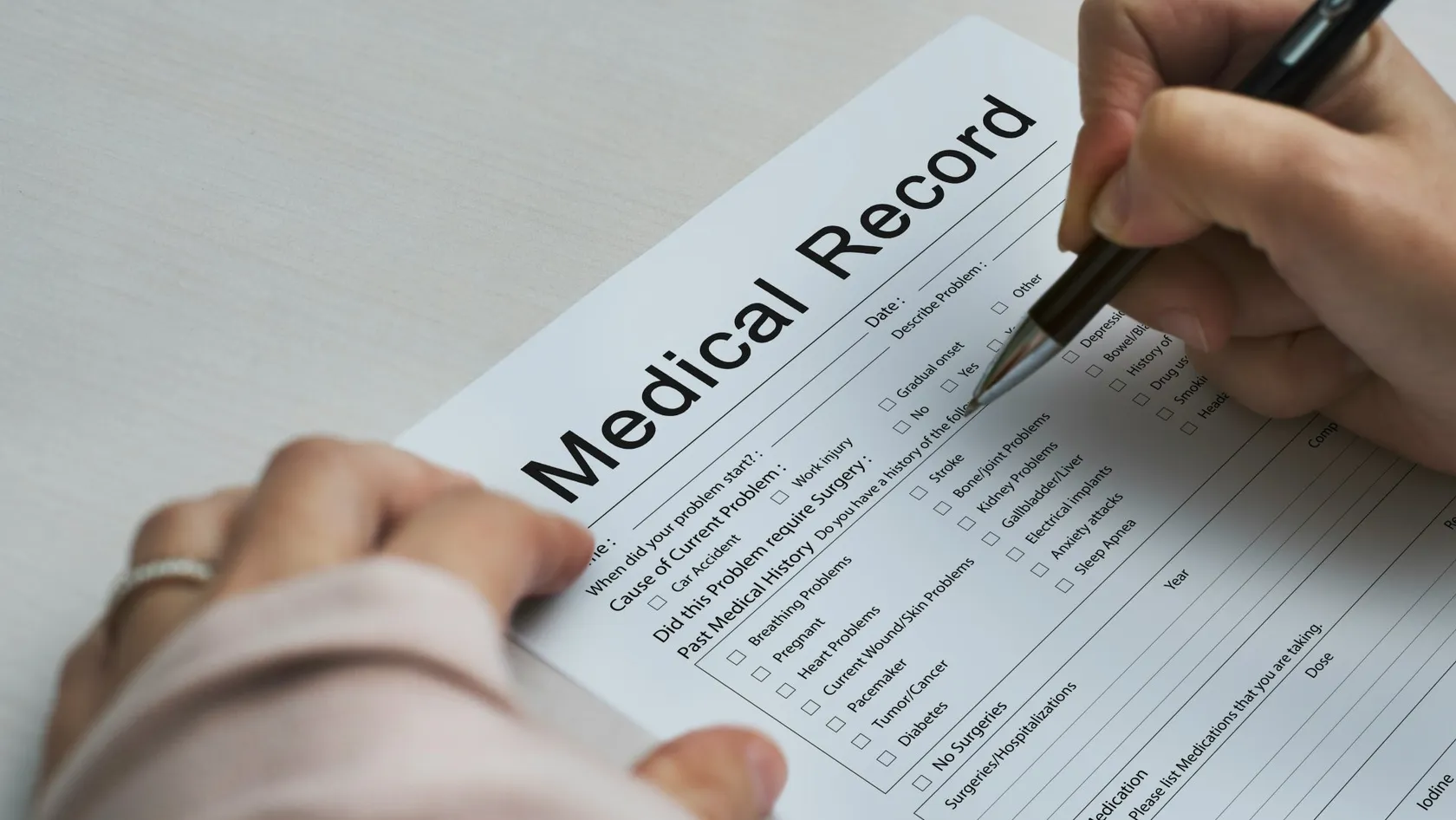
Check Up & Longevity Center
Biruni Hospital's Check-Up and Preventive Medicine Center in Istanbul plans risk based health screening by age, sex and history, with a free remote intake.
Let us call you
Send us your contact information and we will call you as soon as possible.
About This Center
More tests is not a better check-up. The right tests are.
Nine programs, tiered by age, sex, family history and habits, run inside a university hospital where an unclear result walks down the corridor to the specialist instead of waiting for a referral letter.
Most check-up packages marketed to international patients compete on volume: forty tests, sixty tests, a hundred. The Check-Up and Longevity Center at Biruni Hospital in Istanbul starts from a different premise, that a health screen is useful when it is designed around your age, sex, family history and habits, because that is what the evidence supports. This page explains how the center's programs work, which screening tests have been shown to prevent deaths and for whom, how the visit runs when you have flown in for it, what happens on the day something is found, and where longevity medicine genuinely adds to all of it.
Choose your check-up program
Nine programs are documented in full, each with its own page listing every test it contains, how the day runs and what it deliberately leaves out. Read the one that matches your age and sex, or send us your details and let a physician point you at the right tier.
Unsure which one applies? The remote review above exists for exactly that question, and the coordinator will tell you plainly when a smaller program answers what you are worried about.
How the check-up programs at Biruni Hospital are built
Biruni Hospital runs its Check-Up and Longevity Center inside Biruni University Medical Faculty Hospital in Kucukcekmece, Istanbul, an 80,000 square meter university hospital where the laboratory, the imaging units and the specialist departments share one building. That geography matters more than it sounds. A screen is only as good as what follows an unclear result, and here the follow-up question can walk down a corridor to a cardiologist or an endocrinologist instead of waiting for a referral letter.
The adult programs work as tiers rather than fixed menus, running from Integrum through Nova Vita to the Executive program, with a separate oncology screening panel for men and women alongside them. Each one is prepared individually, with a multidisciplinary team weighing your age, gender and health status before the schedule is drawn up, so two people booking the same program will not necessarily sit the same tests. The international office confirms the exact contents for each patient during the intake, which is also the point where gender-specific tests are added or taken out.
A separate check-up program exists for children.
Behind the tiers sits one screening list, covering the conditions responsible for most preventable illness in adults: diabetes, heart disease and cholesterol disorders, kidney and liver disease, thyroid disease, anemia and iron deficiency, hepatitis B, osteoporosis, prostate cancer risk in men, cervical and uterine cancer screening in women, colon disease and celiac disease. No single program tests for all of it. Which parts apply to you is exactly the question the tiering exists to answer.
Do general health checks work? What the evidence shows
A Cochrane review published in 2019 pooled the randomized trials of general health checks in adults and reached a conclusion most check-up brochures prefer not to quote: invitations to broad, untargeted batteries of tests produced little or no reduction in deaths overall. Read the finding carefully. It is not a verdict against prevention. What the trials tested was indiscriminate screening, everyone getting everything, and that model, the one many packages still sell, is what failed to save lives.
Targeted screening has a different record. In the NELSON trial, published in the New England Journal of Medicine in 2020, current and former heavy smokers were randomized to low-dose CT scans of the chest, and lung cancer deaths among the screened men fell by around 24 percent at ten years. The same scan in a lifelong non-smoker carries no comparable evidence and mostly produces false alarms. Colonoscopy repeats the pattern along the axis of age rather than smoking: in the NordICC trial, reported in 2022, one invitation to a screening colonoscopy reduced the risk of developing colorectal cancer by 18 percent over ten years.
Cardiovascular prevention moved the same way. SCORE2, the risk algorithm European cardiology adopted in 2021, estimates a ten-year risk of heart attack and stroke from age, sex, smoking status, blood pressure and lipid values combined, which is why a lone cholesterol number, the staple of the cheapest packages, settles so little on its own.
This evidence is the reason the center tiers and personalizes its programs instead of selling one long list to everyone. A 34-year-old woman who has never smoked and a 58-year-old man with thirty pack-years behind him do not need the same morning of tests. Selling them the same list is not thoroughness, it is padding, and it is precisely the practice the Cochrane data argues against.
Which screening tests are worth doing at your age?
Screening earns its place through risk, and risk has three main drivers: age, sex and exposure, with family history cutting across all of them. The table below maps the main questions. Treat it as the shape of the conversation, not the conversation itself, since one detail in your history, a parent with colon cancer at fifty for instance, can move a test forward by a decade.
| Screening question | Who benefits most | What the assessment uses |
|---|---|---|
| Heart and vessels | Adults from around 40, earlier with diabetes, high blood pressure or a strong family history | Blood pressure, lipid panel and a SCORE2 ten-year risk calculation, with ECG and further cardiac imaging where the risk justifies it |
| Lung cancer | Long-term current and former smokers, broadly between 50 and 75 | Low-dose CT of the chest, the method validated in the NELSON trial; not offered as routine to people who never smoked |
| Colon | Adults from roughly 45 to 50 onward, earlier with an affected close relative | Stool-based testing or colonoscopy, chosen by age, history and preference |
| Women's cancers | Women from their twenties onward for cervical screening, from their forties for breast imaging | Smear testing with gynecological review, plus mammography and breast ultrasound by age |
| Prostate | Men from around 50, from 45 with a family history | PSA testing after a discussion of what a raised value does and does not prove |
| Metabolic and organ health | Most adults, at intervals set by earlier findings | Fasting glucose, thyroid function, kidney and liver panels, hepatitis B, iron studies, with bone density and celiac testing where indicated |
Sex reshapes the list more than any other single factor. For men the additions center on prostate risk. For women they include cervical and uterine cancer screening and breast imaging, and this is one reason the center asks about menstrual timing before fixing the appointment date, since several of the relevant tests read differently during a period.
How does the check-up day run for an international patient?
Most international patients finish their program in one to two days at the center, depending on how deep the chosen tier goes, and the schedule is fixed before travel so the visit can sit inside an ordinary Istanbul trip. The Executive programs run across three days, because endoscopy under sedation and a 24-hour blood pressure recording cannot be compressed into one. Check-up medicine is otherwise kind to travelers in a way surgery is not. Nothing about it restricts flying afterward, no recovery period needs planning, and the only real constraints are the preparation rules below.
Before you travel
You send your age, sex, medication list, known conditions, family history and smoking status over WhatsApp. The office proposes a program, sends the quote in writing, and fixes the appointment day.
The evening before
Your 12-hour fast begins, water excepted. By this point supplements should be paused and the three alcohol-free days completed. Landing in Istanbul the night before is fine, as long as your last meal on the evening of arrival respects the fast.
Test morning
Blood and other samples come first, which ends the fast early. Imaging and the physical examinations follow through the day, in an order the coordinators plan to cut waiting between departments.
Specialist consultations
Physicians from the relevant departments examine you and review the early results, and anything unclear can be clarified with an added test during the same visit rather than by letter afterward.
Results and exit review
How soon the written report is ready depends on the program you chose, because some laboratory panels simply take longer. Blood work is usually same-day, while biopsy and cytology need five to seven days. The staff tell you the dates at booking, and the closing consultation is scheduled around them.
The center's own preparation rules
Six instructions come from the hospital itself, and each protects a result from being distorted.
- Bring any previous test results with you; they turn a single snapshot into a trend.
- Fast for 12 hours before the blood tests. Water is allowed.
- Wear comfortable clothing and shoes, because some tests involve physical activity.
- Women should not schedule the check-up during menstruation, which can distort urine tests and gynecological samples.
- Pause vitamin, iron and mineral supplements beforehand, since they can mask deficiencies the tests are looking for.
- Avoid alcohol for the 3 days before your appointment.
Interpreter support in your own language is available through the visit, and the international office helps arrange airport transfer and accommodation when you want the whole trip handled in one conversation.
What happens if the check-up finds something?
An abnormal result is handled inside the same building, and wherever possible inside the same visit. The finding goes to the specialist department it belongs to, a raised PSA to urology, a suspicious skin lesion to dermatology, an abnormal ECG to cardiology, and that specialist decides with you what clarifying test comes next. Being screened in a full university hospital rather than a standalone laboratory exists exactly for this moment.
Honesty requires two more sentences here. Most abnormal screening results turn out to be minor, and imaging quite regularly picks up incidental findings, harmless variations that still need a follow-up test before anyone can call them harmless. Expect that possibility going in, because it is the routine cost of looking carefully, not a sign that something has gone wrong.
What you do with a confirmed finding stays your decision. You leave with a written report and can take it to your own doctor at home, or ask the relevant department here about treatment, and the center will not pressure you toward either path. No one can promise in advance how any treatment would turn out, which is one more reason the report is written to travel.
How the report travels home with you
The written report is prepared in English, with every laboratory value printed beside its reference range, and imaging is handed over on disc or as digital files. A physician anywhere can read it, repeat a borderline test locally, and pick up whatever follow-up it recommends once you are back home. Nothing about the file ties you to Istanbul.
What does a check-up in Istanbul cost?
Third-party booking platforms published the following figures for Istanbul check-up packages when this page was checked in August 2026. Treat them as market context, since none of them is a Biruni Hospital price.
| Platform | Published figure, USD | What the listing describes |
|---|---|---|
| MyMediTour | 250 to 800 | Basic to mid-depth packages, mostly blood panels with ultrasound and X-ray |
| Cayra Clinic, quoting Memorial | 400 to 2,000 | Standard through advanced tiers at a large private group |
| Istanbul Med Assist | 1,150 | A VIP program with six specialist consultations, run in a single day |
| Turkey Luxury Clinics | 1,000 to 3,000 | Full executive packages with advanced imaging |
Why does one check-up cost 250 dollars and another 3,000? Five ingredients move the price: how many specialist consultations are included, how deep the imaging goes (MRI or CT costs far more than ultrasound and X-ray), whether cancer-marker panels are added, whether cardiac imaging such as echocardiography and stress testing is built in, and how much gender-specific screening the program carries. A cheap package is not a scam and an expensive one is not automatically wiser. They are simply answering different questions, and the fine print tells you which.
Biruni Hospital confirms the exact program content and a written price after a short remote intake, so the figure you receive belongs to your program and your risk profile, not to a menu average.
What a normal result does and does not mean
A normal check-up describes your health on the day the samples were taken. Nothing more. Three limits deserve to be stated as plainly as the benefits.
Longevity medicine, and where it meets a check-up
A check-up asks whether you have a disease today. Longevity medicine asks a different question: how fast the processes that eventually cause disease are moving, and which of them you can still change. The tests overlap heavily. What differs is the use they are put to, because a single value tells you where you stand and a repeated one tells you which direction you are traveling.
The field attracts a great deal of noise, so it is worth separating the measurements that carry serious evidence from the ones being sold ahead of it.
Four measures with real evidence behind them
What to be skeptical about
Biological age scores calculated from DNA methylation are the headline product of the longevity market. They are genuinely accurate correlates of chronological age, but using them to quantify an individual's rate of aging, or to judge whether an intervention worked, remains an open research question rather than a settled clinical test, and the researchers who built them say so directly.7 Treat a number that claims your body is eight years younger than your passport as interesting rather than actionable.
The same caution applies to supplement panels sold on the back of a check-up, and to whole-body MRI marketed as a longevity service. The second one runs directly into the incidental findings problem described above: scan a healthy person thoroughly enough and something ambiguous will appear, and the follow-up it triggers carries its own cost in money, radiation and worry.
What this means for your booking
The practical version of longevity medicine is unglamorous. Choose the program that matches your risk, repeat it on a sensible interval, and keep the reports so the next physician reads a slope instead of a dot. Fitness, muscle, metabolic and inherited risk are already measured inside the programs listed at the top of this page. What turns them into a longevity picture is the dietitian consultation that acts on them and the discipline of coming back, which is why the center asks you to bring previous results and issues every report in a format your own doctor can file.
Questions international patients ask about a check-up in Istanbul
How many days does a check-up at Biruni Hospital take?
Which program should I choose?
Can I fly home straight after my check-up?
When will my results be ready?
What does a full check-up cost in Turkey?
Do I need to fast if I land in Istanbul the night before?
What happens if the check-up finds something serious?
Do you measure biological age?
Will my home doctor be able to use the report?
References
- Krogsboll LT, Jorgensen KJ, Gotzsche PC. General health checks in adults for reducing morbidity and mortality from disease. Cochrane Database of Systematic Reviews. 2019;1(1):CD009009.
- de Koning HJ, van der Aalst CM, et al. Reduced Lung-Cancer Mortality with Volume CT Screening in a Randomized Trial. New England Journal of Medicine. 2020;382(6):503-513.
- Bretthauer M, Loberg M, et al. Effect of Colonoscopy Screening on Risks of Colorectal Cancer and Related Death. New England Journal of Medicine. 2022;387(17):1547-1556.
- SCORE2 working group and ESC Cardiovascular risk collaboration. SCORE2 risk prediction algorithms: new models to estimate 10-year risk of cardiovascular disease in Europe. European Heart Journal. 2021;42(25):2439-2454.
- Mandsager K, Harb S, Cremer P, Phelan D, Nissen SE, Jaber W. Association of Cardiorespiratory Fitness With Long-term Mortality Among Adults Undergoing Exercise Treadmill Testing. JAMA Network Open. 2018;1(6):e183605.
- Celis-Morales CA, Welsh P, Lyall DM, et al. Associations of grip strength with cardiovascular, respiratory, and cancer outcomes and all cause mortality: prospective cohort study of half a million UK Biobank participants. BMJ. 2018;361:k1651.
- Bell CG, Lowe R, Adams PD, et al. DNA methylation aging clocks: challenges and recommendations. Genome Biology. 2019;20(1):249.
Editor's note
Written by the Biruni Hospital medical editorial team. Reviewed by Podologist Gülçin KILIÇ, Podology.
Medically reviewed by

Podologist Gülçin KILIÇ
Podology
Other Medical Centers
View All
Breast Health & Breast Cancer Center
Most people arrive having already decided which operation they want. The operation is rarely the first decision and never the one that decides most.
CAR-T Cell Therapy Center
CAR-T cell therapy in Istanbul for leukemia, lymphoma and myeloma. Eligibility, the five stage process, honest cost figures and how long you stay at Biruni.

Cellular Immunotherapy Center
Two entirely different industries use the words cell therapy. One has a regulator behind it. Four questions tell you which one you are talking to.

Children’s Health Center
The Children's Health and Diseases Center in Istanbul unites pediatric subspecialists at Biruni Hospital, with a free remote review of your child's file.
ENT & Head and Neck Surgery Center
The ENT and Head and Neck Surgery Center at Biruni Hospital in Istanbul treats ear, sinus, voice and neck conditions, with a free file review before travel.