
Corporate
About Us
Biruni Hospital is an academic hospital in Kucukcekmece, Istanbul, with over 40 departments and an international patient team that has served 118 countries.
Opened in 2016 and based in Kucukcekmece, on the European side of Istanbul, since 2023, Biruni Hospital is an academic hospital working alongside Biruni University. It treats patients from Istanbul and from abroad across more than 40 clinical departments and specialty centers. This page explains what the hospital does, how it is equipped, how international patients are handled, and what it does not claim.
Free consultation
Send your reports before you plan a trip
If you already have a diagnosis, send the reports, imaging and pathology results you hold. A physician in the relevant department reviews them and tells you whether treatment here is realistic in your case, what it would involve, and how long you would need to stay. The review costs nothing and puts you under no obligation.
Who we are
Biruni Hospital is a general hospital with a teaching function. Patients come through the emergency department, through outpatient clinics, and by referral for problems that a smaller centre cannot manage: a tumour that needs several specialties in the same room, a transplant, a heart rhythm problem that has not responded to medication.
Care is organised around multidisciplinary teams rather than around individual physicians. In practice that means a case is discussed by the people who will actually treat it. A patient with a newly diagnosed gastric cancer is reviewed by a surgeon, a medical oncologist, a radiologist and a pathologist together, and the plan that reaches the patient is the plan those four agreed on. The same structure applies in transplantation, in complex orthopaedics, and in high-risk obstetrics.
The hospital treats local and international patients in the same buildings, on the same wards, with the same physicians. Nothing is separated into a parallel service for foreign visitors.
Departments and specialty centers
Biruni Hospital operates more than 40 clinical departments and specialty centers. The ones international patients ask about most often are Cardiology, Oncology, Neurosurgery, Orthopaedics, Ophthalmology, Paediatrics, IVF, Bone Marrow Transplantation and Organ Transplantation.
Two of those deserve a note, because they are the reason most long-distance referrals arrive. Bone marrow transplantation and solid organ transplantation both need infrastructure that a hospital either has or does not: isolation units, a tissue typing laboratory, an intensive care team used to immunosuppressed patients, and a haematology or hepatology service that can follow a recipient for years. A hospital cannot improvise those for one case.
Each department is staffed by professors, specialist physicians, nurses and allied health professionals. Physicians who hold academic appointments at Biruni University see patients in the hospital as part of their clinical duties.
Diagnostic and surgical technology
Imaging decides most of what happens next, so the useful thing is to name the machines. The list below is the hospital's current imaging and interventional fleet.
| System | What it is used for |
|---|---|
| Siemens MAGNETOM Vida 3T MRI | Neurological, oncological, cardiac and musculoskeletal imaging at 3 Tesla field strength. |
| Siemens SOMATOM Force dual-source CT | Rapid CT including coronary studies, with lower radiation dose than single-source scanners at comparable image quality. |
| Siemens MAMMOMAT Revelation | Digital mammography with tomosynthesis, which builds a layered image of the breast and improves detection in dense tissue where a conventional two-dimensional mammogram can hide a small lesion. |
| PET-CT and SPECT-CT | Nuclear medicine imaging for cancer staging, treatment response assessment and cardiac perfusion. |
| Artis Icono biplane angiography | Hybrid catheterisation laboratory used for coronary and neurovascular interventions. |
Equipment matters less than who reads the images. A 3T scanner produces the same file in every hospital that owns one, and the difference between a useful report and a useless one is the radiologist. That is why the imaging list sits here as a factual inventory rather than as a reason to travel.
Patients travelling from abroad
Patients have travelled to Biruni Hospital from 118 countries. The International Patient Center handles those cases from the first message through to follow-up after the patient has flown home.
The sequence is the same in almost every case. You send the records you already have. A physician in the relevant department reads them and gives a written opinion, including the opinion that travelling here would not help you, which is an answer some patients receive. If treatment is appropriate, the coordinators put together the schedule, the estimated length of stay and the cost, and only then does anyone discuss flights.
Languages
The International Patient Center works in English, Arabic, French and Russian, among others.
Practical arrangements
Ask the coordination team directly about the arrangements that vary by case: airport transfer, accommodation for a companion, whether a companion can stay overnight on the ward, dietary requirements during the stay, whether a female physician can be requested, and the invitation letter some consulates require for a medical visa. These depend on the department and on how long you are staying, so a general answer on a web page would be misleading.
Follow-up after you return home
The part patients worry about most is not the operation.
It is what happens three weeks later, at home, when something does not look right and the hospital is in another country. Follow-up after returning home is arranged before you are discharged, not once you have already landed. Discharge documents are prepared in a form a physician in your own country can act on, which matters because that physician was not involved in the surgery and will be reading about it for the first time. The treating team stays reachable for questions about the recovery, and remote check-ins are scheduled at the intervals the specific treatment requires.
The academic side of the hospital
Biruni Hospital works with Biruni University, and that connection changes the clinical environment in ways a patient can reasonably care about. Residents and fellows train here. A senior physician who is teaching has to explain the reasoning behind a decision out loud, in front of people whose job that week is to question it, and decisions made that way tend to be examined more carefully than decisions made alone. Clinical research runs alongside routine care.
Two honest caveats come with that. The first is that a teaching hospital sometimes involves trainees in your care. Supervision is constant, and you are entitled to ask who is doing what. The second is that research participation is never automatic. If a trial is relevant to your case, it is offered and explained, and you can decline it without any effect on the treatment you receive.
How to judge a hospital from abroad
You are reading this page because you cannot walk into the building and look around. That puts you in a difficult position, and the honest thing is to tell you what actually distinguishes one hospital from another at this distance.
Ask for numbers that apply to your own diagnosis, not to the institution. A single percentage attached to a whole hospital means nothing, because it mixes a routine cataract operation with a liver transplant. A useful figure is narrower than that: how many patients with your specific condition and stage this department treated last year, what happened to them, and over what follow-up period. Ask the department that would treat you, and expect a physician to answer rather than a coordinator.
Ask who will operate, and whether that person will still be the one making decisions when you are on the ward at two in the morning.
Ask what the plan is if something goes wrong. Every hospital has complications. The difference between a safe institution and an unsafe one is not whether complications happen; it is whether the intensive care unit, the blood bank and the interventional radiology team are on site and staffed when one does. That is a question a hospital either answers directly or evades.
Common questions
Where is Biruni Hospital?
Can I get an opinion before I travel to Istanbul?
What languages does the international team speak?
What happens if there is a problem after I return to my own country?
Does Biruni Hospital treat children?
Editor's note
Written by the Biruni Hospital medical editorial team. Reviewed by Alketa Toska Sert, Physical Therapy and Rehabilitation.
Medically reviewed by
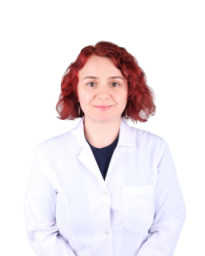
Alketa Toska Sert
Physical Therapy and Rehabilitation