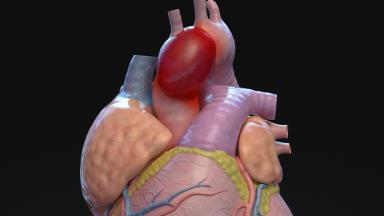
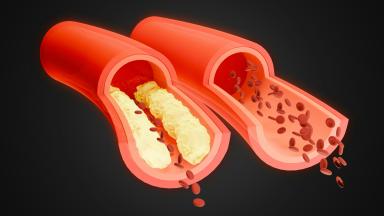
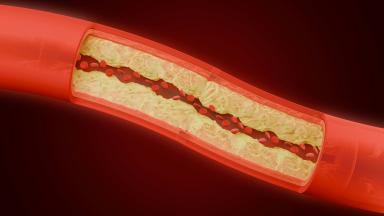
At 5.5 centimeters across, an ascending aortic aneurysm reaches the size at which guidelines advise surgery for most adults, and fast growth, Marfan syndrome or a bicuspid valve can bring that point earlier. This page compares the tube graft, valve-sparing root, arch and stent graft operations, explains why a center's yearly caseload matters, and sets out the weeks in Istanbul before the flight home.
About This Department
Cardiovascular Surgery
Most thoracic aortic aneurysms are silent until a scan finds them. Surgery is planned when the numbers say the wall is at risk.
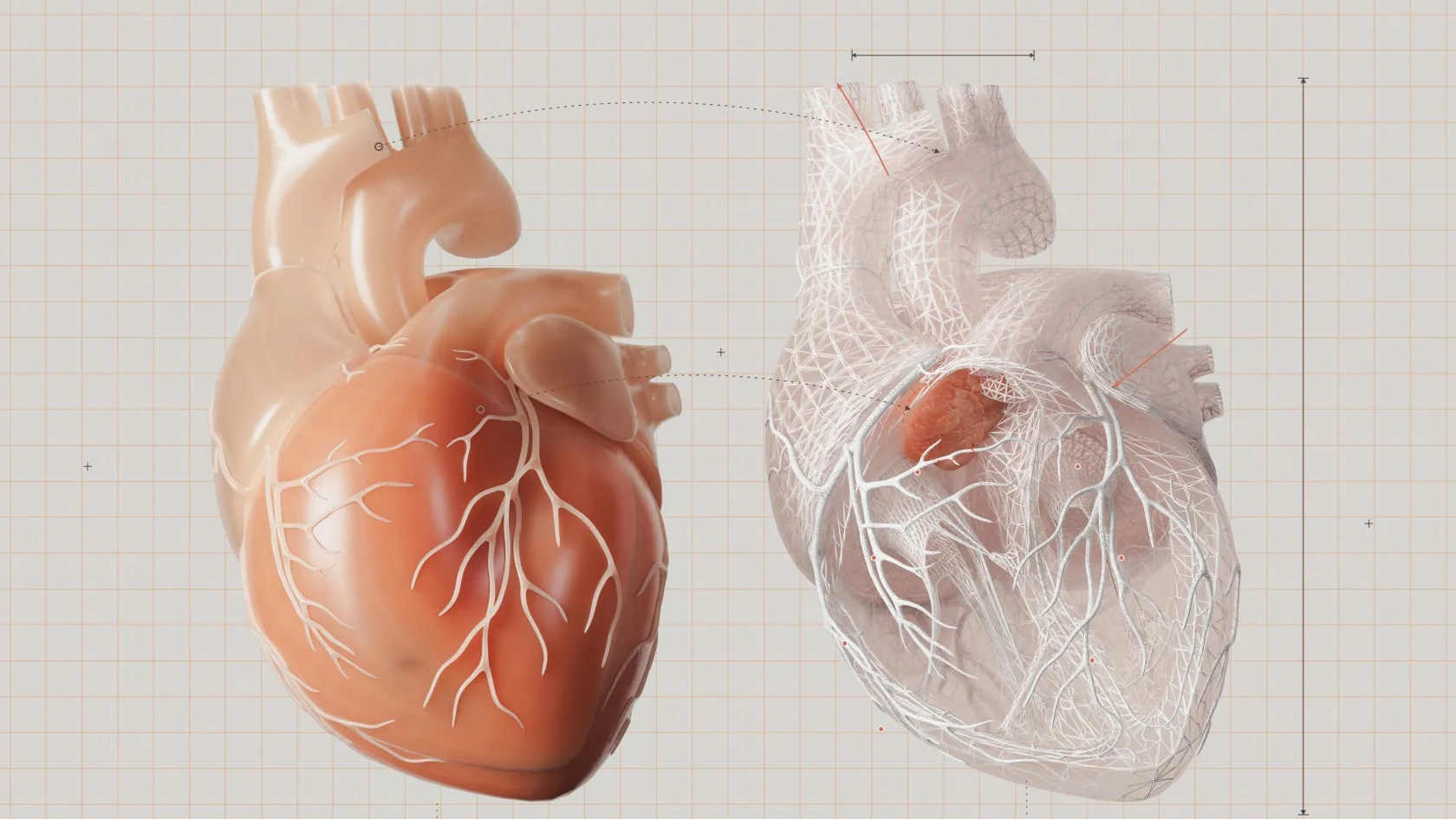
Thoracic aortic surgery replaces a weakened section of the aorta, the main artery leaving the heart, with a fabric tube graft. Most operations go through the breastbone, and an aneurysm in the descending part of the chest can often be lined from inside with a stent graft passed up from the groin. Most thoracic aneurysms cause no symptoms and turn up on a scan done for another reason, so the decision rests on measurements. This page explains the sizes at which guidelines advise an operation, which operation fits which part of the aorta, why a center's yearly caseload matters, and what to send for a free review of your scans.
5.5 cm
Ascending aneurysm size at which guidelines advise surgery for most adults
2.9%
Operative mortality after planned ascending replacement in 5,209 patients
5 to 7 nights
In hospital after open surgery in published packages in Turkey
Call an ambulance now, in the country where you are, for any of these.
Sudden, severe pain in the chest or between the shoulder blades, often described as tearing or ripping
Fainting or collapse with chest or back pain
Sudden weakness on one side, or loss of speech, together with chest pain
A cold, painful leg that starts with the chest pain
Those signs can mean an aortic dissection, a tear in the inner layer of the aortic wall. A tear that involves the ascending aorta, called type A, is operated on the same day. The International Registry of Acute Aortic Dissection has followed more than 7,300 cases at over 51 hospitals in 12 countries, and in-hospital deaths from type A dissection fell over two decades as more patients went straight to surgery. Do not wait for a flight.
Planned surgery abroad is for the aneurysm found before it tears, and for a chronic dissection that has widened since it was first treated.
When an aneurysm needs an operation
Size predicts rupture. The 2022 American guideline on aortic disease sets out when that risk outweighs the risk of the operation, and the 2024 European guideline draws the same 5.5 centimeter line for most adults. Growth counts as much as size. An aneurysm that grows 0.5 centimeters in one year, or 0.3 centimeters a year for two years running, meets the threshold below 5.5 centimeters. Pain does too.
This table scrolls sideways on a narrow screen. Swipe or drag to see every column.
Thoracic aortic aneurysm, diameter at which surgery is advised
Situation
Surgery advised at
Note
Ascending aorta or root, most adults
5.5 cm
The standard threshold
Low surgical risk, experienced aortic team
5.0 cm
Earlier surgery is reasonable
Already having aortic valve surgery
4.5 cm
Replaced in the same operation
Marfan syndrome
5.0 cm
4.5 cm with added risk factors such as a family history of dissection
Bicuspid aortic valve
5.5 cm
5.0 cm with added risk factors or at an experienced center
Descending thoracic aorta
5.5 cm
Stent graft preferred when the anatomy suits it
Below these sizes, the plan is a repeat scan at intervals the cardiologist sets, firm blood pressure control and no straining heavy lifts.
Thoracic aneurysms run in families. The American guideline advises imaging the parents, brothers, sisters and children of a patient with a thoracic aneurysm or dissection, and genetic testing when the disease appears before age 60, runs in the family or comes with features of a syndrome such as Marfan. Loeys-Dietz syndrome and some other inherited conditions carry lower size limits, set by the gene involved.
Which operation fits which part of the aorta
Four segments, four different operations.
The ascending aorta
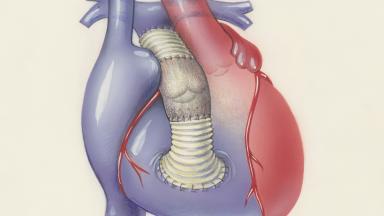
If the aneurysm sits above the valve and the root is normal, the surgeon replaces the swollen segment with a polyester tube graft through an opening in the breastbone, while the heart-lung machine takes over the circulation. In a nationwide Korean series of 5,209 planned ascending replacements, operative mortality was 2.9 percent and stroke 2.2 percent.
The aortic root and the valve
Root surgery is the most technical of the four. The root is the first few centimeters of the aorta, where the valve and the two coronary arteries sit. A Bentall operation replaces the root and the valve together, using a graft that carries a mechanical or tissue valve, and the coronary arteries are sewn back onto the graft. With healthy valve leaflets, a valve-sparing operation, known as the David or reimplantation technique, keeps the patient's own valve inside the new graft and avoids the lifelong blood thinner a mechanical valve requires. Across 39 observational studies and 14,651 patients, survival over 15 years was better after valve-sparing surgery. Repeat operations were more frequent in the first five years, then evened out. Patients picked for valve-sparing surgery are younger on average, and part of that survival gap reflects who was picked. In 1,159 patients with a bicuspid valve who had valve-sparing surgery, 30-day mortality was 1.7 percent and 87 percent were alive at 15 years.
Whether your own valve can stay is judged on a detailed echocardiogram before surgery and confirmed by the surgeon during the operation.
The arch
Arch surgery is where brain protection matters. The arch carries the arteries to the brain and arms, so the operation needs a period with the body cooled to a low temperature while blood reaches the brain through separate tubes placed in the arteries of the neck or arm.
Hemiarch replacement
A hemiarch replacement extends the ascending graft under the curve of the arch, leaving the branches to the brain in place.
Brain protection during arch surgery is planned on the CT before the day, including which artery carries blood to the brain.
Total arch and frozen elephant trunk
A total arch replacement reconnects each branch to the graft. A frozen elephant trunk adds a stented section that hangs down into the descending aorta, ready for a later stent extension if the aorta below widens.
Stent graft or open repair in the descending aorta
Two options compete here. A stent graft placed through the groin is called TEVAR, and the alternative is open replacement of the segment through an incision along the ribs on the left side of the chest, with the circulation to the lower body supported during the repair. A meta-analysis of 29 studies and 49,972 patients found lower early mortality and fewer complications with TEVAR, along with shorter intensive care and hospital stays. It also found more repeat procedures after TEVAR, and better overall survival after open repair beyond 16 months. Early safety, then, against durability.
This table scrolls sideways on a narrow screen. Swipe or drag to see every column.
Descending thoracic aortic aneurysm, TEVAR against open repair
Outcome
TEVAR
Open repair
Early mortality
Lower, odds ratio 0.57
Reference
Intensive care and hospital stay
Shorter
Longer
Repeat aortic procedures
More, hazard ratio 2.10
Fewer
Overall survival beyond 16 months
Lower
Better
Open repair keeps its place in younger patients and in Marfan or Loeys-Dietz syndrome, where the aortic tissue is fragile.
Why a center's yearly caseload matters
Aortic surgery rewards repetition. In the Korean national data, centers doing 10 or more planned ascending replacements a year cut the odds of operative death to about a quarter of those at smaller units, with an odds ratio of 0.26, and their patients also lived longer over a median follow-up of 5.9 years. The American guideline makes the same point and advises that planned aortic surgery take place at a center with a multidisciplinary aortic team, meaning cardiac surgeons, vascular surgeons, cardiologists, imaging specialists and anesthetists who review each case together.
Before choosing any hospital, in Turkey or anywhere else, request the number of operations of your exact type that the surgeon performed in the past year.
A root, an arch and a stent graft each demand a different skill.
Intensive care, the ward and the flight home
Published packages in Turkey list 5 to 7 nights in hospital after open surgery and 3 to 5 after a stent graft.
1
Intensive care
One or two nights on continuous monitoring.
2
The ward
Chest drains and pacing wires come out over the first days, and walking and breathing exercises start straight away.
3
Checks before the flight
A wound check, an echocardiogram and a CT of the graft, read by the surgeon who operated, confirm that the graft is in place, that no fluid has collected around the heart and that the breastbone wound is healing cleanly.
4
Home
The breastbone knits over six to eight weeks, and a CT of the graft is repeated within the first year and then for life.
Plan two to three weeks in Istanbul after open surgery and about ten days after TEVAR. Until the breastbone has healed, nothing heavier than a full shopping bag, no pushing up from a chair with the arms, and no driving for four to six weeks. Desk work resumes at four to six weeks. Full recovery takes two to three months. Tiredness comes and goes. It passes. Lifelong blood pressure control protects the rest of the aorta, which can still widen above or below the graft. The international patients office arranges the hotel, airport transfers and transport to each appointment, and the patient room has a companion bed, so one person you choose stays overnight in the room for the whole admission. A coordinator, assigned from the first message, works in English, Arabic, French, Russian, Serbian, Romanian or Spanish, arranges interpreting in other languages on request, and stays on the same WhatsApp number once you are home. A female surgeon can be requested and is assigned wherever the rota allows, halal, vegetarian and diabetic meals come from the hospital kitchen, a prayer room is on site, and the invitation letter for the visa goes out ten days before travel.
Call the same day for fever, redness or discharge from the wound, a clicking feeling in the breastbone, new breathlessness, or swelling in a leg. Sudden severe chest or back pain means an ambulance.
What a quote should cover
Cost depends first on the segment of aorta. A tube graft in the ascending aorta sits at one end of the range, and a root with a valve, an arch with brain protection, or a stent graft that needs several devices moves it up. Extra intensive care nights move it further. Published packages in this market list what they cover, and the split below is the usual one.
Inside most published packages
The operation and anesthesia
A CT angiogram, blood tests and a cardiology consultation before surgery
The hospital nights
Airport transfers and a coordinator
One or two follow-up visits
Outside most of them
Intensive care nights beyond the number stated, long-term medication and surveillance scans once you are home are billed separately in most quotes.
Get the number of intensive care nights in writing.
A figure worth comparing comes after a surgeon has measured your aorta on your own scans. That review costs nothing.
Thoracic aortic surgery FAQ
At what size is a thoracic aortic aneurysm operated on?
At 5.5 centimeters for most adults, at 5.0 centimeters in Marfan syndrome or for a low-risk patient treated by an experienced aortic team, and at 4.5 centimeters when the aortic valve is being operated on anyway. Fast growth or pain brings the operation forward.
Is TEVAR better than open surgery?
For the descending aorta, TEVAR has lower early mortality and a shorter stay. Open repair needs fewer repeat procedures and shows better overall survival beyond 16 months, and it stays the first choice for many patients with Marfan or Loeys-Dietz syndrome.
When can I fly home after aortic surgery?
After the wound check, the echocardiogram and the CT of the graft, which takes two to three weeks after open surgery and about ten days after TEVAR.
What should I send for a free review?
Send these, and include every earlier scan you have, since growth between scans decides the timing.
The CT angiogram or MRI of the chest, as images and not only the report
Any echocardiogram report
Earlier scans of the aorta, with dates
Your family history of aneurysm, dissection or sudden death
A list of medications and other heart or lung conditions
A cardiovascular surgeon replies with whether an operation is advised now, which one, the expected stay and the time to plan in Istanbul, at no charge and with no obligation to travel.
References
Isselbacher EM, Preventza O, Hamilton Black J 3rd, et al. 2022 ACC/AHA guideline for the diagnosis and management of aortic disease. J Am Coll Cardiol. 2022;80(24):e223-e393.
Mazzolai L, Teixido-Tura G, Lanzi S, et al. 2024 ESC guidelines for the management of peripheral arterial and aortic diseases. Eur Heart J. 2024;45(36):3538-3700.
Evangelista A, Isselbacher EM, Bossone E, et al. Insights from the International Registry of Acute Aortic Dissection: a 20-year experience of collaborative clinical research. Circulation. 2018;137(17):1846-1860.
Kim SH, Kim J, Kang Y, et al. Clinical outcomes of ascending aortic replacement for aneurysm and the impact of centre volume: a nationwide population-based study. Interdiscip Cardiovasc Thorac Surg. 2026;41(8). doi:10.1093/icvts/ivag184
Formica F, Gallingani A, D'Alessandro S, et al. Long-term outcomes comparison of Bentall-De Bono versus valve-sparing aortic root replacement: an updated systematic review and reconstructed time-to-event meta-analysis. Int J Cardiol. 2025;419:132728.
Wilson-Smith AR, Wilson-Smith CJ, Strode Smith J, et al. The outcomes of three decades of the David and Yacoub procedures in bicuspid aortic valve patients: a systematic review and meta-analysis. Ann Cardiothorac Surg. 2023;12(4):286-294.
Liu J, Gou D, Xu K, et al. Comparison of short- and long-term outcomes between endovascular and open repair for descending thoracic aortic aneurysm: a systematic review and meta-analysis. Int J Surg. 2025;111(3):2662-2674.
Editor's note
Written by the Biruni Hospital medical editorial team. Reviewed by Op. Dr. Mohammed N.I. SKAIK, Cardiovascular Surgery.