
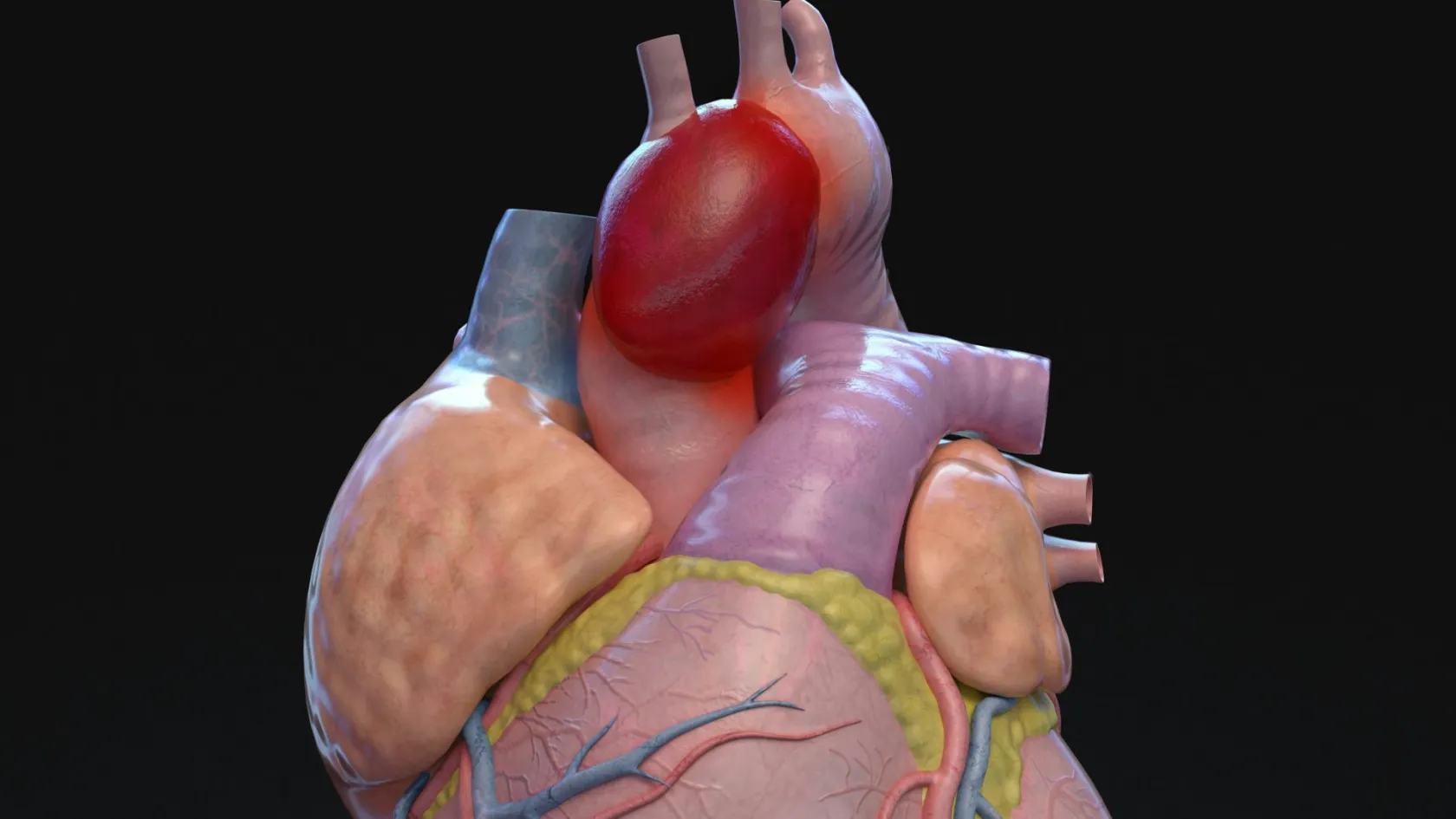
Aortic Valve Replacement
The catheter valve wins the first year and the five-year data show the two routes ending up level. This page sets out what that means for a patient of 60 as opposed to a patient of 85, and which prosthesis belongs in each of them.
About This Department
Untreated severe aortic stenosis is one of the more dangerous diagnoses in cardiology. Treated, it is one of the most rewarding. Two routes exist now where there was one. Surgery opens the chest and sews a new valve into place, and a catheter valve is delivered through an artery in the groin with no chest incision at all, and the trial that compared them head to head in low-risk patients has now reported at five years. That answer is more interesting than the headlines were.
Free consultation
Find out which route your anatomy allows before anybody quotes you
Whether a catheter valve is even possible depends on the width and the calcium load of the arteries in your groin and on the shape of the valve you were born with. A CT scan answers that, and an opinion does not. Send the echocardiogram with its loops, any CT of the aorta and iliac arteries, the coronary angiogram if you have had one, your age and your medication list. A cardiac surgeon and a cardiologist read them together and tell you which routes are open to you and which is the better one. No charge, no obligation, and a coordinator replies in your own language.
Why the valve has to go
Four conditions send most people to aortic valve replacement. Knowing which one you have changes almost everything that follows, including whether a catheter valve is even on the table.
European guidance published in 2021 sets the trigger for treating severe stenosis at the appearance of symptoms, or at a fall in the pumping function of the ventricle below 50 percent in someone who feels well, with a lower threshold in patients who are very active or whose exercise test provokes symptoms. Waiting past that point costs muscle that does not fully come back.
A murmur watched for years, with a gradient that has now crossed into severe territory, is not a reason to wait for breathlessness. It is a reason to have the conversation about timing.
Surgery or a catheter valve
Known as TAVI in Europe and TAVR in the United States, the catheter route threads a folded valve up the artery from the groin and expands it inside the diseased one, crushing the old cusps outward. No chest incision, no heart-lung machine, usually one to three nights in hospital. Surgery opens the breastbone, stops the heart, cuts the calcified valve out and sews a new one into the cleaned annulus, with seven to ten days in hospital afterwards.
Put like that the choice sounds obvious. The marketing treated it that way for years. PARTNER 3 randomized 1,000 low-risk patients with severe aortic stenosis, average age 73, between the two. At one year the catheter group did clearly better, with death, stroke or rehospitalization in 8.5 percent against 15.1 percent after surgery, along with less stroke, less new atrial fibrillation and a shorter stay. At five years those same patients were reported again, and the difference had closed. The composite outcome had reached 22.8 percent in the catheter group and 27.2 percent in the surgical group, a gap that was no longer statistically significant. Death stood at 10.0 percent against 8.2 percent, stroke at 5.8 against 6.4, and valve failure at 3.3 against 3.8 percent.
Read that carefully, because it is the most useful thing on this page. Catheter valves buy a much easier first month. Over five years the two routes end up in the same place, and nobody yet knows what happens at fifteen, which matters enormously for a patient of 60 and hardly at all for a patient of 85.
There is a second consideration the trials cannot answer yet, and a younger patient should have it in mind anyway. Whatever goes in first has to be planned around what comes second, because both surgical tissue valves and catheter valves wear out and the usual treatment for a worn valve is another catheter valve expanded inside it. That only works if the first valve is large enough and sits where it leaves room, and a small catheter valve placed inside a small annulus can close that door twenty years early. A surgeon planning a first operation in a patient of 60 has the third valve in mind as well as the first. Ask whether yours is.
Bicuspid patients sit slightly outside all of this, and they should know it. The low-risk trials largely excluded them, so the five-year comparison quoted above was not measured in valves shaped like theirs, and the oval opening a bicuspid valve leaves is harder for a circular frame to seal against. Some are treated by catheter in experienced hands and the results are respectable, but the evidence behind that is thinner than the evidence behind surgery, and a bicuspid patient of 55 whose aorta is also enlarged is a surgical patient for the aorta alone before the valve is even considered.
So the decision turns on the factors below, and it belongs to a heart team of surgeons and cardiologists together, and not to whoever you happened to consult first.
One question worth putting directly to whoever advises you. Ask what a heart team would recommend if the hospital did not perform the procedure being suggested to you, because a unit that only offers one route will find reasons for it.
The operation, step by step
Surgical replacement takes two to four hours. What happens between the anesthetic and the recovery room is set out below, so that nothing on the day catches you out.
Catheter work runs differently. Sedation or a light general anesthetic, a sheath into the femoral artery, the folded valve tracked up under X-ray guidance to sit inside the old one, then expanded. An hour to ninety minutes for most cases, no bypass machine, and the patient sitting up in a chair that evening.
Two details of that procedure deserve saying out loud, because patients are rarely told them. The old valve is never removed. It is crushed outward against the wall of the aorta and the new frame sits inside it, which is exactly why the calcium load and the shape of your annulus decide so much about how well the result seals. And the heart is briefly paced very fast during deployment so that it stops ejecting for a few seconds and the valve can be positioned in a still field, which is planned, safe, and over before anybody would notice it.
Recovery, stage by stage
Both routes diverge most in the first month and converge after that. Stages below are for the surgical operation, with the catheter timings named where they differ.
Something to know before reading them. The published figures describe an uncomplicated course, and roughly one patient in five has something that adds a few days, most commonly an irregular rhythm, fluid at the base of a lung or a bowel that is slow to wake after the anesthetic. None of those changes the eventual result and every one of them changes the date on the ticket, so a changeable fare earns its premium for anybody flying in for this operation.
Which valve goes in
Choosing the prosthesis is the part of an aortic valve replacement that is most genuinely yours. Settle it in clinic and have it written into the consent form.
A mechanical valve does not wear out and demands warfarin every day for life in exchange, with a target INR of 2.0 to 3.0 in the aortic position, lower than the mitral one. A tissue valve avoids the warfarin and degenerates instead, faster the younger you are. Guidelines put the crossover at roughly 60 to 65, with mechanical favored below and tissue above, and with your own circumstances allowed to override that. A third option exists for younger patients and it deserves more attention than it gets.
In the Ross procedure the surgeon moves your own pulmonary valve into the aortic position and puts a donor valve into the pulmonary position, where the pressures are a fraction of those on the left side. A living valve grows, repairs itself and does not clot. A study matching 434 adults aged 18 to 50 in each group and following them for a median of 12.5 years found survival at fifteen years of 93.1 percent after a Ross procedure, statistically indistinguishable from the age-matched and sex-matched general population, and significantly better than after either a tissue or a mechanical prosthesis. Against a mechanical valve the Ross carried less stroke and less major bleeding but more reoperation. Against a tissue valve it carried less reintervention and less endocarditis.
It turns a one-valve problem into a two-valve operation and it is technically demanding, so it belongs to surgeons who do it regularly. A patient in their thirties or forties should ask about it by name.
This table scrolls sideways on a narrow screen. Swipe or drag to see every column.
| Option | Blood thinner | Expected life of the valve | Whom it suits |
|---|---|---|---|
| Mechanical | Warfarin for life, target INR 2.0 to 3.0. | Longer than most of the people who receive one. | Under 60 to 65, able to attend regular blood tests, no pregnancy planned. |
| Surgical tissue valve | A few months. Then usually nothing at all. | Ten to twenty years, at the short end in younger patients. | Over 60 to 65, or anyone who cannot manage anticoagulation. |
| Catheter valve | Aspirin in most cases, with anticoagulation only if the rhythm demands it. | A tissue valve, with failure at five years reported at 3.3 percent in the low-risk trial. | Older or higher-risk patients, and low-risk patients with suitable anatomy. |
| Ross procedure | None. | A living valve, with 93.1 percent survival at fifteen years in matched adults under 50. | Young adults, in a unit that performs it regularly. |
What can go wrong
Both routes are safer than the disease they treat. Both carry real risks, and a patient deciding between them should be able to name them.
Who should think hard before either. Severe dementia, a cancer with a short prognosis, and frailty at the level where the operation would not restore independent life are the situations where doing nothing surgical, with good symptom control, is the honest recommendation. A heart team that says so is doing its job.
Life with a new aortic valve
Most people feel better than they have in years. The explanation is mechanical, since a ventricle that has spent years straining against a narrow opening finally empties properly again, and breathlessness that crept up over a decade tends to lift within a few weeks of the valve being fixed.
The years afterwards ask something of you. Not much. Something.
If your valve is mechanical, warfarin becomes part of the day. The target range in the aortic position is an INR of 2.0 to 3.0. Keep your intake of green vegetables steady week to week instead of avoiding them, since it is the change that moves the number and not the vitamin itself, and tell every prescriber that you have a mechanical valve, treat aspirin and anti-inflammatory painkillers with respect, and carry a card stating the valve type, its size and the target range. The newer direct oral anticoagulants do not work for mechanical valves. Anybody offering one for this indication is mistaken. If your valve is tissue or was delivered by catheter, aspirin covers it, and after a few months nothing at all. Everyone carries the endocarditis obligation, whichever valve went in and whichever route it came by. A prosthetic valve is a surface bacteria can settle on, so dental work and certain procedures need antibiotic cover for life, dental hygiene stops being optional rather than merely advisable, and a fever lasting several days with no obvious cause is investigated instead of ridden out. Tell every dentist, every dermatologist and anybody planning an endoscopy that you carry a prosthetic valve, because the cover has to be given before the procedure and not after it.
Surveillance is an echocardiogram and a cardiology review at three months and then once a year, wherever you live, with every scan compared against the one taken before you left hospital, which is the whole reason that first report matters. Report breathlessness that returns, ankle swelling, chest pain, blackouts, a change in the sound of a mechanical valve, or bleeding you cannot explain.
Blood pressure control, avoiding tobacco, treating cholesterol and staying active protect the valve and the coronary arteries around it, and cardiac rehabilitation measurably improves how far patients get back, so join a program if one is available where you live.
Two questions come up enough to answer here. Flying is unrestricted once you are past the recovery window, and airport metal detectors do not react to a heart valve, though a mechanical one occasionally sets off a hand-held wand, which is another reason to carry the card. Magnetic resonance scanning is safe with every valve in current use, and if a radiographer hesitates the model name on your card settles it.
Exercise is encouraged, and not merely permitted. Walking, cycling and swimming are all fine once the wound has healed and the breastbone has knitted, and the only real limits are contact sports and anything with a head injury risk while you are taking warfarin. Sexual activity resumes when you can climb two flights of stairs without stopping, which is the usual yardstick and the question patients most want to ask and least often do.
Reading a quote
No price appears on this page. The two routes are priced differently from one another, the prosthesis is a large part of the total in both, and how many nights of monitored care you need cannot be guessed from an email, so any figure produced before a heart team has read your scans describes a patient who is not you.
Seven questions separate a real quote from a headline one, and each is fair to ask.
Which route the figure assumes, since surgery and a catheter valve are not comparable line items. Which prosthesis, because mechanical, surgical tissue and catheter valves differ in cost and a quote that leaves the type open has left its biggest single item open. How many nights of monitored care the figure budgets for. Whether anything else is planned on the same admission, meaning coronary grafting, a mitral procedure, an aortic graft or an ablation for atrial fibrillation. Whether the work-up sits inside the number, which for this operation means a coronary angiogram, a CT of the aorta and the iliac arteries, a carotid scan, lung function tests and dental clearance. What happens financially if you need a pacemaker before discharge, which is a recognized outcome and not an exotic one. And whether a return to theater for bleeding is covered. Your own history moves the total as much as the choice of route does. Kidney impairment, diabetes, chronic lung disease, obesity, a previous cardiac operation and a weak ventricle each lengthen the expected stay, and monitored care is where cardiac money goes.
Packages published by Turkish hospitals and medical travel agencies for aortic valve work generally include the airport transfer, pre-operative tests, the surgeon or interventionalist, anesthesia and perfusion fees, the theater or catheter laboratory, the prosthesis, the planned nights, an interpreter and the follow-up before departure. They generally exclude flights, insurance, unplanned extra monitored care, the treatment of a complication, a pacemaker if one becomes necessary and hotel nights beyond an agreed number. Read what arrives against that list.
A further point specific to anyone traveling for this. A quote for surgery and a quote for a catheter valve from the same hospital are not two prices for the same thing, and comparing them straight across will mislead you, because the surgical figure usually carries more nights, more monitoring and a longer hotel stay behind it while the catheter figure usually carries a more expensive device. Ask for both to be broken into the same headings so the comparison means something.
Send the scans and get a number that describes you.
Coming to Istanbul
Allow three to four weeks for surgery and two for a catheter valve. Consultation and any repeat imaging take the first days, then the procedure and the stay, then hotel recovery until somebody examines you and clears the flight.
Send imaging, and not only reports, and send the CT if you have one. Whether a catheter valve is possible is decided on the width and calcium of your iliac arteries and on the shape of your annulus, which nobody can assess from a summary letter. Bring the discs with you as well as sending the files ahead.
One coordinator handles your case from the first message until discharge. The international patients team works in English, Arabic, French, Russian, Serbian, Romanian and Spanish, with interpreting in other languages arranged when it is asked for, and the consent discussion is where that matters most on this page, because you are consenting to a route and to a prosthesis and both should be understood before you sign anything. A relative can stay in the room overnight for the whole ward stay, since every room carries a second bed, and the intensive care days follow that unit's own rules on visiting. Where the two of you sleep on the nights around the admission, how you get in from the airport and how you travel between hotel and hospital are all handled by the international patients office rather than left to you. Dietary needs go to the hospital kitchen, which covers halal, vegetarian and diabetic meals, and there is a prayer room in the building. Say in your first message if you would prefer a female physician. The department accommodates that wherever the rota allows.
That same office issues an appointment confirmation and an invitation letter naming the hospital and the treating doctor for a medical visa application, and it goes out ten days or so before travel.
Once you are back home, the follow-up protects the result. Fly with a file. It should name the route taken, the make, model and size of the valve, the discharge echocardiogram with its gradient, the anticoagulation plan with a target range and a next test date if one applies, the endocarditis advice, and a letter addressed to a cardiologist. Arrange the first appointment near home before you leave, while somebody at the hospital can still write the referral. Your coordinator stays reachable on the same WhatsApp number afterwards.
Aortic valve replacement FAQ
Is the catheter valve better than surgery?
How long will I be in Turkey?
Which valve should I choose at 55?
Will I need a pacemaker?
What happens when the valve wears out?
Can my husband or wife stay in the room with me?
References
- Mack MJ, Leon MB, Thourani VH, Makkar R, Kodali SK, Russo M, Kapadia SR, Malaisrie SC, Cohen DJ, Pibarot P, Leipsic J, Hahn RT, Blanke P, Williams MR, McCabe JM, Brown DL, Babaliaros V, Goldman S, Szeto WY, Genereux P, Pershad A, Pocock SJ, Alu MC, Webb JG, Smith CR. Transcatheter aortic-valve replacement with a balloon-expandable valve in low-risk patients. The New England Journal of Medicine. 2019;380(18):1695-1705.
- Mack MJ, Leon MB, Thourani VH, Pibarot P, Hahn RT, Genereux P, Kodali SK, Kapadia SR, Cohen DJ, Pocock SJ, Lu M, White R, Szerlip M, Ternacle J, Malaisrie SC, Herrmann HC, Szeto WY, Russo MJ, Babaliaros V, Smith CR, Blanke P, Webb JG, Makkar R. Transcatheter aortic-valve replacement in low-risk patients at five years. The New England Journal of Medicine. 2023;389(21):1949-1960.
- El-Hamamsy I, Toyoda N, Itagaki S, Stelzer P, Varghese R, Williams EE, Erogova N, Adams DH. Propensity-matched comparison of the Ross procedure and prosthetic aortic valve replacement in adults. Journal of the American College of Cardiology. 2022;79(8):805-815.
- Vahanian A, Beyersdorf F, Praz F, Milojevic M, Baldus S, Bauersachs J, Capodanno D, Conradi L, De Bonis M, De Paulis R, Delgado V, Freemantle N, Gilard M, Haugaa KH, Jeppsson A, Juni P, Pierard L, Prendergast BD, Sadaba JR, Tribouilloy C, Wojakowski W. 2021 ESC and EACTS guidelines for the management of valvular heart disease. European Heart Journal. 2022;43(7):561-632.
- Otto CM, Nishimura RA, Bonow RO, Carabello BA, Erwin JP, Gentile F, Jneid H, Krieger EV, Mack M, McLeod C, O'Gara PT, Rigolin VH, Sundt TM, Thompson A, Toly C. 2020 ACC/AHA guideline for the management of patients with valvular heart disease. Journal of the American College of Cardiology. 2021;77(4):e25-e197.
Editor's note
Written by the Biruni Hospital medical editorial team. Reviewed by Op. Dr. Mohammed N.I. SKAIK, Cardiovascular Surgery.
Medically reviewed by
Op. Dr. Mohammed N.I. SKAIK
Cardiovascular Surgery
Related Treatments
View All-
Aortic Aneurysm Repair - Aortic Aneurysm Surgery
Aortic aneurysm repair prevents rupture, which killed 37 percent of patients in emergency surgery against 6 percent in planned repair in a large screening trial. This guide explains when to watch and when to repair, size thresholds for men and women, EVAR against open surgery, long-term trial results, recovery and the stay in Istanbul.
-
Aortic Valve Repair
Being told the aortic valve leaks is usually followed by a conversation about which prosthesis to have. For a large group of patients there is a third answer, which is keeping the valve they were born with, and this page explains who qualifies.
-
Coronary Angioplasty
In 5,179 patients with stable coronary disease, opening the narrowings did not reduce heart attacks or deaths. In somebody having a heart attack, the same procedure saves lives. Almost every argument about stents comes from confusing those two situations.
-
Endovascular Aneurysm Repair - EVAR
Three randomized trials compared keyhole aneurysm repair with open surgery and disagreed about long-term survival. They agreed on something else, and it is the part that decides how you will spend the next twenty years.
-
Heart Valve Surgery
Repair and replacement gave the same survival in a randomized trial. Only durability separated them, and the leak returned in 32.6 percent against 2.3 percent.