
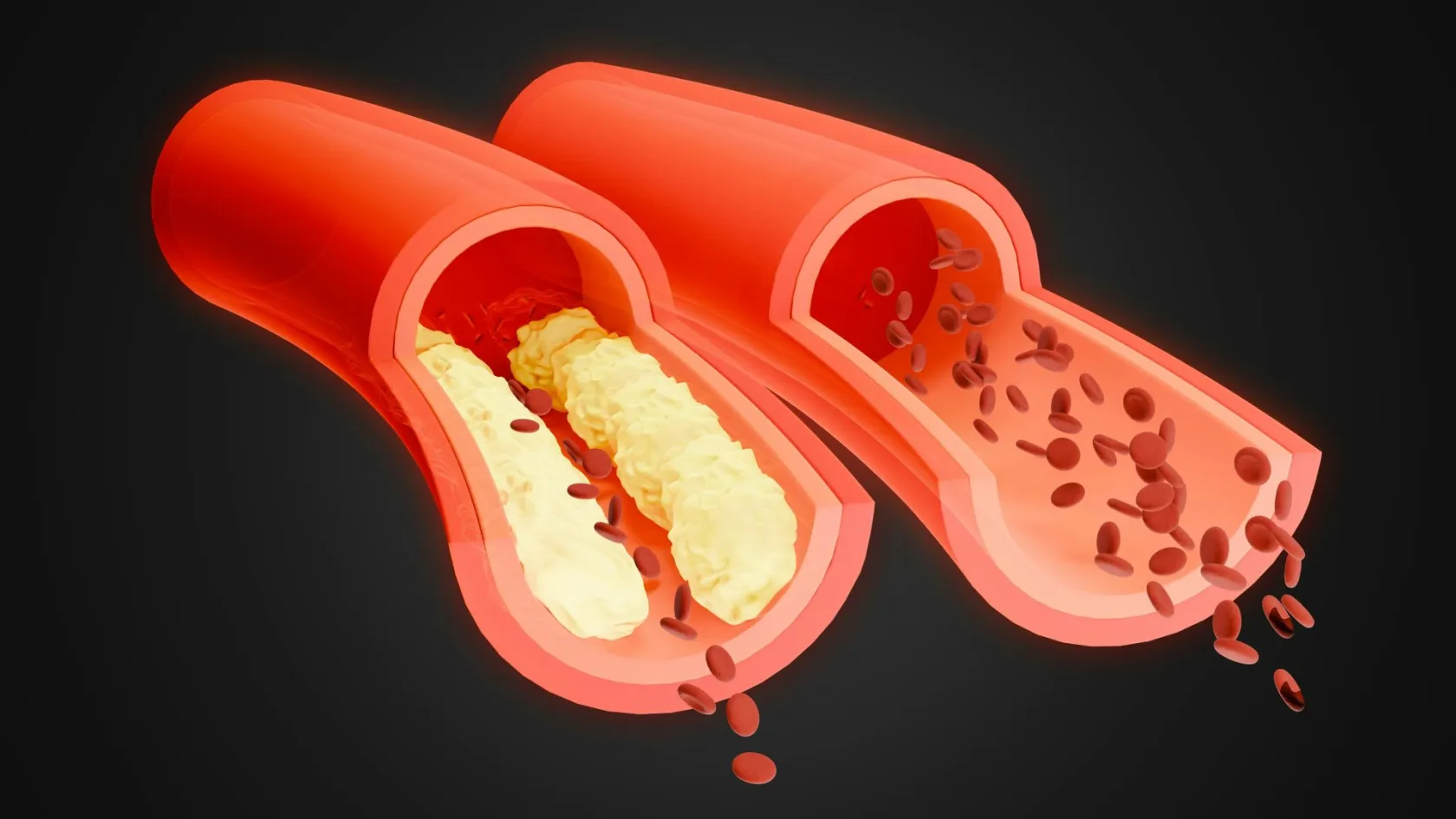
Coronary Angioplasty
In 5,179 patients with stable coronary disease, opening the narrowings did not reduce heart attacks or deaths. In somebody having a heart attack, the same procedure saves lives. Almost every argument about stents comes from confusing those two situations.
About This Department
In 5,179 patients with stable coronary disease and a positive stress test, opening the narrowings did not reduce heart attacks or deaths, and at seven years the two groups were still level, with 12.7 percent dead after the invasive approach and 13.4 percent after medication alone. The same procedure, performed on somebody in the middle of a heart attack, saves lives. Those two sentences are both true, they describe the same operation, and almost every argument patients have about stents comes from confusing them.
Free consultation
Ask what a stent would actually do for you
Whether you are stable or unstable decides most of this. So does how much chest pain you have, and how much medication you are already taking. Send the angiogram images if you have had one, any stress test or CT of the coronary arteries, a recent ECG, your blood results and your full medication list with the doses. A cardiologist reviews the file and tells you what a stent would change, what it would not, and what the alternatives are including tablets and bypass surgery. No fee, no obligation, and a coordinator replies in your own language.
Two procedures, one name
Coronary angioplasty means threading a wire into a heart artery, inflating a small balloon inside a narrowing and leaving a metal mesh tube behind to hold it open. The mechanics are identical whoever is on the table. What differs completely is why it is being done.
In a heart attack, an artery has closed and muscle is dying by the minute. Opening it stops that. In stable disease, the artery is narrowed but nothing is dying, and opening it treats the symptom rather than the disease.
Everything a patient reads about stents makes sense once that split is clear, and very little makes sense before it. A newspaper headline saying stents do not work is describing stable disease. A cardiologist saying a stent saved somebody's life is describing a heart attack. Both are reporting the evidence accurately, and both are describing a different patient from the other. Neither is being dishonest, and a reader who does not know which situation is being discussed will come away believing the field is in disarray when it is not. There is a middle category too. Unstable chest pain and the smaller kind of heart attack sit between the two, and the evidence there supports acting quickly even though the urgency is measured in days rather than minutes. If a doctor has used the words unstable angina or non-ST elevation, you are in that middle group and the stable-disease evidence below does not describe you.
Stable disease
The largest trial ever run on this question randomly assigned 5,179 patients with moderate or severe ischemia on testing either to an early angiogram with stenting or bypass where feasible, or to medication first with a procedure only if the tablets failed. Everybody in both groups received full medical treatment. Read the results below as one set, because the headline and the caveats live in different rows.
This table scrolls sideways on a narrow screen. Swipe or drag to see every column.
| Outcome | Procedure first | Medication first | Reading |
|---|---|---|---|
| Cardiac events at six months | 5.3 percent. | 3.4 percent. | Worse early with the procedure, and the difference of 1.9 points was real. The harm is the procedure itself. |
| Cardiac events at five years | 16.4 percent. | 18.2 percent. | A difference of 1.8 points the other way, with a range running from a benefit to a harm. The trial did not prove a gain. |
| Deaths during the trial | 145 deaths. | 144 deaths. | Identical, with a hazard ratio of 1.05 over a median of a little over three years. |
| Deaths at seven years | 12.7 percent. | 13.4 percent. | Still identical, at a hazard ratio of exactly 1.00. Cardiac deaths were lower after the procedure and other deaths were higher. |
| Angina, in patients who had it daily or weekly | Better by 8.5 points at three months. | Better by 0.1 points. | This is where stenting earns its place. The symptom benefit is large in symptomatic people. |
| Angina, in patients who had none | Almost no change. | Almost no change. | Roughly a third of the trial had no chest pain at the start, and they gained nothing measurable. |
Those seven-year figures deserve one more line, because they are sometimes quoted selectively. Deaths from cardiac causes were lower after the early procedure, at 6.4 percent against 8.6 percent, and deaths from everything else were higher, at 5.6 percent against 4.4 percent. Those two cancel out, which is why the total was unchanged, and quoting the first without the second would misrepresent the trial.
The placebo trial
Symptom relief is the hardest thing in medicine to measure honestly, because a patient who knows a metal tube has just been placed in their heart artery feels better for reasons that have nothing to do with blood flow. Cardiology did something unusual about that. It ran a placebo-controlled trial of a procedure.
Three hundred and one patients with stable angina and a genuinely tight narrowing were sedated, had a catheter placed and then either received a stent or did not, without knowing which. Everybody stopped their angina medication first, so the comparison was a stent against nothing at all. Twelve weeks later the average angina symptom score was 2.9 in the stented group and 5.6 in the placebo group, on a scale where higher means worse and the odds ratio favoring the stent was 2.21.
That is a genuine and important result, and it is narrower than it looks. The trial lasted twelve weeks and measured symptoms only. Its patients had stopped all their tablets, so it does not tell you whether a stent beats good medication, and it says nothing whatever about heart attacks or survival, which is a question the trial was never built to answer. Taken together with the larger trial above, the picture is coherent. A stent in stable disease is a treatment for chest pain. It works, it works better than a convincing placebo, and it does not extend life.
Stents against bypass
Where several arteries are diseased, or where the left main artery is involved, the comparison is not stent against tablets. It is stent against an operation, and the answer depends on which arteries are affected rather than on any general superiority of one over the other.
This table scrolls sideways on a narrow screen. Swipe or drag to see every column.
| Situation | What was found | What it means for you |
|---|---|---|
| Three diseased arteries, at ten years | Death in 28 percent after stenting and 21 percent after surgery, a hazard ratio of 1.42. | Surgery wins here, and by enough that it should be offered and explained rather than mentioned. |
| Left main disease, at ten years | Death in 27 percent after stenting and 28 percent after surgery, a hazard ratio of 0.92. | No difference in that trial. This is the one place where stenting has held its own on survival over a decade. |
| Left main disease, at five years in a newer trial | The combined outcome was 22.0 percent against 19.2 percent, which did not differ significantly. Death from any cause was 13.0 percent against 9.9 percent. | The evidence in left main disease is not unanimous, which is a reason for a heart team to look at your case rather than apply a rule. |
| Further procedures afterwards | Repeat revascularization ran at 16.9 percent after stenting and 10.0 percent after surgery in that same trial. | Stenting means more trips back to the catheter laboratory afterwards, whatever the survival comparison shows, and that is worth weighing if you live a long way from one. |
| Stroke | Cerebrovascular events were less frequent after stenting, at 3.3 percent against 5.2 percent. | The trade runs both ways, and this is the column that matters most to some patients. |
One caution belongs with the ten-year figures. The stents used in that trial were a first-generation design implanted between 2005 and 2007 and stent technology has changed substantially since, so whether a modern stent would close the three-vessel gap is unknown and nobody should tell you it has.
In a heart attack
Everything above concerns a patient with time to think. In a major heart attack the artery is blocked, the muscle it feeds is dying, and the whole question becomes how fast the blockage can be cleared.
Classic evidence pooled 23 randomized trials covering 7,739 patients, comparing opening the artery mechanically against dissolving the clot with drugs, and death in the short term occurred in 7 percent of patients treated with angioplasty and 9 percent of those given clot-busting drugs. A second heart attack happened in 3 percent against 7 percent, stroke in 1 percent against 2 percent, and the three combined in 8 percent against 14 percent. Every one of those differences was statistically convincing.
That analysis is now old, it used balloon angioplasty in an era before modern stents, and its patients were all eligible for clot-dissolving drugs, so the absolute numbers should not be read as a forecast of what would happen to you today. What survives is the direction, which every emergency system in the world has been rebuilt around. It nevertheless established the standard of care that every emergency service in the world now runs on, which is to get a patient with a blocked artery to a catheter laboratory as fast as possible. What that means practically is simple and worth saying plainly. Chest pain that is severe, lasts more than a few minutes and comes with sweating, breathlessness, nausea or pain spreading to the arm or jaw is an emergency ambulance and not an appointment. Time is muscle, and the treatment described in this section only works while there is muscle left to save.
What can go wrong
- Damage to the heart muscle during the procedure. Small amounts of muscle can be lost when a branch is pinched or debris travels downstream. This is the main reason the large stable-disease trial showed more events in the first six months among patients sent for a procedure, and it is the harm that has to be weighed against the symptom gain.
- Bleeding or damage where the catheter went in. Bruising is common. Going in through the wrist rather than the groin has made serious bleeding much less frequent, and it is worth asking which route is planned for you.
- Clot forming inside the stent. Uncommon and serious, presenting as a heart attack. The blood thinners described below exist almost entirely to prevent it, which is why stopping them early is dangerous in a way that stopping most tablets is not.
- Narrowing again inside the stent. Scar tissue growing through the mesh over months. Modern drug-coated stents have reduced this a great deal without abolishing it, and it usually announces itself as the return of the chest pain you had before.
- Kidney injury from the contrast dye. The dye is hard on kidneys already under strain. Fluids before and after and the smallest useful dose are the standard protections, and your kidney function should be checked before anybody books you.
- Tearing the artery. Rare, immediately recognized on the screen and managed by placing a stent across the tear, though very occasionally it means going to emergency bypass surgery, which is one reason these procedures are done where a cardiac surgical team exists.
- Stroke. Rare in this setting, and lower than after bypass surgery in the trials that compared them directly.
The day itself
The blood thinners
A stent is bare metal until your own lining grows over it, and until then blood can clot on it. Two antiplatelet drugs are given together to stop that. How long you take both of them is one of the most actively studied questions in cardiology, and the answer has been getting shorter.
Why longer is not simply safer
A trial of 9,961 patients who had already completed a year without trouble compared continuing the second drug for another eighteen months against stopping it. Clots in the stent fell from 1.4 percent to 0.4 percent and heart attacks from 4.1 percent to 2.1 percent, both large reductions, while moderate or severe bleeding rose from 1.6 percent to 2.5 percent and death from any cause was 2.0 percent with the longer treatment against 1.5 percent without it. The two drugs together buy protection from clotting and charge for it in bleeding, which is the entire shape of this decision.
The newer approach
Combining six trials and 23,256 patients, researchers tested dropping the aspirin after about three months and continuing on one stronger antiplatelet drug alone, and major cardiac and stroke events were no worse, at 2.8 percent against 3.2 percent. Serious bleeding fell by more than half, from 2.1 percent to 0.9 percent, and death from any cause was lower too, at 0.9 percent against 1.2 percent. Patients needing warfarin or a similar drug for another reason were excluded from all of those trials, so none of this applies to them.
What you actually need to do
Never stop either drug on your own. The trial above found an increase in stent clots and heart attacks in the three months after the second drug was stopped even when stopping was planned, which is why a dentist or a surgeon who asks you to pause them should be talking to your cardiologist rather than to you. Get the plan in writing before you fly home, with both drug names, both doses, the stop date for the second one and the name of whoever reviews it.
Who gains most
- Anybody having a major heart attack. The clearest indication in all of cardiology, where minutes matter and the benefit is survival rather than comfort.
- Anybody with unstable symptoms. Chest pain at rest, pain that is getting worse quickly, or a smaller heart attack. Acting within days is supported here even though the clock runs slower than in a major attack.
- Somebody with frequent angina despite good tablets. This is where the stable-disease evidence is genuinely positive. Patients with daily or weekly chest pain gained 8.5 points on the symptom scale against almost nothing for those managed with medication alone.
- Somebody who cannot tolerate the medication. Angina drugs cause tiredness, dizziness and slow pulses, and a patient who cannot take enough of them is in a different position from one who has never tried.
- A patient whose narrowing has been shown to matter. A pressure wire measurement across the narrowing separates the ones limiting blood flow from the ones that merely look impressive on a picture.
Notice who is missing from that list. A person with no symptoms, or with symptoms already controlled on tablets, whose narrowing was found on a scan. The evidence says a stent will not add years to that life, and a doctor who says otherwise is going beyond what the trials support.
The other narrowings
One point matters for a patient here. This evidence belongs to the emergency setting. It says nothing about hunting down and stenting narrowings in somebody stable, which is the situation the trials at the top of this page addressed.
Questions to ask
- Am I stable or unstable. The single question that determines which half of this page applies to you, and the one most patients never ask.
- Is this to make me feel better or to make me live longer. Ask it in exactly those words. A straight answer tells you a great deal about the doctor as well as about the plan.
- Has the narrowing been measured with a pressure wire. If not, ask why not, since an eyeballed picture regularly overstates how much a narrowing restricts flow.
- Am I on the best possible medication already. The stable-disease trials compared stenting against full medical treatment, and a patient on one small dose of one drug has not had that treatment.
- How many arteries are involved, and was a surgeon consulted. Three-vessel disease is where bypass surgery had a survival advantage at ten years, and that conversation should happen before a stent goes in.
- How long will I need both blood thinners. Get both drug names, both doses and the stop date for the second one written down before you leave.
- Wrist or groin. The wrist route bleeds less and lets you sit up sooner, and there are good reasons to choose the groin in some cases. Ask which and why.
When bypass is better
Surgery carries its own costs, and the same trials showed them. Stroke was less frequent after stenting, at 3.3 percent against 5.2 percent in one left main comparison, and recovery from an operation takes weeks rather than days. A proper conversation names both sides.
Recovery and flying home
Recovery here is the fastest of any treatment described on this site. A planned procedure through the wrist often means home the same day, and almost always by the following morning. You will be eating within an hour and walking within a few.
Your access site sets the limits for the first week. A wrist puncture means no heavy gripping or lifting with that arm for a few days and watching for swelling in the forearm. A groin puncture means lying flat for longer in hospital, avoiding straining and stairs for a couple of days, and reporting a lump that pulses. Bruising in both places is normal and spreads before it fades. Driving resumes after about a week for a planned procedure and later after a heart attack, and returning to work follows the same pattern. Cardiac rehabilitation is the part patients skip and should not, since supervised exercise after a heart attack or a stent does more for your next ten years than the stent itself does. Flying is usually cleared within a few days of a planned procedure and after two weeks or so following a heart attack, provided the puncture site is settled, there has been no chest pain and any kidney function check has come back clear. Somebody examines you and writes that date. Carry your stent card and your two drug names in your hand luggage, since neither is something you want to reconstruct from memory in a foreign emergency room.
The medication is the treatment now. Statins, blood pressure drugs and the antiplatelet pair are doing the work of preventing the next event, and the stent is doing none of it. Patients who understand that take their tablets. Patients who believe the artery has been fixed sometimes do not, and the difference between those two groups over the following decade is larger than the difference any procedure on this page can make.
Reading a quote
No figure appears on this page. The number here depends almost entirely on how many stents you turn out to need and how complex the narrowings are, and neither of those is known until a cardiologist has looked at your arteries. Six things to establish in writing. Whether the diagnostic angiogram is inside the number, given that many patients arrive expecting a stent and are told they do not need one. How many stents the price assumes and what each additional one costs, since a three-stent procedure is a different product from a one-stent procedure. Whether a pressure wire measurement and imaging from inside the artery are included, both of which are extras in many quotes and both of which improve the decision. How many nights are budgeted. What the price does if the angiogram shows bypass surgery is the better answer, which is a real outcome and should not cost you the whole sum. And whether the medication you go home on and the discharge letter are covered.
Your own condition moves the total less here than in most treatments, because a planned procedure is short and the stay is brief. Kidney disease, previous bypass surgery, a completely blocked artery and diabetes are the four things that most often turn a routine case into a longer one.
Packages published by Turkish hospitals and medical travel agencies for coronary procedures generally include the airport transfer, pre-procedure testing, the operator fees, the catheter laboratory, a stated number of stents, the planned nights, an interpreter and the review before departure. They generally exclude flights, insurance, additional stents beyond that number, treatment of a complication, extra nights and hotel stays past an agreed number. Read what arrives against both lists.
Coming to Istanbul
Five to seven days is enough for a planned procedure. Assessment takes a day or two, the procedure itself an afternoon, one night in hospital usually follows, and the rest is a short wait before somebody clears you to fly. Send the medication list first, with doses. It sounds mundane and it is the document that most often changes the recommendation, because the stable-disease evidence compares stenting against proper medical treatment and a patient who has never been given a full dose of anything has not had that treatment yet. Add any angiogram images, stress test or coronary CT, a recent ECG and kidney function. If you have had a stent before, the discharge letter naming its type and position matters. You will be told plainly which of the two situations at the top of this page you are in, and what a stent would and would not change for you. Where several arteries are involved, a cardiac surgeon joins that discussion. One coordinator holds your file from the first message to discharge, and the international patients team works in English, Arabic, French, Russian, Serbian, Romanian and Spanish, with other languages arranged on request. Say in your first message if you would prefer a female physician.
Someone can stay overnight with you on the ward, where the rooms carry a companion bed. Meals from the hospital kitchen cover halal, vegetarian and diabetic diets and a prayer room is available. The international patients office books accommodation for both of you, arranges the airport transfer and daily transport, and prepares the appointment confirmation and the invitation letter naming the hospital and your treating doctor for a medical visa application, generally about ten days ahead of travel.
Take home a file rather than a summary. It should name every stent with its type, size and the artery it sits in, carry images of the arteries before and after, state both antiplatelet drugs with their doses and the date the second one stops, list every other medication with its target, record kidney function before and after, and say when your first appointment at home should be. Address it to a cardiologist and book that appointment before you leave, because the months once you are back home are when the medication needs adjusting and when any return of symptoms would show up. Your coordinator stays reachable on the same WhatsApp number, so a question about a bruise or a tablet reaches somebody holding your notes. Get in touch about a wrist or groin that swells or develops a pulsing lump, about bleeding you cannot stop, and about any return of chest pain. Chest pain lasting more than a few minutes with sweating or breathlessness is an ambulance and not a message, wherever in the world you are.
Coronary angioplasty FAQ
Will a stent stop me having a heart attack?
So why is my doctor offering me one?
Could the benefit just be in my head?
Stent or bypass surgery?
For how long will I take the two blood thinners?
What if I need dental work or an operation?
Does the stent wear out?
How long should I stay in Turkey?
References
- Maron DJ, Hochman JS, Reynolds HR, Bangalore S, O'Brien SM, Boden WE, Chaitman BR, Senior R, Lopez-Sendon J, Alexander KP, Lopes RD, Shaw LJ, Berger JS, Newman JD, Sidhu MS, Goodman SG, Ruzyllo W, Gosselin G, Maggioni AP, White HD, Bhargava B, Min JK, Mancini GBJ, Berman DS, Picard MH, Kwong RY, Ali ZA, Mark DB, Spertus JA, Krishnan MN, Elghamaz A, Moorthy N, Hueb WA, Demkow M, Mavromatis K, Bockeria O, Peteiro J, Miller TD, Szwed H, Doerr R, Keltai M, Selvanayagam JB, Steg PG, Held C, Kohsaka S, Mavromichalis S, Kirby R, Jeffries NO, Harrell FE, Rockhold FW, Broderick S, Ferguson TB, Williams DO, Harrington RA, Stone GW, Rosenberg Y. Initial invasive or conservative strategy for stable coronary disease. The New England Journal of Medicine. 2020;382(15):1395-1407.
- Hochman JS, Anthopolos R, Reynolds HR, Bangalore S, Xu Y, O'Brien SM, Mavromichalis S, Chang M, Contreras A, Rosenberg Y, Kirby R, Bhargava B, Senior R, Banfield A, Goodman SG, Lopes RD, Pracon R, Lopez-Sendon J, Maggioni AP, Newman JD, Berger JS, Sidhu MS, White HD, Troxel AB, Harrington RA, Boden WE, Stone GW, Mark DB, Spertus JA, Maron DJ. Survival after invasive or conservative management of stable coronary disease. Circulation. 2023;147(1):8-19.
- Rajkumar CA, Foley MJ, Ahmed-Jushuf F, Nowbar AN, Simader FA, Davies JR, O'Kane PD, Haworth P, Routledge H, Kotecha T, Gamma R, Clesham G, Williams R, Din J, Nijjer SS, Curzen N, Ruparelia N, Sinha M, Dungu JN, Ganesananthan S, Khamis R, Mughal L, Kinnaird T, Petraco R, Spratt JC, Sen S, Sehmi J, Collier DJ, Sohaib A, Keeble TR, Cole GD, Howard JP, Francis DP, Shun-Shin MJ, Al-Lamee RK. A placebo-controlled trial of percutaneous coronary intervention for stable angina. The New England Journal of Medicine. 2023;389(25):2319-2330.
- Spertus JA, Jones PG, Maron DJ, O'Brien SM, Reynolds HR, Rosenberg Y, Stone GW, Harrell FE, Boden WE, Weintraub WS, Baloch K, Mavromatis K, Diaz A, Gosselin G, Newman JD, Mavromichalis S, Alexander KP, Cohen DJ, Bangalore S, Hochman JS, Mark DB. Health-status outcomes with invasive or conservative care in coronary disease. The New England Journal of Medicine. 2020;382(15):1408-1419.
- Mehta SR, Wood DA, Storey RF, Mehran R, Bainey KR, Nguyen H, Meeks B, Di Pasquale G, Lopez-Sendon J, Faxon DP, Mauri L, Rao SV, Feldman L, Steg PG, Avezum A, Sheth T, Pinilla-Echeverri N, Moreno R, Campo G, Wrigley B, Kedev S, Sutton A, Oliver R, Rodes-Cabau J, Stankovic G, Welsh R, Lavi S, Cantor WJ, Wang J, Nakamya J, Bangdiwala SI, Cairns JA. Complete revascularization with multivessel PCI for myocardial infarction. The New England Journal of Medicine. 2019;381(15):1411-1421.
- Thuijs DJFM, Kappetein AP, Serruys PW, Mohr FW, Morice MC, Mack MJ, Holmes DR, Curzen N, Davierwala P, Noack T, Milojevic M, Dawkins KD, da Costa BR, Juni P, Head SJ. Percutaneous coronary intervention versus coronary artery bypass grafting in patients with three-vessel or left main coronary artery disease, 10-year follow-up of the multicenter randomized controlled SYNTAX trial. The Lancet. 2019;394(10206):1325-1334.
- Keeley EC, Boura JA, Grines CL. Primary angioplasty versus intravenous thrombolytic therapy for acute myocardial infarction, a quantitative review of 23 randomized trials. The Lancet. 2003;361(9351):13-20.
- Stone GW, Kappetein AP, Sabik JF, Pocock SJ, Morice MC, Puskas J, Kandzari DE, Karmpaliotis D, Brown WM, Lembo NJ, Banning A, Merkely B, Horkay F, Boonstra PW, van Boven AJ, Ungi I, Bogats G, Mansour S, Noiseux N, Sabate M, Pomar J, Hickey M, Gershlick A, Buszman PE, Bochenek A, Schampaert E, Page P, Modolo R, Gregson J, Simonton CA, Mehran R, Kosmidou I, Genereux P, Crowley A, Dressler O, Serruys PW. Five-year outcomes after PCI or CABG for left main coronary disease. The New England Journal of Medicine. 2019;381(19):1820-1830.
- Valgimigli M, Hong SJ, Gragnano F, Chalkou K, Franzone A, da Costa BR, Baber U, Kim BK, Jang Y, Chen SL, Stone GW, Hahn JY, Windecker S, Gibson MC, Song YB, Ge Z, Vranckx P, Mehta S, Gwon HC, Lopes RD, Dangas GD, McFadden EP, Angiolillo DJ, Leonardi S, Heg D, Calabro P, Juni P, Mehran R, Hong MK. De-escalation to ticagrelor monotherapy versus 12 months of dual antiplatelet therapy in patients with and without acute coronary syndromes, a systematic review and individual patient-level meta-analysis of randomized trials. The Lancet. 2024;404(10456):937-948.
- Mauri L, Kereiakes DJ, Yeh RW, Driscoll-Shempp P, Cutlip DE, Steg PG, Normand SL, Braunwald E, Wiviott SD, Cohen DJ, Holmes DR, Krucoff MW, Hermiller J, Dauerman HL, Simon DI, Kandzari DE, Garratt KN, Lee DP, Pow TK, Ver Lee P, Rinaldi MJ, Massaro JM. Twelve or 30 months of dual antiplatelet therapy after drug-eluting stents. The New England Journal of Medicine. 2014;371(23):2155-2166.
Editor's note
Written by the Biruni Hospital medical editorial team. Reviewed by Op. Dr. Mohammed N.I. SKAIK, Cardiovascular Surgery.
Medically reviewed by
Op. Dr. Mohammed N.I. SKAIK
Cardiovascular Surgery
Related Treatments
View All-
Aortic Aneurysm Repair - Aortic Aneurysm Surgery
Aortic aneurysm repair prevents rupture, which killed 37 percent of patients in emergency surgery against 6 percent in planned repair in a large screening trial. This guide explains when to watch and when to repair, size thresholds for men and women, EVAR against open surgery, long-term trial results, recovery and the stay in Istanbul.
-

Aortic Valve Repair
Being told the aortic valve leaks is usually followed by a conversation about which prosthesis to have. For a large group of patients there is a third answer, which is keeping the valve they were born with, and this page explains who qualifies.
-
Aortic Valve Replacement
The catheter valve wins the first year and the five-year data show the two routes ending up level. This page sets out what that means for a patient of 60 as opposed to a patient of 85, and which prosthesis belongs in each of them.
-
Endovascular Aneurysm Repair - EVAR
Three randomized trials compared keyhole aneurysm repair with open surgery and disagreed about long-term survival. They agreed on something else, and it is the part that decides how you will spend the next twenty years.
-

Heart Valve Surgery
Repair and replacement gave the same survival in a randomized trial. Only durability separated them, and the leak returned in 32.6 percent against 2.3 percent.