
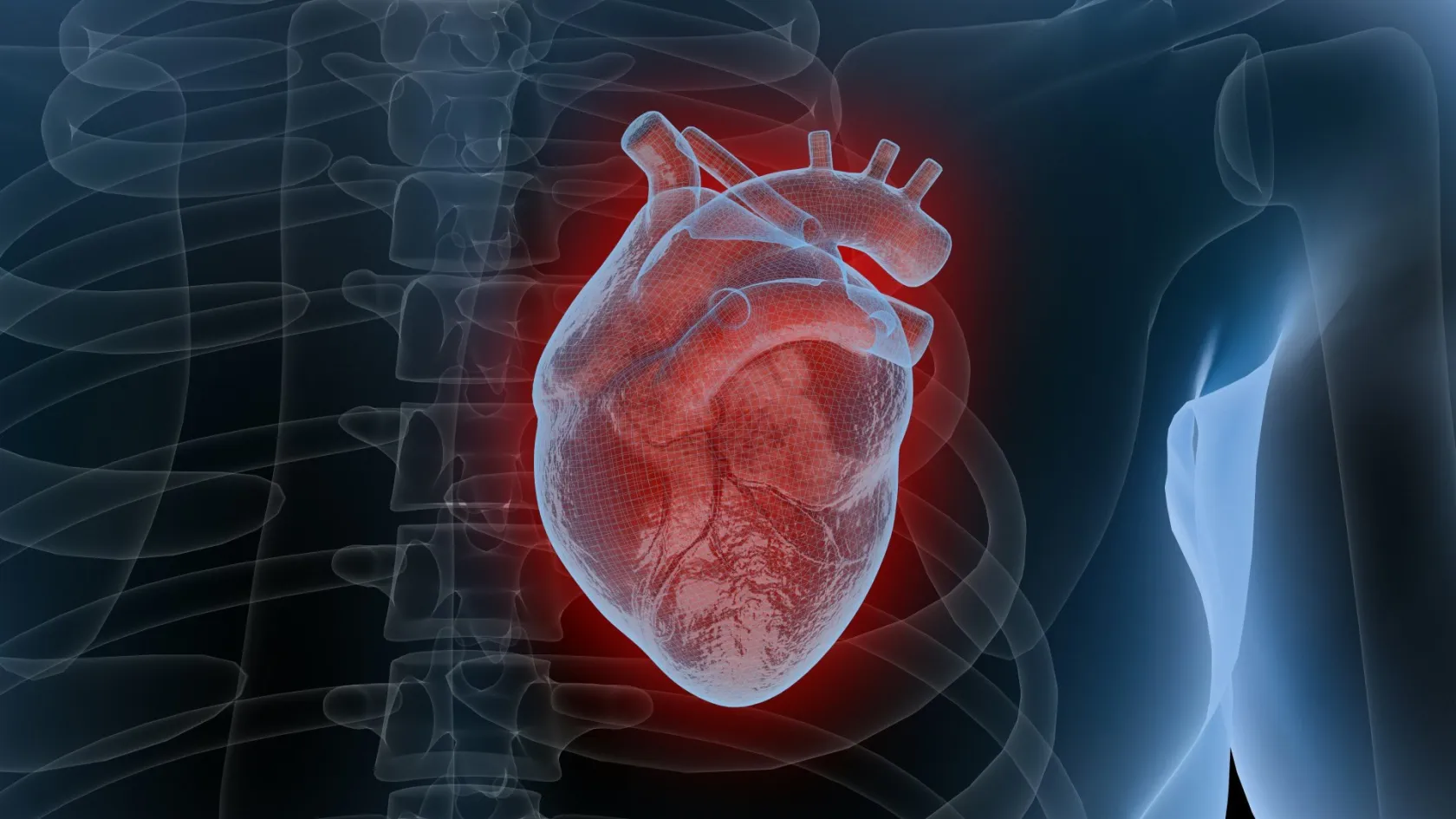
Aortic Valve Repair
Being told the aortic valve leaks is usually followed by a conversation about which prosthesis to have. For a large group of patients there is a third answer, which is keeping the valve they were born with, and this page explains who qualifies.
About This Department
Most people told their aortic valve is leaking are told in the same breath that it will be replaced. For a large share of them that is not the only option. A leaking aortic valve with pliable cusps is often rebuilt out of the tissue you already have, and in a Belgian series of 303 consecutive patients the valve was still working ten years later in 90 percent of them, with hospital mortality of 1 percent and no warfarin at any point. This page explains which valves qualify for aortic valve repair, what the operation involves, and what happens to those who travel here for it.
Free consultation
Ask whether your own valve can be kept
Few questions in cardiac surgery can be answered from the images alone. This one can. Send the echocardiogram with its moving loops, any CT or MRI of the aorta, and the cardiology letter. A surgeon looks at how the cusps move, whether calcium has settled in them and how wide the root has grown, then tells you plainly whether repair is realistic in your case or whether you should be planning for a prosthesis. That opinion costs nothing, commits you to nothing, and a coordinator replies in your own language.
What repair means for the aortic valve
The aortic valve is the door between the heart and the body. Three thin cusps meet in the middle when the heart relaxes, sealing the opening so the blood just pumped out stays out, and around them sits the aortic root, a short length of aorta with three bulges called the sinuses of Valsalva, so that the valve and the root work together as one piece of machinery. Stretch the root and the cusps are pulled apart until they can no longer meet. Damage a cusp and the same gap appears from the other direction.
Blood then falls back into the left ventricle with every beat, which is aortic regurgitation, and aortic valve repair is the operation that closes that gap using your own cusps.
Aortic stenosis poses a different problem, with the valve calcified into a narrow rigid opening. A stenotic valve is nearly always replaced, surgically or through a catheter, because calcium cannot be reversed, and aortic valve repair therefore belongs almost entirely to the leaking valve rather than to the narrowed one. Confusing the two is the commonest reason a patient is told repair is impossible when it is not. What a repair actually consists of depends on why the valve leaks. Where the root has dilated, it is rebuilt to its proper size with a fabric tube and the cusps are reseated inside it, while a cusp that has stretched and hangs lower than its neighbors is shortened along its free edge until all three meet again at the same level. A tear or a hole is patched with a piece of the patient's own pericardium, the sac around the heart, treated to make it firm. Most operations combine two of these.
Aortic valve repair asks more of a surgeon than mitral repair does, so fewer centers do it and patients are steered toward replacement more readily than they should be. The three cusps have to end up geometrically balanced, and a millimeter of asymmetry that would be forgiven elsewhere shows up here as a leak on the check echo. Choose your surgeon carefully for that reason. Difficulty alone does not justify accepting a prosthesis.
Which valves can be repaired
Somebody has to look at the moving images.
A written report saying the regurgitation is severe tells a surgeon almost nothing about repairability, because what decides it is the state of the cusp tissue and the shape of the root, and both of those are seen rather than described.
Calcium in the cusps, cusps that have shrunk back on themselves, and cusps eaten away by an active infection are the three findings that make a durable repair unlikely. Everything else that leaks is worth a look.
That summary comes from the surgical group in Homburg that has done more of this work than most, and it gives a patient the most useful thing to carry into a consultation. Their review of the field puts it in similar terms, that current techniques reconstruct most non-calcified aortic valves, that a root aneurysm makes preservation more likely rather than less, and that three-dimensional transesophageal echocardiography can identify a repairable valve before the chest is opened. Good candidates, then. A root aneurysm stretching an otherwise healthy valve is the classic case, and it is also the one with the best long-term data behind it, which is why a patient told they have both an aneurysm and a leak is often in a better position than they realize. A single cusp that has prolapsed and hangs low. A leak that followed a type A aortic dissection, where the valve itself was never diseased. Marfan syndrome and Loeys-Dietz syndrome, where the aim is to spare a young patient a lifetime of anticoagulation, and where a Japanese series found the durability of a spared valve comparable between the two conditions.
Bicuspid valves deserve their own paragraph, because roughly one person in fifty is born with two cusps instead of three and they present decades earlier than everyone else. A bicuspid valve can absolutely be repaired, the technique is well described, and the results in experienced hands are good. Durability holds slightly less predictably than in a three-cusp valve and the operation is more demanding, so this is precisely the anatomy where volume and experience matter, and precisely the patient who most benefits from avoiding a mechanical valve at 35. Poor candidates make a shorter list. Heavy calcification anywhere in the cusps. A valve destroyed by endocarditis while the infection is still active. Rheumatic disease that has thickened and retracted the tissue. Severe stenosis. In those situations replacement is the right operation and pushing for a repair would trade a durable result for an elegant one. Hearing no is an answer too. Get it early.
What keeping your own valve is worth
Repair is not the gentler operation. It takes longer than a replacement, and it demands considerably more of the surgeon than putting a prosthesis in would. The argument rests on what you avoid for the following thirty years.
In the Belgian series of 303 patients who had their valve spared during root surgery, followed for a median of nearly six years, freedom at ten years from major bleeding was 97 percent, from a clot or embolism 98 percent, and from infection on the valve 96 percent. Those three numbers are the whole case. A mechanical prosthesis brings a bleeding risk that never goes away and a clot risk managed by a blood test every few weeks for life. A tissue prosthesis avoids the warfarin and wears out instead, faster in younger patients, so a 40-year-old given a tissue valve is being handed a second operation in their fifties. Your own valve, if it holds, brings none of that. Ten years on, in that same series, 90 percent of patients had needed no further valve operation and 91 percent had no more than trivial regurgitation, with overall survival of 75 percent at ten years in a group whose average age at surgery was 53 and which included patients operated on as emergencies for acute dissection.
Honesty about the other side. A repair can fail, and it fails more often than a mechanical valve does. What the data show is that when it fails it usually declares itself on a routine echocardiogram years before it causes symptoms, and that the patient who then needs a prosthesis has spent the intervening decade without anticoagulation. Patients take that trade once it is laid out.
This table scrolls sideways on a narrow screen. Swipe or drag to see every column.
| Question | Repair | Mechanical valve | Tissue valve |
|---|---|---|---|
| Blood thinner | None beyond the first weeks. | Warfarin for life, with regular blood tests. | Around three months. |
| Second operation | Around one patient in ten by ten years, in the series above. | Uncommon. The valve itself outlasts most patients. | Expected in time, sooner the younger you are. |
| Infection on the valve | Lower, because there is no foreign material for bacteria to settle on. | A recognized lifelong risk, with antibiotic cover before dental work. | The same lifelong risk as any prosthesis. |
| Pregnancy afterwards | Straightforward, with cardiology input on the aorta itself. | Complicated, since warfarin carries risk to the fetus. | Possible, and pregnancy accelerates the wear. |
| Who it suits | Pliable cusps without calcium, a dilated root, a young patient with years ahead. | Calcified or destroyed valves in patients able to manage anticoagulation. | Older patients, or anyone who cannot take warfarin. |
The named operations, in plain words
Surgeons name these operations after the people who devised them, which makes a consultation harder to follow than it needs to be. Four names cover almost everything you will hear. The David procedure, also called reimplantation, is the workhorse for a dilated root. The surgeon detaches the valve and the two coronary arteries from the aorta, removes the diseased root, and then sews the valve inside a straight fabric tube that becomes the new root, reattaching the coronaries to holes cut in its side. The tube holds the base of the valve at a fixed diameter forever, and the repair therefore does not gradually stretch out again. Almost all of the ten-year data quoted on this page comes from this operation.
The Yacoub procedure, or remodeling, cuts the fabric graft into three tongues sewn into the spaces between the cusps. The new root then keeps the shape of the original sinuses. It moves more naturally and it does not fix the base of the valve, so some surgeons add a ring or a suture at the annulus to stabilize it. A French comparison of the two approaches over more than eleven years of follow-up found freedom from a valve-related reoperation at ten years of around 95 percent with either technique. Cusp repair covers the maneuvers done on the leaflets themselves, often combined with either root operation. A prolapsing cusp is shortened along its free edge with a fine suture until its height matches the others. A hole or a tear is closed with a patch of the patient's own pericardium, and a fused ridge in a bicuspid valve may be divided so the two cusps open more fully.
Neocuspidization, widely known as the Ozaki procedure, sits at the border of repair and replacement. The surgeon removes every cusp and cuts three new ones from the patient's own pericardium to templated sizes, then sews them in. Nothing artificial goes in. No warfarin is needed, and unlike the other three operations this one works on a calcified valve. Long-term data continue to accumulate against the decades already behind reimplantation, and that is worth knowing before choosing it. Whichever technique is used, the operation ends the same way. The heart restarts and an ultrasound probe in the esophagus shows the repaired valve working under real pressure, measuring how much regurgitation remains and how high the cusps sit. A result that is not good enough sends the patient back onto the bypass machine for a correction, or occasionally for a replacement, in the same anesthetic. Expect four to six hours in theater, longer than a straightforward replacement, because the reconstruction is unhurried by design.
When the operation is due
Severe aortic regurgitation is quiet for years. The left ventricle takes the returning blood and enlarges to accommodate it, and while it is enlarging you feel well, which is exactly the problem.
European guidance from 2021 sets out when to operate. Symptoms of any kind in severe regurgitation are an indication on their own. In a patient with no symptoms, surgery is indicated once the ejection fraction falls to 50 percent or below, or the ventricle has dilated past 50 millimeters at end systole, and it should be considered when the end-systolic dimension exceeds 20 millimeters per square meter of body surface area in a smaller person or when the ejection fraction is 55 percent or less. Guidance in the United States sits at similar thresholds.
Two things push the date earlier and both are common in exactly the patients repair suits.
Take the aorta itself first. Once the root or ascending aorta reaches 55 millimeters, surgery is warranted whatever the valve is doing, and the threshold drops to 50 millimeters in Marfan syndrome and lower still with a family history of dissection or with rapid growth. Anybody having the aorta operated on whose valve also leaks should have the valve dealt with in the same operation, and the question is only whether that means repair or replacement. Repairability comes second. A leaking valve left for years does not stay repairable indefinitely, because the cusps continue to stretch under the load and eventually retract. Waiting until the ventricle is failing can convert a repairable valve into a valve that has to be replaced, which is a poor trade for a patient in their thirties or forties. Where the valve looks reconstructible and the surgeon is experienced, operating a little earlier than the strict thresholds is a defensible choice, and it is a conversation to have rather than a rule to apply.
Get the ventricle measured every six to twelve months while you wait. Trends matter more than any single reading, and a ventricle that has grown three millimeters between two scans is telling you something a single number never could.
What can go wrong
Open heart surgery on a planned date in a patient without other serious disease is safer than most people assume, and the 1 percent hospital mortality in the Belgian series included emergencies for acute dissection. The risks below are real all the same and each has a standard response.
Bleeding comes first.
Root surgery involves many suture lines in a high-pressure vessel. Drain output is therefore watched hourly on the intensive care unit, and a steady loss takes the patient straight back to theater so the source can be found and stopped, which is a short procedure and far better than waiting for a number to climb. The repair not holding is the one specific to this operation. Occasionally the check echo before the chest is closed shows a leak that will not do, and the surgeon corrects it or, in a minority, converts to a replacement then and there. Later failure shows up on the follow-up echo rather than as symptoms, which is the whole reason those scans are worth attending. In the ten-year data around one patient in ten had needed a further valve operation and around one in eleven had regurgitation beyond mild.
Rhythm disturbance is frequent after cardiac surgery and settles on its own. Atrial fibrillation in the first week after cardiac surgery is expected more than alarming, and it is treated with medication and occasionally a brief electrical shock under sedation, while heart block requiring a permanent pacemaker stays uncommon after aortic repair, less common than after a replacement, since no rigid sewing ring presses against the conduction tissue. Patients fear stroke most, and it stays uncommon. Air or debris entering the circulation while the heart is open is the mechanism, and it is managed by flooding the field with carbon dioxide, de-airing carefully before the heart restarts and imaging the aorta beforehand to find calcification worth steering around. Weakness on one side, a facial droop or slurred speech is an emergency at any stage.
Then the ones that are common to any cardiac operation.
Kidneys work harder after time on the bypass machine and usually recover. Fluid gathers at the base of a lung and is drained with a needle if it causes breathlessness. Sternal wound infection is the complication that costs months instead of days, and diabetes, obesity, smoking and chronic lung disease all raise it, so the weeks before surgery repay attention, which is the one part of this whole process entirely in your own hands.
A surgeon who tells you before the operation how often a repair is abandoned in favor of a prosthesis, and what would make that happen in your valve, is telling you something useful. One who promises a repair without seeing the images is not.
Two numbers help put all of this in proportion for somebody deciding whether to travel. Across the 303-patient Belgian series, freedom at ten years from a major bleeding event was 97 percent, from a clot or embolism 98 percent, and from infection settling on the valve 96 percent. Those are the complications that follow a prosthesis around for life, and a preserved valve largely removes them from the picture. What replaces them is the smaller and more manageable risk that the repair loosens, which shows on a scan rather than in an ambulance.
One thing to establish before you agree to anything. Ask what proportion of planned aortic repairs in that surgeon's practice end as replacements, and what specifically in your images would push your case that way. A surgeon who does this work regularly will answer with a figure and a reason. The answer also tells you what to consent to, because if the repair is abandoned on the table the prosthesis that goes in should be the one you chose in clinic and not the one that happens to be in the room.
Who should think twice. A severely calcified or infected valve, as covered above. Advanced kidney or lung disease, a recent stroke, and frailty all shift the balance toward the simpler operation or away from surgery altogether. Being told that plainly, before booking anything, is the most valuable thing a remote review can give you.
Recovery and flying home
Seven to ten days in hospital and four to eight weeks to feel yourself again is the picture published packages describe for aortic valve surgery, and it matches what happens. One to two of those days are on the intensive care unit, where the breathing tube comes out within hours of your waking and the drains and pacing wires come out over the next two or three days.
Walking starts on the first day.
Nothing else you do in that week helps as much, because lungs left unexpanded fill at the bases and produce most of the fevers on a cardiac ward.
Tiredness dominates the first month more than pain does, which surprises nearly everybody, and by broken sleep for the first two or three weeks. If your breastbone was divided you keep your arms close to your body when getting out of a chair, lift nothing heavier than a full kettle, and do not drive for six weeks, because an emergency stop drives a seatbelt into a bone that has not knitted. Where a smaller upper-sternum incision was used those limits are shorter. By weeks six to ten the majority are back at desk work and then at physical work, and cardiac rehabilitation measurably improves how far and how confidently they get there. Aspirin for a few months is usual after a repair, and after that nothing beyond whatever your blood pressure needs. That absence is the point of the whole exercise.
Blood pressure deserves its own paragraph, because it is the one thing you control that protects the result. High pressure loads the repaired valve and the aorta above it, so treatment is not optional, and the target is set by your cardiologist and not by how you feel. Take the tablets.
Flying home clears at two to three weeks after a sternotomy and at ten to fourteen days after a smaller incision, on condition that the wound is dry, the rhythm is steady and no fluid has collected around the lungs. Somebody examines you and writes the date, and it moves if the wound or the chest film gives a reason. Take an aisle seat, walk hourly, drink water, wear compression stockings, and keep the discharge summary and the last echo report in your hand luggage rather than in the hold.
If the repair does not hold
Plan for this possibility. Knowing the answer in advance is what makes the choice of repair a rational one and not an optimistic one.
Recurrent regurgitation appears on a surveillance echocardiogram long before it makes you breathless. The schedule exists for that reason, meaning a scan before you leave hospital, another at three to six months, and then once a year for life, done by any cardiologist wherever you live. What the report should record each time is the degree of regurgitation, the size of the ventricle and the diameter of the aorta at several levels, so a trend emerges instead of a snapshot. Mild regurgitation gets watched. Moderate gets watched more closely, with the blood pressure tightened. Severe regurgitation with a ventricle beginning to enlarge is an indication to reoperate, and by then the aortic root has usually already been replaced with a graft during the first operation, so the second procedure is a valve replacement inside a known and stable root rather than a repeat of the whole root operation.
Whether that second valve is mechanical or tissue is decided the same way it would have been the first time, on your age, your ability to manage anticoagulation, and whether pregnancy is in the picture.
Set against that, ten years of no warfarin, no monthly blood tests and no prosthesis for bacteria to settle on is what the repair bought, and most patients count that as a good decade.
One practical consequence for somebody who has traveled for the operation. The surveillance is what protects you, and it has to happen where you live rather than where you were operated on, so the discharge file should name the intervals and the measurements a cardiologist needs to record, in a form a doctor who has never met your surgeon can act on. Arrange the first local appointment before you fly, while somebody at the hospital can still write the referral for you. Patients who leave that until they are home tend to arrive at their first scan a year late.
Reading a quote
No figure appears on this page, and none should appear on any page written before a surgeon has seen your images. What an aortic operation costs depends on whether the root is replaced, whether the arch is involved and how many nights of intensive care the case is expected to need, and none of that is knowable from a keyword. Six things move the total here, and each is a fair question to put to whoever quotes you. Start with whether the quote assumes a repair or a replacement, and what happens financially if the repair is abandoned in theater. Then the root. Most repair operations for a dilated root replace it with a graft, so establish whether that graft is in the figure. Find out whether the ascending aorta or part of the arch is included, since that lengthens the operation considerably and may involve cooling the patient. How many intensive care nights are budgeted. Settle whether the work-up sits inside the number, which here means a coronary angiogram in most adults past 40, a CT of the whole aorta, a carotid scan and dental clearance. And whether a return to theater for bleeding is covered.
Your own history moves it too. A previous cardiac operation, a weak ventricle, kidney impairment, diabetes, obesity and chronic lung disease each lengthen the expected stay, and intensive care is where cardiac costs concentrate.
Packages published by Turkish hospitals and medical travel agencies for valve surgery generally cover the airport transfer, pre-operative tests, surgeon, anesthesia and perfusion fees, the theater, the planned intensive care and ward nights, any graft or prosthesis used, an interpreter and the follow-up before departure. They generally exclude flights, insurance, unplanned extra intensive care, treatment of a complication and hotel nights beyond an agreed number. Read what arrives against that list. Not against another hospital.
Send the imaging first. A number that follows a surgeon reading your file is the only kind worth comparing, and getting one costs nothing here.
Coming to Istanbul
Allow four weeks. Consultation and any repeat imaging occupy the first days, the operation and the ward stay take seven to ten days, and the balance is hotel recovery until you are examined and cleared to fly. Bring imaging, and not only reports. For this operation that means the echocardiogram loops and the CT or MRI of the aorta on a disc, because a surgeon deciding whether your valve is reconstructible needs to watch the cusps move and measure the root himself. Carry copies with you as well as sending them ahead, since transfers fail more than anyone expects. One coordinator stays with your case from the first message until you are discharged. The international patients team works in English, Arabic, French, Russian, Serbian, Romanian and Spanish, with interpreting in other languages arranged on request, and the conversation where that matters most is the consent discussion, since this is an operation where the plan may change on the table and you should understand the alternatives before you sign.
Rooms have a companion bed, so one person stays overnight through the ward stay, with intensive care following the unit's own visiting rules, and the international patients office arranges accommodation for both of you either side of the admission along with airport transfers and the hospital transport in between. Halal, vegetarian and diabetic meals come from the hospital kitchen, a prayer room is on site, and a request for a female physician goes to the department and is met wherever the rota allows.
For a medical visa the office issues an appointment confirmation and an invitation letter naming the hospital and the treating doctor, which is the document most consulates ask for, and it goes out ten days or so before travel.
You should fly home with a file, and not a discharge slip. It ought to name the exact operation performed and the techniques used, the size and type of any graft, the findings of the check echo done in theater, the discharge echo, the blood pressure target, and the surveillance schedule, addressed to a cardiologist. Once you are back home your coordinator stays reachable on the same WhatsApp number, so a photograph of a wound or a question about a scan result reaches somebody holding your file. Report breathlessness that returns, ankles that swell, a fever with no explanation, or chest or back pain that is new and severe.
Aortic valve repair FAQ
How do I find out whether my valve can be repaired?
How long does an aortic valve repair last?
Will I need blood thinners afterwards?
Can a bicuspid aortic valve be repaired?
How long do I need to stay in Turkey?
What happens if the surgeon cannot repair it once I am asleep?
Can my husband or wife stay in the room with me?
References
- Tamer S, Mastrobuoni S, Momeni M, Aphram G, Navarra E, Poncelet A, Noirhomme P, Astarci P, El Khoury G, de Kerchove L. Long-term experience with valve-sparing root reimplantation surgery in tricuspid aortic valve. Indian Journal of Thoracic and Cardiovascular Surgery. 2020;36(Suppl 1):71-80.
- Abeln KB, Giebels C, Ehrlich T, Federspiel JM, Schafers HJ. Which aortic valve can be surgically reconstructed. Current Cardiology Reports. 2021;23(8):108.
- Vahanian A, Beyersdorf F, Praz F, Milojevic M, Baldus S, Bauersachs J, Capodanno D, Conradi L, De Bonis M, De Paulis R, Delgado V, Freemantle N, Gilard M, Haugaa KH, Jeppsson A, Juni P, Pierard L, Prendergast BD, Sadaba JR, Tribouilloy C, Wojakowski W. 2021 ESC and EACTS guidelines for the management of valvular heart disease. European Heart Journal. 2022;43(7):561-632.
- Seike Y, Yokawa K, Koizumi S, Masada K, Inoue Y, Morisaki H, Morisaki T, Sasaki H, Matsuda H. Long-term durability of a reimplantation valve-sparing aortic root replacement can be expected in both Marfan syndrome and Loeys-Dietz syndrome. European Journal of Cardio-Thoracic Surgery. 2022;61(6):1318-1325.
- Liu Y, Benzha MY, Dan P, Hubert M, Piccoli J, Lauria G, Vanhuyse F, Sirbu C, Gauchotte G, Dong N, Villemot JP, Maureira JP. Fifteen-year outcomes after valve-sparing aortic root remodelling or exclusion of the non-coronary sinus. Heart, Lung and Circulation. 2022;31(9):1291-1299.
Editor's note
Written by the Biruni Hospital medical editorial team. Reviewed by Op. Dr. Mohammed N.I. SKAIK, Cardiovascular Surgery.
Medically reviewed by
Op. Dr. Mohammed N.I. SKAIK
Cardiovascular Surgery
Related Treatments
View All-
Aortic Aneurysm Repair - Aortic Aneurysm Surgery
Aortic aneurysm repair prevents rupture, which killed 37 percent of patients in emergency surgery against 6 percent in planned repair in a large screening trial. This guide explains when to watch and when to repair, size thresholds for men and women, EVAR against open surgery, long-term trial results, recovery and the stay in Istanbul.
-
Aortic Valve Replacement
The catheter valve wins the first year and the five-year data show the two routes ending up level. This page sets out what that means for a patient of 60 as opposed to a patient of 85, and which prosthesis belongs in each of them.
-
Coronary Angioplasty
In 5,179 patients with stable coronary disease, opening the narrowings did not reduce heart attacks or deaths. In somebody having a heart attack, the same procedure saves lives. Almost every argument about stents comes from confusing those two situations.
-
Endovascular Aneurysm Repair - EVAR
Three randomized trials compared keyhole aneurysm repair with open surgery and disagreed about long-term survival. They agreed on something else, and it is the part that decides how you will spend the next twenty years.
-
Heart Valve Surgery
Repair and replacement gave the same survival in a randomized trial. Only durability separated them, and the leak returned in 32.6 percent against 2.3 percent.