
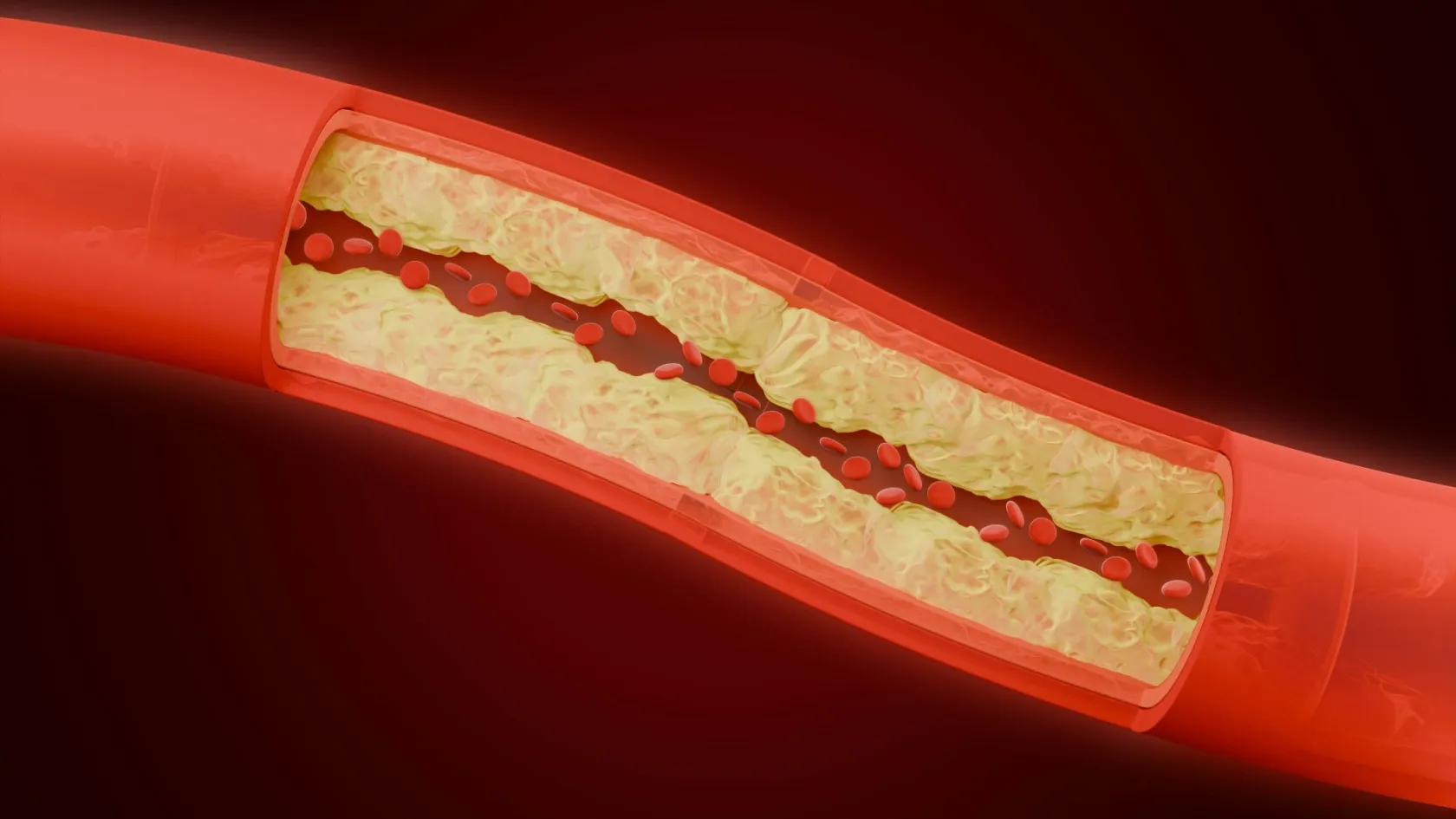
Endovascular Aneurysm Repair - EVAR
Three randomized trials compared keyhole aneurysm repair with open surgery and disagreed about long-term survival. They agreed on something else, and it is the part that decides how you will spend the next twenty years.
About This Department
Three randomized trials compared keyhole aneurysm repair against open surgery and reached three different verdicts about long-term survival. British data found the keyhole group doing worse after eight years. Dutch data found no difference at twelve. American data found no difference at fourteen and said so pointedly. What all three agree on is something the survival argument tends to bury, and it is the thing that should decide how you plan the rest of your life.
Free consultation
Ask whether your aneurysm needs repairing yet, and by which method
Both halves of that question are answered from a CT scan and not from a conversation. Send the CT with contrast covering your chest, abdomen and pelvis, the report from any earlier scan so the growth rate can be worked out, your blood results, your age and your medication list. A vascular surgeon reviews the file and tells you whether repair is indicated now, whether your anatomy suits a stent graft, and what open surgery would offer instead. No fee, no obligation, and a coordinator replies in your own language.
What every trial agrees on
Reintervention is the finding that replicates. In the Dutch trial, 78.9 percent of open patients had needed no further procedure twelve years on, against 62.2 percent of the stent graft patients, a gap of 16.7 percentage points that was statistically solid. The American trial reported more secondary procedures after stent grafting, without putting a number on it and without disputing the direction. And the British trial closed with a recommendation for lifelong surveillance and reintervention where necessary. None of that is a marginal footnote to a survival argument. It is the shape of the next twenty years of your medical life, and it is the part of the decision a patient can actually influence, because whether the surveillance happens is largely up to whether you and your own doctor arrange it. A graft that is watched is a different proposition from a graft that is forgotten, and the trials above were all conducted on patients who were watched.
Open repair is an operation you recover from. A stent graft is a relationship you enter into. Whether the two are equal on survival is genuinely disputed, and whether the stent graft asks more of you afterwards is not disputed at all.
That framing matters most for anybody planning treatment abroad, because the follow-up happens at home and not here. A patient who will reliably attend a scan every year for the rest of their life is a good candidate, while a patient who will not, or who cannot easily get imaging where they live, is being offered something whose safety the evidence simply assumes they will maintain.
What EVAR is
An abdominal aortic aneurysm is a bulge in the main artery running down the back of your abdomen. The wall thins as it stretches, and the danger is that it bursts. Repair does not cure the artery. It lines the weakened section so that blood pressure no longer pushes against the bulge. Two ways exist to do that, and the differences run deeper than the size of the wound.
- Open repair. The abdomen is opened, the aorta is clamped above and below the bulge, and a fabric tube is sewn in to replace the weakened section. The aneurysm sac is closed over the graft. Once healed, the repair is done and no imaging is needed for it.
- Endovascular repair. A fabric-covered metal tube is delivered through the arteries in both groins and opened inside the aorta, sealing top and bottom so blood flows through the graft instead of into the sac. Nothing is removed and the old aneurysm stays around the new lining.
- Sealing is the whole thing. A stent graft works by pressing against healthy artery above and below the bulge. Those sealing zones can change shape over years, and if the seal loosens, pressure returns to the sac. Everything else on this page follows from that sentence.
- Recovery differs sharply. Open repair means about a week in hospital and a couple of months getting back to yourself, while endovascular repair often means two or three nights and a few weeks, which is the reason it now accounts for most repairs performed.
- Follow-up differs just as sharply. Open repair ends. A stent graft is scanned at intervals for as long as you live, because the two things that would tell you it is failing, a leak into the sac and a sac quietly growing, produce no symptoms whatsoever until the day they do.
Both operations treat the same disease and neither treats the artery anywhere else in your body. Blood pressure control, stopping smoking and cholesterol treatment carry on regardless of which repair you have, and over ten or fifteen years they matter more to your overall outlook than the choice between the two ever will. That is worth holding on to while you weigh the arguments below, because the decision in front of you feels enormous and is smaller, in survival terms, than the things you can do yourself every day for the rest of your life.
When repair is justified
Ask two numbers at every appointment. The current diameter, and the diameter at the last scan. Growth rate is the figure that turns a size into a decision, and a patient who tracks it themselves is never surprised by a recommendation.
The three trials
Everything written about long-term survival after a stent graft traces back to three randomized comparisons with open surgery, which enrolled patients between 1999 and 2008, followed them for over a decade, and did not agree with one another. Anybody quoting you a single confident answer has read one of them and not the other two. The bare facts of each are worth having, because the disagreement between them is itself the most useful thing a patient can carry into a consultation, and because a surgeon who acknowledges the disagreement is describing the state of knowledge honestly.
This table scrolls sideways on a narrow screen. Swipe or drag to see every column.
| Trial | Patients and follow-up | Survival verdict | Reintervention |
|---|---|---|---|
| British | 1,252 patients, mean follow-up 12.7 years. | An early aneurysm-related advantage for the stent graft, then worse survival beyond eight years, driven mainly by the old sac bursting later. Thirteen such deaths in the graft group against two after open repair. | Not reported in the published summary. The authors called for lifelong surveillance. |
| Dutch | 351 patients, reported at 12 years. | 42.2 percent alive after open repair and 38.5 percent after a stent graft, a difference of 3.7 points that was well within chance. | 78.9 percent free of a further procedure after open repair against 62.2 percent after a stent graft, a real and significant gap. |
| American | 881 patients, followed up to 14 years. | 68.0 percent had died in the graft group and 70.0 percent after open repair, with no significant difference at any point. The authors stated their results did not match the European finding of late harm. | More secondary procedures after stent grafting, reported without a figure. |
| Real-world data | 39,966 matched pairs from American insurance records. | Death around the operation was 1.6 percent with a stent graft and 5.2 percent with open repair. Survival favored the graft for three years, then the two curves met. | Rupture within eight years occurred in 5.4 percent of graft patients against 1.4 percent after open repair. |
Take that table as an unresolved question and not as a verdict. The devices in all four datasets are older than what is implanted now, sealing technology has changed specifically to address late failure, and the honest position is that a modern graft may well do better than these numbers while nobody can yet prove it. What is not in doubt is the near-term advantage. The stent graft is markedly safer in the first weeks and it needs far more watching afterwards, and those two facts together are what should shape the decision for anyone weighing the two operations. A patient with limited reserve who needs to survive the next month buys a great deal with a stent graft. A patient with decades ahead is buying a shorter recovery now against an obligation that runs the rest of their life, and both halves of that trade deserve to be said out loud in the consultation.
Endoleaks
An endoleak means blood is still getting into the old aneurysm sac despite the graft. It is the complication unique to this treatment. It produces no symptoms of any kind, which is exactly why every scan you will ever have exists, and why those scans do not stop. The types are numbered by where the blood comes from, and knowing which one you have tells you almost everything about what happens next, including whether anything will be done about it, how soon, and what the next scan is looking for. Learn your number and the conversation with any new doctor becomes short and precise.
Type one, a leaking seal
Blood enters past the top or bottom edge of the graft, which means the seal has failed. The sac is then exposed to full arterial pressure, so this type is treated whenever it is found. One discovered at the end of the procedure is corrected before you leave the room.
Type two, back-bleeding from small branches
Small arteries that used to feed the aneurysm wall keep filling the sac in reverse. This is the commonest type by a wide margin and most of them are left alone, because the pressure is low and many seal themselves. It is watched and not treated, and it becomes a problem only if the sac starts growing, which is the reason the sac diameter is measured at every single scan and not just the leak itself. That distinction confuses patients more than any other part of this subject, because being told there is a leak inside you sounds alarming and being told it will be left alone sounds negligent. Neither impression is right. The sac diameter is what is under observation, and a leak that leaves it unchanged year after year has been correctly judged harmless.
Types three, four and five
A type three leak means the graft has separated at a joint or torn, and it needs treating like a type one. Type four is porosity of the fabric itself, which is now rare. Type five is a sac that grows while no leak can be found, which is unsatisfying to be told and is managed by watching closely.
What patients need from that list is one habit. Ask at every scan whether there is a leak, which type it is, and whether the sac has grown since the last measurement. Those three answers are the entire surveillance conversation, and a patient who writes them down each year builds the record that tells a new doctor in a new country everything they need in thirty seconds.
The surveillance schedule
Two numbers explain why this section exists. In a study of more than nineteen thousand American patients, the proportion still getting their yearly imaging fell from 93 percent in 2003 to 63 percent in 2014. And in a separate imaging database of 10,228 patients, the aneurysm sac had grown by five years in 41 percent of them. Those two findings belong together. A sac that grows without being scanned is a rupture waiting to be discovered by an ambulance crew. Nothing in the intervening years would have told you it was happening, because a growing sac is silent until it tears, and that silence is precisely why the schedule below exists and why it does not stop.
This table scrolls sideways on a narrow screen. Swipe or drag to see every column.
| When | Usual test | What is being looked for |
|---|---|---|
| Before you fly home | CT with contrast, or a duplex ultrasound where kidneys are a concern. | A leak at either sealing zone, graft position, and the groin arteries used for access. |
| Around one month | CT or ultrasound, depending on what the first scan showed. | Any leak that was present settling or persisting, and the baseline sac diameter everything later is compared against. |
| At one year | CT with contrast in most protocols. | Sac growth, new leaks, and whether any component of the graft has moved or kinked. |
| Every year afterwards | Ultrasound for a stable graft, CT where anything is changing. | The sac diameter, compared with the previous measurement. Growth is the signal, and a leak without growth is watched. |
| For the rest of your life | The same yearly check, with no end date. | Late seal failure. That is exactly what the eight-year signal in the British trial was made of, and it is the reason no vascular surgeon will ever discharge you from follow-up after a stent graft. |
Arrange the first appointment at home before you travel, while it is still easy to organize. A patient who leaves Istanbul with a scan date already booked in their own country is far more likely to be one of the 63 percent than one of the rest, and that single piece of admin does more for your long-term outlook than most of the medical decisions on this page.
What can go wrong
- Blood leaking into the sac. Covered above. The commonest reason for a further procedure and the reason the scans never stop.
- Late rupture of the old sac. The serious version of everything on this page. In matched American records it happened to 5.4 percent of stent graft patients within eight years, against 1.4 percent after open repair.
- Trouble in the groin arteries. The delivery equipment is large and the arteries it passes through are often narrowed and calcified. Tearing, blockage, bleeding and wound problems all happen here, and a CT of those vessels is part of deciding whether this route is possible at all.
- Kidney injury. Contrast dye is needed for the procedure and for most of the follow-up scans afterwards, so a patient with poor kidneys needs a plan that limits the dye, which means ultrasound surveillance instead of CT wherever it is possible.
- Movement or blockage of the graft. A limb of the graft can kink or clot, producing a leg that hurts on walking, and the graft as a whole can migrate downward over years, which is one of the ways a seal fails late.
- Losing a branch artery. Covering the vessels that supply the pelvis or, in higher repairs, the bowel and spinal cord. Rare, planned for in advance from the CT, and serious when it happens.
- Conversion to open surgery. Uncommon at the time of the procedure and less common than it used to be, with the rate in one large series falling from 2.2 percent to 0.3 percent across the decade studied.
Whether your anatomy fits
Every stent graft is sold with a set of anatomical conditions its maker says must be met, and a study of 10,228 patients found only 42 percent meeting the strictest reading of those conditions, with 69 percent meeting the most generous one. Sac growth at five years ran at 41 percent across that whole group, and the features that predicted it are the ones on the list below.
Ask your surgeon to go through these against your own CT.
- The neck, meaning the healthy aorta above the bulge. It needs enough length to seal against, and a diameter within the range the device covers. A neck of 28 mm or wider predicted the sac growing afterwards.
- How much that neck bends. A bend of more than 60 degrees also predicted sac growth, because a graft sitting in a curve seals unevenly.
- Calcium and clot in the sealing zone. Either can stop the graft pressing evenly against the wall, which is where a leak at the top edge begins.
- Your pelvic arteries. Wider than 20 mm predicted sac growth, and they also have to be large enough and straight enough to deliver the device through.
- Your age. Being 80 or over was itself a predictor of the sac enlarging, which cuts against the usual assumption that the oldest patients are the obvious candidates.
A graft placed outside the conditions its maker specifies is not automatically wrong, and it is a decision that should be made deliberately and explained to you. Ask directly whether your anatomy meets the device instructions. A surgeon who answers precisely has looked.
The day itself
When open repair is better
Any unit that offers a stent graft to everyone who walks in has skipped this conversation. Ask what your open repair would involve and what its risk would be for you specifically, and expect an answer that engages with your age instead of one treating the keyhole option as obviously superior. Vascular surgeons who perform both operations regularly are best placed to give that answer, and a department that has largely stopped doing open repair is not a neutral source on whether you need one. Ask how many open repairs it performed last year alongside how many stent grafts.
A ruptured aneurysm
Everything above concerns a planned repair. A burst aneurysm is a different clinical world and its numbers should never be mixed with the elective ones. This section exists because patients read about it and because families sometimes have to make the decision quickly.
A British trial randomly assigned 613 patients with a suspected rupture either to a strategy of scanning first and using a stent graft where the anatomy allowed, or to going straight to open surgery. Thirty-day mortality was 35.4 percent with the endovascular strategy and 37.4 percent with open repair, which is a difference well within chance and a reminder of how dangerous this event is regardless of what is done about it. What the trial did find was a middle-term advantage. Between three months and three years, deaths were lower in the endovascular strategy group, giving three-year mortality of 48 percent against 56 percent, and far more of those patients went straight home instead of on to another institution, at 94 percent against 77 percent. By seven years the two groups had converged at around 60 percent mortality, so the advantage was real and it was temporary. Two things follow for a reader planning treatment. Waiting until an aneurysm bursts is a catastrophically worse position than repairing it electively, which is the entire argument for acting on a large aneurysm while you feel well. And if you have a large aneurysm and develop sudden severe pain in the abdomen or back, particularly with faintness, that is an emergency ambulance and not a phone call to a clinic abroad.
Recovery and flying home
Two to three nights in hospital for a straightforward repair, against roughly a week after open surgery, and that gap is the clearest practical thing the keyhole route buys you. You will be walking the day after the procedure and most people are doing ordinary things within two to three weeks, compared with two months or more after an operation. The groins set the pace of that first fortnight. Avoid heavy lifting and straining for about a week, keep the puncture sites dry and watch them for swelling that grows or a lump that pulses. Bruising spreading down the thigh is common and settles. A leg that becomes painful, pale or cold is not, and needs assessment the same day. A low fever and a general achiness in the first days after a stent graft is well recognized and usually settles by itself, though it should be mentioned instead of ignored. Flying is usually cleared at about a week to ten days, once the groin sites are sealed with nothing expanding, kidney function has been rechecked after the dye and the discharge scan has been reported. A doctor writes that date. Take an aisle seat, walk every hour of the flight and wear compression stockings. Medically, the recovery changes almost nothing. Blood pressure control, cholesterol treatment and stopping smoking all continue exactly as before, because the graft treats one section of one artery and does nothing for the disease that produced it.
Reading a quote
No figure appears on this page. The device is the largest single component of what this costs and the device is chosen from your CT, so a number quoted before anybody has measured your aorta is a number for an average patient and not for you. Six things to pin down in writing. Whether the planning CT and its measurement are inside the number or billed separately. Which graft system is assumed, named, and whether the price changes if a different one fits your anatomy better. What extra components cost, meaning the cuffs, extensions and iliac branch pieces that a difficult neck or a wide pelvic artery may require during the same procedure. How many nights are budgeted and the cost of an extra one. What happens financially if the CT shows your anatomy is unsuitable and open repair is recommended instead. And whether the discharge scan and the written follow-up plan are included.
Add one question nobody asks. What the surveillance will cost you at home, every year, for the rest of your life. That is a real part of the price of this treatment and it never appears in a package. Packages published by Turkish hospitals and medical travel agencies for vascular procedures generally include the airport transfer, pre-procedure testing, the operator and anesthesia fees, the angiography suite, the graft, the planned nights, an interpreter and the review before departure. They generally exclude flights, insurance, extra graft components, additional nights, treatment of a complication and hotel stays past an agreed number. Read what arrives against both lists.
Coming to Istanbul
Ten to fourteen days covers most planned repairs. Assessment and imaging take the first days, the procedure occupies part of one day, two to three nights follow, and the rest is hotel time until the groins have settled and somebody clears you to fly. Send the CT itself and not the report. Measurement of the neck length, the neck angle, the sealing diameters and the pelvic arteries is what decides whether a graft is possible and which one, and none of that can be read off a paragraph of text. If you have had earlier scans, send those too, because the difference between them gives the growth rate and the growth rate is half of the decision about whether to repair at all.
Your case is discussed by a vascular team, and you will be told what they concluded and why, including whether open repair was judged the better answer for you. One coordinator holds your file from the first message to discharge, and the international patients team works in English, Arabic, French, Russian, Serbian, Romanian and Spanish, with other languages arranged on request. Say in your first message if you would prefer a female physician.
Someone can stay overnight with you on the ward, where the rooms carry a companion bed. Meals from the hospital kitchen cover halal, vegetarian and diabetic diets and a prayer room is available. The international patients office books accommodation for both of you, arranges the airport transfer and daily transport, and prepares the appointment confirmation and the invitation letter naming the hospital and your treating doctor for a medical visa application, generally about ten days before travel. Leave with a file built for surveillance, because that is what this treatment runs on. It should name the graft system with its component sizes, carry the discharge scan images and report and not a summary of them, record the sac diameter measured at discharge as the baseline everything later is compared against, state the kidney function before and after, and set out the scan schedule with the first date already fixed. Address it to a vascular surgeon and book that appointment at home before you fly, since the whole benefit of this repair depends on somebody looking at you every year once you are back home. Your coordinator stays reachable on the same WhatsApp number, so a question about a groin bruise or a scan report reaches somebody holding your notes. Get in touch about a lump that pulses or swelling that grows at either groin, bleeding, a leg turning painful, pale or cold, a fever lasting more than a few days, or sudden severe pain in the abdomen or back, which needs an ambulance and not a message.
Endovascular aneurysm repair FAQ
My aneurysm is 5 cm and I have been told to wait. Is that right?
Is the keyhole repair safer than the operation?
How long do I need scans for?
What is an endoleak and should I be worried about one?
Can the aneurysm still burst after a stent graft?
I am 63 and fit. Which should I choose?
What if my anatomy does not fit the device?
How long should I stay in Turkey?
References
- Patel R, Sweeting MJ, Powell JT, Greenhalgh RM, for the EVAR trial investigators. Endovascular versus open repair of abdominal aortic aneurysm in 15-years follow-up of the UK endovascular aneurysm repair trial 1, a randomized controlled trial. The Lancet. 2016;388(10058):2366-2374.
- van Schaik TG, Yeung KK, Verhagen HJ, de Bruin JL, van Sambeek MRHM, Balm R, Zeebregts CJ, van Herwaarden JA, Blankensteijn JD, for the DREAM trial participants. Long-term survival and secondary procedures after open or endovascular repair of abdominal aortic aneurysms. Journal of Vascular Surgery. 2017;66(5):1379-1389.
- Lederle FA, Kyriakides TC, Stroupe KT, Freischlag JA, Padberg FT, Matsumura JS, Huo Z, Johnson GR, for the OVER Veterans Affairs Cooperative Study Group. Open versus endovascular repair of abdominal aortic aneurysm. The New England Journal of Medicine. 2019;380(22):2126-2135.
- Schermerhorn ML, Buck DB, O'Malley AJ, Curran T, McCallum JC, Darling J, Landon BE. Long-term outcomes of abdominal aortic aneurysm in the Medicare population. The New England Journal of Medicine. 2015;373(4):328-338.
- Schanzer A, Greenberg RK, Hevelone N, Robinson WP, Eslami MH, Goldberg RJ, Messina L. Predictors of abdominal aortic aneurysm sac enlargement after endovascular repair. Circulation. 2011;123(24):2848-2855.
- de Guerre LEVM, Dansey KD, Patel PB, Marcaccio CL, Stone DH, Scali ST, Schermerhorn ML. Long-term implications of elective EVAR that is non-compliant with clinical practice guideline diameter thresholds. Journal of Vascular Surgery. 2022;75(2):526-534.
- Filardo G, Powell JT, Martinez MA, Ballard DJ. Surgery for small asymptomatic abdominal aortic aneurysms. Cochrane Database of Systematic Reviews. 2015;2015(2):CD001835.
- IMPROVE Trial Investigators. Comparative clinical effectiveness and cost effectiveness of endovascular strategy versus open repair for ruptured abdominal aortic aneurysm, three year results of the IMPROVE randomized trial. BMJ. 2017;359:j4859.
Editor's note
Written by the Biruni Hospital medical editorial team. Reviewed by Op. Dr. Mohammed N.I. SKAIK, Cardiovascular Surgery.
Medically reviewed by
Op. Dr. Mohammed N.I. SKAIK
Cardiovascular Surgery
Related Treatments
View All-
Aortic Aneurysm Repair - Aortic Aneurysm Surgery
Aortic aneurysm repair prevents rupture, which killed 37 percent of patients in emergency surgery against 6 percent in planned repair in a large screening trial. This guide explains when to watch and when to repair, size thresholds for men and women, EVAR against open surgery, long-term trial results, recovery and the stay in Istanbul.
-

Aortic Valve Repair
Being told the aortic valve leaks is usually followed by a conversation about which prosthesis to have. For a large group of patients there is a third answer, which is keeping the valve they were born with, and this page explains who qualifies.
-
Aortic Valve Replacement
The catheter valve wins the first year and the five-year data show the two routes ending up level. This page sets out what that means for a patient of 60 as opposed to a patient of 85, and which prosthesis belongs in each of them.
-
Coronary Angioplasty
In 5,179 patients with stable coronary disease, opening the narrowings did not reduce heart attacks or deaths. In somebody having a heart attack, the same procedure saves lives. Almost every argument about stents comes from confusing those two situations.
-

Heart Valve Surgery
Repair and replacement gave the same survival in a randomized trial. Only durability separated them, and the leak returned in 32.6 percent against 2.3 percent.