Skip to content
Cardiovascular Surgery

Aortic Aneurysm Repair - Aortic Aneurysm Surgery

About This Department

 
Cardiovascular Surgery

Aortic aneurysm repair prevents a rupture that kills most of those it strikes. Size, growth and sex decide when to operate.

In a screening trial of 67,800 men, 6 percent died after planned aneurysm surgery against 37 percent after emergency surgery for a rupture. Small aneurysms are safely watched with scans, and repair comes once the aorta reaches around 5.5 cm in men or 5.0 cm in women. Endovascular repair through the groin and open surgery both last, with different trade-offs. Send your CT or ultrasound report and our vascular team will tell you whether to repair now or keep watching.

37% vs 6%
Death after emergency against planned repair, MASS trial
5.5 cm
Diameter where repair overtakes surveillance in men
3x
Higher rupture risk in women than in men
Free
Review of your scan before you book
Free consultation

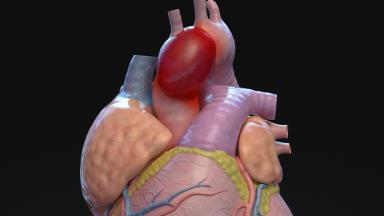
The aorta carries blood from the heart through the chest and abdomen. When a stretch of it weakens and balloons to one and a half times its normal width, surgeons call it an aneurysm. Most sit in the abdomen below the kidney arteries, and they turn up in men over 65 who smoke or once smoked far more than in anyone else, found by chance on an ultrasound or CT scan done for back pain, kidney stones or a routine check. Few cause symptoms.

Abdominal and thoracic aneurysms
Abdominal aortic aneurysms, AAA, make up the large majority and form the focus of this guide. Thoracic aneurysms in the chest share the same logic of watching and repairing at a threshold size, and they are repaired with stent grafts through the groin or with open surgery by a cardiovascular surgeon, depending on the segment involved.

Why an aneurysm is dangerous

Aneurysms grow silently. They widen by a few millimeters a year, faster as the diameter increases, and the wall gives no warning before it tears and bleeds into the abdomen or behind it, where many patients die before an ambulance reaches them. Planned repair gets there first.

Call an ambulance now
Sudden severe pain in the abdomen, back or flank, fainting, a fast pulse or cold sweat in someone known to have an aneurysm or over 65. A rupture needs surgery within the hour.

When to repair and when to watch

Any operation on the aorta carries a risk of its own, so a small aneurysm is safer watched than repaired. A British trial settled the question.

Ultrasonographic surveillance for small abdominal aortic aneurysms is safe, and early surgery does not provide a long-term survival advantage.
UK Small Aneurysm Trial, 1,090 patients, Lancet, 1998

Scan intervals shorten as the aneurysm grows.

This table scrolls sideways on a narrow screen. Swipe or drag to see every column.

Abdominal aortic aneurysm size and what we do
Diameter Plan
3.0 to 3.9 cm Ultrasound every two to three years
4.0 to 4.9 cm Ultrasound every year
5.0 to 5.4 cm Ultrasound every three to six months, and repair in women
5.5 cm or more Repair in men
Growth over 1 cm a year, or pain Repair at any size
Within this cohort of patients, women had a threefold higher risk of aneurysm rupture than men.
Rupture analysis of 2,257 patients, Annals of Surgery, 1999

This table scrolls sideways on a narrow screen. Swipe or drag to see every column.

What raises the risk of rupture under surveillance
Factor Effect
Female sex Three times the risk
Larger starting diameter 76 percent of ruptures came from aneurysms of 5 cm or more
Current smoking Higher risk
Higher blood pressure Higher risk
Weaker lungs, lower FEV1 Higher risk
Why we repair women earlier
Women have smaller aortas, so the same diameter means proportionally more stretching, and the British data showed three times the rupture risk at a given size. Guidelines and our team repair women from 5.0 cm.
Screening saves lives
The MASS trial invited 33,839 men aged 65 to 74 for a single ultrasound and compared them over four years with 33,961 men who received no invitation. Aneurysm deaths fell by 42 percent. Among men who attended, the fall reached 53 percent.
30-day mortality was 6% (24 of 414) after elective surgery for an aneurysm, and 37% (30 of 81) after emergency surgery.
MASS screening trial, 67,800 men, Lancet, 2002
Lowering the risk while you wait
Stop smoking. Of everything you can change, it does the most. Keep blood pressure under control, take a statin and aspirin if your doctor advises them, and keep every scan appointment. Heavy straining and very heavy lifting are best avoided once the aneurysm passes 5 cm.
Effective control of blood pressure and cessation of smoking are likely to diminish the risk of rupture.
Brown and Powell, Annals of Surgery, 1999

Tests before repair


CT angiography
A contrast CT of the chest, abdomen and pelvis measures the aneurysm, the neck below the kidney arteries and the iliac arteries, which decides whether a stent graft fits.
Heart and lungs
An echocardiogram, an ECG and breathing tests, with a cardiologist's review.
Kidneys and blood
Blood tests.
Team decision
Vascular surgeon, anesthetist and cardiologist agree the approach with you.

EVAR or open repair

Two operations repair an abdominal aneurysm. Endovascular aneurysm repair, EVAR, lines the aneurysm from inside with a fabric and metal stent graft passed up from the groin arteries. Open repair replaces the weak segment with a fabric tube through an incision in the abdomen.

This table scrolls sideways on a narrow screen. Swipe or drag to see every column.

Endovascular against open repair
Feature EVAR Open repair
Access Two small groin incisions or punctures Abdominal incision
Anesthesia Local, regional or general General
Hospital stay Two to three days Seven to ten days, with a night in intensive care
Early survival Higher Lower in the first months
Later procedures More, to seal leaks Fewer
Scans after repair Lifelong Occasional
Who suits EVAR
The stent graft needs a healthy neck of aorta below the kidney arteries, at least 10 to 15 millimeters long and not too angled, and iliac arteries wide enough to carry the device. Older patients and those with heart or lung disease gain most. Younger, fit patients weigh lifelong scans against one bigger operation.

Long-term results

Three large randomized trials, in Britain, the Netherlands and the United States, compared the two repairs in patients fit for either, and their follow-up has now reached twelve to fifteen years, long enough to see how the stent grafts hold up as patients age. The answers differ in detail.

The British EVAR trial 1
Patel and colleagues randomized 1,252 patients with aneurysms of at least 5.5 cm. In the first six months, deaths ran lower after EVAR. Beyond eight years, open repair came out ahead, mainly because sacs ruptured later after EVAR, 13 deaths against two, in patients whose grafts had developed leaks.
EVAR has an early survival benefit but an inferior late survival compared with open repair, which needs to be addressed by lifelong surveillance of EVAR and re-intervention if necessary.
EVAR trial 1, 1,252 patients, Lancet, 2016

The trials agree on four points.

  1. EVAR carries a lower risk around the operation itself.
  2. Long-term survival ends up close after both.
  3. EVAR needs more secondary procedures to seal leaks.
  4. After EVAR, scans must continue for life.

Recovery and the stay in Istanbul

How long you stay
Plan seven to ten days in Istanbul after EVAR, including the first check scan, and two to three weeks after open repair. Coordinators speaking English, Arabic, French, Russian, Serbian, Romanian or Spanish arrange the airport, the hotel and interpreters, and a companion can sleep in your room.
EVAR
Walking the same evening or next morning, home from hospital on day two or three, a check CT before you fly.
Open repair
A night in intensive care, eating within days, walking daily, home from hospital at seven to ten days, full recovery over two to three months.

Life after repair

Daily life
Driving after a week following EVAR and after four to six weeks after open repair. No heavy lifting for six weeks after open surgery, while the abdominal wall heals and before the scar has the strength to hold against straining. Keep taking blood pressure and cholesterol medicines. Stay off cigarettes.

Follow-up after you return home runs through your coordinator. The schedule follows.

  1. A CT scan at one month after EVAR, sent to our team.
  2. A scan at twelve months.
  3. Then ultrasound or CT every year for life after EVAR, and every five years after open repair.

Planning the trip

Cost and paperwork
The cost depends on the repair, the stent graft, the nights in hospital and any added procedure on the iliac arteries. The estimate after the free review lists each part, and the coordinator prepares the visa letter.

Flying after repair
Short flights after a week following EVAR, long-haul flights after the check scan, and two to four weeks after open repair, with compression stockings and a walk every hour.

Bringing your records
Bring every CT on disc, the reports, a list of medicines and any heart test results. Your original scans let us measure growth precisely.

The American OVER trial

Fourteen years of follow-up
Lederle and colleagues followed 881 veterans for up to 14 years. Deaths ran at 68.0 percent after EVAR and 70.0 percent after open repair, with no significant difference at any point, aneurysm-related deaths at 2.7 and 3.7 percent, and more secondary procedures after EVAR. Unlike the British trial, late survival did not favor open repair.

Aortic aneurysm repair FAQ

At what size should an aortic aneurysm be repaired?
At 5.5 cm in men and 5.0 cm in women, or sooner if it grows more than 1 cm in a year or causes pain.
Is EVAR better than open surgery?
EVAR is safer around the operation and gets you home sooner. Over ten to fifteen years survival ends up close, and EVAR needs lifelong scans and more repeat procedures.
Can a small aneurysm be left alone?
Yes, with regular ultrasound scans. Repairing small aneurysms early gave no survival benefit in trials.
How long will I stay in Istanbul?
Seven to ten days after EVAR and two to three weeks after open repair.
Can my son or daughter stay with me?
Yes. One relative sleeps in your room throughout, and the coordinator books the hotel for the days after discharge.

References

  1. UK Small Aneurysm Trial Participants. Mortality results for randomised controlled trial of early elective surgery or ultrasonographic surveillance for small abdominal aortic aneurysms. Lancet. 1998;352(9141):1649-1655.
  2. Brown LC, Powell JT. Risk factors for aneurysm rupture in patients kept under ultrasound surveillance. Annals of Surgery. 1999;230(3):289-296.
  3. Ashton HA, Buxton MJ, Day NE, et al. The Multicentre Aneurysm Screening Study (MASS) into the effect of abdominal aortic aneurysm screening on mortality in men: a randomised controlled trial. Lancet. 2002;360(9345):1531-1539.
  4. Patel R, Sweeting MJ, Powell JT, Greenhalgh RM. Endovascular versus open repair of abdominal aortic aneurysm in 15-years' follow-up of the UK endovascular aneurysm repair trial 1 (EVAR trial 1): a randomised controlled trial. Lancet. 2016;388(10058):2366-2374.
  5. Lederle FA, Kyriakides TC, Stroupe KT, et al. Open versus endovascular repair of abdominal aortic aneurysm. New England Journal of Medicine. 2019;380(22):2126-2135.

Editor's note

Written by the Biruni Hospital medical editorial team. Reviewed by Assoc. Prof. Dr. Muhammed BAYRAM, Cardiovascular Surgery.