
Stroke Rehabilitation
Twenty extra hours of arm training given two to three months after a stroke produced a measurable gain one year later in a 2021 randomized trial. Eighteen months after a stroke it took 90 hours to see a comparable change. Timing sets the dose, and the dose is what a rehabilitation program has to deliver.
About This Department
Recovery after a stroke has a best window, the first three months. The window does not close after that.
Training teaches the surviving parts of the brain to move a weak arm, walk, speak and swallow again. In the Critical Period After Stroke Study, published in 2021, patients given 20 extra hours of arm training two to three months after their stroke scored 6.87 points higher on an arm function test one year later than patients on standard care. Later training works too, at a higher dose. At Queen Square in London, 224 people treated a median of 18 months after their stroke improved on every arm measure after a 90 hour program.
The stroke has happened. The emergency treatment is over. One question remains, and it is how much function will come back. This page sets out what training can change, when it works best, how many hours it takes, and how a patient from another country can have it in Istanbul.
What stroke rehabilitation treats
Stroke rehabilitation treats the loss of function that a stroke leaves behind, and its only tool is practice. Brain tissue killed by a stroke does not grow back. Neighboring areas, and sometimes the opposite side of the brain, take over part of the lost work when they are trained to, a property called neuroplasticity.
Which therapies a person needs depends on where the stroke struck.
A weak arm and hand
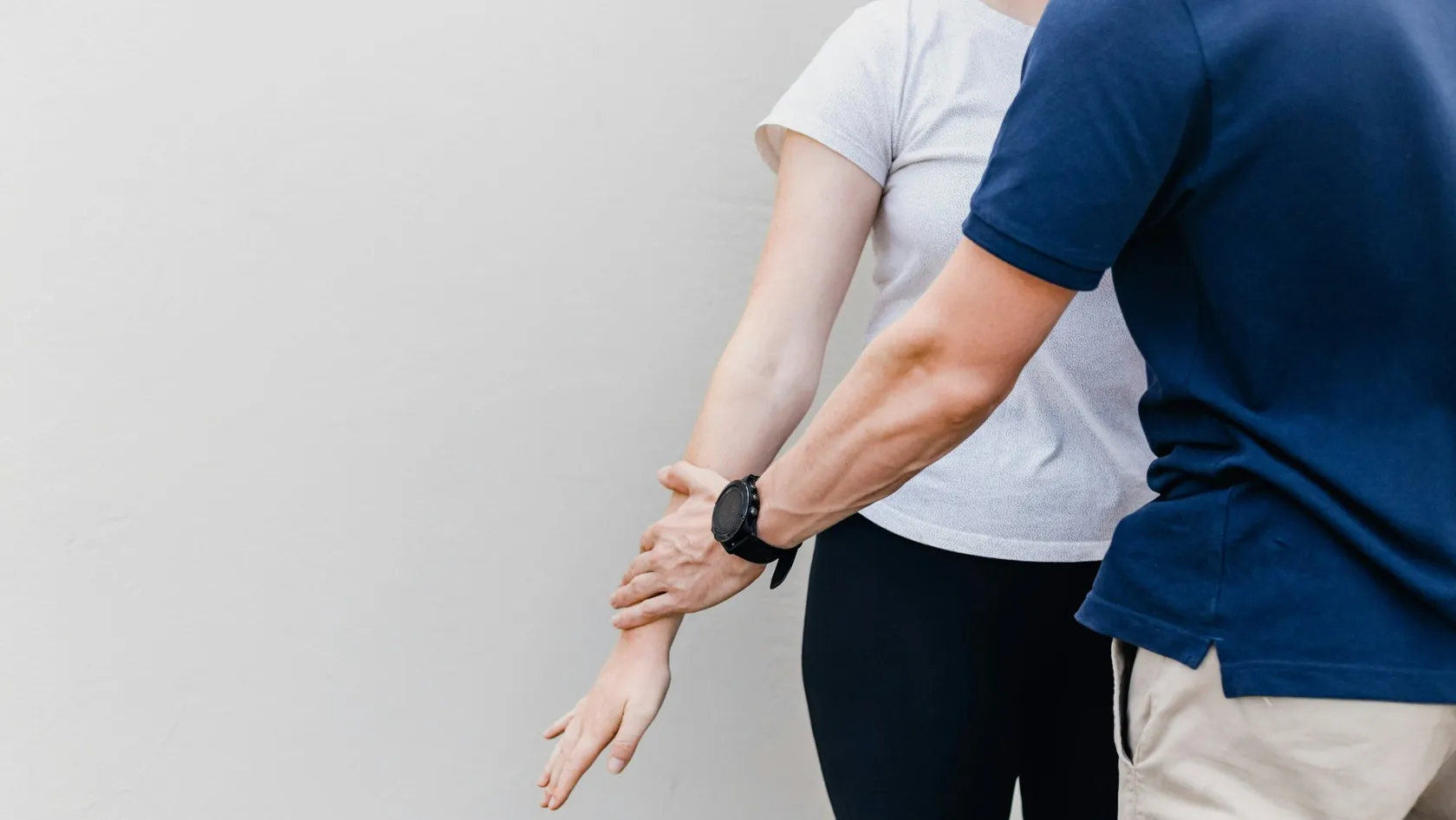
Hand function returns more slowly than walking, and patients ask about it first. Therapy means repetition. Hundreds of times a day the patient reaches for a cup, turns a key or fastens a button, and each task is graded so that it is just possible. Constraint-induced movement therapy goes a step further. A mitt covers the good hand for several hours a day, so the weak one has to work. What a high dose achieves was shown at Queen Square, the National Hospital for Neurology and Neurosurgery in London, where Ward and colleagues treated 224 people a median of 18 months after their stroke with 90 hours of arm therapy in three weeks. On the Action Research Arm Test, which runs from 0 to 57, the median score rose from 18 on admission to 27 six months after the program. Gains continued after the patients went home. The authors, writing in the Journal of Neurology, Neurosurgery and Psychiatry in 2019, found no way to predict who would respond apart from the starting score, which means age and time since the stroke did not rule anyone out.
Walking and balance
Walking comes back through standing practice, weight shifting, stepping with part of the body weight held by a harness, treadmill work and, later, stairs and uneven ground. Robot-assisted gait trainers hold the patient upright and move the legs through a walking pattern, so a person who cannot yet stand alone takes several hundred steps in a session. A 2020 Cochrane review by Mehrholz and colleagues pooled 62 trials with 2,440 participants. Patients who had this training together with physiotherapy were twice as likely to walk independently, with an odds ratio of 2.01, and the authors calculated that eight patients need the treatment for one more of them to walk alone. People in the first three months gained the most. So did people who could not walk at the start, while those already walking gained little from the machine.
Speech and language
One in three people has aphasia after a stroke. Aphasia means trouble finding words, understanding speech, reading or writing, while thinking itself stays intact. The Cochrane review by Brady and colleagues covered 57 trials and 3,002 participants and found that speech and language therapy improved everyday communication, reading, writing and spoken language compared with no therapy, and that therapy given at high intensity or a high dose did better than less of it.
Aphasia therapy only works in a language the patient knows. Anyone planning treatment abroad has to settle that point before any other, and the travel section of this page returns to it.
Swallowing
Swallowing problems, called dysphagia, matter because food or liquid that enters the airway causes pneumonia. A speech and language therapist tests swallowing before the first meal, sets the texture of food and the thickness of drinks, and trains the throat muscles with exercises. The diet is stepped up as swallowing recovers.
Attention, memory and neglect
After a stroke on the right side of the brain, some people stop noticing the left half of the world, a condition called neglect. They eat from one side of the plate and walk into door frames. Occupational therapists and neuropsychologists treat it with scanning exercises, and the whole ward adapts, since a patient who does not attend to the left cannot learn a safe transfer until that is addressed.
Stiff muscles
Spasticity pulls the elbow, wrist, fingers or ankle into a fixed position and builds up over the first weeks and months. Stretching, positioning and splints come first. When stiffness blocks function or makes washing the hand difficult, a rehabilitation doctor injects botulinum toxin into the overactive muscles.
How recovery unfolds over time
Recovery after a stroke is fastest at the beginning and slows with each month.
This table scrolls sideways on a narrow screen. Swipe or drag to see every column.
| Phase | What is happening in the brain | What rehabilitation does |
|---|---|---|
| First days | The stroke is treated and the patient is stabilized | Short sessions of sitting and standing, and a swallowing check |
| First 3 months | Fastest natural recovery and the strongest response to training | Intensive daily therapy, as an inpatient where possible |
| 3 to 6 months | Recovery continues at a slower rate | Therapy narrows to the goals that remain |
| After 6 months | Natural recovery has largely ended | High-dose programs aimed at specific tasks still produce gains |
Dromerick and colleagues tested the timing directly in the Critical Period After Stroke Study, a randomized trial published in the Proceedings of the National Academy of Sciences in 2021. Stroke patients began 20 extra hours of task-specific arm therapy within 30 days of the stroke, at two to three months, or at six months or later, and each group was compared with patients on standard rehabilitation. One year after the stroke, the group that started at two to three months scored 6.87 points higher than controls on the Action Research Arm Test. Starting within 30 days gave 5.25 points. Starting at six months or later gave 2.41 points, a difference too small to separate from chance.
Twenty hours is a small dose.
That detail changes how the late result should be read. The late group in the trial received 20 hours and gained little, while the Queen Square patients, treated a median of 18 months after their stroke, received 90 hours and gained a clinically important amount. Early on, the brain responds to modest amounts of training. Later it still responds. It simply takes a great deal more practice to get there.
How many hours of therapy does a stroke patient need?
More than most health systems provide. The 2016 guideline of the American Heart Association and American Stroke Association recommends that stroke survivors who qualify receive their rehabilitation in an inpatient rehabilitation facility, where the standard is three hours of therapy a day on five days a week. Programs that hospitals in Istanbul publish for international patients list between three and six hours a day, split into sessions of 30 to 45 minutes with rest between them. Outpatient care after discharge often amounts to two or three sessions a week.
90 hours in 3 weeksThe arm therapy dose in the Queen Square program. At two 50 minute outpatient sessions a week, the same 90 hours take a little over a year.
Hours alone do not decide the result. The practice has to be of the task the patient wants back, hard enough to be a challenge, and repeated far more often than feels natural.
Who should travel for it, and who should not
Traveling pays off most for a patient who is medically stable, between three weeks and six months from the stroke, able to follow simple instructions and remember them the next day, and who comes with a relative who will carry the program on at home. A person further out than six months is still a candidate when there is a specific goal, such as opening the hand, walking without a second person, or speaking in sentences, and when the family accepts that the program has to be intensive to work.
Several groups should stay where they are. Nobody should fly in the first two weeks after a stroke, and a patient with an unstable heart rhythm, uncontrolled blood pressure or a stroke whose cause has not been found needs that settled by the treating team first. A patient who cannot retain anything from one session to the next, because of severe dementia or a very large stroke, will not benefit from a training program however many hours it contains, and the family is better served by good nursing care and equipment at home. Someone with a mild stroke who walks, talks and uses the hand, but feels slower than before, needs outpatient therapy and a return-to-work plan near home. And a patient whose main problem is aphasia should think hard before traveling to a country where the therapists do not speak their language, since language therapy through an interpreter is a poor substitute for therapy in the mother tongue. Biruni Hospital says so in the written opinion when any of these applies.
Being told not to come is also an answer, and it costs nothing.
Preventing a second stroke while you recover
The risk of another stroke is highest in the first weeks after the first one.
A rehabilitation stay puts the patient under a doctor's eye every day for weeks. That time gets used. Blood pressure is measured several times a day, during rest and after exercise, and the tablets are adjusted until the readings hold. The doctor checks that the blood thinning treatment matches the type of stroke, meaning an antiplatelet drug such as aspirin or clopidogrel after most strokes caused by a blocked artery, and an anticoagulant when an irregular heartbeat called atrial fibrillation sent a clot to the brain. After a bleeding stroke the decision runs the other way and these drugs are often stopped. Cholesterol treatment with a statin is reviewed. Heart rhythm monitoring during the stay can catch atrial fibrillation that was missed in the first hospital, which changes the treatment completely. Diabetes control, stopping smoking, diet and a safe exercise plan all go into the discharge file, written so that the family doctor at home can continue them without guessing.
From your first message to the flight home
Seven steps take a patient from another country through rehabilitation at Biruni Hospital in Istanbul.
Send the records
Receive a written opinion
Clear the flight
Arrive and be assessed
Train every weekday
Leave with a file
Keep going at home
Planning the stay in Istanbul
How many weeks to plan for
Published stroke programs in Istanbul come in three lengths. Intensive blocks of two to three weeks suit a patient with one or two clear goals, often someone further out from the stroke. Monthly packages are the common choice in the first six months. A few hospitals list inpatient stays of two months or more for patients who arrive unable to sit or stand. These are the figures that hospitals and medical travel agencies publish, and the team at Biruni Hospital sets the actual length after the first week of treatment, when the rate of progress has become visible to everyone involved.
Add two or three days on each side for arrival, rest after the flight, and the discharge tests. Flying home needs no fixed waiting period. The patient leaves in a better state than they arrived in, and the rehabilitation doctor writes the clearance letter.
What a quote is built from
No two stroke patients receive the same quote. No two need the same program. The table shows what moves the total and in which direction.
This table scrolls sideways on a narrow screen. Swipe or drag to see every column.
| Cost driver | How it moves the total |
|---|---|
| Weeks of stay | The largest single factor. Each added week adds room, nursing and therapy |
| Inpatient or hotel-based | A patient who is safe in a hotel and attends as a day patient pays less than one who needs a hospital bed and night nursing |
| Therapy hours and types | Physical therapy alone costs less than a plan that adds occupational therapy, speech and swallowing therapy and neuropsychology |
| Nursing needs | A feeding tube, a urinary catheter, a pressure sore or two-person transfers raise nursing time |
| Robotic sessions | Priced as an extra by many centers in this market |
| Procedures | Botulinum toxin injections, a video swallowing study or repeat brain imaging are added only when needed |
| Equipment | An ankle brace, a hand splint or a walking aid to take home |
Packages published by hospitals in Istanbul and by medical travel agencies for stroke programs commonly cover the room, meals for the patient and one companion, doctor visits, nursing, the agreed therapy hours, routine blood tests, airport transfers and an interpreter. They leave out flights, travel insurance, drugs for other conditions, custom braces, additional imaging, the treatment of a complication and any days past the agreed stay.
When a quote arrives, read it for the number of therapy hours a day and whether those hours are one-to-one or in a group, for which therapies are counted, for whether robotic sessions are inside the figure, and for what happens to days that are not used. A low headline figure with 90 minutes of therapy a day is a hotel stay with some exercise.
A quote that means anything follows the doctor's review of the file.
Traveling with someone who has had a stroke
Language comes first. The international patients team at Biruni Hospital works in English, Arabic, French, Russian, Serbian, Romanian and Spanish and brings in interpreters for other languages, and a coordinator is assigned from the first message and stays with the family until discharge. That covers the medical conversations, the consent and the daily routine. Speech and language therapy is a separate matter, as the section on aphasia explained, so state the patient's mother tongue at the start and ask how language therapy would be delivered in it. For a patient whose speech is intact, the question does not arise.
One relative sleeps in the patient's room on a companion bed for the entire stay. Pick that person with care, because they will watch the therapists for weeks, learn how to help with a transfer without hurting their own back, and become the coach once everyone is home.
Hotel nights before and after the admission, airport transfers and rides between hotel and hospital are booked by the international patients office. Meals can be halal, vegetarian or diabetic. The hospital has a prayer room. If the patient wants a female doctor, say so early, and the department arranges it wherever the rota permits.
Count the days. Your visa has to cover the planned stay for both travelers, and that needs checking before any flight is booked.
Safety during the program
Complications the team watches for
Stroke survivors face a known set of complications in the months after the event, and a rehabilitation ward is organized around them. Falls lead the list. The American Heart Association guideline reports that up to 70 percent of stroke survivors fall in the first six months after leaving hospital, so every transfer is supervised until a therapist has judged it safe, and balance training runs through the whole program. Depression affects around one third of survivors. It slows every other part of recovery and it responds to treatment, so the team screens for it and treats it with counseling, medication or both. Shoulder pain on the weak side comes from a joint that the paralyzed muscles no longer hold in place, and it is prevented by correct positioning, support for the arm and careful handling during transfers. A weak leg raises the risk of a blood clot in the calf. Swelling, warmth and pain are the signs. Prevention means early movement and, for patients who cannot walk, blood thinning injections or compression devices. Seizures occur in a minority of patients after a stroke and are treated with medication.
None of these stops rehabilitation for long when it is caught early.
If something changes during the stay
New stroke symptoms during rehabilitation are an emergency, and the response has to be measured in minutes. Because the rehabilitation service at Biruni Hospital sits inside a general hospital, brain imaging, intensive care and the other specialties are in the same building, and the patient does not have to be moved across the city. Less dramatic changes are more common. A urinary infection, a chest infection or a fall can pause therapy for a few days. The program resumes when the doctor agrees.
Progress can also be faster or slower than forecast. Ask two things before you pay, namely how the hospital handles a stay that ends early and what an added week costs.
Back home
The months after discharge decide whether the gains last. The home program lists each exercise with the number of repetitions and the days of the week, and the letter to the local doctor or therapist gives the test scores, the medication and the goals that were still open, so whoever takes over can start where the Istanbul team stopped. Families that keep up daily practice hold their gains. Those who stop lose part of them within months.
Learn the warning signs of a new stroke before leaving, using the word FAST. Face drooping on one side, Arm weakness, Speech that is slurred or makes no sense, and Time to call the local emergency number at once. Minutes matter. Do not send a message to Istanbul first. Sudden severe headache, sudden loss of vision, a swollen painful calf, breathlessness and a seizure also need a local emergency department.
Some patients return six to twelve months later for a shorter block aimed at the next goal.
Stroke rehabilitation FAQ
Can the brain still recover years after a stroke?
How long does rehabilitation after a stroke take?
When can I fly after a stroke?
Can a family member stay in the hospital room?
Will speech therapy work if the therapist does not speak my language?
What if there is a problem after I return home?
References
- Dromerick AW, Geed S, Barth J, Brady K, Giannetti ML, Mitchell A, Edwardson MA, Tan MT, Zhou Y, Newport EL, Edwards DF. Critical Period After Stroke Study (CPASS): A phase II clinical trial testing an optimal time for motor recovery after stroke in humans. Proc Natl Acad Sci U S A. 2021;118(39):e2026676118.
- Ward NS, Brander F, Kelly K. Intensive upper limb neurorehabilitation in chronic stroke: outcomes from the Queen Square programme. J Neurol Neurosurg Psychiatry. 2019;90(5):498-506.
- Mehrholz J, Thomas S, Kugler J, Pohl M, Elsner B. Electromechanical-assisted training for walking after stroke. Cochrane Database Syst Rev. 2020;10(10):CD006185.
- Brady MC, Kelly H, Godwin J, Enderby P, Campbell P. Speech and language therapy for aphasia following stroke. Cochrane Database Syst Rev. 2016;2016(6):CD000425.
- Winstein CJ, Stein J, Arena R, et al. Guidelines for Adult Stroke Rehabilitation and Recovery: A Guideline for Healthcare Professionals From the American Heart Association/American Stroke Association. Stroke. 2016;47(6):e98-e169.
Editor's note
Written by the Biruni Hospital medical editorial team. Reviewed by Speech and Language Therapist Elif İkbal ESKİOĞLU, Speech and Language Therapy.
Medically reviewed by
Speech and Language Therapist Elif İkbal ESKİOĞLU
Speech and Language Therapy
Related Treatments
View All
Brain Injury Rehabilitation
A bleak outlook given in the first two weeks after a severe brain injury is frequently wrong. In the largest recent follow-up study, 12 percent of such patients were doing well at two weeks and 52 percent at one year. Learn what rehabilitation adds to that recovery, stage by stage, and when a patient is ready to travel.
Cancer Rehabilitation - Oncology Rehabilitation
Cancer rehabilitation treats the fatigue, weakness, stiffness, swelling, nerve damage, swallowing problems and loss of function that cancer and its treatment leave behind, before, during and after therapy. In one study 92 percent of women with metastatic breast cancer had a treatable impairment and fewer than a third were being treated. This page explains what is treated, the evidence on fatigue and lymphedema, prehabilitation, specialist problems and programs for patients from abroad.
Cardiac Rehabilitation - Heart Rehabilitation
A stent or a bypass repairs one artery. It does nothing to the disease that narrowed it. Cardiac rehabilitation is the monitored exercise, tablet review and risk factor treatment that does, and randomized trials link it to fewer repeat heart attacks and fewer hospital admissions in the following year.
Inpatient Rehabilitation
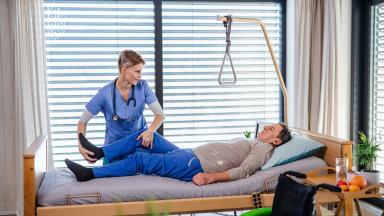
Should recovery happen on a hospital ward, or at home with visits to a clinic? A ward is the answer when someone needs therapy every day, a nurse at night and a doctor nearby, which is common after a stroke, a hip fracture, heart surgery, a lung flare-up or a long spell in intensive care.
Inpatient Rehabilitation - Acute Rehabilitation Unit
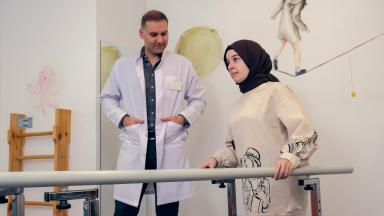
Acute does not mean emergency here. It means the intensive level of rehabilitation, with at least three hours of therapy a day on a hospital ward where a rehabilitation doctor sees you daily, and it suits people in the first months after a stroke, a spinal cord injury, a brain injury or major surgery.