
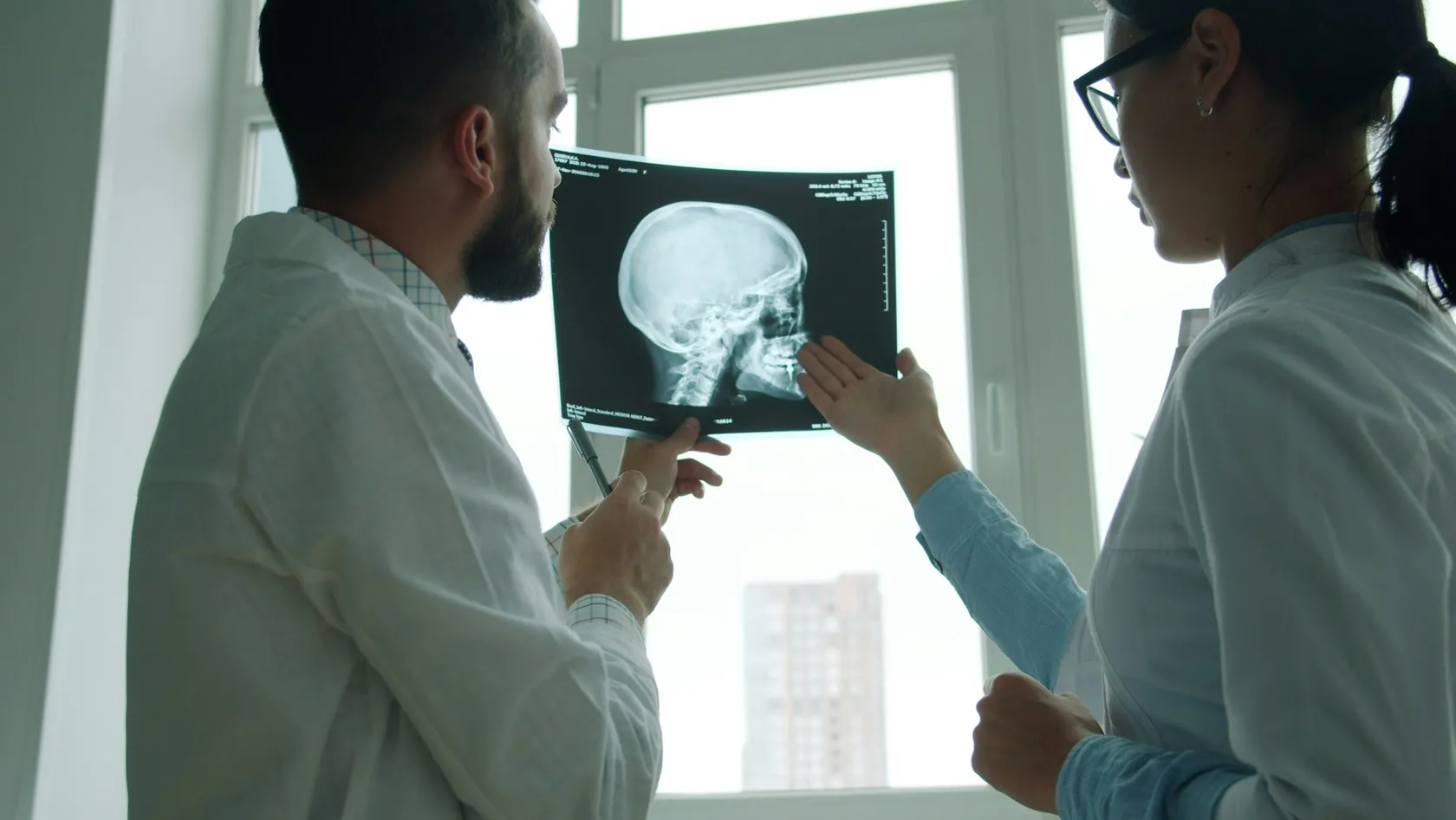
Brain Injury Rehabilitation
A bleak outlook given in the first two weeks after a severe brain injury is frequently wrong. In the largest recent follow-up study, 12 percent of such patients were doing well at two weeks and 52 percent at one year. Learn what rehabilitation adds to that recovery, stage by stage, and when a patient is ready to travel.
About This Department
A severe brain injury looks its worst in the first two weeks. A year later, half of patients are safe at home on their own.
In the TRACK-TBI study of 362 adults with a severe traumatic brain injury, 12 percent had a favorable outcome at two weeks and 52 percent had one at twelve months. Rehabilitation that starts early and runs intensively is the treatment with the strongest evidence for moving a patient along that curve. Send us the hospital reports, the latest scan and a short video, and a rehabilitation physician will tell you what a program could aim for and whether the patient is ready to travel.
Brain injury rehabilitation is the organized work of getting a person back to thinking, moving, speaking and living at home once the emergency has passed. It begins in intensive care. It runs for months. The sections below set out how much recovery the large studies report, what each stage looks like to a family, what a program contains hour by hour, and how a family from another country brings a patient to Istanbul and takes them home again.
How much recovery is realistic
Among 362 adults with a severe traumatic brain injury followed at 18 US trauma centers in the TRACK-TBI study, 12 percent had a favorable outcome two weeks after the injury and 52 percent had one at twelve months, according to results published in JAMA Neurology in 2021. Favorable has a modest meaning here. At the least, the person is safe alone at home for eight hours of the day.
People with a moderate injury went from 41 percent to 75 percent over the same year. One in five of the severe group, and one in three of the moderate group, reported no disability at all at twelve months.
Among patients still vegetative at two weeks, 78 percent regained consciousness within the year.TRACK-TBI study, JAMA Neurology, 2021
One conclusion was drawn by the authors for doctors, and families should hear it too. A statement made in the first two weeks that a patient will never recover is frequently wrong, because severe impairment early on did not predict a poor result in a large share of these patients. Recovery after a traumatic injury runs fastest in the first six months, continues at a slower pace to the end of the second year, and in smaller steps beyond that. Several things shape the curve. Younger patients do better. So do those whose coma was short and whose day-to-day memory came back within weeks, a period doctors call post-traumatic amnesia. The cause counts as well. Traumatic injuries, bleeding into the brain, infection such as encephalitis, surgery for a brain tumor and lack of oxygen after a cardiac arrest or near-drowning all come to the same rehabilitation unit, and the oxygen-loss group recovers more slowly and less completely than the others. A family deserves to hear that on the first day.
What rehabilitation adds to natural recovery
Some recovery happens with time alone, so the fair question is what organized rehabilitation adds on top. The Cochrane review of multidisciplinary rehabilitation for acquired brain injury, updated in 2015, examined 19 controlled studies involving 3,480 people aged 16 to 65. For moderate and severe injuries it found strong evidence of benefit from formal rehabilitation, strong evidence that more intensive programs bring functional gains earlier, and moderate evidence that continued outpatient therapy helps to hold those gains. For mild injuries the message was different. Most people recovered well with good information and a follow-up visit, and needed nothing more.
Timing and intensity were then measured directly. A 2018 meta-analysis in the Archives of Physical Medicine and Rehabilitation pooled 11 controlled trials in moderate to severe traumatic brain injury and found a large benefit from rehabilitation that began early, while the patient was still in the trauma center (effect size 1.02), and a medium benefit from more intensive programs in the rehabilitation unit (effect size 0.67), each compared with usual care. An effect size of 1.0 means the average patient in the early group did better than 84 of every 100 patients given usual care.
Start early. Work intensively. Keep going as an outpatient.
The stages of recovery and what each one needs
Rehabilitation teams describe recovery after a brain injury with the Rancho Los Amigos scale, which runs from level 1, no response, to level 10, purposeful and independent. Families recognize the stages faster than the numbers.
This table scrolls sideways on a narrow screen. Swipe or drag to see every column.
| Stage | What the family sees | What rehabilitation does |
|---|---|---|
| No response to minimal response, levels 1 to 3 | Eyes may open and close. There is no reliable response to a voice or a request, or only a slow, inconsistent one. | Positioning and splints to keep joints from stiffening, standing on a tilt table, chest physiotherapy, a swallowing assessment, and repeated scoring of awareness on the Coma Recovery Scale so that small changes are caught. |
| Confused and agitated, level 4 | Restlessness, shouting, pulling at tubes, no memory from one hour to the next. Families find this the hardest stage to watch, and it passes. | A quiet room, the same few faces, short sessions, and safety measures that avoid tying the patient down or sedating them where possible. Relatives are taught how to respond. |
| Confused and calmer, levels 5 and 6 | Simple requests are followed. Memory for new events is poor and attention lasts minutes. | Physiotherapy for sitting, standing and walking. Relearning washing, dressing and eating. A memory book, a fixed daily timetable, speech and language therapy. |
| Automatic to purposeful, levels 7 to 10 | Daily routines return. Judgment, planning, speed and stamina lag behind, and the person may not see their own difficulties. | Training of attention, memory strategies and planning. Practice in shops, kitchens and public transport. Psychological support, and preparation for work, study and driving assessments at home. |
Speeds differ. Some patients stop at one stage, and a person can sit at the same level for five weeks and then change within days.
Inside a program, hour by hour
A rehabilitation physician leads the team. Around that doctor work physiotherapists, occupational therapists, a speech and swallowing therapist, a neuropsychologist, rehabilitation nurses and a dietitian, with a neurologist and a neurosurgeon called in as needed. Goals are written in the first days and reset at a team meeting every week, which is the norm across this field.
The day starts with nursing care that doubles as therapy. Washing, dressing and moving to a chair are the first skills to relearn. A physiotherapy session of 45 to 60 minutes follows, working on head and trunk control, then sitting balance, then standing and walking as each becomes possible. Occupational therapy takes the arm and hand and the tasks of daily life. Speech therapy covers swallowing first and language second, because a safe swallow decides whether the feeding tube can come out. Rest is written into the timetable between sessions. Fatigue after a brain injury comes from the injury itself, and a patient pushed past it learns nothing in the next hour. After lunch come a second physiotherapy session, a cognitive session and family teaching. Programs published by rehabilitation units in Istanbul describe three to seven hours of therapy a day. For a confused patient at level 4 or 5, several short sessions beat a long one, and the higher figure suits people further along.
Cognitive rehabilitation
Thinking skills respond to training, and the evidence says which kinds. The Cognitive Rehabilitation Task Force of the American Congress of Rehabilitation Medicine has now graded 491 studies, in a review series last published in the Archives of Physical Medicine and Rehabilitation in 2019. Its strongest recommendations after traumatic brain injury cover direct attention training, memory aids such as a notebook and phone alarms for mild memory problems, training in social communication, strategy training for planning and self-monitoring, and comprehensive programs that combine all of these with psychological support.
That task force also advises against computer exercises used alone, without a therapist.
Language is the limit of treatment abroad
Physiotherapy crosses a language barrier with ease. Memory, attention and speech therapy work through words. The international patients team works in English, Arabic, French, Russian, Serbian, Romanian and Spanish and arranges interpreting in other languages on request, so ask at the start how cognitive and speech sessions will be delivered for your language, and expect this part of rehabilitation to continue with a therapist at home.
Patients who are not yet conscious
Three states follow a severe brain injury, and they are easy to confuse at the bedside. Coma means the eyes stay closed. A vegetative state, also called unresponsive wakefulness, brings open eyes and sleep cycles without any sign of awareness, and a minimally conscious state adds definite signs of it, such as following a moving object with the eyes or obeying a simple request now and then.
Telling the last two apart takes repeated, structured testing on the Coma Recovery Scale, done at different times of day. A single bedside look misses awareness in a tired or sedated patient.
One drug has solid trial evidence here. In a randomized trial published in the New England Journal of Medicine in 2012, 184 patients who were vegetative or minimally conscious 4 to 16 weeks after a traumatic brain injury received amantadine or a placebo for four weeks during inpatient rehabilitation. Recovery on the Disability Rating Scale was faster with amantadine, serious adverse events were no more common, and the gap narrowed once the drug was stopped.
Families ask whether such a patient can be accepted at all. Admission criteria published by rehabilitation units in this market ask for a patient who is medically stable, past the life-threatening phase and able to tolerate therapy. A tracheostomy and a feeding tube do not exclude anyone. Dependence on a ventilator does, until the patient breathes unaided.
Medical problems that appear during rehabilitation
Rehabilitation after a brain injury carries little risk of its own. The risks belong to the injury, they surface in the weeks when the patient is in a rehabilitation bed, and a good program is built to catch them.
This table scrolls sideways on a narrow screen. Swipe or drag to see every column.
| Problem | How it shows | What is done |
|---|---|---|
| Seizures | Jerking of a limb, a staring spell, or sudden confusion, sometimes months after the injury. | An EEG recording, antiseizure medication, and a rule that the drug is never stopped suddenly. |
| Hydrocephalus, a build-up of fluid in the brain | A patient who was improving stalls or slips back, grows drowsy, walks worse or loses bladder control. | A CT scan the same day, and if it confirms the diagnosis a neurosurgeon places a shunt to drain the fluid, after which recovery resumes. |
| Spasticity and contractures | Arms and legs stiffen, and joints begin to fix in a bent position. | Daily stretching, splints and casts, botulinum toxin injections into the tight muscles, and oral medication. |
| Swallowing problems and chest infection | Coughing on drinks, a wet-sounding voice, fever. | A formal swallowing assessment. Thickened drinks, modified food, and tube feeding until the swallow is safe. |
| Sympathetic storming | Episodes of sweating, fast pulse, high blood pressure, fever and rigid posture. | Removal of triggers such as pain or a blocked catheter, and medication that calms the overactive nerves. |
| Blood clots in the legs | A swollen, warm, painful calf. | Preventive blood thinners and compression stockings from the start, and an ultrasound scan at the first sign. |
| Bone forming around joints | A hip, knee or elbow becomes warm, painful and stiff. Doctors call this heterotopic ossification. | Gentle exercises and medication. Surgery comes later, and only if the joint locks. |
| Depression, anxiety and irritability | Low mood, tearfulness, anger, withdrawal, often as awareness returns. | Psychological support for patient and family, and medication where needed. |
Programs inside a general hospital have CT, neurosurgery and intensive care in the same building. That counts on the night a patient who was doing well becomes drowsy.
When to start, and whether it is ever too late
Rehabilitation should begin in the intensive care unit, with positioning, splints and sitting out of bed, and the move to a rehabilitation bed should follow as soon as the patient is medically stable. Every week spent lying in an acute ward without therapy costs muscle, joint range and skin.
Late still pays.
Two and three years after an injury, natural recovery has slowed to a crawl, and a program aims at different targets. Treating spasticity can turn a patient who needs two helpers into one who needs a single helper. A better wheelchair and seating stop pressure sores. Teaching memory strategies makes a person safer alone. Training the family lightens the daily load. For patients whose recovery is slow, units in this market also run interval programs, meaning an inpatient block of intensive therapy, a period at home, then another block once there is something new to work on.
Who is ready to travel and who should wait
Readiness for a rehabilitation program abroad comes once breathing is unaided, blood pressure and temperature have been stable for a week or more, seizures are controlled and any skull surgery has been cleared by the neurosurgeon who performed it.
Wait if the patient is still on a ventilator, has an untreated infection, or has a wound over the skull that has not closed. A missing bone flap is different. People whose bone flap has been removed can travel and train with a protective helmet, and the operation to replace the bone can be planned around the program.
Some people should not travel for this at all. A concussion or other mild injury recovers with information, rest and a graded return to activity, as the Cochrane review found, and a trip abroad adds cost without adding benefit. At the other end, a patient who has shown no awareness for several years following oxygen loss is unlikely to wake because of an intensive program, and the realistic aims there are comfort, looser muscles, intact skin and a well-trained family. We would say so in the written opinion.
For that opinion, send the discharge summary with the date and cause of the injury, the first Glasgow Coma Scale score if it is recorded, the length of coma, the most recent CT or MRI report, the operation notes for any skull surgery or shunt, and the medication list with antiseizure drugs marked. State whether there is a tracheostomy, a feeding tube, a urinary catheter or a pressure sore. Add a phone video of a minute or so that shows the patient being asked to do something simple, such as squeeze a hand or look toward a voice, then being sat up, and walking if walking is possible. A rehabilitation physician reads the file, with a neurosurgeon where the scans call for one. The written reply states whether the patient is ready to travel, whether a ward or day attendance fits, how many weeks are reasonable to begin with, and what the first goals would be.
Length of stay, and flying with a brain injury
Inpatient programs for brain injury published by rehabilitation units in Istanbul average eight weeks, and run shorter or longer according to severity and response. Patients at a later stage, who walk and look after themselves, come for blocks of two to four weeks, and focused courses of cognitive and speech therapy in this market last 10 to 14 days.
Flying to Istanbul after a brain injury
Nothing in rehabilitation delays the flight home. The flight to Istanbul needs more thought. After skull surgery a pocket of air can remain inside the head and expand at altitude, so airline medical guidance asks for at least seven days after the operation and confirmation that the air has gone. Seizures should be under control before a long flight. Any passenger who needs a stretcher, oxygen or suction, or who has had recent surgery, must be cleared by the airline's medical desk on its own form, and stretcher places on scheduled flights are limited and booked well ahead. Someone with a tracheostomy who needs frequent suction is safer in an air ambulance.
When the plan changes
Brain injury programs change course more than most, in both directions.
Hydrocephalus heads the medical reasons. It is found on a scan ordered because progress stalled, and the shunt operation that follows interrupts therapy for a week or two and then speeds it up, an effect that replacing a removed bone flap also has in some patients. Chest and urine infections cost days. None of these sends a family home, and each should come with a revised plan and a revised quote in writing.
Good news changes plans as well. Someone who emerges from the confused stage in week three needs a different timetable in week four, with more cognitive work and less passive care.
Then there is the patient who does not progress. The weekly review exists to notice that. After three or four flat weeks the right response is a frank conversation and a discharge plan with home goals, because more paid weeks of the same therapy help nobody.
What decides the cost
No published figure for brain injury rehabilitation applies to your patient, because the total is driven by how much care the person needs and for how long, and both vary tenfold.
Nursing dependence leads the list. A patient with a tracheostomy, tube feeding and turning every two hours through the night needs far more staff time than one who walks to the dining room, and the daily rate reflects it. The number of therapy hours and of therapy disciplines comes next, since a program with physiotherapy alone and a program with physiotherapy, occupational therapy, speech therapy and neuropsychology are different products. Length multiplies everything. So does a single room. Medical events add to the bill when they occur, among them a shunt operation, nights in intensive care, repeat scans and intravenous antibiotics. Botulinum toxin, custom splints, a helmet and a fitted wheelchair are charged as items, and age, body weight, diabetes, heart disease and pressure sores present on arrival all push the nursing and medical share upward.
What a package covers
Packages published in this market bundle the physician's examinations, nursing, the daily therapy sessions, routine blood tests, and a room with meals for the patient and one companion, while flights or an air ambulance, surgery, intensive care, non-routine imaging, custom equipment and drugs for unrelated illness sit outside them.
Two quotes compare only when they assume the same things. Check the therapy hours per day and the disciplines behind them, whether the room and meals for a companion are inside the figure, what one night in intensive care would add, whether a weekly written progress report is part of the service, and what happens to the remaining weeks if the team advises going home early.
Real figures follow a real review of the file. That review is free.
The family's part and the practical side of the trip
Whoever travels with the patient is the person who will carry the program on at home, so the companion is a trainee from the first week. Patient rooms have a companion bed, and one relative can stay overnight for the whole admission. During the stay that relative learns to move the patient safely between bed and chair, to feed without causing choking, to stretch tight limbs, to use the memory book, and to respond calmly when the patient is agitated or says something hurtful. A coordinator from the international patients team is assigned from the first message and stays with the family through discharge, and the team works in English, Arabic, French, Russian, Serbian, Romanian and Spanish, with interpreting in other languages arranged on request. Transfers are arranged too. State in your first message whether the patient travels seated, in a wheelchair or on a stretcher. For families attending as day patients, the same office arranges accommodation near the hospital and transport between the two.
The appointment confirmation and invitation letter name the hospital and the treating doctor, and consulates ask for them with a medical visa application.
Halal, vegetarian and diabetic diets are prepared by the hospital kitchen. A prayer room is available on site. A request for a female physician goes to the department and is met wherever the rota allows, and it helps to make it in the first message.
Going home
Leave with paper. You need a discharge report with the scores from the first and last week, a medication plan, a home exercise and care program, a list of equipment to obtain, and a letter to the doctor and therapists who will take over. Ask for the report in a language your home team reads.
Keep the antiseizure medication exactly as prescribed until a neurologist at home changes it.
Your coordinator remains reachable on the same WhatsApp number once you are home, for questions about the program and for sending a video when something changes. Some things should go to a local emergency department first and to the coordinator second. New drowsiness, repeated vomiting, a headache that keeps getting worse, a first seizure or a seizure longer than five minutes, fever with a stiff neck, clear fluid from the nose or a surgical wound, and swelling along a shunt all belong in that group.
Caring for someone after a brain injury wears families down over years, so build in help from the start and treat a carer's own exhaustion as a medical matter.
Brain injury rehabilitation FAQ
How long does brain injury rehabilitation take?
Can a patient with a tracheostomy or a feeding tube come to Istanbul for brain injury rehabilitation?
Is it too late two years after the injury?
Can I stay in the room with my son or daughter?
Will therapy be given in our language?
What happens if there is a problem after we return home?
References
- McCrea MA, Giacino JT, Barber J, et al. Functional Outcomes Over the First Year After Moderate to Severe Traumatic Brain Injury in the Prospective, Longitudinal TRACK-TBI Study. JAMA Neurology. 2021;78(8):982-992.
- Turner-Stokes L, Pick A, Nair A, Disler PB, Wade DT. Multi-disciplinary rehabilitation for acquired brain injury in adults of working age. Cochrane Database of Systematic Reviews. 2015;2015(12):CD004170.
- Konigs M, Beurskens EA, Snoep L, Scherder EJ, Oosterlaan J. Effects of Timing and Intensity of Neurorehabilitation on Functional Outcome After Traumatic Brain Injury: A Systematic Review and Meta-Analysis. Archives of Physical Medicine and Rehabilitation. 2018;99(6):1149-1159.
- Cicerone KD, Goldin Y, Ganci K, et al. Evidence-Based Cognitive Rehabilitation: Systematic Review of the Literature From 2009 Through 2014. Archives of Physical Medicine and Rehabilitation. 2019;100(8):1515-1533.
- Giacino JT, Whyte J, Bagiella E, et al. Placebo-controlled trial of amantadine for severe traumatic brain injury. New England Journal of Medicine. 2012;366(9):819-826.
Editor's note
Written by the Biruni Hospital medical editorial team. Reviewed by İmran Bakaç, Physical Therapy and Rehabilitation.
Medically reviewed by

İmran Bakaç
Physical Therapy and Rehabilitation
Related Treatments
View All
Cancer Rehabilitation - Oncology Rehabilitation
Cancer rehabilitation treats the fatigue, weakness, stiffness, swelling, nerve damage, swallowing problems and loss of function that cancer and its treatment leave behind, before, during and after therapy. In one study 92 percent of women with metastatic breast cancer had a treatable impairment and fewer than a third were being treated. This page explains what is treated, the evidence on fatigue and lymphedema, prehabilitation, specialist problems and programs for patients from abroad.
Cardiac Rehabilitation - Heart Rehabilitation
A stent or a bypass repairs one artery. It does nothing to the disease that narrowed it. Cardiac rehabilitation is the monitored exercise, tablet review and risk factor treatment that does, and randomized trials link it to fewer repeat heart attacks and fewer hospital admissions in the following year.
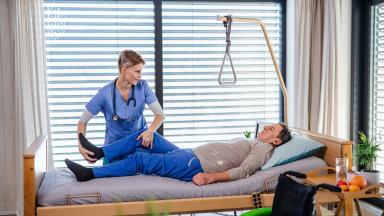
Inpatient Rehabilitation
Should recovery happen on a hospital ward, or at home with visits to a clinic? A ward is the answer when someone needs therapy every day, a nurse at night and a doctor nearby, which is common after a stroke, a hip fracture, heart surgery, a lung flare-up or a long spell in intensive care.
Inpatient Rehabilitation - Acute Rehabilitation Unit
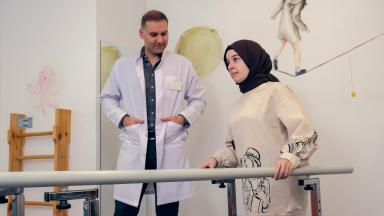
Acute does not mean emergency here. It means the intensive level of rehabilitation, with at least three hours of therapy a day on a hospital ward where a rehabilitation doctor sees you daily, and it suits people in the first months after a stroke, a spinal cord injury, a brain injury or major surgery.
Lymphedema Rehabilitation - Lymphedema Therapy
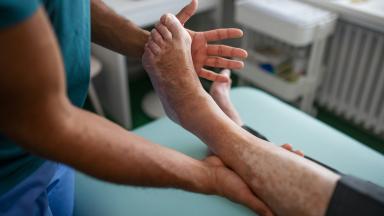
Lymphedema rehabilitation treats the swelling that follows damage to the lymphatic system, most often in the arm after breast cancer and in the leg after pelvic cancer, through skin care, manual drainage, compression and exercise. More than one in five breast cancer survivors is affected, and swelling caught early by measurement responds to a few weeks in a compression garment. This page explains stages, risk, complete decongestive therapy, evidence, daily life and programs from abroad.