
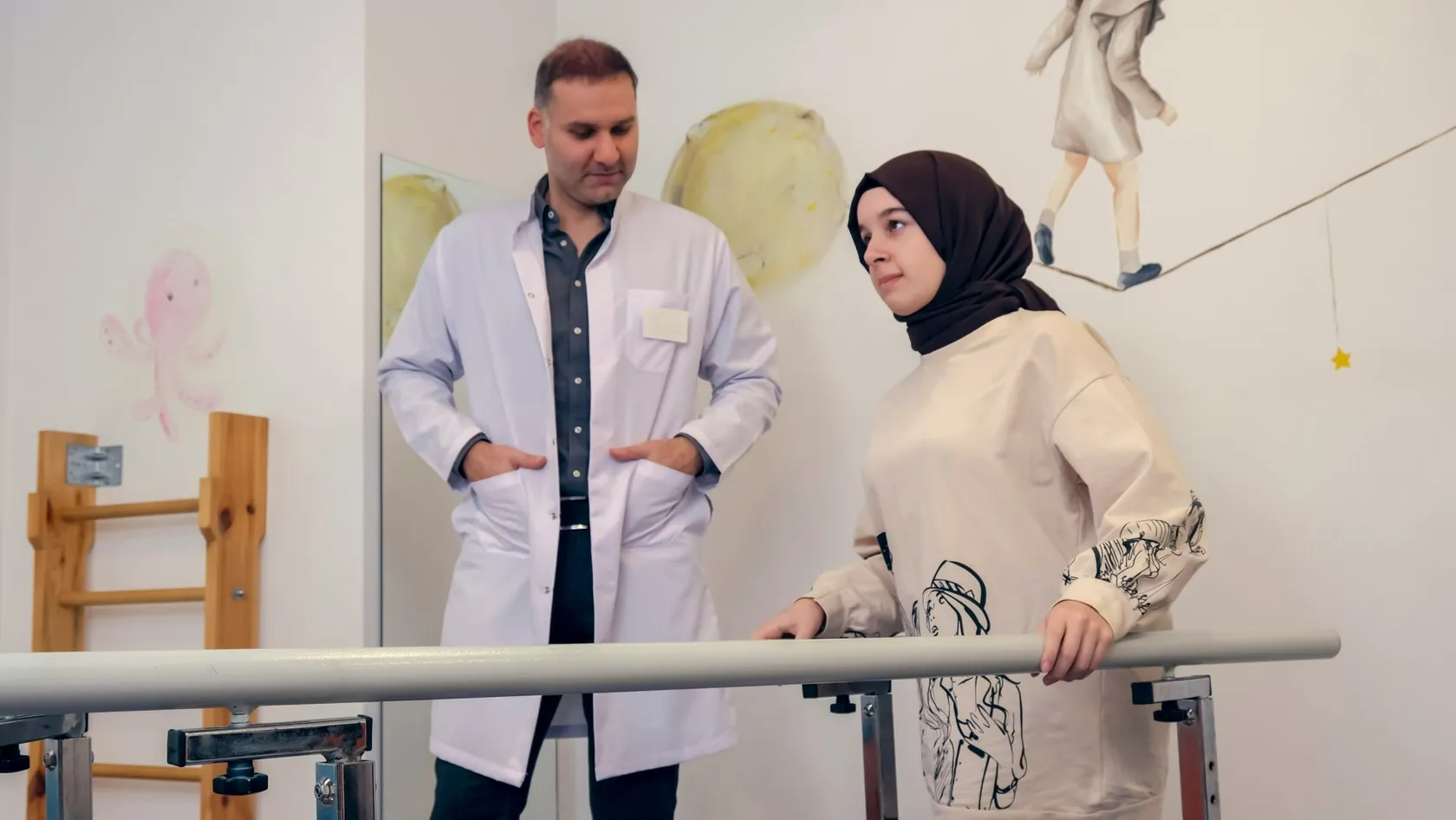
Inpatient Rehabilitation - Acute Rehabilitation Unit
Acute does not mean emergency here. It means the intensive level of rehabilitation, with at least three hours of therapy a day on a hospital ward where a rehabilitation doctor sees you daily, and it suits people in the first months after a stroke, a spinal cord injury, a brain injury or major surgery.
About This Department
Rest does not bring movement back. Daily, supervised practice does.
An acute rehabilitation unit is a hospital ward where a person recovering from a stroke, a spinal cord injury, a brain injury or major surgery trains for at least three hours a day, five days a week, under a rehabilitation doctor who sees them daily. The results can be measured. In a study of 99,185 stroke patients published in JAMA Network Open in 2019, those treated in inpatient rehabilitation gained 11.6 points on the mobility score, against 3.5 points for those sent to a nursing facility.
Hospitals list this service under two names, which is why this page is titled Inpatient Rehabilitation - Acute Rehabilitation Unit. Both names describe the same thing. What follows covers who is admitted, what a week of treatment contains, how long a patient from abroad stays in Istanbul, what decides the cost, and what happens after the flight home.
What is an acute rehabilitation unit?
Patients reach an acute rehabilitation unit when their medical emergency is over and they cannot yet walk, wash, dress, speak or swallow the way they did before. The unit is a ward inside a hospital. Inpatient rehabilitation is the treatment given there. The patient lives on the ward, and therapy fills every weekday.
The word acute confuses many families.
Here it has nothing to do with an emergency. Hospitals use the term to separate this level of care from subacute rehabilitation, which runs at a slower pace, often in a nursing facility, with one to two hours of therapy a day and a doctor's visit once a week or less. In the United States the same service is called an inpatient rehabilitation facility, and the national regulator, the Centers for Medicare and Medicaid Services, admits only patients who can take part in three hours of therapy a day.
A physiatrist leads the unit. That is a doctor trained in physical medicine and rehabilitation, a specialty that covers the medical problems that follow a neurological injury, such as the muscle stiffness called spasticity, bladder and bowel control, pain, blood pressure swings and mood. Around that doctor works a team that the 2016 stroke rehabilitation guideline of the American Heart Association and American Stroke Association treats as the core of the treatment, made up of rehabilitation nurses, physical therapists who work on walking, balance and strength, occupational therapists who retrain dressing, bathing, eating and the use of the hand, speech and language therapists who treat both speech and unsafe swallowing, psychologists, dietitians and social workers. The guideline states that without communication and coordination among these people, separate efforts to rehabilitate a stroke survivor will fall short of what they could achieve. So the team meets every week, reviews each patient against written goals, and changes the plan when progress stalls. Nurses carry the training through the other twenty-one hours of the day. Getting to the bathroom, sitting up for meals and turning in bed all become practice.
Acute rehabilitation, subacute care and outpatient therapy compared
Three settings deliver rehabilitation after a hospital stay. They differ in how many hours of therapy a patient receives and in how closely a doctor follows them. The figures below come from the admission rules of United States inpatient rehabilitation facilities and from the descriptions that hospital units publish about themselves, and the same dividing lines apply in other countries.
This table scrolls sideways on a narrow screen. Swipe or drag to see every column.
| Feature | Acute rehabilitation unit | Subacute or skilled nursing care | Outpatient therapy |
|---|---|---|---|
| Therapy time | At least 3 hours a day, 5 days a week | 1 to 2 hours a day | 2 to 3 sessions a week |
| Doctor | A rehabilitation doctor sees the patient daily | A visit once a week or less | Clinic appointments |
| Nursing | Rehabilitation nurses, 24 hours | Nursing care, 24 hours | None |
| Therapy types | Two or more, working to one plan | One or more | One at a time |
| Published average stay | 10 to 16 days in US units, longer for spinal cord and brain injury | Around 4 weeks | Weeks to months, living at home |
| Suits | A stable patient who can work hard toward clear goals | A patient too weak for 3 hours a day | A patient who is safe at home and can reach a clinic |
An acute rehabilitation unit gives at least three hours of therapy a day on five days of the week, and a subacute or skilled nursing setting gives one to two hours.
For a patient traveling abroad the choice is simpler than the table suggests. Nobody flies to another country for two outpatient sessions a week. Four weeks on an acute rehabilitation unit hold 60 hours of therapy, and at two one-hour outpatient sessions a week the same 60 hours take seven months.
Who is admitted, and who should wait
Stroke is the most common reason for admission to inpatient rehabilitation. The other reasons share one feature with it, a sudden loss of function in someone who was independent before.
- Stroke, whether from a blocked artery or a bleed
- Traumatic brain injury, and brain injury after cardiac arrest or infection
- Spinal cord injury from trauma, a tumor, an infection or surgery
- Surgery for a brain tumor or a spinal tumor
- Guillain-Barre syndrome, a multiple sclerosis relapse and other neurological illnesses
- Multiple fractures, hip fracture, amputation and complex joint replacement
- Severe weakness after a long stay in intensive care
Admission rests on four conditions. The patient is medically stable, with no investigation still open and no treatment that needs an acute ward. They need at least two kinds of therapy. They can take part for three hours a day, even when that is split into short sessions with rest between them. And there is a realistic goal, such as walking with a frame, moving from bed to wheelchair without help, or swallowing safely.
Some people should not travel for this. A patient still on a ventilator, a patient in a coma or a minimally conscious state, and a patient whose stroke happened in the past two weeks all belong in an acute hospital near home. A person with mild weakness who walks alone and manages the bathroom gets what they need from outpatient therapy where they live. Someone whose injury is many years old should expect a smaller return, because the Cochrane review of brain injury rehabilitation found its clearest gains in programs that started early, and the written assessment from Biruni Hospital will say so before anyone books a flight.
Intensive inpatient rehabilitation works, and the numbers are large
Medicare records supply the largest comparison, because Hong and colleagues used them to follow 99,185 people in the United States who were discharged after a stroke in 2013 and 2014, of whom 66,082 went to an inpatient rehabilitation facility and 33,103 went to a skilled nursing facility. Patients in inpatient rehabilitation improved by 11.6 points on the mobility score and by 13.6 points on the self-care score. Patients in nursing facilities improved by 3.5 and 3.2. The two groups differed at the start, since those sent to nursing facilities were four years older on average, so the authors repeated the analysis with three statistical methods that correct for such differences. The gap stayed the same size. JAMA Network Open published the study in 2019.
Threefold differences in recovery are rare in any field of medicine.
Randomized trials point the same way. A 2020 Cochrane review by Langhorne and Ramachandra pooled 29 trials with 5,902 participants and compared organized inpatient stroke care, meaning a coordinated team on a dedicated ward, with care on a general ward. For every 100 patients treated by the organized team, two more survived, six more were living at home and six more were living independently a year later. The benefit held at any age and for mild and severe strokes alike. Mixed rehabilitation wards, which take other diagnoses alongside stroke, also lowered the odds of a poor outcome, with an odds ratio of 0.65. For brain injury in adults of working age, the Cochrane review led by Turner-Stokes covered 19 studies and 3,480 people. It found strong evidence that patients with moderate to severe injury benefit from formal rehabilitation, and strong evidence that more intensive programs bring functional gains earlier. People with mild injury recovered well with information and follow-up alone. That finding explains why a careful unit turns some applicants away.
Older patients gain too. Across 13 trials and 3,036 participants in a 2021 Cochrane review of hip fracture care, team-based inpatient rehabilitation reduced the number of people who had died or moved into institutional care within a year, and the authors calculated that treating 25 patients this way prevents one such outcome.
None of these studies promises a particular result for one person. How much function returns depends on the size and site of the injury, on age, and on how early training starts. Spinal cord injury has fewer randomized trials than stroke, because no ethics committee would let researchers withhold rehabilitation from a paralyzed patient for the sake of a comparison.
When should rehabilitation start?
Early, with one caution. The AVERT trial, published in The Lancet in 2015, assigned 2,104 stroke patients in five countries either to usual stroke unit care or to a more intensive protocol that got them out of bed sooner and more often within the first 24 hours. The intensive group did worse. At three months 46 percent of them had a favorable outcome, against 50 percent with usual care.
That lesson applies to the first day or two, when the brain is still vulnerable, and it explains why an acute rehabilitation unit admits patients once they are stable and no sooner. From that point the direction of the evidence reverses. Most of the recovery after a stroke takes place in the first three to six months, so every week spent waiting for therapy inside that period costs more than a week lost later.
For a patient from abroad, travel becomes possible once the treating doctor confirms stability, around the third week after many strokes, and the first several months remain the best time to come. Later admissions still gain, particularly when the earlier rehabilitation was thin. The goals become narrower, such as a safer transfer, a stronger grip or fewer falls.
A week on the unit
The first two days go to assessment. The rehabilitation doctor examines the patient and reviews the medication, and each therapist measures a baseline that includes muscle strength, balance, walking speed where walking is possible, hand function, memory and attention, speech, and a swallowing test before any food or drink is allowed by mouth. Units score independence with a standard scale such as the Functional Independence Measure or the Barthel Index. The same scale is repeated at discharge, so progress becomes a number that everyone can see.
Then the goals are written down, in the patient's own words where possible.
A weekday starts with nursing care that is itself therapy, because the patient washes and dresses with as little help as the occupational therapist has judged safe. Morning holds the heaviest physical work, which for someone relearning to walk means standing practice, stepping with part of the body weight supported, and many repetitions, since repetition drives relearning in the nervous system. Some units in this market add robotic gait trainers such as the Lokomat or arm robots such as the Armeo, which allow hundreds of steps or reaches in one session. The machines add repetitions. They do not replace the therapist, and the number of hands-on therapy hours in a program tells you more than its list of devices. After lunch come occupational therapy, speech or swallowing therapy, and rest periods that are planned in advance. Fatigue after a brain injury is physical, and pushing through it sets the patient back. Evenings belong to family. Weekends carry a lighter program.
Once a week the whole team meets about each patient. Goals that were met get replaced, and goals that were missed get examined.
Companions take part in all of this. A husband, wife, son or daughter who will help at home learns the transfers, the exercises, the swallowing precautions and the skin checks on the ward, with a therapist watching, and practices until it is routine.
How long will you stay in Istanbul?
Two to eight weeks. That is the range in the rehabilitation programs that Turkish hospitals and medical travel agencies publish for international patients, and spinal cord injury programs of two months are common. United States units report an average of only 10 to 16 days, and the difference has a plain cause, since a patient who lives nearby continues as an outpatient the following week while a patient who flew in has to take the whole gain home.
Nobody fixes the length before the first week is over. The team has to see how fast the patient responds. Published programs for a stroke patient who arrives walking with help run two to four weeks, and a person with a complete spinal cord injury who is learning wheelchair skills, bladder management and skin care from the beginning needs a good deal longer than that. Ask for a review date in writing. The same note should name the measures that will decide whether the stay is extended.
When can you fly in, and when can you fly home?
The UK Civil Aviation Authority advises waiting at least two weeks after a stroke before flying. Airlines set their own rules on top of that and ask for a medical information form, known as a MEDIF, completed by the treating doctor for any passenger who was recently in hospital, needs oxygen, or cannot sit upright for takeoff and landing. Passengers who cannot sit travel on a stretcher booking or by air ambulance. Both have to be arranged well ahead. The international patients office at Biruni Hospital sends an appointment confirmation and an invitation letter naming the hospital and the treating doctor ten days before travel, and arranges the airport transfer. Say in the first message whether the patient sits, stands or travels lying down, because the vehicle is chosen from that answer. Flying home takes less arranging, because discharge has a planned date, the patient leaves stronger than they arrived, and the rehabilitation doctor writes the fit-to-fly letter with that date on it.
Long flights raise the risk of a clot in the leg veins for anyone with a weak leg, so the discharge plan covers fluids, calf exercises, an aisle seat and, where the doctor prescribes them, compression stockings or a blood thinning injection.
Risks on a rehabilitation ward and how they are managed
Therapy itself carries little danger. The risks on a rehabilitation ward come from the underlying injury and from immobility, and the ward routine is built around watching for them.
When a patient becomes medically unwell, therapy pauses and treatment comes first.
If the plan changes
Rehabilitation plans change in both directions. Faster progress than expected shortens the stay, and nobody should be kept on a ward to fill a booked package, so ask how unused days are handled before paying.
Setbacks pull the other way. Some patients develop a medical problem during rehabilitation, such as a urinary infection, a seizure, a chest infection or a new heart rhythm problem. In a free-standing rehabilitation center that means an ambulance to another hospital, whereas a rehabilitation ward inside a general hospital handles it in the same building, with imaging, intensive care and the other specialties on site, and therapy restarts when the doctors agree. Arrival assessment sometimes finds a problem that has to be treated before therapy can work, for example a buildup of fluid in the brain after a hemorrhage, a pressure sore that needs surgery, or spasticity severe enough for botulinum toxin or a baclofen pump. Each of those is a separate decision with its own consent and its own quote. For patients whose weakness comes from a brain or spinal tumor, radiotherapy and chemotherapy are both delivered at Biruni Hospital on the same site, so rehabilitation and cancer treatment can run in one admission without a transfer of records.
What decides the cost
Pricing inpatient rehabilitation means little before someone has read the file, because the cost follows the plan and the plan follows the patient. Six things move the total. Length of stay moves it most. Nursing dependency comes next, since a patient with a tracheostomy, a feeding tube or a need for two helpers at every transfer uses more nursing hours than one who reaches the bathroom with a frame. The number of therapy types counts, and a plan with speech, swallowing and neuropsychology on top of physical and occupational therapy costs more than physical therapy alone. Many centers in this market price robotic sessions as an extra. Procedures such as botulinum toxin injections, a video swallowing study or new imaging join the bill only when they are needed. Equipment to take home, such as an ankle brace, a wheelchair cushion made to measure or a walking aid, comes last, and it is the item most often left out of a quote.
Patient factors work through the same channels. Age, body weight, diabetes, heart and lung disease, blood thinning medication and the time since the injury all change how fast a person progresses and how much nursing they need, which is the reason two patients with the same diagnosis receive different quotes.
Packages that Turkish hospitals and medical travel agencies publish for inpatient rehabilitation bundle the room and meals for the patient and one companion, a daily doctor review, nursing, the agreed therapy hours, routine blood tests, airport transfers and interpreting. Flights, travel insurance, medication for unrelated conditions, custom braces, extra imaging, treatment of a complication and days beyond the agreed stay are the common exclusions.
Five points separate a real quote from a headline one.
- The hours of one-to-one therapy a day inside the figure, and the number of days a week
- The therapy types that are counted
- Whether robotic sessions are inside the figure or charged per session
- The charge for an extra week, and what happens to unused days
- Whether the companion's bed and meals are included
Only after a rehabilitation doctor has read the reports does a figure mean something, and that review is free.
Planning the trip with a patient who cannot walk
A coordinator from the international patients office is assigned from the first message and stays with the family through discharge, and the team works in English, Arabic, French, Russian, Serbian, Romanian and Spanish and arranges interpreting in other languages on request. Language matters more in rehabilitation than in surgery. Speech therapy after a stroke has to happen in the language the patient thinks in, so name that language in the first message and ask how speech therapy will be delivered in it.
Patient rooms have a companion bed. One person stays in the room overnight for the whole admission, and in rehabilitation that person is a trainee as much as a visitor, so where the family has a choice, send whoever will be doing the helping at home.
Accommodation for the nights either side of the admission, the airport transfers and transport between hotel and hospital are arranged by the international patients office. The hospital kitchen handles halal, vegetarian and diabetic diets. A prayer room is available on site. A request for a female physician is put to the department and met wherever the rota allows. Make it early.
Long stays raise a visa question that a one-week surgical trip does not. Count the days your visa or visa-free entry allows before fixing the dates, for the companion as well as the patient. The invitation letter supports the application.
After you fly home
Rehabilitation continues after discharge. The Cochrane brain injury review found that continued outpatient therapy helps hold the gains made in the inpatient phase, and the discharge file is built for that handover. It holds a medical report in English, the admission and discharge scores on the same scale, a written home exercise program, swallowing and diet instructions, the medication list with doses, a list of equipment with measurements, and a letter addressed to the doctor or therapist who will take over at home.
WhatsApp keeps the family connected after the flight home. The coordinator stays reachable on the same number, questions about an exercise, a piece of equipment or a medication dose go there, and anything clinical is passed to the rehabilitation team for an answer.
Some things should never wait for a message to Istanbul. Go to a local emergency department for any of these.
- Sudden new weakness, a drooping face or new difficulty speaking
- A swollen, painful calf, or sudden breathlessness
- Fever with a cough after a choking episode
- A seizure
- After a spinal cord injury, a pounding headache with flushing and sweating
- A fall with a blow to the head while taking blood thinning medication
Some families plan a second, shorter admission six to twelve months later to work on new goals, which makes sense when the first stay produced measurable change and the home program was kept up.
What to send for a free review
Send the hospital discharge summary, the reports of the latest brain or spine imaging, the current medication list, and a short note on what the patient can do today, covering sitting, standing, walking, eating and speaking. Mention a tracheostomy, a feeding tube, a urinary catheter or a pressure sore if there is one. Add a video. One minute of the patient sitting up or moving from bed to chair, filmed on a phone, tells a rehabilitation doctor more than a page of description.
Every file goes to a rehabilitation doctor. The reply says whether inpatient rehabilitation suits this patient now, which goals look realistic, how many weeks to plan for, and what would need to be in place for the flight. The review costs nothing and carries no obligation. A coordinator answers in your own language.
Inpatient Rehabilitation - Acute Rehabilitation Unit FAQ
What is the difference between acute rehabilitation and subacute rehabilitation?
How long do I need to stay in Istanbul for inpatient rehabilitation?
How soon after a stroke can I fly to Turkey for rehabilitation?
Can my husband or wife stay in the room with me?
Will the therapists and doctors understand my language?
What happens if there is a medical problem after I get back home?
Is it too late for inpatient rehabilitation if the stroke or injury was more than a year ago?
References
- Hong I, Goodwin JS, Reistetter TA, Kuo YF, Mallinson T, Karmarkar A, Lin YL, Ottenbacher KJ. Comparison of Functional Status Improvements Among Patients With Stroke Receiving Postacute Care in Inpatient Rehabilitation vs Skilled Nursing Facilities. JAMA Netw Open. 2019;2(12):e1916646.
- Langhorne P, Ramachandra S; Stroke Unit Trialists' Collaboration. Organised inpatient (stroke unit) care for stroke: network meta-analysis. Cochrane Database Syst Rev. 2020;4(4):CD000197.
- Winstein CJ, Stein J, Arena R, et al. Guidelines for Adult Stroke Rehabilitation and Recovery: A Guideline for Healthcare Professionals From the American Heart Association/American Stroke Association. Stroke. 2016;47(6):e98-e169.
- Turner-Stokes L, Pick A, Nair A, Disler PB, Wade DT. Multi-disciplinary rehabilitation for acquired brain injury in adults of working age. Cochrane Database Syst Rev. 2015;2015(12):CD004170.
- Handoll HH, Cameron ID, Mak JC, Panagoda CE, Finnegan TP. Multidisciplinary rehabilitation for older people with hip fractures. Cochrane Database Syst Rev. 2021;11(11):CD007125.
- AVERT Trial Collaboration group. Efficacy and safety of very early mobilisation within 24 h of stroke onset (AVERT): a randomised controlled trial. Lancet. 2015;386(9988):46-55.
Editor's note
Written by the Biruni Hospital medical editorial team. Reviewed by Speech and Language Therapist Elif İkbal ESKİOĞLU, Speech and Language Therapy.
Medically reviewed by

Speech and Language Therapist Elif İkbal ESKİOĞLU
Speech and Language Therapy
Related Treatments
View All
Brain Injury Rehabilitation
A bleak outlook given in the first two weeks after a severe brain injury is frequently wrong. In the largest recent follow-up study, 12 percent of such patients were doing well at two weeks and 52 percent at one year. Learn what rehabilitation adds to that recovery, stage by stage, and when a patient is ready to travel.
Cancer Rehabilitation - Oncology Rehabilitation
Cancer rehabilitation treats the fatigue, weakness, stiffness, swelling, nerve damage, swallowing problems and loss of function that cancer and its treatment leave behind, before, during and after therapy. In one study 92 percent of women with metastatic breast cancer had a treatable impairment and fewer than a third were being treated. This page explains what is treated, the evidence on fatigue and lymphedema, prehabilitation, specialist problems and programs for patients from abroad.
Cardiac Rehabilitation - Heart Rehabilitation
A stent or a bypass repairs one artery. It does nothing to the disease that narrowed it. Cardiac rehabilitation is the monitored exercise, tablet review and risk factor treatment that does, and randomized trials link it to fewer repeat heart attacks and fewer hospital admissions in the following year.
Inpatient Rehabilitation
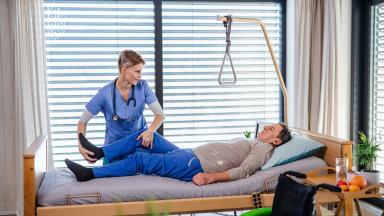
Should recovery happen on a hospital ward, or at home with visits to a clinic? A ward is the answer when someone needs therapy every day, a nurse at night and a doctor nearby, which is common after a stroke, a hip fracture, heart surgery, a lung flare-up or a long spell in intensive care.
Lymphedema Rehabilitation - Lymphedema Therapy
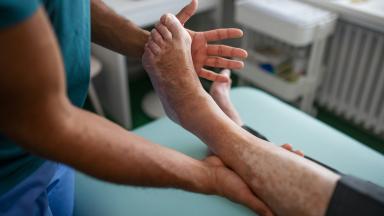
Lymphedema rehabilitation treats the swelling that follows damage to the lymphatic system, most often in the arm after breast cancer and in the leg after pelvic cancer, through skin care, manual drainage, compression and exercise. More than one in five breast cancer survivors is affected, and swelling caught early by measurement responds to a few weeks in a compression garment. This page explains stages, risk, complete decongestive therapy, evidence, daily life and programs from abroad.