
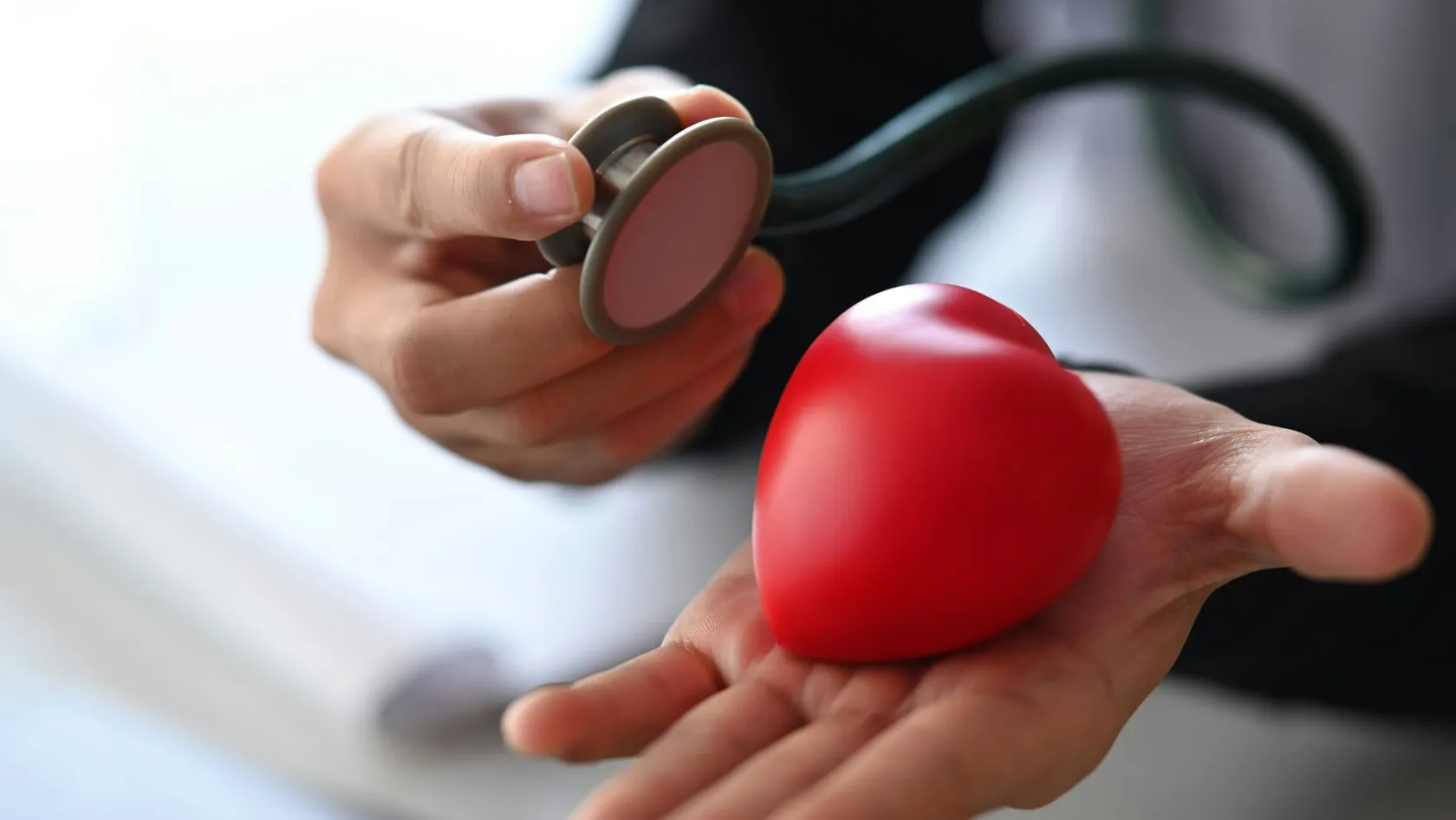
Cardiac Rehabilitation - Heart Rehabilitation
A stent or a bypass repairs one artery. It does nothing to the disease that narrowed it. Cardiac rehabilitation is the monitored exercise, tablet review and risk factor treatment that does, and randomized trials link it to fewer repeat heart attacks and fewer hospital admissions in the following year.
About This Department
A stent opens one artery. Cardiac rehabilitation treats the disease behind it.
Cardiac rehabilitation is a medical program of monitored exercise, medication review, diet and risk factor treatment for people who have had a heart attack, a stent, bypass or valve surgery, or who live with heart failure. A Cochrane review of 85 randomized trials with 23,430 participants found that it lowered the risk of another heart attack by 28 percent within the first year. Supervised exercise for heart patients also has a strong safety record. A French registry of 25,420 patients counted one serious cardiac event in every 49,565 hours of training, and no deaths.
English uses two names for the same treatment, which is why this page carries the title Cardiac Rehabilitation - Heart Rehabilitation. Cardiologists say cardiac. Patients say heart. The program is identical.
What cardiac rehabilitation is
Treatment of the heart does not end with the emergency or the operation, and cardiac rehabilitation is the supervised program that picks up from there and carries on for months. A heart attack, a stent or a bypass deals with one narrowed artery at one moment. The process that narrowed it, the buildup of fatty plaque driven by blood pressure, cholesterol, diabetes, smoking and inactivity, keeps running unless something changes it.
Patients fear the exercise most, and the exercise does the most good.
Programs are described in phases. Phase one happens on the hospital ward, where the patient sits up, walks the corridor and learns what happened to the heart. Phase two is the supervised program this page covers, which starts days to weeks after discharge, uses heart monitoring during exercise and lasts weeks to months, and phase three is the rest of life, meaning independent exercise and risk factor control with checks by the patient's own doctor.
The four parts of a program
A 2020 position paper from the European Association of Preventive Cardiology, written by Ambrosetti and 27 colleagues, lists the components that a program must contain to be called comprehensive. Exercise alone does not qualify.
This table scrolls sideways on a narrow screen. Swipe or drag to see every column.
| Part | What happens | What it changes |
|---|---|---|
| Assessment | History, examination, ECG, echocardiogram, blood tests and an exercise test on a treadmill or bicycle | Sets safe limits and a personal training heart rate |
| Exercise training | Aerobic work with light resistance training, three to five days a week, monitored at the start | Fitness, blood pressure, blood sugar, weight and confidence |
| Risk factor treatment | Review of tablets and doses, targets for blood pressure, cholesterol and sugar, help to stop smoking, diet advice | The speed at which artery disease advances |
| Education and psychological support | Warning signs, what to do with chest pain, return to work, driving, sex and travel, screening for low mood and anxiety | Fear, depression and the chance of stopping medication |
Low mood deserves its place in that table. Depression after a heart attack is common, it predicts who stops taking tablets, and patients rarely raise it themselves.
What the trials found
Few treatments in cardiology have been tested as often. The Cochrane review by Dibben and colleagues, updated in 2021, pooled 85 randomized trials in which 23,430 people with coronary heart disease, mostly after a heart attack, a stent or bypass surgery, were assigned either to exercise-based cardiac rehabilitation or to usual care without it. Within the first year the rehabilitation group had 28 percent fewer heart attacks and 42 percent fewer hospital admissions for any reason. The effect on death from all causes in that first year was small and uncertain, with a risk ratio of 0.87 whose range included no effect. Longer follow-up told a clearer story. In the eight trials that followed patients beyond three years, deaths from cardiovascular causes were 42 percent lower in the rehabilitation group, and heart attacks were 33 percent lower. The benefit did not depend on the type of patient, the dose of exercise, the country or the year of the trial.
Heart failure has its own review. Molloy and colleagues, in the 2024 Cochrane update, analyzed 60 trials with 8,728 participants. Exercise-based rehabilitation did not change survival at one year. It lowered hospital admissions for any cause from 23.8 percent to 15.9 percent and improved the Minnesota Living with Heart Failure score by 7.39 points, where 5 points is the smallest change a patient can feel.
Fewer nights in hospital and a better day. For someone with heart failure, that is the goal.
Who should start, and who has to wait
Guidelines in Europe and the United States recommend a referral after a heart attack, after a stent, after bypass surgery, after valve repair or replacement, in stable angina, in stable heart failure, after a heart transplant, and after an implanted defibrillator or pacemaker for heart failure. Age is no barrier. Older and frailer patients start lower and gain as much.
Timing depends on the event. After an uncomplicated stent, monitored exercise can start within a week or two. After a heart attack the usual start is one to three weeks from discharge. After open heart surgery, walking starts at once while the breastbone needs six to eight weeks before the arms carry any load, so early sessions use the legs. People who should think twice about traveling for a program are those whose condition is still changing from week to week, those waiting for another procedure, and those with a good program near home that they simply have not joined. That last group should join it.
Inside one exercise session
Before you start
A session lasts about an hour. Staff record blood pressure, pulse and symptoms on arrival and attach a small wireless heart monitor, called telemetry, that sends the rhythm to a screen at the nurses' desk. Ten minutes of warm-up follow.
The exercise block
The main block is 20 to 40 minutes of aerobic exercise on a treadmill, a bicycle or an arm machine, held inside a heart rate range that was calculated from the patient's own exercise test on the first day. Light resistance work with bands or small weights comes next, since muscle strength decides whether a person can carry shopping or climb stairs.
How hard is hard enough
Patients rate their own effort on the Borg scale, which runs from 6 to 20, and the target is 11 to 14, described as light to somewhat hard. A simpler check works anywhere. You should be able to speak a full sentence while exercising and unable to sing.
Cooling down, and the teaching sessions
Ten minutes of cool-down close the session. Blood pressure is measured again before anyone leaves. Teaching runs through the week as short talks and one-to-one time with the dietitian, the pharmacist or the psychologist.
How safe is exercise after a heart attack or surgery?
Very safe under supervision, and the numbers are large enough to trust. Pavy and colleagues ran a prospective registry across 65 cardiac rehabilitation centers in France for one year and published it in the Archives of Internal Medicine in 2006. It covered 25,420 patients, half of them after heart surgery, who completed 42,419 exercise tests and 743,471 hours of training, and across that whole year of activity twenty serious cardiac events were recorded. That equals one event per 49,565 hours of training and 1.3 cardiac arrests per million hours. Nobody died.
Other risks are minor. Muscle soreness in the first week, low blood sugar in people on insulin, a drop in blood pressure after exercise in people on several blood pressure tablets, and wound or breastbone pain after surgery if the arms are loaded too early. Staff plan for each of them.
Three weeks in Istanbul, then the rest at home
A full course of phase two is longer than a trip. Published outpatient programs, in Turkey as in the United States, run 8 to 12 weeks with 24 to 36 sessions at two or three a week. Programs that Turkish hospitals and medical travel agencies publish for visitors last two to four weeks on site. The gap between those two figures has a good answer, and it comes from the evidence. McDonagh and colleagues compared home-based with center-based cardiac rehabilitation in a 2023 Cochrane review of 24 trials and 3,046 participants and found no difference in deaths, in exercise capacity or in quality of life, provided the home program was set up and followed by health professionals. That proviso matters, because a home program without a starting assessment, a personal heart rate range and someone to report to amounts to advice to exercise more. So the sensible design for a traveler is a supervised start followed by a structured home phase.
This table scrolls sideways on a narrow screen. Swipe or drag to see every column.
| Stage | Where | What gets done |
|---|---|---|
| Days 1 to 3 | Istanbul | Cardiology assessment, exercise test, blood tests, medication review, personal heart rate range |
| Weeks 1 to 3 | Istanbul | Monitored exercise on every weekday, which gives 12 to 15 sessions, plus diet, medication and psychology sessions |
| Last day | Istanbul | Repeat exercise test, written exercise prescription, report for your cardiologist, fit-to-fly letter |
| Weeks 4 to 12 | Home | Exercise on three to five days a week inside the prescribed range, with a pulse watch or chest strap, and a visit to your own doctor |
Daily sessions compress into three weeks what a local program spreads across six.
Nobody fixes the length before the first exercise test. A fit 55-year-old after a stent may need two weeks, while a 72-year-old after bypass surgery with diabetes and a slow wound needs the full four.
If a test finds something new
The assessment on arrival is a full cardiac check, and now and then it finds something nobody expected, such as chest pain with ECG changes on the treadmill, a rhythm disturbance, a valve that leaks more than the last report said, or fluid around the heart after surgery. Finding it in a monitored gym is far better than finding it on a hillside at home. Training stops until the problem is dealt with. Since the program runs inside a general hospital, the cardiologists, the catheter laboratory, the heart surgeons and intensive care are in the same building. Any further procedure is a new decision with its own consent and its own quote, and the patient can choose to have it at home with the test results in hand. Far more often the change is small. A tablet dose goes up, a second blood pressure drug is added, the training range comes down for a week, and the sessions continue.
Fees, flights and the trip
What the fee depends on
Cardiac rehabilitation for a visitor is priced from the plan, and five things shape the plan. Length counts most. Where the patient sleeps comes second, and the large majority of cardiac patients are well enough for a hotel, which costs far less than a hospital bed. Tests at the start come third. Someone who arrives with a recent echocardiogram and exercise test needs fewer than someone with no records at all. Monitoring level changes the staffing, since a patient with heart failure or an implanted defibrillator trains under closer watch than a patient after a simple stent, and extra consultations with a diabetes doctor, a lung doctor or a psychologist are added when the case calls for them. Age, kidney function, diabetes and blood thinning tablets all feed into those five, which explains how two people with the same operation receive different figures.
- Published packages in this market cover the cardiology assessment, the exercise sessions, the education sessions, routine blood tests, airport transfers and an interpreter
- They leave out flights, travel insurance, the hotel unless it is listed, tablets, additional heart scans, any procedure and extra days
- Before comparing two quotes, check the number of monitored sessions, whether an exercise test is included at both ends, and who supervises the gym
Quotes mean something only after a doctor has read the reports. That reading is free.
Flying and the trip
Airline medical rules that follow the International Air Transport Association manual accept passengers 10 days after an uncomplicated heart attack. Rules after heart surgery vary. Give the airline the operation date early and ask for its medical form. Carry all tablets in hand luggage with a printed list, walk the aisle every hour and drink water.
The international patients office sends an appointment confirmation and an invitation letter that names the hospital and the treating doctor ten days before the flight, for the visa file. It meets you at the airport and runs the car between hotel and hospital, one coordinator handles the case from the first message to the last day, and the team speaks English, Arabic, French, Russian, Serbian, Romanian and Spanish, with interpreters for other languages on request.
Bring your partner. Two family members may sit in on the consultations, and the education sessions on food and medication work best when the person who cooks hears them too. If the patient is admitted, the room has a bed for one companion. Hospital meals come in halal, vegetarian and diabetic versions, a prayer room is on site, and a woman who wishes to be seen by a female doctor can ask in her first message, which the department honors whenever the rota allows.
After you fly home
Once you are back home, phase two continues in your own town. The discharge file holds the two exercise test reports, the heart rate range, a week-by-week exercise plan, the medication list with target values for blood pressure, cholesterol and sugar, and a letter in English for your cardiologist. Book that cardiologist for a visit four to six weeks after you land.
Your coordinator answers on the same WhatsApp number after you leave, and questions about the exercise plan are passed to the rehabilitation team.
Exercise for life is the real prescription, and the benefit lasts only as long as the habit.
Cardiac Rehabilitation - Heart Rehabilitation FAQ
How long does cardiac rehabilitation last?
How soon after a heart attack or stent can I start?
Is it safe to exercise with heart failure?
When can I fly after a heart attack?
Can my husband or wife come to the sessions?
What if I get chest pain after I return home?
References
- Dibben G, Faulkner J, Oldridge N, Rees K, Thompson DR, Zwisler AD, Taylor RS. Exercise-based cardiac rehabilitation for coronary heart disease. Cochrane Database Syst Rev. 2021;11(11):CD001800.
- Molloy C, Long L, Mordi IR, Bridges C, Sagar VA, Davies EJ, Coats AJ, Dalal H, Rees K, Singh SJ, Taylor RS. Exercise-based cardiac rehabilitation for adults with heart failure. Cochrane Database Syst Rev. 2024;3(3):CD003331.
- McDonagh ST, Dalal H, Moore S, Clark CE, Dean SG, Jolly K, Cowie A, Afzal J, Taylor RS. Home-based versus centre-based cardiac rehabilitation. Cochrane Database Syst Rev. 2023;10(10):CD007130.
- Pavy B, Iliou MC, Meurin P, Tabet JY, Corone S. Safety of exercise training for cardiac patients: results of the French registry of complications during cardiac rehabilitation. Arch Intern Med. 2006;166(21):2329-34.
- Ambrosetti M, Abreu A, Corra U, et al. Secondary prevention through comprehensive cardiovascular rehabilitation: From knowledge to implementation. 2020 update. A position paper from the Secondary Prevention and Rehabilitation Section of the European Association of Preventive Cardiology. Eur J Prev Cardiol. 2021;28(5):460-495.
Editor's note
Written by the Biruni Hospital medical editorial team. Reviewed by İmran Bakaç, Physical Therapy and Rehabilitation.
Medically reviewed by

İmran Bakaç
Physical Therapy and Rehabilitation
Related Treatments
View All
Brain Injury Rehabilitation
A bleak outlook given in the first two weeks after a severe brain injury is frequently wrong. In the largest recent follow-up study, 12 percent of such patients were doing well at two weeks and 52 percent at one year. Learn what rehabilitation adds to that recovery, stage by stage, and when a patient is ready to travel.
Cancer Rehabilitation - Oncology Rehabilitation
Cancer rehabilitation treats the fatigue, weakness, stiffness, swelling, nerve damage, swallowing problems and loss of function that cancer and its treatment leave behind, before, during and after therapy. In one study 92 percent of women with metastatic breast cancer had a treatable impairment and fewer than a third were being treated. This page explains what is treated, the evidence on fatigue and lymphedema, prehabilitation, specialist problems and programs for patients from abroad.
Inpatient Rehabilitation
Should recovery happen on a hospital ward, or at home with visits to a clinic? A ward is the answer when someone needs therapy every day, a nurse at night and a doctor nearby, which is common after a stroke, a hip fracture, heart surgery, a lung flare-up or a long spell in intensive care.
Inpatient Rehabilitation - Acute Rehabilitation Unit
Acute does not mean emergency here. It means the intensive level of rehabilitation, with at least three hours of therapy a day on a hospital ward where a rehabilitation doctor sees you daily, and it suits people in the first months after a stroke, a spinal cord injury, a brain injury or major surgery.
Lymphedema Rehabilitation - Lymphedema Therapy
Lymphedema rehabilitation treats the swelling that follows damage to the lymphatic system, most often in the arm after breast cancer and in the leg after pelvic cancer, through skin care, manual drainage, compression and exercise. More than one in five breast cancer survivors is affected, and swelling caught early by measurement responds to a few weeks in a compression garment. This page explains stages, risk, complete decongestive therapy, evidence, daily life and programs from abroad.