
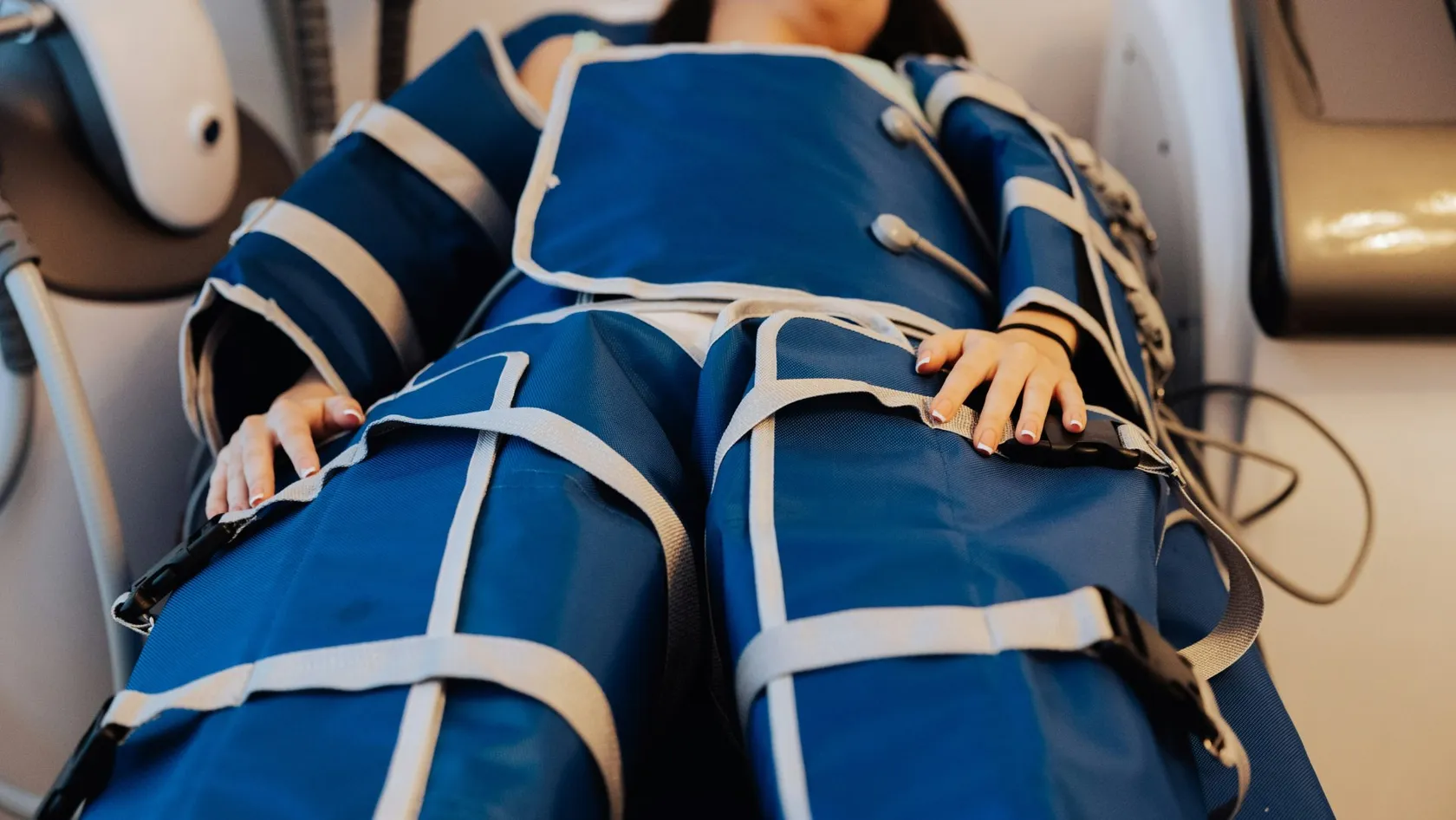
SBRT Radiation Therapy - Stereotactic Body Radiation Therapy
SBRT trades weeks of small daily doses for one to five large ones, and the trade only works when the aim is accurate to a millimeter or two. Trials back it in early lung cancer, prostate cancer and painful spinal deposits, and they also recorded its harms. See who is suitable, how many days to allow and what to ask about the machine.
About This Department
Three sessions controlled 97.6 percent of early lung tumors at three years. SBRT compresses a course of radiotherapy into one to five visits.
The lung result comes from a North American trial in JAMA, in patients too unwell for surgery whose tumors, with older radiotherapy, were controlled in only three or four cases out of ten. Randomized trials have since tested the same approach in the prostate, in the spine and in cancers that have spread to a few sites. Each of those trials also recorded harm. This page reports both. Send us your pathology, your scans and your treatment history, and a radiation oncologist will tell you whether your tumor is one that SBRT suits.
What makes SBRT different from ordinary radiotherapy?
Conventional radiotherapy works by repetition. A dose of about 2 gray is given every weekday for weeks, healthy tissue repairs itself overnight a little better than tumor does, and the difference adds up. SBRT abandons that logic. A single session delivers 7 to 20 gray, enough to destroy whatever receives it (doctors call such a dose ablative), and the protection of healthy tissue comes entirely from geometry. Dose must be confined to the tumor with a margin of a few millimeters and must fall away steeply outside it. A conventional course forgives a few millimeters of error on a given day, because 30 other days average it out. Five sessions do not.
Four technical conditions follow from that, and a unit offering SBRT should be able to describe how it meets each.
- Rigid, reproducible positioning. A vacuum cushion molded to the body, or a mask for targets near the neck.
- Control of breathing motion. Lung, liver, pancreas and kidney tumors move by a centimeter or more with each breath. A four-dimensional planning CT records the motion, and treatment is either timed to one phase of breathing, given during a breath-hold, or planned to cover the measured path.
- Imaging before every session. A cone-beam CT on the treatment machine is matched to the plan and the couch corrected before the beam is switched on. For the prostate, some units implant tiny gold markers beforehand so that the gland itself can be seen.
- Physics checks on every plan. The plan is delivered to a measuring device and verified before the patient is treated.
What do the trials show?
Four terms used below
Liver, pancreas, kidney, adrenal gland and lymph nodes
SBRT has earned its place in early lung cancer, in low and intermediate-risk prostate cancer and in painful spinal deposits. For limited metastatic disease the evidence is promising and still of phase 2 quality.
How is treatment planned for someone traveling to Istanbul?
For a patient from abroad the calendar counts for a great deal, since the whole of an SBRT treatment, from the first consultation to the last session, fits into a stay during which a conventional course of radiotherapy would barely have started.
Days to allow
Planning takes longer than treating. Allow for both.
This table scrolls sideways on a narrow screen. Swipe or drag to see every column.
| Site | Sessions | Pattern | Total stay |
|---|---|---|---|
| Lung, peripheral | 3 to 5 | Every second day | About three weeks |
| Lung, close to the central airways | 8 | Daily or alternate days, at a gentler dose per session | Three to four weeks |
| Prostate | 5 | Alternate days over one to two weeks | Three weeks, longer if gold markers are placed first |
| Spine and bone | 1 to 5 | Daily | Two weeks |
| Liver, pancreas, kidney, adrenal, lymph node | 3 to 5 | Alternate days | About three weeks |
| Several metastases | 3 to 8 per site | Sites are treated in sequence or together | Three to four weeks |
SBRT sets no waiting period before flying. You can leave the day after the last session, and you are not radioactive at any point.
- For the remote review, send the pathology report and any molecular results.
- PET-CT, CT and MRI reports with the images, taken within the past six to eight weeks.
- Lung function tests for a lung tumor, PSA history and prostate MRI for the prostate, liver blood tests for the liver.
- A summary of every earlier treatment, above all any radiotherapy, with its doses.
- Your medication list, a note of any pacemaker, and how far you can walk without stopping.
Afterward
- The same evening. Tiredness, sometimes mild nausea after abdominal treatment. After spinal SBRT, a flare of pain for a day or two that steroids prevent or settle.
- The first month. Tiredness lifts. After prostate SBRT, urinary frequency and urgency peak in the second week and ease over a month or two.
- Three months. The first scan, done at home. After lung SBRT the treated area scars, and the scar can look alarming on CT to a radiologist who does not know SBRT was given. Send the treatment summary with every scan request.
- Six months and beyond. Scans at intervals set by your own oncologist, who should also watch for the late effects that, where they occur, appear in this period.
What are the risks, and does the machine matter?
Side effects of SBRT depend on what lies next to the tumor. During treatment there is little to notice. What counts arrives weeks or months later, in the organ that sat closest to the high dose, and the rows below give the pattern for each of the common sites along with the patients in whom the risk runs higher than average.
Is CyberKnife better than SBRT on a linear accelerator?
Is SBRT an alternative to surgery for early lung cancer?
Can SBRT be given to an area treated before?
What decides the cost?
Hospitals quote SBRT per treated site, and the session count changes the figure less than patients expect, because most of the work lies in planning. Lesions multiply it. Each additional one needs its own contours, plan and checks, and motion management adds a four-dimensional scan and longer sessions. PET-CT or MRI repeated for planning, gold markers and their placement under ultrasound, and a rectal spacer for prostate patients are separate items where they are used, and any drug treatment given alongside belongs to medical oncology and is quoted by that department. Hotel costs come to a fraction of what a conventional course demands, and for many families that saving, three weeks of accommodation in place of eight or nine, decides the matter. Your own history moves the quote too. Earlier radiotherapy nearby, a pacemaker, poor lung function or liver disease all add assessments before anyone will sign off a plan.
Packages published in Turkey for stereotactic treatment cover three to five sessions with consultation, planning images, the sessions themselves, a follow-up consultation and transfers, and they describe a stay of eight to ten days in the country. Treat that stay as a minimum. Compare quotes on the number of lesions covered, whether imaging before every session is included, and whether the treatment summary with organ doses is issued in English.
Your own figure follows the free review of your file.
What about language, companions and follow-up at home?
One coordinator from the international patients team is assigned from your first message and stays on your case. The team works in English, Arabic, French, Russian, Serbian, Romanian and Spanish and arranges interpreting in other languages on request, and an interpreter attends the consultation and consent. An invitation letter naming the hospital and the treating doctor is sent about ten days before travel, and the international patients office arranges the airport transfer, the hotel for you and a companion, and the rides to each session. SBRT needs no admission. Should you be admitted for any other reason, the room has a companion bed. Halal, vegetarian and diabetic meals are available. A prayer room is on site. A request for a female doctor is passed to the department and met wherever the rota allows. Surgery, chemotherapy and radiotherapy share one site, so a change of plan at the tumor board does not mean a change of hospital.
Back home, the coordinator stays reachable on the same WhatsApp number. Send your scans there for the treating oncologist to see.
See a doctor locally the same day for coughing up blood, new breathlessness or fever after lung treatment, for inability to pass urine after prostate treatment, for new leg weakness or loss of bladder control after spinal treatment, and for black stools or vomiting blood after abdominal treatment.
SBRT FAQ
What is the difference between SBRT and conventional radiotherapy?
What is the success rate of SBRT for early lung cancer?
Is five-session SBRT as good as a long course for prostate cancer?
How long will I need to stay in Istanbul?
Does SBRT hurt?
Can my family come with me?
References
- Timmerman R, Paulus R, Galvin J, et al. Stereotactic body radiation therapy for inoperable early stage lung cancer. JAMA. 2010;303(11):1070-1076.
- Ball D, Mai GT, Vinod S, et al. Stereotactic ablative radiotherapy versus standard radiotherapy in stage 1 non-small-cell lung cancer (TROG 09.02 CHISEL): a phase 3, open-label, randomised controlled trial. Lancet Oncology. 2019;20(4):494-503.
- van As N, Griffin C, Tree A, et al. Phase 3 Trial of Stereotactic Body Radiotherapy in Localized Prostate Cancer. New England Journal of Medicine. 2024;391(15):1413-1425.
- Palma DA, Olson R, Harrow S, et al. Stereotactic ablative radiotherapy versus standard of care palliative treatment in patients with oligometastatic cancers (SABR-COMET): a randomised, phase 2, open-label trial. Lancet. 2019;393(10185):2051-2058.
- Sahgal A, Myrehaug SD, Siva S, et al. Stereotactic body radiotherapy versus conventional external beam radiotherapy in patients with painful spinal metastases: an open-label, multicentre, randomised, controlled, phase 2/3 trial. Lancet Oncology. 2021;22(7):1023-1033.
Editor's note
Written by the Biruni Hospital medical editorial team. Reviewed by Prof. Dr. Özcan YILDIZ, Medical Oncology.
Medically reviewed by

Prof. Dr. Özcan YILDIZ
Medical Oncology
Related Treatments
View All
Brachytherapy - Internal Radiation Therapy
A beam from outside has to cross healthy tissue to reach a tumor. Brachytherapy avoids that by placing a rice-sized radioactive source inside the tumor for a few minutes, then taking it out again. It is an essential part of curing cervical cancer and a tested option for womb, prostate and early breast cancer.
Brain Tumor Radiation Therapy
The plan for a brain tumor starts with what must be protected, the optic nerves, the brainstem, the hippocampus, and then shapes the dose around them. Radiosurgery in one to five sessions now treats most metastases, and six weeks of radiotherapy with temozolomide remains the standard after surgery for glioblastoma.
Chemoradiation Therapy - Concurrent Chemoradiotherapy
Blood test on Monday, a drip on Tuesday, radiotherapy every weekday, and the same again for six or seven weeks. Chemoradiation asks more of a patient than either treatment alone and, for several cancers, cures more. See the survival gains trial by trial, the side effects they came with, who is fit for it and how a long stay is organized.
Elekta Versa HD Radiation Therapy
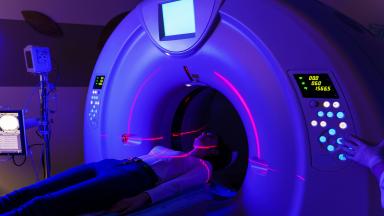
The Elekta Versa HD is the linear accelerator on which Biruni Hospital delivers external beam radiation therapy, with a 160-leaf collimator, high dose rate beams and cone beam CT imaging before every session. This page covers the techniques, from VMAT to radiosurgery, the cancers treated, what large trials show about shorter courses for breast, prostate and metastases, the path from first visit to last session, side effects, and how patients from abroad arrange treatment.
Glioblastoma Radiation Therapy
A glioblastoma has no edge, so surgery alone is never enough. Radiation covers the cavity and a margin of brain around it, together with a daily temozolomide capsule, over six weeks or three depending on age and fitness.