
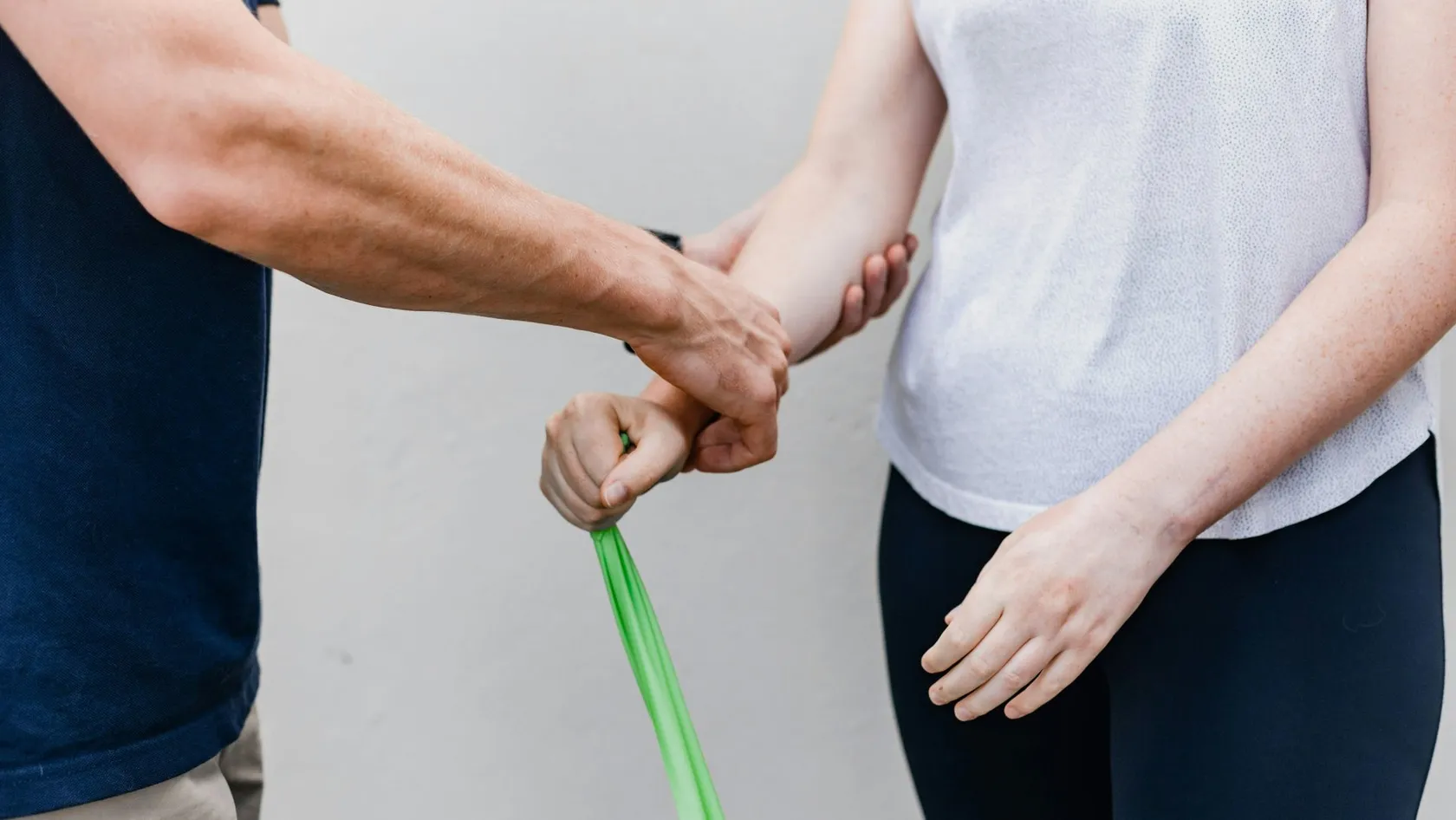
Occupational Therapy
Occupational therapy restores the activities a person needs each day, from buttoning a shirt to returning to work, by retraining the hand and the brain, adapting the task and changing the surroundings. This page explains how it differs from physiotherapy, who it helps after stroke, injury, arthritis or long illness, what a course involves, what the research shows, pediatric therapy, home and workplace changes, and how patients from abroad arrange a program at Biruni Hospital in Istanbul.
About This Department
Among 319 older people struggling with daily tasks, one percent of those given home-based occupational and physical therapy died within 14 months. In the untreated group the figure was ten percent.
That randomized trial in Philadelphia taught people aged 70 and over how to solve the problems of washing, cooking, climbing stairs and getting up from a fall, and it changed their homes to make those tasks safer (Gitlin and colleagues, Journal of the American Geriatrics Society, 2006). Nothing in it was a drug or an operation. Occupational therapy is the profession that works on what a person needs and wants to do each day, from holding a spoon to returning to a job, and it treats the person, the task and the surroundings together. This page explains what an occupational therapist does, how the work differs from physiotherapy, who it helps, what a course involves, what the research shows with its limits, and how patients from abroad can arrange it at Biruni Hospital in Istanbul.
What an occupational therapist does
Occupation confuses people as a word. Here it does not mean a job. It means everything a person occupies the day with, and an occupational therapist is a clinician trained to restore those activities when illness, injury, disability or age has taken them away.
The question is never only whether the arm moves. It is whether the arm can button a shirt, hold a phone, sign a name, cut bread.
Occupational therapy and physiotherapy
| Question | Physiotherapy | Occupational therapy |
|---|---|---|
| Main focus | Movement, strength, balance, walking, pain | Daily activities, hand and arm function, thinking skills, adaptation |
| Typical goal | Walk 50 meters with a stick | Get to the bathroom, wash and dress alone |
| Typical setting | Gym, treadmill, parallel bars | Kitchen, bathroom, workshop, the patient's own home |
| Tools | Exercise, manual therapy, electrical stimulation | Task practice, splints, adaptive equipment, home and workplace modification |
| Shared ground | Transfers from bed to chair, upper limb rehabilitation, falls prevention | The same, planned together in one program |
Hand therapy
Rehabilitation of the hand and wrist after fracture, tendon repair, nerve injury, burns or arthritis is a specialty of its own, practiced by occupational therapists with additional training and, in some countries, by physiotherapists. It combines custom splints made on the spot from thermoplastic, scar and swelling management, graded exercises and the retraining of everyday grips.
Is occupational therapy the same as vocational rehabilitation?
Who it helps
| Condition | Typical goals | Methods |
|---|---|---|
| Stroke | Dressing, feeding and washing with one hand, then two. Using the affected arm in daily tasks | Task-specific practice, constraint-induced therapy, mirror therapy, splints, home visit |
| Hip or wrist fracture in an older adult | Safe bathing, cooking and stairs. No further falls | Equipment, technique training, home hazard assessment, balance and strength with the physiotherapist |
| Brain injury | Attention, memory and planning in real tasks. Return to study or work | Cognitive rehabilitation, structured routines, graded return |
| Rheumatoid arthritis | Less pain in the hands, protected joints, continued work | Joint protection education, resting and working splints, adapted tools |
| Dementia | Longer independence at home, less strain on the carer | Simplified routines, environmental cues, carer training |
| Chronic pain or fatigue | A sustainable pattern of activity | Pacing, energy conservation, graded activity |
What a course looks like
A course begins with a conversation. Which activities does the person miss most. Everything after it serves those goals.
- Assessment. The therapist watches the person perform real tasks, measures hand strength, range of motion, sensation, coordination and thinking skills, and asks about home, work and routine. Standard tools include the Barthel Index, the Canadian Occupational Performance Measure and specific hand and cognitive tests.
- Goal setting. Two or three goals in the patient's own words, with a date attached. "Make breakfast for myself by the end of March."
- Treatment sessions. Usually 45 to 60 minutes, from daily on an inpatient ward to once or twice a week as an outpatient, for six to twelve weeks in a typical course.
- Home program. Exercises and tasks practiced every day between sessions, because repetition is what changes the brain and the hand.
- Review and discharge. Goals are measured again, equipment is checked in use, and a written program continues at home.
What a session contains
- Practice of the actual task, broken into steps and rebuilt, in a kitchen, bathroom or workshop set up for the purpose.
- Exercises for the hand and arm, often with objects from daily life rather than gym equipment.
- Making and fitting splints, and teaching when to wear them.
- Cognitive work, such as memory strategies, planning a shopping trip, managing money and medicines.
- Trial of equipment, so that the shower chair or the adapted knife is the right one before it is bought.
- Training of the family member who will help at home.
What research shows
A Cochrane review of occupational therapy for daily activities after stroke pooled nine randomized trials with 994 participants. Patients who received it scored higher in personal activities of daily living and had 29 percent lower odds of a poor outcome, meaning death, deterioration or dependency in those activities, and they were more independent in wider activities such as shopping and housework (Legg and colleagues, Cochrane Database of Systematic Reviews, 2017). The reviewers rated the evidence as low quality, because neither patients nor therapists can be blinded to a treatment of this kind and because the trials were few. A second Cochrane review looked at constraint-induced movement therapy, in which the good arm is restrained for hours a day to force use of the weak one. Across 42 trials and 1,453 participants it improved arm movement and function, but the gain in disability was smaller and not statistically convincing, and information on long-term effects was scarce (Corbetta and colleagues, Cochrane Database of Systematic Reviews, 2015). The Philadelphia trial quoted at the top of this page is the striking one, with mortality of 1 percent against 10 over 14 months in 319 older people, and its authors called the result preliminary. Taken together the studies say that occupational therapy reliably improves what people can do, that the size of the effect depends on how much practice the patient puts in, and that claims of dramatic cures should be treated with the same caution as claims that it does nothing.
How much therapy is enough?
Children
What does pediatric occupational therapy involve?
Home and work
- Bathroom. Grab rails at the toilet and in the shower, a shower seat, a raised toilet seat, non-slip flooring.
- Kitchen. Frequently used items at waist height, a perching stool, a kettle tipper, one-handed boards.
- Bedroom and stairs. Bed at the right height, a second rail, lighting on the route to the bathroom at night.
- Getting about. A properly fitted walking aid or wheelchair, a car assessment, a plan for public transport.
- Communication. Phone, alarm pendant and a system for medicines that the patient can operate alone.
Splints, and why practice beats equipment
Two things surprise new patients.
Take the splint first. Occupational therapists make many of them by hand, in the session, from a sheet of plastic that softens in warm water and is molded directly onto the wrist or fingers in a few minutes. A resting splint holds a joint in a safe position at night. A working splint supports it during the day so that a painful thumb can still open a jar. A dynamic splint uses springs or elastic to move a stiff finger that has been repaired. The therapist adjusts each one as swelling falls and movement returns, trimming an edge here and reheating a curve there, so that the splint of week six bears little resemblance to the splint of week one. A splint bought ready-made rarely fits as well or does as much.
Then comes the discovery of how little the equipment matters next to the practice, a lesson that every therapist has watched a patient learn the hard way and that no brochure for a rehabilitation robot has ever printed. A hand recovers by being used, hundreds of times a day, in tasks the person cares about. Robots, virtual reality and electrical stimulation all help by making repetitions easier or more interesting. None of them works on a hand that rests in a lap between sessions. The home program does the treating. Sessions teach it.
Fifteen minutes, four times a day, beats one heroic hour.
Coming from abroad
Occupational therapy travels well as part of a rehabilitation stay. On its own it travels less well, since much of it belongs in the patient's own home. The usual pattern for international patients is an intensive inpatient or daily outpatient block in Istanbul of two to six weeks, in which goals are set, hand function and daily skills are trained several hours a day, splints and equipment are made and fitted, the family is taught, and a home program is written for continuation. Send the discharge summary, imaging reports and a list of medicines. Add a short video of the patient dressing, eating and moving about. A minute of film beats a page of notes. The rehabilitation team reviews the file without charge. The reply sets out goals, a program and the length of stay. One coordinator from the international patients office handles arrangements from the first message through discharge and answers the same WhatsApp number once you are back home, when questions about the home program arise. The office works in English, Arabic, French, Russian, Serbian, Romanian and Spanish and books interpreters for sessions, which matters in cognitive work. It arranges the visa invitation letter, airport transfers, daily transport and accommodation near the hospital. Ward rooms have a companion bed, the kitchen prepares halal, vegetarian and diabetic meals as well as modified textures where swallowing is affected, and the dietitian and the occupational therapist plan those meals together when feeding itself is one of the goals. A prayer room is on site, and a request for a female therapist or physician is met wherever the rota allows. Only the medical condition limits flying. The therapist writes a handover for colleagues at home, with the goals reached and the next ones.
Cost
The estimate follows the file review and depends on whether the program is inpatient or outpatient, the number of sessions a day, and equipment or splints supplied. Hospitals in this market quote occupational therapy per session or as part of a weekly rehabilitation package.
Confirm what a session includes and whether splint materials and equipment are billed separately.
References
- Gitlin LN, Hauck WW, Winter L, Dennis MP, Schulz R. Effect of an in-home occupational and physical therapy intervention on reducing mortality in functionally vulnerable older people, preliminary findings. J Am Geriatr Soc. 2006;54(6):950-955.
- Legg LA, Lewis SR, Schofield-Robinson OJ, Drummond A, Langhorne P. Occupational therapy for adults with problems in activities of daily living after stroke. Cochrane Database Syst Rev. 2017, Issue 7, CD003585.
- Corbetta D, Sirtori V, Castellini G, Moja L, Gatti R. Constraint-induced movement therapy for upper extremities in people with stroke. Cochrane Database Syst Rev. 2015, Issue 10, CD004433.
Editor's note
Written by the Biruni Hospital medical editorial team. Reviewed by Speech and Language Therapist Elif İkbal ESKİOĞLU, Speech and Language Therapy.
Medically reviewed by
Speech and Language Therapist Elif İkbal ESKİOĞLU
Speech and Language Therapy
Related Treatments
View All
Brain Injury Rehabilitation
A bleak outlook given in the first two weeks after a severe brain injury is frequently wrong. In the largest recent follow-up study, 12 percent of such patients were doing well at two weeks and 52 percent at one year. Learn what rehabilitation adds to that recovery, stage by stage, and when a patient is ready to travel.
Cancer Rehabilitation - Oncology Rehabilitation
Cancer rehabilitation treats the fatigue, weakness, stiffness, swelling, nerve damage, swallowing problems and loss of function that cancer and its treatment leave behind, before, during and after therapy. In one study 92 percent of women with metastatic breast cancer had a treatable impairment and fewer than a third were being treated. This page explains what is treated, the evidence on fatigue and lymphedema, prehabilitation, specialist problems and programs for patients from abroad.
Cardiac Rehabilitation - Heart Rehabilitation
A stent or a bypass repairs one artery. It does nothing to the disease that narrowed it. Cardiac rehabilitation is the monitored exercise, tablet review and risk factor treatment that does, and randomized trials link it to fewer repeat heart attacks and fewer hospital admissions in the following year.
Inpatient Rehabilitation
Should recovery happen on a hospital ward, or at home with visits to a clinic? A ward is the answer when someone needs therapy every day, a nurse at night and a doctor nearby, which is common after a stroke, a hip fracture, heart surgery, a lung flare-up or a long spell in intensive care.
Inpatient Rehabilitation - Acute Rehabilitation Unit
Acute does not mean emergency here. It means the intensive level of rehabilitation, with at least three hours of therapy a day on a hospital ward where a rehabilitation doctor sees you daily, and it suits people in the first months after a stroke, a spinal cord injury, a brain injury or major surgery.