Radiation therapy for liver cancer means stereotactic body radiation therapy in three to six sessions, aimed at a hepatocellular carcinoma or a liver metastasis while the healthy liver is spared. This page explains which patients and tumors qualify, how radiation compares with ablation, embolization and surgery, what the prospective trials and the randomized trial show, the course step by step, the side effects, and how patients from abroad arrange it in Istanbul.
About This Department
Radiation oncology
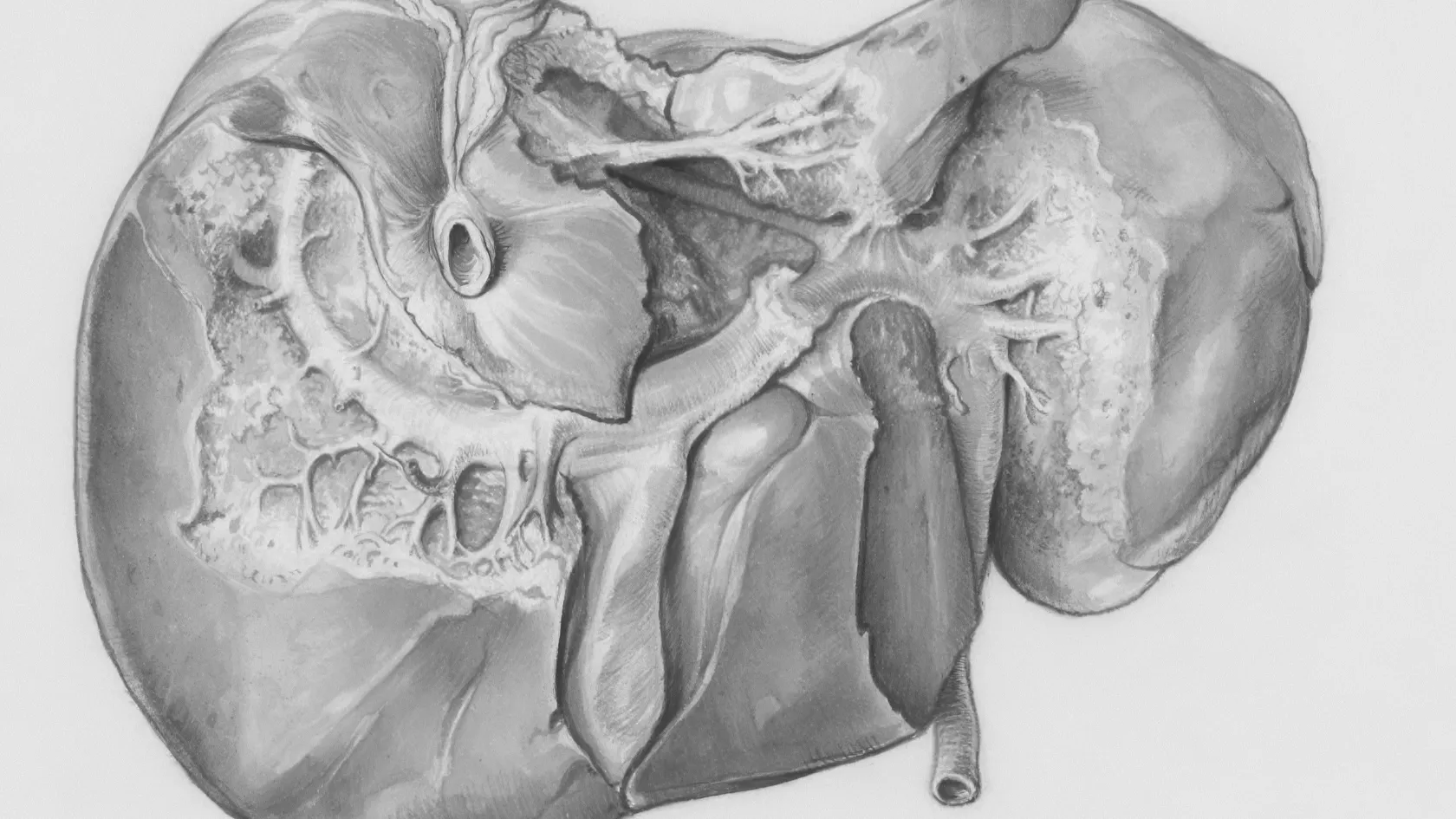
The liver was once the organ radiation could not treat. A high dose to a small part of it, in five sessions, now controls most tumors it is aimed at. The rest of the liver is left alone.
Radiation therapy for liver cancer means, in nearly every case, stereotactic body radiation therapy, or SBRT, which delivers a high dose to the tumor in three to six sessions while sparing the liver around it. In the first prospective trials of the technique, 102 patients with hepatocellular carcinoma unsuitable for other local treatments, more than half of them with tumor in the portal vein, had local control of 87 percent at one year (Bujold and colleagues, Journal of Clinical Oncology, 2013). A randomized phase 3 trial then added SBRT to sorafenib for advanced disease and improved median survival from 12.3 to 15.8 months (Dawson and colleagues, JAMA Oncology, 2025). This page explains what radiation can and cannot do for primary liver cancer and for cancers that have spread to the liver, how it compares with ablation, embolization and surgery, what the trials show, what the course involves, the side effects, and how patients from abroad arrange it at Biruni Hospital in Istanbul.
87
Percent local control at one year in the first prospective SBRT trials for hepatocellular carcinoma
97.4
Percent of tumors free of local progression at one year after SBRT, against 83.6 percent after radiofrequency ablation
15.8
Months median survival with SBRT added to sorafenib in advanced disease, against 12.3 months without
Free
Review of your CT or MRI, liver function tests and prior treatment record
Four jobs, and the dose and the schedule differ for each.
1
Cure a small tumor that cannot be cut out or burned
A hepatocellular carcinoma or a single metastasis under five centimeters, in a patient whose liver function or anatomy rules out surgery and ablation, treated with SBRT to a dose that stops it growing in nearly all cases.
2
Hold a tumor still until a transplant
Patients on a waiting list for a liver transplant receive SBRT to keep the tumor within the limits that allow the transplant to go ahead.
3
Control advanced disease
A tumor that has grown into the portal vein, or one too large for other treatments, receives SBRT to the visible disease alongside drug therapy, which the randomized trial below showed extends life.
4
Relieve pain
A short course of ordinary radiation to a large, painful liver reduces the ache under the ribs within two weeks for the great majority.
Local control at one year was 87 percent. Median gross tumor volume was 117 milliliters, tumor vascular thrombosis was present in 55 percent, and median overall survival was 17.0 months in patients who had no other option (Bujold and colleagues, 2013).
The whole liver tolerates little radiation. A part of it tolerates a great deal. That is the whole principle. As long as enough healthy liver is kept out of the high-dose region, the treated part can receive a dose that destroys the tumor, and the spared part carries on working and, over months, regrows.
How it is delivered here
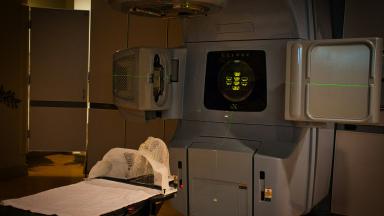
The Versa HD accelerator at Biruni Hospital delivers liver SBRT with its high dose rate beam, a cone beam CT before every session, and management of breathing, because the liver moves several centimeters with each breath and the beam must know where the tumor is. Patients hold their breath for the seconds the beam runs, or the beam switches on only in one phase of breathing, and a small gold marker placed in the liver beforehand under ultrasound shows the tumor's position on the imaging.
Which patients and cancers
The tumor decides less than the liver does.
Cancers treated
Cancer
Role of radiation
Usual schedule
Hepatocellular carcinoma, small, beyond surgery and ablation
Definitive local treatment
3 to 6 sessions
Hepatocellular carcinoma with portal vein invasion
Local control added to drug therapy
5 sessions
Hepatocellular carcinoma on a transplant list
Bridge to transplant
5 sessions
Colorectal, breast or lung cancer with one to three liver metastases
Ablative treatment of each metastasis
3 to 5 sessions
Cholangiocarcinoma inside the liver, unresectable
Local control, sometimes with chemotherapy
5 to 15 sessions
Large painful liver from any cancer
Pain relief
1 to 5 sessions
What the liver must be able to take
Requirements before SBRT
Measure
Needed
Why
Liver function
Child-Pugh class A, or early B in selected cases
Radiation stresses the liver, and a failing liver cannot absorb it
Healthy liver volume
At least 700 milliliters receiving a low dose
That volume keeps working while the treated part recovers
Ascites
None, or controlled
Fluid in the abdomen signals a liver near its limit
Distance from bowel and stomach
Ideally more than a centimeter
These organs tolerate a high dose poorly
Tumor size
Under 5 to 6 centimeters for ablative doses
Larger tumors need lower doses and more sessions
1
Blood tests
Bilirubin, albumin, clotting and platelets, repeated after treatment.
2
Imaging
A three-phase CT or a contrast MRI within a month of treatment, and the same study for follow-up.
Radiation, ablation, embolization or surgery
Liver cancer has more local treatments than any other cancer, and the right one depends on the size and position of the tumor, the state of the liver and what has already been tried.
A comparison of 224 patients with inoperable hepatocellular carcinoma found freedom from local progression at one year of 97.4 percent after SBRT and 83.6 percent after radiofrequency ablation. For tumors of two centimeters or more, ablation failed more than three times as often. Survival was the same, and the authors called SBRT a reasonable first-line treatment for inoperable, larger tumors, while noting that the comparison was retrospective (Wahl and colleagues, Journal of Clinical Oncology, 2016).
Surgery removes the tumor and provides a specimen. Ablation burns it through a needle and works best under three centimeters. Embolization starves it through its artery and suits multiple tumors. Radiation destroys it without touching it, reaches tumors near large vessels and under the dome of the diaphragm that a needle cannot, and needs no anesthetic.
The usual order
Surgery or transplant first, when the patient can have it. Then ablation, for small tumors away from vessels and the liver surface, and embolization for several tumors in a liver that still works. Radiation for the tumor that none of these can reach safely, for the tumor that has come back after ablation or embolization, for the tumor in the portal vein, and, increasingly, as an equal to ablation for tumors between two and five centimeters. The multidisciplinary liver tumor board, with the hepatologist, the liver surgeon, the interventional radiologist and the radiation oncologist, makes the decision for each patient, and a patient referred from abroad with a plan made at home should expect it to be reviewed rather than repeated.
What the trials show
Three studies define what a patient can expect. One prospective series, one comparison, one randomized trial.
The Toronto trials, 2004 to 2010. 102 patients with hepatocellular carcinoma unsuitable for other treatment, two thirds at stage III, received 24 to 54 Gy in six sessions. Local control at one year was 87 percent. Serious toxicity occurred in 30 percent, and seven deaths were possibly related to treatment, most in patients with tumor in the portal vein, which taught the field to select patients with care (Bujold and colleagues, 2013).
Michigan, SBRT against ablation. Freedom from local progression at one year was 97.4 percent after SBRT and 83.6 percent after ablation. Serious acute complications occurred after 5 percent of SBRT treatments and 11 percent of ablations (Wahl and colleagues, 2016).
NRG/RTOG 1112, the randomized trial. 193 patients with advanced hepatocellular carcinoma, three quarters with macrovascular invasion, were randomized to sorafenib alone or SBRT followed by sorafenib. Median survival rose from 12.3 to 15.8 months and progression-free survival from 5.5 to 9.2 months, with no increase in serious side effects and better quality of life at six months (Dawson and colleagues, 2025).
What the randomized trial means
Does radiation extend life in advanced liver cancer?
The trial says yes, by about three and a half months on average, and by considerably more for the patients whose disease is confined to the liver. Its statistical result sat at the border of significance because enrollment stopped early when immunotherapy replaced sorafenib as the standard drug. Radiation is now combined with the newer drugs in the same way, and trials of that combination are under way. The finding that matters for a patient is that treating the visible tumor, even when the disease is advanced, changes the course of the illness.
None of these trials used a CyberKnife or a proton beam. All were delivered on linear accelerators of the same class as the machine at Biruni Hospital, and the doses used are the doses the hospital uses.
Local control after SBRT is high, above 85 percent at one year across the studies, and survival depends on what the cancer does elsewhere in the liver and beyond.
Patient selection, above all liver function and the volume of healthy liver, determines safety more than any detail of the technique.
Radiation and drugs work together, and the sequence is planned at the outset rather than improvised.
The course
Two weeks, as a rule. Three visits before the first session and three to six sessions after.
Marker placement. A gold marker the size of a grain of rice is placed in the liver near the tumor, under ultrasound and local anesthetic, three to seven days before planning so that it settles. Some centers use the tumor's own contrast appearance instead.
Planning CT with contrast and breathing control. The patient lies in a mold, practices the breath-hold, and is scanned in that position. An MRI is fused to the scan. The oncologist outlines the tumor and the physicist designs beams that meet the dose to the tumor and the limits for the healthy liver, the bowel, the stomach, the kidney and the spinal cord.
Treatment. Three to six sessions, every other day, each lasting thirty to forty-five minutes on the couch, most of it imaging and positioning. The beam itself runs for a few minutes.
Follow-up. Blood tests at one month, imaging at three months, then every three months in the first year.
What the patient feels
Nothing during the session. Tiredness for a week or two afterward, mild nausea in the first days if the stomach is near the field, and a dull ache in the right side in some patients. Normal activities continue for nearly everyone. Patients receiving sorafenib or another drug pause it for the days of treatment and restart afterward on the oncologist's schedule.
The tumor does not disappear at once. On the three-month scan it is frequently the same size and no longer enhances with contrast, which means it is dead. Shrinkage follows over the next year.
Side effects
Modest when the patient is well chosen. Serious when the liver was not able to take it.
What to expect
Effect
When
How often
Tiredness, nausea
First two weeks
Common, mild
Rise in liver enzymes
First month
Common, usually silent
Ache under the ribs
First weeks
Some patients
Stomach or duodenal ulcer
Two to six months
Uncommon, when the tumor sits against them
Rib pain or fracture
Months later
Uncommon, for tumors at the liver surface
Decline in liver function
One to three months
Uncommon in Child-Pugh A, the main serious risk
Radiation-induced liver disease
The complication the whole field is designed to avoid. Weeks after treatment the liver swells, fluid collects in the abdomen and the enzymes rise, and in its severe form it leads to liver failure. It follows too high a dose to too much liver, and the dose limits in the plan, the requirement for 700 milliliters of spared liver and the insistence on Child-Pugh A function exist to prevent it. In the Toronto trials, which treated patients with large tumors and portal vein involvement, it was the main cause of the treatment-related deaths. In the later trials with stricter selection, it was rare.
Coming from abroad
Patients travel for liver SBRT because it needs a team that plans the liver every week, with a physicist who knows its dose limits and a radiologist who reads its scans, and such teams exist in a few centers in each region rather than in every hospital. The length of stay is two to three weeks. That covers the tumor board, the marker, the planning and the sessions, with a rest day between each session, and patients are fit to fly two days after the last one. A patient who has had a recent triple-phase CT and a full liver panel at home saves the first two days, and one who has already had a marker placed for another reason saves the week between placement and planning, which is the reason the coordinator asks for every previous report before proposing dates, since the difference between a two-week and a three-week stay is decided by what has already been done at home rather than by anything the hospital can speed up.
1
What to send
The most recent contrast CT or MRI as image files, the liver function tests with the Child-Pugh or MELD score, the alpha-fetoprotein level, the hepatitis status, a record of every previous treatment to the liver with dates, and the list of current medicines. The liver tumor board reviews the file without charge and replies with a recommendation, which is sometimes a different treatment from the one asked about.
2
The visit
Consultation and board review in the first two days, marker placement on day three, planning on day six or seven, sessions from the second week on alternate days, and a blood test before departure.
3
Once you are back home
The three-month scan is reviewed by the same oncologist, wherever it is done, and the next step is agreed with the doctor at home. One coordinator from the international patients office handles arrangements from the first message through discharge and answers the same WhatsApp number afterward. The office works in English, Arabic, French, Russian, Serbian, Romanian and Spanish and books interpreters for other languages. It arranges the visa invitation letter, airport transfers, daily transport and accommodation near the hospital. Halal, vegetarian and diabetic meals, a prayer room on site, and a female physician on request wherever the rota allows.
Cost
An estimate follows the file review and depends on the number of tumors, the number of sessions, the marker procedure and whether an MRI is repeated here. Hospitals in this market quote liver SBRT as a package for the course, with the marker, planning and imaging included and drug therapy priced separately.
Confirm what the figure includes and whether the three-month scan review is part of it.
References
Bujold A, Massey CA, Kim JJ, et al. Sequential phase I and II trials of stereotactic body radiotherapy for locally advanced hepatocellular carcinoma. J Clin Oncol. 2013;31(13):1631-1639.
Wahl DR, Stenmark MH, Tao Y, et al. Outcomes after stereotactic body radiotherapy or radiofrequency ablation for hepatocellular carcinoma. J Clin Oncol. 2016;34(5):452-459.
Dawson LA, Winter KA, Knox JJ, et al. Stereotactic body radiotherapy vs sorafenib alone in hepatocellular carcinoma. The NRG Oncology/RTOG 1112 phase 3 randomized clinical trial. JAMA Oncol. 2025;11(2):136-144.
Editor's note
Written by the Biruni Hospital medical editorial team. Reviewed by Prof. Dr. Mustafa Teoman YANMAZ, Medical Oncology.