Seven weeks of radiotherapy with cisplatin can cure a cancer of the throat or voice box without removing the organ, and the same treatment after surgery clears what the surgeon could not see. It is the hardest course in radiotherapy to get through, and the dental work, feeding plan and swallowing exercises around it decide how a patient comes out of it.
About This Department
Radiation Oncology
Radiotherapy can cure a cancer of the throat and leave the voice box in place. In the trial that settled it, 88 percent of patients kept their larynx.
Cancers of the mouth, throat, voice box, nasopharynx and salivary glands are treated with radiotherapy either instead of surgery, to keep speech and swallowing intact, or after it, to clear cells the surgeon could not see. The usual course runs seven weeks, with cisplatin alongside. A meta-analysis of 87 randomized trials found that adding chemotherapy during radiotherapy raises five-year survival by 6.5 percentage points, and the modern beam-shaping technique cut lasting dry mouth from 74 to 38 percent of patients in a British trial.
88 in 100
Voice box preserved at 2 years, NEJM 2003
6.5 points
Higher 5-year survival with chemoradiation, Radiother Oncol 2009
82.4% vs 57.1%
Alive at 3 years, HPV-positive and HPV-negative throat cancer, NEJM 2010
Free
Radiation oncologist review of your scans
Free consultation
Send the biopsy report with the HPV or p16 result if it was tested, the CT, MRI or PET-CT of the head and neck, the operation note if surgery has been done, and a recent dental panoramic X-ray if you have one. A radiation oncologist tells you whether radiotherapy alone, chemoradiation or surgery first is the right sequence, and how many weeks to plan. The opinion is free and commits you to nothing.
Head and neck cancer is a group of cancers in a small space. Within a few centimeters sit the tools of eating, speaking, tasting, hearing and breathing. Every decision about head and neck cancer radiation therapy is therefore a decision on which of them to protect and at what price, and this page sets out what the treatment can do, what the trials measured, what seven weeks of it feel like, and how a patient from abroad gets through them in Istanbul.
What radiotherapy does in head and neck cancer
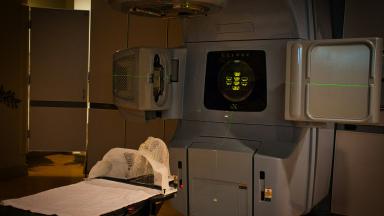
Most head and neck cancers are squamous cell carcinomas. They start in the moist lining of the mouth and throat. Squamous cells are sensitive to radiation, which gives doctors a choice that exists in few other cancers. Seven weeks of radiotherapy with chemotherapy cure a tumor of the voice box or the back of the throat in most patients, and the organ stays where it is. Six weeks of radiotherapy to the operated area lowers the chance of return after surgery for a large tumor or one that has reached the lymph nodes. For the few tumors that cannot be cured, a shorter course shrinks them enough to relieve pain, bleeding or a blocked airway. Intensity modulated radiotherapy, IMRT, is the technique. A linear accelerator delivers it while the head rests in a mask, and the beams are shaped around the salivary glands, the spinal cord, the swallowing muscles and the jaw. At Biruni Hospital the machine is an Elekta Versa HD. A scan on the treatment couch before each session confirms the position, and the medical oncology team on the same site gives the cisplatin, once a week or once every three weeks, during the course.
Site by site
Each site has its own rules.
Oropharynx, the back of the throat
Tonsil and tongue-base cancers have changed in the past twenty years. Human papillomavirus, HPV, now causes many of them in place of tobacco, and the two kinds behave differently. Both get chemoradiation as the standard curative treatment. The HPV status, which the pathologist reports as p16, predicts the outcome more reliably than anything else, and patients with the HPV type often ask whether a milder treatment would do. A large trial answered that question with a clear no.
Larynx and hypopharynx, the voice box and the lower throat
An advanced cancer of the larynx used to mean removal of the voice box, a permanent opening in the neck and no natural voice. Radiotherapy with cisplatin keeps the larynx in most patients. The treatment is harder. Surgery remains the better choice when the tumor has destroyed the cartilage or the larynx no longer works, since a preserved organ that cannot swallow or protect the airway helps nobody.
Mouth, nasopharynx and salivary glands
Tongue, gum and floor-of-mouth cancers go to surgery first. Radiotherapy follows when the margins are close, the nodes are involved or the tumor is large. Nasopharyngeal cancer sits behind the nose where no surgeon can reach, and radiotherapy with cisplatin cures the majority of patients even at advanced stages. Salivary gland tumors are operated on and irradiated afterward when the grade is high or the facial nerve was close.
After surgery
Postoperative radiotherapy starts within six weeks of the operation, once the wound has healed. It covers the tumor bed and the neck. Cisplatin is added when the pathologist finds cancer at the cut edge or spread through the capsule of a lymph node, because two randomized trials showed better control of the disease with it in exactly those two situations and in no others.
The trials behind the treatment
Five trials shaped the standard. Each earns its place below.
Chemotherapy during radiotherapy
6.5 percentage points
Absolute gain in five-year survival when chemotherapy is given during radiotherapy, from 50 trials in the MACH-NC meta-analysis of 16,485 patients, with a hazard ratio for death of 0.81. Chemotherapy given before radiotherapy helped less, and the benefit of any chemotherapy fell with age. Pignon and colleagues, Radiother Oncol, 2009.
What it means for you
Cisplatin during the course is the standard for fit patients under 70 with a locally advanced cancer. Over that age, or with kidney disease, hearing loss or poor general health, the drug is dropped or replaced. Doctors decide person by person.
Keeping the voice box
88 percent
Patients with an intact larynx two years after radiotherapy with concurrent cisplatin, against 75 percent after chemotherapy followed by radiotherapy and 70 percent after radiotherapy alone, among 547 patients with advanced laryngeal cancer. Survival was the same in all three groups. Severe side effects during treatment were 82 percent with chemoradiation against 61 percent with radiotherapy alone. Forastiere and colleagues, N Engl J Med, 2003.
What it means for you
Chemoradiation keeps the larynx. It also takes the harder road during treatment, so patients who choose it should expect a sore throat that stops normal eating for several weeks and should have the feeding support planned in week one, long before it is needed.
HPV changes the outlook
82.4% vs 57.1%
Three-year survival in HPV-positive and HPV-negative oropharyngeal cancer among 323 patients treated with chemoradiation in a randomized trial. After adjustment for stage, age and smoking, HPV-positive disease carried a 58 percent lower risk of death, and every extra pack-year of smoking raised the risk. Ang and colleagues, N Engl J Med, 2010.
What it means for you
Ask for the p16 result before any planning conversation. It shapes the outlook more than the size of the tumor does, and it separates patients who may one day be candidates for gentler treatment from those who need everything the standard offers.
Can cisplatin be swapped for something milder?
77.9% vs 84.6%
Five-year survival with cetuximab and with cisplatin, each given alongside radiotherapy, among 805 patients with HPV-positive oropharyngeal cancer in the RTOG 1016 trial. The cancer came back in the head and neck in 17.3 percent with cetuximab against 9.9 percent with cisplatin, and side effects were no milder. Gillison and colleagues, Lancet, 2019.
What it means for you
Cetuximab, an antibody that some clinics present as a gentler alternative, proved worse. Cisplatin stays the standard. A patient who cannot take it should be told plainly that a different drug is a compromise.
Sparing the salivary glands
38% vs 74%
Patients with troublesome dry mouth a year after IMRT planned to spare the parotid glands and after conventional radiotherapy, in 94 patients with throat cancer. Saliva recovered with IMRT, quality of life was better, and tumor control was the same. Nutting and colleagues, Lancet Oncol, 2011.
Before anyone books a flight
Four things have to be settled first. The order matters.
Dental work. Any tooth that is decayed, loose or infected inside the future beams comes out at least ten days to two weeks before the first session, because an extraction from an irradiated jaw can fail to heal for years. A panoramic X-ray and a dental review are the first appointments of the course, and the reason to arrive early.
The sequence. Surgery first or radiotherapy first is a decision for a tumor board of surgeons, radiation oncologists and medical oncologists, made from the scans and the biopsy before travel. A patient who has already had surgery should send the pathology report, since the margins and the nodes decide whether cisplatin is added.
Smoking and alcohol. Both make radiotherapy work less well and side effects worse. Stopping at diagnosis is part of the treatment.
Time. Seven weeks of daily sessions plus planning means eight to nine weeks away from home. Patients who cannot commit to the whole course should be treated near home, because a course broken in the middle is worse than either choice made cleanly.
The seven weeks, step by step
A curative course runs 33 to 35 sessions over six and a half to seven weeks, Monday to Friday, to a dose of 66 to 70 gray. The trials above used the same range. Sessions take 15 to 20 minutes in the mask, and the beam is on for a few of them.
Week 0. Consultation, tumor board, dental review and extractions, blood tests, hearing test if cisplatin is planned, a dietitian visit to record weight and plan feeding, and a speech therapist visit to record swallowing and teach the exercises that keep the muscles working.
Planning. The mask is made, a planning CT is taken in it, with an MRI or PET-CT fused to it where the tumor is hard to see, and the doctor outlines the tumor, the nodes and every organ to protect. The physicist builds the plan over three to seven working days.
Weeks 1 to 2. Treatment begins. Few symptoms yet. Cisplatin is given on day one, and the first weekly review checks blood counts and kidney function.
Weeks 3 to 4. The mouth and throat become sore, taste fades and saliva thickens. Mouthwashes, pain relief and a soft diet start. Weight is checked weekly, since every kilogram lost changes how the mask fits.
Weeks 5 to 7. The hardest stretch. Swallowing hurts, and many patients need liquid pain relief and a feeding tube, either through the nose or directly into the stomach, to keep calories going in. The skin of the neck reddens and may peel. The team sees you daily.
The two weeks after. Symptoms peak and then turn. Most patients feel the corner has been turned by the end of the second week after the last session, and that is the point at which the flight home makes sense.
Side effects, and what the team does about each
Head and neck radiotherapy has more side effects than radiotherapy anywhere else in the body. The lining that reacts first is the lining you eat and speak with. The table separates what happens during the course from what stays afterward, and the column on the right shows that each effect has an answer, even where that answer is time.
This table scrolls sideways on a narrow screen. Swipe or drag to see every column.
Side effects of head and neck radiotherapy
Effect
When
What is done
Sore mouth and throat, called mucositis
Weeks 3 to 9
Mouthwashes, pain relief up to morphine, soft or liquid diet, feeding tube when needed
Thick saliva, then dry mouth
From week 3, dry mouth can persist for years
Water, saliva substitutes, parotid-sparing planning, pilocarpine tablets in some patients
Loss of taste
Weeks 3 to 12, recovers in most within months
Dietitian support, since food without taste is easy to skip
Weight loss and dehydration
Weeks 4 to 9
Weekly weights, supplements, tube feeding, fluids by drip if needed
Skin reaction on the neck
Weeks 4 to 8
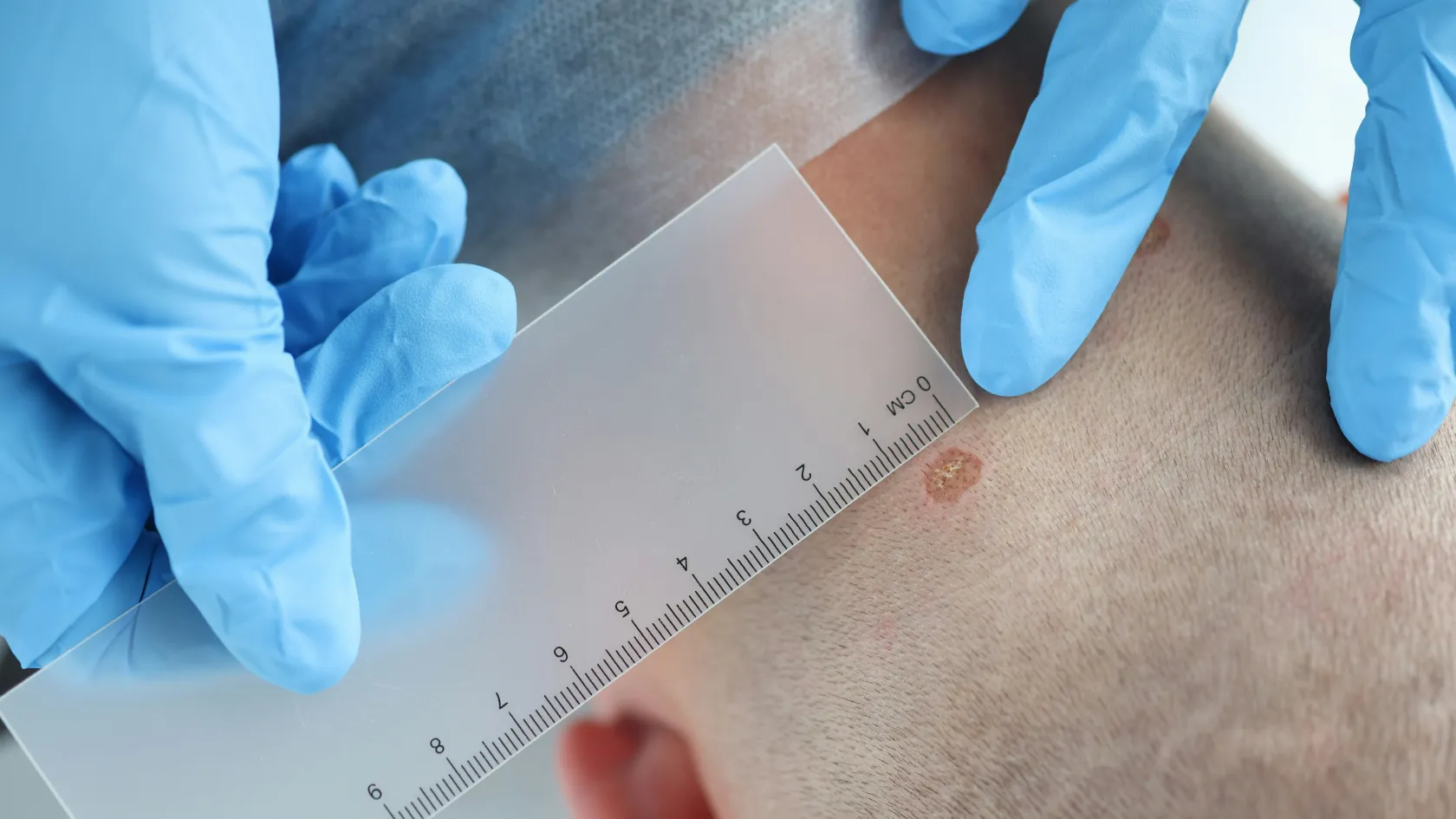
Moisturizer, dressings for broken skin, no shaving with a blade
Hoarseness and swallowing difficulty
During treatment, can persist
Speech therapist exercises through the course and for months after
Hearing loss and kidney strain from cisplatin
During and after treatment
Hearing test before, kidney tests each cycle, dose changes or a different drug
Underactive thyroid
One to five years later
A blood test every year, tablets if it falls
Jaw bone damage, osteoradionecrosis
Years later, after an extraction or injury
Dental work before radiotherapy, fluoride for life, no extractions without the radiation oncologist's advice
Tell the team the same day about a temperature of 38 degrees or higher, being unable to swallow liquids, bleeding from the mouth or throat, noisy or difficult breathing, or confusion. The last two are emergencies at any hour.
When the course has to change
Change during a head and neck course is the rule. Weight loss loosens the mask and shrinks the tumor. Many centers take a new scan and build a new plan in the fifth week as a matter of routine. Low blood counts or a rise in kidney tests delay or cancel a cisplatin dose while radiotherapy continues. Radiotherapy itself must not stop. Dehydration or pain that tablets cannot control leads to admission for fluids, pain relief by drip and a feeding tube, and the daily sessions go on from the ward, with a porter and a wheelchair. Because chemotherapy, radiotherapy and the ward are on one site at Biruni Hospital, a patient who is admitted is taken to the machine each day without an ambulance.
A missed session is added at the end
The total dose and the overall time both matter in this cancer, and gaps in treatment lower the chance of cure. Two sessions on one day, six hours apart, make up lost ground. Keep a margin of a week before the return flight.
Weeks in Istanbul, cost and the trip
The length of stay is the first thing to fix, and the table gives the three usual cases.
This table scrolls sideways on a narrow screen. Swipe or drag to see every column.
How long to plan for
Course
Sessions
Time in Istanbul
Curative chemoradiation, larynx, oropharynx or nasopharynx
33 to 35 over 7 weeks
9 to 10 weeks, including dental work, planning and two weeks of recovery
Postoperative radiotherapy
30 to 33 over 6 to 6.5 weeks
8 to 9 weeks
Short palliative course
5 to 10
2 to 3 weeks
These figures follow the schedules used in the trials and the programs that Turkish hospitals publish for international patients, which quote six to seven weeks of daily treatment plus preparation. Nine or ten weeks is longer than most visa-free entries allow. The international patients office sends an invitation letter with the appointment confirmation ten days before travel, naming the hospital and the treating doctor, and for a stay of this length it belongs in a visa application.
The number of sessions sets the cost first, followed by the technique, the cisplatin cycles with their blood tests, the planning imaging, the mask, dental extractions, dietitian and speech therapy visits, feeding tube placement, and any admission for supportive care. It is a longer list than for most radiotherapy. Published packages in Istanbul cover the consultation, planning, all sessions and weekly reviews, an interpreter and transfers. They leave out chemotherapy drugs, the hotel, flights, dental work and admissions. Age, kidney function, hearing, diabetes and previous radiotherapy to the neck all change the plan. A quote follows the doctor's review of the scans and the biopsy, and that review costs nothing.
Nobody should go through this alone. One coordinator handles the case from first contact to departure, in English, Arabic, French, Russian, Serbian, Romanian or Spanish, or through an interpreter, and stays reachable through the hard weeks. An apartment-style hotel near the hospital, shared with a relative who can prepare soft food, suits a stay of this length, and the hospital kitchen prepares halal, vegetarian and diabetic meals in soft and liquid forms for patients who are admitted. A prayer room is on site. Request a female doctor, if you wish, when you first write.
After you fly home
Recovery outlasts the treatment by a wide margin. Plan for that too.
Recovery takes months, and some care lasts for life
Taste returns over three to six months. Saliva improves for up to two years. Swallowing exercises continue for at least six months, because the muscles stiffen if they are not used. Fluoride trays or gel are used every day for life, and no dentist should extract a tooth from the irradiated jaw without contacting a radiation oncologist first.
The discharge file holds the radiotherapy summary with the doses to the spinal cord, parotids, jaw and swallowing muscles, the chemotherapy record, the dental map of which teeth sat in the beams, the dietitian's plan for weaning off the tube, the swallowing exercise program, and the dates for the first scan, which is a PET-CT at about twelve weeks for most patients, and for the yearly thyroid test. Once you are back home the coordinator stays reachable on the same WhatsApp number, and clinical questions go to the treating doctor. Fever, breathing difficulty, bleeding or inability to drink need a local emergency department the same day.
Head And Neck Cancer Radiation Therapy FAQ
Can radiotherapy cure throat cancer without removing the voice box?
Yes, for most patients with an advanced laryngeal cancer. In the trial that set the standard, 88 percent of patients treated with radiotherapy and cisplatin still had their larynx two years later, with the same survival as the other approaches. Surgery remains better when the tumor has destroyed the cartilage or the larynx no longer works.
How many sessions of radiotherapy are needed for head and neck cancer?
Thirty-three to 35 daily sessions over seven weeks for a curative course, 30 to 33 after surgery, and five to ten for symptom relief. With planning and two weeks of recovery, a curative course means nine to ten weeks in Istanbul.
Will I need a feeding tube?
Many patients on chemoradiation do, from the fifth week, because swallowing becomes too painful to keep weight on. A tube through the nose or directly into the stomach carries liquid feed until the throat heals, and the dietitian plans the weaning. Swallowing exercises continue throughout so the muscles do not stiffen.
Why do my teeth have to come out before radiotherapy?
Teeth inside the future beams that are decayed or loose are removed ten days to two weeks before the first session. An extraction from an irradiated jaw years later can fail to heal and lead to osteoradionecrosis, damage to the bone that is very hard to treat.
Does the HPV result change the treatment?
It changes the outlook more than the treatment. HPV-positive oropharyngeal cancer had 82.4 percent three-year survival against 57.1 percent for HPV-negative disease in a randomized trial. The standard treatment is still chemoradiation with cisplatin, and a trial that tried the antibody cetuximab instead found worse survival.
Can I fly home straight after the last session?
Side effects peak in the two weeks after the last session, so most patients wait until then, when swallowing has started to improve and the skin has begun to heal. The doctor confirms the date. Carry liquid pain relief and the feeding supplies on the flight.
References
Pignon JP, le Maitre A, Maillard E, Bourhis J; MACH-NC Collaborative Group. Meta-analysis of chemotherapy in head and neck cancer (MACH-NC): an update on 93 randomised trials and 17,346 patients. Radiother Oncol. 2009;92(1):4-14.
Forastiere AA, Goepfert H, Maor M, et al. Concurrent chemotherapy and radiotherapy for organ preservation in advanced laryngeal cancer. N Engl J Med. 2003;349(22):2091-8.
Ang KK, Harris J, Wheeler R, et al. Human papillomavirus and survival of patients with oropharyngeal cancer. N Engl J Med. 2010;363(1):24-35.
Gillison ML, Trotti AM, Harris J, et al. Radiotherapy plus cetuximab or cisplatin in human papillomavirus-positive oropharyngeal cancer (NRG Oncology RTOG 1016): a randomised, multicentre, non-inferiority trial. Lancet. 2019;393(10166):40-50.
Nutting CM, Morden JP, Harrington KJ, et al. Parotid-sparing intensity modulated versus conventional radiotherapy in head and neck cancer (PARSPORT): a phase 3 multicentre randomised controlled trial. Lancet Oncol. 2011;12(2):127-36.
Editor's note
Written by the Biruni Hospital medical editorial team. Reviewed by Prof. Dr. Özcan YILDIZ, Medical Oncology.