

GERD Treatment - Acid Reflux Treatment
Should reflux be managed with a daily tablet or fixed with an operation? In the largest trial, 92 percent of patients on esomeprazole and 85 percent after keyhole surgery were still well at five years, with different side effects on each side. The decision starts with tests that prove reflux is the cause.
About This Department
Tablets for life, or an operation? Five years on, 92 percent stay well on tablets and 85 percent after surgery.
Gastroesophageal reflux disease, GERD for short, is the backward flow of stomach contents into the food pipe often enough to cause symptoms or damage. Both main treatments work. In the European LOTUS trial of 554 patients, published in JAMA in 2011, 92 percent of those on esomeprazole and 85 percent of those who had keyhole antireflux surgery were still in remission after five years. They simply fail in different ways. The choice between them should rest on tests, on which symptom bothers you most, and on which side effects you would mind least.
Doctors write GERD and patients say acid reflux. This page carries both in its title, GERD Treatment - Acid Reflux Treatment. It walks up the ladder in the order guidelines recommend, from habits to tablets to tests to surgery, and says at each rung what has been measured.
What GERD is
GERD develops when the valve at the bottom of the food pipe lets stomach contents travel upward. Doctors call that ring of muscle the lower esophageal sphincter. A hiatal hernia weakens that valve further. In a hernia the top of the stomach slides through the diaphragm into the chest. Ness-Jensen and colleagues put the number of adults affected in Western populations at up to 30 percent. Heartburn and regurgitation, the taste of acid or food coming up, are the typical symptoms, while cough, hoarseness, chest pain and worn teeth are the less typical ones and respond to reflux treatment far less reliably.
Most reflux is a nuisance. Some of it does damage. Years of acid exposure can inflame the lining, which doctors call esophagitis and grade from A to D, scar it into a narrowing, or change it into Barrett's esophagus. Food that sticks, weight loss, vomiting blood, black stools and anemia are alarm symptoms. Anyone who has them needs an endoscopy before any treatment plan.
Lifestyle changes that have been measured
Advice on reflux fills magazines, and little of it has been tested, so a systematic review by Ness-Jensen and colleagues in Clinical Gastroenterology and Hepatology sorted through it. Four measures had evidence behind them.
This table scrolls sideways on a narrow screen. Swipe or drag to see every column.
| Change | Measured effect | Type of evidence |
|---|---|---|
| Losing weight | Time with acid in the esophagus fell from 5.6 to 3.7 percent in one trial and from 8.0 to 5.5 percent in another | Two randomized trials |
| Raising the head of the bed | Acid exposure while lying down fell from 21 to 15 percent | Randomized trials |
| Eating the evening meal early | A late meal added 5.2 percentage points of acid exposure at night | Randomized trials |
| Stopping smoking | Reflux symptoms eased in people of normal weight, with an odds ratio of 5.67 | Large prospective cohort |
Blanket bans on coffee, chocolate, citrus or spicy food did not make that list. The 2022 guideline of the American College of Gastroenterology, written by Katz and colleagues, takes a simpler line, which is to drop a food only when it reliably sets off your own symptoms.
Medication
Proton pump inhibitors
Proton pump inhibitors, or PPIs, such as omeprazole, esomeprazole, pantoprazole and lansoprazole, switch off the acid pumps in the stomach lining and remain the most effective medical treatment. The American guideline recommends eight weeks of a standard dose once a day for typical symptoms. Take it 30 to 60 minutes before a meal. That timing matters. The tablet works on pumps that food has just switched on. A PPI swallowed at bedtime on an empty stomach does a fraction of its job. After eight weeks the guideline advises trying to stop or to step down to the lowest dose that keeps symptoms away, although patients with severe esophagitis of grade C or D, or with Barrett's esophagus, stay on treatment. Twice-daily dosing is kept for patients who still have symptoms on one tablet, and one switch to a different PPI is reasonable before anyone calls the treatment a failure. Long-term users who stop suddenly can get a rebound of acid for a few weeks, so the dose is tapered.
Are they safe for years?
Observational studies have linked long-term PPIs to fractures, kidney disease, dementia, pneumonia and more, and the headlines frightened many patients off their tablets. A randomized trial has since tested those links. Moayyedi and colleagues assigned 17,598 people to pantoprazole 40 milligrams or a placebo and followed them for a median of three years, collecting data on every one of those outcomes. The single difference that reached significance was gut infections, at 1.4 percent with pantoprazole against 1.0 percent with placebo. No other link held up. Gastroenterology published the results in 2019.
Other medicines
H2 blockers such as famotidine are weaker than PPIs. They also lose effect with daily use, so they suit occasional symptoms or a bedtime top-up. Alginates form a gel raft that floats on top of the stomach contents after a meal, which helps most with regurgitation after eating and when lying down. Antacids neutralize acid for an hour. None of them heals esophagitis.
Medicines that make reflux worse
Anti-inflammatory painkillers, some blood pressure tablets of the calcium channel blocker family, nitrates, certain asthma drugs and several antidepressants relax the valve or irritate the lining. Bring the full list of what you take. Changing one of them sometimes does more than adding a reflux drug.
When tablets do not work, test before anyone operates
Heartburn that persists on a PPI is the commonest reason patients ask about surgery, and it is also the situation in which surgery is most often wrong. Spechler and colleagues took 366 patients referred to specialist clinics for exactly this problem and worked them up systematically before randomizing anyone. Forty-two lost their heartburn once they took omeprazole correctly, twice a day before meals, for two weeks. Ninety-nine had functional heartburn, a pain-sensitivity disorder in which no reflux is present. Twenty-three had a different esophageal disease. Seventy never finished the tests, and 54 were excluded for other reasons. That left 78. Their heartburn was truly caused by reflux and truly resistant to tablets, and among them keyhole fundoplication succeeded in 67 percent, against 28 percent with intensified medical treatment and 12 percent with a PPI and placebo.
78 of 366Patients referred for heartburn that tablets had failed to control who, after full testing, proved to have reflux as the cause. Surgery helped two thirds of them. It would have helped none of the 99 with functional heartburn. Spechler and colleagues, N Engl J Med, 2019.
Three tests do the sorting. An endoscopy looks for esophagitis, a hernia and other disease. Reflux monitoring, with a thin probe through the nose for 24 hours or a wireless capsule clipped to the lining for up to four days, measures how much acid reaches the esophagus and whether symptoms coincide with it. Manometry measures the squeeze of the esophagus. It also excludes achalasia, a disorder that mimics reflux and that a fundoplication makes worse.
Operations and endoscopic procedures
Laparoscopic fundoplication
The surgeon works through five small cuts in the abdomen, pulls any hernia back below the diaphragm, stitches the opening in the diaphragm snug, and wraps the top of the stomach around the lower esophagus to rebuild the valve. The operation takes one to two hours under general anesthesia. Katz and colleagues recommend it, when performed by an experienced surgeon, as an option for patients with reflux proven by objective testing, above all those with severe esophagitis, a large hiatal hernia, or troublesome regurgitation that tablets do not touch.
Full wrap or partial wrap
A Nissen fundoplication wraps the stomach all the way round, 360 degrees. A Toupet wraps it 270 degrees around the back. The partial wrap causes less difficulty swallowing and less trapped gas, and surgeons prefer it when manometry shows a weak esophagus.
Magnetic sphincter augmentation
A bracelet of magnetic titanium beads, sold as LINX, is placed around the lower esophagus by keyhole surgery, and the beads part to let food down and close again. It appears in the American guideline as an alternative to fundoplication for patients with regurgitation who fail medical treatment.
Who it does not suit
Patients with a large hernia, severe esophagitis, a weak esophagus on manometry or a metal allergy, and anyone likely to need high-field MRI scans, since older devices restrict them.
Procedures through the mouth
Transoral incisionless fundoplication, known as TIF, builds a partial valve from inside with an endoscopic stapler, and guideline authors suggest it for selected patients with regurgitation or heartburn who have no hernia larger than two centimeters and no severe esophagitis, and who do not want surgery. Radiofrequency treatment of the valve is not recommended by the same guideline as an antireflux procedure.
The obese patient
For reflux in a patient who also qualifies for weight loss surgery, the guideline points to gastric bypass, which treats both, and warns that a sleeve gastrectomy can make reflux worse.
Tablets or surgery, five years on
LOTUS remains the largest head-to-head comparison. Galmiche and colleagues randomized 554 patients in 11 European countries, all of whom had responded to a PPI, either to esomeprazole with dose adjustment or to standardized keyhole surgery, and followed them for five years.
This table scrolls sideways on a narrow screen. Swipe or drag to see every column.
| Outcome at 5 years | Esomeprazole | Keyhole surgery |
|---|---|---|
| Still in remission | 92 percent | 85 percent |
| Heartburn | 16 percent | 8 percent |
| Acid regurgitation | 13 percent | 2 percent |
| Difficulty swallowing | 5 percent | 11 percent |
| Bloating | 28 percent | 40 percent |
| Flatulence | 40 percent | 57 percent |
| Serious adverse events | 24.1 percent | 28.6 percent |
Read the table by symptom. Surgery wins clearly on regurgitation. Tablets do little for it, because they change the acidity of what comes up and leave the volume untouched. Tablets win on swallowing, bloating and wind. Neither treatment is a cure, and the claim on many clinic websites that more than nine in ten patients leave their tablets behind for good is not what the best trial found.
The operation and the weeks after
Recovery from a fundoplication revolves around food.
- Before. Blood tests, an ECG, an anesthesia assessment, and a review of the endoscopy, reflux monitoring and manometry. Missing tests are done first.
- Surgery day. One to two hours under general anesthesia. You walk the same evening.
- In hospital. Published programs in Turkey quote one to three nights. Sips of water begin within hours and clear liquids follow.
- Weeks one and two. Liquids and purees. The wrap is swollen, and bread, rice and meat will stick.
- Weeks three to six. Soft food, small portions, slow eating. No lifting above ten kilograms, since straining can pull the wrap into the chest.
- After six weeks. A normal diet for most people. Some difficulty swallowing in the first weeks is expected and settles as the swelling goes.
Desk work resumes after one to two weeks.
Risks of antireflux surgery
Keyhole fundoplication counts as a safe operation in experienced hands. One death occurred in the surgical arm of LOTUS over five years, and it was not attributed to the treatment. The operative risks are bleeding, infection, injury to the esophagus, stomach or spleen, a collapsed lung when the chest lining is opened, and conversion to an open operation. Each occurs rarely. The long-term trade-offs are common, and they matter more to the decision. Many patients cannot belch or vomit for months afterward. A few never regain it. Swallowing difficulty that persists beyond three months is treated by stretching the wrap with a balloon during an endoscopy, and a wrap can also loosen or slip into the chest over the years, which brings reflux back and leads to a second, harder operation in a minority of patients. By five years an estimated 15 percent of surgical patients in LOTUS needed acid-suppressing medication again.
11%, 40% and 57%Patients with difficulty swallowing, bloating and flatulence five years after keyhole antireflux surgery in the LOTUS trial. On esomeprazole the figures were 5, 28 and 40 percent.
Planning treatment from abroad
How long to stay, and when to fly
A testing visit needs three to four working days. That covers the consultation, the endoscopy, 24 hours of reflux monitoring and manometry, and the results discussion. For surgery, Turkish hospitals and medical travel agencies publish one to three nights in hospital followed by five to seven further days nearby before the flight home, and that second figure is the important one. Most early problems, from a wrap that is too tight to a leak, show within the first week. Walk the aisle on the flight and keep to liquids.
One visit or two
Both fit into one trip of ten to twelve days when the tests confirm what the history suggests. They often do not. A patient whose monitoring shows no reflux goes home with a different diagnosis and a different treatment, and that outcome, however inconvenient, is the workup doing its job.
Cost and the trip
Medical treatment costs little anywhere, so the figures that matter are for testing and for surgery. Testing depends on which studies are still needed, and a wireless acid capsule costs more than a nasal probe. Surgery depends on the type of procedure, since a magnetic ring is an expensive implant and a fundoplication uses none, on the size of any hernia and whether mesh is used, on the nights in hospital, and on your own health through the anesthesia plan. Packages published in Istanbul cover the operation, one or two nights, preoperative tests, an endoscopy, transfers and sometimes hotel nights, and leave out flights, reflux monitoring and manometry, extra nights and the treatment of a complication. A coordinator in the international patients office handles the case in English, Arabic, French, Russian, Serbian, Romanian or Spanish, or through an interpreter, and sends the appointment confirmation and an invitation letter naming the hospital and the treating doctor ten days before travel. A companion bed stands in every patient room. The kitchen prepares the liquid and pureed stages of the diet in halal, vegetarian and diabetic versions, a prayer room is on site, and a female doctor can be requested when you first write.
Send the reports first, since a figure written without them is a guess and reading them costs you nothing.
After you fly home
You leave with the operation note, the test results, a staged diet plan for six weeks, a list of tablets to stop and to continue, and a letter in English for your own doctor. Once you are back home the coordinator stays reachable on the same WhatsApp number. Questions about eating or medication go to the surgical team.
See a doctor the same dayFever, worsening abdominal or chest pain, repeated retching, inability to swallow liquids or saliva, a swollen painful calf, or breathlessness. Food that sticks a little in the first weeks is expected, whereas liquids that will not go down are an emergency.
Patients who stay on tablets need follow-up too. Your own doctor should review the dose once a year and try a lower one.
GERD Treatment - Acid Reflux Treatment FAQ
Is it safe to take PPIs for years?
Does surgery cure acid reflux?
Which tests do I need before antireflux surgery?
How long do I need to stay in Istanbul for a fundoplication?
When can I fly after antireflux surgery?
Can someone stay with me in the hospital?
References
- Katz PO, Dunbar KB, Schnoll-Sussman FH, Greer KB, Yadlapati R, Spechler SJ. ACG Clinical Guideline for the Diagnosis and Management of Gastroesophageal Reflux Disease. Am J Gastroenterol. 2022;117(1):27-56.
- Spechler SJ, Hunter JG, Jones KM, et al. Randomized Trial of Medical versus Surgical Treatment for Refractory Heartburn. N Engl J Med. 2019;381(16):1513-1523.
- Galmiche JP, Hatlebakk J, Attwood S, et al. Laparoscopic antireflux surgery vs esomeprazole treatment for chronic GERD: the LOTUS randomized clinical trial. JAMA. 2011;305(19):1969-77.
- Moayyedi P, Eikelboom JW, Bosch J, et al. Safety of Proton Pump Inhibitors Based on a Large, Multi-Year, Randomized Trial of Patients Receiving Rivaroxaban or Aspirin. Gastroenterology. 2019;157(3):682-691.
- Ness-Jensen E, Hveem K, El-Serag H, Lagergren J. Lifestyle Intervention in Gastroesophageal Reflux Disease. Clin Gastroenterol Hepatol. 2016;14(2):175-82.
Editor's note
Written by the Biruni Hospital medical editorial team. Reviewed by Assistant Professor Koray KOÇHAN, Gastroenterology.
Medically reviewed by
Assistant Professor Koray KOÇHAN
Gastroenterology
Related Treatments
View All
Barrett's Esophagus Treatment
Most people told they have Barrett's esophagus have been told only half the story. The yearly cancer risk is 0.12 percent, and the grade of dysplasia in the biopsies decides whether the right plan is a daily tablet with endoscopy every few years, or radiofrequency ablation to remove the lining.
Capsule Endoscopy - Wireless Capsule Endoscopy
When a gastroscopy and a colonoscopy are both normal and the blood count keeps falling, the search moves to the small bowel, which neither instrument reaches. A swallowed capsule camera films that stretch in eight hours without sedation and finds a cause in six of ten patients examined for bleeding.

Colonoscopy
Ask one question before choosing where to have a colonoscopy, which is how often the doctor finds polyps. In a study of 314,872 examinations that figure ranged from 7 to 53 percent between doctors, and it predicted who later developed bowel cancer. This guide covers preparation in a hotel room, sedation, findings and the flight home.
Colorectal Polyp Removal
A large polyp in the colon does not automatically mean bowel surgery. Nearly all polyps, including flat ones wider than 20 millimeters, come out through the colonoscope, and the technique is chosen by size and shape.
Endoscopic Mucosal Resection - EMR
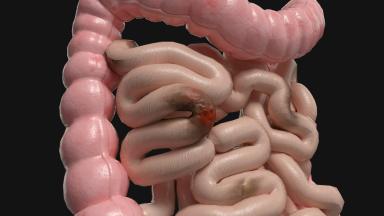
Endoscopic mucosal resection lifts a precancerous growth or an early cancer off the muscle wall with an injection and removes it with a snare through an ordinary endoscope, in the colon, esophagus, stomach or duodenum, without an operation. In a study of 479 patients with large colon polyps, 83.7 percent avoided surgery and none died of the procedure. This page explains what EMR removes, which lesions qualify, how it compares with ESD and surgery, evidence, risks, follow-up and care from abroad.