
Colonoscopy
Ask one question before choosing where to have a colonoscopy, which is how often the doctor finds polyps. In a study of 314,872 examinations that figure ranged from 7 to 53 percent between doctors, and it predicted who later developed bowel cancer. This guide covers preparation in a hotel room, sedation, findings and the flight home.
About This Department
This is the one cancer test that also removes the cause. Taking out polyps cut bowel cancer deaths by half in a 23-year study.
Nearly all bowel cancers begin as a polyp, a small growth that takes years to turn dangerous and can be snipped out through the endoscope in the same session it is found. In the US National Polyp Study, 2,602 patients who had such polyps removed were followed for up to 23 years, and their death rate from colorectal cancer was 53 percent lower than expected. The examination takes half an hour under sedation. Tell us why you need one and what medicines you take, and we will reply with the preparation that suits you and the days to plan in Istanbul.
Your doctor has told you that you need a colonoscopy, or you have reached the age where one is advised, and you are weighing whether to have it done abroad. The dread attaches to the wrong day. The examination itself passes under sedation in half an hour, serious complications are counted per thousand, and the part people hate, the day of laxatives before it, can be made far more bearable than its reputation once the timing and the tricks are known. Everything a traveler needs is below.
What is a colonoscopy, and what can it find?
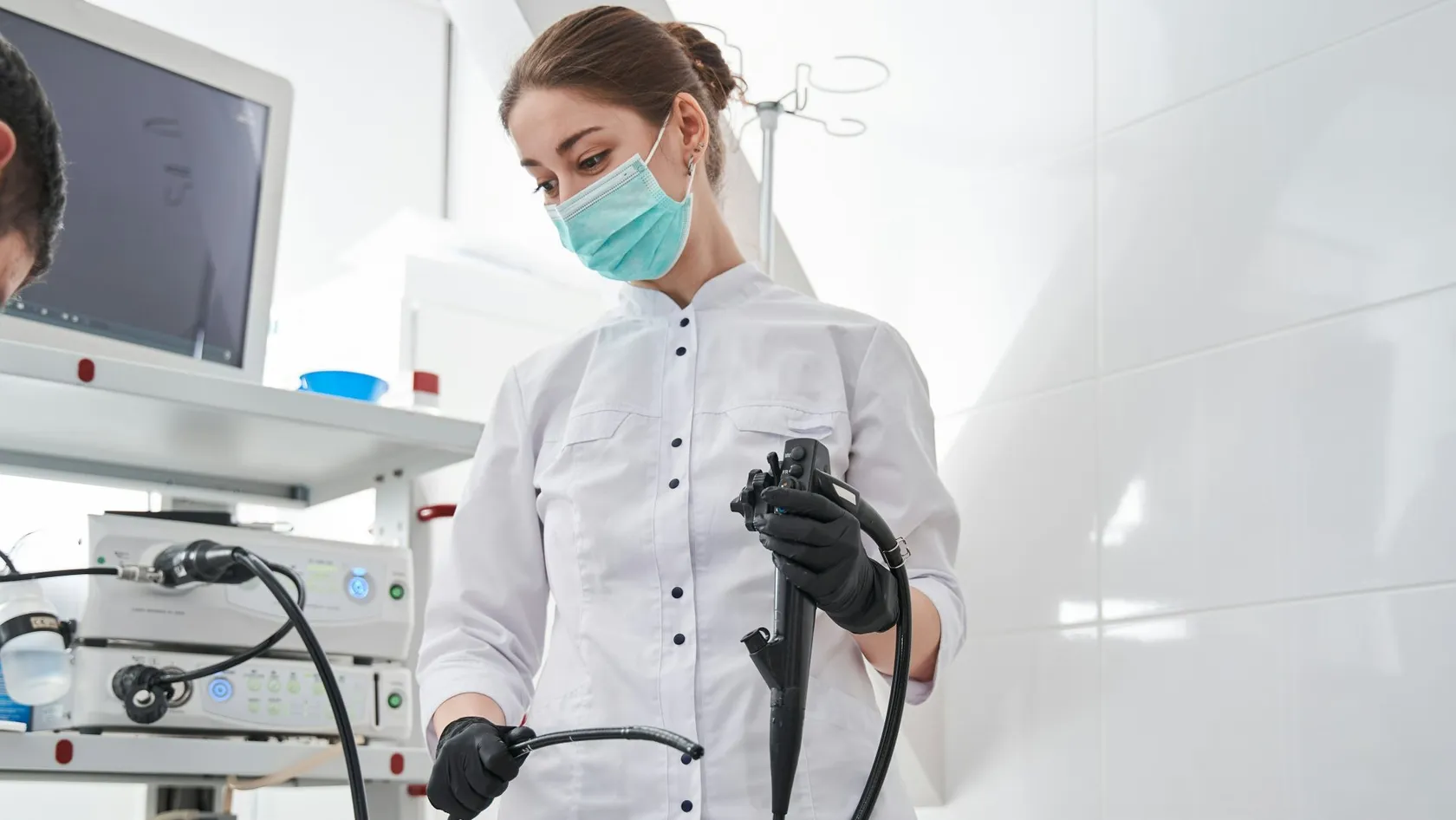
Colonoscopy means an examination of the whole large bowel, a meter and a half of it, with a flexible tube the width of a finger that carries a camera, a light and a working channel. The doctor passes it through the back passage to the point where the small bowel joins, then inspects the lining slowly on the way out, and through the channel go forceps for taking samples and wire loops for removing polyps. Nothing is cut from outside.
That last ability sets it apart from every other bowel test.
Stool tests and scans can raise suspicion, and each positive result then leads to a colonoscopy anyway. The endoscope sees polyps a few millimeters across, inflammation from ulcerative colitis or Crohn's disease, the pouches of diverticular disease, fragile blood vessels that bleed, narrowed segments and cancers, and for most of those it can take tissue or treat on the spot. The strongest randomized evidence comes from the NordICC trial in the New England Journal of Medicine in 2022, which assigned 84,585 people aged 55 to 64 in Poland, Norway and Sweden either to an invitation for one screening colonoscopy or to usual care. After ten years the invited group had 18 percent fewer colorectal cancers. Only 42 percent of those invited turned up for the test, so that figure mixes people who were examined with a majority who were not, and it understates what the examination does for the person who has it.
Who needs one?
Three different situations bring people to the endoscopy unit, and they differ in urgency.
Screening with no symptoms
Symptoms that need an explanation
Surveillance
How do I prepare, especially in a hotel room?
Preparation decides how much the doctor can see. A bowel that is not clean hides flat polyps, lengthens the procedure and can mean doing it all again, and for a traveler doing it again means a second flight, a second hotel and a second day of laxatives.
Timing matters more than the brand of laxative. A meta-analysis of 47 randomized trials and 13,487 patients in the journal Gastroenterology found that split-dose preparation, half the evening before and half on the morning of the test, gave two and a half times the odds of a well-cleansed bowel compared with drinking everything the day before. Patients also said they were more willing to repeat it.
- Seven days before. Stop iron tablets. Send us your medication list so that blood thinners and diabetes drugs can be planned.
- Three days before. Switch to low-fiber food, meaning white bread, rice, pasta, eggs, chicken, fish and yogurt, and leave out seeds, nuts, whole grains, raw vegetables, fruit skins and corn. Eat this way on the journey too.
- The day before. A light breakfast, then clear liquids only. Drink the first half of the preparation in the early evening and keep drinking water or clear tea after it. Stay in your room.
- The morning of the test. Drink the second half four to six hours before your appointment and finish all liquids two hours before it. What you pass should by then be clear or pale yellow, like urine.
This table scrolls sideways on a narrow screen. Swipe or drag to see every column.
| Allowed | Leave out | |
|---|---|---|
| Drinks | Water, clear apple or white grape juice, tea and coffee without milk, clear sports drinks, clear broth. | Milk, smoothies, juice with pulp, alcohol, anything red or purple, which can look like blood. |
| Food | Plain jelly and clear ice pops in pale colors. Boiled sweets. | All solid food. |
| Comfort | Chill the preparation, drink it through a straw, and follow each glass with a clear drink you like. Barrier cream and soft tissue help. | Rushing. A glass every ten to fifteen minutes is fast enough. |
Medicines and conditions to tell us about first
Send the following before you book, and the reply will include your personal preparation plan.
- The reason for the test, in a sentence, and any letter from the doctor who advised it.
- Reports of previous colonoscopies and pathology.
- A full list of medicines and supplements with doses.
- Recent blood results if you have them, above all hemoglobin and kidney function.
What happens on the day?
From arrival to leaving takes two to three hours. The examination itself lasts 20 to 45 minutes, longer if polyps are removed.
No driving. No contracts, no big decisions and no traveling alone for the rest of the day, because sedation lingers in judgment after it has left the legs. Someone should collect you and stay with you that evening, and if you have come to Istanbul alone, tell the coordinator in advance.
How can I judge the quality of a colonoscopy?
Colonoscopies differ, and the difference has been measured. Researchers at Kaiser Permanente analyzed 314,872 examinations by 136 gastroenterologists and ranked the doctors by their adenoma detection rate, the share of screening examinations in which they found one or more precancerous polyps. Those rates ranged from 7 to 53 percent. A sevenfold spread. Patients of doctors in the top fifth had a 48 percent lower risk of a cancer appearing in the following ten years than patients of doctors in the bottom fifth, and a 62 percent lower risk of dying from one. Each one-point rise in a doctor's detection rate went with a 3 percent fall in cancer risk. The study appeared in the New England Journal of Medicine in 2014, and since then professional societies have made the detection rate the main quality measure of the examination.
Few patients know they can ask about quality. Four figures are worth requesting.
- The adenoma detection rate. The minimum is 25 percent.
- The completion rate, meaning how often the far end of the bowel is reached. The standard is 90 percent of all examinations and 95 percent in screening.
- Withdrawal time. Six minutes of inspection on the way out is the accepted minimum when nothing is removed.
- Preparation and reporting. Split-dose preparation should be standard, and the report should state how clean the bowel was and include photographs of the landmarks that prove the examination was complete.
What do the findings mean, and when is the next one?
Five results cover nearly everyone, and the written report will name yours along with the date of the next examination.
This table scrolls sideways on a narrow screen. Swipe or drag to see every column.
| Finding | What it means | Usual next colonoscopy |
|---|---|---|
| Normal, clean bowel, complete examination | No polyps and no disease seen. | Ten years for average risk, and five with a close relative who had bowel cancer. |
| One or two small adenomas | Low-risk precancerous polyps, removed completely. | Seven to ten years under current American and European guidance. |
| Several adenomas, or one that is large or has advanced features | Higher-risk polyps, removed. Your bowel tends to make them. | Three years. |
| A large flat polyp removed in pieces | The site has to be checked for any tissue left behind. | Six months, then on a schedule. |
| Inflammation, a suspicious area or a cancer | Biopsies are taken, and further tests are planned once pathology is back. | Decided by the diagnosis. |
Intervals in the table follow international surveillance guidelines and are adjusted for family history, for how clean the bowel was and for how completely each polyp came out, so treat the date written in your own report as final. Small hyperplastic polyps in the rectum change nothing.
When pathology shows cancer, surgery, chemotherapy and radiotherapy are all delivered at Biruni Hospital on one site, and you can also take the report and slides home and be treated there. Either way the endoscopist writes to your doctor.
How safe is it?
A systematic review of 21 population-based studies in the American Journal of Gastroenterology put numbers on the three serious complications. Perforation, a tear in the bowel wall, occurred in 0.5 of every 1,000 colonoscopies, bleeding in 2.6 of every 1,000, and death in 2.9 of every 100,000. Removing polyps raises the first two, to 0.8 and 9.8 per 1,000. Screening examinations had fewer complications than examinations done for symptoms. Bleeding rates fell over the fifteen years studied. Among the 11,843 people who had a screening colonoscopy in the NordICC trial, fifteen had significant bleeding after a polyp was removed. Nobody had a perforation. Nobody died.
Bleeding after polyp removal is stopped through the endoscope with clips or cautery in nearly every case. It can start late. Two weeks is the outer limit, which matters for anyone flying home. Severe, persistent pain and a rigid abdomen signal a perforation, which is closed with clips at the time or treated with antibiotics and sometimes an operation. Sedation carries its own small risks to breathing and blood pressure, the reason oxygen level, pulse and pressure are monitored throughout, and the reason sleep apnea and heart or lung disease should be declared beforehand.
The quieter risk is a missed lesion, and the detection-rate study above shows how much that depends on who does the examination and how clean the bowel is.
How many days do I need in Istanbul, and when can I fly?
Plan three nights. Arrive two days ahead, spend the next day on clear liquids and preparation within reach of your own bathroom, have the examination on the third day, and rest that evening.
Never do the preparation on a plane.
After a diagnostic examination, or one with biopsies or a few small polyps, endoscopy units allow flying the following day. The gas used to open the bowel is absorbed within hours, and any remaining bloating is uncomfortable in a pressurized cabin and harmless. After removal of a large polyp the advice changes. Delayed bleeding can occur for up to two weeks, so many units advise against long-haul flights and remote destinations in that period, and some keep the patient in hospital for a night. Ask the endoscopist for the advice in writing before you book a fixed return, and if there is any chance of a large polyp, because a previous report mentioned one or a scan has shown one, buy a flexible ticket and leave three or four spare days in the plan. Pathology needs no extra days in the city. The report is sent to you and to your doctor.
What decides the cost of a colonoscopy?
The headline figure on a price list covers a diagnostic look with nothing found, and several things move the real total. Sedation given by an anesthesiologist costs more than sedation given by the endoscopy team, and in this market it is the norm and is included in most published packages. Every biopsy pot sent to pathology is charged, and polyp removal adds to the bill according to number, size and technique, along with the clips and snares used, while a large polyp may add an overnight stay. Having a gastroscopy in the same session under the same sedation costs less than two separate visits, since the room, the anesthesiologist and the recovery are paid for once. Pre-procedure blood tests, an anesthetic consultation and, for frail or elderly patients, admission the night before for supervised preparation are further lines. Your own health counts too. Blood thinners, heart or lung disease and diabetes all bring extra checks before sedation.
Packages published by hospitals in Istanbul bundle the gastroenterologist's consultation, sedation, the examination, the unit's fees and often airport transfers, and they list pathology and polyp removal separately, so when you compare quotes, check whether sedation and the anesthesiologist are inside the figure, what each polyp and each pathology sample adds, and whether the report with photographs is provided in English.
Send your reports and medication list, and the figure you receive will match what is planned for you. We charge nothing for that review.
What about language, companions and the rest of the trip?
Your coordinator from the international patients team is assigned from the first message. The team works in English, Arabic, French, Russian, Serbian, Romanian and Spanish and arranges interpreting in other languages on request, and an interpreter is present for the consent conversation and for the results. Airport transfers, the hotel and the rides to the hospital are arranged by the international patients office, and for this procedure you should ask for a room with its own bathroom as close to the bed as possible. A request for a female doctor is passed to the department and met wherever the rota allows. Make it when you book. Halal, vegetarian and diabetic meals are available in the hospital, and a prayer room is on site. Rooms for overnight patients have a companion bed.
Back home, the coordinator stays reachable on the same WhatsApp number, and the pathology report arrives there and by e-mail. Go to a local emergency department for heavy or repeated bleeding from the back passage, black stools, severe abdominal pain, a hard swollen abdomen, fever, or fainting in the two weeks after polyp removal, and show them the colonoscopy report.
Colonoscopy FAQ
Does a colonoscopy hurt?
How long does a colonoscopy take?
Can I fly home the day after?
Can I have a gastroscopy in the same session?
Do I need someone with me?
Is a stool test or a CT scan enough?
References
- Zauber AG, Winawer SJ, O'Brien MJ, et al. Colonoscopic polypectomy and long-term prevention of colorectal-cancer deaths. New England Journal of Medicine. 2012;366(8):687-696.
- Bretthauer M, Loberg M, Wieszczy P, et al. Effect of Colonoscopy Screening on Risks of Colorectal Cancer and Related Death. New England Journal of Medicine. 2022;387(17):1547-1556.
- Corley DA, Jensen CD, Marks AR, et al. Adenoma detection rate and risk of colorectal cancer and death. New England Journal of Medicine. 2014;370(14):1298-1306.
- Reumkens A, Rondagh EJ, Bakker CM, Winkens B, Masclee AA, Sanduleanu S. Post-Colonoscopy Complications: A Systematic Review, Time Trends, and Meta-Analysis of Population-Based Studies. American Journal of Gastroenterology. 2016;111(8):1092-1101.
- Martel M, Barkun AN, Menard C, Restellini S, Kherad O, Vanasse A. Split-Dose Preparations Are Superior to Day-Before Bowel Cleansing Regimens: A Meta-analysis. Gastroenterology. 2015;149(1):79-88.
Editor's note
Written by the Biruni Hospital medical editorial team. Reviewed by İbrahim Yılmaz, Gastroenterology.
Medically reviewed by
İbrahim Yılmaz
Gastroenterology
Related Treatments
View All
Barrett's Esophagus Treatment
Most people told they have Barrett's esophagus have been told only half the story. The yearly cancer risk is 0.12 percent, and the grade of dysplasia in the biopsies decides whether the right plan is a daily tablet with endoscopy every few years, or radiofrequency ablation to remove the lining.
Capsule Endoscopy - Wireless Capsule Endoscopy
When a gastroscopy and a colonoscopy are both normal and the blood count keeps falling, the search moves to the small bowel, which neither instrument reaches. A swallowed capsule camera films that stretch in eight hours without sedation and finds a cause in six of ten patients examined for bleeding.
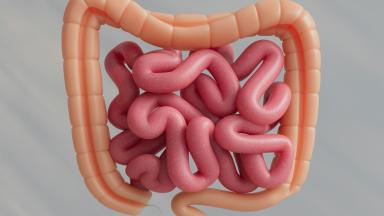
Colorectal Polyp Removal
A large polyp in the colon does not automatically mean bowel surgery. Nearly all polyps, including flat ones wider than 20 millimeters, come out through the colonoscope, and the technique is chosen by size and shape.
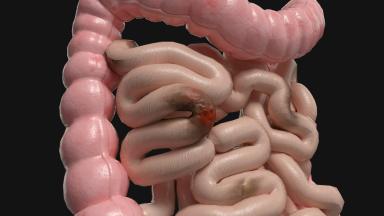
Endoscopic Mucosal Resection - EMR
Endoscopic mucosal resection lifts a precancerous growth or an early cancer off the muscle wall with an injection and removes it with a snare through an ordinary endoscope, in the colon, esophagus, stomach or duodenum, without an operation. In a study of 479 patients with large colon polyps, 83.7 percent avoided surgery and none died of the procedure. This page explains what EMR removes, which lesions qualify, how it compares with ESD and surgery, evidence, risks, follow-up and care from abroad.
Endoscopic Submucosal Dissection - ESD
Removed in one piece, an early tumor can be measured at its edges and at its deepest point, and that measurement decides whether you are cured or need surgery. ESD is the endoscopic technique that makes it possible in the stomach, esophagus and bowel. See which lesions qualify, what recovery involves and how to judge an operator.