
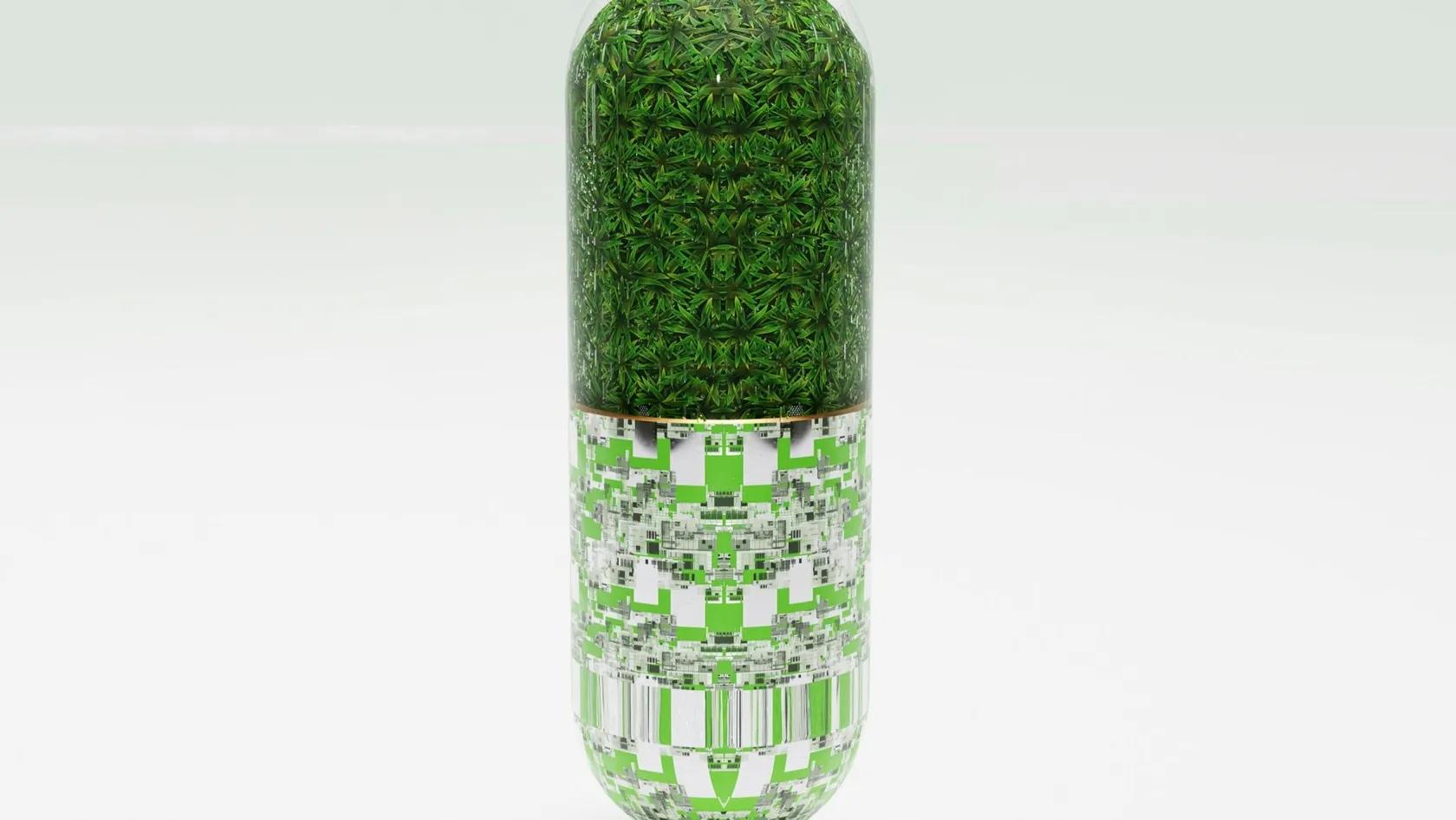
Capsule Endoscopy - Wireless Capsule Endoscopy
When a gastroscopy and a colonoscopy are both normal and the blood count keeps falling, the search moves to the small bowel, which neither instrument reaches. A swallowed capsule camera films that stretch in eight hours without sedation and finds a cause in six of ten patients examined for bleeding.
About This Department
Several meters of small bowel lie beyond the reach of a gastroscope and a colonoscope. A camera the size of a vitamin pill films all of it.
In wireless capsule endoscopy you swallow a 26 millimeter capsule that holds a camera, a light and a transmitter, and it films the lining of the small bowel for eight hours or more while you go about your day. No tube is passed and no sedation is given. A review of 227 studies covering 22,840 examinations found an abnormality in 59 percent of them, and in bleeding of unknown origin the capsule found a significant cause twice as often as the older tube test, 56 percent against 26 percent.
Two names circulate for one examination, and the title of this page, Capsule Endoscopy - Wireless Capsule Endoscopy, carries both. Older papers say wireless, because the first capsules, introduced in 2000, were remarkable for sending their pictures by radio. Patients call it the pill camera.
What capsule endoscopy is
Capsule endoscopy examines the small bowel, the long middle section of the gut where food is absorbed. A gastroscope reaches its first part. A colonoscope reaches its last few centimeters. Everything between the two, several meters of it, stayed out of sight until the capsule arrived. The device measures 11 by 26 millimeters. It takes between two and six pictures a second and sends them to a recorder worn on a belt. The normal movement of the bowel carries it along, it leaves the body in the stool a day or two later, and it is flushed away, since each capsule is used once.
This table scrolls sideways on a narrow screen. Swipe or drag to see every column.
| Feature | Capsule endoscopy | Device-assisted enteroscopy | CT or MR enterography |
|---|---|---|---|
| What it sees | The inner lining, along the whole length | The inner lining, as far as the endoscope can be advanced | The bowel wall and what lies outside it |
| Sedation | None | Deep sedation or general anesthesia | None |
| Biopsy or treatment | No | Yes | No |
| Main drawback | Can get stuck at a narrowing, cannot be steered | Long procedure, seldom covers the entire small bowel in one session | Misses flat lesions such as fragile blood vessels |
| Best use | First look for a hidden source of bleeding or early Crohn's disease | Treating or sampling what the capsule found | Narrowings, fistulas and thickened bowel wall |
No other test shows the whole lining without anesthesia.
When it is the right test
Three situations account for nearly every examination.
Bleeding with no source found
Blood loss from the gut that a gastroscopy and a colonoscopy have both failed to explain is the leading reason for a capsule examination, and it accounted for 66 percent of the 22,840 procedures in the review by Liao and colleagues. The 2022 guideline of the European Society of Gastrointestinal Endoscopy, written by Pennazio and colleagues, recommends the capsule as the first test in this situation, ahead of any other endoscopic or radiological examination. The comparison behind that advice comes from a meta-analysis by Triester and colleagues. Across 14 studies that put the capsule against push enteroscopy, the older method of pushing a long endoscope down from the mouth, the capsule found a clinically significant lesion in 56 percent of patients and the endoscope in 26 percent. Fragile, widened blood vessels called angiodysplasia made up half of what was found in bleeding patients in the Liao review, and these flat red spots are exactly the kind of lesion that a CT scan cannot show.
56% vs 26%Clinically significant findings with the capsule and with push enteroscopy in unexplained bleeding. One extra diagnosis for every three patients tested. Am J Gastroenterol, 2005.
Timing decides the yield
A bleeding point is easiest to see while it bleeds, so European guidance asks for the capsule as soon as possible after visible bleeding, ideally within 48 hours. Someone who passed black stools last week should therefore have the test where they are. This week. Waiting for a flight throws away the best chance of a diagnosis.
Iron-deficiency anemia
Slow, invisible blood loss shows up as falling iron stores and a low blood count. When the stomach and the colon have been cleared, the small bowel is the next place to look, and the European guideline names the capsule as the first-line examination for it. The Canadian guideline by Enns and colleagues is more selective and reserves the capsule for patients whose anemia is unexplained and persistent.
59 in 100Capsule examinations that detected an abnormality, pooled from 227 studies. Gastrointest Endosc, 2010.
What has to come first
Three things have to be done first. They are a gastroscopy with biopsies from the duodenum to exclude celiac disease, a colonoscopy of good quality, and a review of diet, periods in women, and tablets such as aspirin and other anti-inflammatory painkillers, which themselves cause small-bowel ulcers. The capsule comes after those, never in place of them.
Suspected or known Crohn's disease
Crohn's disease starts, in many patients, in stretches of small bowel that a colonoscope cannot reach. For a patient with typical symptoms, raised inflammation markers and a normal colonoscopy with a look into the last part of the small bowel, the European guideline recommends the capsule as the first way to examine the rest, provided there are no symptoms of blockage and no known narrowing. That condition matters, as the next figure shows.
8.2% vs 2.7%Capsules that got stuck in patients with established inflammatory bowel disease, without and with a check for narrowings beforehand. Gastrointest Endosc, 2017.
The patency capsule
A patency capsule is a dummy of the same size made of material that dissolves. You swallow it a day or two before the real one. If it leaves the body intact, or a scan shows it has reached the colon within 30 hours, the way is clear. If it lodges, it softens and breaks up by itself. Every patient with established Crohn's disease should have one first, according to the European guideline.
Less common reasons
Surveillance of inherited polyposis syndromes, celiac disease that keeps causing symptoms despite a strict diet, and a suspected small-bowel tumor on a scan are the remaining accepted reasons in the Canadian guideline.
When it is the wrong test
Some clinics market the capsule as a comfortable substitute for ordinary endoscopy. It is no such thing.
The Canadian guideline advises against it for long-standing abdominal pain or diarrhea when blood tests and stool markers of inflammation are normal, since the chance of a useful finding is low and the chance of a confusing minor one is high. It should not be used to make the diagnosis of celiac disease, which needs biopsies. A colon capsule exists. The same guideline states that it should not routinely replace colonoscopy, because any polyp it shows still has to be removed with a colonoscope. People with symptoms of a blocked bowel, a known narrowing, or a swallowing disorder need a different plan. Pregnancy is a reason to postpone. A pacemaker or an implanted defibrillator has to be declared so that the maker's guidance for the capsule system can be checked. And a person who simply dislikes the idea of a colonoscopy, with no bleeding, no anemia and no sign of inflammation, gains nothing from a capsule, because a normal result would not remove the need for the colonoscopy and an abnormal one would only bring it forward.
Three things every patient should hear firstThe examination can fail, the capsule can get stuck, and a lesion can be missed. Clinical practice guideline, Gastroenterology, 2017.
The examination, hour by hour
The days before
Iron tablets stop five days ahead. They coat the bowel black. Declare blood thinners, diabetes medication and any tablet that slows the gut, such as strong painkillers, and expect breakfast and a light lunch on the day before to be followed by clear fluids only.
The evening before
Swallowing the capsule
Clear drinks
A light meal
The recorder comes off
Risks, led by capsule retention
How often a capsule gets stuck
Retention means the capsule is still inside two weeks after it was swallowed, held up at a narrowing that nobody knew about. Liao and colleagues put the overall rate at 1.4 percent. Rezapour and colleagues broke it down by reason for the test in a 2017 meta-analysis and found 2.1 percent in unexplained bleeding, 3.6 percent in suspected inflammatory bowel disease and 8.2 percent in established disease. Narrowings cause it. Crohn's disease, anti-inflammatory painkillers, previous radiotherapy to the abdomen or pelvis, and tumors produce them. Where a patency capsule or a CT enterography was done first, the rate in bowel disease fell to 2.7 percent.
Each of those figures argues for checking the bowel first in anyone at risk.
What retention feels like
How a retained capsule is removed
Other ways the test can fall short
One examination in six is incomplete. The pooled completion rate in the Liao review was 83.5 percent, meaning the battery ran out before the capsule reached the colon in the rest, most often because the stomach emptied slowly. Lesions can be missed, since the capsule tumbles and sees each fold once. A few people cannot swallow it. A doctor then places it in the duodenum with a gastroscope under sedation.
Results, and what follows them
How the video is read
The recorder holds tens of thousands of still pictures. Software strings them into a film, flags frames that contain red, and a gastroenterologist then watches the whole length, which takes between 30 and 90 minutes of concentrated viewing. Private hospitals in this market and in the United Kingdom quote one to three working days for the written report.
What the report contains
Transit times through the stomach and the small bowel, a statement on whether the colon was reached, the quality of the view, each finding with its still frames and its estimated position, and a recommendation. Ask for the video file as well as the report. A second reader at home can then review it without repeating the test.
When the capsule finds something
Device-assisted enteroscopy comes next. The European guideline names it to confirm and, where possible, treat what the capsule showed. The doctor seals bleeding vessels with heat, removes polyps and samples narrowings. That means a separate procedure under anesthesia, with its own consent and its own quote, and it can be arranged in Istanbul or at home with the capsule report in hand. If the pictures point to Crohn's disease, treatment is medical and belongs with a gastroenterologist who will follow you for years, which for most travelers means the one at home.
When it finds nothing
A clean, complete examination is a result too.
After a high-quality negative capsule study in a patient with suspected small-bowel bleeding, the European guideline recommends watching and treating the anemia without further invasive tests. Doctors consider a repeat only if bleeding returns.
Planning it from abroad
How long to stay in Istanbul
Three working days cover it.
Day one holds the consultation, the review of earlier reports and the start of the bowel preparation. Day two belongs to the examination. On day three, or day four at the latest, the gastroenterologist goes through the findings with you in person, with an interpreter if you need one. Add two days when a patency capsule is required first.
Flying with the capsule still inside
Cabin pressure does not affect the capsule, and no airline rule forbids it. Two cautions apply. An MRI scan is forbidden until the capsule has passed, so carry the card that says you have had the test, and anyone with cramping or vomiting should be seen by a doctor before boarding.
What the cost depends on
The capsule itself is the main item, since it is a single-use device, and systems from different makers are priced differently. A patency capsule beforehand adds a second device and a scan. The reading fee reflects an hour or more of a specialist's time. Blood tests, a gastroscopy or a colonoscopy that turn out to be missing or out of date, and any placement of the capsule by endoscope are counted separately. Published packages from hospitals in Istanbul and medical travel agencies cover the consultation, the capsule, the reading and the report, an interpreter and transfers, and they leave out the hotel, flights, a patency test, enteroscopy for any finding and the treatment of a retained capsule. Your own history moves the figure as well. Previous bowel surgery, Crohn's disease, diabetes that slows the stomach and blood thinning tablets each change which steps are needed, and a patient who arrives with complete, recent endoscopy reports pays for fewer of them than one who arrives with none.
Send the reports first. A quote written without them is a guess, and the review of them is free.
The trip
One coordinator in the international patients office handles the case from the first message to the day you leave. The team works in English, Arabic, French, Russian, Serbian, Romanian and Spanish, arranges interpreters for other languages, books the hotel and the transfers, and sends the appointment confirmation with an invitation letter naming the hospital and the treating doctor ten days before you travel. As an outpatient test, capsule endoscopy involves no hospital room unless something else is planned. Two family members may join the consultation. Mention halal, vegetarian or diabetic needs, because the preparation day involves a set diet, and mention a wish for a female doctor in the first message so that the department can arrange it when the rota allows. The hospital has a prayer room. Bring a companion if you possibly can, since the preparation day and the long day wearing the recorder pass more easily with company.
After you fly home
Once you are back home the file you carry should hold the written report in English, the video on a memory stick, and a letter for your own gastroenterologist that states what was found and what is advised. The coordinator stays reachable on the same WhatsApp number. Questions on the report are passed to the doctor who read the film.
- Watch for the capsule in the stool for the first few days, and tell the coordinator if you saw it
- If you have not seen it after two weeks, ask your own doctor for a plain X-ray of the abdomen
- Do not have an MRI scan until passage is confirmed
- See a doctor the same day for cramping pain with vomiting, a swollen abdomen, fever, or difficulty swallowing and chest pain that began with the capsule
Anemia treatment continues whatever the capsule showed. Your own doctor arranges the iron and a blood count after six to eight weeks.
Capsule Endoscopy - Wireless Capsule Endoscopy FAQ
Does capsule endoscopy hurt?
Can a capsule replace a colonoscopy or a gastroscopy?
What happens if the capsule gets stuck?
How many days do I need in Istanbul?
Can I fly before the capsule has passed?
How do I get my results if I have already gone home?
References
- Pennazio M, Rondonotti E, Despott EJ, et al. Small-bowel capsule endoscopy and device-assisted enteroscopy for diagnosis and treatment of small-bowel disorders: European Society of Gastrointestinal Endoscopy (ESGE) Guideline: Update 2022. Endoscopy. 2023;55(1):58-95.
- Liao Z, Gao R, Xu C, Li ZS. Indications and detection, completion, and retention rates of small-bowel capsule endoscopy: a systematic review. Gastrointest Endosc. 2010;71(2):280-6.
- Rezapour M, Amadi C, Gerson LB. Retention associated with video capsule endoscopy: systematic review and meta-analysis. Gastrointest Endosc. 2017;85(6):1157-1168.
- Enns RA, Hookey L, Armstrong D, Bernstein CN, Heitman SJ, Teshima C, Leontiadis GI, Tse F, Sadowski D. Clinical Practice Guidelines for the Use of Video Capsule Endoscopy. Gastroenterology. 2017;152(3):497-514.
- Triester SL, Leighton JA, Leontiadis GI, Fleischer DE, Hara AK, Heigh RI, Shiff AD, Sharma VK. A meta-analysis of the yield of capsule endoscopy compared to other diagnostic modalities in patients with obscure gastrointestinal bleeding. Am J Gastroenterol. 2005;100(11):2407-18.
Editor's note
Written by the Biruni Hospital medical editorial team. Reviewed by Prof. Dr. Oğuzhan ÖZTÜRK, Gastroenterology.
Medically reviewed by

Prof. Dr. Oğuzhan ÖZTÜRK
Gastroenterology
Related Treatments
View All
Barrett's Esophagus Treatment
Most people told they have Barrett's esophagus have been told only half the story. The yearly cancer risk is 0.12 percent, and the grade of dysplasia in the biopsies decides whether the right plan is a daily tablet with endoscopy every few years, or radiofrequency ablation to remove the lining.
Colonoscopy
Ask one question before choosing where to have a colonoscopy, which is how often the doctor finds polyps. In a study of 314,872 examinations that figure ranged from 7 to 53 percent between doctors, and it predicted who later developed bowel cancer. This guide covers preparation in a hotel room, sedation, findings and the flight home.
Colorectal Polyp Removal
A large polyp in the colon does not automatically mean bowel surgery. Nearly all polyps, including flat ones wider than 20 millimeters, come out through the colonoscope, and the technique is chosen by size and shape.
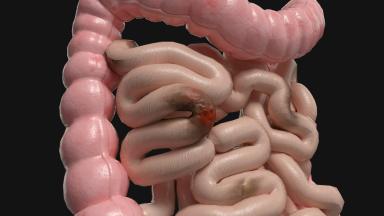
Endoscopic Mucosal Resection - EMR
Endoscopic mucosal resection lifts a precancerous growth or an early cancer off the muscle wall with an injection and removes it with a snare through an ordinary endoscope, in the colon, esophagus, stomach or duodenum, without an operation. In a study of 479 patients with large colon polyps, 83.7 percent avoided surgery and none died of the procedure. This page explains what EMR removes, which lesions qualify, how it compares with ESD and surgery, evidence, risks, follow-up and care from abroad.
Endoscopic Submucosal Dissection - ESD
Removed in one piece, an early tumor can be measured at its edges and at its deepest point, and that measurement decides whether you are cured or need surgery. ESD is the endoscopic technique that makes it possible in the stomach, esophagus and bowel. See which lesions qualify, what recovery involves and how to judge an operator.