
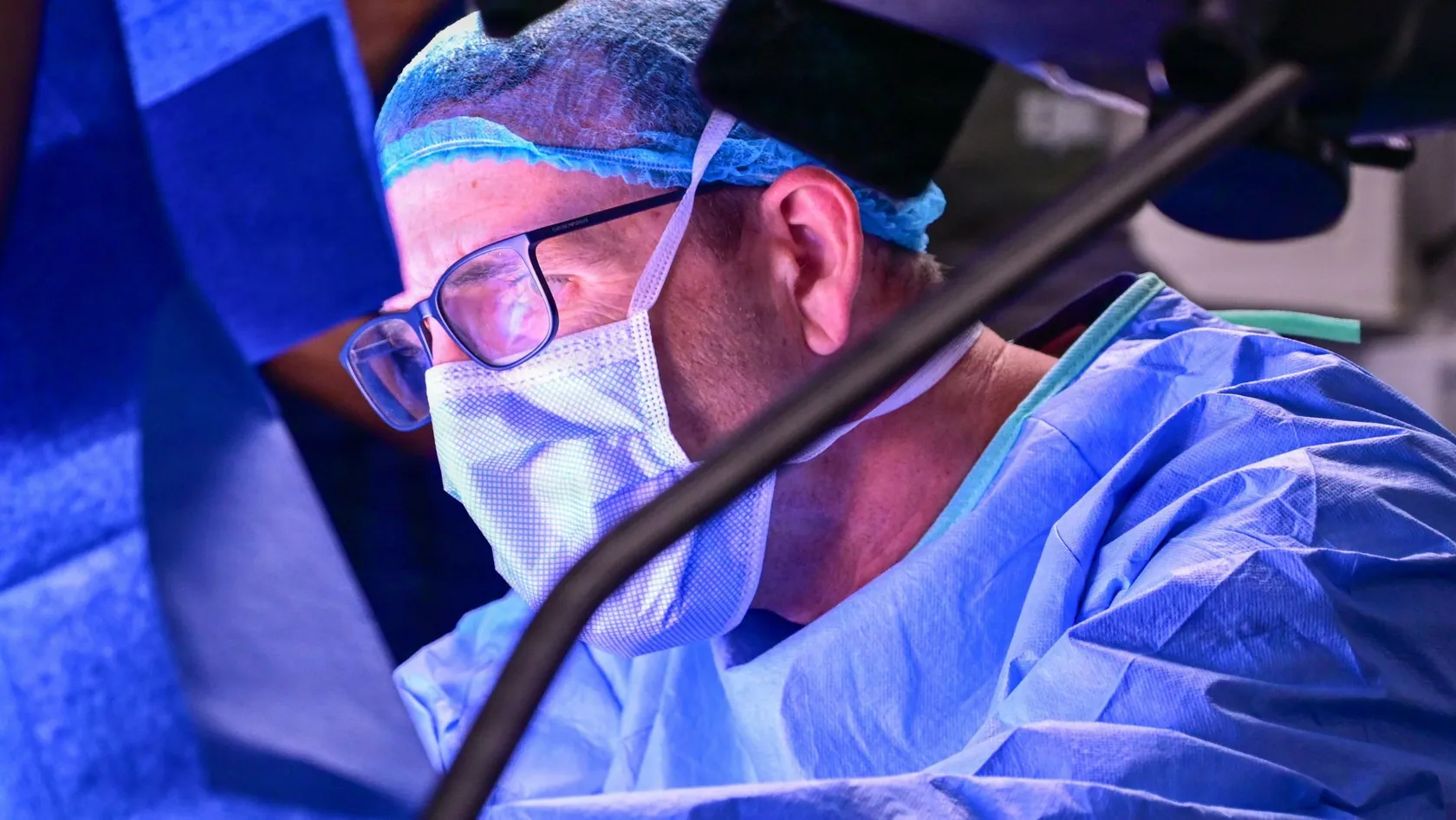
EUS-Guided Biopsy - EUS-FNA
A needle through the skin and a needle through the stomach wall reach the same pancreas by very different routes. The inside route is shorter, samples lesions of a few millimeters and stages the disease in the same session. Read how accurate it is, which needle to ask for, what the risks are in numbers and when no biopsy is needed.
About This Department
A needle guided from inside the stomach reaches what a scan can only photograph. When it reports cancer, false alarms are rare.
A CT or MRI has shown a mass, a cyst or an enlarged lymph node near your pancreas, stomach or esophagus, and nobody can tell you what it is without tissue. In a meta-analysis of 33 studies and 4,984 patients, endoscopic ultrasound with needle sampling identified pancreatic cancer with 85 percent sensitivity and 98 percent specificity. The procedure takes under an hour, under sedation, with no cut in the skin. Send us the scan report and the images, and a gastroenterologist will tell you whether this is the right test and what it can be expected to answer.
EUS-guided biopsy in brief
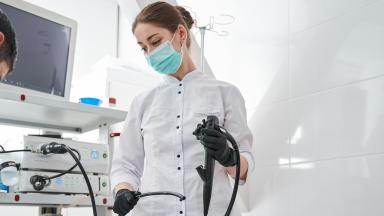
EUS-guided biopsy, written EUS-FNA or EUS-FNB in reports, is a way of taking tissue from organs that lie against the stomach and the first part of the intestine. An endoscope with a miniature ultrasound probe at its tip goes down through the mouth. From inside the stomach the pancreas sits a centimeter or two away, and the doctor watches on the ultrasound screen as a fine needle passes through the stomach or duodenal wall into the target. Nothing goes through the skin. Proximity is the whole advantage. A needle from outside has to cross the abdominal wall, fat and loops of bowel to reach the pancreas, and lesions under two centimeters are hard to hit that way. From the inside the path is short, the image is sharp enough to show lesions of a few millimeters, and the same examination stages the disease by showing nearby blood vessels and lymph nodes.
Across 33 studies and 4,984 patients, EUS-guided needle sampling of solid pancreatic masses had a sensitivity of 85 percent and a specificity of 98 percent for cancer.Meta-analysis in Gastrointestinal Endoscopy, 2012
This table scrolls sideways on a narrow screen. Swipe or drag to see every column.
| Target | What needs settling | What the laboratory does |
|---|---|---|
| Solid mass in the pancreas | Whether it is cancer and which kind, among adenocarcinoma, neuroendocrine tumor, lymphoma, a deposit from elsewhere, or inflammation that imitates a tumor. | Cytology, tissue blocks and immune stains. Grading of neuroendocrine tumors. Molecular tests where the choice of drug depends on them. |
| Pancreatic cyst | Whether it is a harmless fluid collection or a mucus-producing cyst that can turn malignant. | Fluid is drawn off for tumor markers, enzymes and glucose, and any solid part is sampled. |
| Lymph nodes in the chest or upper abdomen | Whether a cancer of the esophagus, stomach, lung or pancreas has spread, or whether the cause is lymphoma, tuberculosis or sarcoidosis. | Cytology, tissue blocks, flow cytometry and cultures as needed. |
| Lump under the lining of the stomach or esophagus | Whether it is a gastrointestinal stromal tumor or a harmless muscle growth. | Core tissue with immune stains, which a surface biopsy cannot provide. |
| Left liver lobe, left adrenal gland, bile duct wall | Whether a spot seen on staging scans is a metastasis. | Cytology and tissue blocks. |
Not every mass needs a needle. When scans show a pancreatic cancer that a surgeon can clearly remove in a patient fit for the operation, many surgical teams operate without a biopsy, because a negative sample would not change the decision. Three situations make tissue essential.
- Chemotherapy or radiotherapy is planned before or in place of surgery, since no oncologist treats without proof.
- The pictures are not typical, and the alternatives, such as autoimmune pancreatitis, a neuroendocrine tumor or lymphoma, are treated in completely different ways.
- The disease has spread, and the type and its molecular profile decide the drugs.
For the remote review, send these.
- The CT, MRI or PET report, and the images themselves as a download link or disc copy.
- Blood results, including bilirubin and liver tests, CA 19-9 if measured, and a clotting profile.
- Reports of any previous endoscopy, biopsy or stent.
- A full medication list, with blood thinners and diabetes drugs marked.
The review of your scans is free, and one of its possible conclusions is that you do not need this test.
How do I prepare?
Preparation is lighter than for a colonoscopy, since only the stomach has to be empty.
- A week ahead. Agree a plan for blood thinners. Needle sampling counts as a higher-bleeding-risk endoscopic procedure, so warfarin, apixaban, rivaroxaban, dabigatran, clopidogrel and similar drugs are paused for a set number of days, with the agreement of the doctor who prescribed them. Low-dose aspirin is normally continued.
- The day before. Eat normally and finish with a light evening meal.
- The day itself. No food for six to eight hours. Clear fluids are allowed until two hours before. Take permitted morning tablets with a sip of water.
- Bring your scan disc, your medication list and someone to accompany you afterward.
FNA or FNB, and why the needle matters
Two families of needle exist. Fine-needle aspiration, FNA, draws up loose cells. Fine-needle biopsy, FNB, has a cutting tip that brings back a sliver of intact tissue, which a pathologist can stain, grade and test in ways that loose cells do not allow.
This table scrolls sideways on a narrow screen. Swipe or drag to see every column.
| FNA, aspiration | FNB, biopsy | |
|---|---|---|
| What comes back | Cells | A core of tissue with its architecture preserved |
| Good for | A yes or no on malignancy, cyst fluid, lymph node staging | Tumor typing, neuroendocrine grading, lymphoma, autoimmune pancreatitis, stromal tumors, molecular profiling |
| Passes usually needed without a pathologist in the room | Three to four | Two to three |
| Head-to-head trial | Accuracy for malignancy 78 percent, tissue suitable for histology in 44 percent | Accuracy 87 percent, tissue suitable for histology in 77 percent, with no more adverse events |
The bottom row comes from a randomized trial of 608 patients at hospitals on four continents, published in Gastrointestinal Endoscopy in 2019, which compared a 25-gauge FNA needle with a 20-gauge FNB needle. The European Society of Gastrointestinal Endoscopy recommends both types for routine sampling, advises that specimens be processed as tissue blocks and not as smears alone, and suggests the pass numbers shown above. Ask which needle is planned for you. Where the answer depends on tumor type, on grading or on molecular testing, as it does for neuroendocrine tumors, lymphoma, stromal tumors and any cancer for which targeted drugs are being considered, an FNB needle should be used from the first pass, because a second procedure to get tissue the first one could have provided costs the patient a week and another sedation.
What happens on the day, and how safe is it?
Plan on half a day at the hospital. The examination itself lasts 30 to 60 minutes, under deep sedation given and monitored by an anesthesiologist, which is the norm for this procedure in Turkish hospitals.
The risks, in numbers
One systematic review of 51 studies and 10,941 patients put the overall complication rate of EUS-guided sampling at 0.98 percent. Pancreatitis after sampling the pancreas occurred in 0.44 percent and pain needing attention in 0.34 percent, with bleeding, infection and perforation making up the remainder. Two patients died, a rate of 0.02 percent. Carefully run prospective studies, which look for every complication instead of relying on what was written in the notes, reported higher figures, 2.44 percent for pancreatic masses and up to 5 percent for cysts, and those are the fairer numbers to keep in mind. Cysts carry the infection risk, so antibiotics are given for them and not for solid lesions.
Pancreatitis declares itself within hours.
Upper abdominal pain going through to the back, with nausea, in the evening after the procedure means a return to the hospital for a blood test and, in most cases, a night or two of fluids and pain relief. Fever and chills over the following days suggest infection. Black stools or vomiting blood mean bleeding. Each of these is uncommon and each needs same-day assessment.
Patients also ask whether the needle can spread cancer along its path. It can, rarely. A Japanese nationwide survey of 12,109 patients who had a pancreatic tumor removed after EUS sampling found tumor deposits in the needle track in 0.33 percent. Every case followed sampling through the stomach wall, the route used for tumors in the body and tail of the pancreas. None followed sampling through the duodenum, the route for tumors in the head, where the track is removed with the specimen at surgery. The deposits appeared in the stomach wall a median of 19 months later. Most could be cut out by a surgeon. For a tumor in the body or tail of the pancreas that a surgeon is confident of removing, this small risk is one more reason to ask, before consenting, whether the result of a biopsy would change anything about the operation that is already planned.
Complications occurred in 0.98 percent of 10,941 patients, and most were mild to moderate.Systematic review in Gastrointestinal Endoscopy, 2011
How do I read the result?
Pathology reports on these samples use five categories. Two need no gloss, malignant and benign, while suspicious and atypical mean abnormal cells were found without enough evidence to be certain, and non-diagnostic means the needle did not bring back enough material to judge.
Benign and non-diagnostic reports do not close the case. With a sensitivity of 85 percent, about one pancreatic cancer in seven is missed at the first sampling, because tumors are surrounded by scar tissue and inflammation that fill the needle with the wrong cells. When the scan still looks worrying, guidelines advise repeating the procedure, preferably with an FNB needle, and the second attempt settles most cases. Counting suspicious and atypical results as positive raises sensitivity to 91 percent and lowers specificity to 94, and for that reason those two words lead to more tests before any treatment starts.
Ask for the slides and tissue blocks to be released to you. Any pathology department in the world can review them, and for a diagnosis of this weight a second reading is reasonable.
How many days do I need in Istanbul?
Two nights cover the procedure. Arrive the day before, have the examination in the morning, stay in the city that night because pancreatitis shows itself within the first day, and fly the day after if you are free of pain.
Whether to wait for the result is the real decision. The first cytology reading takes several working days, and immune stains or molecular tests can double that. People who intend to be treated at home can leave, and the report follows by e-mail and WhatsApp with the slides sent on request. People who want treatment planned here should allow seven to ten days, by which time the tumor board has met with the full report in hand, and should know that surgery, chemotherapy and radiotherapy are all delivered on the one site.
What decides the cost?
An endoscopic ultrasound without sampling and one with sampling are priced differently, and within sampling the total depends on what is done with the tissue. FNB needles cost more than FNA needles, and sampling two sites means two needles, since a needle that has been in a possible cancer is never used on a second target. A cytopathologist in the room adds a fee and can reduce the number of passes. The pathology bill grows with each immune stain and each molecular test. Those depend on what the first slides show. Nobody can fix them in advance. Cyst fluid analysis, antibiotics, anesthesia time and an overnight stay for observation are further lines. So is jaundice. A jaundiced patient may need a bile duct stent placed by ERCP in the same session, which is a separate procedure with its own price. Blood thinners, heart or lung disease and diabetes add pre-procedure checks.
Packages published by Istanbul hospitals for this procedure list the gastroenterology and anesthesia consultations, the endoscopic ultrasound, the needle sampling, a basic pathology examination and pre-procedure blood tests, and quotes should be compared on four points, namely which needle type is included, how many immune stains the pathology figure covers, whether release of slides and blocks is free, and what an unplanned night in hospital would cost.
Your own quote follows the free review of your scans.
What about language, companions and the journey?
A coordinator from the international patients team is with you from the first message to the final report. The team works in English, Arabic, French, Russian, Serbian, Romanian and Spanish and arranges interpreting in other languages on request, and an interpreter is present for consent and for the results conversation, the two moments when every word counts. The international patients office arranges airport transfers, the hotel and the rides to the hospital. Bring a companion if you can. Sedation rules out traveling alone that day, and a diagnosis of this kind is easier to hear with someone beside you. Rooms for patients kept overnight have a companion bed. Halal, vegetarian and diabetic meals are available, a prayer room is on site, and a request for a female doctor is passed to the department and met wherever the rota allows.
Back home, your coordinator remains reachable on the same WhatsApp number. Go to a local emergency department for severe abdominal pain, fever, vomiting blood or black stools in the week after the procedure, and take the endoscopy report with you.
EUS-guided biopsy FAQ
Is an EUS-guided biopsy painful?
How accurate is EUS-FNA for pancreatic cancer?
What is the difference between FNA and FNB?
How long do the results take?
Can I fly the next day?
Can the needle spread the tumor?
References
- Hewitt MJ, McPhail MJ, Possamai L, Dhar A, Vlavianos P, Monahan KJ. EUS-guided FNA for diagnosis of solid pancreatic neoplasms: a meta-analysis. Gastrointestinal Endoscopy. 2012;75(2):319-331.
- van Riet PA, Larghi A, Attili F, et al. A multicenter randomized trial comparing a 25-gauge EUS fine-needle aspiration device with a 20-gauge EUS fine-needle biopsy device. Gastrointestinal Endoscopy. 2019;89(2):329-339.
- Polkowski M, Jenssen C, Kaye P, et al. Technical aspects of endoscopic ultrasound (EUS)-guided sampling in gastroenterology: European Society of Gastrointestinal Endoscopy (ESGE) Technical Guideline, March 2017. Endoscopy. 2017;49(10):989-1006.
- Wang KX, Ben QW, Jin ZD, et al. Assessment of morbidity and mortality associated with EUS-guided FNA: a systematic review. Gastrointestinal Endoscopy. 2011;73(2):283-290.
- Kitano M, Yoshida M, Ashida R, et al. Needle tract seeding after endoscopic ultrasound-guided tissue acquisition of pancreatic tumors: Nationwide survey in Japan. Digestive Endoscopy. 2022;34(7):1442-1455.
Editor's note
Written by the Biruni Hospital medical editorial team. Reviewed by Assistant Professor Koray KOÇHAN, Gastroenterology.
Medically reviewed by
Assistant Professor Koray KOÇHAN
Gastroenterology
Related Treatments
View All
Barrett's Esophagus Treatment
Most people told they have Barrett's esophagus have been told only half the story. The yearly cancer risk is 0.12 percent, and the grade of dysplasia in the biopsies decides whether the right plan is a daily tablet with endoscopy every few years, or radiofrequency ablation to remove the lining.
Capsule Endoscopy - Wireless Capsule Endoscopy
When a gastroscopy and a colonoscopy are both normal and the blood count keeps falling, the search moves to the small bowel, which neither instrument reaches. A swallowed capsule camera films that stretch in eight hours without sedation and finds a cause in six of ten patients examined for bleeding.
Colonoscopy
Ask one question before choosing where to have a colonoscopy, which is how often the doctor finds polyps. In a study of 314,872 examinations that figure ranged from 7 to 53 percent between doctors, and it predicted who later developed bowel cancer. This guide covers preparation in a hotel room, sedation, findings and the flight home.
Colorectal Polyp Removal
A large polyp in the colon does not automatically mean bowel surgery. Nearly all polyps, including flat ones wider than 20 millimeters, come out through the colonoscope, and the technique is chosen by size and shape.
Endoscopic Mucosal Resection - EMR
Endoscopic mucosal resection lifts a precancerous growth or an early cancer off the muscle wall with an injection and removes it with a snare through an ordinary endoscope, in the colon, esophagus, stomach or duodenum, without an operation. In a study of 479 patients with large colon polyps, 83.7 percent avoided surgery and none died of the procedure. This page explains what EMR removes, which lesions qualify, how it compares with ESD and surgery, evidence, risks, follow-up and care from abroad.