Bladder Reconstruction Surgery - Neobladder Surgery
Life after bladder removal can run without a bag. This guide explains who qualifies for a neobladder built from the small bowel, how the pouch is made, the weeks of training to stay dry by day and night, chemotherapy before surgery and why the stay in Istanbul runs three to four weeks.
About This Department
A new bladder built from your own bowel. No bag on the outside.
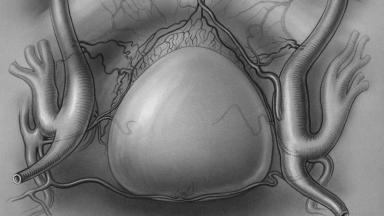
When the bladder has to come out, usually for cancer that has grown into its muscle wall, a neobladder is the reconstruction closest to normal. A loop of small bowel is reshaped into a pouch and joined to the urethra, so urine leaves the body the usual way. In a German series of 259 men followed for a median of ten years, 90 percent were dry by day and 82 percent by night, and 87 percent emptied the new bladder on their own.
Removing the bladder is half of the operation. The other half, the reconstruction, decides how daily life feels for the decades that follow, from sleeping through the night to traveling without planning every hour around a toilet.
Here is what that involves.
Three ways to store urine
After radical cystectomy, the removal of the bladder, the kidneys still make urine. Bladder reconstruction surgery gives it somewhere to go.
This table scrolls sideways on a narrow screen. Swipe or drag to see every column.
| Option | How urine leaves | Daily care |
|---|---|---|
| Orthotopic neobladder | Through the urethra, as before | Emptying by the clock, pelvic floor training, night alarm in the first months |
| Ileal conduit | Into a bag worn on the belly, through a stoma | Bag changes and skin care, no training |
| Continent cutaneous pouch | Through a small valve on the belly, with a catheter | Catheter several times a day, no bag |
An ileal conduit is the simplest and remains the most common worldwide. The neobladder takes longer to build and asks more of the patient in the first months, and in return there is no stoma and no bag. Bladder reconstruction also has a second meaning. Augmentation cystoplasty enlarges a small, stiff bladder with a patch of bowel and keeps the bladder in place, for conditions such as a neurogenic bladder. This page is about the neobladder after cystectomy.
Who can have a neobladder
Both sexes qualify. What matters is the urethra, the sphincter muscle that closes it, the kidneys, the liver, the bowel and the cancer itself. A 2006 review of more than 1,300 neobladders built at the University hospitals of Ulm and Bern listed the reasons to choose another diversion. Stress incontinence before surgery, a damaged sphincter, severely reduced kidney or liver function, serious bowel disease, and cancer that requires removal of the urethra all rule a neobladder out. At those two centers, 58 percent of all patients who had their bladder removed went on to receive one. Age alone is not a barrier, although continence after surgery is somewhat better in younger patients. The patient also has to be willing to empty the bladder on a schedule, at night too in the first months, and in a minority of cases to pass a thin catheter if the pouch does not empty fully. A tumor at the bladder neck or in the prostatic urethra is checked with biopsies, sometimes during the operation itself, before the surgeon commits to joining the pouch to the urethra.
For context, US SEER data put five-year relative survival at 71 percent for bladder cancer confined to the bladder and 39 percent once it reaches nearby tissue or lymph nodes.
Inside the operation
Five to seven hours.
Stents come out in the first one to two weeks, while the urethral catheter stays in place until an X-ray with contrast, taken through the catheter, shows that the pouch and every join are watertight.
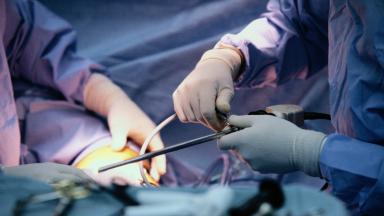
Robotic or open
Strong evidence comes from the iROC trial, published in JAMA in 2022. It randomized 338 patients at nine UK centers to robotic cystectomy with the urinary reconstruction done fully inside the body, or to open surgery. Over the first 90 days the robotic group spent a median of 82 days alive and out of hospital against 80, blood clots fell from 8.3 to 1.9 percent and wound complications from 16.0 to 5.6 percent. Cancer recurrence did not differ. Most patients in that trial received an ileal conduit. For neobladders the result is supportive.
Experience matters more than the route.
Learning to use the new bladder
A neobladder has no nerve that signals fullness. It is emptied by habit.
- Catheter out after a leak-free contrast X-ray, two to three weeks after surgery.
- Empty every two hours by the clock, sitting down, relaxing the pelvic floor and pressing gently with the belly muscles.
- Set an alarm at night, every three hours at first.
- Stretch the interval by half an hour every few weeks as capacity grows toward 400 to 500 mL.
- Practice pelvic floor exercises daily and drink two to three liters a day to keep mucus thin.
Daytime dryness comes first, often within weeks of the catheter coming out, and it improves further as the pouch stretches and the pelvic floor gets stronger. In the Ulm and Bern review, 92 percent were dry by day at twelve months while night continence stayed lower, around 80 percent, because the sphincter relaxes in sleep. The Ulm follow-up published in 2021 showed the age effect clearly, with day and night continence falling from 100 and 88 percent in men operated on before 50 to 87 and 80 percent in men aged 70 or older. Pads at night in the first year are common. Expect them. Some patients, more often women, cannot empty the pouch fully and learn clean intermittent self-catheterization, a two-minute routine with a thin disposable catheter that is taught on the ward before you go home and that keeps leftover urine from causing infection or stretching the pouch over the years. It sounds daunting. Within a week it becomes routine.
Cancer treatment around surgery
Chemotherapy first
For muscle-invasive bladder cancer, cisplatin-based chemotherapy before cystectomy is the standard for patients whose kidneys and general health allow it. Four cycles, three weeks apart, then surgery.
Adding immunotherapy
The NIAGARA trial, published in the New England Journal of Medicine in 2024, added durvalumab to gemcitabine and cisplatin before surgery and continued it for eight cycles afterward. In 1,063 patients, two-year survival rose from 75.2 to 82.2 percent.
This changes the timeline. Chemotherapy takes three months before the operation, and Biruni Hospital's medical oncology team can give it in Istanbul or hand over a written plan for your oncologist at home, with surgery booked once the restaging scan is done.
Complications
Cystectomy with a neobladder is one of the largest operations in urology. Complications happen. The 35-year Ulm series recorded surgical complications in 27 percent of men. Early problems include slow return of bowel function, urine or bowel leaks at the joins, infection and blood clots. Later, the joint between a ureter and the pouch can narrow and needs a stent or a revision, mucus can block the outlet, and urinary infections recur in some patients. Bowel lining in contact with urine absorbs acid, and 51 percent of the Ulm men took sodium bicarbonate tablets at five years, falling to 19 percent at 25 years. Vitamin B12 needs a yearly check. The last part of the ileum, now working as a bladder, is where the body used to absorb it, and a low level causes tiredness and numbness that are easily missed. In men, erections afterward depend on whether the nerves running beside the prostate could be spared, which the surgeon decides from the tumor's position and discusses with you before the operation, since some cancers make nerve sparing unsafe. Routine blood tests at each follow-up visit catch most of the metabolic problems early, long before they cause symptoms, which is one reason the follow-up schedule matters as much as the operation.
Weeks in Istanbul
On the ward
Plan seven to ten nights on the ward, sitting out of bed from day one. Drinks start early. Food follows as the bowel wakes up. The catheter is flushed several times a day to clear mucus, and nurses teach you and your companion to do it before discharge.
After discharge
You stay in a hotel near the hospital with the catheter in place. Around the end of the second or third week comes the contrast X-ray, then catheter removal and the first days of voiding by the clock under supervision. The final pathology report arrives in this window too. Read it with the surgeon. Plan three to four weeks in Istanbul in total, and fly once you are emptying the pouch reliably and the surgeon signs your fit-to-fly letter.
Travel and support
A coordinator is assigned from your first message and works in English, Arabic, French, Russian, Serbian, Romanian or Spanish, with interpreters arranged for other languages. Ten days before travel the international patients office sends the appointment confirmation and a visa invitation letter, then books the airport transfer, every trip between hotel and hospital, and a hotel for you and your companion for the weeks before and after the admission, which on this operation can run close to a month. You deal with one office throughout. One companion sleeps in your room on the ward. Halal, vegetarian and diabetic meals come from the hospital kitchen, there is a prayer room on site, and a request for a female surgeon goes to the department with your first message. Bring loose trousers and comfortable shoes. The catheter weeks are easier in clothes that leave room for a leg bag, and the hotel stays are planned close to the hospital so that daily visits are short.
Back home
Follow-up continues once you are back home. Blood tests for kidney function, salts and acid balance run at set intervals, with CT scans on a schedule set by the pathology, more often in the first two years. The urethra and the upper urinary tract are watched too, since the Ulm and Bern review found cancer returning in the urethra in 1.5 to 5 percent of patients. Reports sent to your coordinator on WhatsApp reach the surgeon, who replies with a written opinion for your doctor.
Fever, pain over the pouch, no urine for several hours despite trying, or vomiting with tiredness and fast breathing needs a doctor the same day.
What shapes the cost
Robotic or open, the number of ward nights, and weeks of hotel after discharge drive the total more than anything else. Chemotherapy is separate. Packages published by Istanbul hospitals list surgery, anesthesia, transfers and the hospital stay, and leave flights and hotel outside. Ask whether pathology, the contrast X-ray before catheter removal and the first clinic visits are included, so two quotes compare on the same terms. Get it in writing.
Neobladder surgery FAQ
Will I need a bag?
How long until I am dry?
Can women have a neobladder?
How long do I stay in Istanbul?
Can a companion stay with me?
Send your CT or MRI images with the report, the pathology from your bladder biopsy, a recent creatinine test and your medicine list. A urologic surgeon reviews them free of charge and replies whether a neobladder fits.
References
- Hautmann RE, Volkmer B, Egghart G, et al. Functional Outcome and Complications following Ileal Neobladder Reconstruction in Male Patients without Tumor Recurrence. More than 35 Years of Experience from a Single Center. J Urol. 2021;205(1):174-182.
- Hautmann RE, Volkmer BG, Schumacher MC, Gschwend JE, Studer UE. Long-term results of standard procedures in urology. The ileal neobladder. World J Urol. 2006;24(3):305-314.
- Catto JWF, Khetrapal P, Ricciardi F, et al. Effect of Robot-Assisted Radical Cystectomy With Intracorporeal Urinary Diversion vs Open Radical Cystectomy on 90-Day Morbidity and Mortality Among Patients With Bladder Cancer. A Randomized Clinical Trial. JAMA. 2022;327(21):2092-2103.
- Powles T, Catto JWF, Galsky MD, et al. Perioperative Durvalumab with Neoadjuvant Chemotherapy in Operable Bladder Cancer. N Engl J Med. 2024;391(19):1773-1786.
Editor's note
Written by the Biruni Hospital medical editorial team. Reviewed by Prof. Dr. Barış NUHOĞLU, Urology.
Medically reviewed by

Prof. Dr. Barış NUHOĞLU
Urology
Last updated: