
VMAT Radiation Therapy - Volumetric Modulated Arc Therapy
You lie still on a flat couch while a machine the size of a small car circles you once or twice, and a few minutes later the day's treatment is over. VMAT shapes the dose to the tumor and away from the organs beside it. Read what trials show for side effects, how many sessions each cancer needs and how to live in Istanbul during a course.
About This Department
The beam stays on while the machine circles you, reshaping itself every few degrees. A full fraction is delivered in 1.5 to 3 minutes.
Those timings come from the 2008 paper in Medical Physics that introduced volumetric modulated arc therapy. Where the dose lands matters more than the speed. The arcs wrap radiation tightly around the tumor and bend it away from the salivary glands, the bowel, the bladder or the spinal cord, and randomized trials of intensity-modulated treatment have shown what that does for side effects. Send us your pathology report and staging scans, and a radiation oncologist will reply with the number of sessions, the weeks to plan for and what to expect.
What is VMAT radiation therapy?
Volumetric modulated arc therapy, VMAT, is a way of delivering external radiotherapy in which the treatment machine rotates around the patient in one or two continuous arcs with the beam switched on throughout. Three things change at once during the rotation, namely the shape of the beam, the speed of the machine and the rate at which dose is given. A computer plan sets all three for every few degrees of the arc.
The multileaf collimator sets the shape. It consists of thin tungsten leaves that slide in and out of the beam. At each angle the leaves form an outline that matches how the tumor looks from that direction while shielding whatever sensitive organ lies in front of or behind it. Added together over 360 degrees, hundreds of these shaped beams build a block of high dose that follows the contours of the target, curves included, and falls away steeply at its edges.
This table scrolls sideways on a narrow screen. Swipe or drag to see every column.
| 3D conformal | Static-field IMRT | VMAT | |
|---|---|---|---|
| How the beam is delivered | Three to six fixed beams, each with one fixed shape | Five to nine fixed beams, each with a changing shape | One or two rotating arcs, shape changing continuously |
| How well dose follows the tumor | Box-like. Organs inside the box get the full dose | Sculpted, including concave shapes | Sculpted to the same standard as IMRT, sometimes better |
| Beam time per session | A few minutes | Ten to twenty minutes | 1.5 to 3 minutes in the founding paper |
| Why the time matters | Patients and organs drift during a long session | Less movement, less time in a mask, room for imaging before every fraction |
VMAT belongs to the IMRT family. Nobody has shown that arcs cure more cancers than fixed modulated beams, and a 2011 review in the British Journal of Radiology said frankly that most of the published work compared treatment plans on a computer and not outcomes in patients. What the arc adds is speed, with dose distributions that Karl Otto's original paper described as equivalent or superior to static IMRT. The clinical proof that sculpted dose spares patients comes from the IMRT trials. Two stand out.
PARSPORT randomized 94 patients with throat cancer at six UK centers to conventional radiotherapy or to IMRT planned to spare the parotid salivary glands. A year later, 74 percent of the conventional group had a dry mouth of grade 2 or worse, against 38 percent of the IMRT group, and at two years the gap had widened to 83 against 29 percent. Tumor control did not differ. Nor did survival. Fatigue during treatment was more common with IMRT, which the trial reported openly, in The Lancet Oncology in 2011.
Prostate cancer supplied the second trial. Brazilian investigators randomized 215 men to the same dose given by IMRT or by 3D conformal treatment. Late bowel side effects of grade 2 or worse occurred in 6.4 percent with IMRT and 21.7 percent without, late bladder effects in 3.7 against 12.3 percent, and five-year control of the cancer was the same, 95.4 and 94.3 percent. The study appeared in the journal Cancer in 2016.
Same cure rate, fewer lasting side effects. The whole case for modulated radiotherapy fits in that line.
Which cancers is VMAT used for?
Wherever a tumor sits close to an organ that tolerates radiation badly, which covers the sites below, taken from the British Journal of Radiology review.
Prostate
Head and neck
Brain
Lung and esophagus
Pelvis
Breast
Relief of symptoms
What happens between the first message and the last session?
- Remote review. Send the pathology report, the staging scans with their images, operation notes, any chemotherapy plan, and a summary of any earlier radiotherapy. A radiation oncologist replies with the intent of treatment, the number of fractions and the calendar.
- Consultation and consent. In person, with an interpreter. Examination, review of the images, discussion at the tumor board where surgery or chemotherapy is part of the plan.
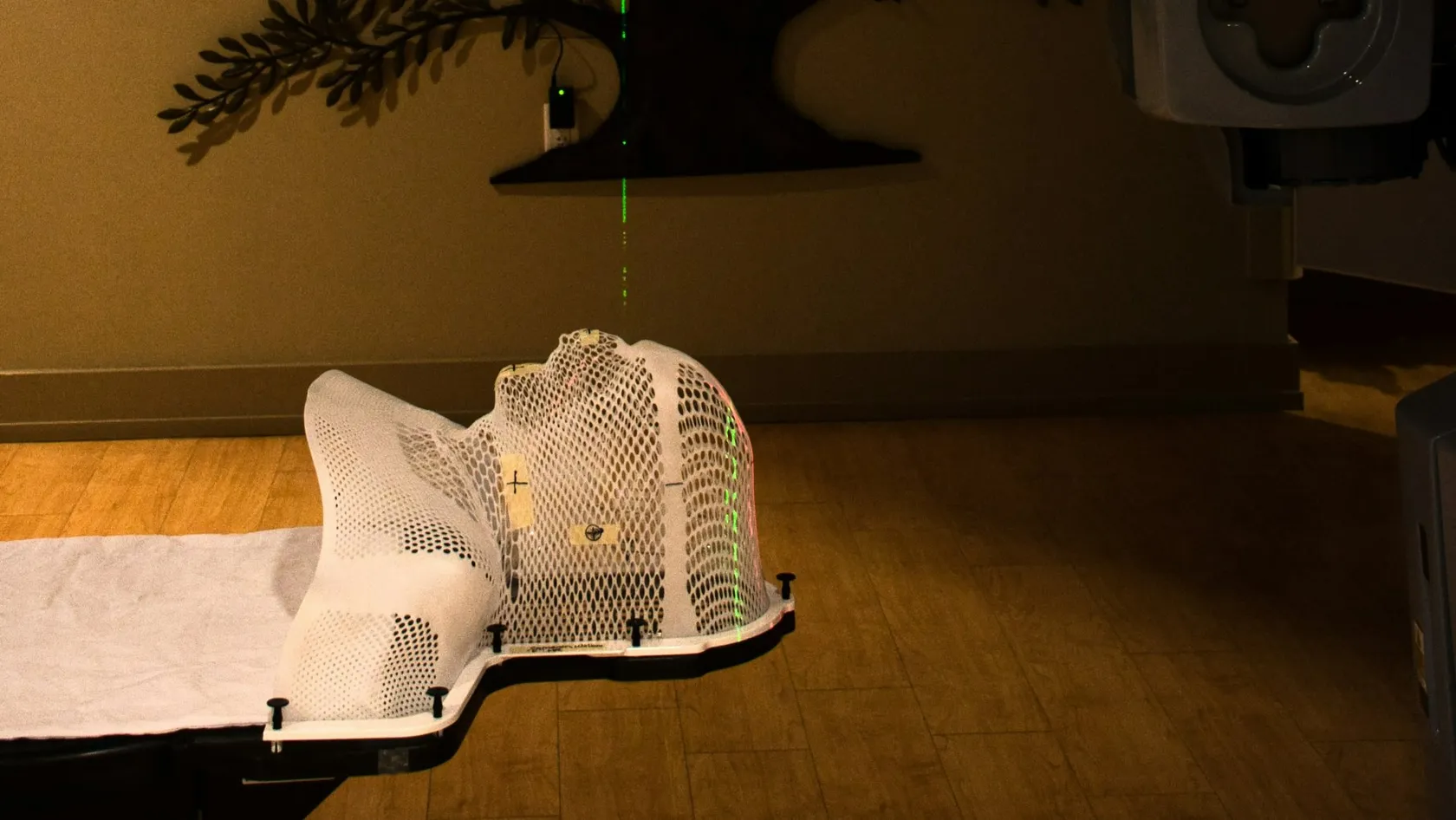
- Simulation. A planning CT scan in the exact treatment position. A mask is molded for head and neck or brain treatment, a vacuum cushion for the body. Small marks or tattoo dots record the alignment. Prostate patients follow a bladder and bowel routine from this day on. MRI or PET images are fused with the CT where they show the tumor better.
- Contouring and planning. The oncologist outlines the target and every organ at risk on each CT slice, and a medical physicist builds the arc plan to meet dose limits for each one. This takes five to ten working days. It is the step that decides the quality of the whole course, and nobody sees it.
- Quality assurance. Before you are treated, the plan is delivered to a measuring device and the measured dose is compared with the calculated one.
- Treatment. One session a day, Monday to Friday. A weekly clinic visit with the oncologist and the nurse.
- Last day. A treatment summary with doses to the target and to each organ, a skin and symptom plan for the following weeks, and a follow-up schedule for your doctor at home.
Side effects, by the area treated
Radiotherapy affects only the part of the body it passes through, so the side effects of a brain treatment and a pelvic treatment have nothing in common. Tiredness makes the exception. It builds through the course, peaks a week or two after the last session and lifts over the following month. Early effects begin in the second or third week and settle within weeks of finishing.
Report these the same day
- Fever of 38 degrees or more, above all if you are also having chemotherapy.
- Being unable to swallow fluids, or passing very little urine.
- New weakness or numbness in the legs, or loss of bladder or bowel control.
- Bleeding that does not stop, severe headache with vomiting, or a seizure.
How many weeks will I need in Istanbul?
Add one to two weeks of preparation to the length of the course. Courses keep getting shorter. The CHHiP trial, published in The Lancet Oncology in 2016, randomized 3,216 men with prostate cancer at 71 centers to 37 sessions over seven and a half weeks or to 20 sessions over four. Five years on, the cancer was controlled in 90.6 percent of the 20-session group and 88.3 percent of the 37-session group. Side effects were alike. The shorter course became the recommended standard.
This table scrolls sideways on a narrow screen. Swipe or drag to see every column.
| Cancer | Sessions | Weeks of treatment | Notes |
|---|---|---|---|
| Prostate | 20 | 4 | Selected patients are treated in 5 stereotactic sessions. |
| Breast, after surgery | 15, or 5 | 3, or 1 | A boost to the tumor bed adds up to a week for some. |
| Head and neck | 30 to 35 | 6 to 7 | Weekly chemotherapy for many. Allow two weeks after the end for the reaction to peak and begin to settle before flying far. |
| Lung, curative | 30 to 33 | 6 to 6.5 | Early small tumors may have 3 to 8 stereotactic sessions. |
| Brain, glioma | 30 | 6 | With daily chemotherapy tablets. |
| Cervix, rectum, anus, bladder | 25 to 28 | 5 to 5.5 | Cervical cancer adds brachytherapy. |
| Relief of symptoms | 1 to 10 | 1 day to 2 weeks | Planned and started within days. |
The table shows schedules in common use. The oncologist sets yours after the tumor board, and the reply to your first message will state it.
Which machine is used?
The linear accelerator at Biruni Hospital is an Elekta Versa HD, a platform built for arc delivery. Its collimator has 160 leaves, each casting a five-millimeter shadow at the patient, it can run without a flattening filter to give dose at a higher rate for short-course treatments, and it carries the cone-beam CT used before each session. The hospital does not operate a CyberKnife or a Gamma Knife. If a dedicated radiosurgery platform would serve you better, the reply to your file will say so.
Brand names dominate the advertising of radiotherapy abroad, and they matter less than three things patients never see, the care taken over contouring, the time a physicist spends on the plan and its quality assurance, and whether imaging is done before every session or once a week. Ask about all three.
What decides the cost?
Hospitals quote radiotherapy by the course, and they price the course by its number of sessions and the complexity of its plan. A one-session palliative treatment and a 35-session head and neck course with two dose levels differ by an order of magnitude in physics time alone. Planning images add to the bill when MRI or PET-CT has to be repeated for fusion. Each mask and cushion serves one patient. Daily image guidance, plan checks and any re-planning when weight loss or tumor shrinkage changes the anatomy are part of a well-run course, and a quote should say whether they are included. Then come the extras. Weekly chemotherapy, blood tests, a feeding tube, dental work before head and neck treatment, and hormone injections for prostate cancer sit outside the radiotherapy price. So does the hotel. Over a six-week course, accommodation and meals for two people make up a large share of what the family spends, a point that short modern schedules such as the 20-session prostate course and the five-session breast course have changed for travelers more than any advance in the machines. Age, diabetes, heart disease and earlier treatment to the same area all add consultations and checks.
Packages published by hospitals in Istanbul are sold by session bands, such as 1 to 14, 20 to 25 or 30 to 33 sessions, and list the consultation, planning, an interpreter and transfers, with hotel nights in some. Compare them on four points, the technique named in writing, the imaging schedule, what happens if a re-plan is needed, and whether the treatment summary with organ doses is provided in English.
Your own figure follows the free review of your file.
What about living in Istanbul for weeks, and care once I am home?
A course of radiotherapy means living in the city, and the arrangements reflect that. One coordinator from the international patients team is assigned from your first message and stays with you to the last session. The team works in English, Arabic, French, Russian, Serbian, Romanian and Spanish and arranges interpreting in other languages on request. An invitation letter naming the hospital and the treating doctor is sent about ten days before travel, so check how many days your visa allows. Six weeks of treatment can outlast a tourist stamp. The international patients office arranges the airport transfer, an apartment or hotel for you and a companion, and the daily ride, and an apartment with a kitchen suits most families better than a hotel after the second week. Surgery, chemotherapy and radiotherapy are on one site, so combined treatment needs no travel between hospitals. Rooms for patients admitted during treatment have a companion bed. Halal, vegetarian and diabetic meals come from the hospital kitchen, a prayer room is on site, and a request for a female doctor is passed to the department and met wherever the rota allows.
You can fly safely at any point, including between sessions on a weekend.
Back home, your coordinator stays reachable on the same WhatsApp number. The first follow-up visit falls four to six weeks after the last session, and your own oncologist can do it with the treatment summary in hand, since that document records every dose a future doctor will need. Keep it for life. Any radiotherapy you are offered later, for this cancer or another, in this country or any other, will be planned around the doses written in it.
VMAT FAQ
Is VMAT better than IMRT?
Does VMAT hurt?
How long is each session?
How many weeks do I need to stay?
Will I be radioactive?
Can my family stay with me?
References
- Otto K. Volumetric modulated arc therapy: IMRT in a single gantry arc. Medical Physics. 2008;35(1):310-317.
- Teoh M, Clark CH, Wood K, Whitaker S, Nisbet A. Volumetric modulated arc therapy: a review of current literature and clinical use in practice. British Journal of Radiology. 2011;84(1007):967-996.
- Nutting CM, Morden JP, Harrington KJ, et al. Parotid-sparing intensity modulated versus conventional radiotherapy in head and neck cancer (PARSPORT): a phase 3 multicentre randomised controlled trial. Lancet Oncology. 2011;12(2):127-136.
- Viani GA, Viana BS, Martin JE, Rossi BT, Zuliani G, Stefano EJ. Intensity-modulated radiotherapy reduces toxicity with similar biochemical control compared with 3-dimensional conformal radiotherapy for prostate cancer: A randomized clinical trial. Cancer. 2016;122(13):2004-2011.
- Dearnaley D, Syndikus I, Mossop H, et al. Conventional versus hypofractionated high-dose intensity-modulated radiotherapy for prostate cancer: 5-year outcomes of the randomised, non-inferiority, phase 3 CHHiP trial. Lancet Oncology. 2016;17(8):1047-1060.
Editor's note
Written by the Biruni Hospital medical editorial team. Reviewed by Prof. Dr. Metin GÜDEN, Radiation Oncology.
Medically reviewed by
Prof. Dr. Metin GÜDEN
Radiation Oncology
Related Treatments
View All
Brachytherapy - Internal Radiation Therapy
A beam from outside has to cross healthy tissue to reach a tumor. Brachytherapy avoids that by placing a rice-sized radioactive source inside the tumor for a few minutes, then taking it out again. It is an essential part of curing cervical cancer and a tested option for womb, prostate and early breast cancer.
Brain Tumor Radiation Therapy
The plan for a brain tumor starts with what must be protected, the optic nerves, the brainstem, the hippocampus, and then shapes the dose around them. Radiosurgery in one to five sessions now treats most metastases, and six weeks of radiotherapy with temozolomide remains the standard after surgery for glioblastoma.
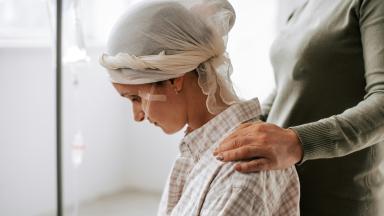
Chemoradiation Therapy - Concurrent Chemoradiotherapy
Blood test on Monday, a drip on Tuesday, radiotherapy every weekday, and the same again for six or seven weeks. Chemoradiation asks more of a patient than either treatment alone and, for several cancers, cures more. See the survival gains trial by trial, the side effects they came with, who is fit for it and how a long stay is organized.
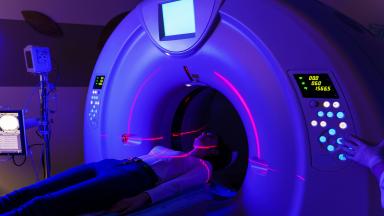
Elekta Versa HD Radiation Therapy
The Elekta Versa HD is the linear accelerator on which Biruni Hospital delivers external beam radiation therapy, with a 160-leaf collimator, high dose rate beams and cone beam CT imaging before every session. This page covers the techniques, from VMAT to radiosurgery, the cancers treated, what large trials show about shorter courses for breast, prostate and metastases, the path from first visit to last session, side effects, and how patients from abroad arrange treatment.
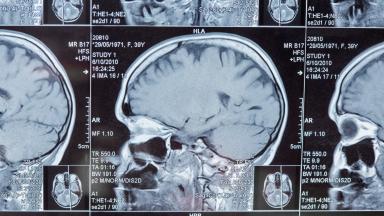
Glioblastoma Radiation Therapy
A glioblastoma has no edge, so surgery alone is never enough. Radiation covers the cavity and a margin of brain around it, together with a daily temozolomide capsule, over six weeks or three depending on age and fitness.