VIP inpatient services at Biruni Hospital in Istanbul change the setting of a hospital stay and leave the medicine exactly as it is. Research shows patients on ordinary wards sleep 83 minutes less than at home, and single rooms lower hospital-acquired infection and colonization by 45 percent. This page covers what a VIP admission includes, what stays the same, discretion, questions to settle in writing, and travel. Reports are reviewed free of charge.
About This Department
VIP inpatient services
Patients on ordinary hospital wards slept 83 minutes less than at home. In pooled studies, single rooms cut hospital-acquired infection and colonization by 45 percent.
Hospitals sell the private suite as a luxury. Medicine offers the better argument for it. A one-day survey of 2,005 patients in 39 Dutch hospitals found that they slept 83 minutes less than at home and woke 3.3 times a night, most often because of other patients, equipment and staff (Wesselius and colleagues, JAMA Internal Medicine, 2018). A meta-analysis of ward design found a risk ratio of 0.55 for acquiring a hospital infection or colonization in single rooms compared with shared ones (Stiller and colleagues, Antimicrobial Resistance and Infection Control, 2016). This page explains what VIP inpatient services at Biruni Hospital in Istanbul change about a hospital stay, what they leave exactly as it is, and which questions to settle before admission.
83
Minutes of sleep lost per night on an ordinary hospital ward
45
Percent lower risk of hospital-acquired infection or colonization in single rooms
55
Studies linking better patient experience with safer, more effective care
Free
Review of your reports and a written plan before you travel
The medicine does not change. Diagnosis, operation, drugs and nursing follow the same protocols in every room of the hospital.
A suite buys no better surgeon and no different antibiotic.
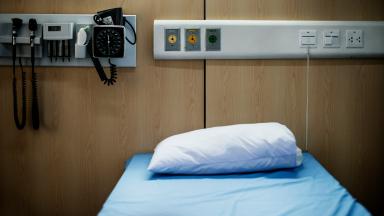
Rest, privacy and time do change. A quiet room of your own, space for family, and staff with time to explain.
Most hospital stays fall short on those three more than on anything else, and a patient can reasonably pay to improve them.
One person coordinates. A single named contact handles requests from admission to the journey home.
At Biruni Hospital that coordinator is assigned with the first message and stays reachable on the same WhatsApp number after discharge.
Where VIP care must stay ordinary
Doctors have a name for what goes wrong when a patient is treated as too important for the usual rules. They call it VIP syndrome. An article in the American Journal of Medicine describes how status, wealth or fame can bend a clinician's judgment, so that uncomfortable tests are skipped, senior doctors perform tasks that juniors do daily and do better, nurses hesitate to wake the patient for observations, and the normal chain of decisions is bypassed out of deference. The authors conclude that the quality of care for such patients can end up inferior, and their advice is simple. Treat the person in the suite exactly as the protocol says (Alfandre and colleagues, 2016). A well-run VIP service is built on that advice. The comfort differs. The checklist before surgery, the blood thinner at night, the physiotherapist who insists on a walk down the corridor, and the nurse who wakes you at two in the morning because your blood pressure is due remain identical, and that should reassure a patient, never offend.
Say so to the team on the first day. It frees them to do their job.
What the service includes
Definitions of VIP differ between hospitals, so treat any list as a set of questions. In Istanbul's private hospitals a VIP admission generally covers the following.
A private suite with a separate sitting area for family and visitors.
A companion bed.
Meals chosen from a menu, with halal, vegetarian and diabetic options.
Visiting hours that bend to the family, inside whatever limits the medical team sets for rest and infection control.
Priority scheduling of tests during the stay, where that is medically neutral.
Ask the coordinator to confirm in writing which items apply to your admission. A written list prevents disappointment on both sides.
For every international patient at Biruni Hospital, VIP or not, these are part of the service.
A coordinator from the international patients office from the first message through discharge.
The office working in English, Arabic, French, Russian, Serbian, Romanian and Spanish, with interpreters for other languages.
Accommodation near the hospital for relatives, airport transfers and daily transport.
The invitation letter that consulates request with a visa application.
A prayer room on site, and a female physician on request wherever the rota allows.
Rooms, rest and recovery
Nine studies compared single rooms with shared rooms or open wards. Six found fewer hospital-acquired infections and colonizations in single rooms, three found no difference, and the pooled risk ratio was 0.55.
For a patient after surgery or during chemotherapy, fewer neighbors means fewer chances to pick up a resistant organism.
The same review found that hand rub dispensers placed within reach of the bed improved hand hygiene. Look for one.
In the Dutch sleep survey, 70.4 percent of patients said something outside themselves had woken them, and for 35.8 percent that something was hospital staff.
Ask the nurses to group night-time checks where it is safe, dim the lights after ten, and close the door.
Tissue repairs during sleep, and pain weighs least after a good night. Hospitals have been slow to act on that. Observations at fixed hours, corridor lights, alarms set louder than they need to be and conversations at the nursing station all belong to routines designed around staff, and each of them yields to a polite request when the patient's condition allows. Earplugs and an eye mask help too, and cost almost nothing. A broader review of 55 studies found consistent links between how patients rate their experience and how safe and effective their care turns out to be, from taking medicines correctly to shorter stays (Doyle and colleagues, BMJ Open, 2013). Comfort, in other words, earns its place on clinical grounds, and a patient who sleeps, eats and understands the plan leaves sooner and returns less.
Comparing and asking
A VIP suite and a standard private room share far more than separates them, as the comparison below shows.
This table scrolls sideways on a narrow screen. Swipe or drag to see every column.
What stays the same and what differs
Aspect
Standard private room
VIP suite
Doctors, protocols, operating rooms
Same
Same
Nursing observations and safety checks
Same
Same
Space for family
A chair and a companion bed
A separate sitting area, as a rule
Noise and interruptions
Depends on the ward and the room type
A single room by definition
Coordination
International patients office
The same office, with one named contact for every request
Does VIP mean a more senior doctor?
No. Your doctor is chosen for the condition you have. You are free to ask who will operate and how often they perform the procedure, as any patient is.
Can my own doctor or nurse accompany me?
A personal physician is welcome as a visitor and as a source of history. Treatment decisions and orders remain with the hospital team, for safety and for legal reasons.
Can visiting hours be waived?
They can be relaxed. After surgery and in intensive care the team will still limit numbers and duration, because rest and infection control come first.
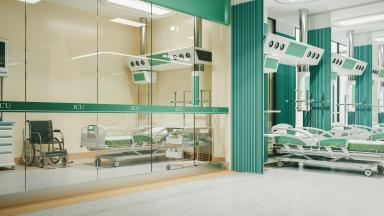
Is a VIP suite available in intensive care?
Intensive care beds are arranged for monitoring and fast access, so the suite is used before and after that phase of the stay.
Questions to settle before admission
Question
Why it matters
Get it in
What exactly does the suite include
Definitions vary from hospital to hospital
Writing
How many companions may stay overnight
Rooms and fire rules set a limit
Writing
Which costs sit outside the room rate
Meals for guests, extra nights and transport are common extras
The estimate
Who is my single contact, and at what hours
Requests get lost without one
The first message
Discretion
Every patient is owed confidentiality by the hospital. People in public life need extra steps, and they may reasonably request the following. Admission under an alias on the door and the ward list, a limit on which staff enter the room, no calls put through without a code word, and transfers timed and routed to avoid waiting areas. Medical records stay under the real name, because safety depends on matching the right blood group, the right scan and the right prescription to the right person, and no alias justifies a transfusion error. Tell the coordinator early who may receive information about you and who may not. Put it in writing.
Medical confidentiality and Turkish data protection law forbid staff to photograph patients or share details of a stay.
Guests from abroad
The order of events matters more than the room. Send reports before booking anything. The relevant specialists review them free of charge and reply with a written plan that states the treatment, the expected nights in the hospital and the days to remain in Istanbul afterward. Surgeons decide when you are fit to fly and confirm it in writing. Private aviation changes the comfort of the journey and leaves the medical timing untouched, because cabin pressure and distance from help affect a fresh wound or a recovering lung the same way in any aircraft, so the date the surgeon gives applies however you travel. Once you are back home the same WhatsApp number reaches the coordinator, and a summary in English goes with you for your own doctor. Relatives and staff who travel with the patient are looked after by the same office, which arranges their accommodation near the hospital, their airport transfers and their daily transport, and which should be told in the first message how many people are coming and whether any of them have medical or dietary needs of their own.
Cost
Only the room rate differs. Hospitals quote it per night, separately from the medical estimate, and the medical estimate stays the same whichever room you choose.
Hospitals in this market list what the suite rate covers and charge guest meals, additional companions and private transport as extras. Request both figures on one page. People who compare hospitals on the room alone have picked the wrong yardstick, since the surgeon, the unit and the follow-up decide the result.
References
Wesselius HM, van den Ende ES, Alsma J, et al. Quality and quantity of sleep and factors associated with sleep disturbance in hospitalized patients. JAMA Intern Med. 2018;178(9):1201-1208.
Stiller A, Salm F, Bischoff P, Gastmeier P. Relationship between hospital ward design and healthcare-associated infection rates: a systematic review and meta-analysis. Antimicrob Resist Infect Control. 2016;5:51.
Alfandre D, Clever S, Farber NJ, Hughes MT, Redstone P, Lehmann LS. Caring for very important patients, ethical dilemmas and suggestions for practical management. Am J Med. 2016;129(2):143-147.
Doyle C, Lennox L, Bell D. A systematic review of evidence on the links between patient experience and clinical safety and effectiveness. BMJ Open. 2013;3(1):e001570.
Editor's note
Written by the Biruni Hospital medical editorial team. Reviewed by Assistant Professor Pınar ACAR, Anesthesia and Reanimation.