
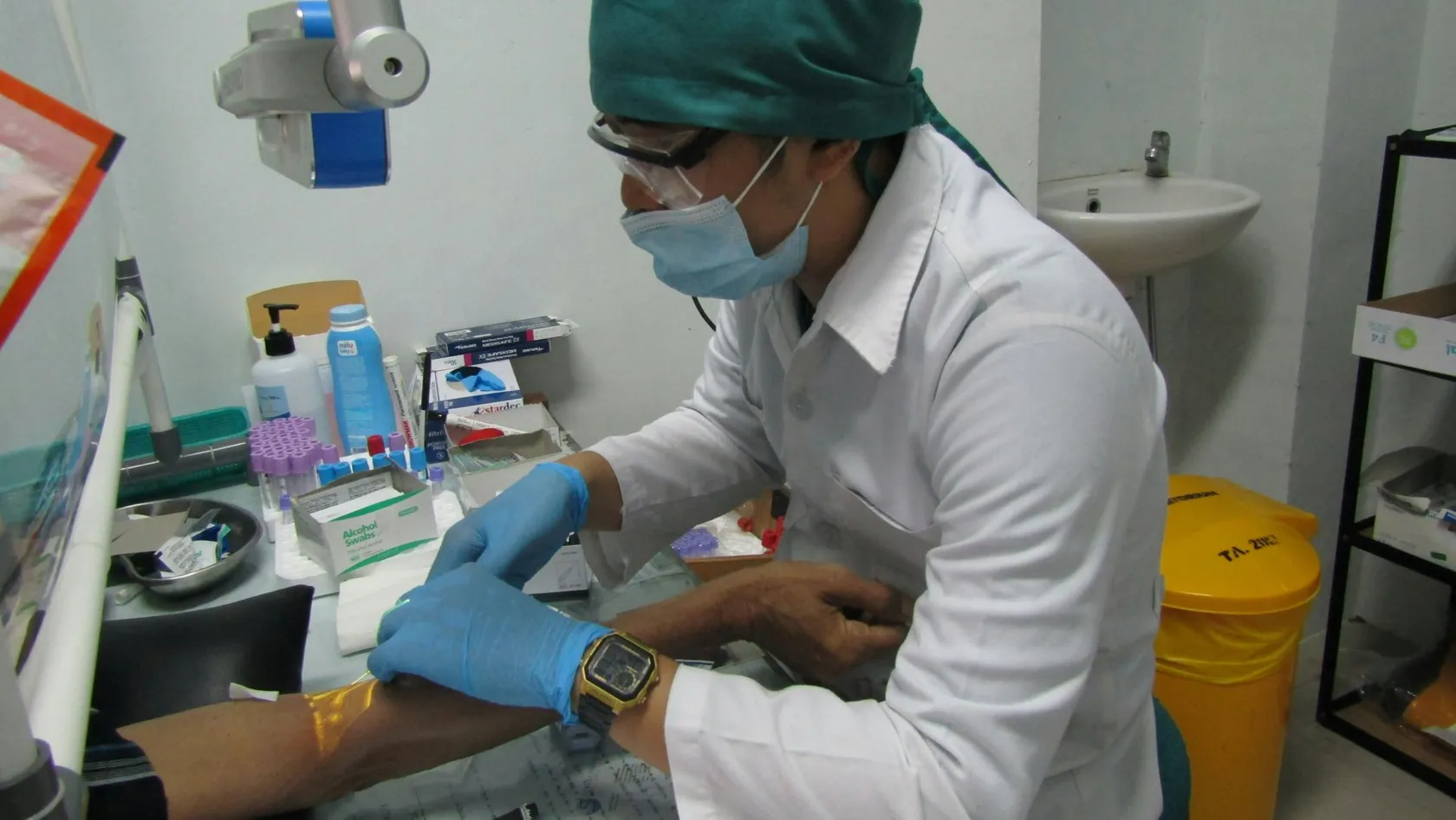
Bone Marrow Transplant Unit (BMT Unit)
Between the mid 1990s and the mid 2000s, death within 200 days of an allogeneic transplant that was not caused by relapse fell by 60 percent, and almost none of that came from a new drug. This page is about the part nobody photographs, meaning the filtered room, the rules that have evidence behind them and the ones that do not, the laboratory chain behind the cells, and what a family can actually do.
About This Department
Most of what keeps a transplant patient alive is not a drug. The room, the rota and the laboratory behind them do it.
Comparing patients transplanted between 2003 and 2007 against those transplanted a decade earlier, death within 200 days that was not caused by the cancer coming back fell by 60 percent, and almost none of that came from a new drug.
What the room actually is
A transplant room looks like an ordinary hospital room with an extra door. Everything that makes it a transplant room sits in the ceiling, in the walls and in the pressure difference between the two sides of that door, and none of it is visible from the bed. Air enters through a filter fine enough to hold back fungal spores, which are the thing this whole arrangement exists to exclude. It enters at a higher pressure than the corridor, so air moves outward whenever the door opens and nothing drifts in. It changes over completely many times an hour and never recirculates. Some units add a directional flow across the bed. The small room between the corridor and the patient, where staff wash and change, exists so that the two air systems never meet directly. None of this is decorative. Every element of it exists because a spore that would be harmless to anybody reading this page can kill a patient whose neutrophil count is zero.
Twenty nine studies of infection control measures in patients whose white cell counts had been flattened by chemotherapy were pooled. Protective isolation that included air quality control reduced death from any cause at 30 days, with a risk ratio of 0.60 and a number needed to treat of 20, and the effect held at the longest follow up with a risk ratio of 0.86. One extra patient alive for every twenty treated in a properly filtered room is a larger effect than most drugs on the ward produce, and it comes from engineering rather than from medicine.
What this means for the patient inside it
Weeks in one room, commonly two to six of them, with the door closed and a window that does not open. Isolation is the treatment here. Understanding that changes how people cope with it. Patients who know why the door stays shut tolerate the confinement better than patients who were told it was hospital policy, which is the difference between a rule and a reason.
The rules, and which ones have evidence behind them
Transplant units run on rules, and the rules are a mixture of things that have been tested and things that have been inherited. Knowing which is which saves a great deal of unnecessary misery.
This table scrolls sideways on a phone. Drag it across to reach the last column.
| The rule | Where it comes from | What the evidence shows |
|---|---|---|
| Filtered air and positive pressure in the room | Tested | Pooled data show lower 30 day mortality with a number needed to treat of 20 |
| Hand hygiene and gowning before entry | Tested | The single best supported infection control measure anywhere in hospital medicine |
| No fresh flowers or potted plants | Reasoned | Soil and standing water carry fungal spores, so the rule is precautionary and cheap to follow |
| The neutropenic diet, meaning no raw fruit, salad or soft cheese | Inherited | Five randomized trials and 388 patients found no reduction in infection, 53.7 percent against 50 percent on an unrestricted diet |
| Ice chips during the conditioning drug | Tested | Severe mouth ulceration cut sharply, with a number needed to treat of 4 |
Row four deserves attention, because it governs every meal for a month. A meta-analysis of five randomized trials found infection in 53.7 percent of patients on a neutropenic diet against 50 percent on an unrestricted one, with a pooled risk ratio of 1.13 whose confidence interval crosses one. No benefit appeared. Many units have relaxed the diet to ordinary food safety rules, meaning washed produce, cooked meat and nothing past its date, and a unit that still enforces the full restriction should be able to say why it does.
Who is in the unit
Families meet the doctor and the nurse. Eight other people decide how the month goes.
Slide this table sideways on a small screen to reach the second column.
| Role | What they decide |
|---|---|
| Transplant physician | The regimen, the donor choice, when to intervene and when to wait, and the conversation about limits |
| Transplant nurse | Line care, early recognition of deterioration, and most of what the patient experiences hour by hour |
| Transplant pharmacist | Drug interactions and the dose of the immunosuppressant, which is adjusted on blood levels several times a week |
| Dietitian | When food stops working and intravenous feeding starts, which is a clinical decision rather than a comfort one |
| Physiotherapist | Keeping muscle through weeks in one room, which is what makes the difference to how somebody walks out |
| Microbiologist | Which antibiotic and antifungal, on evidence from this unit rather than from a textbook |
| Transfusion laboratory | Irradiated and screened blood products matched to a patient whose blood group may be changing |
| Psychologist and social worker | The isolation, the family, and the part nobody schedules time for |
Of everything on that list, the nursing ratio tells you most. Transplant units work at one nurse to one or two patients, well clear of the ratios used on a general ward, because the first sign of a bloodstream infection in a patient with no white cells is a small change somebody has to be in the room to notice.
The chain behind the cells
Stem cells reach the patient through a chain of laboratories, and any weak link in it stops the transplant rather than delaying it.
Tissue typing comes first, at a level of detail that determines whether a donor is usable at all. Where the donor is unrelated, an international registry search follows, which takes weeks and involves confirming the match on a fresh sample, arranging the donation in the donor country, and moving the cells within a fixed window. The collection itself happens through an apheresis machine over several hours. A processing laboratory counts the stem cells, checks them for contamination, and either freezes them in liquid nitrogen or releases them fresh, and the count on that report decides whether the collection was adequate before anybody starts conditioning. A short count means repeating the collection, which is frustrating and safe, and going ahead on an inadequate dose is neither.
Two numbers from that chain matter to a patient. The stem cell dose, counted as CD34 positive cells per kilogram of body weight, which predicts how fast the counts recover. And the viability after thawing, for frozen cells, which tells the team whether what was stored is still what will engraft. Both appear on a laboratory report that the patient is entitled to see, and a unit that cannot produce them has a gap somewhere in the chain.
Why the timing is so rigid
Conditioning destroys the marrow before the cells go in. Once it has started, there is no bone marrow left and no way back, so the cells must exist, be adequate in number and be physically present before the first dose is given. That is the reason units refuse to begin until the laboratory has signed the release, and the reason a delay in the donor country moves the whole schedule rather than a day of it.
Whether the program standard matters
Transplant programs can be inspected against an international quality standard covering the clinical unit, the collection facility and the processing laboratory together. Whether that inspection changes outcomes has been measured.
A patient can do one useful thing with that finding. Which standard does this program work to, when was it last inspected, and how many transplants of the kind I need were done here last year. Ask for the certificate, because the word itself costs nothing to say.
Day minus seven to day plus thirty
Units count time from the day the cells go in. Everything before it is negative, everything after it is positive, and the shape of the month is the same almost everywhere.
Families find it hard that the difficult days come after the transplant and not before it. Saying so in advance removes a great deal of unnecessary alarm on day nine.
The mouth, and the cheapest thing in the unit
Former transplant patients asked what they remember mostly say the mouth. Mucositis means the lining of the mouth and gut breaking down under the conditioning drug, and at its worst it stops people eating, drinking and speaking for a week.
A Cochrane review looked at holding ice chips in the mouth during the infusion of the conditioning drug. In adults receiving high dose melphalan before a transplant, oral cryotherapy reduced severe oral mucositis with a risk ratio of 0.38, and the number needed to treat was 4. One patient in four spared the worst of it, using ice. The mechanism is simple, since cold constricts the blood vessels in the mouth and less of the drug reaches the lining during the minutes it is circulating at its peak.
Ask whether the unit does this. A program that has never heard of it is telling you something about how closely it follows the supportive care literature, and the answer takes two seconds.
Alongside it, the ordinary measures carry more weight than they sound. Mouth rinses several times a day, a soft brush kept up even when it hurts, and strong pain relief given properly, in doses that match the pain, because a patient who cannot swallow their own saliva is not being managed adequately on paracetamol.
What the unit is defending against
Three waves of infection arrive in a predictable order after an allogeneic transplant, and the unit is built around knowing which wave it is in. The first month belongs to bacteria and to yeast, driven by the central line and by a gut lining that has broken down, while months one to six belong to viruses and to mold, once the neutrophils have returned but the new immune system is still immature and immunosuppressant drugs are holding it down. Beyond six months, and especially where chronic graft versus host disease has developed, encapsulated bacteria and the infections that healthy people shrug off become the risk. Each wave has its own prophylaxis. A unit that gives everybody the same antibiotic regardless of where they sit in that sequence is not really running a protocol, so ask which organisms it sees most and what it treats them with, because local resistance patterns beat any textbook every time.
Cytomegalovirus, and what changed
Cytomegalovirus sits dormant in most adults and reactivates when the immune system is suppressed. It used to be managed by testing the blood twice a week and treating when the virus appeared, which meant giving drugs that damage the kidneys and the marrow to patients who already had failing counts.
A randomized trial of 495 patients tested a preventive drug given from the start, without waiting for the virus to appear. Clinically significant cytomegalovirus infection by week 24 occurred in 37.5 percent of patients on letermovir against 60.6 percent on placebo. That is a shift from treating a problem to preventing it, and it is one of the clearer reasons transplant outcomes have improved without anything changing about the transplant itself.
The blood bank behind the bed
Transplant patients use more blood products than almost any other patient in the hospital, and the laboratory supplying them is doing something more complicated than matching a blood group.
None of it is visible from the bed. All of it fails silently when a hospital runs a transplant program without a transfusion laboratory built for it.
What a family can actually do
Families arrive expecting to be sent away. Most of what helps is available to them, and one part of it has been tested in a randomized trial.
Treat the caregiver as the second patient here. Units that say so out loud tend to handle the rest of it well.
Doing it without the room
Some transplants no longer need the four weeks behind a closed door, and the difference is which kind of transplant it is.
This model applies to autologous transplantation only. Allogeneic transplantation, where the donor immune system has to be watched for graft versus host disease as well as for infection, stays an inpatient operation in most programs, and a unit offering to do one as a day case should be asked to explain exactly how.
For an international patient the outpatient route is harder and not easier, since it trades hospital nights for a caregiver who must be present continuously in an unfamiliar city.
Leaving the room, and the hundred day tether
Discharge feels like the end. It functions as a change of address.
The first hundred days
Patients leave the room once counts hold, fever has settled and eating and drinking are reliable, and then attends clinic daily for a week or two, twice weekly after that, and weekly for a while longer. Blood is checked for counts, kidney and liver function, and for the level of the immunosuppressant drug, which is adjusted constantly. Fever at home means coming straight in rather than waiting until morning. For an allogeneic transplant this is also the window where acute graft versus host disease appears, usually as a rash, diarrhea or rising liver tests, and recognizing it early is the reason the clinic visits are so frequent. Remote follow up once you are home continues on the same rhythm at a slower pace, and it does not stop at a hundred days. The coordinator who handled the admission stays reachable on WhatsApp once you are back home, which is what rescues a doctor at home who needs one detail from the stay at short notice.
How long you have to stay near the hospital
Two to six weeks as an inpatient, then a further four to eight weeks within reach of the unit for an autologous transplant, and commonly three months or more for an allogeneic one. Nobody agrees a flight date in advance. Fitness to fly is judged on the neutrophil count, on whether any infection has settled fully, and on whether the patient can eat and drink reliably, so it is decided in the week it happens. Plan on booking a changeable ticket and being wrong about the date. Childhood vaccination immunity is erased by the conditioning and the whole schedule has to be given again, starting around six months and running past two years for the live vaccines, so that schedule should leave with the patient written out by date and by vaccine, in English, so a family doctor anywhere can act on it.
Coming from another country
A transplant is one of the few treatments where traveling for it is often the correct decision, because the operation is concentrated in a small number of units and the difference between an experienced one and an occasional one is measurable.
Sometimes the transplant belongs closer to home. You are told so plainly.
What drives the cost
No figure appears on this page, for a practical reason. Pricing follows the length of the admission and what goes wrong, and neither is knowable before a hematologist has read the file.
This table scrolls sideways on a phone. Drag it across to reach the second column.
| Driver | Which way it moves the total |
|---|---|
| Autologous or allogeneic | An allogeneic transplant runs longer, needs more monitoring and carries graft versus host disease, so it costs considerably more |
| Where the donor comes from | A family donor is typed and collected locally. An unrelated registry donor adds search, confirmatory typing, collection abroad and courier transport |
| The number of inpatient nights | The largest single driver, and the one nobody can forecast on day one |
| Whether complications arrive | Intensive care, dialysis, a second course of antifungal treatment or treatment for graft versus host disease all sit outside a standard quotation |
| Blood product use | Irradiated red cells and platelets over several weeks, and matched platelets where antibodies develop, which is a separate service |
| Maintenance treatment afterwards | In myeloma a drug is taken for years after the transplant, and it is prescribed and monitored separately from the admission |
Find out what the quotation assumes about the length of stay and what happens financially if it runs longer, whether the donor search and collection are inside or outside it, and ask whether the follow up clinic visits before departure are counted. A figure that means anything comes only after somebody has read the actual file, and that review costs nothing.
What we arrange
Expect two to three months away from home, most of it outside a hospital bed, which makes the practical arrangements part of the treatment.
Get the coordinator name before anything is agreed. A unit that cannot produce one has already told you how the next three months will run.
What to ask a transplant unit
Every question below has a short answer. A long vague reply to any of them is itself an answer.
- How many transplants of the kind I need did this unit do last year, and which quality standard does the program work to, inspected when.
- What is the nursing ratio on the unit overnight, and how many of those nurses have more than two years of transplant experience.
- Are the collection facility and the processing laboratory inspected as part of the same program as the ward, or separately.
- Do you give ice chips during the conditioning drug, and what is the diet policy.
- What antiviral prophylaxis is used against cytomegalovirus, and is it given from the start or only once the virus appears.
- Who is responsible for my follow up once I have gone home, by name, and what is written into the handover.
That last one matters more than any of the clinical questions, because it is the one that decides what happens in the nine months after everybody has stopped paying attention.
Questions we are asked, a transplant unit FAQ
Why does the room matter so much
Because the air in it is doing part of the treatment. Filtered air at positive pressure keeps fungal spores out of a patient with no immune system left, and pooling 29 studies of infection control in patients whose counts had been flattened by chemotherapy, protective isolation including air quality control reduced death from any cause at 30 days with a risk ratio of 0.60 and a number needed to treat of 20. One extra patient alive for every twenty treated in a properly filtered room is a larger effect than most of the drugs given on the ward, and that is why the door stays shut, why the window does not open and why staff change before they come in. Tell a patient the reason and not just the rule. People tolerate weeks in one room far better when they understand what the room is doing. The same logic explains the things that are not allowed in. Soil in a plant pot and water in a flower vase both grow the organisms the filters exist to exclude.
Do I really have to avoid salad and fruit for a month
Probably not, and the evidence is against it. A meta-analysis of five randomized trials covering 388 patients found infection in 53.7 percent of patients on a neutropenic diet against 50 percent on an unrestricted diet, a pooled risk ratio of 1.13. Many units now apply ordinary food safety rules instead, meaning washed produce, cooked meat and nothing past its date. If a unit still enforces the full restriction, ask what it is based on.
How long is the whole thing
Two to six weeks as an inpatient, then four to eight weeks nearby for an autologous transplant and three months or more for an allogeneic one. Nobody agrees a flight date in advance.
Can my family visit
Yes, on a schedule, and units restrict numbers rather than presence. Come daily and predictably, stay away when you are unwell, learn the hand hygiene properly, and leave flowers and plants at home, and note that a randomized trial of 100 caregivers found that a structured support program improved caregiver quality of life and reduced burden, anxiety and depression, so take that support seriously if it is offered.
What is the ice chip thing I have read about
Holding ice in the mouth while the conditioning drug runs in, so the cold narrows the blood vessels there and less drug reaches the lining, and a Cochrane review found severe mucositis cut with a risk ratio of 0.38 and a number needed to treat of 4.
Why do the counts have to be destroyed before the cells go in
Because there is no space otherwise, and because in an allogeneic transplant the recipient immune system would reject the donor cells. Conditioning clears the marrow and suppresses the immune system so the new cells can take, and it also means that once conditioning has started there is no way back, and that is why the laboratory has to release the cells before the first dose is given.
Does it matter how many transplants the unit does
The evidence says yes, and it works through organization more than through volume alone. Across 107,904 patients, mortality fell faster at centers inside an inspected quality management system, roughly 5.3 percent a year against 3.5 percent, with a hazard ratio of 0.86 for survival at 72 months after an allogeneic transplant.
What happens once I get home
Vaccination immunity from childhood has been erased and the whole schedule has to be given again, starting around six months and running past two years for the live vaccines, while blood counts, kidney and thyroid function and vitamin D all need periodic checking, and cancer screening starts earlier than for people who have not had high dose chemotherapy. Request all of it written out by date, in English, and settle who is responsible for it before you fly.
References
- Gooley TA, Chien JW, Pergam SA, et al. Reduced mortality after allogeneic hematopoietic-cell transplantation. N Engl J Med. 2010;363(22):2091-2101.
- Schlesinger A, Paul M, Gafter-Gvili A, et al. Infection-control interventions for cancer patients after chemotherapy, a systematic review and meta-analysis. Lancet Infect Dis. 2009;9(2):97-107.
- Ball S, Brown TJ, Das A, et al. Effect of neutropenic diet on infection rates in cancer patients with neutropenia, a meta-analysis of randomized controlled trials. Am J Clin Oncol. 2019;42(3):270-274.
- Riley P, Glenny AM, Worthington HV, et al. Interventions for preventing oral mucositis in patients with cancer receiving treatment, oral cryotherapy. Cochrane Database Syst Rev. 2015;2015(12):CD011552.
- Marty FM, Ljungman P, Chemaly RF, et al. Letermovir prophylaxis for cytomegalovirus in hematopoietic-cell transplantation. N Engl J Med. 2017;377(25):2433-2444.
- Gratwohl A, Brand R, McGrath E, et al. Use of the quality management system JACIE and outcome after hematopoietic stem cell transplantation. Haematologica. 2014;99(5):908-915.
- Tan XN, Yew CY, Ragg SJ, et al. Outpatient autologous stem cell transplantation in Royal Hobart Hospital, Tasmania, a single-centre, retrospective review in the Australian setting. Intern Med J. 2022;52(7):1242-1250.
- El-Jawahri A, Jacobs JM, Nelson AM, et al. Multimodal psychosocial intervention for family caregivers of patients undergoing hematopoietic stem cell transplantation, a randomized clinical trial. Cancer. 2020;126(8):1758-1765.
Editor's note
Written by the Biruni Hospital medical editorial team. Reviewed by Assistant Professor Pınar ACAR, Anesthesia and Reanimation.
Medically reviewed by
Assistant Professor Pınar ACAR
Anesthesia and Reanimation
Related Treatments
View All
Burn ICU (Burn Intensive Care Unit)
Age, burn size and smoke inhalation are the three numbers that set the outlook after a major burn. This page walks through fluids, early surgery and grafting, the long healing phase, and when a burn patient can be flown abroad.
Burn Unit (Burn Center)
Burn care runs on one figure, the percentage of the body surface burned, and a systematic review of 28 studies found that referring hospitals overestimate it in half or more of cases. Fluid volume, the transfer decision and the survival estimate are all calculated from that number, which is why this page starts with how it is measured and who should be measuring it.
Cancer Pain Management Unit
The Cancer Pain Management Unit at Biruni Hospital in Istanbul treats pain caused by cancer and by its treatment. Two in three people with advanced cancer report pain, and reviews show nearly one in three receive medication too weak for it. The unit uses stepwise medicines, radiotherapy for bone pain, nerve blocks and spinal pumps, and plans follow-up for patients who return home abroad. The pain team reviews reports and current medicines free of charge.
Cancer Patient ICU Care
Cancer once counted as a reason not to offer an intensive care bed at all. Pooled data from 7,354 critically ill cancer patients retired that rule, and the argument now is about which patient, for what, and how long full support runs before anybody formally reassesses it.
Cardiac Care Unit (CCU)
The Cardiac Care Unit at Biruni Hospital in Istanbul monitors and treats people during and after a heart attack, a dangerous heart rhythm or sudden heart failure. In a French registry of 14,423 patients, six-month mortality after a major heart attack fell from 17.2 percent in 1995 to 5.3 percent in 2015. This page covers the path from chest pain to the unit, what is watched, angioplasty, going home and flying. The heart team reviews reports free of charge.