
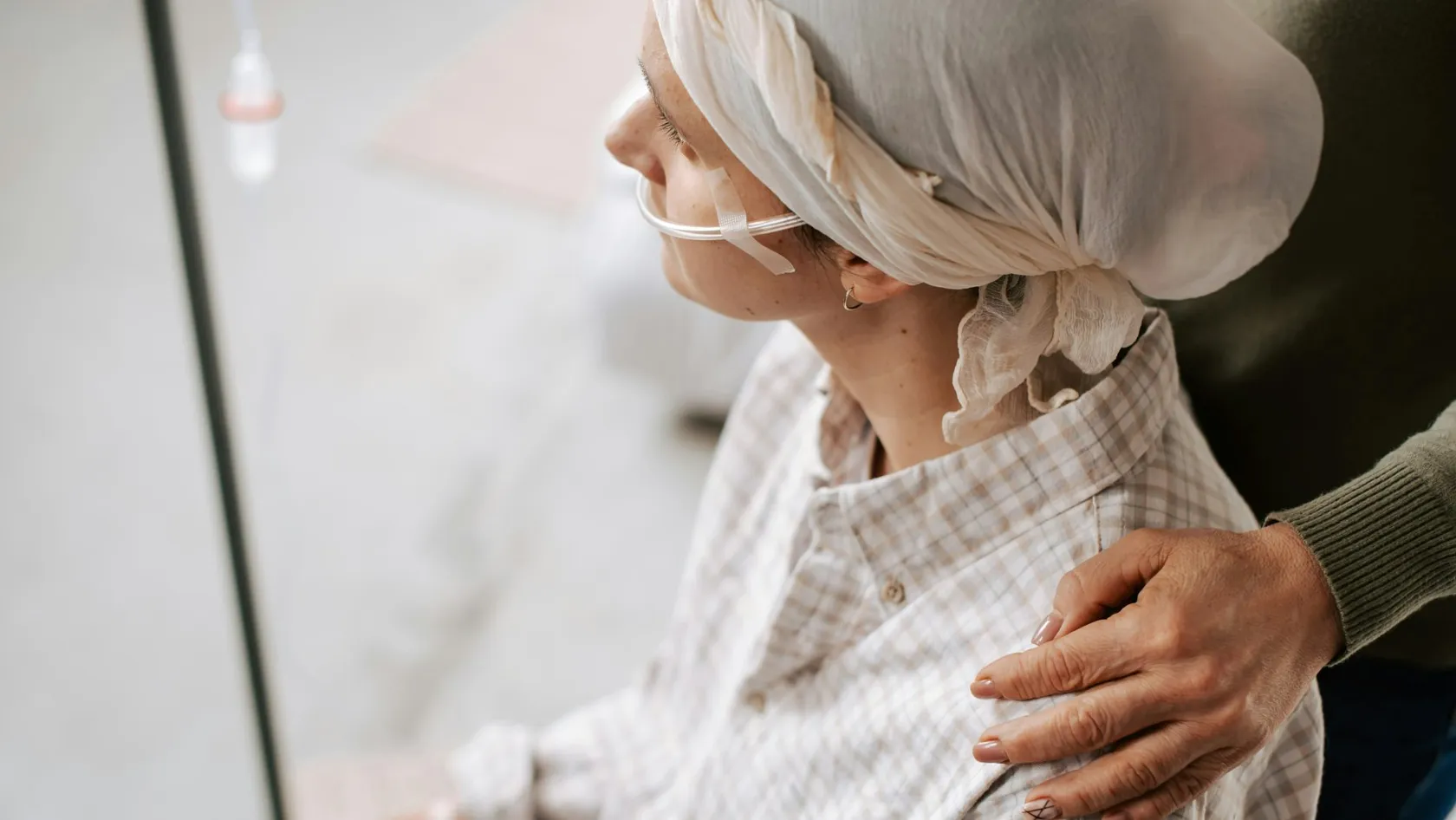
Cancer Pain Management Unit
The Cancer Pain Management Unit at Biruni Hospital in Istanbul treats pain caused by cancer and by its treatment. Two in three people with advanced cancer report pain, and reviews show nearly one in three receive medication too weak for it. The unit uses stepwise medicines, radiotherapy for bone pain, nerve blocks and spinal pumps, and plans follow-up for patients who return home abroad. The pain team reviews reports and current medicines free of charge.
About This Department
Two in three people with advanced cancer live with pain. Nearly one in three people with cancer pain receive weaker medication than their pain calls for.
Pain is the symptom people with cancer fear most, and it is among the most treatable. A meta-analysis of 117 studies and 63,533 patients found pain in 39.3 percent of people after curative treatment, 55.0 percent during treatment and 66.4 percent with advanced disease (van den Beuken-van Everdingen and colleagues, Journal of Pain and Symptom Management, 2016). A second review found that 31.8 percent of patients were given analgesics too weak for the pain they reported (Greco and colleagues, Journal of Clinical Oncology, 2014). A dedicated unit exists to close that gap. This page explains how the Cancer Pain Management Unit at Biruni Hospital in Istanbul assesses pain, which treatments it draws on, and what patients from abroad should know about follow-up and traveling with medicines.
The three steps
Most cancer pain is controlled with medicines taken by mouth, by the clock, and adjusted step by step. The World Health Organization set out the approach in 1986 and pain units everywhere still follow its logic.
- Mild pain. Paracetamol or an anti-inflammatory drug, taken regularly and not only when pain breaks through.
- Moderate pain. A weak opioid such as tramadol or codeine is added, or a low dose of a strong opioid, which many units now prefer.
- Severe pain. A strong opioid such as morphine, oxycodone or fentanyl, with a fast-acting rescue dose for flares. No ceiling dose exists. The right dose controls pain with side effects the patient can accept.
At every step other drugs join in where they help. Nerve pain, which burns, shoots or tingles, responds better to certain antidepressants and anti-seizure drugs than to opioids. Steroids shrink swelling around a tumor. Laxatives start on the same day as any opioid, since constipation is the one side effect that never wears off, and a patient who has been warned about it and given the remedy in advance is far less likely to abandon a drug that was otherwise working.
Where cancer pain comes from
Treatment follows the cause, so the first task is to name it. Tumor growing into bone produces a deep ache that worsens with movement and at night, and bone accounts for more cancer pain than any other site. Pressure on a nerve or on the spinal cord sends burning, electric or numb sensations along the path of that nerve. Swelling inside a solid organ such as the liver stretches its capsule and causes a dull, poorly located ache, while a blocked bowel or ureter produces waves of cramp. Treatment causes pain too. Surgery leaves scars that trap small nerves, some chemotherapy drugs damage the nerves of the hands and feet, radiotherapy inflames the mouth or bowel for a few weeks, and hormone treatments make joints ache. Many patients carry two or three of these at once, each needing its own answer, which explains why a single painkiller so often disappoints. Sorting them out takes a careful conversation, an examination and a look at the scans alongside the oncologist, and it is the most useful hour a person in pain will spend.
Ordinary pains continue as well. They count. Arthritis and migraine do not retire when cancer arrives.
How much pain is acceptable
None that stops you sleeping, eating, moving or being with your family. Pain that does any of these is undertreated.
Patients under-report pain. Some accept it as an inevitable part of cancer, some fear that mentioning it will distract the oncologist from treating the tumor, and some read worse pain as proof the cancer is growing and would sooner not know. Doctors add barriers of their own, from short appointments to unease about prescribing opioids. The combined result shows in the undertreatment figures. In the review quoted at the top of this page, the share of patients given inadequate analgesia fell from 43.4 percent in studies before 2007 to 31.8 percent afterward, which counts as progress, and it was lowest where pain was handled by a team set up for the purpose. The same meta-analysis that counted how common pain is also found that 38.0 percent of all cancer patients rated their pain at five or more out of ten. That is severe enough to interfere with sleep, appetite and the will to continue treatment, and nearly all of it responds to measures that have been available for decades.
Say the number. A score out of ten at every visit remains the simplest tool the unit has.
Fears about morphine
Does starting morphine mean I am dying?
Will I become addicted?
If I take it now, will it stop working later?
Will I be too drowsy to function?
Can I drive?
Asking for pain relief early is part of good cancer care. People whose pain is controlled eat, sleep and tolerate treatment better.
When tablets are not enough
A minority of patients need more than the ladder offers. The options below are matched to where the pain comes from.
- Radiotherapy for bone pain. Sixteen randomized trials with about 5,000 patients compared one session against a course of several, and pain eased in 58 percent and 59 percent, with complete relief in 23 and 24 percent (Chow and colleagues, Journal of Clinical Oncology, 2007). One visit works as well as ten, though it is repeated more often later. Radiotherapy is given at Biruni Hospital on an Elekta Versa HD linear accelerator.
- Nerve blocks. For pancreatic and upper abdominal cancers, a block of the celiac plexus, the nerve junction behind the stomach, was tested against sham injection in 100 patients. In the first six weeks 14 percent of the block group had moderate or severe pain against 40 percent on opioids alone (Wong and colleagues, JAMA, 2004).
- A pump into the spinal fluid. Delivering a tiny dose next to the spinal cord gives strong relief with fewer side effects. In a trial of 202 patients with pain uncontrolled by other means, pain scores fell by 52 percent with a pump against 39 percent with best medical care, and drug side effects fell by 50 percent against 17 percent (Smith and colleagues, Journal of Clinical Oncology, 2002).
- Stabilizing a bone. Cement injected into a collapsed vertebra, or surgery to fix a bone at risk of breaking, removes a mechanical cause that no drug reaches.
The aim is the simplest treatment that works. Procedures are offered when they would let the dose of opioid, and its side effects, come down.
Flares and warning signs
Doctors call short flares on top of well-controlled background pain breakthrough pain. Most last under half an hour. Three moves handle them.
Your first appointment
Traveling with pain medicines
Every country treats strong opioids as controlled drugs, and rules for carrying them across borders differ. Keep them in the original pharmacy packaging in your hand luggage, carry a signed letter from the prescribing doctor that names you, the drugs by generic name, the doses and the total quantity, and carry only what the trip requires plus a small margin. Several countries ask for a permit in advance or limit the supply a traveler may bring, and a few ban particular drugs outright, so check with the embassy of each country on your route well before you fly. The unit prepares the letter in English. Carry two copies. Patches and slow-release tablets make long journeys easier than frequent short-acting doses, and the plan is adjusted for time zones before departure.
Patients from abroad
Pain control rarely takes a single visit. Most care happens in the outpatient clinic, a procedure such as a nerve block means a day case or one night in the hospital, and visitors from abroad should plan about a week in Istanbul so that the team has time to adjust doses before they leave. Once you are back home, dose adjustments continue by message and video call with the same team, and a summary goes to your own doctor, who will write the ongoing prescriptions under local rules. Inside the hospital, the international patients office assigns one coordinator from the first message through discharge and keeps the same WhatsApp number open afterward. The office works in English, Arabic, French, Russian, Serbian, Romanian and Spanish and arranges interpreters for other languages, which matters in a specialty where the patient's own words are the main measurement. The office also arranges accommodation near the hospital, airport transfers, daily transport and the invitation letter for a visa. The kitchen serves halal, vegetarian and diabetic meals, the building has a prayer room, and the department meets a request for a female physician wherever the rota allows. Chemotherapy and radiotherapy take place on the same site, so pain treatment and cancer treatment are planned together.
Send the latest oncology letter, imaging reports and a list of current medicines with doses. The review costs nothing.
Patients who are very unwell should ask their own doctor whether they are fit to fly before booking.
Cost
Consultations and tablets cost little. Procedures cost more, and the estimate depends on which one is chosen, whether it needs an operating room or imaging guidance, how many nights in the hospital follow, and the price of any device that is implanted, which for a spinal pump makes up the larger share of the total.
Hospitals in this market quote a pain procedure as a package and list medicines and follow-up visits on their own lines. Estimates wait until the team has seen the reports. That first review carries no charge.
References
- van den Beuken-van Everdingen MH, Hochstenbach LM, Joosten EA, Tjan-Heijnen VC, Janssen DJ. Update on prevalence of pain in patients with cancer: systematic review and meta-analysis. J Pain Symptom Manage. 2016;51(6):1070-1090.
- Greco MT, Roberto A, Corli O, et al. Quality of cancer pain management: an update of a systematic review of undertreatment of patients with cancer. J Clin Oncol. 2014;32(36):4149-4154.
- Chow E, Harris K, Fan G, Tsao M, Sze WM. Palliative radiotherapy trials for bone metastases: a systematic review. J Clin Oncol. 2007;25(11):1423-1436.
- Wong GY, Schroeder DR, Carns PE, et al. Effect of neurolytic celiac plexus block on pain relief, quality of life, and survival in patients with unresectable pancreatic cancer: a randomized controlled trial. JAMA. 2004;291(9):1092-1099.
- Smith TJ, Staats PS, Deer T, et al. Randomized clinical trial of an implantable drug delivery system compared with comprehensive medical management for refractory cancer pain. J Clin Oncol. 2002;20(19):4040-4049.
Editor's note
Written by the Biruni Hospital medical editorial team. Reviewed by Assoc. Prof. Dr. Selçuk ALVER, Anesthesia and Reanimation.
Medically reviewed by

Assoc. Prof. Dr. Selçuk ALVER
Anesthesia and Reanimation
Related Treatments
View All
Bone Marrow Transplant Unit (BMT Unit)
Between the mid 1990s and the mid 2000s, death within 200 days of an allogeneic transplant that was not caused by relapse fell by 60 percent, and almost none of that came from a new drug. This page is about the part nobody photographs, meaning the filtered room, the rules that have evidence behind them and the ones that do not, the laboratory chain behind the cells, and what a family can actually do.
Burn ICU (Burn Intensive Care Unit)
Age, burn size and smoke inhalation are the three numbers that set the outlook after a major burn. This page walks through fluids, early surgery and grafting, the long healing phase, and when a burn patient can be flown abroad.

Burn Unit (Burn Center)
Burn care runs on one figure, the percentage of the body surface burned, and a systematic review of 28 studies found that referring hospitals overestimate it in half or more of cases. Fluid volume, the transfer decision and the survival estimate are all calculated from that number, which is why this page starts with how it is measured and who should be measuring it.
Cancer Patient ICU Care
Cancer once counted as a reason not to offer an intensive care bed at all. Pooled data from 7,354 critically ill cancer patients retired that rule, and the argument now is about which patient, for what, and how long full support runs before anybody formally reassesses it.
Cardiac Care Unit (CCU)
The Cardiac Care Unit at Biruni Hospital in Istanbul monitors and treats people during and after a heart attack, a dangerous heart rhythm or sudden heart failure. In a French registry of 14,423 patients, six-month mortality after a major heart attack fell from 17.2 percent in 1995 to 5.3 percent in 2015. This page covers the path from chest pain to the unit, what is watched, angioplasty, going home and flying. The heart team reviews reports free of charge.