
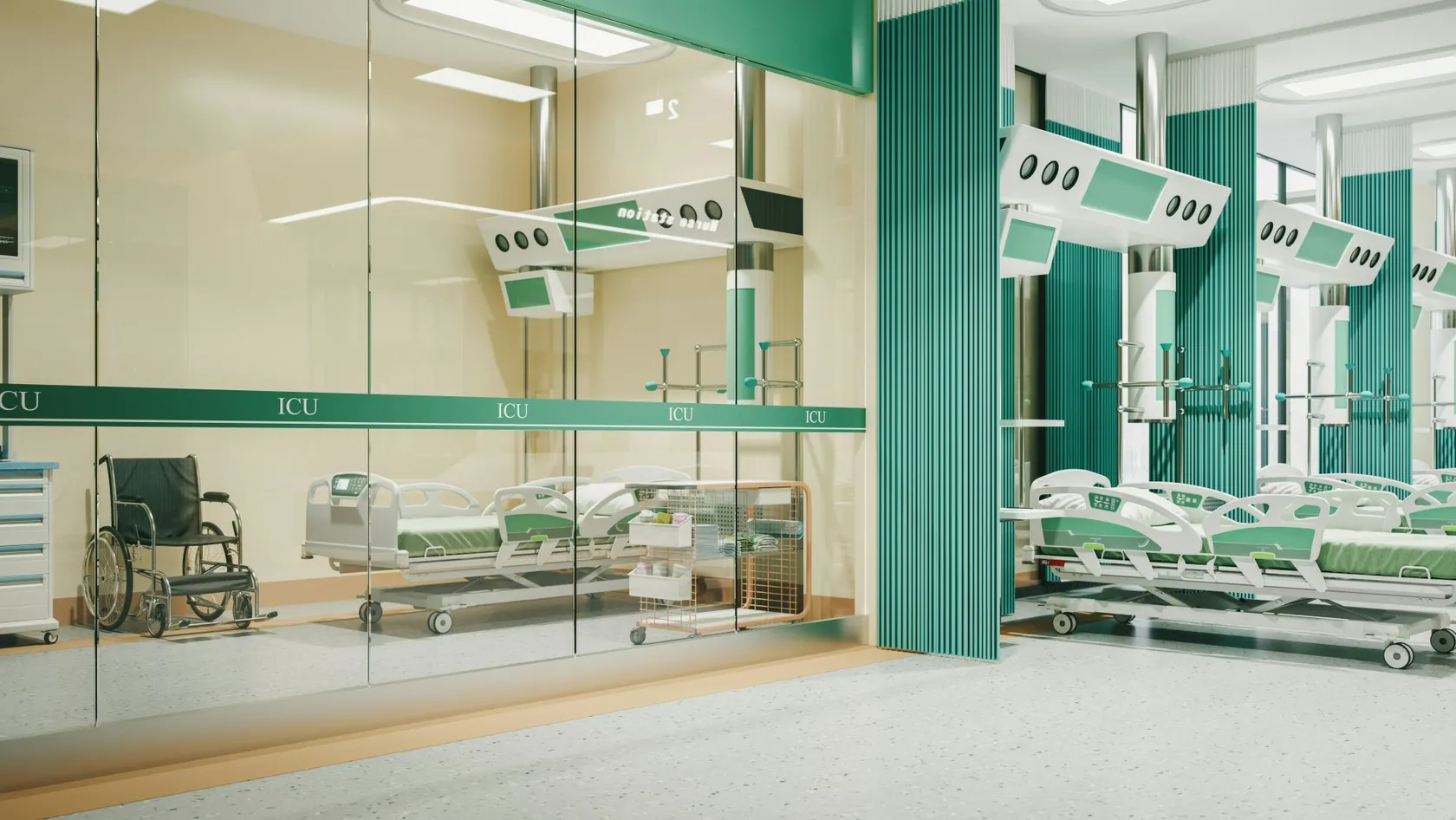
Cancer Patient ICU Care
Cancer once counted as a reason not to offer an intensive care bed at all. Pooled data from 7,354 critically ill cancer patients retired that rule, and the argument now is about which patient, for what, and how long full support runs before anybody formally reassesses it.
About This Department
Cancer used to be the reason not to admit somebody. The evidence retired that rule, and the question moved to which patient, for what, and for how long.
Pooled individual data from 7,354 critically ill cancer patients put overall hospital mortality at 47.7 percent and found an independent improvement with every later year of admission, and in a separate study of 9,946 cancer patients across 70 units, 84 percent left intensive care alive.
The rule that used to decide this
Cancer patients arrive in intensive care for the same reasons anybody else does. An infection that has outrun the antibiotics, lungs that have stopped keeping up, a kidney or a heart that gave way under the strain of treatment, and the difference comes in the sentence the family hears next, because for thirty years the word cancer on a chart changed the conversation before anyone had looked at the patient properly.
That assumption stopped being true some time ago. Outcomes did not improve because the machines got better. They improved because units stopped deciding on the diagnosis and started deciding on the patient.
Put the question to an intensivist who trained in the 1990s. What happened when a patient with acute leukemia needed a ventilator, and why does the answer still make them uncomfortable. Many units did not admit them. The published survival was poor enough that the bed was judged better used elsewhere, and because those patients were not admitted, the survival stayed poor, and the figure that justified the rule kept renewing itself.
Three things broke that loop. Chemotherapy regimens got less toxic to the organs that intensive care has to support. Supportive treatment improved, particularly antifungal and antiviral cover and the handling of neutropenic fever. And intensive care itself moved to lung protective ventilation, earlier antibiotics and a far more careful approach to fluid, all of which help the cancer patient at least as much as anybody else.
Behind the headline figure sits the finding that matters more. A systematic review with meta-analysis on individual patient data covering 7,354 critically ill cancer patients put overall mortality at 47.7 percent, which is high and belongs in the open. Look at the trend inside it. After adjusting for severity of illness, cancer type and the reason for admission, each later calendar year of ICU admission was independently associated with lower hospital mortality, with an adjusted odds ratio of 0.96 and a confidence interval of 0.95 to 0.97. The improvement is real and it is continuing.
So the modern question is not whether a cancer patient belongs in intensive care.
Which patient, for what, and for how long.
What brings a cancer patient in
Five situations account for the large majority of admissions. They carry very different outlooks, which is exactly why a single survival figure for cancer patients in intensive care means so little.
On a phone this table slides sideways. Drag it across to reach the last column.
| Route in | What is happening | What it usually turns on |
|---|---|---|
| Infection during treatment | Chemotherapy has flattened the white cell count and a bacterial or fungal infection has become bloodstream infection | How fast antibiotics were started and whether the source is found |
| Breathing failure | The lungs are failing from pneumonia, from the cancer itself, from a drug reaction or from fluid overload | Whether the cause is reversible and whether the patient avoids a breathing tube |
| An oncologic emergency | Tumor lysis syndrome, spinal cord compression, superior vena cava obstruction, severe hypercalcemia, uncontrolled bleeding | Speed. Most of these have a short window where the damage is preventable |
| After major cancer surgery | A planned overnight stay after a long resection, or an unplanned return for a leak, a bleed or a chest complication | Whether the admission was planned. Planned stays have far better outcomes |
| Treatment toxicity | Severe reaction to immunotherapy or to cell therapy, cardiac toxicity, or an unexpected organ injury | Recognizing the cause as the treatment rather than as the cancer |
That last row is the newest of the five and the one most often missed outside cancer centers, and anyone who becomes confused and feverish two days after a cell therapy infusion is not having a straightforward infection, and treating it as one wastes the hours that matter.
Fever with no white cells
Neutropenic sepsis is the commonest reason a cancer patient ends up in intensive care. The first hour changes the outcome more than anything done later.
Why it moves so fast
Chemotherapy suppresses the neutrophils, which are the cells that wall off an infection and produce most of the signs a doctor looks for. Without them, a patient can have a bloodstream infection and almost no localizing signs. No visible abscess, no impressive chest sounds, sometimes not much of a cough. A temperature and a feeling of being unwell can be the entire presentation, and six hours later the blood pressure is gone, and that is why cancer units treat a single fever in a neutropenic patient as an emergency requiring antibiotics within the hour rather than as something to observe overnight.
What the outcome gap actually looks like
One study of 1,104,363 sepsis hospitalizations in the United States separated cancer related sepsis from sepsis in patients without cancer, and in hospital mortality came out at 27.9 percent in the cancer group against 19.5 percent in the non cancer group. That gap is real and it should be stated honestly. It also runs far smaller than families expect on hearing the words sepsis and cancer together, and the majority of patients in both groups survived the admission.
Fungal infection is the second layer. It behaves differently. It arrives later, after a week or more of neutropenia and broad antibiotics, it is harder to prove on a culture, and the decision to start antifungal treatment is frequently made on suspicion, before any result confirms it. Waiting for proof in a patient this fragile means waiting too long.
Breathing failure and the oxygen argument
Half the intensive care admissions in this population come down to lungs, and there has been a real argument in critical care over how to support them before anybody reaches for a breathing tube.
Why the argument existed
Putting a breathing tube into an immunosuppressed patient carries risks that a tube in anybody else does not. It opens a direct route for infection past every defense the patient has left, it requires sedation that slows everything else down, and the published outcomes for ventilated cancer patients were poor, so for two decades the field looked for ways to hold the patient off the ventilator, first with a tight mask delivering pressure and later with high flow oxygen through the nose. Both felt right. Both were then tested properly.
What the two randomized trials found
Two randomized trials answered it. The first enrolled 374 immunocompromised patients with acute respiratory failure and compared early noninvasive ventilation through a mask against oxygen alone, and day 28 mortality came out at 24.1 percent with the mask against 27.3 percent with oxygen, an absolute difference of 3.2 percent whose confidence interval crossed zero comfortably. A second trial randomized 776 immunocompromised patients to high flow nasal oxygen or standard oxygen. Day 28 mortality was 35.6 percent against 36.1 percent, with a hazard ratio of 0.98. Neither device beat plain oxygen on survival. That result disappointed a lot of people and it is useful in a way the positive result would not have been. It moved the field away from arguing over which mask to use and toward two things that do change outcomes, namely finding the cause of the breathing failure fast enough to treat it, and not delaying a breathing tube in a patient who is going to need one anyway. Somebody who spends three days deteriorating on a high flow machine and then gets intubated in an emergency does worse than one intubated on day one in a controlled way.
Watch what they watch. A unit following the work of breathing hour by hour instead of the oxygen number is following that evidence.
The newest reason to need this room
Chimeric antigen receptor T cell therapy has changed what happens to some lymphomas, leukemias and myelomas. It has also produced a category of intensive care admission that did not exist a decade ago, and the treatment takes a patient's own T cells, engineers them to recognize a target on the cancer cell, and gives them back. When those cells find their target they multiply and release a flood of inflammatory signals. That flood is the point of the treatment and it is also the danger. Cytokine release syndrome produces fever, low blood pressure and low oxygen that can look identical to septic shock. A separate neurological toxicity produces confusion, difficulty finding words, tremor and in severe cases seizures, and both are treatable, both are time critical, and both are managed by protocols that a general intensive care unit with no cell therapy program will not have written down.
One practical consequence follows for anybody planning cell therapy, at home or abroad. Check whether the intensive care unit sits in the same building as the cell therapy program, whether its staff have managed these two toxicities before, and whether the drug used to treat severe cytokine release is held on site ready to give. Those three answers matter more than the brand of any equipment in the room.
How long full support runs
Families are most afraid to ask how long full support will continue, and that question has a published answer behind it.
Units faced a genuine problem. Predicting on day one which cancer patient will recover is unreliable. Severity scores built for general intensive care perform poorly here, the underlying cancer may be curable or may be beyond treatment, and the family in front of the doctor has usually been told two contradictory things already. Deciding on admission day was producing the wrong answer in both directions, refusing patients who would have lived and continuing support in patients who had no path back.
The response was to stop predicting and start measuring. A patient is admitted with no limitation on treatment, given everything the unit has, and then formally reassessed on a fixed day. In the study that established this, 188 mechanically ventilated cancer patients were admitted under exactly that policy and reviewed on day five. Overall survival to hospital discharge was 21.8 percent. Among the patients still alive on day five, survival rose to 40 percent. The reassessment separates the two groups better than any judgment made on the day of admission.
That is what a time limited trial of intensive care means, and understanding it before anybody uses the phrase in front of you matters, because it sounds like a threat and lands close to the opposite. The commitment runs the other way. Full treatment first, then a decision, taken on evidence from the patient and not on the diagnosis written above the bed.
The ventilator question
Families ask for this figure before any other, and giving them a soft answer helps nobody.
An analysis of 304,515 hospital admissions in patients with blood cancers who developed acute respiratory failure found that 84,260 of them, 27.7 percent, needed invasive mechanical ventilation. In hospital mortality in that ventilated group was 49.7 percent. So roughly half of the patients with a blood cancer who reach the point of needing a breathing tube do not leave hospital, and roughly half walk out of it. Both halves are true. The second half is the one that gets left out of the conversation the family has already had somewhere else, usually by somebody trying to be kind. Three separate factors move a patient within that range, and the cancer diagnosis on its own is not among them. Reversibility comes first. A treatable infection behaves one way and lung tissue replaced by tumor behaves another. How many other organs are failing at the same time matters second, because a ventilated patient with failing kidneys and failing circulation is in a different position from one whose only problem is the lungs. And whether there is a cancer treatment left that works, because a ventilator buys time and time only helps if something remains to be done with it.
Nobody stays on a ventilator forever. Most patients who are ventilated and survive come off it inside a week.
Two specialists, one patient, daily
Where a cancer patient is treated changes what happens to them, and the mechanism is more ordinary than most people imagine.
Investigators studied 9,946 cancer patients admitted to 70 intensive care units, nineteen of them inside dedicated cancer centers, and asked which organizational features tracked with survival after adjusting for how sick the patients were. Overall ICU mortality was 15.9 percent and hospital mortality 25.4 percent. What stood out had nothing to do with equipment or bed numbers. Units where the oncologists and the intensivists held daily meetings on shared patients had lower hospital mortality, with an odds ratio of 0.69 and a confidence interval of 0.52 to 0.91. There is no mystery in that. The intensivist knows what the blood pressure and the lactate are doing. The oncologist knows whether the lymphoma has a treatment left, whether the last scan showed response, whether the confusion is more likely to be the drug given on Tuesday than an infection. Neither of them has the full picture alone, and a conversation held every morning produces decisions that a message left in a chart does not, and a unit that cannot tell you when those two doctors last spoke on your relative is telling you something about how the case is being run.
What a number can and cannot say
Every figure on this page describes a group. None describes a person. That difference is where most of the distress in these conversations comes from.
Why the general scores underperform here
Units score severity of illness on admission using tools built from general populations. In cancer patients those tools consistently overestimate the risk of dying, because the numbers behind them were collected in an era with worse supportive treatment and because the scores cannot see the one variable that matters most, which is whether the cancer still has a treatment that works. A model built specifically for cancer patients with sepsis, developed on 3,796 patients and validated on a separate group, reached an area under the curve of 0.726. Read that figure the way a statistician would. It ranks a population reasonably well and it carries a wide margin around any single patient, which makes it a useful research tool and a poor basis for a conversation at a bedside, so no published score should be the thing a family is handed when they ask what the chances are.
What the medical team is actually reading
Four things, in this order. How many organ systems have failed and whether that count is falling or rising over 48 to 72 hours. Then whether the thing that caused the admission has a treatment, meaning a drainable abscess and a treatable organism rather than progressive disease filling the lungs, then what the patient was able to do a month ago, because somebody walking and working before admission has reserves that somebody bed bound for two months does not. And what the oncologist says about the cancer, which is the one input a general intensive care unit cannot generate for itself.
If a doctor gives you a percentage for your relative, ask which of those four it came from.
Going back to cancer treatment
Surviving intensive care does not end the story for a cancer patient. It interrupts one. Whether the treatment restarts afterward is the part almost no page covers.
Somebody has measured this. A systematic review pooling 20 studies and 3,551 patients looked at exactly that question. After discharge from intensive care, 61 percent of patients went back to some form of anticancer treatment, with a confidence interval of 51 to 70 percent, while only 48 percent were back on the regimen originally planned for them by six months, with a confidence interval of 36 to 60. So the common outcome is treatment resuming in a modified form, at reduced dose, on a longer schedule, or with a different drug chosen because the kidneys or the heart no longer tolerate the first one. Three things shorten that gap, and all three belong to how the case is organized. The oncology team staying involved during the intensive care stay instead of picking the case back up afterward, then a discharge summary that states what organ damage is permanent and what is expected to recover, because an oncologist cannot dose a drug without knowing which, and a scheduled review date set before the patient leaves the unit, rather than a promise to arrange one.
Ask for the restart plan in writing before discharge. It should name the drug or the regimen intended, the organ function thresholds that have to be met first, the date of the review that checks them, and who is responsible for making that review happen. An international patient carrying that document home is the most reliable way this information reaches their own oncologist intact.
Once you are home
Leaving intensive care is not recovery. A slower phase starts there, one that families are rarely warned of, and for an international patient it unfolds in another country under a different doctor.
What the next few months look like
Muscle is lost fast in an intensive care bed and it comes back slowly, so weakness catches people out. Stairs become the test. Somebody who walked into hospital can need help on them for weeks. Alongside that sit poor appetite, disturbed sleep, breathlessness on small efforts, and problems with memory and concentration that patients describe as feeling slower than they were, while vivid and frightening recollections of the unit are common and they are not a sign of anything going wrong. Together these are known as post intensive care syndrome. Most of it improves across three to twelve months, and the one thing that shortens it is starting to move early and keeping at it after discharge.
What has to leave the hospital with you
First, a discharge summary that separates the organ damage expected to recover from the damage that is permanent, since an oncologist cannot choose a drug dose without knowing which. The full medication list with the drugs that were stopped and why, then the microbiology results, including any resistant organism grown, because that changes what a hospital at home would give if the patient is readmitted. The cancer restart plan with its thresholds and its review date, and the contact details of the coordinator who handled the case.
Request all of it in English if that is what your own doctor reads.
The coordinator stays reachable on the same WhatsApp number after the patient flies home, which is what makes the difference when a local doctor needs a detail from the admission at short notice. Set that up before departure. Finding a number under pressure, in a second language, on the day something goes wrong, is the situation this arrangement exists to prevent.
See a local doctor the same day for fever, for breathlessness that is getting worse, for new confusion, for passing much less urine, for a wound that opens or leaks, or for pain and swelling in one leg.
If this happens far from home
Two entirely different situations get mixed together under the same search, and separating them is the first useful thing this page can do.
A complication during planned treatment here
A patient travels for cancer surgery, for a transplant or for a course of treatment, and something goes wrong that needs an intensive care bed. The whole system is built around this situation, and the answer reassures. The patient is already inside the hospital, the surgical team and the oncology team know the case, the pathology and the imaging are on site, and nobody has to reconstruct a history from a translated summary. The file is already here. Surgery, radiotherapy and chemotherapy are all delivered at Biruni Hospital on the same site, so a plan that changes after a complication does not require a transfer or a new referral.
What the family needs from that first day
A coordinator with a name and a direct number, a daily update at a fixed time in a language they read, and a clear statement of whether the admission is a full trial of treatment. The international patients team works in English, Arabic, French, Russian, Serbian, Romanian and Spanish, with interpreting in other languages arranged on request, and the same coordinator stays with the case from the first message through to discharge. Patient rooms have a companion bed, so one family member stays in the room overnight for the whole admission, and accommodation for the nights either side is arranged from this end.
A patient already critically ill somewhere else
Families in the other situation have a relative already in an intensive care unit somewhere else, and they want a second opinion, a transfer, or both. That question is harder and it is covered next.
Whether a patient can be moved
Every family asks this in the first message. They deserve a straight answer, so here it is.
Moving a critically ill patient between countries is possible. The move is never neutral. A transfer means disconnecting from one set of machines, a road journey, hours in an aircraft cabin at reduced pressure, and another road journey, with a team that has known the patient for two hours. For a stable patient on modest support it is routine. For a patient on high ventilator settings with failing circulation it can be the thing that kills them, and a service willing to move anybody for a fee is not doing that family a favor.
- A remote review of the reports comes first and it costs nothing. What is needed is the current intensive care chart, the ventilator settings, the vasopressor doses, the last three sets of bloods, recent imaging, the microbiology results and the full cancer history with what treatment has been given and when.
- The first question that review answers is whether the problem is treatable rather than whether the patient is transportable, because those are different questions and only the first one is worth traveling for.
- Where the answer is that the current unit is doing what any unit would do, that is the answer you get, in those words, and it usually saves a family a great deal of money and a dangerous journey.
- Where a transfer does make sense, it is planned around a specific treatment that is available here and not there, with the receiving team named and the bed confirmed before anybody books an aircraft.
- Air ambulance services are booked commercially and separately by the family, and any hospital that presents itself as arranging the flight, the escort and the bed as one package deserves a closer look at who is actually being paid.
Most of those reviews end with advice to stay where they are.
What drives the cost
No figure appears on this page, for a practical reason. Intensive care is billed by the day and by what is used, so a number quoted before anybody knows the length of stay is a number about nothing. What actually moves the total, in the order it usually moves it. The number of nights, which is the largest single driver and the one nobody can forecast on day one. Ventilation next, because a ventilated bed costs more than a monitored one in every health system. Whether dialysis is needed, since kidney support is priced separately almost everywhere. Which antibiotics and antifungals are used, because the drugs reached for in a neutropenic patient with a resistant organism sit at the expensive end, and how much blood and how many platelets are transfused, which in a patient with a blood cancer runs high. And whether a procedure is needed, meaning a tracheostomy, a chest drain, an interventional radiology drainage or a return to the operating room. Length of stay dwarfs the rest.
- Ask what a daily intensive care rate includes and what is billed on top of it. The answer separates a real quotation from a headline one immediately.
- Ask whether ventilation, dialysis and blood products are inside the daily rate or itemized, and whether the rate changes once the patient steps down to a ward.
- Ask what happens financially if the stay runs past whatever was estimated, and get that answer before it becomes relevant rather than after.
- Ask whether the oncology treatment that follows the intensive care stay is quoted separately, because it almost always is.
Where the admission follows an operation or a course of treatment arranged here, a planned overnight stay in intensive care is normally written into the original quotation and an unplanned longer stay is not. Published packages from hospitals in this market are consistent on that point, and confirm it in writing for your own case, because a figure that means anything comes only after a doctor has read the current charts, and that review costs nothing.
What we arrange
An intensive care admission puts a family in a foreign city with nothing planned and no idea how long they will be there. The practical arrangements are part of the care.
Get the coordinator name before anything is agreed. A unit that cannot supply one is telling you how the next few weeks will run.
What to ask
Each of these has a short answer, and the ones that produce a long vague reply are telling you something you need.
First and last matter most. They decide whether the family understands what is happening to them over the following two weeks.
What we will not claim
Pages on intensive care tend to promise. This one will not. The reasons are specific.
No survival figure will be given for your relative before somebody has read the current charts, the imaging and the cancer history. Nobody here will tell a family that a cancer patient in intensive care has a good chance without naming which of the four things in the prognosis section that judgment rests on. No unit percentage will be quoted as a single clean number, because a mortality rate without the case mix behind it is a marketing figure. Nobody will encourage a transfer of a critically ill patient before a review has established that something different would be done on arrival. And the word routine will not appear, because none of this is routine for the family living through it.
If a hospital has already handed you a percentage with no range and no case mix attached, ask which patients produced it and watch what follows.
Questions we are asked, an intensive care FAQ for cancer patients
Does having cancer mean intensive care is pointless
No, and the evidence against that idea is strong. A meta-analysis on individual data from 7,354 critically ill cancer patients found overall hospital mortality of 47.7 percent and, more importantly, an independent improvement with each later year of admission, with an adjusted odds ratio of 0.96 per year. In a separate study of 9,946 cancer patients across 70 units, 84 percent left intensive care alive. Outcome turns on whether the problem that caused the admission responds to treatment and whether the cancer still has a treatment available. The diagnosis on its own decides very little. A patient admitted with pneumonia during a curable lymphoma sits in a completely different position from a patient admitted with progressive disease after every line of treatment has failed, and putting those two people inside one survival figure is what makes the figure useless. Any doctor quoting a number should be able to say which of the two they are describing.
What does a time limited trial of intensive care mean
The patient is admitted with no restriction on treatment and given everything the unit has. The review lands on a fixed day. Nobody judges it on admission. In the study that established the approach, 188 mechanically ventilated cancer patients were reviewed on day five, and survival to hospital discharge reached 21.8 percent overall and 40 percent among those still alive at that review. Ask which day the review falls on and who will be in the room.
If my relative needs a breathing tube, what are the chances
Across 304,515 hospital admissions for blood cancer with acute respiratory failure, 27.7 percent needed invasive ventilation and in hospital mortality in that group ran at 49.7 percent. Roughly half do not leave hospital. Roughly half walk out of it.
Can I stay in the room with my relative
Patient rooms have a companion bed, so one person stays overnight for the whole admission. Intensive care sets its own visiting pattern around the medical round and the nursing handover, and somebody explains it on the first day.
Will somebody speak our language at three in the morning
The international patients team works in English, Arabic, French, Russian, Serbian, Romanian and Spanish, and interpreting in other languages is arranged on request, and one coordinator is assigned to the case from the first message and stays with it through discharge. One conversation matters more than the rest. Get the daily update right, so ask what time it happens and arrange to have the same interpreter present each day instead of whoever is available.
Can a critically ill cancer patient be flown to another country
Sometimes, and the first question is not whether the patient can be moved. Everything turns on whether a different hospital would do something different. Send the current intensive care chart, the ventilator settings, the vasopressor doses, recent bloods and imaging, the microbiology and the full cancer history for a free review. A transfer means disconnecting from one set of machines, a road journey, hours in a cabin at reduced pressure and another road journey, with a team that has known the patient for two hours, so it makes sense only when something specific waits at the other end. The commonest answer that review produces is that the current unit is already doing what any unit would do, and that answer saves a family a dangerous journey.
What happens to the chemotherapy while somebody is in intensive care
Most cancer treatment is paused during the acute illness, and the question that matters is what happens afterward. A systematic review of 20 studies and 3,551 patients found 61 percent of patients resumed some anticancer treatment after intensive care discharge, while 48 percent were back on their originally planned regimen at six months. Ask for the restart plan in writing before discharge, naming the intended treatment and the organ function thresholds that have to be met first.
How long do these admissions usually last
No useful average exists, because the five routes into intensive care described above behave differently. A planned overnight stay after major cancer surgery is one night. Neutropenic sepsis that answers antibiotics runs a few days, sometimes less where the organism is found quickly. Respiratory failure needing a ventilator runs into a week or more. Plan around the review date.
References
- Darmon M, Bourmaud A, Georges Q, et al. Changes in critically ill cancer patients short term outcome over the last decades, results of systematic review with meta-analysis on individual data. Intensive Care Med. 2019;45(7):977-987.
- Soares M, Bozza FA, Azevedo LC, et al. Effects of organizational characteristics on outcomes and resource use in patients with cancer admitted to intensive care units. J Clin Oncol. 2016;34(27):3315-3324.
- Azoulay E, Lemiale V, Mokart D, et al. Effect of high-flow nasal oxygen vs standard oxygen on 28-day mortality in immunocompromised patients with acute respiratory failure, the HIGH randomized clinical trial. JAMA. 2018;320(20):2099-2107.
- Lemiale V, Mokart D, Resche-Rigon M, et al. Effect of noninvasive ventilation vs oxygen therapy on mortality among immunocompromised patients with acute respiratory failure, a randomized clinical trial. JAMA. 2015;314(16):1711-1719.
- Hensley MK, Donnelly JP, Carlton EF, et al. Epidemiology and outcomes of cancer-related versus non-cancer-related sepsis hospitalizations. Crit Care Med. 2019;47(10):1310-1316.
- Azoulay E, Castro P, Maamar A, et al. Outcomes in patients treated with chimeric antigen receptor T-cell therapy who were admitted to intensive care (CARTTAS), an international, multicentre, observational cohort study. Lancet Haematol. 2021;8(5):e355-e364.
- Lecuyer L, Chevret S, Thiery G, et al. The ICU trial, a new admission policy for cancer patients requiring mechanical ventilation. Crit Care Med. 2007;35(3):808-814.
- Ponnapalli A, Sharma A, Fatima M, et al. Epidemiology and outcomes of hospitalized patients with hematological malignancy and acute respiratory failure. Hematol Oncol Stem Cell Ther. 2026;18(4):146-154.
- Yuan ZN, Xue YJ, Wang HJ, et al. A nomogram for predicting hospital mortality of critical ill patients with sepsis and cancer, a retrospective cohort study based on MIMIC-IV and eICU-CRD. BMJ Open. 2023;13(9):e072112.
- do Val Roso R, Daltro-Oliveira R, Munshi L, et al. Impact of intensive care unit admission on the resumption of treatment in patients with cancer, a systematic review and meta-analysis. Support Care Cancer. 2026;34(9).
Editor's note
Written by the Biruni Hospital medical editorial team. Reviewed by Prof. Dr. Mehmet İlke BÜGET, Anesthesia and Reanimation.
Medically reviewed by
Prof. Dr. Mehmet İlke BÜGET
Anesthesia and Reanimation
Related Treatments
View All
Bone Marrow Transplant Unit (BMT Unit)
Between the mid 1990s and the mid 2000s, death within 200 days of an allogeneic transplant that was not caused by relapse fell by 60 percent, and almost none of that came from a new drug. This page is about the part nobody photographs, meaning the filtered room, the rules that have evidence behind them and the ones that do not, the laboratory chain behind the cells, and what a family can actually do.

Burn ICU (Burn Intensive Care Unit)
Age, burn size and smoke inhalation are the three numbers that set the outlook after a major burn. This page walks through fluids, early surgery and grafting, the long healing phase, and when a burn patient can be flown abroad.

Burn Unit (Burn Center)
Burn care runs on one figure, the percentage of the body surface burned, and a systematic review of 28 studies found that referring hospitals overestimate it in half or more of cases. Fluid volume, the transfer decision and the survival estimate are all calculated from that number, which is why this page starts with how it is measured and who should be measuring it.

Cancer Pain Management Unit
The Cancer Pain Management Unit at Biruni Hospital in Istanbul treats pain caused by cancer and by its treatment. Two in three people with advanced cancer report pain, and reviews show nearly one in three receive medication too weak for it. The unit uses stepwise medicines, radiotherapy for bone pain, nerve blocks and spinal pumps, and plans follow-up for patients who return home abroad. The pain team reviews reports and current medicines free of charge.
Cardiac Care Unit (CCU)
The Cardiac Care Unit at Biruni Hospital in Istanbul monitors and treats people during and after a heart attack, a dangerous heart rhythm or sudden heart failure. In a French registry of 14,423 patients, six-month mortality after a major heart attack fell from 17.2 percent in 1995 to 5.3 percent in 2015. This page covers the path from chest pain to the unit, what is watched, angioplasty, going home and flying. The heart team reviews reports free of charge.