
Vagus Nerve Stimulator Surgery - VNS Surgery
A vagus nerve stimulator goes into the neck and the chest, never into the skull, and it almost never ends seizures altogether. What it offers is a percentage off the seizure count that keeps climbing for years, and this page sets out exactly what the trials measured, what the side effects cost, and who should be assessed for other surgery first.
About This Department
A vagus nerve stimulator never enters the skull. Neither does it promise to end your seizures.
What it offers is a percentage off your seizure count, one that tends to grow across the first few years, plus a magnet the person sitting next to you can use when a seizure begins.
What a vagus nerve stimulator is
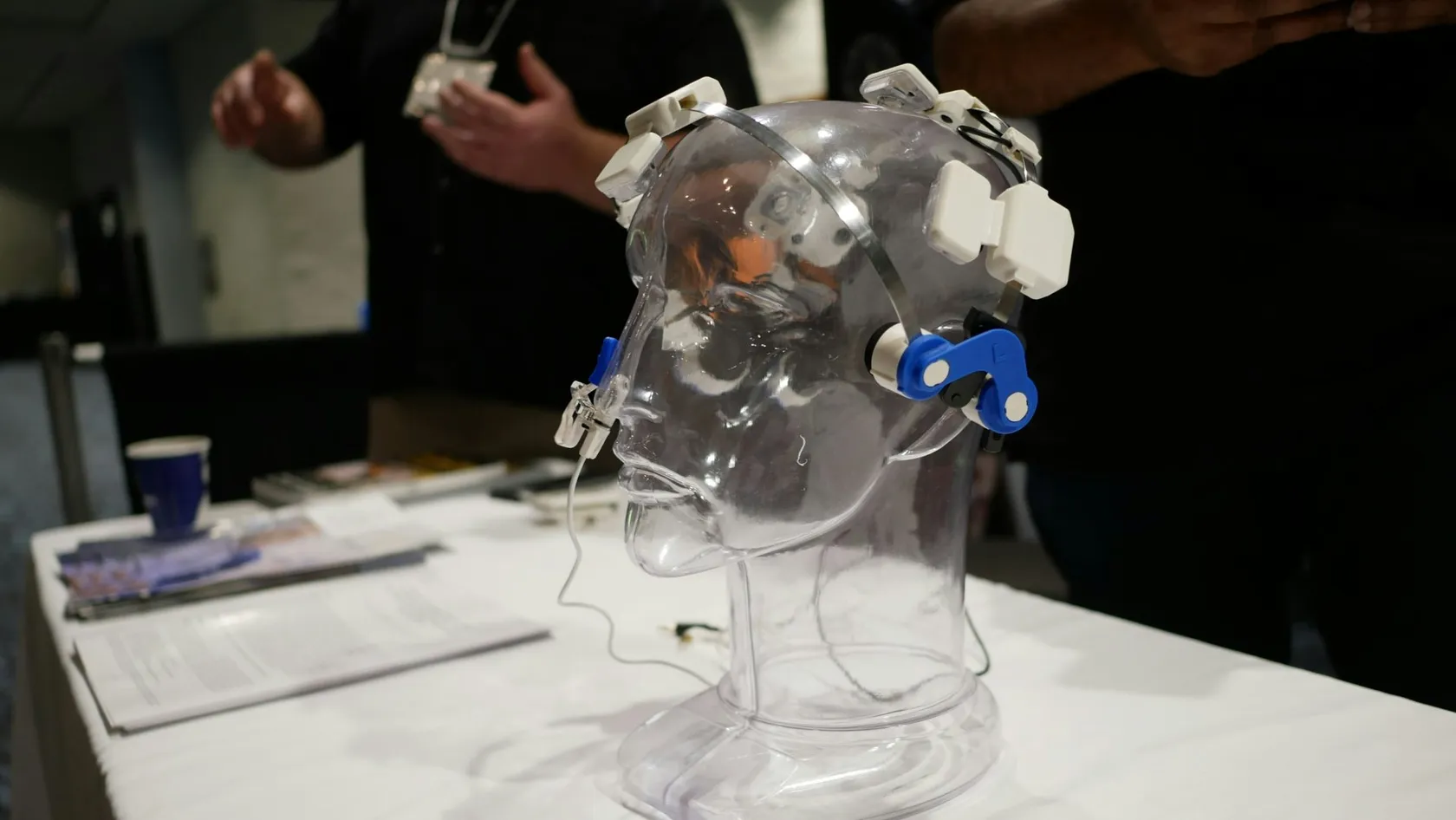
Three components make up the whole system. A flat pulse generator the size of a large coin, tucked under the skin of the upper left chest. A pair of soft electrode coils wound around the left vagus nerve in the neck. And a thin lead joining the two, tunneled under the skin so nothing shows.
Nothing goes near your brain.
The left vagus nerve carries traffic upward into the brainstem, and from there into networks involved in starting seizures and spreading them. Sending a mild electrical pulse up that nerve, on and off around the clock, damps the tendency of those networks to fire together. Exactly how it does that has never been pinned down, and that is an honest sentence patients deserve from anyone asking them to consent to an implant. Stimulation runs on a rhythm you stop noticing. Thirty seconds of current, then a few minutes of silence, repeating through the day and through the night, at a strength somebody raises slowly across the first months. You will stop feeling most of it after the first weeks, and the moments you do feel tend to be the moments you are speaking, since the pulse and your voice share one nerve. That overlap explains almost every side effect described on this page.
Where the device actually goes
Families arrive at this consultation braced for a craniotomy, because the words epilepsy and surgery sit together in their heads. Correcting that early changes the whole conversation, and it changes what a person is willing to consider.
Two small incisions, neither of them on your head
One incision sits in a skin crease on the left side of the neck, low down, where it fades into a line few people go on noticing after a year. The other sits below the left collarbone, over the pocket that holds the generator. No bone is opened. No brain tissue is touched, retracted, removed or even seen.
This table scrolls sideways on a narrow screen. Swipe or drag to see every column.
| Part | Where it sits | What it does |
|---|---|---|
| Pulse generator | A pocket under the skin below the left collarbone | Holds the battery and the settings, and can be read and reprogrammed through the skin |
| Electrode coils | Wrapped loosely around the left vagus nerve in the neck | Delivers the pulse to the nerve without squeezing it |
| Connecting lead | Tunneled under the skin between neck and chest | Carries the current, and stays in place when a generator is later swapped |
That last row matters more than it looks, because when the battery runs down years from now the leads normally stay exactly where they are and only the generator gets changed, through the old scar, in a short operation that reuses everything already sitting in your neck.
How it compares with the other options
Somebody whose epilepsy has stopped answering to medication has three broad paths in front of them, and stimulation sits in the middle of the three. Seeing all three side by side is the fastest way to understand what stimulation is for, because its purpose only becomes clear once you know what the other two can and cannot do.
This table scrolls sideways on a narrow screen. Swipe or drag to see every column.
| Route | What it can achieve | What it requires |
|---|---|---|
| Removing the source | Freedom from seizures for a substantial share of well selected patients | One identifiable source, in brain that can be removed safely, plus a craniotomy |
| Vagus nerve stimulation | Fewer and often shorter seizures, with freedom from them in a small minority | A neck and chest implant, years of gradual programming, and patience |
| Further drug combinations | Occasional success, and falling odds with each drug already tried | No operation, and a rising load of side effects |
Removing the source gets the first look
Any epilepsy center worth traveling to will ask whether your seizures start in one identifiable place that could be taken out, because that route is the only one that offers a genuine chance of stopping seizures altogether. Answering it takes video monitoring, detailed imaging and often more testing again. Stimulation belongs to the conversation that happens after that question has been asked and answered, and a center that reaches for the implant without asking it first has skipped the important part. Find out directly whether you have had video telemetry, whether a source was identified, and what an epilepsy surgery team concluded on removing it. Those three answers decide whether stimulation is even the right conversation for you, and a patient who cannot recall having that discussion has probably never had it.
Who it is for
Stimulation was designed for people whose seizures continue despite properly tried medication, and whose seizures either come from more than one place, or from somewhere too important to remove, or from somewhere nobody has managed to locate at all, and it covers just as squarely the person whose resective operation went ahead and did not work.
That last group is larger than most patients realize.
Age is rarely the barrier. Devices go into young children with severe epilepsy syndromes and into adults in their sixties, and the assessment turns instead on how well the seizures are documented, whether medication has genuinely been given a fair trial, and whether somebody at home can help operate a magnet and notice a problem with the wound.
What the randomized trial showed
In 1998 Neurology published the study that put this treatment into practice. Everybody enrolled had the device implanted, so nobody had a scar without a working machine underneath it, and the comparison ran between a stimulation setting expected to help and a much weaker one expected to do very little. Three months of counting followed.
Twenty eight percent against fifteen is a modest gap. Pretending otherwise helps nobody, and what that trial established was a direction and a safety profile, measured at three months, in a population that had nothing else left to try. The far more interesting question turned out to be what happens after the first year.
Why the number improves with time
Almost every operation in this hospital delivers its benefit on the day it happens and then holds steady or fades. Stimulation of the vagus nerve does the opposite, and that single fact reshapes how you should judge it. A team examined 5,554 patients in the manufacturer's outcome registry and separately reviewed 2,869 more across 78 published studies, and both datasets showed the same climb.
The climb, in registry numbers
Within the first four months after implantation, 49 percent of patients had halved their seizure count and 5.1 percent had stopped having seizures entirely. Between 24 and 48 months those figures had risen to 63 percent and 8.2 percent. The literature review agreed, moving from 40 percent responding at four months to 60 percent at last follow up with seizure freedom going from 2.6 percent to 8.0 percent, and an independent guideline review found the same pattern from a different angle, reporting a rise of some 7 percentage points in the responder rate between year one and year five. Nobody has settled why the effect grows. Continuing changes in the nerve, rising settings across the ramp, and the plain tendency of very bad years to be followed by less bad ones all get proposed, and a registry cannot separate them. What these numbers do establish is that the treatment has to be judged late instead of early.
Two features that predicted a better result
Seizure freedom in that registry was more likely where epilepsy had started after the age of twelve, and where the seizures were predominantly generalized. Response, meaning any halving of the count, was more likely where scans showed no structural lesion. None of those factors decides anything on its own, and all three belong in the conversation before you agree to travel for an implant.
Read the seizure freedom figures again. They stay in single digits.
What the Cochrane review quantified
Five trials, 439 people, and one clean result
A Cochrane systematic review pooled five randomized trials covering 439 participants and compared higher stimulation with lower stimulation. Patients on the higher setting were 1.73 times as likely to halve their seizure count, a result the reviewers graded as moderate quality evidence. Withdrawals from treatment were rare in both groups, which tells you something real about how the device gets tolerated once it is in.
Why blinding a stimulation trial is hard
One point the reviewers made deserves repeating, since it applies to every study on this page. A patient whose voice changes every few minutes has a fairly good idea which group they landed in, and so does the doctor listening to them speak. That leak weakens the blinding of every trial in this field, and it means the measured effect could be flattered by expectation. Knowing it does not make the treatment useless, and it makes the modest published numbers more believable instead of less, since a field that has to report its results through leaky blinding tends to publish numbers that are lower than the truth rather than higher. Hold that thought when somebody quotes you a percentage. Every figure on this page came out of studies where patients could hear which arm they had landed in, and the honest response is to treat those figures as a floor for what the treatment does and as a ceiling for how confident anybody should sound about it.
Children, Lennox-Gastaut and mood
Approval originally covered partial onset seizures in patients over twelve, which left families of younger children and of people with severe generalized syndromes reading trial results that did not describe them. A guideline review published in 2013 gathered what the evidence had accumulated since.
- Children. Across 470 children with partial or generalized epilepsy, 55 percent halved their seizure count, with a confidence interval running from 50 to 59 percent.
- Lennox-Gastaut syndrome. Among 113 patients, 55 percent again reached that same halving, from a confidence interval of 46 to 64 percent.
- Mood. Two studies of 31 adults with epilepsy found a significant improvement on standard mood scales, separately from any change in seizures.
- Infection in children. The risk of infection at the implant site ran higher in children than in adults, at an odds ratio of 3.4, which is the reason children need closer watching of the wound.
Those were graded as Level C recommendations, meaning the evidence supports considering the treatment rather than compelling it. Parents reading this should hold the mood finding lightly and the infection finding tightly.
The trial that measured living instead of counting
Counting seizures misses most of what epilepsy does to a life. A European and Canadian study across 28 sites tried to measure the rest of it, randomizing 112 adults with drug resistant focal seizures to stimulation added to best medical practice, or to best medical practice on its own, then following quality of life for up to a year.
Take that section as a whole rather than as a headline. A treatment can improve how somebody lives while producing more side effects than doing nothing, and both halves of that sentence were measured in the same 112 people.
What the operation involves
Published figures put the implant at 45 to 90 minutes, usually under general anesthetic, occasionally under local anesthetic with sedation where a patient cannot tolerate being fully asleep. The surgeon opens the neck crease, finds the vagus nerve where it runs alongside the carotid artery and the jugular vein, and separates a short length of it from the sheath wrapping all three, after which the coils go on, the pocket is made below the collarbone, the lead is tunneled between the two, and every connection is tested before anything gets closed.
Why the left side, and what the surgeon protectsThe left vagus nerve carries far less traffic to the heart than the right one does, which is why implants go on the left and why the trial found no change in heart measurements. Running with that nerve is the branch that supplies your voice box, and stretching or bruising it is what produces hoarseness after surgery that has nothing to do with the stimulation. Careful handling matters more here than speed does, and a hoarse voice in the first weeks that settles on its own is a different problem from the hoarseness that arrives later with each pulse.
Many centers send patients home the same day, while others keep one night for observation, which is what a patient who has flown in from abroad should expect and should settle in advance, since the answer changes how many hotel nights get booked and who needs to be in the room overnight.
Find out which it will be.
Switching it on, and the ramp
Surgeons test the device briefly in the operating room, at the lowest setting, for well under two minutes. That test confirms the connections work. Then it goes off again, and the wounds get two to four weeks to heal before anybody turns it on properly.
Why the current climbs slowly
Programming starts low and rises in small steps, spaced two to four weeks apart, and the whole ramp runs across several months. Two reasons drive that pace. A nerve that has never been stimulated tolerates a gentle start far better than a sudden one, and the throat sensations that come with each pulse fade as the body gets used to them, so a setting that felt intolerable in month one turns unremarkable by month four. Pushing the current up faster than the throat can adapt is the commonest way to end up with a patient who wants the device switched off. Tell whoever programs you when a setting makes swallowing or talking difficult, because the fix is a smaller step instead of a lower ceiling, and a patient who suffers in silence ends up with a device parked at a level that never reaches the range where it works.
Nobody reaches their final settings in a week.
The magnet
Every patient goes home with a small magnet on a wristband or a belt clip. Passing it over the generator delivers an extra burst of stimulation on demand, separately from the automatic cycle running underneath, so somebody who gets a warning before a seizure can use it themselves and somebody who gets no warning can have a family member use it as the seizure begins. That is the whole design.
What it gives the person sitting next to you
Watching a seizure and being able to do nothing is one of the quiet cruelties of this condition, and the people who live with a patient carry it as heavily as the patient does. A magnet swipe changes that. Whether the extra burst shortens a particular seizure is not something anybody can promise in advance, and families frequently report that seizures end sooner or that recovery afterward comes quicker. The magnet is also how you switch stimulation off temporarily, by holding it over the generator, which matters if a setting is causing trouble at a bad moment. Practice the swipe before you need it. A family member fumbling with a wristband during a first seizure at home will not manage it, and the five minutes spent rehearsing that movement on a calm afternoon is the cheapest preparation in this entire treatment. Keep a second magnet somewhere another person can reach.
Hardware, and what can go wrong
A battery lasts around six years for many patients, with the real figure swinging widely either side of that depending on the settings and the model. Replacing it is a short operation through the old chest scar, reusing the leads already in the neck, and it is usually a day case.
Infection is the one that ends in explantation
Foreign material under the skin in two places carries a risk that no amount of care removes entirely. An infection around the generator or along the lead frequently ends with the whole system coming out, a course of antibiotics, and a fresh implant months later once everything has settled, and children run a higher risk than adults do, at an odds ratio of 3.4 in the guideline review, so a parent watching a child's wound is doing something genuinely useful. Leads can fracture where they cross the moving parts of the neck, connections can loosen, and skin can wear thin over a generator in a very slim patient, and every one of those failures ends the same way, with a return to an operating room. None of them is common. What they add up to is a reason to understand a stimulator as a long relationship with a hospital instead of as a single afternoon.
What you carry, and who needs to knowYou leave with an implant card naming the manufacturer and the exact model, and that card decides what happens to you in a radiology department. MRI scanning is possible for most modern systems under conditions the manufacturer publishes for that specific device, and a radiographer who cannot identify your model will cancel the scan rather than guess. Diathermy, the heat treatment used in some surgery and physiotherapy, has to be avoided entirely. Tell any dentist, surgeon or physiotherapist before they start, and tell the anesthetist before any future operation.
Depression, and where that evidence sits
Stimulation of the vagus nerve also carries an approval in several countries for depression that has failed to respond to a series of adequate treatments. That indication is real, it is regulated separately from the epilepsy one, and it is far less settled.
What an honest description sounds like
Benefit in depression builds across many months and not across weeks, which makes short trials a poor instrument for measuring it and makes long term data harder to read, while selection is correspondingly strict, the assessment belongs to a psychiatrist and not to a surgeon, and in several health systems a committee decides where an individual doctor otherwise would. A center that offers you this implant for depression without a psychiatric team leading the assessment has told you something useful about that center. Anyone considering it should be under the care of a psychiatrist who knows their history, and should treat this page as background instead of as advice. The seizure evidence on this page does not transfer to depression, and neither do the response percentages, so nobody should read a 63 percent figure from an epilepsy registry and carry it across. Ask what evidence specifically covers depression, and ask who on the team is a psychiatrist.
Recovery and flying home
Recovery from this operation is unusually quick by the standards of the rest of this hospital. Ordinary daily activity comes back within a couple of days, the stitches are commonly the dissolving kind, and the main restrictions are avoiding heavy lifting and keeping the wounds dry for the first stretch. A stiff neck and a sore chest pocket for a week or two are normal.
Through all of that the device stays switched off.
Your surgeon signs you off to fly at the wound check, with a dated fitness to fly opinion written for the airline and the insurer. The harder scheduling question sits elsewhere. First activation lands two to four weeks after surgery, so a patient traveling from abroad has to choose between staying for it, flying back for it, or arranging for a neurologist at home to do it, and settling that before you book anything is the difference between a smooth first year and a device nobody ever turned up.
Cost, coordination and having VNS surgery in Istanbul
No price appears on this page, because a figure written today would be wrong by the time you read it. What can be described is where the money goes, and the shape of it surprises people, since the implanted hardware forms the largest single line and the operation itself is short. Patients come to Biruni Hospital for this implant from Europe, the Gulf, North Africa and Central Asia, and the difficulty of doing it abroad has almost nothing to do with the ninety minutes in the operating room. It has everything to do with the two years afterward, because a device that nobody raises past its starting setting delivers the side effects of stimulation without the benefit, and that is the failure mode a patient flying home should be most afraid of. A written quote should therefore name five things, and a clinic that will not put all five in writing has answered a different question than the one you asked.
- The hardware, named. Manufacturer and model of the generator and the leads, in writing, because the model decides your MRI conditions and who can program it later.
- The operation and the stay. Operating room, anesthetic, surgeon and any overnight nights, plus the per night rate if the stay runs long.
- The first activation. Whether it is inside the price, and whether it happens here or at home.
- The programming that follows. Who runs sessions two through six, over what months, and at what cost.
- Travel. Hotel and transfers for you and one companion, against flights and visa costs, which normally sit outside.
Language cover in the international patients office runs to English, Arabic, French, Russian, Serbian, Romanian and Spanish, and interpreting for anything outside that list gets booked ahead of your arrival. A single coordinator stays with you from the first message until discharge and remains reachable on WhatsApp long after you have gone home, which is what turns a question about a setting in month five into something somebody actually answers. Your room holds a bed for a companion, so nobody sleeps in a corridor. Accommodation and airport transfers get booked around the admission for both of you, a female physician can be requested, the visa invitation letter goes out some ten days ahead, halal, vegetarian and diabetic meals are ordinary kitchen work here, and a prayer room sits on the same site.
Coordination is not the hard part.
Follow up after you return home runs on a written plan instead of on good intentions. Your seizure diary and your local reports go back to the team here for review at agreed intervals, the full settings history travels with you inside the discharge summary so any programmer anywhere can pick up exactly where the last one stopped, and where no local service exists at all the arrangement becomes a return visit or remote sessions run alongside your own neurologist.
Get that written down before you fly out.
Send a seizure diary covering at least three months, your medication history including what failed and at what dose, your scans and your EEG reports, because that package tells an epilepsy team more in an afternoon than any referral letter manages in a page. The review costs nothing. Being told that removing the source deserves assessing first is a more valuable answer than an offer of an implant.
VNS surgery FAQ
Is VNS surgery brain surgery?
Will it stop my seizures completely?
Can I stop my epilepsy medication?
Will my voice change permanently?
How soon will I know whether it is working?
Can I have an MRI scan afterward?
Who programs the device once I am home?
Written by the Biruni Hospital medical editorial team. Reviewed by Dr Yunus Emre Yavuz, Neurosurgery.
References
- Handforth A, DeGiorgio CM, Schachter SC, Uthman BM, Naritoku DK, Tecoma ES, et al. Vagus nerve stimulation therapy for partial-onset seizures. A randomized active-control trial. Neurology. 1998;51(1):48-55.
- Englot DJ, Rolston JD, Wright CW, Hassnain KH, Chang EF. Rates and predictors of seizure freedom with vagus nerve stimulation for intractable epilepsy. Neurosurgery. 2016;79(3):345-353.
- Panebianco M, Rigby A, Weston J, Marson AG. Vagus nerve stimulation for partial seizures. Cochrane Database of Systematic Reviews. 2015;2015(4):CD002896.
- Morris GL, Gloss D, Buchhalter J, Mack KJ, Nickels K, Harden C. Evidence-based guideline update. Vagus nerve stimulation for the treatment of epilepsy. Neurology. 2013;81(16):1453-1459.
- Ryvlin P, Gilliam FG, Nguyen DK, Colicchio G, Iudice A, Tinuper P, et al. The long-term effect of vagus nerve stimulation on quality of life in patients with pharmacoresistant focal epilepsy. The PuLsE trial. Epilepsia. 2014;55(6):893-900.
Editor's note
Written by the Biruni Hospital medical editorial team. Reviewed by Assoc. Prof. Dr. Melih ÜÇER, Neurosurgery.
Medically reviewed by
Assoc. Prof. Dr. Melih ÜÇER
Neurosurgery
Related Treatments
View All
ALIF - Anterior Lumbar Interbody Fusion Surgery
Coming in from the front restores the curve of the lower back better than any posterior route and leaves the back muscles untouched. It also carries one risk most pages will not name, and this page names it.

Brain AVM Surgery - Arteriovenous Malformation Surgery
An unruptured brain AVM bleeds at roughly 2.2 percent a year, and surgery spends its whole risk on a single morning. This page sets those two shapes of risk side by side, explains what the ARUBA trial does and does not say about your case, and shows how a Spetzler-Martin grade changes the answer.
Brain Tumor Surgery - Brain Tumor Removal
Brain surgery is one trade repeated all day, how much tumor comes out against what the brain around it still does. This page puts the published numbers on both sides of that trade.
Cervical Microdiscectomy - Minimally Invasive Neck Disc Surgery
Neck disc surgery is done from the front, through the space between your windpipe and your carotid artery, and almost everything that goes wrong that is not the disc happens in that corridor. What has been measured in it.
Chiari Malformation Surgery
A Chiari malformation is measured in millimeters and treated according to symptoms, and those two things come apart more often than patients are told. Most people with the finding never need an operation. This page sets out who does, what posterior fossa decompression removes, why surgeons still argue over opening the dura, and what the pooled studies say about both sides of that argument.