
Tricuspid Valve Replacement
Most leaking tricuspid valves can still be rebuilt, so the first job is finding out whether yours is one of them. This page is about the valves that genuinely cannot be, and what an artificial valve in this position asks of you for the rest of your life.
About This Department
Surgeons argue hard against replacing this valve, and the argument is a good one. Pooled data from isolated tricuspid operations put thirty-day mortality at 4.7 percent when the valve was repaired and 12.6 percent when it was replaced, so a hospital that reaches for a prosthesis early is doing its patients no favors. Some valves cannot be repaired. This page is about those.
Free consultation
Ask whether your valve really has to be replaced
A second opinion is worth more here than on any other valve, because the honest answer changes the operation you have. Send the echocardiogram with its moving images, any cardiac CT, recent blood tests covering bilirubin and kidney function, your medication list with the diuretic dose, and details of any pacemaker or defibrillator lead. A cardiac surgeon reads them. You will be told whether the leaflets could still be rebuilt, what a prosthesis would commit you to over the years that follow, and whether a catheter valve fits your situation better than either. No fee, no obligation, and a coordinator writes back in your own language.
The short version
The operation, step by step
Two to three hours for an isolated case, longer where a mitral valve or a lead is being dealt with at the same time. What follows happens between the anesthetic and the recovery room.
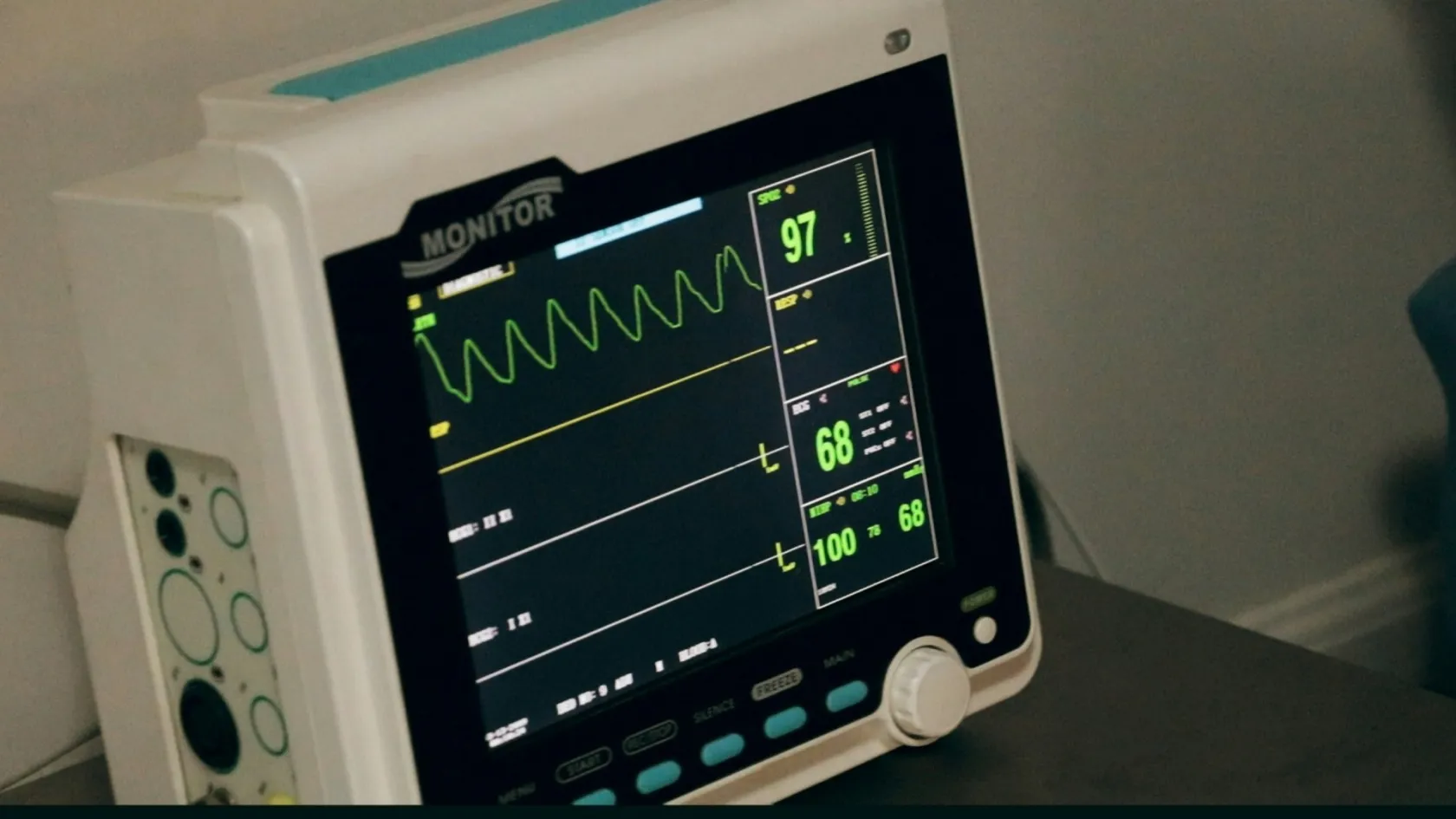
You wake on the intensive care unit with the breathing tube coming out within a few hours, and the rhythm on the monitor is what everybody is watching.
When the valve cannot be repaired
Four situations account for nearly every tricuspid replacement, and none of them is a matter of surgical preference.
Rheumatic disease that has thickened the leaflets and fused them at their edges leaves tissue with no pliability to work with. Endocarditis that has eaten through a leaflet or hollowed out the annulus leaves nothing sound to sew a ring to, and here the operation is as much about removing infected material as about restoring the valve. Carcinoid heart disease turns the leaflets into rigid white plaques, and no ring corrects that. And a repair attempted at the same operation that will not hold on the check echocardiogram gets taken down and replaced.
Everything else is a repair candidate until proven otherwise. That includes the large group whose valve leaks only because the ring has stretched, which is the commonest picture by far.
This table scrolls sideways on a narrow screen. Swipe or drag to see every column.
| Outcome | Repair | Replacement |
|---|---|---|
| Thirty-day mortality | 4.7 percent across ten studies and 1,407 patients. | 12.6 percent in the same pooled analysis, with an odds ratio of 0.34 favoring repair. |
| Permanent pacemaker | Significantly less common. | More common, because the sewing ring sits harder against the conduction tissue than a repair ring does. |
| Later reoperation | Numerically better, though the difference did not reach significance. | A prosthesis in this position eventually wears out or clots, so a second procedure is part of the plan. |
| How to read all this | Sicker patients are more often sent for replacement, so part of the gap reflects who gets which operation. | Even allowing for that, no surgeon replaces a valve they could have repaired, and you should ask directly why yours cannot be. |
Why this position is unforgiving
A prosthesis on the right side of the heart lives in different conditions from one on the left, and the differences all work against it.
Blood moves through the tricuspid valve slowly and at a fraction of the pressure. Slow flow across an artificial surface is what clots form on, so thrombosis in this position is meaningfully more common than in the aortic or mitral position. The annulus is also large, which means a large prosthesis, and a large prosthesis has more surface to line and more room for stagnation behind its leaflets.
Everything that makes the right side gentle to operate on makes it hard on a prosthesis. Low pressure, slow flow and a wide opening are exactly the conditions under which artificial valves clot and tissue valves calcify quietly.
Two practical consequences follow, and neither is negotiable. Anticoagulation is taken more seriously here than elsewhere. A mechanical tricuspid valve needs warfarin at the upper end of the range for the rest of your life, and even a tissue valve in this position is often anticoagulated for longer than the three months that would follow a tissue valve on the left, sometimes indefinitely where the rhythm or the right ventricle argues for it. An INR that drifts low for a fortnight matters more on this side of the heart than on the other. And the surveillance echocardiogram is not optional. A prosthesis in the tricuspid position can narrow gradually with clot or with tissue ingrowth and cause nothing at all until the leg swelling and the liver congestion return, so the yearly scan exists to find the rising gradient before you feel it.
Pacemaker leads and the new valve
If you already carry a pacemaker or defibrillator lead, or if you might need one afterwards, say so at the first consultation. A lead running through a prosthetic tricuspid valve is a genuine problem and not a detail, and the plan for it belongs in the operation note before the operation and not after it.
Four routes exist and the surgeon picks between them from your anatomy and your rhythm.
- Take the lead out and put an epicardial one on. Pacing wires are sewn onto the outside of the heart while the chest is open and connected to a generator under the skin, which leaves nothing crossing the new valve. This is the cleanest answer when you already depend on a pacemaker.
- Trap the existing lead outside the sewing ring. The lead is pushed against the annulus and the prosthesis is stitched over it, so it no longer passes between the leaflets. Simple, effective, and it relies on the lead still working.
- Remove it and place a leadless pacemaker later. A self-contained device sits inside the right ventricle with no lead at all, which suits somebody who needs only modest pacing support.
- Leave a functioning lead in place across a tissue valve. Occasionally reasonable, occasionally the thing that damages the new valve within a few years, and the least attractive of the four unless the alternatives carry more risk in your case.
Ask which of the four is planned for you, and treat the answer as a test of the consultation, because a patient who can name the plan for their own lead has been through a proper conversation rather than a reassuring one.
Mechanical or tissue
On the aortic and mitral valves this decision runs on age, because mechanical valves outlast their owners and tissue valves do not. In the tricuspid position that logic breaks down, and the evidence is unusually clear about it. A systematic review pooled 23 studies covering 945 mechanical and 1,332 biological tricuspid prostheses. Hospital mortality was no different between them. Long-term survival was no different. Freedom from reoperation was no different, and neither was valve failure at five years. The authors concluded that the choice should turn on the patient's own risk factors rather than on any superiority of one prosthesis over the other. That is a genuinely unusual finding and it changes the conversation. Since neither wins on durability, the decision falls to what each one asks of you. Most units lean toward a tissue valve here, because the thrombosis risk of a mechanical valve in slow right-sided flow is the thing that worries surgeons most, and because a failed tissue valve in this position can often be treated later with a catheter valve expanded inside it. A mechanical valve keeps its place where the patient is already committed to lifelong warfarin for another reason, such as a mechanical valve on the left.
This table scrolls sideways on a narrow screen. Swipe or drag to see every column.
| Question | Mechanical | Tissue |
|---|---|---|
| Survival and reoperation | No measurable advantage in the pooled data. | No measurable disadvantage either, which is the whole point. |
| Blood thinning | Warfarin for life, at the upper end of the usual range because right-sided flow is slow. | Often longer than the three months used on the left, and sometimes permanent. |
| Main failure mode | Clot on the valve, which is commoner here than in any other position. | Gradual degeneration, and it often runs slower here than on the left. |
| If it fails later | A repeat operation, or clot-dissolving treatment where the diagnosis is caught early. | A catheter valve can often be expanded inside it, avoiding a second sternotomy. |
| Where it fits | A patient already on lifelong warfarin for a left-sided mechanical valve or another indication. | Most other patients, which is why it is the more usual choice in this position. |
Catheter-delivered valves
Whole valves can now be delivered on a catheter through a vein and seated inside the tricuspid annulus with no chest incision. For a patient too frail for surgery that is a real option, and the evidence behind it arrived recently enough that many cardiologists have not yet absorbed the details. Four hundred patients with severe symptomatic leakage were randomized two to one between a catheter valve with medical therapy and medical therapy alone, and at one year the trial's composite outcome favored the valve with a win ratio of 2.02. Reading which components drove that number is where the honesty lies. Symptom scores and functional class improved substantially. Deaths were 14.8 percent against 12.5 percent and heart failure admissions ran at 9.7 percent against 10.0 percent, neither of which favored the device. The costs were not small either. Severe bleeding occurred in 15.4 percent of the treated patients against 5.3 percent of controls, and new permanent pacemakers were needed in 17.4 percent against 2.3 percent. So the fair summary is that a catheter valve makes a symptomatic patient feel considerably better, has not been shown to make them live longer, and carries a real chance of a pacemaker and of bleeding. For an eighty-year-old whose problem is breathlessness and swelling, that trade is often worth taking. For a sixty-year-old who could have a durable surgical result, it usually is not.
What can go wrong
Three of these belong to this operation specifically and the rest are shared with any cardiac procedure. Each carries a standard response.
Who should think hard first. A right ventricle that has already failed, a bilirubin that will not come down with diuretics, advanced kidney disease and severe lung hypertension all shift the balance away from an operation, and in those situations a catheter valve or well-run medical treatment may serve you better. A heart team that says so plainly, before you book a flight, is doing the most useful thing available to it.
Recovery and flying home
Expect a week to ten days in hospital and six to eight weeks to feel yourself again, with one feature that makes this recovery different from the other valve operations on this site. The fluid has to come off, and it takes longer than the wound does. Patients who arrive with swollen legs and a distended abdomen commonly lose several kilograms of water in the first two weeks, and the diuretic dose is adjusted almost daily against the morning weight and the kidney function and not against a fixed prescription. Learn that routine before you leave, because it is what you will be managing at home. Pacing wires stay in longer than usual, for the reasons above, and their removal is the step that usually clears you for discharge. If you went home on warfarin, the first weeks are also about settling the dose. Testing runs every few days at first and stretches out once the number is stable, and the target range for a tricuspid prosthesis sits at the upper end of what is used elsewhere. Carry a card naming the valve, its size and that range.
Physical restrictions follow the incision. A divided breastbone means no lifting, no pushing up out of a chair with your arms and no driving for six weeks, and a right-side incision shortens all of that. Appetite returning is a good early sign, since it means the gut is no longer congested.
Flying is cleared at two to three weeks after a sternotomy and ten to fourteen days after a smaller incision, on condition that the wound is dry, the rhythm is stable off the wires, the weight has stopped falling and the INR is in range if you are anticoagulated. Somebody examines you and writes that date instead of estimating it. Take an aisle seat, walk every hour, wear compression stockings and take your diuretic on the day as normal.
Reading a quote
No price appears on this page, and no honest price should appear in a first email either. What this operation costs turns on your liver, your kidneys and your right ventricle far more than on the valve, because those decide how many nights of monitored care the case needs. Seven questions separate a real quote from a headline one. Whether the figure assumes a repair or a replacement, and what changes financially if the surgeon can repair after all. Which prosthesis it assumes. Whether anything else is planned on the same bypass run, which here usually means a mitral procedure or an ablation. What happens if a permanent pacemaker becomes necessary, which is likelier after this operation than after any other valve replacement. Whether extraction, repositioning or an epicardial replacement of a pacemaker lead is covered. How many nights of intensive care are budgeted. And whether the work-up sits inside the number, meaning a coronary angiogram, liver and kidney assessment and lung function testing.
Your own state moves it as much as anything. Advanced liver congestion, a low glomerular filtration rate, a weak right ventricle, previous cardiac surgery and severe lung hypertension each lengthen the expected stay, and two or three of them together lengthen it a great deal.
Packages published by Turkish hospitals and medical travel agencies for valve surgery generally include the airport transfer, pre-operative tests, surgeon, anesthesia and perfusion fees, the theater, the planned intensive care and ward nights, the prosthesis, an interpreter and the follow-up before departure. They generally exclude flights, insurance, unplanned extra intensive care, treatment of a complication, a pacemaker if one becomes necessary and hotel nights beyond an agreed number. Compare what you receive against that list.
Send the file. The number that comes back will be about you.
Coming to Istanbul
Set aside four weeks. Consultation and repeat imaging take the opening days, the operation and hospital stay run a week to ten days, and the remainder is hotel recovery while the fluid comes off and the anticoagulation settles. Send blood results alongside the imaging. Bilirubin, albumin, kidney function and your current weight tell a surgeon as much about the risk as the pictures do, and if you carry a pacemaker or defibrillator bring the device card with the model and implant date, since the lead plan depends on it. A single coordinator carries your case from the first message through to discharge, and the international patients team works in English, Arabic, French, Russian, Serbian, Romanian and Spanish, with other languages interpreted on request. The consent discussion is the one to follow closely on this page, because you are consenting to a repair or a replacement, to a prosthesis type and to a plan for any existing lead, and all three should be understood before anything is signed.
Somebody can stay with you overnight through the ward stay, since the rooms carry a second bed, and the intensive care days follow that unit's own visiting rules. The international patients office books accommodation for both of you around the admission and arranges the airport transfer and the daily hospital transport. Meals from the hospital kitchen cover halal, vegetarian and diabetic diets, a prayer room is available, and asking for a female physician in your first message means the department can plan for it.
The same office prepares the appointment confirmation and the invitation letter naming the hospital and your treating doctor for a medical visa application, which goes out roughly ten days ahead of travel.
Fly home with a file rather than a summary sheet. It should name the prosthesis with its model and size, record the gradient measured across it before discharge, set out the anticoagulation plan with its target range and next test date, state what was done with any pacemaker lead, and give the diuretic plan against a target weight. Address it to a cardiologist and arrange that first appointment before you leave, while the hospital can still write the referral, since the weeks once you are back home are when the diuretic dose and the anticoagulation actually settle. Your coordinator stays contactable on the same WhatsApp number, so a question about an INR result or a photograph of a wound reaches somebody with your notes open. Report swelling that returns, a weight climbing two kilograms in three days, breathlessness, an irregular pulse or a fever without a cause.
Tricuspid valve replacement FAQ
I have been told my valve must be replaced. Is a second opinion worth the delay?
Mechanical or tissue, which lasts longer here?
Why is a pacemaker so much likelier after this operation?
I already have a pacemaker lead through the valve. What happens to it?
Will I be on blood thinners forever?
Could a catheter valve spare me the operation?
How long should I plan to be in Turkey?
What follow-up will my own cardiologist need to do?
References
- Sarris-Michopoulos P, Macias AE, Sarris-Michopoulos C, Woodhouse P, Buitrago D, Salerno TA, Magarakis M. Isolated tricuspid valve surgery, repair versus replacement: a meta-analysis. Journal of Cardiac Surgery. 2022;37(2):329-335.
- Negm S, Arafat AA, Elatafy EE, Fawzy HF. Mechanical versus bioprosthetic valve replacement in the tricuspid valve position: a systematic review and meta-analysis. Heart, Lung and Circulation. 2021;30(3):362-371.
- Hahn RT, Makkar R, Thourani VH, Makar M, Sharma RP, Haeffele C, Davidson CJ, Narang A, O'Neill B, Lee J, Yadav P, Zahr F, Chadderdon S, Eleid M, Pislaru S, Smith R, Szerlip M, Whisenant B, Sekaran NK, Garcia S, Stewart-Dehner T, Thiele H, Kipperman R, Koulogiannis K, Lim DS, Fowler D, Kapadia S, Harb SC, Grayburn PA, Sannino A, Mack MJ, Leon MB, Lurz P, Kodali SK. Transcatheter valve replacement in severe tricuspid regurgitation. The New England Journal of Medicine. 2025;392(2):115-126.
- Dreyfus J, Audureau E, Bohbot Y, Coisne A, Lavie-Badie Y, Bouchery M, Flagiello M, Bazire B, Eggenspieler F, Viau F, Riant E, Mbaki Y, Eyharts D, Senage T, Modine T, Nicol M, Doguet F, Nguyen V, Le Tourneau T, Tribouilloy C, Donal E, Tomasi J, Habib G, Selton-Suty C, Raffoul R, Iung B, Obadia JF, Messika-Zeitoun D. TRI-SCORE, a new risk score for in-hospital mortality prediction after isolated tricuspid valve surgery. European Heart Journal. 2022;43(7):654-662.
Editor's note
Written by the Biruni Hospital medical editorial team. Reviewed by Op. Dr. Mohammed N.I. SKAIK, Cardiovascular Surgery.
Medically reviewed by
Op. Dr. Mohammed N.I. SKAIK
Cardiovascular Surgery
Related Treatments
View All-
Aortic Aneurysm Repair - Aortic Aneurysm Surgery
Aortic aneurysm repair prevents rupture, which killed 37 percent of patients in emergency surgery against 6 percent in planned repair in a large screening trial. This guide explains when to watch and when to repair, size thresholds for men and women, EVAR against open surgery, long-term trial results, recovery and the stay in Istanbul.
-
Aortic Valve Repair
Being told the aortic valve leaks is usually followed by a conversation about which prosthesis to have. For a large group of patients there is a third answer, which is keeping the valve they were born with, and this page explains who qualifies.
-
Aortic Valve Replacement
The catheter valve wins the first year and the five-year data show the two routes ending up level. This page sets out what that means for a patient of 60 as opposed to a patient of 85, and which prosthesis belongs in each of them.
-
Coronary Angioplasty
In 5,179 patients with stable coronary disease, opening the narrowings did not reduce heart attacks or deaths. In somebody having a heart attack, the same procedure saves lives. Almost every argument about stents comes from confusing those two situations.
-
Endovascular Aneurysm Repair - EVAR
Three randomized trials compared keyhole aneurysm repair with open surgery and disagreed about long-term survival. They agreed on something else, and it is the part that decides how you will spend the next twenty years.