
Tricuspid Valve Repair
Hospital mortality for isolated tricuspid surgery runs from near zero to sixty percent, and the operation is the same one in both groups. What separates them is how long the patient waited, which makes timing the only question that really matters here.
About This Department
Cardiology spent forty years calling this the forgotten valve, and the phrase was earned. A leaking tricuspid valve was watched rather than treated, partly because the symptoms are vague and partly because operating on it late went badly often enough to make surgeons cautious, and both halves of that have now changed, so tricuspid valve repair is a planned operation these days rather than a salvage one. Timing carries the whole argument, and a patient who grasps that stands in a far better position than one who is told to come back in a year.
Free consultation
Ask whether you are still early enough
Two things decide the answer, and both are in your existing records. How the right ventricle is working, and whether your liver and kidneys have started to feel the back pressure. Send the echocardiogram with its moving images, the most recent blood tests including bilirubin and kidney function, the list of what you take each day with the furosemide dose, and any cardiology letter. A surgeon and a cardiologist read them and tell you whether repair is still the right move, whether a catheter option suits you better, and what waiting another year would cost. That review costs nothing, and a coordinator replies in your own language.
Why the tricuspid valve leaks
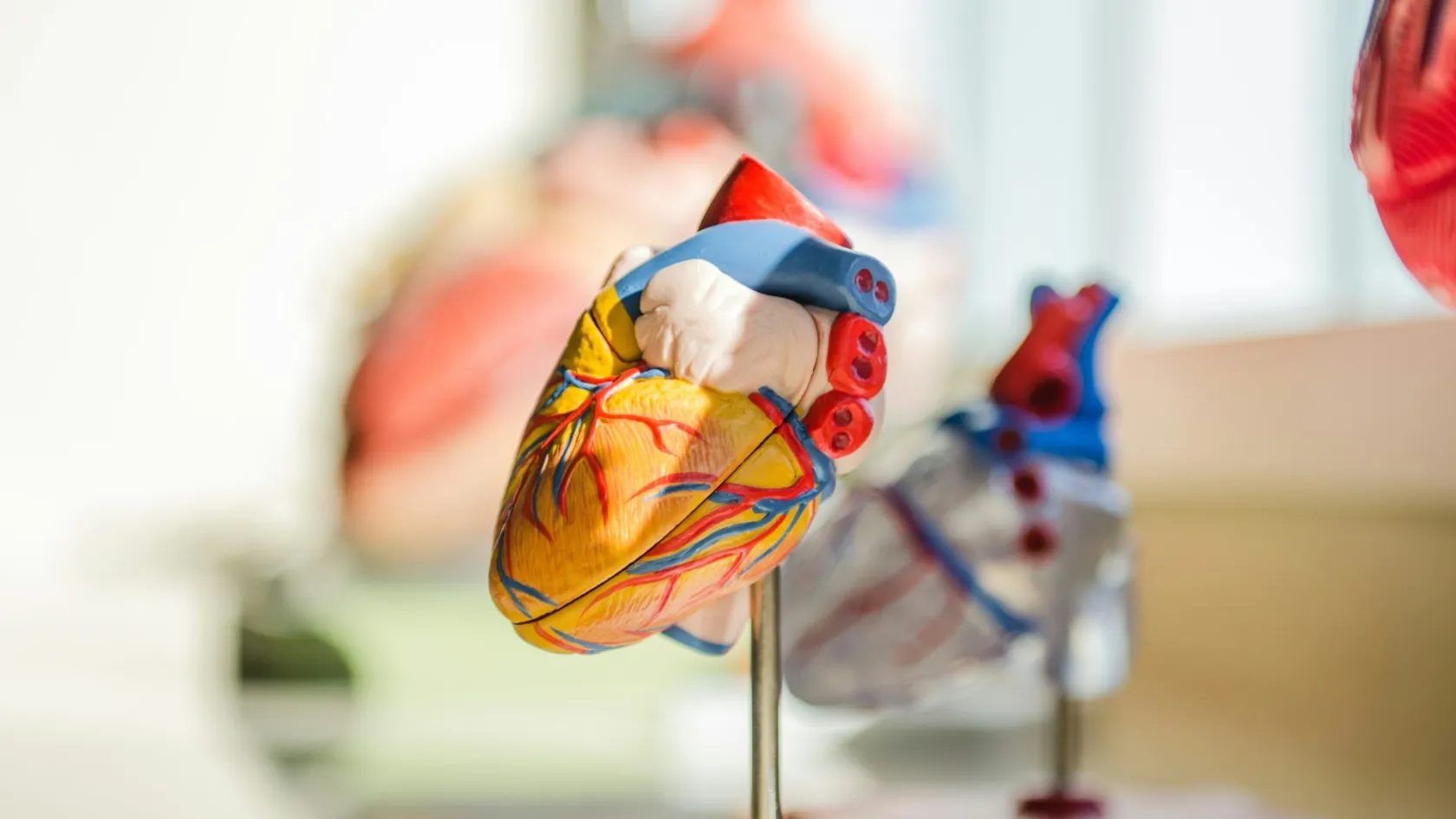
Think of the tricuspid valve as the door on the right side of the heart, between the atrium that receives blood coming back from the body and the ventricle that pushes it into the lungs. Three thin leaflets, a soft ring around them, and fine cords tethering their edges to the ventricle wall, which together make the most delicate valve in the heart. Nothing in it is sturdy. That matters, because the ring is far more stretchable than the ring around the mitral valve, so it gives way under pressures the mitral ring would shrug off.
When it leaks, blood goes backward. It travels into the right atrium with every beat and from there into the veins of the neck, the liver, the gut and the legs, so this valve makes its presence felt everywhere except the chest.
Symptoms confuse people for that reason. Chest pain does not happen, and breathlessness often waits. Ankles swell, the abdomen fills, the appetite goes and the liver tests drift upward, so patients are investigated for gastrointestinal disease for months, sometimes for a year or more, before anybody thinks to look at the heart.
One distinction governs everything else, which is is whether the valve itself is diseased or whether it has been pulled apart by what is happening around it.
This table scrolls sideways on a narrow screen. Swipe or drag to see every column.
| Question | Primary, the valve is damaged | Secondary, the valve is stretched |
|---|---|---|
| What went wrong | Rheumatic scarring, endocarditis, a pacemaker lead crossing the valve, injury from a biopsy, or a congenital abnormality. | The right ventricle and the ring have enlarged, usually behind mitral valve disease, long-standing atrial fibrillation or lung disease. |
| How common | Roughly one case in ten. | The other nine, which is why this page spends most of its length on it. |
| What repair involves | Work on the leaflets and cords themselves, patching, resuspending or, where the tissue is destroyed, replacing the valve. | Bringing the stretched ring back to size with a rigid annuloplasty ring, which is the operation most patients have. |
| What decides the outcome | How much valve tissue is left to work with. | How well the right ventricle is still pumping when you arrive, and whether the underlying cause has been treated. |
Why it was left alone for so long
The history here explains a lot. A patient can still meet the old thinking in a clinic today, and should recognize it when they do.
- The belief that fixing the left side would fix the right. Surgeons expected a stretched tricuspid ring to shrink back once the mitral valve was repaired and the pressures fell. In a proportion of patients it does not, and the leak carries on getting worse.
- A reputation built on late operations. Isolated tricuspid surgery was done mainly on patients who arrived swollen, jaundiced and with failing kidneys, and the results in that group were poor. The operation took the blame for the timing.
- Symptoms nobody connects to the heart. Swollen ankles and a distended abdomen send a patient to a general physician, and by the time an echocardiogram is done the right ventricle has been carrying the load for years.
All three now count as reasons to act earlier instead of reasons to wait, and both the European and the American guidelines have moved in that direction over the past few years.
What the leak does if nothing is done
Severe tricuspid regurgitation does not stay confined to the valve. The right ventricle enlarges to handle the volume it is pumping twice and for a while it manages, then it starts to fail, and because it is a thin-walled chamber built for low pressure it fails less gracefully than the left ventricle does.
Meanwhile the pressure backs up. The liver takes it first. It becomes congested and stiff, and over years that congestion turns into fibrosis that does not reverse, while the kidneys, receiving blood at a lower pressure and draining against a higher one, lose function steadily and quietly. The gut absorbs less, so protein and appetite fall away. That cascade explains why timing dominates this page. A repair performed while the right ventricle still works and the liver and kidneys are intact is a manageable operation. The same repair performed three years later, on a patient with a failing right ventricle, a raised bilirubin, a low glomerular filtration rate and a large daily dose of diuretic, becomes a different operation carrying a different risk, and no amount of surgical skill compensates for those three years. Ankles that swell more than they did, a belt that no longer fastens, a liver that feels full under the ribs, or diuretic doses that keep climbing month after month are all the same message arriving by different routes. Get the valve looked at.
Repairing it during another operation
Most tricuspid valve repair happens at the same time as a mitral operation. Until recently surgeons disagreed over when to bother. A randomized trial has now answered the narrow version of that question.
Four hundred and one patients having surgery for degenerative mitral regurgitation, who had either moderate tricuspid leakage or a dilated tricuspid ring with less leakage than that, were randomly assigned to have a tricuspid ring fitted or to have the valve left alone, which is as clean a test of the question as anybody is likely to run. At two years the combined outcome of death, reoperation on the tricuspid valve or the leak worsening had occurred in 3.9 percent of those who had the ring and 10.2 percent of those who did not. Progression of the leak alone fell from 6.1 percent to 0.6 percent.
Fitting the ring during mitral surgery cut the chance of the tricuspid leak worsening by roughly nine tenths. It also raised the chance of needing a permanent pacemaker from 2.5 percent to 14.1 percent, and that is the trade you are being asked to accept.
That pacemaker figure surprised everyone, including the investigators, and it is the reason this decision belongs in your consent conversation rather than in the surgeon's private judgment on the day. The conduction tissue passes close to the tricuspid ring and stitches placed there can bruise it permanently.
Two years is short. Whether preventing the leak translates into living longer will take another decade to answer, and anybody telling you today that it already has is going a long way beyond what the trial actually showed.
Nobody disputes the situation the trial did not test, meaning a patient with severe tricuspid leakage who is already having left-sided surgery. Every guideline on both sides of the Atlantic repairs that valve at the same operation, and leaving it means the patient comes back later for the harder version of the same job.
Operating on the tricuspid valve alone
Isolated tricuspid surgery is where the old reputation came from. Honest numbers matter most here, because a patient who reads that the operation carries a ten percent hospital mortality will reasonably decide against having it, and that would be the wrong conclusion from the right statistic. That figure averages two very different populations.
A French study of 466 consecutive patients operated on for severe tricuspid regurgitation without any other valve procedure built a score from eight items, and the score sorted the risk almost completely. Age of seventy or more, breathlessness at class three or four, visible signs of right heart failure, a daily furosemide dose of 125 milligrams or more, a glomerular filtration rate below 30, a raised bilirubin, a left ventricular ejection fraction under 60 percent, and moderate or severe right ventricular dysfunction.
Patients with none of those eight features had a hospital mortality near zero. Patients with most of them had a mortality approaching sixty percent. The operation did not change between those two groups. Only the timing did.
Notice what the list contains and what it leaves out. The mechanism of the leak was not an independent predictor of survival at all. Whether the valve was diseased or merely stretched mattered far less than whether the organs downstream had started to give way.
The useful question in a consultation is therefore not whether the operation is dangerous. It is where you sit on that list today, and how much of it you can still change. A furosemide dose brought down, a bilirubin corrected, a rhythm restored and an anemia treated all move a patient toward the safer end of that list, and the time to do it is in the months before an operation instead of the weeks after one.
Ask for your own count of those eight items. Any cardiologist can produce it from the notes already in front of them, and it converts an abstract fear into a number you can act on and argue about.
How the repair is done
Tricuspid valve repair runs shorter and gentler than most cardiac procedures. The right side of the heart is reached without disturbing the left, and often without stopping the heart at all.
Replacement is reserved for valves destroyed by infection or rheumatic scarring and for repairs that fail on the table, and a tissue valve goes in here, because the right side is a low-pressure chamber where mechanical valves clot more readily than they do on the left.
The catheter clip
For patients too frail or too far advanced for an operation, a clip delivered on a catheter through a vein in the groin can grip two leaflets together at the point of the leak. No chest incision and no bypass machine.
A randomized trial of 350 patients with severe symptomatic leakage, average age 78, compared the clip against medical treatment alone. It reported in 2023. At thirty days, 87.0 percent of the treated patients had leakage down to moderate or less against 4.8 percent of the controls, and the procedure proved safe, with 98.3 percent free of major adverse events at thirty days. Quality of life improved by 12.3 points on a hundred-point score against 0.6 points in the control group. Now the part the brochures leave out. Deaths, tricuspid surgery and hospital admissions for heart failure did not differ between the two groups at all. The clip made people feel considerably better and reduced the leak. It has not yet been shown to make them live longer.
That makes it a good answer for an elderly patient whose problem is how they feel today. It makes a poor substitute for an operation in somebody young enough and well enough for a durable surgical repair, which is a distinction worth holding on to when a brochure blurs it. At Biruni Hospital the choice between the two is worked out case by case with cardiology, and where the catheter route is the better answer for you, that is where you are directed.
What can go wrong
Tricuspid repair carries one complication that is genuinely more common than in other valve surgery and several that are shared with any cardiac operation. Naming them in proportion is more useful than listing them.
This table scrolls sideways on a narrow screen. Swipe or drag to see every column.
| Complication | How likely | What is done |
|---|---|---|
| Permanent pacemaker | The one that stands out. Around one patient in seven in the randomized trial, against one in forty without the ring. | Temporary wires are kept in for several days, because a good proportion of conduction recovers on its own. A device is fitted before discharge if it does not. |
| Right heart failure after surgery | Uncommon in patients operated on early, and the dominant risk in those operated on late. | Drugs to support the ventricle, careful fluid balance, and occasionally a period of mechanical support. Prevented mainly by not waiting. |
| Kidney and liver strain | Depends entirely on how much congestion there was beforehand. | Diuretics adjusted daily, kidney function tracked, and dialysis in a small number who arrive with advanced disease. |
| Bleeding and atrial fibrillation | As after any cardiac operation. A congested liver raises the bleeding risk. | Drains measured hourly with a return to theater for a brisk loss. Rhythm treated with drugs or a brief shock under sedation. |
| The leak coming back | Higher than after mitral repair, and higher still when the underlying cause was not treated. | Found on the yearly echocardiogram before symptoms return. Managed medically, with a catheter option or a further operation according to the case. |
Who should think hard before agreeing. A right ventricle that has already failed, a bilirubin that will not come down, advanced kidney disease and severe lung hypertension all shift the balance away from an operation and toward the catheter clip or medical treatment. Hearing that plainly, before travel, is the most valuable thing a remote review offers.
Recovery and flying home
Recovery here follows the usual cardiac pattern with one addition, which is that the fluid your body has been holding for months has to come off, and that takes longer than the wound does.
Longer term, the underlying cause decides how well the repair holds. A mitral valve fixed at the same time, a rhythm restored, lung disease treated and blood pressure controlled all protect the result, and a right ventricle left under the same load that stretched the ring in the first place will stretch it again.
Reading a quote
No figure appears here.
What tricuspid surgery costs depends more on your organ function than on the valve, because a patient who arrives congested spends longer in intensive care than one who arrives compensated, and intensive care is where cardiac money goes.
Six things move the total, and every one is fair to ask about. Start with the prosthesis. Ask whether the quote covers a ring repair or a valve replacement, and what happens financially if the repair cannot be made to hold, then move to anything else planned on the same bypass run, which for most of these patients means a mitral procedure, an ablation for atrial fibrillation or closure of a hole between the atria. Intensive care nights come next. That number bends with your kidney and liver function more than with the surgery. Establish whether a permanent pacemaker, if you need one, sits inside the figure, which matters here more than in any other valve operation. Check whether the work-up sits inside it, meaning a coronary angiogram, liver and kidney assessment and lung function tests. And whether extraction or repositioning of a pacemaker lead is included where a lead is causing the leak.
Your own condition moves it further. Advanced liver congestion, a low glomerular filtration rate, a weak right ventricle, a previous cardiac operation and severe lung hypertension each lengthen the expected stay, and several of them together lengthen it considerably.
Packages published by Turkish hospitals and medical travel agencies for valve surgery generally cover the airport transfer, pre-operative tests, surgeon, anesthesia and perfusion fees, the theater, the planned intensive care and ward nights, any ring or prosthesis used, an interpreter and the follow-up before departure. They generally exclude flights, insurance, unplanned extra intensive care, treatment of a complication, a pacemaker if one becomes necessary and hotel nights beyond an agreed number. Read what arrives against that list. Not against another hospital.
Send the file. The number that comes back will describe you.
Coming to Istanbul
Allow three to four weeks.
Consultation and any tests repeated here fill the first days, the operation and ward stay run a week, and the balance is hotel recovery while the fluid comes off and somebody clears you to fly.
Send blood tests with the imaging, which is unusual advice and specific to this valve. Bilirubin, albumin, kidney function and a recent weight tell a surgeon as much of your risk as the echocardiogram does, and they are the numbers the risk score is built from. Bring the moving echo images on a disc as well as sending the files ahead, since transfers fail more than anyone expects and a surgeon with no images has nothing to decide on.
The hospital assigns a coordinator from your first message, and she stays until discharge. The international patients team covers English, Arabic, French, Russian, Serbian, Romanian and Spanish, with interpreting in other languages arranged on request, and that matters more here than on most pages, because the conversation ahead of you concerns timing rather than technique. The conversation that matters most here concerns timing, because you may be told to come sooner than you planned or that medical treatment first would make the operation safer, and that is a discussion you need to follow properly. Every ward room holds a second bed, so somebody can stay with you overnight for the whole admission, with the intensive care days following that unit's own visiting rules, which are stricter for reasons that become obvious the first time you walk onto one. Where the two of you sleep on the nights around the hospital stay, the ride in from the airport and the daily journey between hotel and hospital are all set up by the international patients office. Tell them about diets and they go to the kitchen, which covers halal, vegetarian and diabetic meals, and there is a prayer room in the building. If you would rather see a female physician, put that in the first message and the department accommodates it wherever the rota allows.
For a medical visa the office issues an appointment confirmation and an invitation letter naming the hospital and the treating doctor, and it goes out around ten days before you travel.
Once you are back home, the follow-up protects the result. You should leave with the operation note naming the ring used and its size, the discharge echocardiogram, the diuretic plan with the target weight written down, a record of whether pacing was needed, and a letter to a cardiologist. Arrange the first local appointment before you fly, while somebody here can still write the referral. Your coordinator stays reachable on the same WhatsApp number afterwards, so a photograph of a wound or a question over a weight gain reaches somebody holding your file rather than a general inbox. Report ankles that swell again, a weight gain of two kilograms over three days, a pulse that turns irregular, or a fever with no explanation.
Tricuspid valve repair FAQ
My cardiologist says to wait and watch. Should I?
Will I need a pacemaker afterwards?
Can a leaking tricuspid valve be repaired rather than replaced?
How long will I need to stay in Turkey?
Is the catheter clip as good as an operation?
Can my husband or wife stay with me?
My leak started after a pacemaker was fitted. Does that change anything?
References
- Gammie JS, Chu MWA, Falk V, Overbey JR, Moskowitz AJ, Gillinov M, Mack MJ, Voisine P, Krane M, Yerokun B, Bowdish ME, Conradi L, Bolling SF, Miller MA, Taddei-Peters WC, Jeffries NO, Parides MK, Weisel R, Jessup M, Rose EA, Iribarne A, Borger MA, Geirsson A, Bagiella E, Hung J, Gelijns AC, O'Gara PT, Ailawadi G. Concomitant tricuspid repair in patients with degenerative mitral regurgitation. The New England Journal of Medicine. 2022;386(4):327-339.
- Dreyfus J, Audureau E, Bohbot Y, Coisne A, Lavie-Badie Y, Bouchery M, Flagiello M, Bazire B, Eggenspieler F, Viau F, Riant E, Mbaki Y, Eyharts D, Senage T, Modine T, Nicol M, Doguet F, Nguyen V, Le Tourneau T, Tribouilloy C, Donal E, Tomasi J, Habib G, Selton-Suty C, Raffoul R, Iung B, Obadia JF, Messika-Zeitoun D. TRI-SCORE, a new risk score for in-hospital mortality prediction after isolated tricuspid valve surgery. European Heart Journal. 2022;43(7):654-662.
- Sorajja P, Whisenant B, Hamid N, Naik H, Makkar R, Tadros P, Price MJ, Singh G, Fam N, Kar S, Schwartz JG, Mehta S, Bae R, Sekaran N, Warner T, Makar M, Zorn G, Spinner EM, Trusty PM, Benza R, Jorde U, McCarthy P, Thourani V, Tang GHL, Hahn RT, Adams DH. Transcatheter repair for patients with tricuspid regurgitation. The New England Journal of Medicine. 2023;388(20):1833-1842.
- Vahanian A, Beyersdorf F, Praz F, Milojevic M, Baldus S, Bauersachs J, Capodanno D, Conradi L, De Bonis M, De Paulis R, Delgado V, Freemantle N, Gilard M, Haugaa KH, Jeppsson A, Juni P, Pierard L, Prendergast BD, Sadaba JR, Tribouilloy C, Wojakowski W. 2021 ESC and EACTS guidelines for the management of valvular heart disease. European Heart Journal. 2022;43(7):561-632.
Editor's note
Written by the Biruni Hospital medical editorial team. Reviewed by Op. Dr. Mohammed N.I. SKAIK, Cardiovascular Surgery.
Medically reviewed by
Op. Dr. Mohammed N.I. SKAIK
Cardiovascular Surgery
Related Treatments
View All-
Aortic Aneurysm Repair - Aortic Aneurysm Surgery
Aortic aneurysm repair prevents rupture, which killed 37 percent of patients in emergency surgery against 6 percent in planned repair in a large screening trial. This guide explains when to watch and when to repair, size thresholds for men and women, EVAR against open surgery, long-term trial results, recovery and the stay in Istanbul.
-

Aortic Valve Repair
Being told the aortic valve leaks is usually followed by a conversation about which prosthesis to have. For a large group of patients there is a third answer, which is keeping the valve they were born with, and this page explains who qualifies.
-
Aortic Valve Replacement
The catheter valve wins the first year and the five-year data show the two routes ending up level. This page sets out what that means for a patient of 60 as opposed to a patient of 85, and which prosthesis belongs in each of them.
-
Coronary Angioplasty
In 5,179 patients with stable coronary disease, opening the narrowings did not reduce heart attacks or deaths. In somebody having a heart attack, the same procedure saves lives. Almost every argument about stents comes from confusing those two situations.
-
Endovascular Aneurysm Repair - EVAR
Three randomized trials compared keyhole aneurysm repair with open surgery and disagreed about long-term survival. They agreed on something else, and it is the part that decides how you will spend the next twenty years.