
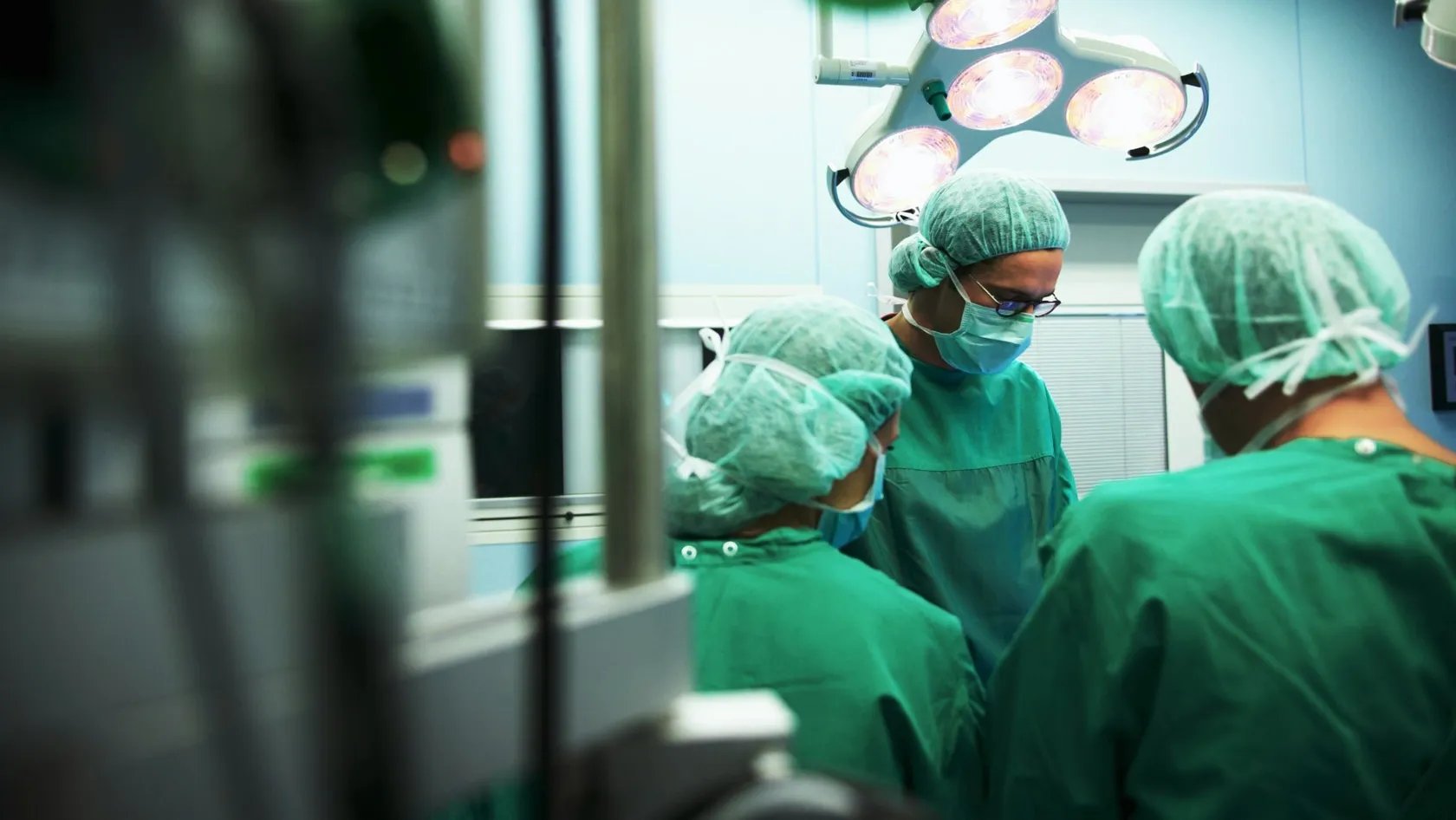
Transplant ICU (Post-Transplant Intensive Care)
The Transplant ICU at Biruni Hospital in Istanbul looks after kidney and liver recipients in the first hours and days with a new organ, and again if infection or rejection brings them back. A study of 23,275 kidney recipients found the risk of death 2.8 times higher in the first two weeks and 68 percent lower by 18 months than staying on dialysis. Families are supported in seven languages, and the transplant team reviews the file free of charge.
About This Department
The first two weeks after a kidney transplant carry the highest risk. By 18 months the risk of death is 68 percent lower than on dialysis.
A transplant intensive care unit looks after people in the hours and days after they receive a new organ, and again if a serious infection or rejection brings them back later. The early period is the dangerous one. A study of 23,275 kidney recipients in the New England Journal of Medicine found that the risk of death in the first two weeks was 2.8 times that of similar patients who stayed on dialysis, and that by 18 months it had fallen to about a third (Wolfe and colleagues, 1999). Close monitoring exists to carry patients across that gap. This page explains what happens in the Transplant ICU at Biruni Hospital in Istanbul, what the team watches for, and what families coming from abroad should expect.
The first two days
Most recipients arrive straight from the operating room. What follows runs to a timetable.
- Arrival. The anesthesiologist hands over at the bedside. Lines, drains and the urine catheter are checked, and the first blood samples go to the laboratory within minutes.
- The first six hours. Blood pressure is held inside a narrow range chosen by the surgeon, because a new organ has no nerve supply of its own and depends entirely on the pressure it is given. Urine or bile output is recorded every hour.
- The first night. An ultrasound with Doppler confirms blood flowing in and out of the organ. Most patients are breathing without the ventilator by now.
- Day one. Anti-rejection drugs are under way, and blood levels of them are measured each morning. Sitting in a chair and breathing exercises begin.
- Day two. With stable numbers, the patient moves to the transplant ward. A liver recipient who was very ill before surgery often stays longer.
How long is long enough. Shorter than it used to be. A prospective study of 147 liver recipients in Denver found that 111 came off the ventilator in the operating room and 83 of those went to a surgical ward without an intensive care bed at all, and only 3 of them later needed closer nursing (Mandell and colleagues, Liver Transplantation, 2002). The lesson most centers took from it is that intensive care after a transplant is matched to the patient and not applied by habit. A fit kidney recipient with a living donor sometimes spends a single night. Nobody is kept for the sake of routine. Someone who came to a liver transplant from a hospital bed, with failing kidneys and fluid in the abdomen, is a different case and stays a week or more, often with a ventilator for the first days and dialysis until the new liver has taken the strain off the kidneys.
Kidney and liver, side by side
The two organs announce trouble in different ways. For a kidney the early questions are simple ones. Is urine flowing, and how much each hour. Is creatinine, the blood marker of kidney function, falling day by day. Are potassium and fluid balance safe without dialysis.
The tables in this section scroll sideways on a narrow screen. Swipe or drag to see every column.
| Measurement | How often | What a change means |
|---|---|---|
| Urine output | Every hour | A sudden drop points to a blocked catheter, a clot in the artery or vein, or too little fluid |
| Creatinine | Once or twice a day | A kidney from a deceased donor can take days to wake up, and dialysis covers the wait |
| Doppler ultrasound | First day, then as needed | Shows blood flow through the graft and any collection of fluid around it |
Livers work on more fronts, so the questions change. The team wants to see the patient waking up clearly, which shows the liver is clearing toxins, blood clotting that improves without transfusion, and bile of a healthy golden color in the drain.
| Measurement | How often | What a change means |
|---|---|---|
| Liver enzymes and bilirubin | Every 6 to 12 hours at first | Enzymes peak on the first or second day and should then fall steadily |
| Clotting tests and lactate | Every 6 to 12 hours at first | Failure to improve suggests the new liver is slow to function or short of blood |
| Doppler ultrasound | Daily in the first days | A clot in the hepatic artery needs an operation the same day |
Why the early risk is worth it
Relatives sometimes ask why anyone would accept an operation that raises the risk of death nearly threefold for two weeks. The answer lies in what comes afterward. In the American study quoted at the top of this page, researchers followed 228,552 people on dialysis, of whom 46,164 joined a waiting list and 23,275 received a first kidney from a deceased donor. They compared recipients only with people healthy enough to be listed, which removes the obvious objection that transplant patients were fitter to begin with. Survival in the two groups crossed over within 5 to 673 days, depending on the subgroup. Over the long term the death rate was 3.8 per 100 patients each year with a transplant against 6.3 on the waiting list, and the benefit was larger still among people aged 20 to 39 and younger people with diabetes. Nothing comparable exists for dialysis.
Two weeks of danger, then years of advantage.
Rejection
Every immune system treats a new organ as foreign. Drugs started in the operating room hold it back, and the unit looks for early rejection in three ways.
Early rejection is common and usually reversible with a few days of stronger treatment. After discharge the warning signs below deserve a call to the transplant team the same day.
- Fever, or pain and swelling over the graft.
- After a kidney transplant, less urine than usual, a sudden gain in weight over a day or two, or ankles that swell by evening.
- Yellow eyes, dark urine or pale stools after a liver transplant.
- A missed or vomited dose of an anti-rejection drug.
Infection keeps a calendar
The same drugs that protect the organ lower the defenses against infection, and the likely culprits change with time in a pattern described in the New England Journal of Medicine (Fishman, 2007).
- The first month. Infections here are the ones any surgical patient can get, in the wound, the lungs, the urine or a line, and they come from the hospital environment.
- Months one to six. Immune suppression is at its deepest. Viruses such as cytomegalovirus and opportunistic organisms such as Pneumocystis appear in this window, which is why preventive tablets are prescribed for it.
- After six months. With lower drug doses, most infections are the ordinary community kind, though they can hit harder than in other people.
For visitors the rules follow from that. Wash your hands on entering and leaving, wear the mask and gown the nurse provides, leave flowers and plants outside, and stay away with a cough, a cold or a stomach upset.
Coming back to intensive care
Some recipients meet the unit again long after the operation. A study of nine French transplant centers followed 6,819 kidney recipients and found that 452, or 6.6 percent, needed intensive care at some point, 200 of them for breathing failure (Canet and colleagues, Critical Care, 2011). Bacterial pneumonia caused 35.5 percent of those cases, fluid on the lungs from the heart 24.5 percent and Pneumocystis pneumonia 11.5 percent. Just under half needed a ventilator and 52 percent needed dialysis. In-hospital mortality was 22.5 percent. Of the 155 people alive at day 90, 115 were free of dialysis, so three in four survivors kept a working graft. Shock on arrival and fungal infection predicted death, and each day of delay between hospital admission and transfer to intensive care lowered the chance of leaving with a working kidney. The authors drew two conclusions, that preventive treatment against Pneumocystis and common bacteria deserves more attention than it gets, and that a recipient with worsening breathing belongs in intensive care sooner than the same patient without a transplant.
Delay costs kidneys. Early transfer protects the graft. It applies to a recipient who falls ill while traveling as much as to one at home.
The living donor
Living donors are healthy people who have had a major operation for someone else. Most recover on the surgical ward and need an intensive care bed only if the surgeon or anesthesiologist asks for a night of closer observation, which is more likely after donating part of a liver than after donating a kidney. Under Turkish law a living donor must be a relative of the recipient up to the fourth degree or a spouse, and any other pairing goes before an ethics committee. Bring the papers. Families traveling from abroad need official documents that prove the relationship, translated and certified, and the coordinator sends the exact list before travel.
Families from abroad
A coordinator from the international patients team is assigned from the first message and stays with the family through discharge. The team speaks English, Arabic, French, Russian, Serbian, Romanian and Spanish and arranges interpreters for other languages. That matters for transplant patients more than most, because the drug schedule explained on the last day has to be followed exactly for years, and a relative who has understood every word of it in their own language is the best safeguard a recipient takes home. The office arranges accommodation near the hospital, airport transfers, daily transport and the invitation letter that consulates request with a visa application. Meals matter too. Halal, vegetarian and diabetic menus come from the hospital kitchen. A prayer room is on site. A request for a female physician goes to the department and is met wherever the rota allows. After the move to a ward room one relative stays overnight on the companion bed, and the same WhatsApp number keeps working once you are back home, when questions about drug levels and clinic visits begin.
Plan to stay in Istanbul for several weeks after discharge. Clinic visits come often at first.
Before travel, send the latest letter from the nephrologist or liver specialist, blood group and tissue typing results for recipient and donor, recent blood tests, imaging reports and a list of current drugs. Send everything. The transplant team reads the file free of charge and replies in writing with three things, namely whether the recipient is fit for the operation, whether the donor looks suitable on paper, and which tests must be repeated in Istanbul before a date is set.
Cost
Nights in the unit, days on a ventilator, dialysis while a kidney wakes up, blood products and any return to the operating room move an estimate most. Anti-rejection drugs and the donor operation are quoted as separate items.
Hospitals in this market quote a transplant as a package with a stated number of intensive care and ward days, and extra days are charged at a daily rate in nearly all published terms. Ask what the package includes for the donor, who updates the estimate if the stay runs longer, and in which language. No figure means anything before the team has read the file. The review costs nothing.
Transplant ICU FAQ
How long do you stay in the ICU after a kidney transplant?
How long is the ICU stay after a liver transplant?
Can family visit in the Transplant ICU at Biruni Hospital?
What are the first signs of organ rejection?
Does the living donor go to intensive care?
When can a transplant patient fly home?
References
- Wolfe RA, Ashby VB, Milford EL, et al. Comparison of mortality in all patients on dialysis, patients on dialysis awaiting transplantation, and recipients of a first cadaveric transplant. N Engl J Med. 1999;341(23):1725-1730.
- Mandell MS, Lezotte D, Kam I, Zamudio S. Reduced use of intensive care after liver transplantation: influence of early extubation. Liver Transpl. 2002;8(8):676-681.
- Fishman JA. Infection in solid-organ transplant recipients. N Engl J Med. 2007;357(25):2601-2614.
- Canet E, Osman D, Lambert J, et al. Acute respiratory failure in kidney transplant recipients: a multicenter study. Crit Care. 2011;15(2):R91.
Editor's note
Written by the Biruni Hospital medical editorial team. Reviewed by Prof. Dr. Mehmet İlke BÜGET, Anesthesia and Reanimation.
Medically reviewed by
Prof. Dr. Mehmet İlke BÜGET
Anesthesia and Reanimation
Related Treatments
View All
Bone Marrow Transplant Unit (BMT Unit)
Between the mid 1990s and the mid 2000s, death within 200 days of an allogeneic transplant that was not caused by relapse fell by 60 percent, and almost none of that came from a new drug. This page is about the part nobody photographs, meaning the filtered room, the rules that have evidence behind them and the ones that do not, the laboratory chain behind the cells, and what a family can actually do.
Burn ICU (Burn Intensive Care Unit)
Age, burn size and smoke inhalation are the three numbers that set the outlook after a major burn. This page walks through fluids, early surgery and grafting, the long healing phase, and when a burn patient can be flown abroad.
Burn Unit (Burn Center)
Burn care runs on one figure, the percentage of the body surface burned, and a systematic review of 28 studies found that referring hospitals overestimate it in half or more of cases. Fluid volume, the transfer decision and the survival estimate are all calculated from that number, which is why this page starts with how it is measured and who should be measuring it.
Cancer Pain Management Unit
The Cancer Pain Management Unit at Biruni Hospital in Istanbul treats pain caused by cancer and by its treatment. Two in three people with advanced cancer report pain, and reviews show nearly one in three receive medication too weak for it. The unit uses stepwise medicines, radiotherapy for bone pain, nerve blocks and spinal pumps, and plans follow-up for patients who return home abroad. The pain team reviews reports and current medicines free of charge.
Cancer Patient ICU Care
Cancer once counted as a reason not to offer an intensive care bed at all. Pooled data from 7,354 critically ill cancer patients retired that rule, and the argument now is about which patient, for what, and how long full support runs before anybody formally reassesses it.