
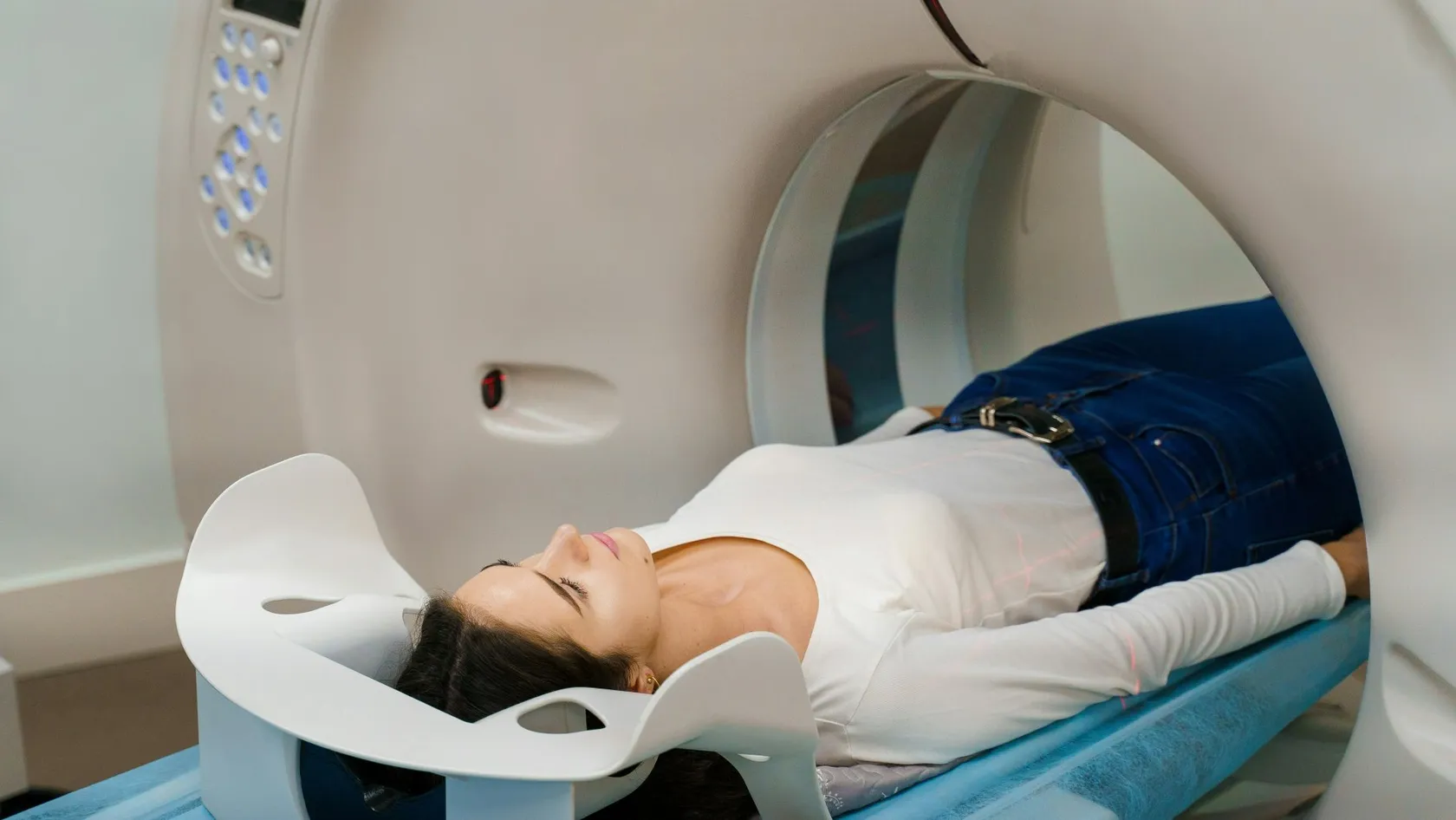
Total Body Irradiation - TBI
In the largest trial of conditioning for high-risk childhood ALL, 91 percent of patients given TBI were alive at two years, against 75 percent given chemotherapy alone. This page sets that benefit beside the late effects, the doses, and the months a family spends in Istanbul.
About This Department
Before a stem cell transplant, the old marrow has to go. For high-risk ALL, nothing has done that better than TBI.
A transplant doctor has said the words total body irradiation. You are reading up on it for yourself or, more likely, for your child. TBI means radiotherapy given to the whole body in small doses over three or four days, the last step before donor stem cells are infused, and it does three things that no single drug does, clearing the diseased marrow, reaching leukemia cells in places medicines reach poorly, and quieting the immune system so the graft is accepted. The strongest evidence comes from FORUM, a trial that randomly assigned 417 children and young adults with high-risk acute lymphoblastic leukemia between 2013 and 2018. Two years later 91 percent of those conditioned with TBI were alive. With chemotherapy alone, 75 percent. That benefit has a price in late effects, and this page sets out both sides, along with the doses, the session itself, the organs that are shielded, and how many months a family should plan to spend in Istanbul.
Three jobs in one treatment
Total Body Irradiation - TBI belongs to conditioning, the week of treatment that prepares a patient for donor stem cells. Nobody receives it alone. It does three things at once, and no single drug does all three.
Because radiation does not depend on blood supply, on kidney or liver function, or on a tumor cell being sensitive to a particular drug, it works where chemotherapy has already failed. That independence explains why it has stayed in transplant medicine since the 1950s while almost everything around it has changed.
Who is offered TBI
Acute lymphoblastic leukemia leads the list of indications, in children from the age of four and in adults fit for a full-intensity transplant. Doctors also use TBI for acute myeloid leukemia, for myelodysplastic syndromes, for some lymphomas, and at a much lower dose for older or frailer adults having a reduced-intensity transplant, where its task is mostly to suppress immunity.
Two facts concerning the patient decide the matter more than the diagnosis does. Age comes first. Remission status comes second, since conditioning works best once the leukemia has fallen to a level that only sensitive laboratory tests can find.
If your file falls into one of those groups, the review will propose chemotherapy-only conditioning and explain why.
TBI against chemotherapy-only conditioning
Chemotherapy-only conditioning exists, works, and spares the patient radiation. For years the open question was whether it could replace TBI in the group with the most to lose from late effects, children.
FORUM answered it. The trial, published in the Journal of Clinical Oncology in 2021, enrolled patients aged 4 to 21 at transplant who were in complete remission from high-risk ALL and had a matched donor, at centers in many countries. Half received 12 Gy of fractionated TBI with etoposide, and the other half received fludarabine, thiotepa and either busulfan or treosulfan. The investigators planned to randomize 1,000 patients and show that chemotherapy was no worse. It never got there. A safety rule stopped the randomization in March 2019, after 417 patients, because the chemotherapy arm was clearly doing worse. Two-year overall survival reached 91 percent after TBI and 75 percent after chemotherapy. Relapse at two years stood at 12 percent against 33 percent, and deaths caused by the treatment itself at 2 percent against 9 percent. The authors recommended TBI with etoposide for patients over four years old with high-risk ALL, and that recommendation stands. The trial is registered as NCT01949129 for anyone who wants to read the protocol.
Two limits apply. Follow-up lasted two years. Late effects take a decade or more to appear. And the result belongs to ALL in the young.
In adults with acute myeloid leukemia the picture is more even, busulfan-based chemotherapy is as established as TBI, and transplant teams choose between them by disease, by previous treatment and by which organs are already under strain. A good review gives you the reasoning. Expect to hear it.
Doses and schedules
TBI doses fall into two families that do different jobs.
| Schedule | Dose and sessions | Purpose |
|---|---|---|
| Full intensity, also called myeloablative | 12 to 14.4 Gy in sessions of 1.6 to 2 Gy, twice a day, over 3 to 4 days | Destroys the marrow and the leukemia. Standard for ALL in children and fit adults. |
| Reduced intensity | 2 to 4 Gy in one or two sessions | Suppresses immunity so the graft is accepted, and leaves the attack on the disease to the donor cells. For older adults and those with other illnesses. |
| Total marrow irradiation | 12 Gy or more to the bones, with far less to the organs | A highly conformal technique on TomoTherapy or VMAT machines. Still being studied, and offered in few centers. |
Why twice a day
Healthy tissue repairs radiation damage within about six hours. Leukemia cells repair it poorly. Splitting the dose into small sessions six hours apart therefore protects the lungs, the gut and the eyes while costing the leukemia nothing, and it is the single biggest reason TBI today is safer than the single large doses of the 1970s.
Dose rate
The speed at which the radiation arrives matters as well. Operators deliver TBI slowly, and the ESTRO and SIOPE document ties its organ limits to dose rates of 6 centigray a minute or more, which is a fraction of the rate used in ordinary radiotherapy.
Inside the treatment room
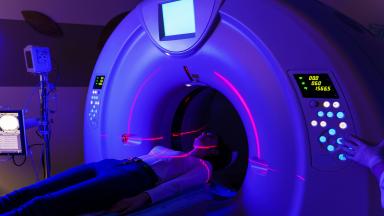
TBI looks nothing like ordinary radiotherapy, where the machine sits close and aims at a small target. Here the whole body has to fit inside the beam.
Small children cannot keep still for half an hour. Those under five or six are given a short general anesthetic for every session, which means up to eight anesthetics in four days and an anesthesia team that does this routinely. Ask any center how many children it treats this way in a year.
Radiotherapy at Biruni Hospital is delivered on an Elekta Versa HD linear accelerator, and the radiation oncology department shares a site with the adult and pediatric bone marrow transplant centers, so a patient is wheeled between the two and never leaves the hospital during conditioning.
Shielding the lungs, kidneys and eyes
Planners aim for an even dose everywhere except the organs that tolerate it least, and the 2022 ESTRO and SIOPE recommendations put numbers on that. Lungs below 8 Gy. Kidneys at 10 Gy or less. The lenses of the eyes below 12 Gy.
Lungs come first because inflammation of the lung after transplant, called interstitial pneumonitis, is the complication of TBI most likely to threaten life, and its risk climbs steeply with lung dose. Shielding brings the dose down. Ribs behind the shields contain marrow too, so some protocols add a small electron boost to the chest wall, and kidney shields follow the same logic wherever the protocol includes drugs that are hard on the kidney. Eye shielding lowers the risk of cataract, though units weigh it against the fact that leukemia can relapse in the eye and the tissues behind it.
Boys with ALL sometimes receive an extra dose to the testes, and patients with previous disease in the brain an extra dose to the head. Each case is decided individually.
The first days and weeks
During the days of treatment
Nausea leads the complaints and starts within hours of the first session. Modern anti-sickness drugs given before each session control it for the majority. Swelling and tenderness of the salivary glands in front of the ears appears within a day in some patients, looks alarming, and fades in two or three days. Headache, tiredness and a flushed skin are common. Appetite goes.
The two to three weeks after
By now the chemotherapy has been given too. The effects of the two cannot be separated. The lining of the mouth and gut breaks down, which means mouth ulcers, painful swallowing and diarrhea, treated with strong pain relief and with feeding through a vein or a tube when eating becomes impossible for a while. Blood counts fall to almost nothing until the graft takes, around two to three weeks after the infusion, and during that time transfusions, antibiotics and a protected room carry the patient through. Hair falls out from the second week and grows back within months.
Nothing in the transplant is harder than this stretch. Everyone expects it, and a transplant unit is built around it, from the filtered air in the rooms to the number of nurses on at night.
Late effects, one by one
Late effects explain why TBI is given only when it clearly adds to the chance of cure. Each appears below with what is done for it, because a family deciding on a transplant deserves the whole account and because nearly every one of them can be detected early and treated.
Fertility
Cataract
Thyroid and other hormones
Growth in children
Lungs, kidneys and heart
Learning and memory
Second cancers
What to do before conditioning starts
Fertility preservation carries a deadline. It cannot be done once conditioning has begun, it takes days for a man and two weeks or more for a woman, and in a teenager or a child it needs a specialist team. Raise it in your first message. Decide then whether to do it at home before you travel or in Istanbul on arrival.
Dental checks come next, with treatment of any infection, since a small abscess becomes a serious one when the blood counts reach zero. Lung function, heart ultrasound, kidney tests and an eye examination are recorded as a baseline for later comparison, and any previous radiotherapy has to be documented with its dose and fields, because it may change what can safely be given now. A donor who is a relative needs medical clearance too. And a travel plan.
The transplant calendar and the length of your stay
Transplant teams count days from the infusion, which is day zero. Everything before it carries a minus sign.
| When | What happens | Where you are |
|---|---|---|
| Weeks 1 to 3 after arrival | Consultations, repeat marrow test, donor workup, central line, fertility preservation if done here, TBI planning | Hotel or apartment, daily outpatient visits |
| Day -7 to day -1 | Admission. TBI twice a day for 3 to 4 days, chemotherapy on the other days, in the order the protocol sets | Transplant unit, protected room |
| Day 0 | Stem cell infusion through the central line, like a blood transfusion | Transplant unit |
| Day +1 to about day +21 | Low counts, mouth and gut soreness, transfusions and antibiotics, until the graft starts producing cells | Transplant unit |
| About day +21 to day +100 | Clinic visits two or three times a week, then weekly. Watching for infection and graft-versus-host disease, adjusting immune-suppressing drugs | Accommodation near the hospital |
| Around day +100 | First full reassessment. For most patients, clearance to travel home | Home, with a written handover |
Biruni Hospital's own published figure for the inpatient part of a transplant is three to five weeks. Staying near the hospital until day 100 or so is the convention followed by transplant centers worldwide for allogeneic transplants, because the serious complications cluster in that window.
Plan on four to five months in Istanbul.
After an autologous transplant, which uses the patient's own cells and rarely involves TBI, six to eight weeks is usual.
The transplant doctor clears the flight home, and the calendar alone does not. Counts have to be stable without transfusions. No infection can be active, and graft-versus-host disease has to be under control. A mask is worn in the airport and on board.
When the plan has to change
Conditioning runs to a fixed schedule, yet three things move it. Families should hear of them in advance. A marrow test on arrival that shows the leukemia has returned or the residual disease has risen leads to more treatment first, since transplanting in poor remission wastes the best chance. A fever or infection postpones admission until it has cleared. And a donor who falls ill or fails medical clearance means switching to a second donor, so the team identifies a backup whenever one exists. Each of these costs weeks, and none of them cancels the transplant. A switch from TBI to chemotherapy-only conditioning can also happen, when lung or kidney tests come back worse than the file suggested. Chemotherapy, radiotherapy, the transplant unit and intensive care share one site at Biruni Hospital. Whatever the change, the same team carries it out, and your coordinator sends the new dates the day they are set.
How TBI appears in a transplant quote
Nobody quotes TBI alone.
It sits inside the transplant package as one line of the conditioning, and no figure appears on this page because the package depends on facts that only the workup provides.
On the radiotherapy side the total moves with the number of sessions, with the technique, since a conformal plan takes many more hours of physics work than a conventional one, with custom lung shields and dose measurements on the skin, and above all with anesthesia, because a small child needs an anesthesia team twice a day for four days. On the transplant side the drivers are larger. Donor type comes first, a matched sibling being the simplest, an unrelated donor adding registry search and procurement fees charged by the registry, and a half-matched relative adding graft processing and the laboratory work that goes with it. Then come the days in the protected room. Blood products. Antifungal and antiviral drugs. Any treatment for graft-versus-host disease. Packages published by Turkish hospitals and medical travel agencies for bone marrow transplantation state a fixed number of inpatient days and cover conditioning, the infusion, routine drugs and tests within that period, and they leave out registry fees, days beyond the limit, intensive care, and the months of accommodation.
Read a quote for four things. Which conditioning it assumes. How many inpatient days. What happens after that number. Whether anesthesia for TBI is inside the figure.
For the family traveling with the patient
Language and the person at the bedside
A transplant involves dozens of conversations on consent, results and setbacks, and they have to happen in a language the family thinks in. The international patients team at Biruni Hospital works in English, Arabic, French, Russian, Serbian, Romanian and Spanish, arranges interpreters for other languages, and gives you one coordinator from the first message to the flight home. Patient rooms have a companion bed, and for a child a parent stays throughout. The transplant unit adds its own isolation rules on masks, hand hygiene and visitors, and the coordinator sends them before you travel so that the ward holds no surprises.
Four months of ordinary life
The international patients office arranges accommodation for the family for the whole period, the airport transfers, and the transport to every clinic visit. It issues the appointment confirmation and invitation letter that consulates ask for, naming the hospital and the treating doctor, ten days or so before travel, and a second letter for the donor if the donor is a relative traveling separately. The hospital kitchen prepares halal, vegetarian and diabetic meals and follows the low-bacteria diet the transplant team prescribes. A prayer room is on site. Requests for a female physician go to the department, which meets them where the rota allows.
Follow-up at home, year by year
Once you get back home, care passes to a hematologist near you. The handover document makes that possible. It states the conditioning given, the TBI dose, the number of sessions and the dose rate, the doses received by the lungs, kidneys and eyes, the donor and graft details, the drugs you are on and the plan for reducing them.
Survivors of TBI need a fixed set of checks for life.
- Thyroid blood test every year
- Eye examination every year, for cataract
- Lung function test at one year, then as advised
- Blood pressure, kidney function, cholesterol and blood sugar every year
- Height, weight and puberty staging every six months in children, with hormone tests
- Skin check, and breast screening for women from an earlier age than the general population
- Repeat of the childhood vaccinations, starting six to twelve months after transplant
Your coordinator stays reachable on the same WhatsApp number, and the transplant team will answer questions from your doctor at home, but fever, breathlessness, a new rash or persistent diarrhea during the first year need same-day attention locally.
Total Body Irradiation - TBI FAQ
Does total body irradiation hurt?
Is TBI better than chemotherapy before a transplant?
Will my child be able to have children later?
How long do we need to stay in Istanbul?
Can a parent stay in the room with a child during the transplant?
When is it safe to fly home after a transplant?
References
- Peters C, Dalle JH, Locatelli F, et al. Total Body Irradiation or Chemotherapy Conditioning in Childhood ALL: A Multinational, Randomized, Noninferiority Phase III Study. Journal of Clinical Oncology. 2021;39(4):295-307.
- Hoeben BAW, Pazos M, Seravalli E, et al. ESTRO ACROP and SIOPE recommendations for myeloablative Total Body Irradiation in children. Radiotherapy and Oncology. 2022;173:119-133.
- Wong JYC, Filippi AR, Dabaja BS, Yahalom J, Specht L. Total Body Irradiation: Guidelines from the International Lymphoma Radiation Oncology Group (ILROG). International Journal of Radiation Oncology, Biology, Physics. 2018;101(3):521-529.
- Paix A, Antoni D, Waissi W, et al. Total body irradiation in allogeneic bone marrow transplantation conditioning regimens: A review. Critical Reviews in Oncology/Hematology. 2018;123:138-148.
Editor's note
Written by the Biruni Hospital medical editorial team. Reviewed by Prof. Dr. Metin GÜDEN, Radiation Oncology.
Medically reviewed by
Prof. Dr. Metin GÜDEN
Radiation Oncology
Related Treatments
View All
Brachytherapy - Internal Radiation Therapy
A beam from outside has to cross healthy tissue to reach a tumor. Brachytherapy avoids that by placing a rice-sized radioactive source inside the tumor for a few minutes, then taking it out again. It is an essential part of curing cervical cancer and a tested option for womb, prostate and early breast cancer.
Brain Tumor Radiation Therapy
The plan for a brain tumor starts with what must be protected, the optic nerves, the brainstem, the hippocampus, and then shapes the dose around them. Radiosurgery in one to five sessions now treats most metastases, and six weeks of radiotherapy with temozolomide remains the standard after surgery for glioblastoma.
Chemoradiation Therapy - Concurrent Chemoradiotherapy
Blood test on Monday, a drip on Tuesday, radiotherapy every weekday, and the same again for six or seven weeks. Chemoradiation asks more of a patient than either treatment alone and, for several cancers, cures more. See the survival gains trial by trial, the side effects they came with, who is fit for it and how a long stay is organized.
Elekta Versa HD Radiation Therapy
The Elekta Versa HD is the linear accelerator on which Biruni Hospital delivers external beam radiation therapy, with a 160-leaf collimator, high dose rate beams and cone beam CT imaging before every session. This page covers the techniques, from VMAT to radiosurgery, the cancers treated, what large trials show about shorter courses for breast, prostate and metastases, the path from first visit to last session, side effects, and how patients from abroad arrange treatment.
Glioblastoma Radiation Therapy
A glioblastoma has no edge, so surgery alone is never enough. Radiation covers the cavity and a margin of brain around it, together with a daily temozolomide capsule, over six weeks or three depending on age and fitness.