A thyroid scan uses a small dose of technetium or iodine-123 to show which parts of the thyroid are working. It finds the cause of an overactive thyroid, separating Graves disease, toxic nodules and thyroiditis, shows whether a nodule is hot or cold, and plans radioactive iodine treatment. The scan takes under an hour, and our nuclear medicine team reviews your medicines and blood tests before booking.
About This Department
Nuclear Medicine
An ultrasound shows how a thyroid nodule looks. A thyroid scan shows whether it is working.
A thyroid scan, or thyroid scintigraphy, uses a small dose of technetium-99m pertechnetate or iodine-123 to show how the thyroid takes up iodine and which parts of it are overactive or underactive. It answers two questions. Both matter. The first asks why the thyroid is overactive, whether from Graves disease, toxic nodules or thyroiditis. The second asks whether a nodule is hot, producing hormone on its own, or cold. Nodules turn up in up to 65 percent of people and most are harmless, while 5 percent become overactive (Durante and colleagues, JAMA, 2018). A hot nodule so rarely proves to be cancer that guidelines drop the biopsy for it and recommend the scan whenever blood tests show a low TSH. This page explains how the scan works, when it is needed, hot and cold nodules, finding the cause of an overactive thyroid, its role before radioactive iodine treatment and in newborns, preparation and medicines to stop, the scan day, safety, and how patients from abroad arrange the test at Biruni Hospital in Istanbul.
65
Percent of people in whom thyroid nodules can be found with modern imaging
10
Percent of thyroid nodules that harbor a clinically significant cancer
5
Percent of thyroid nodules that become overactive, the ones a scan shows as hot
Free
Review of your thyroid blood tests and ultrasound by our nuclear medicine team
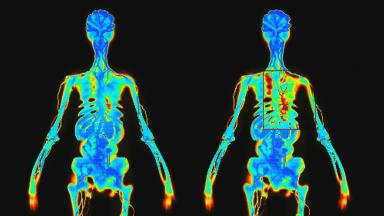
The thyroid is the only organ that gathers iodine in large amounts, to make thyroid hormone. A thyroid scan gives a small amount of a tracer the gland treats like iodine, then photographs it with a gamma camera. Active tissue lights up. Inactive tissue stays dark.
Tracers used for thyroid scans
Tracer
How given
Main use
Technetium-99m pertechnetate
Injection into a vein, images after 20 minutes
Standard scan for nodules and overactive thyroid
Iodine-123
Capsule by mouth, images after 4 to 24 hours
Scan with uptake measurement, some nodules
Iodine-131, tiny dose
Capsule
Uptake measurement before radioactive iodine treatment
Thyroid scintigraphy remains the most accurate method for the diagnosis and quantification of thyroid autonomy and the detection of ectopic thyroid tissue (Giovanella and colleagues, European Journal of Nuclear Medicine and Molecular Imaging, 2019).
An uptake measurement, often done with the scan, records what percentage of the tracer the thyroid has taken up. A high value points to an overactive gland making hormone, a low value to hormone leaking from an inflamed gland.
When a scan is needed
Common reasons
Reasons for a thyroid scan
Situation
Question answered
Next step
Nodule with low TSH
Is the nodule hot
A hot nodule needs no biopsy
Overactive thyroid
Graves disease, toxic nodule or thyroiditis
Treatment matched to the cause
Before radioactive iodine
How much iodine the gland takes up
Dose calculation
Newborn with low thyroid function
Is the thyroid missing or misplaced
Lifelong treatment planned
Lump at the base of the tongue or in the neck
Is it thyroid tissue
Avoids removing the only working thyroid
Most patients with a nodule and normal thyroid blood tests do not need a scan. Ultrasound and, when needed, a fine-needle biopsy answer the question. In countries with lower iodine intake, where hot nodules are more common, some guidelines recommend a scan more widely.
1
Ultrasound first
A neck ultrasound and TSH blood test come before the scan. They decide whether a scan will add anything.
Nodules are common
Few nodules ever need treatment.
Ultrasound finds nodules in more than half of adults, and far more are found now than twenty years ago simply because scans of the neck, chest, spine and carotid arteries done for other reasons pick them up by chance. The great majority stay small and harmless for life. The team looks for the few that matter, those that are cancer, those large enough to press on the windpipe, and those that make too much hormone. The scan answers the third question directly and helps with the first.
That knowledge alone reassures many patients who arrive worried.
Hot and cold nodules
A nodule that takes up more tracer than the rest of the gland is hot. It makes thyroid hormone independently and can make the whole thyroid overactive over time. A cold nodule takes up little or none.
What the patterns mean
Nodule patterns on a thyroid scan
Pattern
Meaning
Cancer risk
Hot, rest of gland suppressed
Toxic adenoma, autonomous nodule
Very low
Warm, same as surrounding tissue
Functioning in step with the rest of the gland
Assessed by ultrasound
Cold
Not producing hormone
Most are benign, a minority are cancer, ultrasound and biopsy decide
American Thyroid Association guidelines advise a radionuclide scan when a nodule is found with a subnormal TSH, and hyperfunctioning nodules rarely harbor malignancy, so they do not need cytologic evaluation (Haugen and colleagues, Thyroid, 2016).
1
A cold nodule is not a cancer diagnosis
Most cold nodules are benign. Their risk is judged by ultrasound features and, where needed, a fine-needle biopsy.
Scan and ultrasound together
Finding
Usual action
Note
Hot nodule, suspicious ultrasound
Rare combination, discussed individually
Biopsy only if strongly suspicious
Hot nodule causing overactivity
Radioactive iodine, surgery or ablation
Treats the overactivity
Cold nodule with suspicious features
Fine-needle biopsy
Follows ultrasound risk scores
Finding the cause of an overactive thyroid
A radioactive iodine uptake measurement should be performed when the clinical presentation of thyrotoxicosis is not diagnostic of Graves disease, and a scan should be added when thyroid nodularity is present (Ross and colleagues, Thyroid, 2016).
An overactive thyroid can come from very different causes that need very different treatment. Graves disease and toxic nodules make too much hormone and are treated with tablets, radioactive iodine or surgery. Thyroiditis, inflammation after a virus or pregnancy, releases stored hormone and settles on its own. The scan tells them apart within an hour.
Scan patterns in an overactive thyroid
Cause
Scan appearance
Treatment
Graves disease
Whole gland bright, uptake high
Tablets, radioactive iodine or surgery
Toxic multinodular goiter
Several hot areas, rest suppressed
Radioactive iodine or surgery
Toxic adenoma
One hot nodule, rest suppressed
Radioactive iodine, surgery or ablation
Thyroiditis
Little or no uptake
Symptom control, settles in weeks to months
Uptake numbers
Normal 24-hour iodine uptake lies between about 10 and 30 percent, varying with dietary iodine. Graves disease pushes it well above, thyroiditis well below.
Iodine-induced overactivity
Large doses of iodine, from CT contrast or the heart drug amiodarone, make an overactive thyroid show low uptake, which the scan recognizes.
Before radioactive iodine treatment
Radioactive iodine therapy works only if the gland takes up iodine, and the uptake measurement shows how much of the dose it will absorb, which guides both the choice of treatment and the dose.
1
Dose planning
Some centers calculate the dose from uptake and gland size. Others give fixed doses. Either way, the scan confirms the diagnosis and shows whether nodules or the whole gland need treatment.
After thyroid cancer surgery, a different scan with iodine-123 or iodine-131 looks for remaining thyroid tissue or cancer. That whole-body scan follows its own preparation with a low-iodine diet and TSH stimulation.
Newborns and ectopic thyroid
Newborn screening finds babies born with an underactive thyroid. A scan in the first weeks shows whether the gland is missing, small or sitting in the wrong place, often at the base of the tongue. Treatment with thyroid hormone starts at once and is not delayed for the scan.
1
Lingual thyroid
A lump at the back of the tongue or in the midline of the neck may be the only thyroid tissue a person has. A scan before any surgery prevents removing it by mistake.
Preparation and medicines
Iodine from food, supplements and medicines fills the thyroid and blocks the tracer. The scan is planned around this.
No fasting is needed for a technetium scan. For an iodine-123 scan, patients fast for a few hours before swallowing the capsule. Pregnancy has to be excluded, and breastfeeding mothers get specific instructions.
Which medicines affect the scan?
Thyroid hormone tablets, antithyroid drugs, iodine-containing supplements and kelp, amiodarone and recent CT or angiography contrast all change the result. Some are stopped for days, others for weeks, and never without the prescribing doctor agreeing. The team reviews your medicine list at booking.
1
Recent CT contrast
A CT scan with iodine contrast in the previous four to six weeks can make the thyroid appear inactive. Tell the team about any recent scans.
Typical stop times before a thyroid scan
Medicine or exposure
Usual stop time
Note
Methimazole or carbimazole
3 to 7 days
Agreed with the endocrinologist
Propylthiouracil
Several days
Agreed with the endocrinologist
Levothyroxine
Up to 4 weeks
Only when the question requires it
Iodine supplements, kelp
2 to 4 weeks
Includes some multivitamins
CT contrast
4 to 6 weeks since exposure
Longer after large doses
Amiodarone
Months
Scan interpreted with this in mind
Scan day
A technetium scan takes less than an hour. An iodine-123 scan with uptake needs a second visit the next day.
Timeline
A typical thyroid scan
Step
Time
Note
Injection of technetium
A few seconds
Or capsule for iodine-123
Wait
About 20 minutes
4 to 24 hours for iodine-123
Images of the neck
10 to 20 minutes
Lying on your back, head tilted back
Uptake reading, if requested
5 minutes
Probe held over the neck
1
During the scan
You lie on your back with a pillow under the shoulders. The camera sits close to the neck but does not touch it. Swallowing and talking are kept to a minimum while images are taken.
The nuclear medicine physician often reviews the images the same day and discusses them with you.
Reading the result
Physicians read the scan alongside the ultrasound.
A report that describes a hot area means little unless the nodule it matches on ultrasound is known, so the physician lines up the two, matches each nodule to its pattern and adds the uptake value. The result goes to the endocrinologist or surgeon who requested the scan, and a treatment plan follows. With ultrasound in the same visit, the full answer comes within a day.
Safety
The radiation dose from a technetium thyroid scan is low, about the same as a few months of natural background radiation.
Allergic reactions to the tracer are extremely rare.
No sedation or special aftercare is needed.
The tracer leaves the body within a day, mostly in urine.
Drinking water and emptying the bladder often after the scan speeds clearance.
1
Pregnancy and breastfeeding
Thyroid scans are not done in pregnancy, since the baby's thyroid would take up the tracer. Breastfeeding mothers pause for a set time, 12 to 24 hours after technetium and longer after iodine-123, and express and discard milk during that time.
Children receive doses adjusted to body weight, and scans in newborns are done with doses a fraction of the adult one.
For patients from abroad
Combining tests
Most patients from abroad combine the scan with an endocrinology consultation, thyroid blood tests and a neck ultrasound on the same day, and, if needed, a fine-needle biopsy. Send your blood results, ultrasound reports and medicine list in advance so that any medicines that need stopping can be stopped before you travel.
One coordinator from the international patients office handles arrangements from the first message through discharge and answers the same WhatsApp number once you are back home. The office works in English, Arabic, French, Russian, Serbian, Romanian and Spanish and books interpreters for other languages, and it arranges the visa invitation letter, airport transfers, daily transport and accommodation near the hospital. Halal, vegetarian and diabetic meals, a prayer room on site, and a female physician on request wherever the rota allows.
1
Length of stay and fitness to fly
One to two days for a technetium scan with consultation and ultrasound, two to three days if an iodine-123 uptake study or biopsy is added. You can fly the same day as the scan.
Cost
1
What changes the price
The tracer, whether uptake is measured, and whether ultrasound, blood tests and a consultation are combined.
A technetium scan costs less than an iodine-123 study. The iodine capsule is prepared for each patient in advance and the uptake reading needs a second visit the next day, which adds to the price.
2
Package option
Many patients choose a thyroid assessment package that combines scan, ultrasound, blood tests and endocrinology consultation.
What a quote for a thyroid scan covers
Item
Included
Priced separately
Scan
Tracer, images, report
Iodine-123 uptake study
Tests
Review of existing results
Blood tests, ultrasound, biopsy
Consultation
Nuclear medicine review
Endocrinology or surgery consultation
References
Durante C, Grani G, Lamartina L, Filetti S, Mandel SJ, Cooper DS. The diagnosis and management of thyroid nodules. A review. JAMA. 2018;319(9):914-924.
Haugen BR, Alexander EK, Bible KC, et al. 2015 American Thyroid Association management guidelines for adult patients with thyroid nodules and differentiated thyroid cancer. Thyroid. 2016;26(1):1-133.
Ross DS, Burch HB, Cooper DS, et al. 2016 American Thyroid Association guidelines for diagnosis and management of hyperthyroidism and other causes of thyrotoxicosis. Thyroid. 2016;26(10):1343-1421.
Giovanella L, Avram AM, Iakovou I, et al. EANM practice guideline/SNMMI procedure standard for RAIU and thyroid scintigraphy. Eur J Nucl Med Mol Imaging. 2019;46(12):2514-2525.
Editor's note
Written by the Biruni Hospital medical editorial team. Reviewed by Specialist Dr. Nesrin Aslan İlkmen, Nuclear Medicine.