Skip to content
Dotatate PET/CT Scan - Neuroendocrine Tumor Imaging
Nuclear Medicine

Dotatate PET/CT Scan - Neuroendocrine Tumor Imaging

About This Department

 
Nuclear Medicine

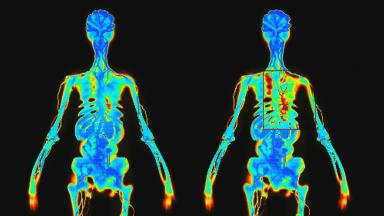
Neuroendocrine tumors carry a receptor that a Dotatate scan lights up. In a prospective study it found 95 percent of lesions, against 45 percent on CT or MRI.

Most neuroendocrine tumors, in the bowel, pancreas and lungs, carry somatostatin receptors on their surface. A Dotatate PET/CT scan uses a small radioactive tracer that binds to those receptors, so tumors glow on the images wherever they are, including small deposits that a CT scan misses. A positive scan also shows whether the same molecule, carrying a stronger radioactive dose, will reach the tumor as treatment, a treatment called PRRT. The scan takes two to three hours, needs one day in Istanbul, and the report follows within a day or two. Send us your pathology, recent scans and the name and date of your last somatostatin injection, and a nuclear medicine physician will confirm whether the scan is right for you and how to prepare.

95.1%
Lesions detected, against 30.9% with the older Octreoscan
44%
Patients whose treatment plan changed after the scan
1 day
In Istanbul for the scan, report in one to two
Free
Nuclear medicine review of your file
Free consultation
What a Dotatate PET/CT scan shows

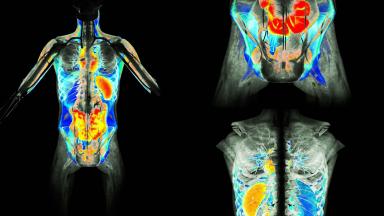
Dotatate is a small molecule that mimics somatostatin, a hormone whose receptors cover the surface of most well-differentiated neuroendocrine tumors. Linked to gallium-68, a radioactive element with a half-life of 68 minutes, it goes into a vein, travels to every receptor-bearing tumor in the body and shows up on the PET camera. The CT taken in the same session then maps each glowing spot to an organ, a lymph node or a bone, so the report can say exactly where a surgeon, a radiologist or a nuclear medicine physician would have to act.

It answers three questions at once. Where the tumors are, how many there are, and whether they carry enough receptors to be treated with the same molecule loaded with a therapeutic dose. Related tracers, DOTATOC and DOTANOC, work the same way, and doctors treat the results as equivalent.

Available information in the peer-reviewed literature regarding diagnostic efficacy and safety supports the use of 68Ga-DOTATATE for imaging of NETs where it is available.
Systematic review and meta-analysis, Journal of Nuclear Medicine, 2016
Why it replaced the Octreoscan

Indium-111 pentetreotide scintigraphy, the older test, used a similar molecule with a weaker camera and took two days. In a prospective study of 131 patients at the United States National Institutes of Health, the Dotatate scan found 95.1 percent of lesions, CT or MRI 45.3 percent and the Octreoscan 30.9 percent. It also found a previously unknown primary tumor in four of 14 patients whose cancer had been discovered through liver or lymph node metastases, a situation in which knowing where the disease began decides whether surgery on the primary is worthwhile and which drugs are likely to work.

Radiation is lower. Images are sharper. The whole test takes a morning. International guidelines now recommend Dotatate or a related tracer in place of the Octreoscan wherever it is available.

Who needs one

68Ga-DOTATATE PET/CT imaging provides important information for accurate staging of gastro-entero-pancreatic neuroendocrine tumors and selection of appropriate treatment interventions.
National Institutes of Health prospective study, Journal of Clinical Oncology, 2016
Appropriate uses

Nuclear medicine, oncology, endocrine and surgical societies agreed in 2017 on when somatostatin receptor PET is appropriate. The strongest indications include staging a newly diagnosed neuroendocrine tumor, finding the primary tumor when only metastases are known, choosing patients for PRRT, and restaging before surgery or when symptoms or markers suggest the disease has changed.

Its value falls for poorly differentiated or grade 3 tumors that have lost their receptors. An FDG PET/CT, the standard cancer scan, shows those better. Some need both.

  • A new diagnosis of neuroendocrine tumor of the bowel, pancreas, lung or appendix, before treatment is planned.
  • Liver or lymph node metastases from a neuroendocrine tumor whose origin is unknown.
  • Consideration for PRRT with lutetium-177 Dotatate, which requires a positive scan.
  • Rising markers such as chromogranin A or 5-HIAA, or new flushing and diarrhea, after treatment.
  • Some rarer tumors that carry the same receptors, including paraganglioma, pheochromocytoma and meningioma.

The scan day

Arrival and injection
A short check of your history and medicines, a cannula in the arm, and the tracer injection, which you do not feel. You need not fast. Diabetic patients take their medicines as usual.
The wait
You rest quietly for 45 to 60 minutes while the tracer reaches the tumors. Drinking water helps clear the tracer that has not attached.
The scan
You lie still on the scanner bed for 20 to 30 minutes. If your doctor has asked for a diagnostic CT at the same time, contrast goes in through the same cannula. The whole visit takes two to three hours.

How accurate is it, and what does the result change?

Few imaging tests in oncology change as many treatment plans as this one.

Accuracy in numbers

A meta-analysis of 42 studies estimated the sensitivity of Dotatate PET/CT at 90.9 percent and specificity at 90.6 percent for lung and gastroenteropancreatic neuroendocrine tumors. Side effects from the tracer were reported in 6 of 974 patients, none serious.

In the National Institutes of Health study, the scan changed the recommended treatment in 43 of 131 patients, 32.8 percent. Symptoms alone were enough. In patients with typical flushing and diarrhea and normal blood and urine tests, the scan found tumors in 65.2 percent, and in four of ten of those the lesions had been invisible on every other test, which is the strongest argument for the scan when symptoms and laboratory results disagree.

A scan and a treatment with the same target
A positive Dotatate scan does more than locate the tumor. It shows that the tumor will take up lutetium-177 Dotatate, the same molecule carrying a radioactive element that kills cells from inside. In the NETTER-1 trial of 229 patients with advanced midgut neuroendocrine tumors, 65.2 percent of those treated were alive without progression at 20 months, against 10.8 percent with high-dose octreotide alone. Doctors call this pairing of a diagnostic scan and a treatment theranostics.

This table scrolls sideways on a narrow screen. Swipe or drag to see every column.

Lesions found by each test in the same patients
Test Lesions detected
Gallium-68 Dotatate PET/CT 95.1 percent
CT or MRI 45.3 percent
Indium-111 Octreoscan SPECT/CT 30.9 percent
  • Poorly differentiated or grade 3 tumors may not show, and need an FDG PET/CT.
  • Most insulinomas carry few receptors. Other methods find them better.
  • The spleen, adrenal glands, kidneys and part of the pancreas take up some tracer normally, and experienced readers know these patterns.
  • Inflammation, some bone lesions and a small accessory spleen can mimic tumor.

How often the plan changes

A meta-analysis of 14 studies and 1,561 patients found that somatostatin receptor PET/CT changed management in 44 percent. Even in patients who had already had an Octreoscan, the PET scan changed the plan in 39 percent.

Most changes were between types of treatment, for example from surgery to PRRT or from watching to treating, three times as frequently as adjustments within one type. For a patient planning surgery, a scan that finds extra deposits in the liver or bones can spare an operation that would not have removed all the disease.

This table scrolls sideways on a narrow screen. Swipe or drag to see every column.

NETTER-1, lutetium-177 Dotatate in advanced midgut tumors
Outcome Lutetium-177 Dotatate High-dose octreotide
Alive without progression at 20 months 65.2 percent 10.8 percent
Tumor response 18 percent 3 percent
Deaths at the interim analysis 14 26
Severe blood count problems Under 10 percent None
  • Book the scan just before your next long-acting octreotide or lanreotide injection, three to four weeks after the last.
  • Stop short-acting octreotide 24 hours before, if your doctor agrees.
  • Tell the team if you are or might be pregnant, or are breastfeeding.

This table scrolls sideways on a narrow screen. Swipe or drag to see every column.

The timing of a scan visit
Step Time
Registration and injection 30 minutes
Rest while the tracer distributes 45 to 60 minutes
PET/CT imaging 20 to 30 minutes
Written report One to two working days

The report and the tumor board
The nuclear medicine physician reports every lesion and its uptake. The neuroendocrine tumor board reviews the images with the pathology and earlier scans.
The plan
Surgery, liver-directed treatment, somatostatin injections, PRRT, targeted drugs or observation, according to the extent and grade of the tumor and the uptake on the scan.
Follow-up
A repeat scan when symptoms, markers or CT suggest change, and before and after PRRT, rather than on a fixed calendar.

How many days in Istanbul, and what decides the cost?

One day covers the scan.

Days, cost and travel

A second day in Istanbul allows a consultation with the report in hand. Patients who come for surgery or PRRT have the scan as part of that stay. The tracer leaves the body within a day. Fly the same evening if you wish.

The cost covers the gallium-68 tracer, which is produced on site shortly before each scan, the PET/CT imaging and the specialist report. A diagnostic CT with contrast in the same session, a consultation and a tumor board review are separate items. Your own figure follows the free review of your file.

One coordinator stays with you from the first message to the report and the consultation, and the team works in seven languages, with interpreters for the rest. An invitation letter naming the hospital and the physician goes out ten days before travel, and the international patients office arranges the transfer and a hotel for you and a companion. Halal, vegetarian and diabetic meals are available, there is a prayer room, and a request for a female doctor is passed to the department and met wherever the rota allows. Back home, the coordinator stays reachable on the same WhatsApp number, and the images are sent to your own doctors in a standard format.

Radiation, pregnancy and children
The radiation dose is comparable to a standard CT scan. The scan is avoided in pregnancy unless essential, breastfeeding is paused for a few hours afterward, and close contact with small children and pregnant women is limited for the rest of the day.

Dotatate PET/CT FAQ

What is a Dotatate PET/CT scan used for?
To find and stage neuroendocrine tumors, locate an unknown primary tumor, restage the disease, and decide whether a patient can receive PRRT with lutetium-177 Dotatate.
How accurate is a Dotatate scan?
A meta-analysis estimated 90.9 percent sensitivity and 90.6 percent specificity. In a prospective study it found 95.1 percent of lesions, against 45.3 percent on CT or MRI.
Do I need to stop my octreotide or lanreotide injection?
The scan is best timed just before your next long-acting injection, three to four weeks after the last one. Short-acting octreotide is stopped 24 hours before if your doctor agrees.
Does the scan hurt, and is it safe?
Only the cannula is felt. Side effects from the tracer are very rare, and the radiation dose is similar to a CT scan.
How long do I need to stay in Istanbul?
One day for the scan, two if you want a consultation with the report. You can fly the same evening.
Can my family come with me?
Yes. The international patients office arranges a hotel for you and a companion.

References

  1. Deppen SA, Blume J, Bobbey AJ, et al. 68Ga-DOTATATE Compared with 111In-DTPA-Octreotide and Conventional Imaging for Pulmonary and Gastroenteropancreatic Neuroendocrine Tumors: A Systematic Review and Meta-Analysis. Journal of Nuclear Medicine. 2016;57(6):872-878.
  2. Sadowski SM, Neychev V, Millo C, et al. Prospective Study of 68Ga-DOTATATE Positron Emission Tomography/Computed Tomography for Detecting Gastro-Entero-Pancreatic Neuroendocrine Tumors and Unknown Primary Sites. Journal of Clinical Oncology. 2016;34(6):588-596.
  3. Barrio M, Czernin J, Fanti S, et al. The Impact of Somatostatin Receptor-Directed PET/CT on the Management of Patients with Neuroendocrine Tumor: A Systematic Review and Meta-Analysis. Journal of Nuclear Medicine. 2017;58(5):756-761.
  4. Hope TA, Bergsland EK, Bozkurt MF, et al. Appropriate Use Criteria for Somatostatin Receptor PET Imaging in Neuroendocrine Tumors. Journal of Nuclear Medicine. 2018;59(1):66-74.
  5. Strosberg J, El-Haddad G, Wolin E, et al. Phase 3 Trial of 177Lu-Dotatate for Midgut Neuroendocrine Tumors. New England Journal of Medicine. 2017;376(2):125-135.

Editor's note

Written by the Biruni Hospital medical editorial team. Reviewed by Specialist Dr. Sedat OFLUOĞLU, Nuclear Medicine.

Related Treatments

View All