
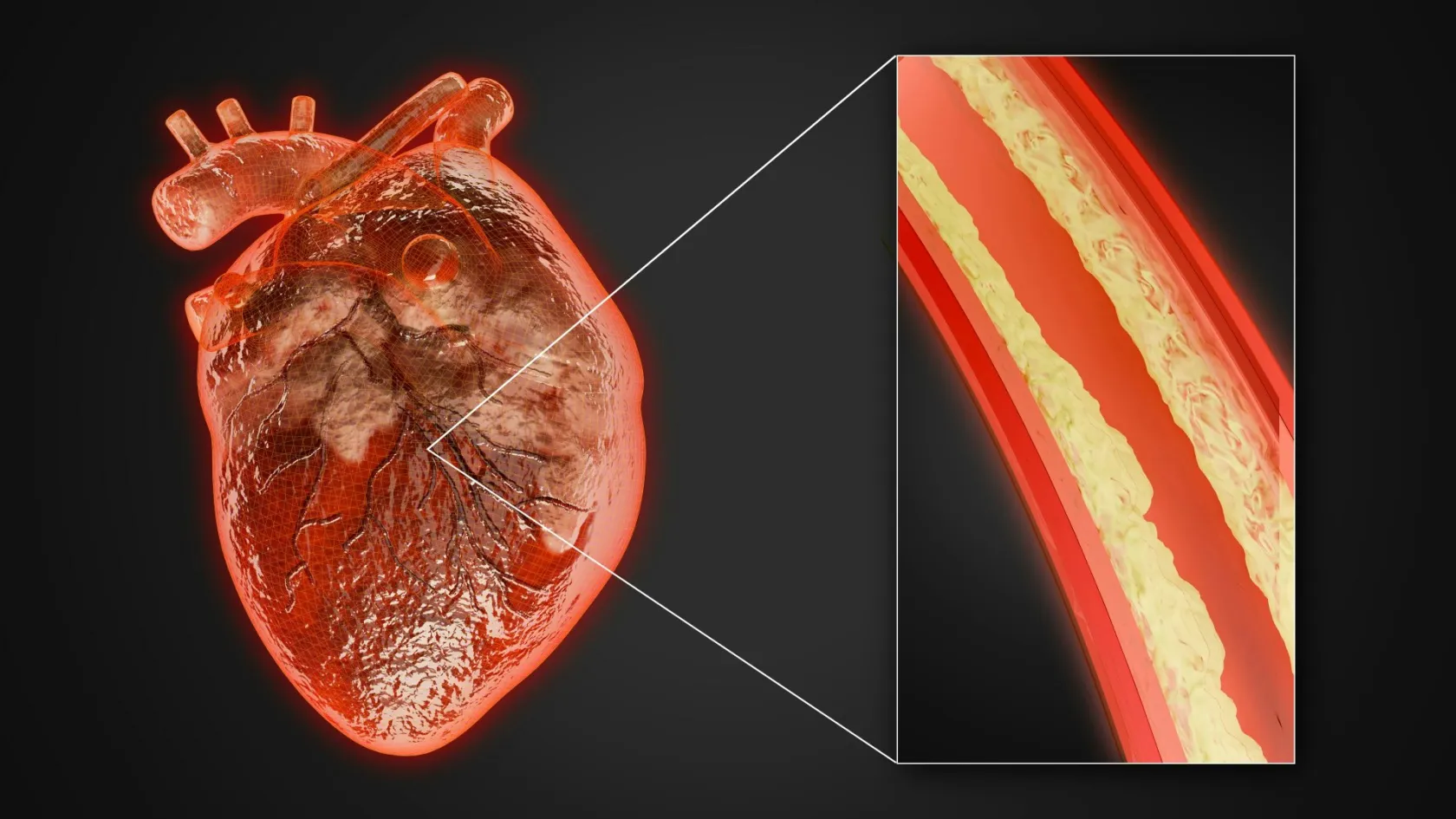
TAVI Surgery - Transcatheter Aortic Valve Implantation
At five years TAVI matched surgery in both major trials. At seven years, patients who had a catheter valve needed a further valve procedure 9.8 percent of the time against 6.0 percent after surgery, and that gap changes the arithmetic for anyone under seventy-five.
About This Department
For five years the two big trials said the same reassuring thing, which was that a valve delivered on a catheter matched a valve sewn in by a surgeon. Then the follow-up ran longer. In one of those trials, patients who had reached seven years needed a further valve procedure 9.8 percent of the time after the catheter valve and 6.0 percent of the time after surgery, and the difference was statistically significant. That single line changes how a younger patient should think about this decision, and most pages about TAVI have not caught up with it.
Free consultation
Ask for the plan covering your whole life, valve after valve
What happens when this valve wears out is the real question, and answering it takes a CT scan of your aortic root and your coronary arteries. Send the echocardiogram with its moving images, any cardiac CT, a recent angiogram, your blood results, your age and your medication list. A heart team reviews the file and tells you whether TAVI is suitable, whether a second valve could later be placed inside the first, and what surgery would offer instead. No fee, no obligation, and a coordinator answers in your own language.
What TAVI is
A new aortic valve is folded onto the end of a thin tube, threaded up an artery in the groin, and opened inside the old one. The chest is never entered, and your own diseased valve is never removed. It is crushed against the wall of the aorta and left there, holding the new valve in place. Three facts follow.
You will meet two other names for it. TAVR, transcatheter aortic valve replacement, is the American term, and TAVI, transcatheter aortic valve implantation, is the European one. Nothing about the procedure differs.
TAVI against surgery
Two randomized trials put TAVI head to head with surgery in patients at low surgical risk, one using a balloon-expanded valve and one using a self-expanding valve. Both have now published follow-up beyond five years. Both are funded by the company whose device they tested, which is worth holding in mind when you read the confident summaries written about them, since the trials themselves are considerably more careful than the marketing built on top of them. At five years neither trial found a meaningful difference in death, stroke or rehospitalization. That is the finding most articles about TAVI are still built on, and for the patient in their eighties it remains the relevant one. What has changed is what happens after that.
This table scrolls sideways on a narrow screen. Swipe or drag to see every column.
| Outcome | TAVI | Surgery | Reading |
|---|---|---|---|
| Death, stroke or rehospitalization at seven years | 34.6 percent. | 37.2 percent. | A difference of 2.6 points with a confidence interval crossing zero, so the two are equivalent. |
| Death at seven years | 19.5 percent. | 16.8 percent. | Numerically higher after TAVI, and within the play of chance in a trial this size. |
| Stroke at seven years | 8.5 percent. | 8.1 percent. | The same, which answers a fear many patients arrive with. |
| Death or disabling stroke at six years, other trial | 23.3 percent. | 20.4 percent. | A gap of 2.8 points that did not reach significance. |
| Permanent pacemaker at five years | 27.3 percent. | 8.9 percent. | Three times as many, and the clearest difference between the two treatments. |
| Further valve procedure at seven years | 9.8 percent. | 6.0 percent. | Significantly more after TAVI, driven by leakage around the valve. |
Read that table with two honesty notes beside it. The pacemaker figure comes from an analysis of the patients who had valve replacement alone, which excluded a quarter of the trial. The seven-year reintervention figure was not planned in advance and covers only the patients who had reached seven years of follow-up. Both deserve to be taken seriously. Neither is the same grade of evidence as a trial's headline result.
How long the valve lasts
Two different things wear out and they fail in different ways, which is why a single durability number is misleading.
Tissue is the first. It thickens, calcifies and stiffens over years exactly as a surgical tissue valve does. On this measure the two have looked alike. Failure of the implanted valve was recorded in 3.3 percent of TAVI patients and 3.8 percent of surgical patients at five years in the balloon-expandable trial, and in 6.9 against 7.5 percent at seven years. The second is leakage around the outside of the device, and this one has no surgical equivalent. A sewn-in valve is stitched to the annulus, so nothing passes beside it. A catheter valve is wedged inside a calcified, irregular ring, and a channel can remain between the frame and the wall. When the seven-year reinterventions in the self-expanding trial were broken down, the excess came almost entirely from this. Reintervention for leakage ran at 5.6 percent after TAVI against 1.6 percent after surgery. Reintervention for narrowing was identical.
This table scrolls sideways on a narrow screen. Swipe or drag to see every column.
| Failure | What happens | Against surgery |
|---|---|---|
| The tissue degenerates | Leaflets stiffen and calcify over years, and the valve narrows or starts to leak through the middle. | Comparable so far, at 6.9 against 7.5 percent valve failure by seven years. |
| Blood leaks around the frame | A gap between the device and the calcified wall lets blood run backward past the valve rather than through it. | Reintervention for this reached 5.6 against 1.6 percent, which is where the durability gap sits. |
| Which device was used | Pooled data across 12,131 patients found moderate or severe tissue degeneration in 7 percent at a median of seven years. | Older-generation devices made up 84.5 percent of that pool, so it understates what is implanted today. |
What all of this means depends entirely on your age. A patient of eighty-two needs a valve that works well for the years they have, and both treatments deliver that. A patient of sixty-eight is being asked to accept a device with a measurable chance of needing something else done within a decade, and for them the question is no longer which procedure is better this year. It is which sequence of procedures serves them best over thirty. A final caution applies to every number quoted here. The pooled durability data covering 12,131 patients was collected largely from devices that are no longer implanted, sealing skirts and frame designs have improved specifically to reduce leakage around the valve, and it is entirely possible that the seven-year signal described above belongs to a generation of hardware rather than to the technique itself. That would be good news. It is also not yet established, and a decision made today has to be made on what has been measured rather than on what is expected.
There is a practical way to hold all of this. Ask what your yearly echocardiogram will be looking for, and take the discharge numbers home so you have something to compare against. A rising gradient across the valve means the tissue is stiffening. A leak appearing beside the frame where there was none means the seal is giving way. Breathlessness returning after a period of feeling well is what usually brings a patient back, and it should bring them back promptly, since a valve caught while it is failing leaves a cardiologist far more options than one caught after the heart muscle has suffered for it. Nobody expects you to read the scan. Knowing what it is for is enough.
The day itself
Most TAVI procedures now run without general anesthesia and take between one and two hours from the first puncture to the last stitch.
The pacemaker
Heart block is the complication TAVI owns, and it deserves more space than most pages give it. The bundle of tissue carrying every heartbeat down into the ventricles runs immediately beneath the aortic valve. A metal frame expanded against that valve presses on it, and in a proportion of patients the electrical signal never fully recovers. Pooled data from 82 studies and 124,808 patients put the chance of needing a permanent pacemaker within thirty days of TAVI at 17.5 percent. In the low-risk trial that followed patients for five years, 27.3 percent of the TAVI group had received one against 8.9 percent of the surgical group. Neither number is a footnote for somebody in their sixties, since a pacemaker means a device under the skin, a lead in the heart, battery changes every decade or so and a set of lifelong precautions. Some of this is controllable and the same pooled analysis shows how. A pre-existing right bundle branch block on your ECG raises the odds more than five times, and first-degree heart block roughly doubles them, so those two lines on a tracing are worth asking about before you decide anything. Implanting the valve deeper raises the risk, self-expanding devices carry roughly two and a half times the odds of balloon-expandable ones, and stretching the old valve with a balloon beforehand adds to it.
Technique matters, and this is the most encouraging finding of the set. A method of lining up the X-ray views so that the operator can judge implant depth more accurately, known as cusp overlap, cut the odds of needing a pacemaker by more than half in the pooled data. Ask whether the unit treating you uses it as routine. An operator who knows what you are asking about is telling you something useful by the fact of recognizing the question.
Recovery and flying home
In hospital
One to three nights for a straightforward case, which is the shortest stay of any treatment on this site. You lie flat for a few hours while the puncture in the groin seals, then sit up, eat and walk. What keeps people longer is rarely the valve. It is the heart rhythm, since the monitoring that decides whether you need a pacemaker takes at least a day and sometimes several, and a patient whose conduction was already abnormal before the procedure should expect the longer end of that.
The first weeks
A week or two back to ordinary activity, with no breastbone to protect and no lifting rules imposed by a healing bone. The groin sets the limits instead. Avoid heavy lifting, straining and hot baths for about a week. Watch the puncture site for swelling or bruising that grows, and report a lump that pulses. Blood thinning after TAVI is usually a single antiplatelet drug for life unless you have another reason for something stronger, and anybody who arrives already taking an anticoagulant for atrial fibrillation generally continues that instead. Breathlessness improving over the first weeks is what tells you the valve is doing its job, and most patients notice it on stairs before they notice it anywhere else. Cardiac rehabilitation is worth asking about even here, where the recovery is short, because the exercise capacity people lose while waiting for a valve does not come back on its own.
Flying
Often within a week, sometimes sooner, and this is where TAVI differs most sharply from surgery. The conditions are a sealed groin with no expanding swelling, a stable rhythm off the monitor, and an echocardiogram before discharge showing the valve working with no more than trivial leak. A doctor writes it. If a pacemaker was fitted, add a few days to the plan and take the device card with you, since airport security and any future scan will need it, and so will the cardiologist who takes over your care at home. Ask for the pacing settings on paper as well as the card.
What can go wrong
- Heart block needing a pacemaker. The commonest serious complication, covered above, and the one to weigh most heavily if you are under seventy.
- Stroke. Debris can break loose as the wire and the device pass through a calcified valve. In the seven-year trial data the rates matched those after surgery, at 8.5 against 8.1 percent, and most strokes that occur happen in the first days.
- Damage to the artery in the leg. Sheaths have become much smaller over the past decade, and the vessel can still tear, narrow or bleed despite that, particularly where it was already diseased. This is what the CT scan of your leg arteries is for, and it is why a patient with severely diseased vessels is offered a different access route rather than being pushed through the usual one.
- Leakage around the valve. Mild leaks are common and harmless. Anything more is treated during the procedure, because moderate leakage predicts trouble years later and is the main driver of the reinterventions in the long-term data.
- Blocked coronary arteries. Uncommon. Immediately serious when it happens. The old leaflets are pushed upward and can cover a coronary opening, which is why the planning CT measures the height of those openings above the valve before anybody agrees to proceed.
- Kidney injury from contrast. The dye needed to see the anatomy is hard on kidneys that are already struggling. Fluids before and after the procedure, the smallest useful dose of dye, and a check of kidney function on the following day are the standard protections, and a patient whose kidneys are already poor should be told what their own baseline number is before agreeing to anything.
- Poor seating of the device. A device that ends up too high or too low can be repositioned in some designs, retrieved in others, and occasionally needs a second valve placed immediately inside the first. Surgery to remove a poorly seated transcatheter valve is rare and difficult.
Who TAVI suits
People who gain most from a catheter valve share a pattern. Recognizing yourself in it, or failing to, is where an honest conversation starts, and the list below is the one a heart team works through before anybody mentions a date.
- Anybody over about seventy-five with symptomatic aortic stenosis. The trial data cover this group thoroughly, the results match surgery, and the expected lifespan of the valve comfortably exceeds the years it needs to serve.
- Anyone who has already had a sternotomy. Avoiding a second opening of a scarred chest is a real advantage, and a great many patients with a failing surgical tissue valve are now treated with a catheter valve placed inside it.
- Anyone frail, or carrying serious lung, liver or kidney disease. The absence of a bypass machine and a chest incision matters most to the patients with the least reserve, which is where TAVI began and where its case has never been in doubt.
- Somebody who needs to be back on their feet quickly. One to three nights in hospital against a week, and a week or two of recovery against six.
- Somebody whose CT shows a favorable root. Good coronary height, a roomy sinus and a suitable annulus size make both this procedure and any future one easier, and your scan either shows that or it does not.
None of that list is about the calendar age on your passport. It is about two other things. How many years the valve actually has to last, and how much physical reserve you have to spend on an operation, and those are separate questions that happen to move together in most people and come apart in some. A fit seventy-eight-year-old and a frail sixty-six-year-old will get different advice from a careful heart team, and both of them should.
Your second valve
If you are under seventy-five, the most important part of this consultation is not the procedure being offered. It is the one after it. A tissue valve placed at sixty-five will very probably need something doing to it before you die, and the options available then are decided by what is done now.
Ask the heart team to walk you through all of it. Not this valve, but the second one and the third, in the order they would come, with the reasons each option might be closed off by the one before it.
Placing a second catheter valve inside a first is done routinely enough to have been studied. A registry of 439 such patients found procedural complications uncommon and outcomes at thirty days and at one year comparable to a first-time procedure, with the gradients measured across the doubled valve running modestly higher than they would across a single one. Those patients averaged nearly seventy-nine years of age, so the registry answers a question about elderly patients and not about a sixty-year-old.
The real constraint is space. When a second valve is expanded inside the first, the first one's leaflets are pushed outward and can form a cylinder that blocks blood reaching the coronary arteries. Modeling work using CT scans from a low-risk trial calculated that risk against how high the second valve sits inside the first, and found it ranged from about one in five at the most favorable position to three in four at the least favorable. That is a computer simulation and not a record of what happened to real patients. It is still enough to show the question is real, and that the answer for you sits in measurements a radiologist can take off your own scan today rather than in a general statement about the technology. Surgery keeps more doors open than TAVI does. A surgical valve can be replaced by another surgical valve or treated later with a catheter valve inside it, and a patient who starts with TAVI and later needs open surgery faces the more difficult direction, since removing a well-endothelialized metal frame from the aortic root is a considerably bigger operation than replacing a sewn-in valve. None of that makes TAVI wrong for a younger patient. What it does mean is that the sequence should be decided deliberately, with the second and third steps drawn out in advance, instead of arriving by default. Four questions put the whole sequence on the table. What would my second procedure be if this valve fails in ten years, and what would come after that. Does my CT show room for a second valve inside the first. If I ever need a stent in a coronary artery, will a catheter still reach it past this frame, and what would the surgical route offer instead, mechanical valve included, and what would that commit me to for the rest of my life. Write the answers down. A plan that survives being written in plain language is usually a real plan.
One further consideration rarely reaches patients until it becomes relevant. Aortic stenosis and coronary disease share their risk factors, so a large proportion of people who have a valve treated will at some point need an angiogram or a stent. Reaching a coronary artery afterwards means passing a catheter through the metal frame of the implanted valve, and how easy that is depends on the design of the frame, on how high it sits and on where the old leaflets were pushed. Some frames are straightforward to work through and some are awkward. Ask about it before the device is chosen instead of afterwards, because it is one of the few consequences of this decision that is genuinely permanent.
When surgery is better
Good heart teams turn patients down for TAVI regularly. These are the situations where they should, and a unit that has never met one of them is a unit that has not looked.
- You are young. Below about sixty-five the durability question dominates everything else, and a mechanical surgical valve, which does not wear out at all, becomes a serious option in exchange for lifelong warfarin.
- Your coronary arteries need grafting. Blocked arteries treated in the same operation as the valve generally beat two separate procedures, and a patient who needs both is exactly who bypass surgery with a valve replacement was designed for.
- Another valve needs work. A mitral or tricuspid problem serious enough to fix is a reason to open the chest and fix everything at once.
- An enlarged aorta. A dilated ascending aorta needs replacing, and no catheter does that.
- Leaking or infection instead of narrowing. Neither gives a transcatheter device what it needs, and infection in particular requires the diseased tissue to be cut out.
- Your anatomy says no. A bicuspid valve with awkward calcium, coronary arteries sitting too low, a root too small or too large for available sizes, or leg arteries that cannot take a sheath.
A unit that offers TAVI to everybody who walks in is not offering you a choice. Ask what the surgical option would look like for you specifically. Expect an answer that engages with your age rather than one that treats it as a formality, because your age is the variable doing most of the work in this decision and any recommendation that ignores it has skipped the hardest part.
Guidelines in Europe and the United States both ask for these decisions to be made by a heart team containing a cardiac surgeon and an interventional cardiologist together, and the reason is exactly the pressure described above. A cardiologist working alone recommends the procedure they perform, a surgeon working alone recommends theirs, and the discussion between them is what protects the patient who cannot referee the two. Ask whether your case was reviewed that way, and by whom. The answer is one of the more informative things you will learn about a unit.
Reading a quote
No figure appears on this page. What TAVI costs is dominated by the device itself, and the device is chosen from your CT rather than from a price list, so a number quoted before anybody has measured your aortic root is a guess dressed up as an answer. Six questions make a quote comparable. Which valve is being used, by name and generation, since designs differ in pacemaker risk and in how easy a second valve would be later. Whether the planning CT of the heart, aorta and leg arteries is included or billed separately. What happens financially if a permanent pacemaker becomes necessary, which is the item most likely to appear afterwards and the one most often left out. How many nights are budgeted and what an extra one costs. Whether a second valve implanted during the same procedure, should the first sit badly, is covered. And whether the discharge echocardiogram and the written follow-up plan are part of the package.
Compared with surgery, your own condition moves the total less here, because there is no bypass machine and no long intensive care stay in a routine case. Kidney disease, difficult access needing a non-femoral route, a bicuspid valve and a previous prosthesis are the four things that most often turn a routine case into a longer one.
Packages published by Turkish hospitals and medical travel agencies for TAVI generally include the airport transfer, pre-procedure testing, the operator and anesthesia fees, the catheter laboratory, the device, the planned nights and an interpreter. They generally exclude flights, insurance, a pacemaker if one becomes necessary, additional nights, treatment of a complication and hotel stays past an agreed number. Read what you are sent against those two lists before you compare it with anything.
Coming to Istanbul
Ten to fourteen days is enough for most people. Assessment and the planning CT fill the first days, the procedure takes an afternoon, one to three nights follow, and the rest is hotel time. The scan is the thing to send. A gated cardiac CT covering the aortic root, the whole aorta and the arteries down to the groin is what decides device size, access route and whether the procedure is possible at all, and if you already have one taken within the last few months it may not need repeating. Send the echocardiogram as moving images alongside it, plus a recent ECG, since the conduction pattern on that tracing is part of the pacemaker conversation. Say how old you are in the first message, and whether you have had heart surgery before. Both change the recommendation. Every case here is discussed by a heart team that includes a cardiac surgeon as well as an interventional cardiologist, which is the arrangement guidelines ask for and the one that makes a recommendation trustworthy. One coordinator holds your file from the first message to discharge, and the international patients team works in English, Arabic, French, Russian, Serbian, Romanian and Spanish, with other languages arranged on request. Ask in that first message if you would prefer a female physician.
Somebody can stay with you overnight on the ward, where the rooms carry a second bed. Meals from the hospital kitchen cover halal, vegetarian and diabetic diets and a prayer room is available. The international patients office books the accommodation and arranges the airport transfer and daily transport, and prepares the appointment confirmation and the invitation letter naming the hospital and your treating doctor for a medical visa application, usually about ten days before you travel.
Go home with a proper file. It should name the device with its model and size, record the gradient and any leak measured on the discharge scan, state the antiplatelet or anticoagulant plan, include the ECG and say whether a pacemaker was fitted, and set the date of the first echocardiogram at home. Address it to a cardiologist and book that appointment before you leave, because the months once you are back home are when a leak or a rhythm change would first show itself. Your coordinator stays reachable on the same WhatsApp number, so a question about a groin bruise or a test result goes to somebody holding your notes. Contact them straight away about swelling or a lump that pulses at the puncture site, about bleeding, a leg that turns pale or cold, fainting or near-fainting, a pulse that becomes slow or irregular, or breathlessness that returns after it had been improving.
TAVI FAQ
How long will a TAVI valve last?
Am I too young for TAVI?
How likely am I to need a pacemaker?
Can a second valve be put inside the first?
Will I be asleep?
Will I need blood thinners afterwards?
My valve has no symptoms yet. Should I wait?
How soon can I fly home?
References
- Leon MB, Mack MJ, Pibarot P, Hahn RT, Thourani VH, Kodali SH, Genereux P, Kapadia SR, Cohen DJ, Pocock SJ, Zhang Y, Szerlip M, Ternacle J, Malaisrie SC, Herrmann HC, Szeto WY, Russo MJ, Babaliaros V, Nazif T, Webb JG, Makkar RR, for the PARTNER 3 Investigators. Transcatheter or surgical aortic-valve replacement in low-risk patients at 7 years. The New England Journal of Medicine. 2025;394(8):773-783.
- Forrest JK, Yakubov SJ, Deeb GM, Reardon MJ, for the Evolut Low Risk Trial Investigators. Six-year outcomes after transcatheter vs surgical aortic valve replacement in low-risk patients with aortic stenosis. Journal of the American College of Cardiology. 2026;87(23):3210-3221.
- Ramlawi B, Deeb GM, Yakubov SJ, Mumtaz M, Chu MWA, Berthoumieu P, Miyagawa S, Jung Y, Forrest JK, Reardon MJ. Isolated transcatheter and surgical aortic valve replacement in the Evolut Low-Risk trial, 5-year comparative outcomes. The Annals of Thoracic Surgery. 2026;122(1):57-66.
- Peng X, Chen N, Li P, Zhu FH, Li M, Zhao XH, Zhang HP. Perioperative risk factors for permanent pacemaker implantation after transcatheter aortic valve replacement, a systematic review and meta-analysis. Reviews in Cardiovascular Medicine. 2025;26(10):39299.
- Grubb KJ, Shekiladze N, Spencer J, Perdoncin E, Tang GHL, Xie J, Lisko J, Sanchez JZ, Lucas LM, Sathananthan J, Rogers T, Deeb GM, Fukuhara S, Blanke P, Leipsic JA, Forrest JK, Reardon MJ, Gleason P. Feasibility of redo-TAVI in self-expanding Evolut valves, a CT analysis from the Evolut Low Risk Trial substudy. EuroIntervention. 2023;19(4):e330-e339.
- Rogers T, Bapat VN, Chetcuti SJ, Dauerman HL, Forrest JK, Goel SS, Grubb KJ, Htun WW, Puri R, Reardon MJ, Tang GHL, Vora AN, Yakubov SJ, Eisenberg R, Attizzani GF. Redo-transcatheter aortic valve replacement with self-expanding valves, a U.S. registry analysis. JACC Cardiovascular Interventions. 2026;19(16):2204-2216.
Editor's note
Written by the Biruni Hospital medical editorial team. Reviewed by Op. Dr. Mohammed N.I. SKAIK, Cardiovascular Surgery.
Medically reviewed by
Op. Dr. Mohammed N.I. SKAIK
Cardiovascular Surgery
Related Treatments
View All-
Aortic Aneurysm Repair - Aortic Aneurysm Surgery
Aortic aneurysm repair prevents rupture, which killed 37 percent of patients in emergency surgery against 6 percent in planned repair in a large screening trial. This guide explains when to watch and when to repair, size thresholds for men and women, EVAR against open surgery, long-term trial results, recovery and the stay in Istanbul.
-
Aortic Valve Repair
Being told the aortic valve leaks is usually followed by a conversation about which prosthesis to have. For a large group of patients there is a third answer, which is keeping the valve they were born with, and this page explains who qualifies.
-
Aortic Valve Replacement
The catheter valve wins the first year and the five-year data show the two routes ending up level. This page sets out what that means for a patient of 60 as opposed to a patient of 85, and which prosthesis belongs in each of them.
-
Coronary Angioplasty
In 5,179 patients with stable coronary disease, opening the narrowings did not reduce heart attacks or deaths. In somebody having a heart attack, the same procedure saves lives. Almost every argument about stents comes from confusing those two situations.
-
Endovascular Aneurysm Repair - EVAR
Three randomized trials compared keyhole aneurysm repair with open surgery and disagreed about long-term survival. They agreed on something else, and it is the part that decides how you will spend the next twenty years.