
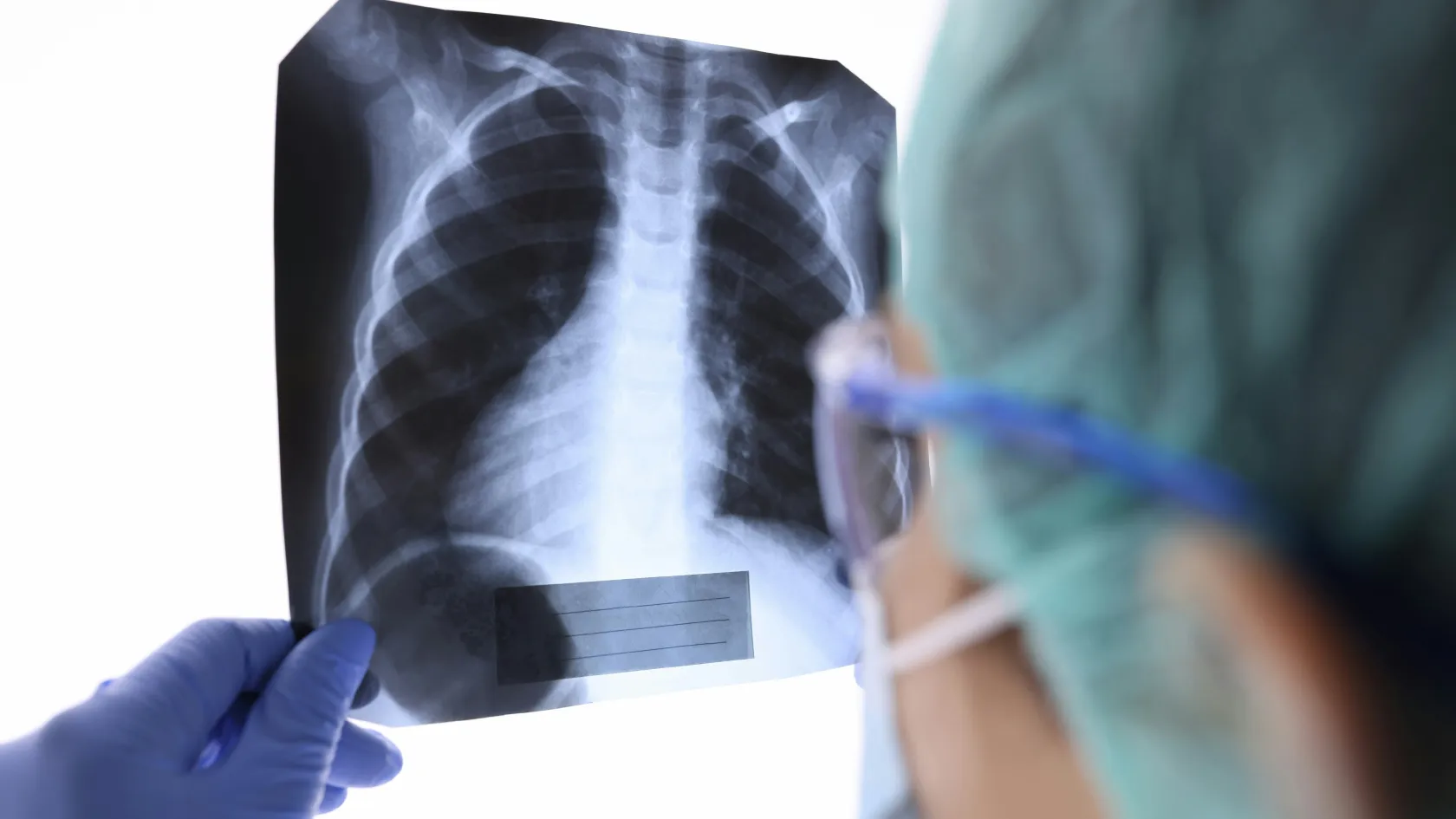
TARE Treatment - Transarterial Radioembolization
Liver tumors feed from the hepatic artery and the healthy liver from the portal vein, so radioactive microspheres released into the artery lodge in the tumor and irradiate it from inside. A mapping visit and a treatment visit one to three weeks apart, a personalized dose that doubled response rates in a randomized trial, and the same survival as sorafenib with half the severe side effects in advanced liver cancer.
About This Department
Millions of radioactive beads, each a third the width of a hair, carried by the blood into a liver tumor. The dose is planned to the gray, and the dose decides the result.
Transarterial radioembolization delivers radiation to liver tumors from inside their own blood supply. A catheter travels from the wrist or groin into the hepatic artery, and glass or resin microspheres loaded with yttrium-90 lodge in the small vessels of the tumor, where they irradiate it from within for about two weeks. In the LEGACY study of 162 patients with a single unresectable liver cancer, 88 percent of tumors responded and 87 percent of patients were alive three years later. In a randomized trial, planning the dose to the tumor instead of the liver lobe doubled the response rate, from 36 to 71 percent.
The treatment has three names. Interventional radiologists say TARE, the trials call it selective internal radiation therapy or SIRT, and patients search for Y-90, so the title of this page, TARE Treatment - Transarterial Radioembolization, carries the two that are searched most. All three mean the same procedure. What follows explains how it works, which liver tumors it treats, what the randomized trials showed and failed to show, and how a patient from abroad fits the two required visits into one trip.
What TARE is, and why it takes two visits
Liver tumors feed almost entirely from the hepatic artery, while the healthy liver draws most of its blood from the portal vein. The whole treatment rests on that difference. Microspheres released into the artery flow preferentially into the tumor, lodge in its smallest vessels, and deliver beta radiation that travels only a few millimeters, so the tumor receives a dose that would be impossible to give from outside the body while the surrounding liver receives far less. Yttrium-90 has a half-life of 64 hours. Nearly all of its energy is spent within two weeks. The beads stay in place for good and do no harm.
The first visit maps, the second treats. Before any microspheres are given, a catheter study of the liver arteries is done and a tracer, technetium-labeled albumin particles of the same size as the beads, is injected to see where they would go. A scan then shows how much would escape to the lungs and whether any would reach the stomach or bowel, and a nuclear medicine physicist calculates the dose from the images. Treatment follows one to three weeks later, on a second catheter visit, with the dose adjusted to what the mapping showed.
Who it is for
Four groups of patients account for nearly all radioembolization, and the aim differs in each.
Liver cancer that cannot be removed, a single tumor
Liver cancer that has grown into the portal vein
Bowel cancer metastases in the liver after first-line chemotherapy
Preparing the liver for surgery
Poor liver function rules it out, since a Child-Pugh class beyond A or a raised bilirubin means the healthy liver cannot absorb the dose it will receive. So does a mapping scan showing that more than a set fraction of the beads would reach the lungs, when disease outside the liver dominates the picture, or when a patient is too unwell to lie on an angiography table for two hours.
What the trials found, and what they did not
In advanced liver cancer, no longer life than tablets, and a much easier life
SARAH and SIRveNIB, two randomized trials against sorafenib
The dose, and the patient, decide
DOSISPHERE-01 and LEGACY
In bowel cancer metastases, more time before the liver progresses, no more time overall
EPOCH, radioembolization added to second-line chemotherapy
The two procedures, step by step
Risks and side effects
Most side effects come from the radiation working. The serious ones come from beads in the wrong place.
This table scrolls sideways on a narrow screen. Swipe or drag to see every column.
| Complication | How common | What is done |
|---|---|---|
| Post-radioembolization syndrome, which is fatigue, ache, nausea and low fever | The majority, for one to two weeks | Tablets, rest, and it passes |
| Radiation damage to the liver, with jaundice and fluid in the abdomen weeks later | A few percent, more with poor liver function or a lobe-wide dose | Prevented by patient selection and dosimetry. Treated with steroids and supportive care |
| Ulcer in the stomach or duodenum from beads that strayed | Uncommon since coiling of side vessels became routine | Acid suppression, endoscopy, and time |
| Radiation inflammation of the lung | Rare, and prevented by the lung fraction limit at mapping | The reason treatment is withheld when the shunt is large |
| Inflammation of the gallbladder | Occasional | Antibiotics, rarely removal |
| Bleeding or bruising at the puncture site | Common and minor | Pressure and rest |
| Contrast allergy or kidney strain from the dye | Rare | Screening beforehand, fluids |
Severe side effects were fewer with radioembolization than with sorafenib in both randomized trials, and more frequent than with chemotherapy alone when it was added to chemotherapy. Read that as a treatment that is easier than tablets in advanced disease and adds its own burden when combined with drugs.
TARE, TACE, ablation and drugs
Radioembolization or chemoembolization
Radioembolization or ablation
Radioembolization or drugs
Days in Istanbul, cost and the trip
Two visits or one long one. The table sets out both.
This table scrolls sideways on a narrow screen. Swipe or drag to see every column.
| Option | What happens | Time in Istanbul |
|---|---|---|
| Two visits, separated | Mapping on a first visit of three to four days, treatment on a second visit of four to five days one to three weeks later | Two trips, total seven to nine days |
| One trip, both procedures | Mapping in the first week, the wait for dosimetry and microsphere delivery, treatment in the second or third week | Twelve to eighteen days |
| Both lobes, staged | Treatment of the second lobe four to eight weeks after the first | A third visit of four to five days |
Each dose of microspheres is ordered for a named patient at a set activity and a set date. The two procedures therefore cannot fit into one week. Cost depends on the microspheres, which are the largest item and are priced per dose, on whether one or two lobes are treated, on the mapping study with its coils and tracer, on the angiography and the night in hospital, and on the imaging before and after. Published packages in Istanbul cover the consultation, the mapping, the dosimetry, the treatment with the microspheres, one night, the follow-up scan, an interpreter and transfers, and leave out the hotel, flights, chemotherapy and the treatment of a complication. Liver function, kidney function and blood thinners change the plan. A figure follows the review of your scans and blood tests, and that review is free. One coordinator handles the case from the first message, in English, Arabic, French, Russian, Serbian, Romanian or Spanish, or through an interpreter, sends the appointment confirmation and an invitation letter naming the hospital and the treating doctor ten days before travel, and books the hotel and the transfers for each visit. The room has a companion bed. Halal, vegetarian and diabetic meals are available, a prayer room is on site, and a female doctor can be requested when you first write. You can fly two days after either procedure.
Results, and after you fly home
The response takes time to show. Doctors take the first MRI or CT at three months, since the treated tumor swells before it shrinks and an earlier scan misleads, and scans then continue every three months for the first year. Liver function gets checked at two, four and eight weeks. Once you are back home the discharge file tells your oncologist how to continue. The coordinator stays reachable on the same WhatsApp number, with clinical questions passed to the treating radiologist.
- Liver blood tests at two, four and eight weeks, sent to your own doctor
- MRI or CT of the liver at three months, then every three months in the first year
- A tumor marker with each scan, alpha-fetoprotein for liver cancer or CEA for bowel cancer
- Chemotherapy or targeted drugs continued at home where the plan includes them
- A local doctor the same day for jaundice, swelling of the abdomen, black stools, vomiting blood, fever above 38.5 degrees after the second week, or breathlessness
TARE Treatment - Transarterial Radioembolization FAQ
Is TARE a cure for liver cancer?
Why do I need two procedures?
Am I radioactive after TARE?
How does TARE compare with TACE?
How long do I stay in Istanbul?
What are the side effects?
References
- Vilgrain V, Pereira H, Assenat E, et al. Efficacy and safety of selective internal radiotherapy with yttrium-90 resin microspheres compared with sorafenib in locally advanced and inoperable hepatocellular carcinoma (SARAH): an open-label randomised controlled phase 3 trial. Lancet Oncol. 2017;18(12):1624-1636.
- Chow PKH, Gandhi M, Tan SB, et al. SIRveNIB: Selective Internal Radiation Therapy Versus Sorafenib in Asia-Pacific Patients With Hepatocellular Carcinoma. J Clin Oncol. 2018;36(19):1913-1921.
- Garin E, Tselikas L, Guiu B, et al. Personalised versus standard dosimetry approach of selective internal radiation therapy in patients with locally advanced hepatocellular carcinoma (DOSISPHERE-01): a randomised, multicentre, open-label phase 2 trial. Lancet Gastroenterol Hepatol. 2021;6(1):17-29.
- Salem R, Johnson GE, Kim E, et al. Yttrium-90 Radioembolization for the Treatment of Solitary, Unresectable HCC: The LEGACY Study. Hepatology. 2021;74(5):2342-2352.
- Mulcahy MF, Mahvash A, Pracht M, et al. Radioembolization With Chemotherapy for Colorectal Liver Metastases: A Randomized, Open-Label, International, Multicenter, Phase III Trial. J Clin Oncol. 2021;39(35):3897-3907.
Editor's note
Written by the Biruni Hospital medical editorial team. Reviewed by Assistant Professor Yunus Emre AKPINAR, Radiology.
Medically reviewed by

Assistant Professor Yunus Emre AKPINAR
Radiology
Related Treatments
View All
Biliary Stenting - Bile Duct Stent Placement
Draining the bile before a pancreatic cancer operation doubles the complication rate, metal stents beat plastic ones by months, and both sides of a blocked liver do no better than one. Each of those findings came from trials, and each overturned what doctors assumed. This guide gives them plainly, along with the routes, the risks and the days to plan.
Bone Marrow Biopsy
Collecting the marrow takes 10 to 30 minutes, while the genetic tests on it can take three weeks, and that wait decides how long a trip to Istanbul should last.
Cryoablation - Tumor Freezing Surgery
Cryoablation destroys a tumor with a ball of ice grown around it through needles the width of a pencil lead, with no incision and one night in hospital. For small kidney tumors it matched surgery in the Mayo Clinic series, and it treats lung metastases and painful bone metastases.
CT-Guided Biopsy - Computed Tomography Guided Biopsy
A CT-guided biopsy uses the scanner to steer a needle into a lung nodule, a deep abdominal mass, a bone lesion or a lymph node and remove cores of tissue for diagnosis and molecular testing, under local anesthetic in about twenty minutes. This page explains when CT guidance is chosen, why a core of tissue matters, what the day involves, the risks of lung biopsy and of other sites with figures from large studies, what the report means, and how patients from abroad arrange it in Istanbul.
Irreversible Electroporation - Nanoknife Surgery
Irreversible electroporation, known by the brand name NanoKnife, destroys a tumor with high-voltage electrical pulses between needle electrodes while sparing the blood vessels, bile ducts and nerves around it. It covers how it works, which pancreatic, liver, prostate and kidney tumors it treats, what the registry and trial data show and what they do not, the procedure, the risks, the follow-up, and how patients from abroad arrange it in Istanbul.