Bile carries bilirubin, the pigment left over from old red cells, out of the liver and into the gut. When the duct is blocked, bilirubin backs up into the blood and the skin and eyes turn yellow, the urine turns the color of tea, the stools turn pale, and bile salts under the skin cause an itch that keeps people awake.
So far, the visible signs. The dangerous ones follow. Stagnant bile becomes infected, and cholangitis, an infection of the bile ducts, brings fever, shaking chills and pain and can send bacteria into the bloodstream within hours. The liver itself stops working properly after weeks of obstruction, clotting fails, the kidneys suffer, and any operation or chemotherapy becomes far riskier. A stent removes the cause of all of it, and the bilirubin falls by half within a week or two of a successful drainage.
Plastic or metal, covered or bare?
The three kinds of stent
A plastic stent is a straight or curved tube a few millimeters across, cheap, easy to remove and prone to blocking with biliary sludge after three to four months. A self-expanding metal stent is a mesh of nickel-titanium wire that opens to a centimeter inside the duct and stays open far longer. A covered metal stent has a membrane over the mesh, which stops tumor growing through it and allows removal, at the cost of a slightly higher chance of sliding out of place and of blocking the cystic duct to the gallbladder. Bare metal stents embed in the wall and cannot be removed, so they are reserved for confirmed cancer.
What the trials show
Two large meta-analyses settled the plastic-or-metal question for cancer that cannot be removed. One pooled 20 randomized trials with 1,713 patients and found metal stents stayed open 4.45 months longer, with fewer late complications, half the rate of sepsis or cholangitis, a tenth of the rate of blockage by sludge and fewer repeat procedures. Overall survival did not differ. The other pooled 19 studies with 1,989 patients and found cholangitis in 8 percent of patients with metal stents against 21 percent with plastic, and treatment failure in 7 against 13 percent.
Hilar tumors got their own answer.
That second review looked at them, where the duct splits into left and right, and found that stenting both sides gave no fewer blockages than stenting one. The European guideline that followed recommends a metal stent for palliative drainage of a blocked lower duct, a bare metal stent for hilar tumors, and, when the cause of the blockage has not been confirmed, no bare metal stent at all, since a permanent stent placed for what turns out to be a benign narrowing is a mistake that cannot be undone.
How do I prepare, and what does the day involve?
Fasting is the only preparation you do yourself, and the team does the rest.
This table scrolls sideways on a narrow screen. Swipe or drag to see every column.
The day, by route
| |
Endoscopic stent |
Percutaneous stent |
| Fasting |
Six hours for food, two for clear fluids |
The same |
| Anesthetic |
Deep sedation given by an anesthesiologist, or general anesthetic for a long procedure |
Sedation and local anesthetic, general anesthetic for the anxious or for a complex procedure |
| Time |
30 to 60 minutes |
45 to 90 minutes |
| Antibiotics |
Given when drainage could be incomplete, above all for hilar tumors |
Given routinely |
| Afterward |
Two to four hours of observation, home the same day, or one night if the bilirubin is very high or pancreatitis is a concern |
One to two nights, with an external drain that is capped and removed within days |
| First blood test |
Bilirubin and liver enzymes the next day, then weekly until they settle |
The same |
Tell the team before the procedure
Blood thinners and when you last took them, since a cut at the duct opening bleeds. Contrast allergy. A pacemaker. Previous stomach or bile duct surgery, which changes the anatomy the endoscope must follow. Pancreatitis in the past. Pregnancy. Any earlier ERCP and what happened at it.
The procedure
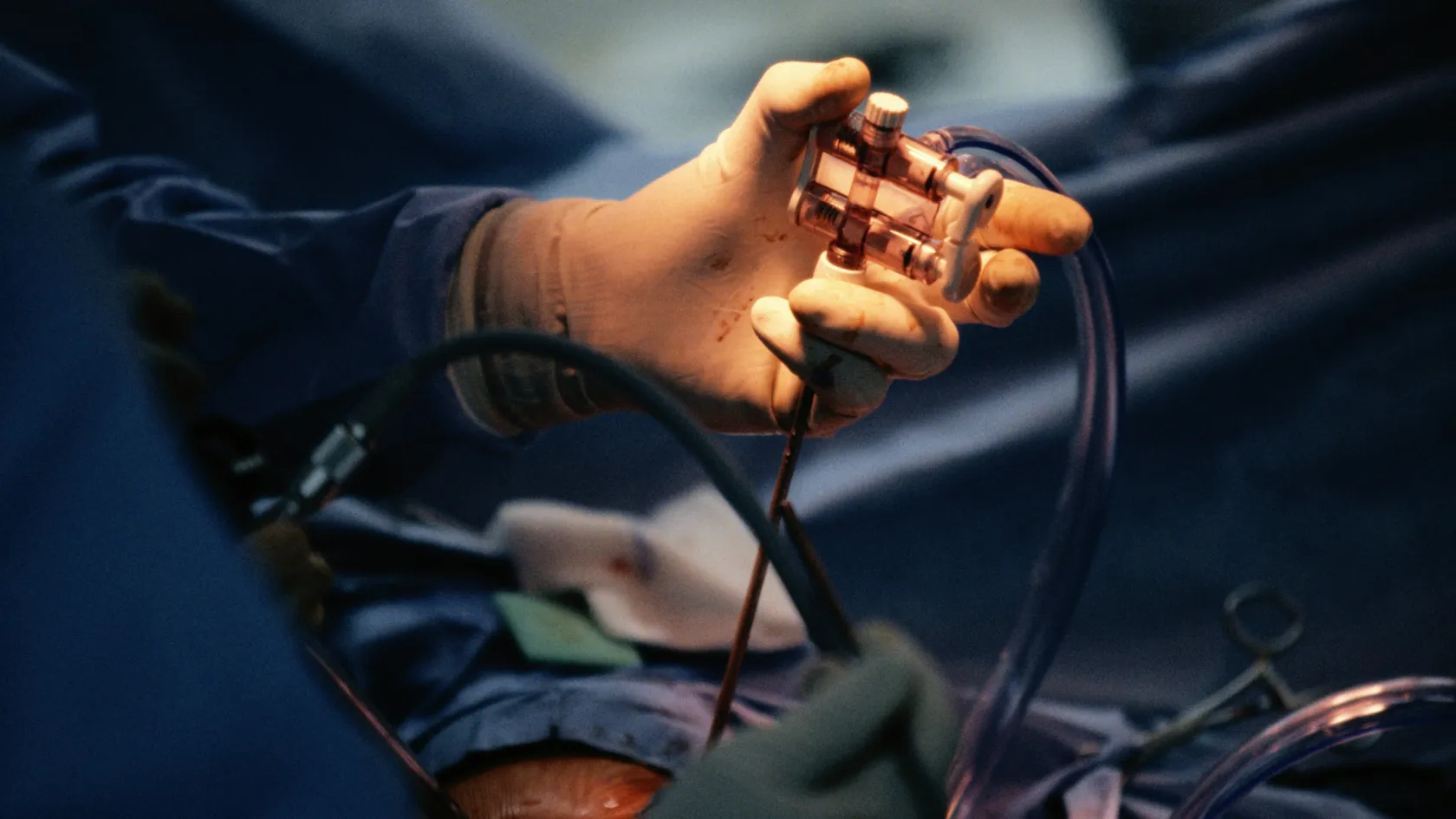
For an endoscopic stent you lie on your front or your left side, asleep under sedation. The endoscope passes to the duodenum, and the physician finds the small opening where the bile duct and pancreatic duct empty. A fine catheter is passed into the bile duct and contrast is injected under X-ray to show the blockage, its length and its position. A guidewire is advanced through it, a cut is made at the opening if the stent is large, a balloon stretches the blockage where it is tight, and the stent is pushed over the wire until it bridges the narrowing with a margin at each end. Bile flows at once. The physician sees it. The X-ray images show the stent in position, and you wake in recovery an hour later with a sore throat and a little bloating. Percutaneous placement follows the same logic from the other direction, through a needle in the side of the chest, and ends with a small drain through the skin that is capped once the stent is seen to work and removed a few days later.
Sedation and the anesthesiologist
ERCP is done under deep sedation or general anesthetic with an anesthesiologist present, because the procedure is longer than a diagnostic endoscopy, the patient lies face down, and any movement matters. Turkish hospitals have an anesthesiologist for both routes. Sleep apnea, heart or lung disease and a full stomach change the choice, and each should be declared.
The risks
- Pancreatitis after ERCP. Inflammation of the pancreas from handling its duct opening, in a few percent of patients, with pain and a night or more in hospital. A suppository given at the end of the procedure and a temporary pancreatic stent in high-risk patients lower the rate.
- Cholangitis. Infection when drainage is incomplete, above all in hilar tumors where a duct that received contrast was not drained. Antibiotics and a further drainage procedure.
- Bleeding. From the cut at the duct opening, more with blood thinners, and controlled through the endoscope in nearly every case.
- Perforation. Rare, from the wire or the cut, treated with antibiotics and sometimes surgery.
- Stent problems later. Blockage by sludge or tumor growth, and migration of a covered stent. Both mean a repeat procedure to exchange or clear it, and return of jaundice or fever is the sign.
- Percutaneous route. Bleeding into the liver or the bile, bile leak into the abdomen, and pain at the entry site through the chest wall.
Cholangitis occurred in 8 percent of patients with metal stents and 21 percent with plastic stents, and metal stents needed fewer reinterventions.
Meta-analysis of 19 studies, Gastrointestinal Endoscopy, 2015
- Fever or shaking chills at any time after the stent, which means infection or blockage and needs a hospital the same day.
- Return of yellow eyes, dark urine or pale stools weeks or months later, which means the stent has blocked or moved.
- Severe abdominal pain in the first day, which points to pancreatitis or perforation.
- Black stools or vomiting blood.
- Breathlessness or chest pain after a percutaneous procedure.
ESGE recommends against routine preoperative biliary drainage in patients with malignant extrahepatic biliary obstruction.
European Society of Gastrointestinal Endoscopy guideline, Endoscopy, 2018
How many days do I need in Istanbul?
Three nights for an endoscopic stent. The consultation, the blood tests and any imaging fall on the first day, the procedure on the second, and a check of the bilirubin and a review on the third, after which you can fly. A percutaneous stent needs five to six nights, because the external drain is capped and removed over the following days and a chest X-ray is taken before the flight. Pancreatitis or cholangitis, when they occur, add a few nights.
Many patients arrive with a diagnosis still open.
In many patients a blocked duct is the first sign of a cancer nobody has named, and the stent is placed during the same visit in which the tumor is staged and sampled, by CT, by endoscopic ultrasound with a needle, or by brushings taken from the duct itself during the ERCP. That visit takes a week to ten days, and it ends with a tumor board and a plan, which for some patients means an operation here, for some chemotherapy at home around a stent that will last, and for a few the news that the narrowing was benign and the stents will come out in a year.
What decides the cost?
The stent sets the price.
It matters more than the procedure does. A metal stent costs several times a plastic one, and a covered metal stent costs more again, so a quote should name the stent. An anesthesiologist for deep sedation, a sphincterotomy, a balloon to stretch the narrowing, a temporary pancreatic stent, brushings for cytology and any biopsy through the scope are each charged. The percutaneous route adds the interventional radiology suite, the drain and one to two nights, and imaging before the procedure and the blood tests afterward sit on their own lines. A later exchange costs what the first did. The patient's own condition moves the total, since cholangitis means antibiotics and admission, and a very high bilirubin means a night of observation.
Packages published by hospitals in Istanbul for ERCP quote a base procedure and add sphincterotomy and stent placement as separate items, with the stent itself sometimes doubling the figure, and they include one to two nights and transfers. Ask which stent the figure includes.
Your own figure follows the free review of your scans and blood tests.
Language, companions and going home
One coordinator from the international patients team is assigned from your first message and stays with you until you fly. The team works in English, Arabic, French, Russian, Serbian, Romanian and Spanish and arranges interpreting in other languages on request. An interpreter attends the consultation, consent and the results conversation. An invitation letter naming the hospital and the treating physician goes out ten days before travel, faster for a jaundiced patient on request. The international patients office arranges the airport transfer, the hotel for you and a companion, and the rides to the hospital, and a companion is needed on the day of the procedure. Rooms for patients admitted overnight have a companion bed. Halal, vegetarian and diabetic meals come from the hospital kitchen, and a low-fat diet is prepared for the days after drainage. A prayer room is on site, and a request for a female doctor is passed to the department and met wherever the rota allows. Gastroenterology, interventional radiology, surgery and oncology share one site, so the stent, the biopsy, the tumor board and the operation, where there is one, happen without a change of hospital.
Three facts travel with you.
Back home, the coordinator stays reachable on the same WhatsApp number. Your discharge letter names the stent, its size and the date it was placed, and any doctor who treats you later will need them, because a plastic stent must be exchanged within three to four months and a metal one must be recognized on any future scan or operation. Fever or a return of jaundice means a local hospital the same day, with that letter in your hand.