Collecting the marrow takes 10 to 30 minutes, while the genetic tests on it can take three weeks, and that wait decides how long a trip to Istanbul should last.
About This Department
Interventional Radiology at Biruni Hospital
The needle takes minutes. The answers need a plan.
Slides from the marrow can be read within days, while the genetic tests that decide treatment can take up to three weeks, so the length of your stay should follow the laboratory and never the wound.
10 to 30 min
Time on the couch
Same day
Back at your hotel
26 in 54,890
Adverse events in a UK audit
Free
Remote review before you book
Reviewing your reports costs nothing and commits you to nothing. Send your latest blood count and your doctor's referral, and a coordinator replies in your own language with what the interventional radiology team suggests.
When a hematologist asks for a bone marrow biopsy, something in your blood count needs an explanation that a blood test alone cannot give. The good news sits in the numbers. British audits of close to 55,000 procedures recorded 26 adverse events, and the sample itself takes minutes to collect under local anesthetic. This guide explains what the test can find, how much it hurts, when each result comes back, and how to plan a trip to Istanbul around the laboratory's timetable.
Why the marrow gets sampled, and what it can reveal
A request for this test does not mean you have cancer.
Blood tests show what leaves the marrow, but only the marrow itself shows why the numbers look wrong. Hematologists turn to it when a count stays unexplained after the simpler tests have been done, for instance anemia that does not respond to iron or vitamin B12, a platelet count that keeps falling, white cells that are far too many or too few, or immature cells seen on a blood film. One sample can confirm or rule out acute and chronic leukemia, myelodysplastic syndrome, multiple myeloma and the myeloproliferative disorders. It also shows whether a lymphoma, or a solid tumor such as breast or prostate cancer, has reached the marrow, and that single finding can move a cancer to a different stage with a different treatment plan. Doctors investigating a fever with no source, certain storage diseases, or an infection in someone whose immune system is weak will look here too. Plenty of samples end with a reassuring answer. A vitamin deficiency, the effect of a medicine, or a marrow working hard against an infection all show up this way.
For someone already on treatment, a repeat sample measures response. After chemotherapy for acute leukemia, the marrow is where the team looks for residual disease, at levels far below anything a microscope can see.
Aspiration and biopsy, two samples through one small cut
Bone marrow examination nearly always means two samples taken in the same sitting, from the same spot at the back of the hip bone. Liquid marrow drawn into a syringe makes up the aspirate. A thin cylinder of bone with marrow inside it, a few millimeters across, makes up the core, also called the trephine biopsy. International guidelines from the International Council for Standardization in Hematology describe the two as complementary, and they ask for a final report that brings both together with the blood count and with specialist tests such as flow cytometry, chromosome analysis and molecular genetics, read in the context of the whole clinical picture.
On a phone, swipe the table sideways to see every column.
Aspirate and core biopsy side by side
Aspirate
Core biopsy (trephine)
What is taken
A few milliliters of liquid marrow, drawn into a syringe
A solid cylinder of bone and marrow, a few millimeters across
What the lab does with it
Spreads cells on slides and sends portions for flow cytometry, chromosome and molecular tests
Softens the bone, cuts thin sections and stains them, often with immunohistochemistry
What it answers best
Which abnormal cells are present, in what proportion, and with which genetic changes
How full the marrow is, whether it is scarred, and patchy disease such as lymphoma or spread from a tumor
When results arrive
Slides within days, genetic tests within one to three weeks
Several days longer than the slides, because bone must be softened before it can be cut
Sometimes the syringe draws nothing back. Doctors call this a dry tap, and it happens when the marrow is packed solid with cells or scarred by fibrosis, which makes it a finding in its own right, with the core then carrying the diagnosis.
Inside the procedure room, step by step
Adults have the procedure as outpatients and walk out the same day.
A nurse checks your latest blood count and clotting results, confirms which blood thinners you take, and helps you lie on your side with your knees drawn up, or flat on your front.
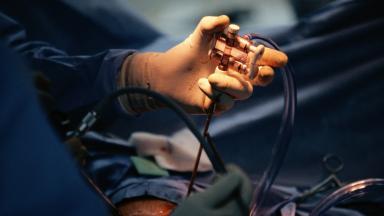
The interventional radiologist feels for the ridge at the back of the pelvis, called the posterior iliac crest, cleans the skin, and injects local anesthetic first into the skin and then onto the surface of the bone, which holds most of the nerve endings.
A hollow needle passes through the outer shell of bone. The syringe pull that draws up liquid marrow brings a sharp, deep sensation for a few seconds.
A second, slightly wider needle goes a little deeper and is twisted to free the core, which feels like pressure and a dull ache.
Firm pressure on the site for several minutes, a dressing, then a rest lying on your back while the team watches for bleeding.
From the first injection to the dressing, the needle work takes 10 to 30 minutes.
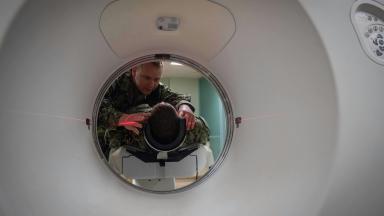
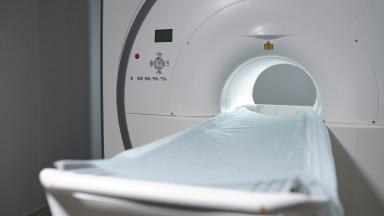
Interventional radiologists can also place the needle under CT or ultrasound guidance. Imaging helps when body weight, previous surgery or radiotherapy to the pelvis makes the ridge of the hip hard to find by touch, and it lets the radiologist sample a specific spot that a scan has already flagged.
Plan for an hour in the unit, or up to two if you had sedation, since a sedated patient stays under observation until fully awake and then needs someone to go back to the hotel with them. In some adults the breastbone serves for an aspirate alone, since it cannot give a core, and in young children the shin bone is sometimes chosen, with the procedure done under deep sedation or a short general anesthetic.
Does a bone marrow biopsy hurt?
A prospective study of 448 adults in Paris, published in PLOS ONE in 2019, found a median pain score of 3.5 out of 10 for marrow aspiration overall, and 2.5 for samples taken from the hip, the site used for a biopsy.
That figure describes a brief, real pain that most people rate as moderate, and the same study found the strongest predictor of a high score to be anxiety beforehand, ahead of age, body weight or the difficulty of the bone. Other research points the same way. At a university hospital in Cape Town, every patient who had the procedure under local anesthetic alone reported pain, against 29.1 percent of those who also received intravenous midazolam, a short-acting sedative, and patients reported less pain when an experienced operator held the needle and when they had been through a biopsy before. A 2024 meta-analysis of 18 randomized trials with 1,017 patients found that distraction, such as music or a virtual reality headset, lowered pain scores significantly, as did a powered biopsy drill in place of a hand-turned needle. Hypnosis did not reach significance. Taken together, the evidence says the pain can be managed, and the tools that manage it are simple.
If you want sedation, say so in your first message.
It changes the shape of the day. A sedated patient cannot leave alone. You should not sign documents or make decisions for the rest of that day, and the fasting instructions need confirming in advance. Headphones and your own music cost nothing and have trial evidence behind them, so bring them either way.
Soreness afterward feels like a deep bruise at the top of the buttock. It fades over several days. Ordinary pain relief covers it, and paracetamol suits most people better than ibuprofen or aspirin here, because both of those thin the blood, which matters even more if your platelet count is low.
Risks, rates, and who needs extra preparation
Bleeding tops the list, and it is rare. A survey of British hematologists covering an estimated 54,890 procedures between 1995 and 2001 recorded 26 adverse events in total, fourteen of them bleeding, with six of those patients needing a transfusion and one death attributed to the procedure. The factors most often present when bleeding happened were a myeloproliferative disorder, aspirin, or both, followed by warfarin, a clotting disorder called disseminated intravascular coagulation, and obesity.
Knowing the risk factors is what makes them manageable. A low platelet count can be corrected with a platelet transfusion shortly before the procedure, pressure on the site goes on for longer when bleeding risk runs high, and the team times each blood thinner around the day. Infection of the puncture site is rarer still and shows itself days later as spreading redness, warmth or fever.
Tell the team before you travel
You take aspirin, clopidogrel or another antiplatelet medicine.
You take warfarin, an anticoagulant such as apixaban or rivaroxaban, or heparin injections.
Your platelet count has been low, or you bruise and bleed easily.
You have reacted before to lidocaine, adhesive tape or skin cleaning solutions.
Never stop a blood thinner on your own before the trip. Your doctors set the plan for each medicine together. For some, the safest plan keeps it going.
Results arrive in stages
Patient guidance from large cancer centers puts the first slide results at two to three days after the procedure, the fuller analysis at seven to ten days, and the complete picture, including chromosome and gene tests, at one to three weeks.
Within days
The aspirate slides, read under the microscope. Enough to tell whether the marrow looks normal, reactive, or taken over by abnormal cells.
Days, not weeks
Flow cytometry, which sorts cells by the proteins on their surface and names the type of leukemia or lymphoma.
One to two weeks
The core biopsy, once the bone has been softened, sectioned and stained.
Up to three weeks
Chromosome analysis, FISH and gene panels. These set the risk group and often the choice of drug.
Which tests run on your sample depends on the question your blood count raised, and the hematologist chooses them before the needle goes in. A myeloma workup and an acute leukemia workup send the same marrow down different paths. For a traveler, the first stage matters most. It tells you whether the news is reassuring or serious. The last stage fills in the detail of treatment. The written report integrates every stage into one document, as the international guidance recommends, and you leave with a copy.
How long to stay in Istanbul, and when you can fly home
The puncture site does not keep you in the country. Patient guidance from large centers returns people to normal activity the day after, with a dry dressing for 24 hours and no swimming or bath until the skin has closed, which takes around five days.
The laboratory decides the rest. A realistic plan runs like this. You arrive and rest. The next day brings a consultation with the interventional radiologist, fresh blood tests including a clotting screen, and any imaging your case needs. The biopsy follows, either that afternoon or the next morning. Two to four days later the first results are ready to discuss face to face, and the doctor tells you which later results are still pending and what they could change. Five to seven nights in Istanbul covers that sequence for most adults with an unexplained blood count. Staying for the full genetics makes sense only when treatment would start here anyway, and your coordinator can plan both versions of the trip from the start.
Flying depends on your blood count. A very low platelet count, severe anemia, or a white cell count low enough to raise the risk of infection means your doctor clears the flight individually, and that clearance forms part of the conversation before you leave, so you fly with a date in writing and with enough of your regular medicines to cover any delay.
If the biopsy shows leukemia, lymphoma or myeloma
Acute leukemia changes a travel plan overnight.
Induction chemotherapy for acute leukemia starts within days of diagnosis and runs as an inpatient stay of several weeks, because the blood count falls to its lowest point during treatment, while lymphoma and myeloma allow more time and the decision on where to be treated can wait for the full report. Chemotherapy and radiotherapy are both delivered at Biruni Hospital, on the same site where the biopsy was done, so a patient who chooses to start here continues with the same team, without a referral and without moving records. Patient rooms have a companion bed, which means one family member can stay overnight for the whole admission. Going home for treatment remains fully open. In that case you leave with the complete report, and a written handover goes to the hematologist or oncologist who will treat you.
Bring a companion if a serious result is possible, even when the biopsy itself would not need one.
What decides the cost of a bone marrow biopsy
Two patients booked for the same named procedure can receive very different quotes, and the needle accounts for the smallest part of the difference. The laboratory panel drives most of it. An aspirate read on slides alone costs far less than one sent for flow cytometry, a full karyotype, FISH probes and a gene sequencing panel, and a suspected acute leukemia calls for most of those. Adding the core biopsy adds histology and immunohistochemistry. Sedation adds an anesthesia team and a longer recovery. Around the procedure sit the consultation, the blood tests and any staging imaging, such as a PET-CT scan for lymphoma. Your own health moves the figure too. A low platelet count may call for a transfusion first, a blood thinner may need a bridging plan, and a dry tap or an inadequate core sometimes means a second sample. A child's biopsy adds a pediatric anesthesia team, since children are sedated deeply or put to sleep for it.
No published figure can account for all of that, and this page carries none for that reason. When you compare quotes, check whether the figure covers the core biopsy or only the aspirate, which tests run on the sample and whether each is named, whether flow cytometry and the genetic tests sit inside it, whether sedation is included, and whether the consultation and pre-procedure blood tests are part of it. The free review of your reports is the step that turns those unknowns into a figure for your own case.
The practical side of the trip
Language matters most in the procedure room.
The doctor asks you to keep still and warns you before the pressure comes, and those instructions reach you in English, Arabic, French, Russian, Serbian, Romanian or Spanish through the international patients team, with interpreting in other languages arranged on request. A coordinator assigned from your first message stays with you through the consultation, the biopsy and the results appointment, and remains on the same WhatsApp number after you fly home.
Visa applications move faster with the right document. Around ten days before travel, the international patients office sends an appointment confirmation and an invitation letter naming the hospital and the treating doctor, the paper most consulates ask for with a medical visa. The same office arranges your hotel, the airport transfer and the rides between hotel and hospital, so the sedated patient never has to find a taxi.
A female interventional radiologist can be requested. Mention it in your first message and the department accommodates it wherever the rota allows. Halal, vegetarian and diabetic meals come from the hospital kitchen, and a prayer room is on site.
Back home afterward
By the time you land, the site should be a sore bruise with a small scab. Keep checking it daily until it heals, and see a local doctor the same day for any of these.
Bright red bleeding that has not stopped after 30 minutes of firm, steady pressure.
A fever of 38.0°C (100.4°F) or higher, or shivering chills.
Redness, warmth or swelling spreading out from the site, red streaks, or yellow or green discharge.
Pain growing worse after the third day.
Then message your coordinator.
Results that arrive after you leave come to you in writing, and your coordinator stays reachable on the same WhatsApp number for the questions they raise, so share the final report with your own doctor, since the follow-up blood counts will happen close to home.
What to send for a free review
Five documents make the review useful. Your most recent full blood count with the differential and any blood film report, your doctor's letter explaining why the biopsy was requested, reports of any previous marrow examination, imaging reports such as CT or PET-CT, and a list of every medicine you take, with blood thinners marked. From those, the interventional radiology team can tell you whether a biopsy is the right next test, which laboratory panel your case needs, and whether an earlier sample could be reviewed instead of taking a new one, before you spend anything on travel.
Bone marrow biopsy FAQ
Are you put to sleep for a bone marrow biopsy?
Adults receive local anesthetic as the standard, and intravenous sedation is widely offered on top of it. Sedation makes you drowsy and relaxed without full general anesthesia, and it cut the share of patients reporting pain from all of them to 29.1 percent in one hospital study. Children receive deep sedation or a full general anesthetic.
How many days should I plan in Istanbul?
Five to seven nights. That covers the consultation, the biopsy and a face-to-face talk about the first results, while genetic results that take up to three weeks follow you home in writing.
Can I fly the day after the biopsy?
Nothing about the puncture site prevents it.
Your blood count might, if platelets, hemoglobin or white cells run very low, and your doctor clears the flight before you leave.
Can a family member come with me?
Yes, and one should if you plan to have sedation. The international patients office arranges the hotel for both of you, and if the result leads to an admission, the patient room has a companion bed for the whole stay.
Will anyone speak my language during the procedure?
English, Arabic, French, Russian, Serbian, Romanian and Spanish are all covered by the international patients team, with interpreters arranged for other languages, so the instructions at the moment of the needle reach you in words you know.
What happens if something goes wrong after I get home?
Bleeding that will not stop under pressure, fever, or spreading redness needs a local doctor the same day, and after that a message to the coordinator on the WhatsApp number you already have lets the team that did your biopsy know what happened.
Scientific references
1. Bain BJ. Bone marrow biopsy morbidity and mortality. British Journal of Haematology. 2003;121(6):949-951.
2. Lee SH, Erber WN, Porwit A, Tomonaga M, Peterson LC. ICSH guidelines for the standardization of bone marrow specimens and reports. International Journal of Laboratory Hematology. 2008;30(5):349-364.
3. Gendron N, Zia Chahabi S, Poenou G, et al. Pain assessment and factors influencing pain during bone marrow aspiration: A prospective study. PLoS One. 2019;14(8):e0221534.
4. Alzanad F, Feyaza M, Chapanduka ZC. A study of patient-reported pain during bone marrow aspiration and biopsy using local anesthesia alone compared with local anesthesia with intravenous midazolam coadministration at a tertiary academic hospital in South Africa. Health Science Reports. 2022;5(6):e902.
5. Li C, Zhang X, Zhuang X, et al. The effectiveness of non-pharmacological interventions on reducing pain in patients undergoing bone marrow aspiration and biopsy: A systematic review and meta-analysis of randomized controlled trials. Journal of Clinical Nursing. 2024;33(8):2829-2848.
Editor's note
Written by the Biruni Hospital medical editorial team. Reviewed by Prof. Dr. Birnur YILMAZ, Radiology.