
Surgical ICU (Surgical Intensive Care Unit)
Patients sent to critical care after surgery stayed a median of 1.2 days in a study of 46,539 Europeans. Here is what that night involves, which tubes you wake up with, and what to ask a hospital abroad first.
About This Department
A night in intensive care after major surgery is part of the plan. The typical stay lasts just over one day.
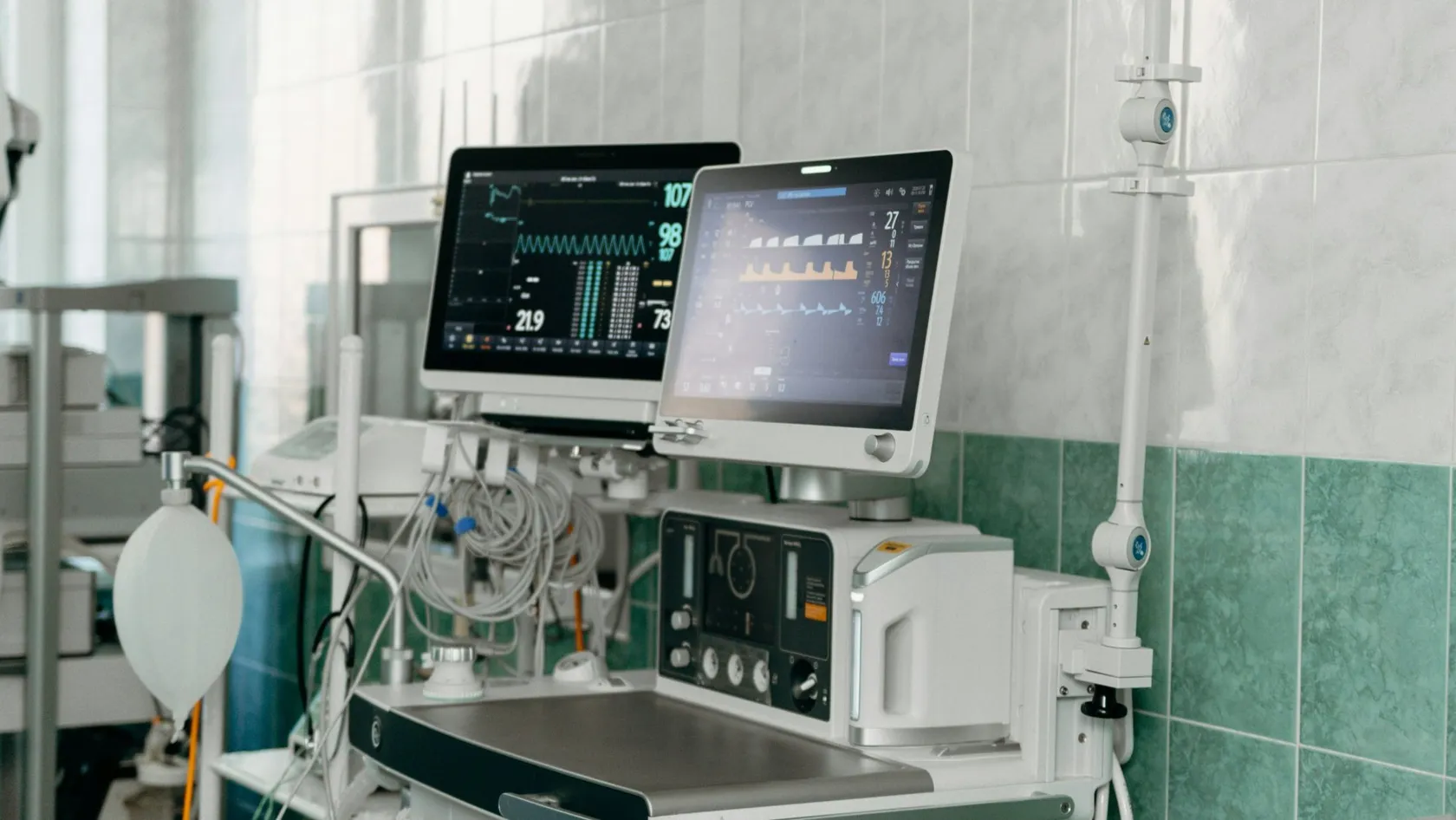
A surgical intensive care unit looks after adults in the first hours and days after a major operation or a serious injury, when bleeding, breathing and blood pressure need watching minute by minute. In a study of 46,539 adults having surgery in 498 European hospitals, those admitted to critical care afterward stayed a median of 1.2 days (Pearse and colleagues, Lancet, 2012). This page explains who goes to the Surgical ICU at Biruni Hospital in Istanbul, what happens there hour by hour, and what to ask before you travel for an operation that needs it.
Why would I go to intensive care after an operation?
Two very different routes lead to a bed in the surgical ICU.
Planned admission is common. The International Surgical Outcomes Study followed 44,814 adults having elective surgery in 474 hospitals across 27 countries, and 9.7 percent of them went to a critical care unit as routine straight after the operation, while 99.5 percent of all patients in the study left hospital alive (International Surgical Outcomes Study group, 2016).
When intensive care is not needed
Plenty of major operations go well without it. A review in Current Opinion in Critical Care found no clear link between routine ICU admission and better results after many types of elective surgery. Its authors pointed to high dependency units and enhanced recovery wards as sound alternatives for lower-risk patients and kept the ICU for very high-risk patients and for complex or emergency surgery (Ghaffar and colleagues, 2017).
Not needing the unit is good news.
Which operations end with a night in the unit?
Large hospitals send the same groups of operations to their surgical ICUs. Open surgery on the aorta and other major vessels, and removal of part of a lung or of the esophagus. Liver and pancreas resections, including the Whipple operation. Organ transplants. Long cancer operations in the abdomen or pelvis, brain and complex spine surgery, reconstructions that depend on a delicate blood supply to a transplanted flap of tissue, and joint or fracture surgery in someone whose heart or lungs are fragile. Trauma adds a further group, namely people with injuries to the chest, abdomen or pelvis, several broken bones or internal bleeding, who reach the unit from the emergency department or the operating room. The patient counts as much as the procedure, so advanced age, heart failure, severe lung disease, kidney disease, sleep apnea treated with a mask at night and a body weight at either extreme each push the decision toward a monitored bed.
Emergency surgery raises the odds for everyone.
The first 24 hours, in order
Handover at the bedside
Waking up
Pain control and deep breaths
Out of bed
Morning round and the move
Drinking, eating and moving this early comes from enhanced recovery programs, known as ERAS, and a review in JAMA Surgery reported that these programs shorten hospital stay by 30 to 50 percent, with similar reductions in complications (Ljungqvist and colleagues, 2017).
What does the unit do that a ward cannot?
A surgical ICU catches trouble early. In comparable units one nurse looks after one or two patients, blood pressure is read with every heartbeat, urine output is measured by the hour, and blood tests come back in minutes from an analyzer inside the unit.
Rescue, and the evidence behind it
Surgeons call what happens next rescue, and strong evidence shows that it decides who survives. Researchers at the University of Michigan studied 84,730 patients who had general and vascular surgery in American hospitals and ranked those hospitals by their death rates. Hospitals with the lowest and the highest mortality had almost the same rate of complications, 24.6 percent against 26.9 percent. What happened afterward separated them. Among patients who developed a major complication, 12.5 percent died in the best hospitals and 21.4 percent in the worst (Ghaferi and colleagues, New England Journal of Medicine, 2009). The European Surgical Outcomes Study added a finding that points the same way, because 73 percent of the patients who died after surgery in that study never reached critical care at any stage. Complications happen in good hospitals and in poor ones. Spotting them within the hour, with a team and a bed ready, belongs to the part a hospital controls.
Ask any hospital you are considering who covers the unit at night.
What can go wrong, and what is done about it
Numbers from the International Surgical Outcomes Study set the baseline, because 16.8 percent of its 44,814 patients developed one or more complications after elective surgery and 2.8 percent of those patients died. The other 97.2 percent left hospital alive.
What will I wake up attached to?
Knowing what to expect takes much of the fear out of it. Everything in the table below is temporary, and each removal is a small milestone that the team works toward from the first morning.
This table scrolls sideways on a narrow screen. Swipe or drag to see every column.
| Item | What it does | When it comes out |
|---|---|---|
| Breathing tube | Connects you to the ventilator while the anesthetic wears off | Within hours after a planned admission, once you are awake and breathing strongly |
| Arterial line in the wrist | Reads blood pressure continuously and gives blood samples without a needle | Before you leave the unit |
| Central line in the neck | Delivers drugs that cannot go into a small vein | When those drugs stop |
| Urinary catheter | Measures urine output by the hour | In the first day or two |
| Surgical drains | Carry blood and fluid away from the operated area | When the volume falls, on your surgeon's decision |
| Epidural or pain pump | Controls pain so that you can breathe deeply and move | After two to three days, replaced by tablets |
| Tube through the nose into the stomach | Keeps the stomach empty after some abdominal operations | When the bowel starts working again |
You cannot speak while the breathing tube is in. Nurses use yes and no questions, a letter board or a pen and paper. Few people remember much of this stage afterward.
Pain, sleep and confusion
Pain relief
Pain relief counts as treatment, because a patient who cannot take a deep breath or cough goes on to develop a chest infection, and units combine methods so that no single drug has to be given in a high dose. An epidural or a nerve block numbs the operated area, a pump lets you give yourself a small measured dose at the press of a button, and regular paracetamol and anti-inflammatory drugs run underneath. Speak up before the pain builds.
Sleep
Sleep is poor in any ICU. Earplugs and an eye mask help.
Delirium
Confusion after surgery has a name, delirium. It affects older patients most, does not mean dementia, and shows as muddled speech, seeing things that are absent or pulling at lines, mostly at night. Glasses, hearing aids, daylight, a familiar voice and the early removal of tubes all shorten it. Families notice first. Tell the nurse when your relative is not behaving like themselves.
Can my family be with me, and will staff speak my language?
Visiting and staying overnight
Visits inside the unit are short, with one or two people at the bedside and hand cleaning at the door, and once you move to a ward room that room has a companion bed, so one person stays with you overnight for the remainder of the admission.
Language, food and faith
Biruni Hospital assigns a coordinator from your first message, and the same person stays with you through discharge. The international patients team works in English, Arabic, French, Russian, Serbian, Romanian and Spanish and arranges interpreters for other languages on request, which matters most for the consent conversation before surgery and the surgeon's update to your family afterward. Halal, vegetarian and diabetic meals come from the hospital kitchen once you are eating again, a prayer room is on site, and a request for a female surgeon or physician goes to the department and is met wherever the rota allows. Hotel nights on either side of the admission, airport transfers, transport between hotel and hospital, and the invitation letter that consulates request with a medical visa application all come from the same office. Mention dietary rules, mobility needs and who is traveling with you in that first message, since arranging them before admission is far easier than from a hospital bed.
Traveling for an operation that needs intensive care
Four questions belong in your first message to any hospital abroad. Will a surgical ICU bed be reserved for my operation. Who covers the unit overnight, and is that doctor a specialist in intensive care medicine who looks after surgical patients every day. What happens to the plan and to the quote after three nights there. How long before I can fly.
Send the letter or report recommending the operation, recent imaging, your full drug list with doses, and any heart or lung tests from the past year, such as an echocardiogram, a stress test or breathing tests. Anesthesiologists read those to judge whether you need the unit at all. This review is free and carries no obligation. Bring the originals when you travel.
How the ICU night appears in a quote
Packages published for major surgery in this market include a set number of intensive care nights, one or two for the majority of operations, along with the ward nights, the fees of the surgeon and the anesthesiologist, routine tests and transfers. Extra ICU nights, blood products, a return to the operating room, dialysis and the treatment of a complication sit outside the package in nearly all published terms. Three things move the total, namely the length and type of the operation, how many nights of monitoring your heart, lungs and kidneys call for, and whether an implant, a graft or a stapling device is used.
Get the daily rate for an unplanned extra night in writing before you travel.
When you can fly home
Your operation sets the date. A routine night in the ICU adds nothing to it, and the surgeon gives clearance in writing at the final check before discharge. After chest surgery any air left around the lung has to clear first, because it expands at altitude, and after every major operation the risk of a leg clot on a long flight is managed with walking, fluids, compression stockings and, for some patients, an injection.
If the operation changes the plan
A pathology report after a cancer operation sometimes calls for chemotherapy or radiotherapy. Both are delivered at Biruni Hospital on the same site as surgery, so treatment continues with the same team and without a referral or a transfer of records. Going home for it stays open as well, with a written handover to your own oncologist.
Once you are back home
Your coordinator stays reachable on the same WhatsApp number once you are back home, and questions about the wound, drain sites and drugs reach the surgical team that way. Give the discharge summary and the operation note to your own doctor in the first week.
Go to a local emergency department the same day for a fever, a wound that opens or leaks, new breathlessness or chest pain, a swollen painful calf, or vomiting that will not stop. A message abroad comes second.
Surgical ICU FAQ
Is it normal to go to the ICU after surgery?
How long do patients stay in a surgical ICU?
What is the difference between a surgical ICU and a medical ICU?
Will I be awake in the surgical intensive care unit?
Can someone stay with me after surgery at Biruni Hospital?
How soon can I fly home after an operation that needed intensive care?
References
- Pearse RM, Moreno RP, Bauer P, et al. Mortality after surgery in Europe: a 7 day cohort study. Lancet. 2012;380(9847):1059-1065.
- International Surgical Outcomes Study group. Global patient outcomes after elective surgery: prospective cohort study in 27 low-, middle- and high-income countries. Br J Anaesth. 2016;117(5):601-609.
- Ghaferi AA, Birkmeyer JD, Dimick JB. Variation in hospital mortality associated with inpatient surgery. N Engl J Med. 2009;361(14):1368-1375.
- Ghaffar S, Pearse RM, Gillies MA. ICU admission after surgery: who benefits? Curr Opin Crit Care. 2017;23(5):424-429.
- Ljungqvist O, Scott M, Fearon KC. Enhanced Recovery After Surgery: A Review. JAMA Surg. 2017;152(3):292-298.
Editor's note
Written by the Biruni Hospital medical editorial team. Reviewed by Assistant Professor İsmail YILDIZ, Anesthesia and Reanimation.
Medically reviewed by
Assistant Professor İsmail YILDIZ
Anesthesia and Reanimation
Related Treatments
View All
Bone Marrow Transplant Unit (BMT Unit)
Between the mid 1990s and the mid 2000s, death within 200 days of an allogeneic transplant that was not caused by relapse fell by 60 percent, and almost none of that came from a new drug. This page is about the part nobody photographs, meaning the filtered room, the rules that have evidence behind them and the ones that do not, the laboratory chain behind the cells, and what a family can actually do.
Burn ICU (Burn Intensive Care Unit)
Age, burn size and smoke inhalation are the three numbers that set the outlook after a major burn. This page walks through fluids, early surgery and grafting, the long healing phase, and when a burn patient can be flown abroad.

Burn Unit (Burn Center)
Burn care runs on one figure, the percentage of the body surface burned, and a systematic review of 28 studies found that referring hospitals overestimate it in half or more of cases. Fluid volume, the transfer decision and the survival estimate are all calculated from that number, which is why this page starts with how it is measured and who should be measuring it.
Cancer Pain Management Unit
The Cancer Pain Management Unit at Biruni Hospital in Istanbul treats pain caused by cancer and by its treatment. Two in three people with advanced cancer report pain, and reviews show nearly one in three receive medication too weak for it. The unit uses stepwise medicines, radiotherapy for bone pain, nerve blocks and spinal pumps, and plans follow-up for patients who return home abroad. The pain team reviews reports and current medicines free of charge.
Cancer Patient ICU Care
Cancer once counted as a reason not to offer an intensive care bed at all. Pooled data from 7,354 critically ill cancer patients retired that rule, and the argument now is about which patient, for what, and how long full support runs before anybody formally reassesses it.