
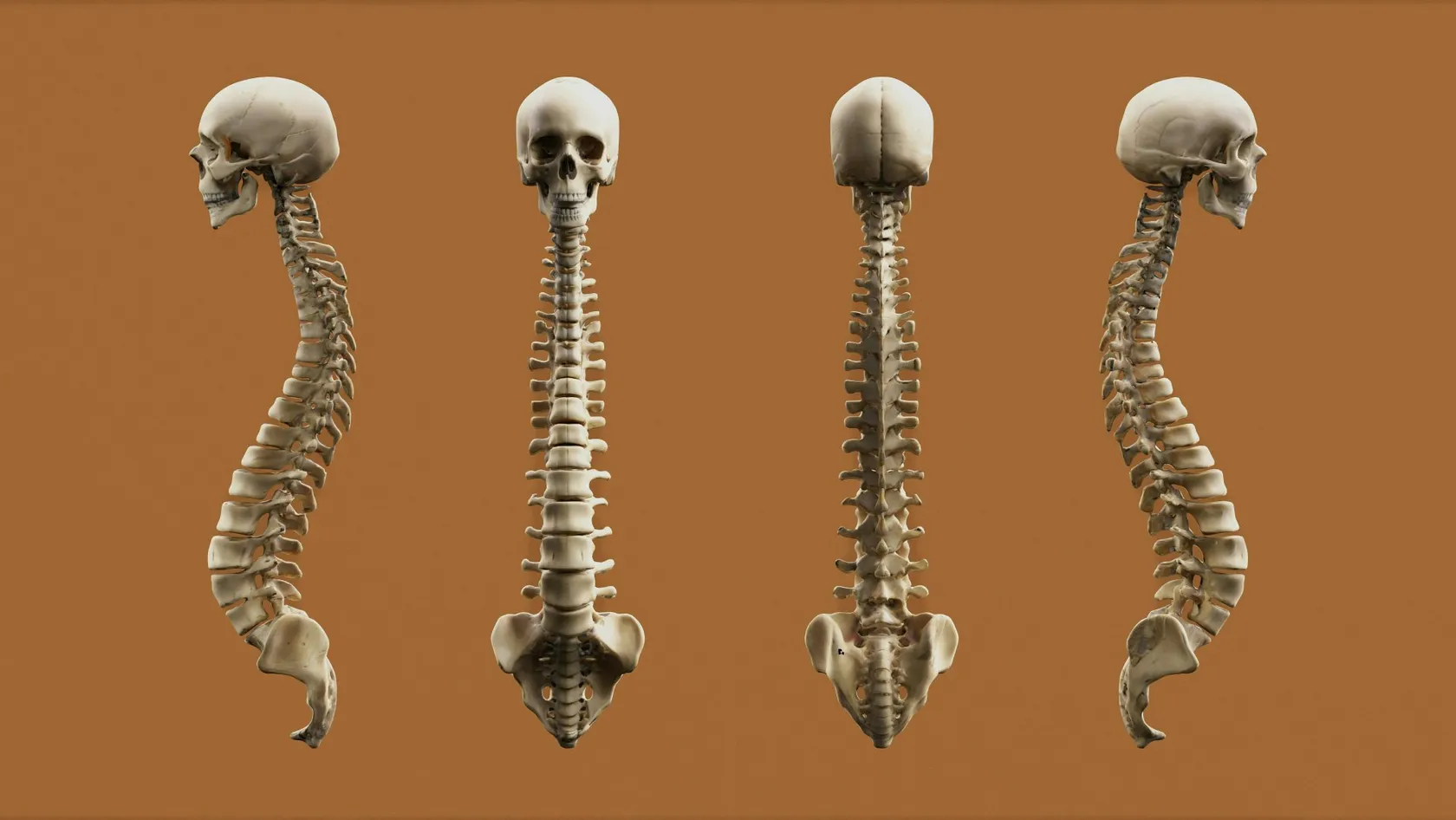
Spinal Fusion Surgery - Vertebrae Fusion Surgery
Four different operations share this name, and the randomized evidence behind them points in opposite directions depending on why the fusion is being proposed. What the trials found, and what the screws, the graft and the robot actually change.
About This Department
Across 306 regions of the United States in 2002 and 2003, the rate of lumbar fusion among older adults varied nearly twentyfold from one region to the next, and the authors of that analysis wrote that it represented the largest variation they had seen for any surgical procedure. Human spines do not vary twentyfold across a country. What varies is the answer to a question that sounds simple and is not, which is whether this particular back needs its vertebrae joined together, and the honest answer depends far more on why the fusion is being proposed than on how it is performed. Nothing in that sentence is an argument against the operation, and it is an argument for asking one question before every other question, which is which of several quite different problems your surgeon believes they are treating. The rest of this page is organized around that question, because the evidence attached to each answer is different.
Free consultation
Send the images and ask whether a fusion is actually the operation you need
Send the image files themselves along with the radiology report, a description of where the pain runs and whether it is mostly in the back or mostly down a leg, how long it has been there, and a list of everything already tried. Whether fusing anything is the right answer depends on whether there is a slip, whether there is instability, whether the canal is narrowed, and whether the trouble is a nerve or a disc. A spine surgeon reads the images against your symptoms and tells you which of those applies and what the alternatives are. No fee, no obligation, and a coordinator replies in your own language, usually within the same working day.
Four operations, one name
The trials for back pain
Fusing a painful but stable disc has been tested properly, more than once, in more than one country. Before reading the table, hold one number in mind. Working inside one of these trials, a separate analysis established that a change of about 10 points on the 100-point Oswestry disability index is the smallest change patients themselves recognize as meaningful, and about 18 to 19 points on the pain scale. Every difference in the table is measured against those thresholds.
Wide table. Swipe or drag it sideways on a narrow screen, because it scrolls instead of shrinking.
| Trial and size | What it found | What has to be said with it |
|---|---|---|
| Sweden, 294 patients, two years | Back pain fell 33 percent after fusion against 7 percent without. Disability fell 25 percent against 6 percent. | The comparison group received ordinary physiotherapy rather than any structured program. Early complications after surgery were 17 percent. |
| Norway, 64 patients, one year | Disability difference between fusion and a three-week cognitive and exercise program was 2.3 points, interval minus 6.7 to 11.4 | Success rated by an independent observer was 70 percent after surgery and 76 percent after the program. Early complications 18 percent. |
| Norway, 124 patients, four years | Treatment effect 1.1 points, interval minus 5.9 to 8.2, with no difference in return to work | Within four years, 23 percent of the fusion group had further surgery and 24 percent of the rehabilitation group had surgery. |
| United Kingdom, 349 patients, two years | Disability favored surgery by 4.1 points, interval 8.1 to 0.1, and no other outcome differed at all | Its own authors call the difference marginal and only just at the predefined threshold. Nineteen percent were lost to follow-up. |
| Three trials pooled, 473 enrolled, eleven years | Adjusted effect of fusion was minus 0.7 points, interval minus 5.5 to 4.2, meaning no difference at all | Forty-five percent did not complete long-term follow-up, which is the standing criticism, and the finding was disputed in print. |
| Sweden again, same patients, thirteen years | Two thirds of the fusion group rated themselves better, against roughly a third of the comparison group | Disability, pain, work status and medication use were all similar. Sponsored by a spinal implant company, and not significant by intention to treat. |
Read down the last column and a pattern emerges that is more interesting than any single row. The trial that found the biggest advantage compared surgery against ordinary care, and the trials that found no advantage compared surgery against a proper rehabilitation program. At eleven years across three of them the difference was less than one point on a hundred-point scale, with an interval that comfortably includes zero in both directions. Nobody in this literature has demonstrated that fusing a stable painful disc beats teaching somebody that their back is safe to move and then supervising them while they move it. None of that makes fusion a bad operation, and it does mean that being offered one for long-standing back pain without a slip, without instability and without nerve compression is a moment to ask what the alternative program would involve and whether you have genuinely had one. Most people have not.
Why those trials disagree
Questions before you agree
Ten questions, each answerable in a sentence. The first four are about whether to fuse at all, the middle three about the operation itself, and the last three about what follows.
- Tell me which of the four reasons on this page describes my case, and say it in one sentence.
- Say whether there is a genuine slip or genuine instability, and show me the measurement you are basing that on.
- Explain what a decompression alone would achieve for me, and what the fusion adds to that.
- Describe what a structured rehabilitation program would look like here and whether I have actually had one.
- Say how many levels are being fused, because almost every risk on this page scales with that number.
- Name the approach and the implants, and tell me whether any biological product is being added to the graft.
- Give me your own rate of non-union at my number of levels, and tell me how you measure it.
- Tell me what your plan is for painkillers at three months, and give me the stopping plan as well as the starting one.
- Say what you expect me to be able to do at three months, at a year, and at five years.
- Confirm I leave with the operative note listing every level and every implant, plus my images.
The slip, and two trials
Where a vertebra has slipped forward and the canal is narrowed, the question changes from whether to operate to whether the operation should include a fusion. Two randomized trials were published back to back in the same journal on the same day in April 2016 and reached opposite conclusions, which is rare enough to be worth understanding rather than glossing over.
Another wide one. Drag it sideways on a narrow screen, because it scrolls instead of shrinking.
| Trial | Result | The qualifier |
|---|---|---|
| American trial, 66 patients | Physical health improved more with fusion, by 5.7 points, interval 0.1 to 11.3 | The lower end of that interval is essentially zero. Disability scores did not differ significantly between the groups. |
| The same trial, on further surgery | Reoperation reached 14 percent after fusion and 34 percent after decompression alone | A borderline comparison resting on a handful of events, in a trial where only 68 percent were followed to four years. |
| Swedish trial, 247 patients | Disability at two years was 27 with fusion and 24 without, which is no difference | Results were the same in patients with and without a slip. Nearly four times the size of the American trial. |
| The same trial, on further surgery | Over an average of six and a half years, 22 percent after fusion and 21 percent after decompression alone | A flat contradiction of the American reoperation figures, on a larger sample and a longer follow-up. |
| Norwegian trial, 267 patients | Disability improved by 20.6 points without fusion and 21.3 with it, a difference of 0.7, interval minus 2.8 to 4.3 | Designed to test whether decompression alone is not worse, and it was not worse. Open label. |
| The same trial, on further surgery | Reoperation in 12.5 percent after decompression alone and 9.1 percent after fusion | The authors flag this in their own conclusion, and it is the one finding that leans toward fusing. |
| American observational study, 601 patients | Large advantages for surgery over non-surgical care, for example 16.7 points of disability, interval 13.9 to 19.5 | Those figures come from a non-randomized comparison. The randomized analysis found no significant effect on the primary outcomes. |
Weighing that honestly means accepting that the two larger and longer trials found no benefit from adding a fusion, that the smaller trial found a marginal one, and that the three of them cannot be reconciled by any amount of careful reading. What can be said is that a patient with a slipped vertebra and narrowing who is offered a decompression alone is being offered something two randomized trials support, and that the reoperation figures pull gently in the other direction in two of the three studies while pulling hard in only one.
What decides who gets fused
Somebody tested surgical judgment against a coin
Inside the Norwegian trial, the surgeons did something unusually brave. Before each patient was randomized, the operating surgeon wrote down which treatment they thought that particular person needed, and 222 of 267 patients had a recorded preference. Because allocation was random, roughly half of those patients then received the operation their surgeon had recommended and roughly half received the other one. At two years, 75 percent of the patients who got the surgeon's choice reached the target improvement, against 73 percent of those who got the opposite, a difference of 2.4 percentage points with an interval running from minus 9.1 to 13.9. Expert judgment about who needs a fusion performed no better than a random allocation. That interval is wide enough to accommodate a modest real effect in either direction and it is nowhere near wide enough to rescue the idea that experienced surgeons can reliably pick out the patients who need fusing.
Geography decides more than it should
The twentyfold regional variation quoted at the top of this page came from an analysis of Medicare claims across 306 regions, and the same study reported that fusion rates rose from 0.3 to 1.1 per thousand enrollees between 1992 and 2003 while showing no correlation with the local supply of surgeons. A later claims study of commercially insured working-age adults carrying the single diagnosis of spinal stenosis found that the proportion receiving a fusion instead of a decompression alone was 48 percent in the South, 42 percent in the Midwest, 36 percent in the Northeast and 31 percent in the West, with the odds of receiving a fusion 1.6 times higher in the South than in the Northeast on an interval of 1.50 to 1.75. Those adjustments covered age, sex and comorbidity but not the severity of the stenosis or the presence of instability, so this is not proof that any individual operation was wrong. It is evidence that where you live is doing work that anatomy should be doing.
The volume kept rising anyway
Between 2004 and 2015, elective lumbar fusion in the United States rose by 62.3 percent in volume, with the steepest rise among people aged 65 and over, where the rate went from 98.3 to 170.3 per hundred thousand. The largest absolute increases were for slipped vertebrae and for scoliosis, which are the two indications with the better mechanical rationale. Underneath that reassuring headline sits a figure the same analysis reports and its conclusion does not dwell on, which is that disc degeneration, disc herniation and stenosis together still accounted for 42.3 percent of all elective lumbar fusions in 2015. Those are precisely the indications where the randomized evidence is weakest. Growth of that size across a decade is not explained by a decade of new evidence, since the trials that changed how this operation is understood were published before that period began and pointed away from wider use rather than toward it.
What the screws are for
Pedicle screws hold the segment still while bone grows across it, and the intuition that stillness produces union is correct. Two randomized trials published in the same year both tested it, and they do not agree even on that. One randomized 76 patients having a single-level fusion after decompression to screws or no screws and found union in 82 percent of the instrumented group against 45 percent of the uninstrumented, a large and convincing difference. The other randomized 130 patients and found no significant difference in union rates between the two at all.
Where they do agree is on what the screws did for the patient, which is nothing measurable. In the first trial the clinical outcome was excellent or good in 76 percent of the instrumented patients and 85 percent of the uninstrumented, a difference in favor of no screws that did not reach significance, and the authors state plainly that achieving union did not influence outcome. In the second trial global patient satisfaction was 82 percent with screws and 74 percent without, again not significant, while fixation significantly increased operating time, blood loss and the early reoperation rate. Symptoms from a misplaced screw affected 4.8 percent of the instrumented patients in that study. Neither trial was large enough to prove equivalence, so the honest summary is that nobody has shown screws to improve how a patient feels, in trials that were also too small to rule it out.
The clearest picture of what added complexity costs comes from the Swedish trial, which randomized its 222 surgical patients across three techniques of increasing elaborateness. Fusion rates on plain radiographs rose from 72 percent with the simplest technique, to 87 percent with screws added, to 91 percent with screws and an interbody cage. No significant difference in pain or disability was found between the three groups. Early complications rose from 6 percent, to 16 percent, to 31 percent across the same three arms, and the more demanding techniques consumed significantly more operating time, more transfusions and more days in hospital. The authors concluded there was no obvious disadvantage to using the least demanding technique. Reading those three arms in order is the clearest demonstration available that a technique which fuses more reliably is not the same thing as a technique that helps more, and the two are routinely presented as though they were.
None of that means screws are pointless. Holding a corrected deformity or a genuinely unstable segment is a mechanical job that graft alone cannot do, and every trial above studied stable degenerative spines. It does mean that adding hardware to a routine fusion is a decision with a measurable price and an unmeasured benefit, which is a reasonable thing to raise with the person proposing it.
The graft and the protein
Bone has to come from somewhere. Traditionally it is taken from the patient's own pelvis, which works well and hurts at the donor site, and for two decades an engineered growth factor called bone morphogenetic protein has been offered as a way of avoiding that. Its story is the most instructive thing in this entire field about how to read a surgical literature.
Wide again. Swipe the table sideways on a narrow screen, because it scrolls instead of shrinking.
| Question | What was found | Who found it and what limits it |
|---|---|---|
| What did the original trials report | Zero adverse events attributable to the product across 780 patients in 13 industry-sponsored publications | A published critical review that set those reports against regulatory data and later publications. |
| What did that review estimate instead | Adverse events somewhere between 10 and 50 percent depending on the approach used | A reconstructed range with no pooled denominator and no interval. Direction only, never a precise risk. |
| Does it work better than the patient's own bone | Disability 3.5 points better at two years, interval 0.5 to 6.5, and union 12 percent higher, interval 2 to 23 | Independent reanalysis of individual patient data from 12 trials. The authors call the pain reduction clinically insignificant. |
| What did a second independent team find | Similar overall success and similar adverse event risk, with high rates in both arms at 77 to 93 percent | Published in the same journal issue as the row above. Partly funded by the manufacturer whose data it examined. |
| What about cancer | One team found a risk ratio of 1.98, interval 0.86 to 4.54. The other found 3.45, interval 1.98 to 6.00 | Two reanalyses of overlapping data, published together, reaching different answers. Events were few. This is unsettled. |
| What about the ejaculation problem | In one institutional series, 5 events among 69 men receiving it against 1 among 174 who did not | Six events in total, retrospective, no interval anywhere. Three of six affected men had recovered at a year. |
| How did the original reporting go wrong | Through selective reporting, duplicate publication and underreporting, in the reanalysing team's own words | The same team notes that no trial in this literature was truly independent of industry sponsorship. |
Take one further example of how the surrogate endpoint works in practice. An unblinded randomized study of 74 patients compared the growth factor against pelvic bone and reported mean fusion grades on a five-point scale, at 4.35 against 3.09 at six months and 4.62 against 3.77 at a year, both differences significant. That study contains no pain outcome, no disability outcome, no function outcome and no complication outcome whatsoever. It measures how the fusion looks on a scan and nothing about how the patient is, and it was graded by observers who knew which product each patient had received. Surrogate endpoints are not dishonest and they are seductive, since a radiologist grading a scan is cheaper, faster and less variable than following patients for two years and asking them how their back is, and every incentive in a device literature pushes toward the cheaper measurement. Ask which one you are being shown.
Which way in
Robots and navigation
The screws do go in more accurately
One meta-analysis restricted to randomized trials pooled 12 of them, covering 892 patients and 4,046 screws, and found robotic or navigated placement gave higher odds of an accurate screw at 2.66 on an interval of 1.24 to 5.72, far fewer violations of the neighboring facet joint at a risk ratio of 0.09, and fewer major complications at a risk ratio of 0.31 with an interval of 0.11 to 0.84. A separate analysis of 30 studies and 24,600 screws put clinically acceptable placement at 96.2 percent with navigation against 94.2 percent without, which is a two-point gain that reaches significance only because the pooled number of screws is enormous. Those are real advantages, and every one of them concerns the thing the machine was designed to control, which is where a screw finishes up relative to the bone around it rather than how the person feels a year later. The next paragraph is about that gap.
Whether that reaches the patient is a separate question
In the randomized pool, the two outcomes a patient would actually care about both had intervals crossing no effect, with nerve root injury at a risk ratio of 0.50 on an interval of 0.11 to 2.30 and return to the operating room for screw revision at 0.28 on an interval of 0.07 to 1.13. Those intervals are wide because the trials are too small to study rare events, and not because equivalence was demonstrated. The 24,600-screw analysis reports no significant difference in pain scores or disability scores between navigated and conventional techniques, while carrying a title that claims better clinical outcomes, and a meta-analysis of nine randomized trials likewise found pain and disability equivalent while operating time was longer with the robot. Reading a title against the results underneath it is a skill this literature demands unusually often, and the honest summary of the whole theme is that navigation and robotics reliably improve a measurement and have never been shown to improve a symptom.
And it depends which machine
Breaking those results down by platform, the last analysis found that one robot beat freehand placement across every grade of accuracy while another was indistinguishable from a surgeon's hand. Presenting robotic assistance as a single thing with a single accuracy advantage is therefore misleading, and the correct question to ask is not whether the hospital has a robot but which system it is and what that particular system has been shown to do.
What happens on the day
What can go wrong
Tearing the covering of the nerves
The Norwegian national spine registry followed 8,919 patients operated for lumbar stenosis and found a dural tear in 4.9 percent, against a background rate in the wider literature of 4 to 10 percent. What makes that study unusually useful is that it linked the tear to how patients said they were doing a year later. The odds of a poor result were 1.44 times higher after a tear, on an interval of 1.11 to 1.86, and the average disability score at twelve months was 27.9 in those who had a tear against 23.6 in those who did not. That gap of 4.3 points sits well below the 10-point threshold patients themselves recognize as meaningful, so the accurate statement is that dural tears are common and that on average they do not change how you end up. Saying that out loud during consent is more useful than either pretending tears do not happen or implying that one would ruin the result, because the accurate version is both more reassuring and more honest than either of the alternatives.
Infection, and one small trial about powder
One double-blind randomized trial put antibiotic powder into the wound before closing in 78 patients and compared them with 78 who did not receive it, finding infection in 1.3 percent against 10.3 percent, a risk ratio of 0.125 on an interval of 0.016 to 0.976. Read that interval carefully, because its upper end almost touches no effect and the entire result rests on nine infections. Note also that a 10.3 percent infection rate in the comparison group is far higher than elective lumbar fusion usually produces, which inflates how impressive the reduction looks. Diabetes raises infection risk substantially and reliably, with pooled odds of 2.65 on an interval of 2.19 to 3.20 across 28 studies and 18,853 patients. Powder in the wound is cheap, it is widely used, and the trial supporting it is a single center reporting nine infections in total, which is a fair description of a great deal of what gets called standard practice in this field.
A gut that stops working
After an anterior approach through the abdomen the bowel can take days to restart. Among 13,139 Medicare patients aged 65 and over having a one or two level anterior fusion, 642 developed this within three days of surgery, which is about one in twenty, and it added an average of 2.83 days in hospital. Men were affected more often, with odds of 1.72 on an interval of 1.48 to 2.00.
Age, frailty and the rare bad outcome
An analysis of 429,380 posterior interbody fusions graded patients by a frailty score and found in-hospital death rising from 0.1 percent in the robust group to 1.3 percent in the very frail, while discharge somewhere other than home rose from 6.5 percent to 42.0 percent. That second number is the one people underestimate, since it describes going to a rehabilitation facility instead of your own house. A smaller multicenter study of 153 patients aged 80 and over found a 30-day readmission rate of 11.1 percent and concluded that existing frailty scores predict poorly, with every confidence interval for their accuracy touching the level of chance. Discharge to somewhere other than home is the outcome that changes a family's life most and appears in the fewest consent conversations, and a rise from roughly one patient in fifteen to more than two in five across the frailty range is not a detail. Ask where you are expected to go afterward.
The first three months
When to call the same day
Five situations warrant contacting somebody on the day you notice them, in roughly this order of urgency.
- Difficulty passing urine, loss of control, or numbness in the saddle area. This one needs assessment within hours and not at the next appointment, whatever else is going on.
- New or worsening weakness in a leg or foot. Weakness present before surgery and slowly improving is expected. Weakness that appears after a good start is a different event and needs looking at.
- A severe headache when you sit up that eases when you lie flat, or clear fluid from the wound. Both point to the dural covering, which tears in roughly one operation in twenty and is far easier to deal with early.
- Fever, spreading redness, or a wound that starts discharging. Wound infection after fusion is uncommon and is not rare, and diabetes roughly doubles the odds of it.
- A belly that is swollen and silent after an operation from the front. Bowel shutdown affected about one in twenty older patients after anterior fusion in one large series, usually within three days.
Whether the bones knit
Fusions that do not unite are called pseudarthrosis, and that is the specific failure this operation is exposed to. Not everybody with one has symptoms, which is part of why the reported rates vary so much, and the factors that raise the risk are reasonably consistent across studies.
This table is wide too. Drag it sideways on a narrow screen, because it scrolls instead of shrinking.
| Factor | What was found | What limits it |
|---|---|---|
| Number of levels fused | Pooled odds of 1.35 per additional level, on an interval of 1.17 to 1.55 | From 12 studies, nine of them retrospective. The only surgical factor that reached significance. |
| Smoking | Significant, on an interval of 1.68 to 5.44 | The pooled point estimate is not printed and the interval is very wide, implying few pooled studies. |
| Age | Significant, on an interval of 1.02 to 1.11 | A very small effect per year of age, and again the point estimate is missing from the report. |
| Stopping smoking before surgery | Fewer complications overall, odds 0.86 on an interval of 0.80 to 0.93, across 31,935 matched patients | No difference in non-union, revision or readmission was detected, and no figures for that null were published. |
| Diabetes | More complications overall and far more wound infection, but non-union was not among the pooled outcomes | This analysis does not show that diabetes causes non-union and must not be quoted as if it did. |
| Bone medication | Teriparatide gave higher union than bisphosphonates, odds 2.3 on an interval of 1.55 to 3.42 | Bisphosphonates neither helped nor clearly harmed union, on a wide interval that cannot establish either. |
One practical point sits behind that whole table. The two things most under anybody's control are how many levels get fused and whether the patient smokes, and both of them belong in the conversation before a date is set rather than afterward.
The level next door
Fused segments no longer move, and the segments above and below are widely believed to take up that movement and wear out sooner. The observed rates are real. Whether the operation causes them is the question nobody has answered.
Following 215 patients for an average of 6.7 years, 27.4 percent went on to have further decompression or fusion at a neighboring level, and survival analysis predicted freedom from that at 83.5 percent by five years and 63.9 percent by ten. A larger study of 1,000 consecutive posterior interbody fusions found further surgery at a neighboring level after 13 percent of procedures, at an average of 43 months, with an annual incidence over the first decade of 2.5 percent on an interval of 1.9 to 3.1.
That second study also broke the annual incidence down by how many levels were fused, finding 1.7 percent after a single level, 3.6 percent after two, and 5.0 percent after three or four. It reported that performing a laminectomy next to a fusion multiplied the risk by 2.4 and that stopping a fusion at the lowest lumbar vertebra multiplied it by 1.7. Every one of those findings is equally consistent with the fusion loading its neighbors and with the plain fact that a spine needing three levels fused is a spine that was going to keep degenerating anyway. Separating those two explanations would require randomizing people to be fused or not and then watching their neighboring levels for a decade, and no such trial exists, which is why confident versions of this claim are overstated in both directions. Nobody knows.
Reviewing both the neck and the lower back together, one paper puts the incidence at 2 to 4 percent a year across both regions and describes the cause as a combination of pre-existing wear at the neighboring level, individual predisposition and altered mechanics next to the fusion. Its most useful sentence is the admission that despite many attempts, no single consistent predictor has been found. Anybody who tells you confidently that your fusion will wear out the level above is describing a mechanism that has never been isolated from the disease that brought you to surgery in the first place. Living with that uncertainty is easier than it sounds, since the practical decision it affects is a narrow one, namely whether to fuse an extra level as a precaution, and the evidence for doing that is weaker still than the evidence for the fusion you came in for. That question is worth raising before the operation is planned.
Painkillers and work
Whether somebody stops taking opioids and whether they go back to work are the two outcomes patients ask about most and the two that surgical papers report least. What data exist come mostly from insurance claims, which have obvious limits, and they point in a consistent and uncomfortable direction.
Following 1,422 commercially insured patients for two years after fusion for degenerative conditions, 70 percent incurred further medical claims, 97.5 percent of those with pharmacy benefits received multiple classes of pain medication, 62.5 percent remained on long-term opioids, and 95 percent of those taking opioids before the operation were still taking them two years afterward.
That last figure is the one to carry into a consultation. Surgery did not interrupt established opioid use in nineteen out of twenty patients who arrived on it. In a workers' compensation population of 1,037 patients, 23.2 percent made a sustained return to work within two years, with the strongest predictors of failure being time already spent out of work, psychiatric history and prolonged opioid use before surgery. An Australian study of 874 injured workers found 32.3 percent had substantial work capacity at two years while 44.4 percent were still being prescribed opioids and 37.8 percent were receiving mental health treatment.
All of those studies share the same fatal limitation, which is that none of them contains a comparison group of similar people managed without an operation. They cannot tell you what surgery did, only what happened afterward. What they can tell you is that arriving at a fusion already on long-term opioids, already out of work and already struggling is a situation in which the operation rarely reverses the trajectory on its own, and that is worth knowing before rather than after. None of that means an operation cannot help somebody in that position, and it does mean the operation alone has repeatedly failed to change it, which is an argument for arranging everything else at the same time instead of afterward. Painkiller planning, work planning and mood all belong in the same conversation as the surgical date.
Getting home
Recovery protocols, and what they have shown
Structured recovery programs cover everything from what you eat before surgery to when you first stand up, and they are now standard in good units. A pooled analysis of eleven studies of these protocols in minimally invasive posterior fusion found that the randomized trials within it reported shorter stays, less blood loss, fewer complications and better scores, while the observational studies within the same analysis found no difference in disability, union, operating time or complications. The paper published no effect sizes and no intervals for any outcome, so how much shorter a stay actually becomes cannot be answered from it. Recovery protocols are worth having and the evidence for them is thinner than their popularity suggests, and both of those things can be true at once, since almost nothing in the bundle is plausibly harmful and almost nothing in it has been isolated and tested on its own. The parts are bundled because bundling them is easier.
How short is short
Among 12,664 single-level transforaminal fusions in a national surgical database, 14.8 percent went home within one day of surgery. Staying longer was associated with female sex, a diagnosis of spondylolisthesis, higher anesthetic risk and an operation lasting more than 150 minutes, and the longer-stay group had more transfusions and more reoperations. No difference in complications after discharge was found between matched groups, which is an absence of evidence with no power calculation behind it and should not be read as proof of equivalence. There is no randomized trial of same-day discharge after lumbar fusion anywhere in this literature, so anybody describing it as proven safe is describing something that has not been tested. Somebody sent home the day after a fusion is somebody who was well enough to be sent home, which is the oldest confounder in surgical research and the one that database studies of discharge timing can never fully remove.
Coming to Istanbul
Send the images and ask the prior question
Before anything about travel, the question worth answering is whether a fusion is the operation you need at all, and that is answerable from your own scan and your own symptom pattern. Send the image files rather than the report alone, along with a clear statement of how much of your trouble is in the back and how much runs down a leg, because the answer to that one question changes what the evidence on this page says about you. A second reading frequently reclassifies somebody from the third category on this page into the first, or the other way round, and that reclassification is worth more than any detail of technique. Reclassification of that kind is the single most valuable thing a second opinion produces, and it costs nothing beyond the time taken to send the files, which is a poor reason not to do it before committing to a flight and an operation.
Length of stay, cost drivers and the flight
Plan on two to four nights in hospital and ten to fourteen days in Istanbul in total for a single-level fusion, allowing time for assessment beforehand and a wound check before flying. What moves the total are the number of levels, the approach used, which implants go in and how many nights you stay, so ask for those itemized before you travel. Flying is normally reasonable from around ten days, with an aisle seat, regular walking and painkillers in hand luggage, and anybody with a longer or multilevel operation should expect to be advised to wait longer than that.
Once you are back home
Arrange a local wound review at ten to fourteen days and keep a named contact here for anything that changes. Take home the operative note listing every level fused, every implant used and any biological product added to the graft, along with your images and the plan for imaging at three to six months. Give all of it to your own doctor at the first appointment instead of filing it, because the surgeon managing your spine in ten years will not have been in the room and the metal will still be there.
Spinal fusion FAQ
Does fusion work for ordinary back pain?
If I have a slipped vertebra, do I need the fusion added?
How often does a fusion fail to knit?
Do the screws make it better?
Will the level above wear out?
Is a robot better than a surgeon's hand?
Will I get off the painkillers?
Why do fusion rates vary so much between places?
References
- Fritzell P, Hagg O, Wessberg P, Nordwall A. Lumbar fusion versus nonsurgical treatment for chronic low back pain, a multicenter randomized controlled trial from the Swedish Lumbar Spine Study Group. Spine. 2001;26(23):2521-2532.
- Brox JI, Sorensen R, Friis A, Nygaard O, Indahl A, Keller A, Ingebrigtsen T, Eriksen HR, Holm I, Koller AK, Riise R, Reikeras O. Randomized clinical trial of lumbar instrumented fusion and cognitive intervention and exercises in patients with chronic low back pain and disc degeneration. Spine. 2003;28(17):1913-1921.
- Brox JI, Nygaard OP, Holm I, Keller A, Ingebrigtsen T, Reikeras O. Four-year follow-up of surgical versus non-surgical therapy for chronic low back pain. Annals of the Rheumatic Diseases. 2010;69(9):1643-1648.
- Fairbank J, Frost H, Wilson-MacDonald J, Yu LM, Barker K, Collins R. Randomised controlled trial to compare surgical stabilisation of the lumbar spine with an intensive rehabilitation program for patients with chronic low back pain, the MRC spine stabilisation trial. BMJ. 2005;330(7502):1233.
- Mannion AF, Brox JI, Fairbank JCT. Comparison of spinal fusion and nonoperative treatment in patients with chronic low back pain, long-term follow-up of three randomized controlled trials. The Spine Journal. 2013;13(11):1438-1448.
- Hedlund R, Johansson C, Hagg O, Fritzell P, Tullberg T. The long-term outcome of lumbar fusion in the Swedish lumbar spine study. The Spine Journal. 2016;16(5):579-587.
- Hagg O, Fritzell P, Nordwall A. The clinical importance of changes in outcome scores after treatment for chronic low back pain. European Spine Journal. 2003;12(1):12-20.
- Ghogawala Z, Dziura J, Butler WE, Dai F, Terrin N, Magge SN, Coumans JVCE, Harrington JF, Amin-Hanjani S, Schwartz JS, Sonntag VKH, Barker FG, Benzel EC. Laminectomy plus fusion versus laminectomy alone for lumbar spondylolisthesis. New England Journal of Medicine. 2016;374(15):1424-1434.
- Forsth P, Olafsson G, Carlsson T, Frost A, Borgstrom F, Fritzell P, Ohagen P, Michaelsson K, Sanden B. A randomized, controlled trial of fusion surgery for lumbar spinal stenosis. New England Journal of Medicine. 2016;374(15):1413-1423.
- Weinstein JN, Lurie JD, Tosteson TD, Hanscom B, Tosteson ANA, Blood EA, Birkmeyer NJO, Hilibrand AS, Herkowitz H, Cammisa FP, Albert TJ, Emery SE, Lenke LG, Abdu WA, Longley M, Errico TJ, Hu SS. Surgical versus nonsurgical treatment for lumbar degenerative spondylolisthesis. New England Journal of Medicine. 2007;356(22):2257-2270.
- Austevoll IM, Hermansen E, Fagerland MW, Storheim K, Brox JI, Solberg T, Rekeland F, Franssen E, Weber C, Brisby H, Grundnes O, Algaard KRH, Boker T, Banitalebi H, Indrekvam K, Hellum C. Decompression with or without fusion in degenerative lumbar spondylolisthesis. New England Journal of Medicine. 2021;385(6):526-538.
- Seip A, Hellum C, Fagerland MW, Solberg T, Brox JI, Storheim K, Hermansen E, Weber C, Brisby H, Banitalebi H, Furunes H, Indrekvam K, Ljostad I, Austevoll IM. Surgeon recommendation and outcomes of decompression with versus without fusion in patients with degenerative spondylolisthesis. JAMA Network Open. 2025;8(1):e2453466.
- Fischgrund JS, Mackay M, Herkowitz HN, Brower R, Montgomery DM, Kurz LT. Degenerative lumbar spondylolisthesis with spinal stenosis, a prospective, randomized study comparing decompressive laminectomy and arthrodesis with and without spinal instrumentation. Spine. 1997;22(24):2807-2812.
- Thomsen K, Christensen FB, Eiskjaer SP, Hansen ES, Fruensgaard S, Bunger CE. The effect of pedicle screw instrumentation on functional outcome and fusion rates in posterolateral lumbar spinal fusion, a prospective, randomized clinical study. Spine. 1997;22(24):2813-2822.
- Fritzell P, Hagg O, Wessberg P, Nordwall A. Chronic low back pain and fusion, a comparison of three surgical techniques, a prospective multicenter randomized study from the Swedish lumbar spine study group. Spine. 2002;27(11):1131-1141.
- Carragee EJ, Hurwitz EL, Weiner BK. A critical review of recombinant human bone morphogenetic protein-2 trials in spinal surgery, emerging safety concerns and lessons learned. The Spine Journal. 2011;11(6):471-491.
- Simmonds MC, Brown JVE, Heirs MK, Higgins JPT, Mannion RJ, Rodgers MA, Stewart LA. Safety and effectiveness of recombinant human bone morphogenetic protein-2 for spinal fusion, a meta-analysis of individual-participant data. Annals of Internal Medicine. 2013;158(12):877-889.
- Fu R, Selph S, McDonagh M, Peterson K, Tiwari A, Chou R, Helfand M. Effectiveness and harms of recombinant human bone morphogenetic protein-2 in spine fusion, a systematic review and meta-analysis. Annals of Internal Medicine. 2013;158(12):890-902.
- Carragee EJ, Mitsunaga KA, Hurwitz EL, Scuderi GJ. Retrograde ejaculation after anterior lumbar interbody fusion using rhBMP-2, a cohort controlled study. The Spine Journal. 2011;11(6):511-516.
- Glassman SD, Dimar JR, Carreon LY, Campbell MJ, Puno RM, Johnson JR. Initial fusion rates with recombinant human bone morphogenetic protein-2 and compression resistant matrix and a hydroxyapatite and tricalcium phosphate and collagen carrier in posterolateral spinal fusion. Spine. 2005;30(15):1694-1698.
- de Kunder SL, van Kuijk SMJ, Rijkers K, Caelers IJMH, van Hemert WLW, de Bie RA, van Santbrink H. Transforaminal lumbar interbody fusion versus posterior lumbar interbody fusion in lumbar spondylolisthesis, a systematic review and meta-analysis. The Spine Journal. 2017;17(11):1712-1721.
- Mobbs RJ, Phan K, Daly D, Rao PJ, Lennox A. Approach-related complications of anterior lumbar interbody fusion, results of a combined spine and vascular surgical team. Global Spine Journal. 2016;6(2):147-154.
- Fujii T, Kumar R, Cha J, Bansal A, de Oliveira RG, Louie PK, Nemani VM, Leveque JC, Sethi RK. Neurological complications following anterior lumbar interbody fusion, a systematic review. Global Spine Journal. 2025;16(1):734-745.
- Nolte MT, Gandhi SD, Nguyen AQ, Siyaji ZK, Piracha AZ, Khanna K, Rush AJ, Sheha ED, Phillips FM. Rates of postoperative complications and approach-related neurological symptoms after L4-L5 lateral transpsoas lumbar interbody fusion compared with upper lumbar levels. Clinical Spine Surgery. 2023;36(7):E294-E299.
- Hammad A, Wirries A, Ardeshiri A, Nikiforov O, Geiger F. Open versus minimally invasive TLIF, literature review and meta-analysis. Journal of Orthopaedic Surgery and Research. 2019;14(1):229.
- Matur AV, Palmisciano P, Duah HO, Chilakapati SS, Cheng JS, Adogwa O. Robotic and navigated pedicle screws are safer and more accurate than fluoroscopic freehand screws, a systematic review and meta-analysis. The Spine Journal. 2023;23(2):197-208.
- Papalia GF, Vadala G, Russo F, Marcello G, Nardi N, Papalia R, Denaro V. Higher accuracy and better clinical outcomes in navigated thoraco-lumbar pedicle screw fixation versus conventional techniques, a systematic review and meta-analysis. Spine. 2024;49(19):1370-1380.
- Li HM, Zhang RJ, Shen CL. Accuracy of pedicle screw placement and clinical outcomes of robot-assisted technique versus conventional freehand technique in spine surgery from nine randomized controlled trials, a meta-analysis. Spine. 2020;45(2):E111-E119.
- Ghiselli G, Wang JC, Bhatia NN, Hsu WK, Dawson EG. Adjacent segment degeneration in the lumbar spine. Journal of Bone and Joint Surgery American Volume. 2004;86(7):1497-1503.
- Sears WR, Sergides IG, Kazemi N, Smith M, White GJ, Osburg B. Incidence and prevalence of surgery at segments adjacent to a previous posterior lumbar arthrodesis. The Spine Journal. 2011;11(1):11-20.
- Tobert DG, Antoci V, Patel SP, Saadat E, Bono CM. Adjacent segment disease in the cervical and lumbar spine. Clinical Spine Surgery. 2017;30(3):94-101.
- Boonsirikamchai W, Wilartratsami S, Ruangchainikom M, Korwutthikulrangsri E, Tongsai S, Luksanapruksa P. Pseudarthrosis risk factors in lumbar fusion, a systematic review and meta-analysis. BMC Musculoskeletal Disorders. 2024;25(1):433.
- Khalid SI, Thomson KB, Chilakapati S, Singh R, Eldridge C, Mehta AI, Adogwa O. The impact of smoking cessation therapy on lumbar fusion outcomes. World Neurosurgery. 2022;164:e119-e126.
- Ruggiero N, Soliman MAR, Kuo CC, Aguirre AO, Quiceno E, Saleh J, Yeung K, Khan A, Hess RM, Lim J, Smolar DE, Pollina J, Mullin JP. The effect of diabetes on complications after spinal fusion, a systematic review and meta-analysis. World Neurosurgery. 2024;185:e976-e994.
- Buerba RA, Sharma A, Ziino C, Arzeno A, Ajiboye RM. Bisphosphonate and teriparatide use in thoracolumbar spinal fusion, a systematic review and meta-analysis of comparative studies. Spine. 2018;43(17):E1014-E1023.
- Izima C, Sampath SG, Tang AJ, Ambati VS, Chou D, Chan AK. Systematic review and meta-analysis of topical tranexamic acid in spine surgery. Neurosurgical Focus. 2023;55(4):E18.
- Alhaug OK, Dolatowski F, Austevoll I, Mjones S, Lonne G. Incidental dural tears associated with worse clinical outcomes in patients operated for lumbar spinal stenosis. Acta Neurochirurgica. 2023;165(1):99-106.
- Han B, Lu H, Pan A, Guan L, Cheng F, Zhao M, Chu S, Hai Y, Liu Y. Safety and efficacy of intrawound vancomycin powder in the prevention of lumbar surgical site infection, a prospective, double-blind, randomized controlled study. International Journal of Surgery. 2025;111(1):589-596.
- Horowitz JA, Jain A, Puvanesarajah V, Qureshi R, Hassanzadeh H. Risk factors, additional length of stay, and cost associated with postoperative ileus following anterior lumbar interbody fusion in elderly patients. World Neurosurgery. 2018;115:e185-e189.
- Covell MM, Rumalla KC, Bhalla S, Bowers CA. Risk analysis index predicts mortality and non-home discharge following posterior lumbar interbody fusion, a nationwide inpatient sample analysis of 429,380 patients. European Spine Journal. 2024;33(9):3484-3491.
- Moniz-Garcia D, Odeh N, Genel O, Montaser A, Sousa-Pinto B, De Biase G, Otamendi-Lopez A, Nottmeier E, Bydon M, McClendon J, Buchanan IA, Pirris S, Abode-Iyamah K, Chen S. Frailty as a predictor of postoperative morbidity and mortality in patients aged 80 years and older undergoing instrumented fusion. Operative Neurosurgery. 2024;26(6):669-676.
- Anderson JT, Haas AR, Percy R, Woods ST, Ahn UM, Ahn NU. Chronic opioid therapy after lumbar fusion surgery for degenerative disc disease in a workers' compensation setting. Spine. 2015;40(22):1775-1784.
- Anderson JT, Haas AR, Percy R, Woods ST, Ahn UM, Ahn NU. Return to work after diskogenic fusion in workers' compensation subjects. Orthopedics. 2015;38(12):e1065-e1072.
- Mino DE, Munterich JE, Castel LD. Lumbar fusion surgery for degenerative conditions is associated with significant resource and narcotic use 2 years postoperatively in the commercially insured, a medical and pharmacy claims study. Journal of Spine Surgery. 2017;3(2):141-148.
- McMillan JS, Jones K, Forgan L, Busija L, Carey RPL, de Silva AM, Phillips MG. Lumbar spinal fusion surgery outcomes in a cohort of injured workers in the Victorian workers' compensation system. ANZ Journal of Surgery. 2022;92(3):481-486.
- Weinstein JN, Lurie JD, Olson PR, Bronner KK, Fisher ES. United States trends and regional variations in lumbar spine surgery, 1992-2003. Spine. 2006;31(23):2707-2714.
- Martin BI, Mirza SK, Spina N, Spiker WR, Lawrence B, Brodke DS. Trends in lumbar fusion procedure rates and associated hospital costs for degenerative spinal diseases in the United States, 2004 to 2015. Spine. 2019;44(5):369-376.
- Raad M, Reidler JS, El Dafrawy MH, Amin RM, Jain A, Neuman BJ, Riley LH, Sciubba DM, Kebaish KM, Skolasky RL. US regional variations in rates, outcomes, and costs of spinal arthrodesis for lumbar spinal stenosis in working adults aged 40-65 years. Journal of Neurosurgery Spine. 2018;30(1):83-90.
- Guo T, Ding F, Fu B, Yang Z, Yang Y, Liu A, Wang P. Efficacy and safety of enhanced recovery after surgery protocols for patients undergoing minimally invasive transforaminal lumbar interbody fusion surgery, a systematic review and meta-analysis. World Neurosurgery. 2024;188:199-210.
- Jiang SH, Chaudhry NS, Nie JW, Patel S, Ansari D, Nie JZ, Shah P, Patel J, Mehta AI. Discharge within 1 day following elective single-level transforaminal lumbar interbody fusion, a propensity score-matched analysis of predictors, complications, and readmission. Asian Spine Journal. 2024;18(3):362-371.
Editor's note
Written by the Biruni Hospital medical editorial team. Reviewed by Assoc. Prof. Dr. Melih ÜÇER, Neurosurgery.
Medically reviewed by

Assoc. Prof. Dr. Melih ÜÇER
Neurosurgery
Related Treatments
View All
ALIF - Anterior Lumbar Interbody Fusion Surgery
Coming in from the front restores the curve of the lower back better than any posterior route and leaves the back muscles untouched. It also carries one risk most pages will not name, and this page names it.

Brain AVM Surgery - Arteriovenous Malformation Surgery
An unruptured brain AVM bleeds at roughly 2.2 percent a year, and surgery spends its whole risk on a single morning. This page sets those two shapes of risk side by side, explains what the ARUBA trial does and does not say about your case, and shows how a Spetzler-Martin grade changes the answer.
Brain Tumor Surgery - Brain Tumor Removal
Brain surgery is one trade repeated all day, how much tumor comes out against what the brain around it still does. This page puts the published numbers on both sides of that trade.
Cervical Microdiscectomy - Minimally Invasive Neck Disc Surgery
Neck disc surgery is done from the front, through the space between your windpipe and your carotid artery, and almost everything that goes wrong that is not the disc happens in that corridor. What has been measured in it.
Chiari Malformation Surgery
A Chiari malformation is measured in millimeters and treated according to symptoms, and those two things come apart more often than patients are told. Most people with the finding never need an operation. This page sets out who does, what posterior fossa decompression removes, why surgeons still argue over opening the dura, and what the pooled studies say about both sides of that argument.