
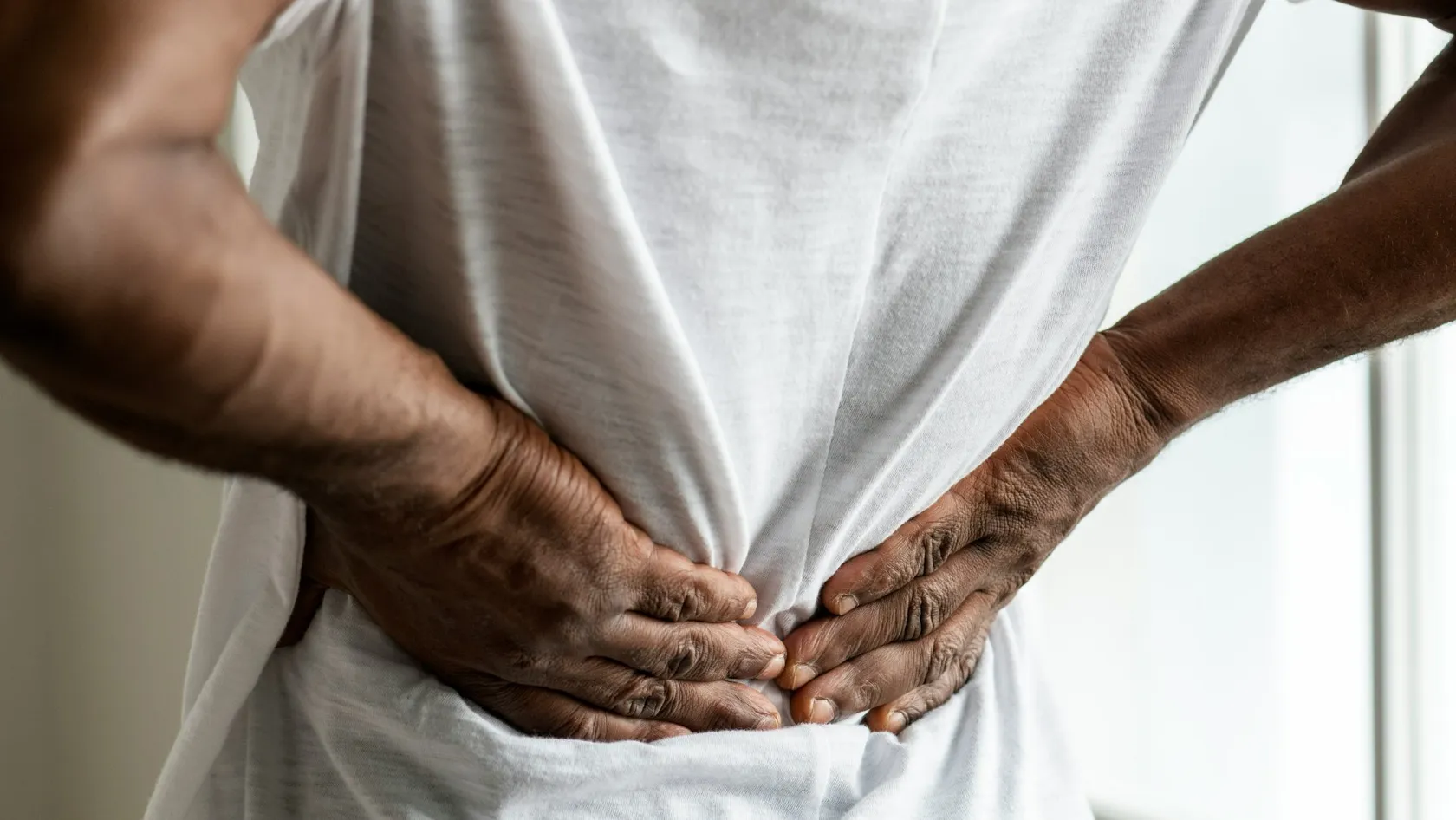
Spinal Cord Injury Rehabilitation - SCI Rehabilitation
Spinal cord injury rehabilitation is a program of months that teaches a person to live fully with paralysis or to walk again where the injury allows, covering strength, transfers, wheelchair skills, bladder and bowel care, breathing and self-care under one team. A bedside examination in the first two weeks predicts walking at one year with 96 percent accuracy. This page explains levels and grades, the program, prediction, walking technology, complications and care from abroad.
About This Department
Five findings from a bedside examination in the first two weeks predict, with 96 percent accuracy, who will walk independently one year after a spinal cord injury. Rehabilitation is planned from that answer, and it starts before the answer is certain.
The rule combines age with the strength of two leg muscles and the sensation in two patches of skin, and it was built from 492 patients in 19 European centers and confirmed in a second group (van Middendorp and colleagues, The Lancet, 2011). It matters because spinal cord injury rehabilitation, or SCI rehabilitation, is a program measured in months, and its goals differ completely between a person who will walk again and a person who will live from a wheelchair. Both can reach a full and independent life. The route is different. This page explains what the injury does, how the level and completeness are established, what the months of rehabilitation involve, what can be predicted and what cannot, what research says about walking training and technology, the complications that have to be prevented for life, and how patients from abroad can arrange a program at Biruni Hospital in Istanbul.
What the injury does
The spinal cord carries every command from the brain to the body and every sensation back. An injury interrupts the traffic at one point, and everything below that point is affected. Two facts describe an injury.
- The level. The lowest segment of the cord that still works normally, named by the vertebra, such as C6 or T10. Injuries in the neck affect arms, trunk and legs, and are called tetraplegia. Injuries below the neck affect trunk and legs, and are called paraplegia.
- The completeness. Whether any movement or sensation survives below the level. The ASIA Impairment Scale grades this from A, meaning complete, through B, C and D, meaning increasingly preserved function, to E, meaning normal.
| Level | What is preserved | Typical independence after rehabilitation |
|---|---|---|
| C1 to C4 | Head and neck, sometimes shoulders | Breathing support may be needed. Powered wheelchair with chin or head control, full assistance for personal care |
| C5 | Shoulders and elbow bending | Powered chair, feeding and grooming with adapted tools, help with transfers |
| C6 | Wrist extension added | Manual chair on level ground, dressing the upper body, transfers with a board, driving with hand controls |
| C7 to C8 | Elbow straightening and some hand function | Independent transfers, most self-care, manual chair |
| T1 to T9 | Full arm and hand function, partial trunk | Fully independent in a manual chair, driving, most housework |
| T10 to L1 | Trunk control | Standing in braces for exercise, walking short distances with braces in some |
| L2 and below | Hip and some leg movement | Walking with braces and crutches, wheelchair for distance |
The first weeks
| Assessment | Purpose | When |
|---|---|---|
| ISNCSCI examination | The international neurological examination that fixes level and grade | On admission, then at intervals to track recovery |
| Bladder ultrasound and urodynamics | How the bladder empties and stores, which decides catheter method and protects the kidneys | First weeks |
| Skin inspection and risk score | Pressure injury prevention | Daily |
| Lung function | Cough strength and breathing reserve, especially in neck injuries | On admission |
| Swallowing and nutrition | Common problems after neck surgery and long intensive care | First days |
| Mood and cognition | Depression is common and treatable. Head injury often accompanies a neck injury | First weeks |
| Spinal Cord Independence Measure | The baseline score against which every gain is measured | On admission and at discharge |
What rehabilitation works on
The program
Inpatient rehabilitation for spinal cord injury runs two to five months, longer for high tetraplegia, and it is the most comprehensive program in rehabilitation medicine, because the injury touches every system of the body. A rehabilitation physician leads. Physiotherapists, occupational therapists, nurses, a psychologist, a dietitian, a urologist, a respiratory therapist, an orthotist and a social worker each own part of the plan, and the patient learns to direct all of them, since after discharge the patient becomes the expert on his or her own body.
| Session | Hours per week | Who |
|---|---|---|
| Physiotherapy | 7 to 10 | Physiotherapist and assistant |
| Occupational therapy | 5 to 7 | Occupational therapist |
| Nursing education and practice | Daily | Rehabilitation nurses |
| Psychology and peer support | 1 to 2 | Psychologist, peer mentor |
| Sports and recreation | 2 to 3 | Sports therapist |
| Family training | Weekly, more near discharge | Whole team |
What can be predicted
The most common question is whether the patient will walk again. For most patients the answer comes early and with confidence, in either direction, and giving it early lets rehabilitation aim at the right target.
| ASIA grade | Chance of walking at one year | Comment |
|---|---|---|
| A, complete | Low, a few percent | Recovery of a level or two of arm function is common in tetraplegia |
| B, sensation only | Roughly one in three | Sharp pin sensation preserved below the injury improves the odds |
| C, weak movement | Most patients | In the US trial, 92 percent of grade C patients with upper motor neuron injuries walked independently by six months |
| D, useful movement | Nearly all | The question becomes speed, distance and safety |
- Recovery continues past the hospital. Most neurological recovery happens in the first six months, and gains in function, strength and skill continue for years.
- A prediction is not a limit. The rule was built for planning, and a patient graded A who regains movement is examined again and the plan changes.
- Some questions have no early answer. Bladder recovery, pain and spasticity follow their own course, and the team says so.
Walking, technology and evidence
Few areas of rehabilitation attract as much technology as walking after spinal cord injury, and few have been tested as carefully.
| Method | What it involves | Evidence |
|---|---|---|
| Overground training | Practice with braces, parallel bars and walking aids, guided by a physiotherapist | The comparison arm in most trials and as effective as any alternative |
| Body-weight-supported treadmill | A harness takes part of the body weight while therapists move the legs on a treadmill | Equal to overground training in the 146-patient US trial and in the Cochrane pooled analysis |
| Robotic gait trainers | A motorized exoskeleton moves the legs on a treadmill | No advantage shown, and one trial suggested less walking capacity than other methods |
| Wearable exoskeletons | Powered braces for overground stepping | Allow standing and stepping for those who cannot walk. Evidence for lasting benefit is still thin |
| Functional electrical stimulation | Electrodes activate paralyzed muscles during cycling or stepping | Improves fitness and muscle bulk. Effects on walking are modest |
| Epidural stimulation | An implanted electrode over the cord, still experimental | Remarkable single cases, small studies, no routine use yet |
Cochrane reviewed five randomized trials with 309 participants and found no walking training method superior to any other. Treadmill training with body-weight support did not raise walking speed or distance over other physical rehabilitation (Mehrholz and colleagues, 2012).
Are there treatments that repair the cord?
Complications and life afterward
What shortens life after spinal cord injury is the complications rather than the injury itself. Nearly all of them are preventable, and prevention is a daily habit taught in rehabilitation and kept for life.
Going home
Discharge planning begins in the first week and takes as long as the therapy. The home is assessed and adapted, with ramps, door widths, a roll-in shower and a bed at chair height. A properly fitted wheelchair and cushion are ordered, and a second chair or a powered attachment for outdoors is considered. Driving with hand controls is assessed. Most paraplegic patients drive. Return to study or work is planned, in stages, and vocational services are involved early because employment after spinal cord injury is possible and common where the path is prepared. Sexuality and fertility are discussed openly by the team, since both are affected and both have answers. Peer mentors, people some years past their own injury, make the most credible teachers of all. The patient leaves with a written bowel, bladder and skin program, a supply chain for catheters and equipment, and a schedule of yearly reviews of kidneys, skin, lungs and shoulders, which carry the wheelchair user's whole body and wear accordingly.
Pain, spasticity and sleep
Three problems follow patients home.
Nerve pain below the injury, burning or shooting, affects a large share of patients and responds partly to medicines used for nerve pain, to exercise and to psychological techniques, and rarely disappears entirely. It is real. It is not imagined. Shoulder and wrist pain come later, from years of pushing and transferring, and are prevented by good technique, a light chair and strength work for the muscles that protect the shoulder. Spasticity, the stiffness and jumping of paralyzed muscles, is useful in small amounts, since it keeps muscle bulk and helps some transfers, and troublesome in large amounts, when stretching, positioning, tablets, botulinum toxin injections and, in severe cases, a pump delivering baclofen into the spinal fluid bring it down. Sleep suffers. All three disturb it, along with bladder routines at night and breathing disturbance, which is common in tetraplegia and treatable once found.
None of this is a reason for despair. All of it is a reason for a team that knows the condition.
The family's part
A spinal cord injury lands on the family as hard as on the patient, and the program trains them on purpose. Relatives learn transfers without hurting their backs, skin checks, catheter care, bowel routines, the signs of autonomic dysreflexia and the response to them, and how to step back and let the patient do what the patient can do, which is the hardest lesson of all. The psychologist sees relatives as well as patients. Many families arrive expecting to become full-time carers and leave having discovered that the person they feared for needs less help than they feared and a different kind of help than they imagined.
Plan for one relative to be present throughout, and for others to rotate.
Coming from abroad
Families seek rehabilitation abroad when the program at home is short, distant or absent. Send the operation note, the spine imaging reports, the neurological examination with level and ASIA grade, the current bladder method, any pressure injury details with photographs, and a short video of transfers and sitting balance. The rehabilitation team reviews the file without charge and replies with goals, a program and the expected length of stay, which for a first program after injury runs two to four months and for a later skills-focused program four to eight weeks. Transfer from abroad needs planning. Start it early. Airlines carry patients on a stretcher or in a seat with medical clearance, a nurse or doctor may need to travel with a ventilated or newly injured patient, and the coordinator advises on the forms. One coordinator from the international patients office handles every arrangement from the first message through discharge and answers the same WhatsApp number once you are back home. The office works in English, Arabic, French, Russian, Serbian, Romanian and Spanish and books interpreters for sessions. It arranges the visa invitation letter, ambulance or accessible transfer from the airport, accessible accommodation near the hospital for relatives and accessible daily transport. Ward rooms have a companion bed. Meals fit the bowel program. The kitchen prepares halal, vegetarian and diabetic meals, with fiber adjusted to the bowel program. A prayer room is on site, and a request for a female therapist or physician is met wherever the rota allows. Patients are fit to fly home once skin is intact, the bladder program is stable and the doctor confirms it, and the team writes a full handover for the services at home.
Cost
The estimate follows the file review and depends on the length of stay, therapy hours, room type, and equipment such as the wheelchair, cushion and orthoses, which are itemized because their specification depends on the patient. Hospitals in this market quote spinal cord injury rehabilitation by the week or the month.
Confirm what the weekly figure includes. Ask how equipment is priced.
References
- van Middendorp JJ, Hosman AJ, Donders AR, et al. A clinical prediction rule for ambulation outcomes after traumatic spinal cord injury, a longitudinal cohort study. Lancet. 2011;377(9770):1004-1010.
- Dobkin B, Apple D, Barbeau H, et al. Weight-supported treadmill vs over-ground training for walking after acute incomplete SCI. Neurology. 2006;66(4):484-493.
- Mehrholz J, Kugler J, Pohl M. Locomotor training for walking after spinal cord injury. Cochrane Database Syst Rev. 2012, Issue 11, CD006676.
Editor's note
Written by the Biruni Hospital medical editorial team. Reviewed by İmran Bakaç, Physical Therapy and Rehabilitation.
Medically reviewed by

İmran Bakaç
Physical Therapy and Rehabilitation
Related Treatments
View All
Brain Injury Rehabilitation
A bleak outlook given in the first two weeks after a severe brain injury is frequently wrong. In the largest recent follow-up study, 12 percent of such patients were doing well at two weeks and 52 percent at one year. Learn what rehabilitation adds to that recovery, stage by stage, and when a patient is ready to travel.
Cancer Rehabilitation - Oncology Rehabilitation
Cancer rehabilitation treats the fatigue, weakness, stiffness, swelling, nerve damage, swallowing problems and loss of function that cancer and its treatment leave behind, before, during and after therapy. In one study 92 percent of women with metastatic breast cancer had a treatable impairment and fewer than a third were being treated. This page explains what is treated, the evidence on fatigue and lymphedema, prehabilitation, specialist problems and programs for patients from abroad.
Cardiac Rehabilitation - Heart Rehabilitation
A stent or a bypass repairs one artery. It does nothing to the disease that narrowed it. Cardiac rehabilitation is the monitored exercise, tablet review and risk factor treatment that does, and randomized trials link it to fewer repeat heart attacks and fewer hospital admissions in the following year.
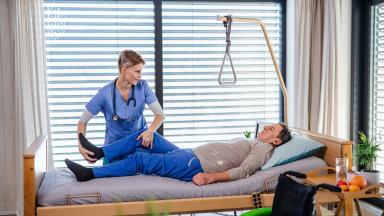
Inpatient Rehabilitation
Should recovery happen on a hospital ward, or at home with visits to a clinic? A ward is the answer when someone needs therapy every day, a nurse at night and a doctor nearby, which is common after a stroke, a hip fracture, heart surgery, a lung flare-up or a long spell in intensive care.
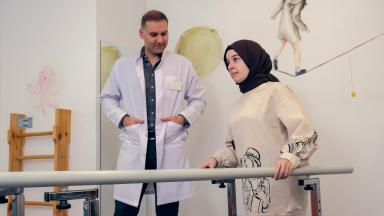
Inpatient Rehabilitation - Acute Rehabilitation Unit
Acute does not mean emergency here. It means the intensive level of rehabilitation, with at least three hours of therapy a day on a hospital ward where a rehabilitation doctor sees you daily, and it suits people in the first months after a stroke, a spinal cord injury, a brain injury or major surgery.