
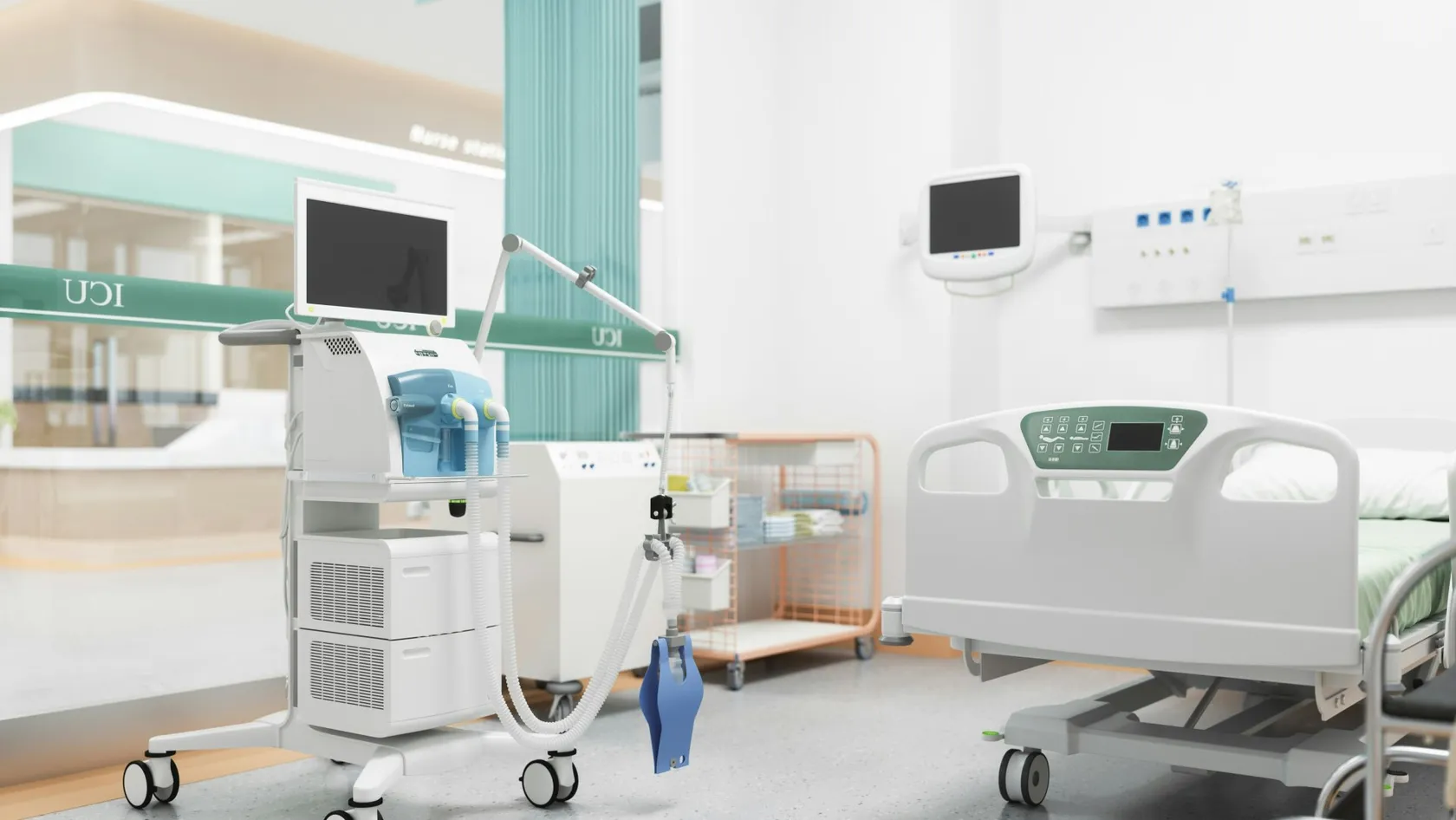
Severe Burn Treatment ICU
Most people assume the size of the burn decides everything. Breathing the smoke carries the same weight in the arithmetic as seventeen extra years of age, and it is the first thing a burn unit checks.
About This Department
Age counts once. Every percent of body burned counts once. Breathing the smoke counts as seventeen.
Across 39,888 burn patients in the American national registry, inhalation injury carried the same weight in the survival arithmetic as seventeen extra years of age, or seventeen more percent of the body burned. Burn units therefore ask about the smoke before they ask about the skin.
What severe means here, and the arithmetic behind it
Severity here reduces to three measurements, and every decision in the unit follows from them. How much of the body surface is burned. How deep the burn goes. Whether the airway and the lungs were in the fire.
Surface area gets estimated in percent, and the estimate matters more than any single laboratory value in the first two days, because fluid, surgery and transfer decisions are all calculated from it. Depth decides whether skin can regrow on its own or has to be replaced, and it is often uncertain on day one, because a burn that looks intermediate at the roadside declares itself over the following two or three days. Smoke in the lungs changes the whole picture.
The score, and what it is good for
Osler and colleagues rebuilt the old burn score using 39,888 patients from the American national burn repository, publishing the result in the Journal of Trauma in 2010. Age in years and percent of body surface burned contributed almost exactly equally, and inhalation injury added the equivalent of seventeen years or seventeen percent. So a forty year old with a thirty percent burn and no smoke injury sits at seventy, and the same patient who also breathed the fire sits at eighty seven.
Use that as a map, never as a verdict.
Scores describe what happens on average to a large group of people who resemble the patient. It cannot tell you what happens to this patient, it takes no account of how quickly treatment started, and modern burn units routinely carry patients through numbers that would have been considered hopeless a generation ago. Ask what the number means for planning. Survival is a different question and the score answers it badly.
The first day is about fluid, and too much is its own injury
A large burn leaks. Damaged capillaries across the burned area and, past a certain size, across the whole body let plasma escape into the tissues, so the circulation empties from the inside while the skin surface weeps. Replacing that volume in the first twenty four hours is what keeps the kidneys and the gut alive, and it is the single most time critical thing a burn unit does.
The formulas that estimate the volume are starting points and nothing more.
Each one multiplies body weight by burned surface area to produce a figure for the first twenty four hours, half of it given in the first eight, and the figure then gets adjusted hourly against what the patient actually does. Urine output guides it hour by hour, alongside blood pressure, lactate and how the peripheries feel. Respond well and you receive less than the formula predicted. Respond poorly and the volume climbs, which is where the trouble starts, because nobody wants to be the person who under-resuscitated a burn and the pressure runs entirely in one direction. Units spent two decades giving progressively more fluid than the formulas called for. The literature named the drift fluid creep, and the consequences turned out to be serious. Reviews in the critical care literature describe the same pattern, where excess volume swells the burned tissue and everything under it, converts a partial thickness burn into a deeper one, raises pressure inside the abdomen and inside the limbs, floods the lungs and prolongs ventilation. The response has been to set an upper limit as well as a lower one, to measure the running total hour by hour, and to use protocols or computer algorithms that force the rate down as soon as the patient allows it.
Ask the team what the twenty four hour total was. Good units track that number closely and can quote it without looking it up.
The airway, and why smoke changes everything
Fire injures the lungs three separate ways, and they arrive on different timetables.
Heat burns the upper airway directly, and the swelling that follows can close it over a few hours, so a breathing tube often goes in early, on suspicion, before the evidence is complete. Carbon monoxide and cyanide from burning household materials poison the blood and the cells within minutes of exposure, and both are treatable if they are looked for. The particles and chemicals in smoke then injure the small airways and the lung tissue itself over the following one to three days, producing a picture that looks like nothing at all on the first chest film and like severe lung injury by day three.
That delay is the trap. Somebody who walks in talking and refuses a bed can be on a ventilator by morning, which is why burn teams keep anybody with a suspicious exposure under observation even when the first examination reassures everybody in the room.
That delay also earns the seventeen point penalty in the score. Inhalation injury multiplies ventilator days, multiplies pneumonia, and interacts badly with everything else. The first question about any fire victim therefore concerns the enclosed space, the soot and the voice.
Taking the burn off, and taking it off early
Dead burned skin does not sit there waiting to heal. It feeds inflammation, it grows bacteria, and leaving it in place feeds both problems while the body tries to separate it by itself over weeks.
Modern practice removes it surgically and covers the result, starting within the first few days and continuing across a series of operations. A meta-analysis in Burns pooled six randomized trials comparing early excision against conservative treatment and found a substantial reduction in death among patients without inhalation injury, with a relative risk of 0.36 and a confidence interval running from 0.20 to 0.65. Hospital stay fell by nearly nine days. The one clear cost was blood, because cutting burned tissue away bleeds, and the early excision group needed significantly more transfusion. The operations then run in stages, because a patient can only tolerate so much blood loss and so much anesthetic at a sitting, and because donor skin has to be harvested, allowed to heal and harvested again wherever the burn outruns the available supply. Families often find the repetition harder than the first operation, so ask at the outset roughly how many trips to theater the plan contains.
Early surgery trades blood loss in the operating room for a lower chance of dying from infection two weeks later. Burn surgeons make that trade deliberately, and the trials support it.
Get that number early. It changes how a family paces itself across a long admission that will otherwise feel like an unbroken sequence of setbacks.
How the wound actually gets closed
Once the burn is off, something has to go on. The options differ in how long they last, where the skin comes from, and what the result looks like a year later.
Narrow screens scroll this table sideways. Swipe or drag to reach every column.
| Method | Where it comes from | What it is used for |
|---|---|---|
| Split thickness skin graft | A thin layer shaved from the patient's own unburned skin, usually thigh, back or scalp | The workhorse. Permanent, and the donor site heals itself in about two weeks and can be harvested again |
| Meshed graft | The same graft passed through a machine that cuts it into a net so it stretches to cover more area | Large burns where donor skin is scarce. The mesh pattern stays visible, so faces and hands go unmeshed wherever supply allows |
| Donor skin from a deceased donor | A tissue bank | A temporary biological dressing buying weeks while donor sites regrow. Rejection follows, and it is expected |
| Dermal substitute | A manufactured scaffold the patient's own tissue grows into | Deep burns over joints, where a thin graft would contract badly. It costs an extra operation and several weeks |
| Cultured skin cells | Grown in a laboratory from a small biopsy of the patient's own skin | Very large burns where too little donor skin exists. It takes weeks to produce and is fragile in handling |
| Temporary synthetic dressing | Manufactured | Shallower burns expected to heal without grafting, and holding cover while depth declares itself |
Faces, hands, feet, the perineum and anything crossing a joint get treated as special cases whatever their size, because the functional cost of a bad result there is out of all proportion to the area involved.
The engine that runs flat out for months
Major burns reset the body metabolically, and the reset outlasts the wound by a long way.
Stress hormones stay high, resting energy expenditure climbs and stays climbed, and muscle gets broken down to supply the raw material, so an untreated patient with a large burn visibly wastes while the grafts are healing. Feeding starts early, usually through a tube into the stomach or small bowel within the first day or two, and the calorie and protein targets are far above anything a ward patient would receive. Interrupting that feeding for operations, dressing changes and scans is one of the quiet reasons burn patients fall behind, so good units minimize the fasting windows deliberately.
What beta blockade showed
The catecholamine surge behind all of that can be blunted, and somebody tested whether blunting it helps. Herndon and colleagues randomized 25 children with burns covering more than 40 percent of the body surface to oral propranolol or to no beta blockade, reporting in the New England Journal of Medicine in 2001. The dose was titrated to drop the resting heart rate by a fifth. Over two weeks, net muscle protein balance improved by 82 percent in the treated children while falling by 27 percent in the controls, and fat free mass held steady in the treated group while dropping 9 percent in the untreated one.
Small trial. Large effect. It reframed the problem.
Treatment covers more than the wound. Protecting muscle across the months of healing decides how much of the patient walks out, and that work is done with food, with movement and with drugs that blunt the stress response. Nothing applied to the skin touches this part of the problem.
What actually kills people who survive the first week
Shock kills in the first days. After that the picture changes completely, and reviews of burn intensive care identify sepsis and multiple organ failure as the main causes of death among the patients who get through the initial resuscitation, which means the danger moves from the circulation to the bacteria at roughly the point a family starts to relax.
Anatomy explains it. Skin forms the body's largest barrier against bacteria, a large burn strips a great deal of it, and the same injury suppresses immune function at the same time. Add days of ventilation, central lines, urinary catheters and repeated operations, and the exposure is continuous.
Every ordinary sign of sepsis is produced by the burn itself. Fever, a racing heart and a high white cell count mean nothing here on their own, which is why burn teams read the direction of travel instead of the numbers.
What the unit does about it
Preventive antibiotics given to everybody are avoided, because they select resistant organisms without lowering the infection rate, and burn units are among the places where resistance hurts most. Instead the wound is inspected at every dressing change, cultures are taken from the wound and the blood when the picture changes, antibiotics are chosen against the organism actually grown and stopped when the course is finished, and lines are changed on a schedule. Recognizing infection here is harder than elsewhere, and knowing that in advance helps. A large burn produces fever, a fast heart rate and a high white cell count all by itself, so the ordinary signs of sepsis are present in a patient who has no infection at all. Burn teams work from deterioration in the pattern instead, meaning a rising oxygen requirement, falling platelets, worsening kidney function, a graft that stops taking, feeding that stops being tolerated, or simply a patient who was awake yesterday and is vague today.
Blood, and how much is enough
Few operations consume blood on the scale burn surgery does. Patients with large burns are routinely transfused more than their entire blood volume across an admission, and for years the question of when to transfuse was answered generously on the assumption that a higher hemoglobin helped grafts take.
It was tested. Palmieri and colleagues randomized 345 patients with burns covering 20 percent or more of the body surface across 18 burn centers, comparing a restrictive threshold against a liberal one, and reported the result in Annals of Surgery in 2017. The restrictive group received roughly half as many units, with a median of 8 against 16. Bloodstream infection, organ dysfunction, ventilator days and time to wound healing came out the same, and 30 day mortality was 9.5 percent against 8.5 percent, which is no difference.
Fewer transfusions. Same outcomes. Restrictive thresholds now stand as the default, and a unit still transfusing liberally should be able to say why.
Pain, dressing changes and the part patients remember
Survivors asked what was worst mostly describe the dressing changes. The injury and the operations come further down the list.
Two separate components make up burn pain, and each needs its own treatment.
Good units plan the procedure, and the drug follows from it.
- Short acting analgesia or sedation is timed to the dressing change and given before it starts. Never once the patient is already in pain.
- The same staff do it the same way each time, so that the patient knows the sequence and the likely length in advance and is not asked to trust a new person with something that hurt yesterday.
- Dressings come off wet where the ward allows a bath or a shower, because soaked dressings separate far more easily than dry ones.
- Distraction is offered to adults as well as to children, and it works on both.
- The patient has a stated pause word, and everybody in the room honors it.
Anxiety and pain feed each other here more visibly than almost anywhere in medicine, so the psychological side counts as part of the analgesia and gets treated that way.
If pain is being managed badly, say so on the day. Pain control is fixable, and nobody benefits from a patient who endures it quietly.
What families see, and what it means
A burn intensive care room confronts people, and almost everything in it carries a plain explanation.
Columns run past the edge on a small screen. Slide the table across to read them.
| What you see | What it usually means |
|---|---|
| The patient is swollen almost beyond recognition | The fluid of the first day sitting in the tissues. It peaks around 48 hours and then comes off over the following week, and the face returns |
| The room is kept uncomfortably hot | Burned skin cannot hold heat, and a cold patient burns through calories and clots badly. The temperature is set for the patient |
| Dressings are changed behind a closed door, daily | The wound is being inspected as much as dressed, because how it looks today is the main evidence about infection and graft take |
| Limbs are splinted in awkward positions | Deliberate. Burned skin contracts as it heals, and splinting in the stretched position is how a hand or an elbow keeps its range |
| A second wound appears where there was no burn | The donor site, where skin was harvested for grafting. It heals on its own in about two weeks and is often more painful than the graft |
| Everyone entering wears a gown, gloves and a mask | Barrier precautions protecting the patient, because the missing skin is the missing defense |
| The patient looks worse on day three than on day one | Common, and usually expected. Smoke injury and the inflammatory response both peak after the first day, and never on it |
Photographs taken for the record are part of normal care and families are entitled to see the wound if they want to. Most people find the reality less frightening than what they had imagined, and the staff will prepare you first.
Scars, contractures and the years afterwards
Wound closure is the halfway point. What follows takes longer. It decides more.
Deep burns heal with scar that thickens, reddens and tightens over the first six to twelve months before slowly softening across the second year, and left alone it pulls joints out of position. The work against that starts in the intensive care unit with positioning and splinting, continues with daily stretching, pressure garments worn for most of the day over many months, silicone, moisturizing of skin that no longer makes its own oil, and sun protection over new scar that burns easily and darkens permanently. Itch turns up in nearly everybody. It is frequently worse than the pain, and it responds to treatment.
The first year is the one that counts
Everything done in that window changes the end state, and very little done afterwards changes it as much. A family that keeps the garments on and the stretches going through the months when nothing seems to be happening ends up with a different result from one that stops at six months because the scar looked settled.
Reconstruction comes later, and it is planned
Releasing a contracture, resurfacing a scarred area or rebuilding an eyelid is a second phase of surgery that generally waits until the scar has matured, which is a matter of months, unless a contracture is threatening function or growth in a child. Get the reconstruction plan in writing before you fly home, because it is the part most easily lost between two countries.
Psychological recovery runs on its own clock and deserves naming. Sleep disturbance, intrusive memories of the fire, avoidance and low mood are common after a severe burn, they respond to treatment, and they are not a failure of character. Raise them with your team. Waiting for somebody to ask wastes months.
Planning the trip, the stay and the flight home
Severe burn care divides into two situations that need different planning, and the difference matters more here than on most pages.
Acute major burns get treated where they happen. Flying an unstable patient with a fresh large burn across a continent for the first operation helps nobody, because the days that decide the outcome are the first ones and they do not travel. The second phase travels well. Reconstruction of contractures and scars, grafting that was never completed, releases around the face, hands and joints, and revision of results the patient is unhappy with are all planned operations on a healed patient, and they can be arranged in advance with dates fixed.
Photographs help more than anything else you can send. Take them in daylight, from several angles, with a hand or a ruler in frame for scale, and including any donor sites. Add the discharge summary from the original admission, the operation notes listing what was grafted and when, the percent of body surface burned if it was recorded, the current medicine list, and a plain description of what the patient can and cannot do now, meaning which joints will not straighten and which movements are lost. A burn and reconstructive surgeon reads them and tells you which operations would help, in what order, and how many stages it would take. That review is free and it commits you to nothing. Flying then carries its own clearance, separate from discharge. A healed and grafted patient travels normally, and a patient with open wounds or fresh grafts does not, because dressings need changing in flight, grafts need pressure kept off them, and a long period sitting still is bad for a newly grafted lower limb. Your surgeon gives you the date. Book a changeable ticket and buy insurance covering an extended stay and a medical repatriation, and read the policy before you buy on price.
Follow up after you return home is arranged before you leave, because the long term work happens where you live. You go home with the operation notes, photographs of the result, the pressure garment prescription with measurements, the splinting and stretching program written out, and a scar care plan a local physiotherapist can follow. Your coordinator stays reachable on the same WhatsApp number and you send photographs at the intervals agreed, which is how a graft problem gets caught from another country. A wound that opens, a fever, a graft that changes color or a contracture tightening faster than expected all go to a local doctor the same day, and to us immediately afterwards. Photographs are what make that work across a border, because a description of a graft is close to useless while a photograph taken in daylight answers the question in seconds, so get into the habit early and keep the same angles each time. Nobody here minds being sent pictures of something that turns out to be nothing.
The international patients team covers seven languages directly, namely English, Arabic, French, Russian, Serbian, Romanian and Spanish, with interpreting in anything else arranged on request. One coordinator takes the case from your first message and follows it through discharge. After the move to a normal room, one person stays overnight because those rooms have a companion bed, and accommodation for the nights either side of the admission comes from the international patients office along with the airport transfers. Halal, vegetarian and diabetic diets come from the hospital kitchen, there is a prayer room on site, and a request for a female surgeon goes to the department and is accommodated wherever the rota allows.
What moves the cost of burn intensive care
Treating a major burn ranks among the most expensive treatment in medicine, and no published figure will fit your case, because the total follows the surface area and the number of operations rather than a procedure name.
Drag the table sideways where a phone cuts off the last column.
| What moves the total | Which direction, and why |
|---|---|
| Percent of body surface burned | The master variable. It drives the number of operations, the dressing consumption, the nights and the staffing all at once |
| Number of trips to the operating room | Large burns are closed across a series of operations, and each one carries theater time, anesthesia and a fresh donor site |
| Inhalation injury | Adds ventilator days, pneumonia treatment and often a tracheostomy, which is why it moves the cost as sharply as it moves the risk |
| Dermal substitutes and cultured skin | Manufactured cover is expensive and adds operations and weeks. It is used where donor skin runs short or the site demands it |
| Blood products | Counted by the unit, and burn surgery uses them heavily, though a restrictive strategy has been shown to halve the number safely |
| Rehabilitation, splints and pressure garments | Daily therapy across the whole admission, plus custom garments that are remade as swelling settles and as a child grows |
Health the patient arrives with moves it before anything happens. Age, diabetes, heart and lung disease, smoking and a poor nutritional state all slow graft healing, and a graft that fails has to be redone, which is how a patient factor turns into another trip to theater and another line on the invoice. Nutrition is the one on that list a family can influence directly, because a patient who meets the calorie and protein targets grafts better than one who does not, and meeting those targets through weeks of operations, fasting windows and nausea takes somebody paying attention every single day. Ask how the feeding is going as often as you ask how the wound looks, because the two questions are closer to being the same question than they appear.
Five questions to put in writing before you commit
How many operations does this figure assume, and what happens financially if the number rises. Are dermal substitutes or cultured skin inside the figure, or quoted separately as and when they turn out to be needed. How many intensive care nights does it assume. Does it cover the pressure garments and the splints, including the remaking of both as swelling settles and, in a child, as the child grows. Is a later reconstruction stage quoted now, and for how long does that quote hold.
Any number that means something comes from a surgeon who has seen the photographs. That reading costs nothing.
Severe burn treatment FAQ
How long does someone stay in a burn intensive care unit?
Burn centers work to a rough rule of around one day of hospital stay for each percent of body surface burned, with the intensive care portion concentrated at the front. A twenty percent burn in a fit adult without inhalation injury may mean two or three weeks in hospital and a shorter spell in the unit, while a large burn with smoke injury runs into months. The team gives you a moving estimate rather than a date, because each operation resets the clock.
Will the scars fade?
Scar from a deep burn thickens and reddens for six to twelve months before softening across the second year, so what you see at three months is not the final result, and judging the outcome then is the mistake almost everybody makes. Pressure garments worn for most of the day, silicone, daily stretching and strict sun protection all change where it ends up, and they work only if they are done consistently across months rather than in bursts. Color settles last. A scar that is angry red at six months is commonly pale and flat at two years, particularly in younger patients, and new skin that darkens permanently after one sunny afternoon will keep doing that for at least a year, so the sun advice is not a formality. Reconstruction can improve function and appearance further, and it gets planned once the scar has matured rather than while it is still changing under your hands.
Can a burn patient be flown abroad for treatment?
Not in the acute phase. A fresh major burn gets treated where it happens. Reconstruction is different, and once the wounds are closed releases, resurfacing and revision surgery can all be arranged in advance.
Why does the patient look worse on the third day than on the first?
Because two of the three main processes peak after day one. Inhalation injury damages the small airways over one to three days, so the chest film that was clear on arrival can look severe by day three, and the swelling from resuscitation fluid peaks around 48 hours before it comes off. Neither is necessarily a sign that treatment is failing.
Can one of us stay with the patient?
Inside the unit, visiting follows rules stricter than a general unit applies, because the patient has lost the barrier that keeps bacteria out. Your coordinator sends you those rules in writing before you arrive. After the move to a normal room, one person stays overnight, because those rooms have a companion bed.
Will anyone there speak our language?
Seven directly, namely English, Arabic, French, Russian, Serbian, Romanian and Spanish, with interpreting in anything else arranged on request. One coordinator takes the case from your first message and stays with you through discharge, which matters most during the dressing change conversations and while each operation is being planned, because those are the moments a family has to understand a trade-off rather than simply receive news, and a translated summary delivered an hour later is not the same thing at all.
References
- Osler T, Glance LG, Hosmer DW. Simplified estimates of the probability of death after burn injuries. Extending and updating the Baux score. The Journal of Trauma. 2010;68(3):690-697.
- Ong YS, Samuel M, Song C. Meta-analysis of early excision of burns. Burns. 2006;32(2):145-150.
- Herndon DN, Hart DW, Wolf SE, Chinkes DL, Wolfe RR. Reversal of catabolism by beta-blockade after severe burns. New England Journal of Medicine. 2001;345(17):1223-1229.
- Palmieri TL, Holmes JH, Arnoldo B, Peck M, Potenza B, Cochran A, et al. Transfusion requirement in burn care evaluation (TRIBE). A multicenter randomized prospective trial of blood transfusion in major burn injury. Annals of Surgery. 2017;266(4):595-602.
- Rex S. Burn injuries. Current Opinion in Critical Care. 2012;18(6):671-676.
Editor's note
Written by the Biruni Hospital medical editorial team. Reviewed by Assoc. Prof. Dr. Selçuk ALVER, Anesthesia and Reanimation.
Medically reviewed by
Assoc. Prof. Dr. Selçuk ALVER
Anesthesia and Reanimation
Related Treatments
View All
Bone Marrow Transplant Unit (BMT Unit)
Between the mid 1990s and the mid 2000s, death within 200 days of an allogeneic transplant that was not caused by relapse fell by 60 percent, and almost none of that came from a new drug. This page is about the part nobody photographs, meaning the filtered room, the rules that have evidence behind them and the ones that do not, the laboratory chain behind the cells, and what a family can actually do.
Burn ICU (Burn Intensive Care Unit)
Age, burn size and smoke inhalation are the three numbers that set the outlook after a major burn. This page walks through fluids, early surgery and grafting, the long healing phase, and when a burn patient can be flown abroad.
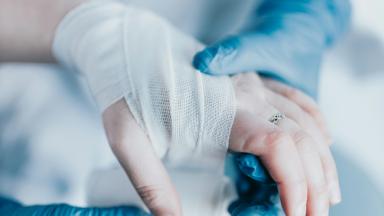
Burn Unit (Burn Center)
Burn care runs on one figure, the percentage of the body surface burned, and a systematic review of 28 studies found that referring hospitals overestimate it in half or more of cases. Fluid volume, the transfer decision and the survival estimate are all calculated from that number, which is why this page starts with how it is measured and who should be measuring it.
Cancer Pain Management Unit
The Cancer Pain Management Unit at Biruni Hospital in Istanbul treats pain caused by cancer and by its treatment. Two in three people with advanced cancer report pain, and reviews show nearly one in three receive medication too weak for it. The unit uses stepwise medicines, radiotherapy for bone pain, nerve blocks and spinal pumps, and plans follow-up for patients who return home abroad. The pain team reviews reports and current medicines free of charge.
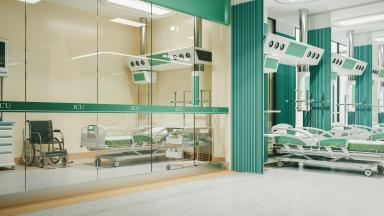
Cancer Patient ICU Care
Cancer once counted as a reason not to offer an intensive care bed at all. Pooled data from 7,354 critically ill cancer patients retired that rule, and the argument now is about which patient, for what, and how long full support runs before anybody formally reassesses it.