Robotic orthopedic surgery explained plainly, how it works, what the research shows for knee, hip and spine, and what recovery abroad actually involves.
About This Department
A surgeon has told you the knee or hip needs to be replaced, or a spine problem needs fusing, and somewhere in that conversation the word robotic came up. It sounds reassuring and slightly unnerving at the same time. This article covers what the robot does in the operating room, what the research says once the marketing language is stripped away, and what the process looks like for someone flying in from abroad, from the first message to the flight home.
1 to 2 hours
typical operating time for a robotic knee or hip replacement
Surgeon led
the arm follows a plan the surgeon builds and can override
~2 weeks
rough guide before a surgeon typically clears a lower limb patient to fly
Same risks
as conventional joint replacement
Free consultation
Unsure whether a robotic procedure applies to your case
Send your imaging (X-ray, CT or MRI) and your surgeon's notes on WhatsApp. An orthopedic specialist will tell you whether robotic assistance is relevant to your joint or spine problem, what the alternatives are, and roughly how long you would need to stay, at no cost and before you book anything.
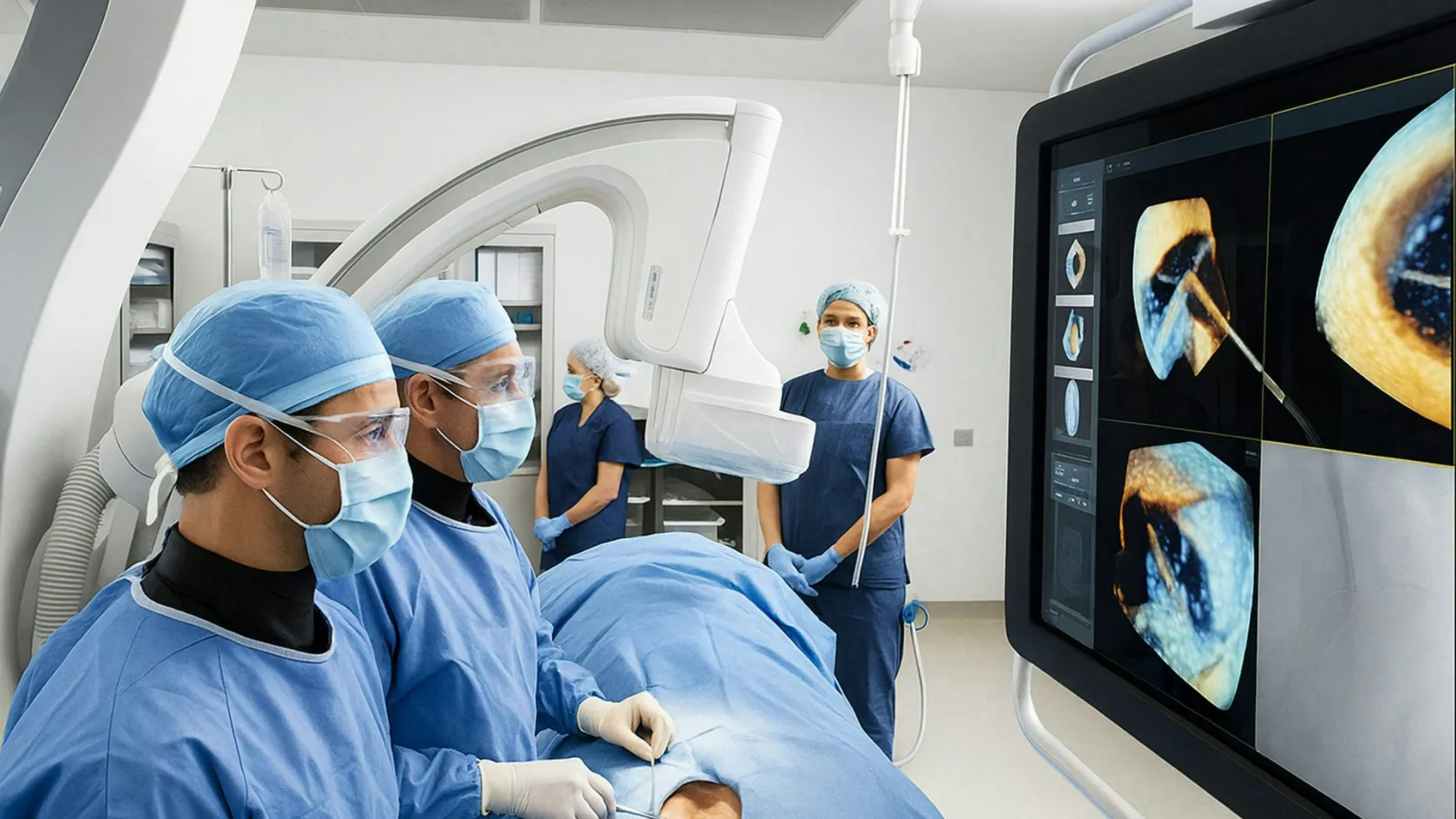
Robotic orthopedic surgery uses a computer controlled arm, built from a CT or MRI scan of your own joint, to carry out a plan the surgeon draws up before the operation begins. That scan becomes a three dimensional model of your own bone, not a textbook average. Implant size, position and angle get decided on that model well before you are anesthetized, and in the operating room the arm holds the surgeon to it.
The arm does not cut, drill or place anything on its own. It resists movement that strays outside the planned boundary, a form of feedback engineers call haptic guidance, roughly comparable to the lane assist in a modern car nudging the wheel back toward the lane. The surgeon makes the incision and reads the tissue as the joint opens. If something looks different from the plan, the surgeon changes course right there, and that part has no substitute.
Why the surgeon, not the robot, is the one making decisions
The worry nearly every patient arrives with is whether the machine is the one making the decisions. It is not. What the system removes is small variation between one case and the next, things like a slightly awkward angle, a long surgical day, ordinary fatigue. A skilled surgeon without a robot can still deliver an excellent result, and the tool narrows the range of outcomes rather than replacing the judgment the operation depends on.
The system names you will come across
Several platforms are in clinical use worldwide, and the brand name matters less than whether the surgeon operating on you has used it often enough to be fluent with it. Knee and hip systems are typically arm assisted and planned from a preoperative CT scan. Spine systems serve a narrower purpose. They guide pedicle screws into bone that sits a few millimeters from the spinal cord, a task where robotic guidance has shown a measurable accuracy advantage over freehand technique, covered below.
Which Joints and Procedures It Applies To
Three areas account for almost all robotic orthopedic work today. Knee replacement is where the technology matured first, both the partial procedure that resurfaces a single worn compartment and the full replacement. Hip replacement follows, where the system mainly helps seat the socket at the angle that gives the joint the best chance of feeling natural and lasting. Spine surgery is narrower and more specialized, used chiefly to place screws during a fusion. Shoulder replacement and larger reconstructive work are starting to use robotic platforms too, though the evidence base there is thinner and newer.
Robotic Knee Replacement
Partial (single compartment) and total knee replacement. The most established application of the technology.
Robotic Hip Replacement
Guides socket positioning and offset, which affects leg length balance and dislocation risk.
Robotic Spine Surgery
Mainly pedicle screw placement during spinal fusion, where millimeters separate a well placed screw from a nerve injury.
Shoulder and Complex Reconstruction
An emerging application, with a smaller body of published outcome data so far.
A robotic knee or hip replacement is still major surgery, with the same anesthesia and the same recovery period as the conventional version. What changes is how precisely the plan gets carried out, not the scale of the operation. Marketing pages that suggest otherwise are simplifying past the point of being useful to you.
What the Published Research Shows
A 2026 meta-analysis in Cureus pooled 12 randomized and quasi-randomized trials covering 2,269 patients undergoing robotic-assisted versus conventional total knee arthroplasty. Robotic surgery took longer on the operating table, by an average of just under 24 minutes, and showed no significant difference in hospital stay, blood loss or the overall rate of adverse events. Where it did separate from conventional surgery was alignment. The postoperative hip knee ankle angle sat closer to the target with robotic assistance, and fewer knees ended up meaningfully off that target.
That alignment advantage held across every subgroup the reviewers checked. Whether it translates into a knee that feels better years later is a separate question, and the same body of research answers it more cautiously. Pain scores, function scores and complication rates run broadly level between robotic and conventional surgery in the short and medium term. Roughly 80 to 90 percent of knee replacement patients report satisfaction at one year, a figure that holds steady whether a robot was involved or not.
Hip replacement performed through the direct anterior approach shows a similar split in a 2026 review. Robotic assistance achieved better acetabular socket orientation and a higher proportion of implants landing inside the predefined safe zone, with less variability between cases than conventional technique. What patients themselves reported afterward stayed largely comparable between the two approaches. Spine surgery tells a tighter story. A 2026 systematic review and meta-analysis of 14 studies comparing robotic guidance against image based navigation for thoracolumbar pedicle screws found a significant advantage for the robotic group in both hospital stay and screw placement accuracy, with no meaningful difference in operative time, blood loss or the rate of screw revisions.
This table scrolls sideways on a narrow screen. Swipe or drag to see every column.
Robotic assisted versus conventional surgery, by what the research measured
Measure
What tends to favor robotics
What stays roughly level
Implant alignment
Consistently closer to the surgical plan, across knee, hip and spine studies
Not applicable
Pain and function at one year
Not applicable
Broadly comparable to conventional surgery
Operative time
Not applicable
Runs longer with robotics, by roughly 20 to 25 minutes on average
Hospital stay and blood loss
Not applicable
No consistent difference reported
Robotic assistance earns its place in this evidence base without being the transformation some clinics imply. A well trained surgeon working the conventional way can still deliver a knee or hip that lasts and functions well, and anyone crediting the robot alone for a better outcome is promising more than the current evidence supports.
Is Robotic Orthopedic Surgery Safe?
The risks are the same ones that come with any joint replacement or spinal fusion, namely infection, blood clots, bleeding, the usual risks of anesthesia, and occasionally a problem with the implant itself that requires revision later. Adding a robotic arm to the process has not been shown to add a new category of risk on top of those.
On infection specifically, a 2026 meta-analysis in the Journal of Robotic Surgery pooled 87 comparative studies of robotic versus manual total knee arthroplasty. It found a lower overall infection rate with robotic surgery and a lower rate of periprosthetic joint infection, with the two techniques running level within the first two years and robotic surgery pulling ahead on periprosthetic infection risk beyond that point. Surgical site infection specifically showed no significant difference either way. That finding is reassuring on its own terms, and it is also a reminder to compare infection risk after knee replacement as a whole, not simply whether a robot was involved.
Hip surgery tells a more cautious story. A 2026 cohort study of 3,243 primary hip replacements across seven surgeons found an overall dislocation rate of 1.0 percent, with the robotic assisted posterior approach subgroup showing a higher rate, 2.7 percent, than the conventional posterior approach, 1.2 percent. The difference was not statistically significant, and the robotic group was small, only 111 hips, which is exactly the kind of number that should make you distrust a confident claim in either direction. The same study found active smoking raised dislocation odds more than sixfold, a reminder that surgical technique is one variable among several that determine how an operation goes for you.
Keeping these risks low comes down to unglamorous basics rather than the robot itself, things like proper preoperative screening, antibiotics and clot prevention timed around the operation, strict sterile technique, and getting you upright and moving within a day, which by itself cuts clot risk substantially. Those basics, done consistently, are what a hospital's safety record reflects, more than which brand of arm sits in the operating room. No operation is without risk, and a source that suggests otherwise is worth the same skepticism you would give a sales pitch.
Who This Is For, and Who It Usually Is Not
If you would qualify for a standard first time knee or hip replacement, you will very likely qualify for the robotic version too. Revision surgery is different. Surgeons get more selective once scar tissue and altered anatomy from a previous implant are involved, and some revision cases are not suited to robotic guidance at all. Candidacy depends on your imaging, your joint, and your overall health, which is why a clinician's review beats any checklist on a web page, this one included.
Usually a candidate.
Joint pain from osteoarthritis, rheumatoid arthritis or an old injury that has not improved with physiotherapy, weight management, anti-inflammatories or injections, in a patient otherwise fit for a first time joint replacement.
Often not a candidate, or assessed case by case.
A severe bone deformity, an active infection anywhere in the body, a health condition that makes major surgery unwise for now, or a complex revision case. None of these rule out treatment altogether. They usually mean a different approach or further workup first.
If you are not certain where you fall, send your scans and clinical notes through the contact details above. An orthopedic specialist will review your specific case, including saying so directly if robotic surgery is not the right recommendation, which happens more often than clinics tend to advertise.
From Your First Message to the Operating Table
1
Remote review of your case
You send your imaging and any specialist notes you already have. An orthopedic specialist reviews them and tells you, before you book a flight, whether robotic surgery applies to your case and roughly what the trip would involve.
2
Pre-operative workup on arrival
A CT scan of the joint builds the surgical plan the robotic system will use. Alongside it come routine blood tests, a heart check and an anesthesia review. You may be asked to stop certain medications, blood thinners in particular, for a period before surgery.
3
Surgery day
Anesthesia is agreed with you in advance, often a spinal block with sedation for knee and hip cases, occasionally general anesthesia. The operation itself typically runs one to two hours. You will usually be walked, with support, within a day of surgery.
A detail that rarely makes it onto a hospital web page is that the question asked most often the night before surgery is not about the robot at all. It is whether the operation will hurt. Pain control after joint replacement now typically combines several methods deliberately, so that you can move early without unmanaged pain. There is discomfort. It is managed, and it is not the ordeal that lying awake beforehand tends to imagine.
What we need from you for a useful first opinion
The single most common reason a first review takes longer than it should is an incomplete file. Send the imaging itself, not only a radiology report describing it, since the specialist needs to see the joint directly. Send your surgeon's most recent clinical letter, a list of current medications, and, if you have had previous joint surgery, the operative note from that procedure. A complete file from the outset is usually the difference between a same week opinion and a frustrating back and forth over email.
Recovery Week by Week, and Flying Home
Recovery follows a fairly predictable shape, even though the pace is individual. Within a day of surgery, most patients take a few supported steps. Over the following two to four weeks, pain settles enough that strong painkillers are usually no longer needed daily. Somewhere between weeks four and six, walking aids tend to be set aside and ordinary activities, including driving, start to return. From six weeks to three months, low impact exercise fills most of the rehabilitation work, and strength continues to build for up to a year after surgery, particularly for a full knee replacement.
The mistake we see most often happens around week two. The joint feels good enough to push, the patient overdoes it, and pays for it in swelling and setback over the following days. Recovery rewards patience over heroics, especially in the first month.
When Are You Cleared to Fly Home?
International patients rarely get a specific answer to this question elsewhere. A long flight soon after lower limb surgery raises the risk of a blood clot, so the date is set by how your leg and wound are healing, not by which return ticket you already bought. Many patients are cleared to fly around two weeks after knee or hip replacement, sometimes earlier for a short regional flight, always with clot prevention measures such as compression stockings and, where appropriate, blood thinning medication in place. Spine surgery timelines vary more by procedure and get set individually. Your treatment plan should build in a safe flight date from the outset, stated clearly before you commit to nonrefundable travel.
Warning signs that should prompt an immediate call, wherever you are
A wound that turns redder, hotter or starts weeping, a new fever, a calf that becomes painful or swollen, or sudden shortness of breath or chest pain. Most recoveries never involve any of this, but knowing the short list, and having a real person to call, matters more once you are no longer down the hall from the surgical team.
What Happens Once You Are Back Home
Care does not end at the departure gate. Before you leave, you should have a written record of the operation, the implant used, and a rehabilitation plan a physiotherapist or doctor in your home country can pick up without starting from zero. You should also know exactly how to reach the surgical team if a question or a warning sign comes up after you are home, and roughly how quickly you can expect an answer.
Remote follow-up typically means a photo of the wound, a short written update, or a video call at agreed intervals, most often around the two week and six week marks after joint replacement, with the schedule adjusted for how you are healing. If something does not look right, that same channel is where it gets raised first, before deciding whether it needs a local doctor's attention or a message back to the surgical team in Istanbul.
This handover is where cross border care most commonly breaks down when it goes wrong, and it is worth asking about before you travel. Who exactly do I contact after I am home, in what language, and how fast should I expect a reply. A hospital confident in its own aftercare answers that question specifically, not in general terms.
What Determines the Price
Distrust any page that hands you a fixed number before it has seen your case. What you pay depends on which joint or spinal level is involved, the specific procedure, the implant selected, how many nights you stay in hospital, any additional imaging or rehabilitation you need, and what a quoted package includes and excludes, namely the surgery itself, the hospital stay, the implant, airport and hospital transfers, accommodation, and interpreting. Some international insurance policies contribute toward treatment abroad. Most domestic policies in your home country will not.
Published price comparisons for robotic joint replacement abroad vary widely between countries, largely because they rarely itemize the same things. Some quote the surgeon's fee alone. Others bundle in the hospital stay, the implant and the interpreter, and quietly leave out the follow-up visits that turn out to matter most. That inconsistency is why a number pulled from a comparison site is a poor basis for a decision, and why the figure below needs to come from Biruni directly rather than from us summarizing someone else's spreadsheet.
An accurate figure comes only from someone who has reviewed your imaging and your specific procedure. A package worth trusting spells out what is included and what is not, in writing, before you travel.
Practical Questions Worth Asking Before You Book
Patients arrive for this kind of surgery from very different starting points, the Gulf, the Balkans, Central Asia, West Africa and Western Europe among them, and the clinical part of the page above applies the same way regardless of where you are travelling from. The practical questions differ more by person than by country, and they are worth putting to the international patients team rather than assuming an answer either way.
Ask how many people can travel with you and where a companion stays during your hospital days, since joint replacement recovery is easier with someone present and policies on this vary by hospital. Confirm which languages the coordination team covers day to day, and whether a female physician can be requested if that matters to you. Dietary requirements matter too, and so does the paperwork for an invitation letter if your visa application needs one. Raise all of this before you travel rather than after. None of it is awkward to ask, and a team that handles international patients regularly should have a specific answer ready rather than a vague reassurance.
Frequently Asked Questions
Does the robot perform the operation by itself?
No. The surgeon plans the operation, makes every cut, and controls the robotic arm throughout. The system holds the surgeon to the plan and provides feedback if the instrument moves outside it.
Is robotic joint replacement better than conventional surgery?
It is measurably more precise at implant positioning. On pain, function and satisfaction a year after surgery, the current evidence shows the two approaches running roughly level, with operative time typically longer for the robotic version.
How long do I need to stay in the country after surgery?
Long enough for the surgical team to confirm your wound and mobility are on track before a long flight, commonly around two weeks for knee or hip replacement, though your surgeon sets the exact date based on your own healing rather than a fixed rule.
Can someone travel with me, and what happens if I have a complication after I get home?
Most patients travel with a companion, and hospitals experienced with international patients typically arrange nearby accommodation for them. If something comes up after you are home, you should have a direct line to your surgical team for a remote check before deciding whether local care is needed. Ask about this specifically before you book.
Is robotic surgery safe for someone who is not otherwise young or especially fit?
Age alone rarely rules a patient out. What matters more is overall health and how well any existing conditions, such as diabetes or heart disease, are controlled going into surgery. A proper preoperative assessment, not an age cutoff, is what determines whether you are a safe candidate.
What does robotic orthopedic surgery cost?
It depends on the joint, the implant and what the package includes, so any fixed number quoted before your imaging has been reviewed should be treated with caution. A written, itemized quote after your case has been reviewed properly is what to ask for.
Scientific References
Idrees MA, Ibrahim S, Ibrahim M. Robotic-assisted versus conventional total knee arthroplasty: a systematic review and meta-analysis of randomized and quasi-randomized controlled trials evaluating perioperative and radiographic outcomes. Cureus. 2026;18(4):e106394. doi:10.7759/cureus.106394
Wu Z, Zhang Y, Jiang Z, Lv D, Shen Z, He B. Robot-assisted total knee arthroplasty and the risk of postoperative infection: a systematic review and meta-analysis. Journal of Robotic Surgery. 2026;20(1). doi:10.1007/s11701-026-03771-1
Hulse N. Robotic-assisted total hip replacement using direct anterior approach. Journal of Clinical Orthopaedics and Trauma. 2026;80:103533. doi:10.1016/j.jcot.2026.103533
Alqazzaz A, Chen AT, Smith WE, Travers C, Gibon E, Nelson CL. Dislocation risk in modern total hip arthroplasty: comparing surgical approaches with and without enabling technology. The Journal of Arthroplasty. 2026;41(9S1):S185-S191. doi:10.1016/j.arth.2026.03.036
Papalia GF, Nardi N, Maltese G, Marcello G, Fazzi N, Russo F, Vadala G, Papalia R, Denaro V. Robotic versus intraoperative image-based navigated thoraco-lumbar pedicle screw fixation: a systematic review and meta-analysis. Musculoskeletal Surgery. 2026. doi:10.1007/s12306-026-00965-6
Editor's note
Written by the Biruni Hospital medical editorial team. Reviewed by Assistant Professor Şafak SAYAR, Orthopedics and Traumatology.