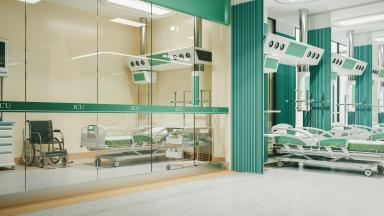
Private room inpatient care at Biruni Hospital in Istanbul means a single room with a companion bed for one relative. Studies show two in three patients prefer a room of their own, and one intensive care unit saw resistant infections fall by 54 percent after moving to private rooms. This page describes a day and a night on the ward, the companion's role, safety when nobody is watching, what to bring and what to ask about cost.
About This Department
Private room care
Two in three hospital patients say they prefer a room of their own. When one intensive care unit converted to private rooms, patients acquired three resistant organisms 54 percent less often.
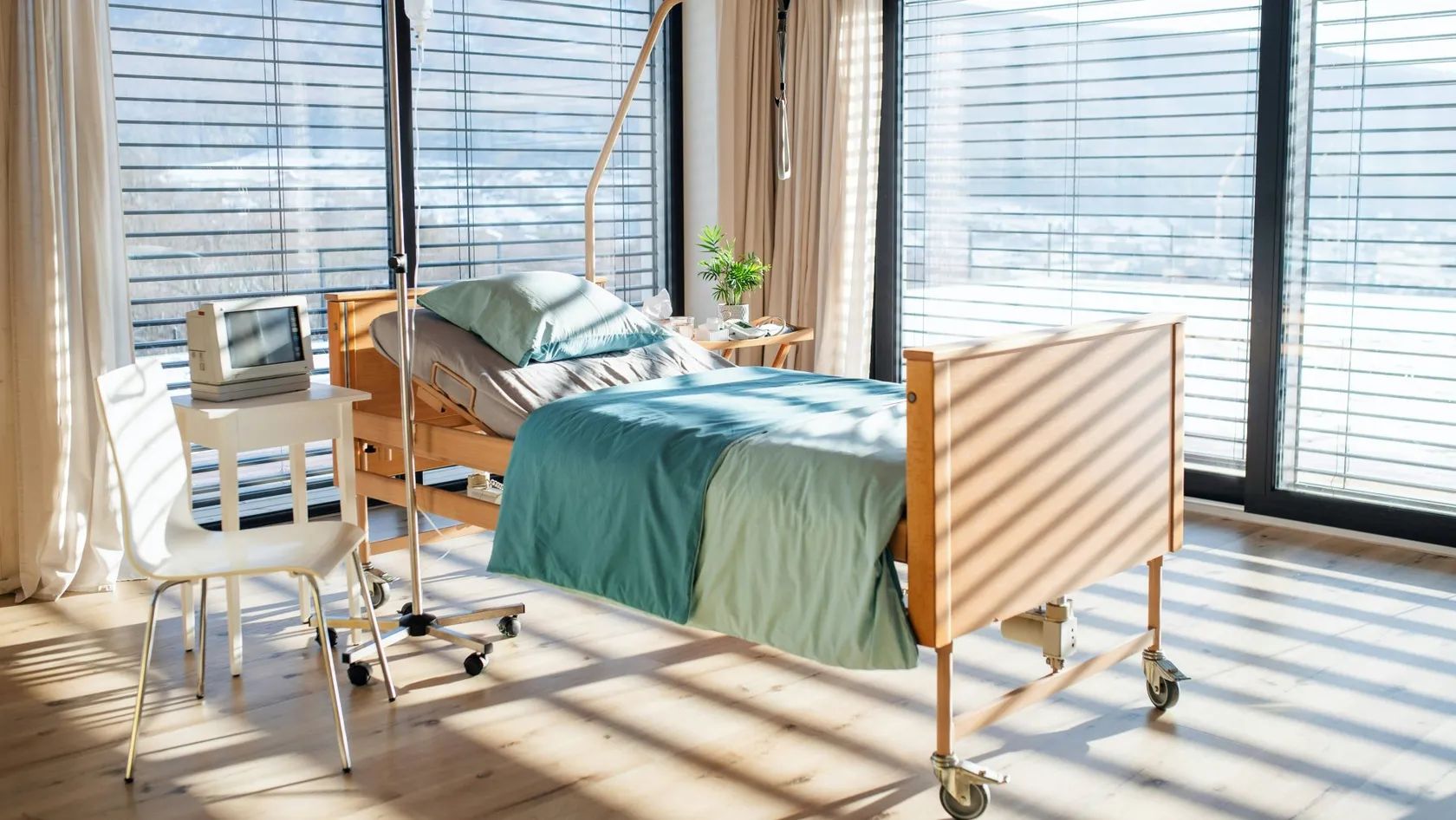
A private room is a single-occupancy hospital room with its own bathroom, where one patient is cared for without sharing space with others. The preference figure comes from an English hospital that moved entirely to single rooms and asked patients before and after (Maben and colleagues, BMJ Quality and Safety, 2016). The infection figure comes from a Montreal intensive care unit compared against a neighboring hospital over the same years (Teltsch and colleagues, Archives of Internal Medicine, 2011). Both studies also found drawbacks, and this page reports them. It explains what private room inpatient care at Biruni Hospital in Istanbul is like from morning to night, how a companion fits in, and how to stay safe in a room where nobody else is watching.
2 in 3
Patients who preferred a single room in a hospital that offered nothing else
54
Percent fall in acquisition of three resistant organisms after a unit moved to private rooms
10
Percent shorter stay in that unit after the move
Free
Review of your reports and a written plan before admission
Evidence on single rooms is good, mixed and worth reading with both eyes open.
This table scrolls sideways on a narrow screen. Swipe or drag to see every column.
Three studies of single hospital rooms
Study
Finding
Caveat
Maben, 2016, England
Two thirds of patients preferred single rooms and valued privacy, confidentiality and freedom for visitors
Some felt isolated. Staff found patients harder to see, and the hospital found no fall in infection rates
Teltsch, 2011, Canada
Acquisition of C. difficile, resistant Enterococcus and MRSA combined fell by 54 percent after an intensive care unit moved to private rooms
One unit, compared with one neighbor
Ulrich, 1984, United States
After gallbladder surgery, 23 patients with a window onto trees went home sooner and took fewer strong painkillers than 23 facing a brick wall
Small, old, and never bettered as a reminder that surroundings count
Put together, the three say something sensible. A room of your own gives privacy, control over light and noise, room for family and fewer chances to pick up another patient's bacteria, and in exchange you lose the company of neighbors and the casual eye of a nurse walking past an open bay. Knowing that trade in advance lets a patient collect the benefits and cover the gap. None of the drawbacks is hard to fix. Isolation answers to a companion, an open door and a walk, and visibility answers to a call bell that is used without embarrassment, and both depend more on what the patient and family do than on anything the building provides, which is the subject of the sections that follow. Read them before admission if you can, and give them to whoever will be staying with you, since the companion carries half of this.
A day and a night
Hospital days run to a rhythm that nobody explains. Blood is drawn before dawn so that results are ready for the round, the round happens early so that tests can be ordered the same day, and afternoons fill with whatever the morning decided. In a shared bay a patient picks this up by watching the neighbors. Alone in a room, the same patient can spend the first day wondering why nothing seems to be happening and the second day being wheeled to a scan just as the family arrives. Ask the nurse on the first morning to talk you through the usual timetable. The two tables below give the general shape, with a suggestion beside each step, and they apply whether the stay lasts two nights or two weeks. Details differ between wards, so treat the times as a guide and let the nurse correct them for yours on the first morning.
This table scrolls sideways on a narrow screen. Swipe or drag to see every column.
Daytime
When
What happens
Make it work for you
Early morning
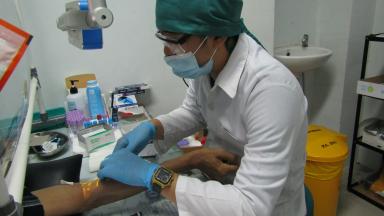
Blood tests, observations, medicines
Ask what each tablet is until you know them
Morning
The doctor's round
Keep a written list of questions by the bed
Late morning and afternoon
Scans, physiotherapy, dressings
Find out the day's plan at breakfast so visitors come at the right time
Mealtimes
Halal, vegetarian and diabetic meals come from the hospital kitchen
Tell the nurse if you are not eating, since appetite is a clinical sign
1
Sit out of bed for meals
An hour in the chair does more for lungs and circulation than any amount of rest.
2
Walk the corridor
With help the first time, then a little farther each day.
Night
When
What happens
Make it work for you
Evening
Last medicines, pain score, blood thinner injection where prescribed
Take pain relief before settling down for the night
Overnight
Observations at intervals set by your condition
Ask whether checks can be grouped
Before dawn
Early blood samples on some wards
An eye mask and earplugs help you sleep through the rest
1
Call bell where your hand falls
Check before the nurse leaves the room.
2
A lit path to the bathroom
Leave the bathroom light on and the door ajar.
Your companion
Ward rooms at Biruni Hospital have a companion bed, and one relative can stay overnight. A familiar person in the room is the best answer to the isolation some patients feel in a single room. A good companion does the following.
Helps with meals, washing and short walks once the nurse has shown how.
Listens on the doctor's round and writes down what was said.
Notices change, such as new confusion, breathlessness or unusual sleepiness, and tells the nurse at once.
Does the companion have to stay every night?
No. Many families take turns, and patients who are independent often prefer nights alone after the first day or two.
Can children visit?
Short visits are usually welcome on general wards. Check with the nurse first, and keep anyone with a cold or stomach upset at home.
Some things belong to the staff alone.
Adjusting drips, pumps, oxygen or drains.
Giving medicines brought from home without telling the nurse.
Helping a patient out of bed for the first time after surgery.
Safety when nobody is watching
The English study found that staff in an all-single-room hospital worried most about visibility, and one ward saw a temporary rise in falls while routines adjusted. The remedy lies partly with the patient.
Use the call bell. Nurses would much sooner come ten times for nothing than once for a fall.
Rise in stages. Sit on the edge of the bed for a minute before standing, above all after an anesthetic or a new blood pressure tablet.
Wear shoes or non-slip socks. Hospital floors and bare feet do not mix.
Keep the floor clear. Bags, cables and the companion bed should leave a straight path to the bathroom.
Clean your hands. Gel on entering and leaving the room applies to visitors, doctors and you.
Tell the nurse if you feel low or cut off. Doors can stay open by day, and a walk to the day room counts as treatment.
What to bring
Pack light. One small bag will do. Bring your regular medicines in their boxes, a list of doses, glasses, hearing aids and dentures with labeled cases, a phone charger with a long cable, slippers with a closed back, loose clothes that open at the front, earplugs and an eye mask. Leave jewelry and large sums of cash at home or with a relative. People coming from abroad should add a plug adapter, copies of their passport and insurance papers, and a printed list of emergency contacts with country codes, since a phone that works at home sometimes fails to roam on the first day.
Questions
Is a private room the same as a VIP suite?
No. A private room is a standard single room with its own bathroom and a companion bed. A suite adds a separate sitting area and extra services. Medical care is identical in both.
Will I be lonely?
Some patients are, mainly on long stays. A companion, an open door by day, video calls and walks outside the room all help, and the nurses will look in more often if you ask.
Are private rooms better for infection control?
Evidence points that way for resistant bacteria passed between patients, though one large English hospital found no change. Hand hygiene matters more than walls.
How long will I stay?
That depends on the treatment. Your written plan states the expected number of nights, and the doctor updates it on the daily round.
Coming from abroad
One coordinator from the international patients office is assigned with your first message, follows the admission through discharge and answers the same WhatsApp number once you are back home. The office works in English, Arabic, French, Russian, Serbian, Romanian and Spanish and books interpreters for other languages. It arranges accommodation near the hospital for relatives who are not staying in the room, airport transfers, daily transport and the invitation letter for a visa. A prayer room is on site, and a request for a female physician is met wherever the rota allows. Send your reports first. Specialists review them free of charge and reply with a written plan that names the treatment, the expected nights in the room and the days to stay in Istanbul after discharge. Relatives underestimate that last figure. Surgeons ask patients to remain nearby for a period after leaving the hospital, so that a wound check or a repeat test does not mean another flight, and the doctor confirms in writing when you are fit to fly.
Cost
Room type is one line in an estimate, and a small one next to the operation, implants, intensive care nights and medicines.
Hospitals in this market state the number of nights included and the rate for each extra night. Find out too whether the companion's meals are part of it, because on a stay of a week or more that small item adds up. Compare whole estimates. Rooms alone mislead.
References
Maben J, Griffiths P, Penfold C, et al. One size fits all? Mixed methods evaluation of the impact of 100% single-room accommodation on staff and patient experience, safety and costs. BMJ Qual Saf. 2016;25(4):241-256.
Teltsch DY, Hanley J, Loo V, Goldberg P, Gursahaney A, Buckeridge DL. Infection acquisition following intensive care unit room privatization. Arch Intern Med. 2011;171(1):32-38.
Ulrich RS. View through a window may influence recovery from surgery. Science. 1984;224(4647):420-421.
Editor's note
Written by the Biruni Hospital medical editorial team. Reviewed by Assoc. Prof. Dr. Selçuk ALVER, Anesthesia and Reanimation.