
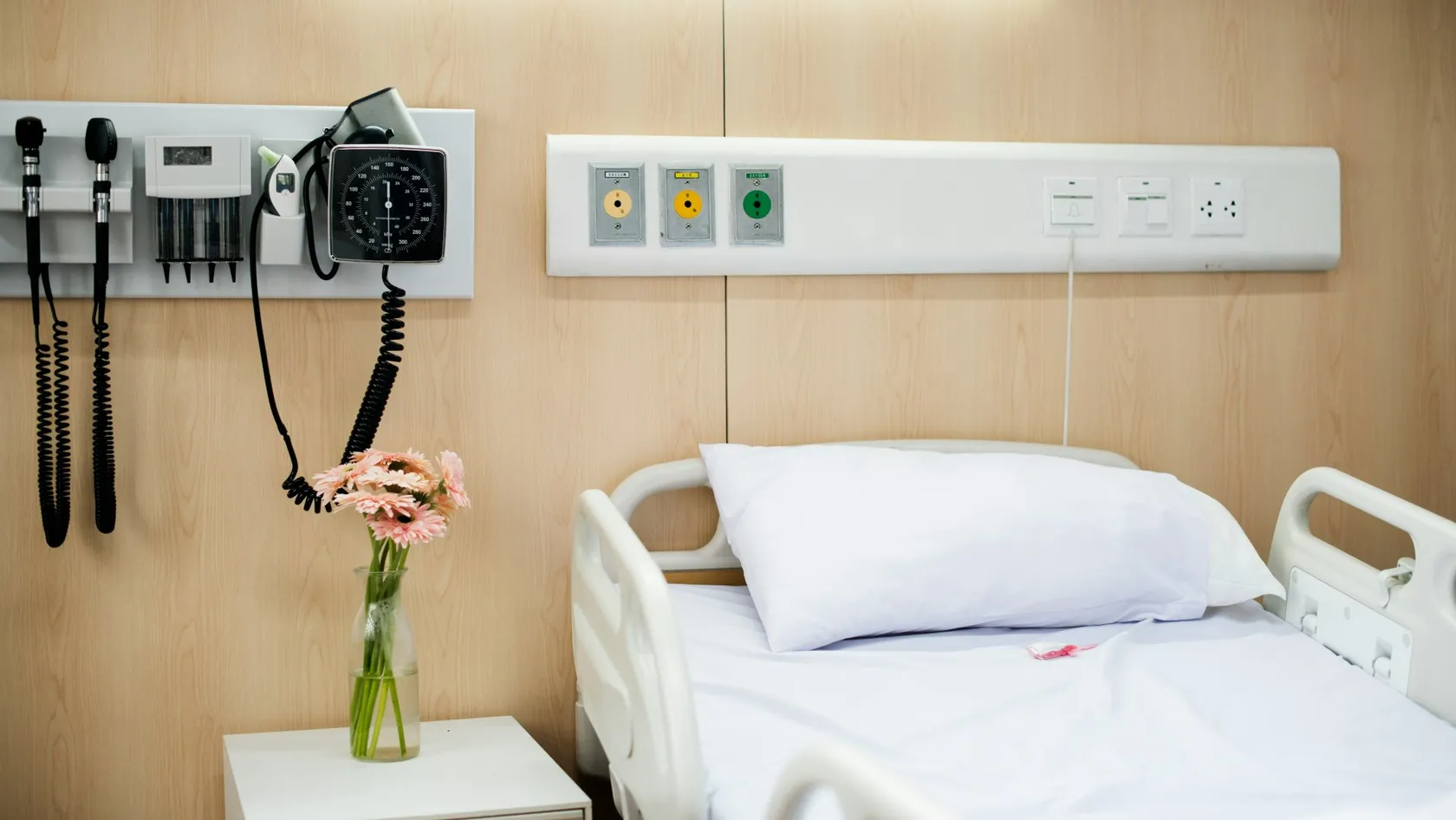
Post-Operative ICU Care
A bed in intensive care after surgery is usually booked weeks before the operation, and it measures the size of the surgery. What separates hospitals is how fast a complication gets caught.
About This Department
Both hospitals had the same rate of complications. At one of them twice as many patients died.
Across 84,730 American general and vascular operations, the hospitals with the best death rates and the hospitals with the worst ones had almost identical complication rates. What separated them was what happened in the hours after a complication started. That is the work an intensive care unit exists to do.
A booked bed is not bad news
Most people who wake up in an intensive care unit after an operation were always going to wake up there. Somebody reserved that bed when the surgery was scheduled, and the reservation describes the size of the operation while carrying no verdict at all on how it went.
That distinction gets lost in translation more reliably than any other part of surgical recovery, because families hear the words intensive care and read them as a verdict on the operation that has just finished. Numbers say otherwise. Across one large private hospital reviewed over three years, 3,584 of its 4,363 intensive care admissions followed elective surgery and had been booked in advance, which puts the planned admission at better than four in five.
Ask which of the two your surgeon has in mind. It changes nothing in the operating room and it changes a great deal in how you and your family read the first twenty four hours.
Which operations come with a bed reserved
Two sets of factors decide it, and they get weighed together.
On the operation side, surgeons and anesthesiologists look at how long you will be under, how much blood loss they expect, whether a major vessel is clamped, whether one lung has to be collapsed to reach the other, and whether the plan involves opening more than one body cavity. Cardiac surgery, aortic surgery, large liver and pancreas resections, extensive cancer clearances inside the abdomen, major spinal reconstructions and transplantation almost always come with a reserved bed, and so does any emergency abdominal operation, where published series put death and complication rates far above those of the same procedure performed as a planned case. On your side, every question turns on reserve. Whether your heart copes with a sudden fluid load, how much lung capacity you have before an operation takes some of it away, whether your kidneys already work at the edge of their range, whether you stop breathing at night, and whether you take blood thinners and how long you have been off them. Age counts for less than people assume. Exercise tolerance counts for more, which is why the anesthesiologist asks what you can climb before asking what you weigh.
A frail seventy five year old having a hernia repaired gets a bed booked. A fit fifty year old having a much bigger operation does not.
The first night, step by step
Below is a sequence close to universal across surgical intensive care units, whatever the operation was.
- You arrive from the operating room with the anesthesiologist, who hands over to the intensive care team at the bedside. That handover covers what was done, what was difficult, what was given and what to watch for. It takes several minutes and it is the most important conversation of the night.
- The first full set of numbers goes on the chart. Blood pressure, heart rhythm, oxygen saturation, breathing rate, temperature, urine output, and blood tests drawn from the arterial line so nobody has to keep finding a vein.
- You get warmed. Operating rooms are cold and a cold patient bleeds more, shivers, and uses oxygen the heart would rather keep. A warming blanket goes on and stays on until your temperature is normal.
- Pain relief is built as a plan for the whole stay. Depending on the operation that means an epidural, a nerve block catheter, a pump you control yourself, or a scheduled combination. Nobody expects you to ask.
- The ventilator question gets answered. Some people are woken and have the breathing tube removed within the hour. Others are kept asleep and ventilated until morning, which is a safety judgment made by the anesthesiologist.
- You sit up. Often on the same night, usually with two people helping, and for a few minutes only. Sitting upright opens the bases of the lungs, and the bases of the lungs are where pneumonia starts.
Every tube and monitor, and when it comes out
Equipment frightens visitors more than anything else in the room, and most of it measures instead of treating. Knowing what each item does makes the room legible instead of alarming.
Narrow screens scroll this table sideways. Swipe or drag to reach every column.
| Tube or monitor | What it is doing | When it usually comes out |
|---|---|---|
| Breathing tube | Holds the airway open and lets the ventilator do the work of breathing while the anesthetic wears off | Within a few hours for most planned cases, the next morning for longer ones |
| Arterial line | Reads blood pressure with every heartbeat and gives blood samples without repeated needles | Once blood pressure has been steady without drugs for several hours |
| Central line in the neck or chest | Delivers drugs too concentrated for a small vein and measures filling pressure | When the drugs it was placed for are finished, often on day two or three |
| Urinary catheter | Measures urine output hour by hour, which is the earliest sign that the kidneys are unhappy | Usually the morning after you are up and drinking |
| Surgical drains | Carry away fluid or blood collecting where the surgeon worked, and warn if bleeding restarts | When the volume falls and the color clears, judged by the surgical team |
| Nasogastric tube | Empties the stomach while the bowel is asleep, which prevents vomiting and aspiration | Once bowel sounds return and the drainage volume drops |
| Epidural or block catheter | Delivers local anesthetic directly to the nerves supplying the wound | Usually day two or three, as tablets take over |
| Chest and finger monitors | Continuous heart rhythm and oxygen saturation, watched by alarm as well as by eye | They stay on until you leave the unit |
Nothing on that list is permanent and nothing on it is decorative.
Coming off the breathing machine
People dread the breathing tube more than any other part of this and remember it less than any other part. Sedation holds you at a level where the tube stays tolerable, and almost nobody recalls it afterwards. Weaning then follows a routine that barely varies between units. The team lightens the sedation first, early in the morning, to see whether you wake, follow a simple instruction and cough on request, and then reduces the ventilator support so that you do most of the breathing yourself for a trial period while somebody watches your rate, your oxygen levels and how hard the effort looks. A trial that goes well ends with the tube out and oxygen running through a mask or a pair of nasal prongs, and the whole sequence from waking to breathing on your own takes a couple of hours in a straightforward case.
A tube that stays in overnight
A breathing tube left in place until morning is not a complication.
It usually means the operation was long, the fluid shifts were large, the body temperature had not fully recovered, or the anesthesiologist judged that waking you in the small hours with fewer staff around was the worse option. Waiting for daylight and a full team is a considered choice, and it is often the safer one.
Confusion in the days after surgery
Post-operative delirium means an acute disturbance of attention and thinking in the first days after an operation, and among older patients it happens a great deal. A 2023 systematic review in the Journal of Clinical Anesthesia pooled 54 studies covering 20,988 patients aged 60 and over, and found delirium in 19 percent after planned surgery and 32 percent after emergency surgery. The same review linked it to higher one year mortality, more complications, longer hospital stays and a lower chance of going straight home from hospital, which does not prove that delirium causes any of the harm, and does mark out a patient whose recovery needs closer handling than the wound alone would suggest.
Families expect agitation. The quiet form turns up more often and slips past far more easily, with the patient withdrawn, drowsy and answering in single words. Both forms count. Both get picked up by a short bedside assessment the nurses repeat each shift, because asking whether someone seems confused misses the quiet half entirely.
What actually reduces it
Glasses on. Hearing aids in and working. Curtains open in the day and the room dark and quiet at night. Sedation kept to the minimum the situation allows. Pain treated properly, because untreated pain drives delirium as reliably as the drugs used to treat it. Sitting out of bed early. A familiar voice in the room, saying where the patient is and what day it is, repeated without impatience.
Bring the glasses and the hearing aids in the hand luggage rather than the hold. Families who travel for surgery leave them at home more often than you would think, and they matter more than almost anything else a visitor can bring.
Does more physiotherapy get you out faster
Early movement in intensive care has been promoted hard for a decade. The largest trial of it deserves a straight reading, including the parts that do not flatter the idea, because a page that quotes only the encouraging half of a trial is worth nothing to somebody choosing a hospital.
The TEAM trial, published in the New England Journal of Medicine in 2022, randomly assigned 750 ventilated intensive care patients to increased early mobilization or to whatever their unit normally did. The intervention worked as designed, with 20.8 minutes of active mobilization a day against 8.8 minutes in the usual care group. Patients in the early mobilization group were standing sooner, at a median of three days against five. Yet the number of days alive and out of hospital at six months came out at 143 against 145, a difference of two days in favor of usual care and well inside the range of chance. Quality of life, disability, cognitive function and psychological function at six months were the same in both groups, and events possibly caused by the mobilization itself, meaning arrhythmias, blood pressure swings and drops in oxygen saturation, were reported in 9.2 percent of the intervention group against 4.1 percent of the others.
Pushing the dose higher buys no better recovery, and it costs something.
None of that argues for lying still. Sitting up, breathing exercises and standing the moment it becomes safe remain part of ordinary care, the trial confirms they get people upright sooner, and the place the evidence stops is at the idea that a unit doing twice as much physiotherapy hands you a better outcome for the trouble. Judge a unit on when it moves you and when it leaves you alone.
Rescue, and why it is the number that matters
The most useful study ever published on surgical safety looked at 84,730 general and vascular operations across American hospitals and asked a simple question. Why do some hospitals lose twice as many surgical patients as others.
They do not cause more complications. Ghaferi and colleagues, reporting in the New England Journal of Medicine in 2009, found overall complication rates of 24.6 percent at the lowest mortality hospitals and 26.9 percent at the highest, with major complications at 16.2 and 18.2 percent, and no significant difference between the groups on any individual complication they examined. The entire gap sat in what happened next. Among patients who suffered a major complication, 12.5 percent died at the best hospitals and 21.4 percent died at the worst, which produced overall surgical mortality of 3.5 percent against 6.9 percent from the same raw rate of things going wrong.
Complications happen almost everywhere at the same rate. Surviving them does not. Surgeons call the gap failure to rescue, and an intensive care unit is the main place where rescue either happens or does not.
That reframes what you should be asking a hospital, and it has very little to do with brochures.
Four questions worth putting to any hospital
Who is in the building at three in the morning
Complications keep no office hours, so staffing overnight comes first. Ask how many patients one nurse covers on the night shift, and whether a doctor trained in intensive care sits physically in the building through the night or waits at home thirty minutes away for the call that a blood pressure is falling at two in the morning.
How fast the hospital can move once something starts
A computed tomography scan at three in the morning and an operating room opened within the hour are the two things that turn a bleed into a survivable night. A hospital that has organized itself around them answers in minutes and hours instead of adjectives.
Evidence sits behind that instinct. Among 3,584 planned intensive care admissions following elective surgery, 29.8 percent arrived outside Monday to Friday daytime hours, and those patients went on to suffer more infections, more blood transfusions and more unplanned return trips to the operating room, and they stayed in hospital 1.74 days longer once the analysis adjusted for how sick they were to begin with. When you arrive stands in for how thinly a hospital is staffed at the moment you need it.
Put those questions to any hospital you are considering, this one included. A unit that answers them precisely tells you something no certificate can.
What goes wrong in the unit, and what is done about it
Every item below is anticipated, monitored for by name, and has a standard response that begins before the patient feels anything. That is the reason the monitoring exists.
Columns run past the edge on a small screen. Slide the table across to read them.
| Problem | How it announces itself | What the unit does |
|---|---|---|
| Bleeding after the operation | Falling blood pressure, rising heart rate, more blood in the drains, a falling hemoglobin on the next blood test | Fluids and blood products, reversal of any blood thinning, an urgent scan, and a return to the operating room if the source needs closing |
| Low blood pressure without bleeding | Pressure that keeps sliding despite fluid, with cool hands and falling urine output | Drugs that tighten the blood vessels or support the heart, given through the central line and adjusted minute by minute |
| Pneumonia and collapsed lung bases | Rising oxygen requirement, fever, a cough that produces something, changes on the chest x-ray | Sitting up, chest physiotherapy, suction, targeted antibiotics once cultures are taken |
| Atrial fibrillation | A fast irregular pulse, often on the second or third day, sometimes with a drop in blood pressure | Correcting potassium and magnesium, rate control drugs, and electrical cardioversion if the rhythm is not tolerated |
| Acute kidney injury | Urine output falling below the hourly target, creatinine climbing on the morning blood test | Restoring blood flow and pressure, stopping drugs that harm the kidney, and short term dialysis in the minority who need it |
| Blood clots in the legs or lungs | A swollen calf, sudden breathlessness, a drop in oxygen with no chest x-ray change | Preventive injections and calf compression from the first day, scanning on suspicion, full anticoagulation if confirmed |
| Infection of a wound or a line | Fever, rising inflammatory markers, redness or discharge at the wound or the catheter site | Cultures, removal of the suspect line, antibiotics chosen for the organism rather than by habit |
| Delirium | Inattention, disorientation, or unusual quietness, detected by a bedside test each shift | Treating the cause, correcting sleep and sensory input, and cutting sedating drugs wherever possible |
Rates vary far too widely by operation and by patient for any single figure to mean much here, and what does transfer across every operation on the list is the principle in the study further down this page, which is that the units doing well are the ones that notice early.
Your family, the room, and being understood
People argue for open visiting on the grounds that it prevents confusion. The largest trial of it knocks that claim down and puts something better in its place. The ICU Visits trial, reported in JAMA in 2019, randomized 36 Brazilian intensive care units between flexible visiting of up to twelve hours a day and their usual restricted hours, across 1,685 patients, and visiting time duly rose from 1.4 hours a day to 4.8. Delirium occurred in 18.9 percent of patients under flexible visiting and 20.1 percent under restricted visiting, a gap well inside chance, and infection rates came out the same. The families changed. Anxiety and depression scores among relatives were significantly better wherever the doors stayed open.
Open visiting is for the people in the corridor. Good enough reason on its own.
Visiting inside the intensive care unit follows the unit's own rules, and your coordinator gives you those rules in writing before you arrive, so that nobody learns them at the door. Once you move to a normal room the position gets simple, because patient rooms have a companion bed and one person stays overnight for the rest of the admission. One person handles the language for your whole stay. Our international patients team works in English, Arabic, French, Russian, Serbian, Romanian and Spanish, and arranges interpreting in other languages on request, and the coordinator assigned from your first message stays with you through discharge and remains reachable on the same WhatsApp number after you fly home. If you would prefer a female physician, say so in that first message and the request goes to the department, which accommodates it wherever the rota allows.
Halal, vegetarian and diabetic diets come from the hospital kitchen, and there is a prayer room on site. Accommodation for you and for whoever travels with you, covering the nights either side of the admission, comes from the international patients office along with the airport transfers.
Leaving the unit, and the months after it
Moving to a normal ward feels like promotion and like abandonment at the same time. Alarms stop. One to one nursing stops, and plenty of patients sleep badly on their first ward night for exactly that reason, then settle within a day or two.
Weakness, and the memory of the stay
Nobody warns people about the weakness. Muscle disappears fast during critical illness, faster than it does during ordinary bed rest, and somebody who spent several days ventilated discovers that standing from a chair costs more than the wound does. Physiotherapy starts in the unit and carries on across the ward, and the curve runs in weeks to months. Memory does the same thing from the other direction. Gaps in the record of the stay come as standard, and so do vivid dreams that felt entirely real at the time, including dreams of being restrained or carried somewhere, which some people find intrusive for weeks afterwards. Talking through what actually happened, with somebody who was there or with the written record in front of you, clears most of it, and persistent nightmares, flashbacks or low mood in the months after a long stay are worth raising with a doctor. Waiting them out is the wrong instinct.
Tell your coordinator if any of that starts. It happens to a great many people who have been through a long stay, it responds to treatment, and it reflects nothing whatever on how well you are handling your own recovery.
Staying in Istanbul, and when you can fly
Your operation sets the length of stay, and the unit does not. A stay in the unit that runs to plan adds nothing to the total, because those nights were counted before you flew. A stay that runs long adds both ward days and recovery days before anyone clears you to travel.
Flying carries its own clearance, separate from being discharged, and it is the one to ask about explicitly. Cabin pressure lowers the oxygen available to you, sitting still for hours raises the chance of a clot forming in a leg vein, and air trapped inside the body after chest or abdominal surgery expands as the aircraft climbs, which is why a surgeon sets your date against the operation you actually had and why the answer moves by several weeks between a keyhole procedure and an open chest.
Book the return leg as a changeable ticket.
Changing it costs a little and it removes the worst pressure a recovering patient carries, which is the feeling that a flight is sitting there waiting whatever the wound decides to do. Read the travel insurance properly before you buy on price, checking that it covers an extended stay and a medical repatriation.
Before you travel, send the reports and imaging you already have. For an operation likely to involve intensive care that means your scans, your most recent blood tests, an echocardiogram or lung function test if one has been done, a written list of your medicines with doses, and any previous operation notes or discharge summaries. A surgeon and an intensive care physician read them together and come back to you with what the plan would look like, whether a reserved bed forms part of it, and what would make them advise against traveling for this operation at all. That review costs nothing and commits you to nothing. Our international patients office then issues an appointment confirmation and an invitation letter naming the hospital and the treating doctor, which is the document most consulates ask for with a medical visa application, and it goes out roughly ten days ahead of travel. Airport transfers and transport between hotel and hospital come from the same office.
What drives the cost of an intensive care stay
No figure published on a website will apply to you, because what an intensive care stay costs depends on what the stay turns out to be. Learn which items move the number instead, so that the quote you are sent becomes readable.
Six items drive it harder than anything else.
Drag the table sideways where a phone cuts off the last column.
| What moves the total | Which way it moves, and by how much |
|---|---|
| Nights in the unit | The largest single item on the list, and the one every other item eventually works through, because almost everything that goes wrong adds nights |
| Time on the ventilator | A few hours absorb into the planned stay. Days bring their own nursing, their own drugs and a longer unit stay behind them |
| Temporary dialysis | Adds the machine, the consumables and the staff time, for as many sessions as the kidneys need before they restart on their own |
| Blood and plasma | Counted by the unit given, so a case that bleeds and a case that does not can separate sharply here |
| A resistant organism | Expensive antibiotics, and the isolation that comes with them costs bed time on top of the drug itself |
| A second operation | The heaviest of the six whenever it happens, because going back to the operating room restarts the entire sequence from the beginning |
Health you arrive with moves the figure before a single thing happens. Diabetes, heart failure, lung disease, kidney impairment, obesity, blood thinning medication and previous surgery at the same site all raise the chance of an extra night and of an extra intervention.
Packages published by hospitals and medical travel agencies in this market typically cover the surgeon and anesthesia fees, the planned nights on the ward, the pre-operative tests, any implant or device named in the quote, an interpreter, transfers and a set number of hotel nights, with the follow up appointments before departure included. The usual exclusions matter more on this topic than on most. Flights, travel insurance, extra hospital nights and the treatment of a complication sit outside almost every package sold in this market, and so, specifically and importantly for anybody reading this page, does any intensive care beyond the nights the quote assumed when it was written. So five questions separate a real quote from a headline one, and every one of them is fair to put in writing before you commit to anything. How many intensive care nights does this figure assume, and what happens financially if the count goes up. Does it include ventilated time and any dialysis. Would a return to the operating room be covered, or billed separately. Do the pre-operative scans and tests sit inside the figure or get added to it. What number of physiotherapy sessions has been counted in before discharge.
Any number that means something comes from a clinician who has read your own reports and imaging. That reading is free.
Post-operative ICU care FAQ
How long will I be in intensive care after surgery?
For a planned admission after major elective surgery, one night is the most common answer and two to three nights is normal after cardiac, aortic, major liver or extensive abdominal cancer surgery. The unit discharges you once your breathing, blood pressure and urine output have held steady for several hours without any drug propping them up and your pain has come under control on treatment a normal ward can give, which is a set of conditions rather than a clock. Emergency operations and stays that begin with a complication run longer, and the team tells you day by day. Nobody promises a date at the start.
Will I be awake in the unit, and will I remember it?
Most patients after planned surgery are woken within a few hours and are awake for the rest of the stay. Memory of the first night comes out patchy and sometimes blank altogether, which is what the anesthetic and the sedation do to the laying down of memory and carries no implication that anything went wrong, and if you were ventilated overnight you should expect to remember very little of that period at all.
Can my husband or wife stay with me in the intensive care unit?
Visiting inside the unit follows the unit's own rules, and your coordinator sends you those rules in writing before you travel so nobody is surprised at the door. Once you move to a normal room, one person stays with you overnight for the rest of the admission, because the patient rooms have a companion bed. Accommodation for the nights either side of the admission is arranged by the international patients office.
Will anyone there speak my language?
The international patients team works in English, Arabic, French, Russian, Serbian, Romanian and Spanish, and interpreting in other languages is arranged on request. A coordinator is assigned from your first message and stays with you through discharge, which matters most during consent conversations and on the daily round, where you need to understand what changed overnight.
When can I fly home after an operation that needed intensive care?
Your surgeon sets that date against the operation you actually had, and it is a separate clearance from being discharged. The gap runs to several weeks between a keyhole procedure and an open chest operation, so ask for the number in writing at discharge and book a changeable return ticket. Long flights also carry a raised clot risk after any operation, higher again if you spent days in bed, so your team tells you what to take, what to wear on your legs and how often to get up in the aisle before you leave the ward.
What happens if something goes wrong once I am back home?
Your coordinator stays reachable on the same WhatsApp number after you fly, so the first message goes to someone who already knows your case. You leave with a written discharge summary and, where it is relevant, an operation note and the pathology result, which together are what a doctor at home needs in order to act on the same day instead of spending a week requesting records from another country. Anything urgent goes to your nearest emergency department first and to us second.
Does being sent to intensive care mean the operation went badly?
Usually the opposite. The bed was booked when the surgery was booked, because the operation is large enough that close monitoring is standard, and the majority of surgical intensive care admissions are planned this way. An admission that was not planned does carry information, and it is also the situation the unit is built for.
References
- Ghaferi AA, Birkmeyer JD, Dimick JB. Variation in hospital mortality associated with inpatient surgery. New England Journal of Medicine. 2009;361(14):1368-1375.
- Yan E, Veitch M, Saripella A, Alhamdah Y, Butris N, Tang-Wai DF, et al. Association between postoperative delirium and adverse outcomes in older surgical patients. A systematic review and meta-analysis. Journal of Clinical Anesthesia. 2023;90:111221.
- Hodgson CL, Bailey M, Bellomo R, Brickell K, Broadley T, et al. Early active mobilization during mechanical ventilation in the ICU. New England Journal of Medicine. 2022;387(19):1747-1758.
- Rosa RG, Falavigna M, da Silva DB, Sganzerla D, Santos MMS, Kochhann R, et al. Effect of flexible family visitation on delirium among patients in the intensive care unit. The ICU Visits randomized clinical trial. JAMA. 2019;322(3):216-228.
- Morgan DJR, Ho KM, Ong YJ, Kolybaba ML. Out-of-office hours elective surgical intensive care admissions and their associated complications. ANZ Journal of Surgery. 2017;87(11):886-892.
Editor's note
Written by the Biruni Hospital medical editorial team. Reviewed by Assistant Professor Pınar ACAR, Anesthesia and Reanimation.
Medically reviewed by

Assistant Professor Pınar ACAR
Anesthesia and Reanimation
Related Treatments
View All
Bone Marrow Transplant Unit (BMT Unit)
Between the mid 1990s and the mid 2000s, death within 200 days of an allogeneic transplant that was not caused by relapse fell by 60 percent, and almost none of that came from a new drug. This page is about the part nobody photographs, meaning the filtered room, the rules that have evidence behind them and the ones that do not, the laboratory chain behind the cells, and what a family can actually do.
Burn ICU (Burn Intensive Care Unit)
Age, burn size and smoke inhalation are the three numbers that set the outlook after a major burn. This page walks through fluids, early surgery and grafting, the long healing phase, and when a burn patient can be flown abroad.

Burn Unit (Burn Center)
Burn care runs on one figure, the percentage of the body surface burned, and a systematic review of 28 studies found that referring hospitals overestimate it in half or more of cases. Fluid volume, the transfer decision and the survival estimate are all calculated from that number, which is why this page starts with how it is measured and who should be measuring it.

Cancer Pain Management Unit
The Cancer Pain Management Unit at Biruni Hospital in Istanbul treats pain caused by cancer and by its treatment. Two in three people with advanced cancer report pain, and reviews show nearly one in three receive medication too weak for it. The unit uses stepwise medicines, radiotherapy for bone pain, nerve blocks and spinal pumps, and plans follow-up for patients who return home abroad. The pain team reviews reports and current medicines free of charge.
Cancer Patient ICU Care
Cancer once counted as a reason not to offer an intensive care bed at all. Pooled data from 7,354 critically ill cancer patients retired that rule, and the argument now is about which patient, for what, and how long full support runs before anybody formally reassesses it.