
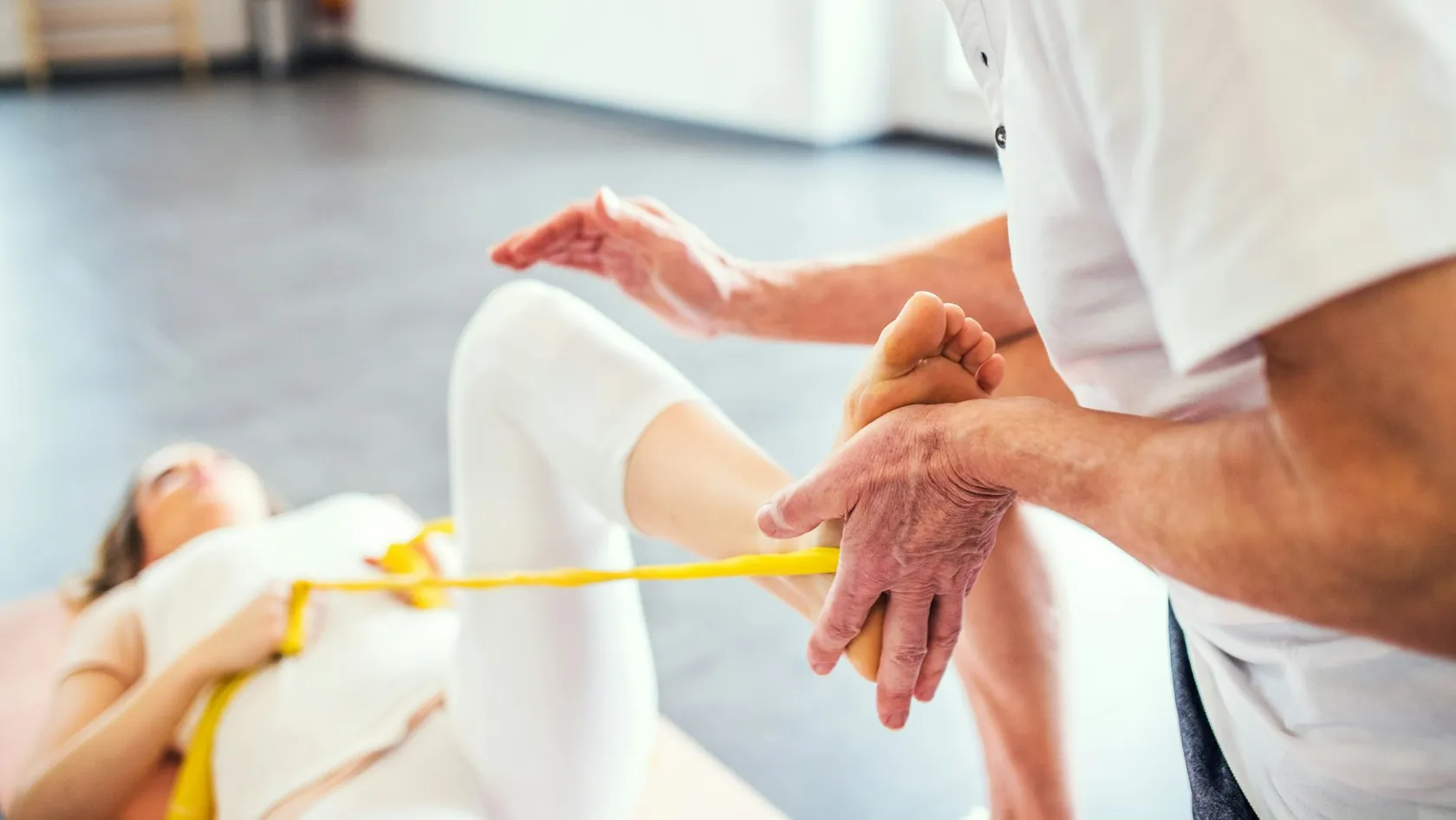
Physical Therapy And Rehabilitation
Twelve weeks of supervised exercise matched knee arthroscopy point for point at two years and left the thigh stronger. Rehabilitation works when it is dosed like a drug rather than offered like advice.
About This Department
Rehabilitation is a prescription, and the dose is the treatment. Too much, too early, made stroke outcomes worse.
In the largest trial of early movement after stroke, covering 2,104 patients across 56 units in five countries, the group mobilized harder and sooner did worse at three months, at 46 percent good outcomes against 50 percent. The principle cuts both ways, because exercise-based cardiac rehabilitation lowers the odds of another heart attack and roughly halves hospital admissions.
Rehabilitation behaves like a dose
Physical therapy and rehabilitation gets described to patients as movement, activity or simply getting going again. That language makes the whole thing sound like advice. It behaves like a drug, with a right amount, a right moment to start and a right way to deliver it, and each of those gets wrong in the direction of too much as easily as too little. The trial that proved it is the one this page opens on. AVERT randomized 2,104 stroke patients across 56 acute stroke units in five countries to a protocol of frequent, higher dose mobilization beginning within 24 hours, or to the mobilization their unit normally provided, and reported in the Lancet in 2015. Almost everybody in both arms was moved within the first day, so the trial was testing the dose rather than the idea. Good outcomes at three months occurred in 46 percent of the higher dose group against 50 percent of the usual care group, an adjusted odds ratio of 0.73. Immobility complications were no lower in the group that moved more.
Earlier and harder made things worse.
That finding did not retire early rehabilitation, and it did change what a good unit does with it. The question stopped being whether to start and became how much, how often and beginning when, which is the same set of questions a pharmacist asks about a prescription. Any unit that cannot answer those three for your condition is offering you activity in place of treatment.
What this department actually treats
Five groups of condition account for the great majority of referrals into this department, and together they cover a wider range than most patients expect.
Narrow screens scroll this table sideways. Swipe or drag to reach every column.
| Group | Typical conditions | What the program is aiming at |
|---|---|---|
| Neurological | Stroke, traumatic brain injury, spinal cord injury, multiple sclerosis, Parkinson disease, nerve injuries | Relearning movement through repetition, protecting joints from contracture, and rebuilding independence in daily tasks |
| Orthopedic and musculoskeletal | Back and neck pain, shoulder and knee problems, tendon disorders, recovery after joint replacement or fracture fixation | Restoring range and strength, and loading the tissue enough to remodel it without provoking a flare |
| Cardiac and pulmonary | After a heart attack, bypass surgery or stenting, chronic lung disease, long term breathlessness | Raising exercise capacity safely under monitoring, and lowering the chance of another event |
| After surgery of any kind | Abdominal, chest, spinal, cancer and transplant surgery | Getting lungs open, getting the patient upright, and rebuilding the muscle that critical illness and bed rest strip away |
| Persistent pain and function loss | Pain lasting beyond healing, deconditioning, work and sport related problems | Graded loading, pacing and confidence, treating the fear of movement as part of the problem |
Some countries call the specialty physical medicine and rehabilitation and others call it physiotherapy, and the name matters far less to a patient than two other things. Does a physician who specializes in rehabilitation set the program. Do therapists deliver it frequently enough for the dose to count.
The assessment that decides everything else
Nothing in a rehabilitation program means much yet. Not until somebody has measured where you are starting from and written down where you are trying to get to.
What a first assessment measures
Proper first assessments take the better part of an hour and produces numbers and not impressions. Range of movement at each relevant joint, in degrees. Strength graded muscle by muscle. How far you walk in six minutes, measured on a marked corridor with the distance written down rather than estimated from how breathless you looked at the end. How long it takes you to stand from a chair, walk three meters, turn and sit back down. What you can and cannot do at home without help, scored on a scale somebody else can repeat. Pain at rest, and pain on the movements that matter to you. For a neurological patient, the specific motor and balance scales the condition calls for.
Then the goals go down in your own words.
Goals written in your words
Climbing the stairs to your apartment without stopping is a goal. Improving mobility is not. That difference decides whether the program has a target it can aim at, whether anybody can tell at week six that it is working, and whether the discharge conversation rests on a measurement or on an impression. Ask to see your own baseline numbers and your own written goals. A department that cannot produce them on request was not measuring in the first place.
Stroke and brain injury, where timing and intensity are the argument
Repetition drives recovery of movement after a stroke more than any technique does, and the brain reorganizes most in the first months, so the total count of correct movements a patient performs matters more to the eventual result than the name of the approach printed on the program. Hence the tension AVERT exposed. The window when the brain is most plastic is also the window when the injured brain tolerates exertion least.
What survived the AVERT result
The shape of good practice survived it, and no single number did. Mobilization still starts in the first day or two, and it starts gently, with sitting, standing and short transfers rather than with distance walked. Intensity builds across the first two weeks as the patient shows they tolerate it, guided by blood pressure, oxygen levels and how the neurological examination looks afterwards. From the second week onward, when the physiology has settled, dose becomes the main lever, and the number of correct repetitions a patient performs each day is the thing most strongly associated with how much function returns. So the question to put to a rehabilitation unit about a stroke patient has nothing to do with which methods it uses. Ask how many minutes of active therapy the patient gets each day, how many of those minutes go to the affected side, and who decides when the dose goes up.
Where physical therapy replaces an operation
Two of the commonest operations in orthopedics have been tested head to head against structured exercise in randomized trials, and the results should change how a patient with either problem reads a surgical recommendation, because in one of the two the operation turned out to add nothing that twelve weeks of supervised work did not already deliver.
The worn meniscus
Kise and colleagues randomized 140 middle aged adults with a degenerative medial meniscal tear confirmed on MRI, and with no definitive radiographic arthritis, to twelve weeks of supervised exercise therapy alone or to arthroscopic partial meniscectomy alone, reporting in the BMJ in 2016. At two years the difference in knee scores between the groups was 0.9 points on a 100 point scale, which is nothing. Thigh muscle strength had improved in the exercise group by three months. The surgical group gained none. Nineteen percent of the exercise group crossed over to surgery during follow up and gained nothing extra by doing so. Twelve weeks of supervised work bought what the operation bought, and left the leg stronger.
Chronic low back pain
Cochrane reviewers pooled 249 randomized trials of exercise treatment for chronic non-specific low back pain. Against no treatment, usual care or placebo, exercise reduced pain by 15.2 points on a 100 point scale, which crosses the threshold the reviewers set for a clinically important difference. The effect on functional limitation was smaller at 6.8 points and did not cross its threshold. Against other conservative treatments the advantage was real but modest, and exercise outperformed advice alone and electrotherapy while showing no advantage over manual therapy.
Read those two results together and a pattern appears that carries into any consultation. Structured exercise is a genuine treatment with a measurable effect, it is more honest about its size than most alternatives are, and in the specific case of a worn meniscus without arthritis it does as well as an operation while leaving you stronger.
After a heart event, the strongest evidence in the specialty
Exercise-based cardiac rehabilitation carries the largest and cleanest evidence base of anything this department does. It also remains the most under-used treatment in cardiology.
A 2021 Cochrane review pooled 85 randomized trials covering 23,430 people with coronary heart disease, comparing exercise-based rehabilitation against no exercise control. Within the first year it produced a large reduction in further heart attacks, at a risk ratio of 0.72 on high certainty evidence, and a large reduction in all-cause hospital admission, at a risk ratio of 0.58, with twelve people needing treatment for one to avoid an admission, which is a number needed to treat most cardiologists would be pleased to see attached to a tablet. Past three years of follow up, cardiovascular mortality fell by a risk ratio of 0.58. Benefits held regardless of the exercise dose, the setting, the country or the mix of cardiac diagnoses, which is unusual enough in a pooled analysis of 85 trials to be worth stating on its own.
Twelve patients complete cardiac rehabilitation and one of them avoids a hospital admission that would otherwise have happened. Very few drugs in cardiology carry a number needed to treat that small.
The question to put to your cardiologist
Ask it even if the recovery felt straightforward
Anybody who has had a stent, a bypass or a heart attack and has never been offered a supervised exercise program has been under-treated, and it is reasonable to ask why.
Getting fit before an operation, and what that actually buys
Prehabilitation means training in the weeks before planned surgery, on the logic that a fitter patient tolerates the insult better. The idea attracts everybody, and the evidence comes out more mixed than the enthusiasm suggests.
What the pooled trials found
Twenty randomized trials covering 1,258 patients were pooled in a 2023 systematic review before major abdominal surgery. Supervised prehabilitation improved the six minute walking distance by 33 meters on average, and by 47 meters in the programs running more than one supervised session a week. Peak oxygen uptake improved as well. Post-operative complications did not differ significantly between the prehabilitation groups and usual care, at a risk ratio of 0.80 with a confidence interval crossing one.
Fitter, yes. Fewer complications, unproven.
Why it is still worth doing
That is still a reason to do it for many patients, because walking further and breathing better before an operation makes the early recovery easier whatever the complication rate does, and because the supervised frequency clearly matters. None of that licenses selling a prehabilitation block as complication insurance, and any program that does is overstating what the trials found.
What an actual treatment session contains
Sessions vary by condition. The skeleton below holds across most of them.
- A brief reassessment against the last session, covering what hurt afterwards, what was easier and what the measurements say today.
- Preparation of the tissue that needs it, which may be hands-on work, joint mobilization or heat, and which takes minutes out of the session and never the bulk of it.
- The active work, which is the treatment. Loaded exercise, gait and balance practice, task repetition for a neurological patient, or supervised conditioning for a cardiac one.
- Progression, where the therapist raises the load, the range, the speed or the complexity based on how the last block went and never on the week number.
- The home program, updated at every session and written down, because what happens in the other twenty three hours decides most of the result.
Proportions matter more than components. A session spending forty minutes on passive treatment and ten on active work has the ratio backwards whatever equipment is involved, and the patient who paid for it received ten minutes of the thing that changes a measurement and fifty of the thing that does not.
What to be skeptical of
Rehabilitation attracts more unproven equipment than almost any other specialty, because the machines look like treatment and demand nothing of the patient.
Treat passive modalities as adjuncts at best. Ultrasound, short wave diathermy, laser and most electrical stimulation carry thin evidence for the conditions they are most commonly sold for, and their main effect in practice is to fill twenty minutes of a session that should have contained loaded exercise, which costs the patient both the money and the repetitions. Heat and ice earn a place as comfort measures that make the active work possible, which is a smaller claim and a true one. Be equally wary of a fixed block of sessions sold before anybody has assessed you. A program that was twenty sessions long before the first measurement was taken is a product and not a prescription, and it has no way of stopping early if you recover faster or extending if you do not. The same applies to any quote that names a session count in its first line. Numbers agreed before an examination are commercial decisions wearing clinical clothes, so insist on an assessment first, a plan second and a price built from the plan, in that order and no other.
Ask what happens at the reassessment, and what would make the plan change.
How progress gets measured
Every credible program repeats the same measurements it took at the start, at intervals set in advance and written into the plan before the first session, so that nobody has to decide later whether the numbers are worth collecting.
Columns run past the edge on a small screen. Slide the table across to read them.
| Measurement | What it captures |
|---|---|
| Six minute walk distance | Overall endurance, and the measure most used in cardiac, pulmonary and pre-operative programs. Improvements are reported in meters and compared against your own baseline |
| Timed up and go | How long it takes to rise from a chair, walk three meters, turn and sit. A practical marker of mobility and fall risk that takes under a minute to repeat |
| Range of movement in degrees | Measured joint by joint with a goniometer, which is how a stiff shoulder or knee is tracked objectively instead of by impression |
| Graded muscle strength | Tested muscle by muscle, and increasingly with a handheld dynamometer so the number is comparable between sessions and between therapists |
| Condition specific scores | Knee, shoulder, back and stroke scales that combine pain, function and quality of life into a number with a published threshold for meaningful change |
| Your own goals | Whether you can now do the specific things written down at the assessment, which is the measure that decides whether the program worked for you |
Ask for these numbers at the midpoint. Waiting until discharge is too late. A program producing no movement by the halfway mark needs changing. A service that measures only at discharge has removed its own chance to correct course, which is a design fault rather than bad luck, and it is the single easiest thing to check before you book anything.
When rehabilitation is the wrong answer
Situations where this department should send you elsewhere make a short list, and knowing it before you travel saves a wasted trip.
Departments that accept every referral without asking these questions are not applying judgment. Judgment is most of what you are paying for.
Planning an intensive program abroad
Rehabilitation stands alone on this site in making the length of the course the central planning problem, because the treatment runs for months and a trip does not.
One model works. A block. Two to four weeks of daily supervised therapy, at an intensity no outpatient clinic at home delivers, aimed at a specific set of goals, followed by a written program you continue where you live. That shape suits a neurological patient in the first year after a stroke, somebody who has plateaued on twice weekly therapy at home, a patient preparing for or recovering from major surgery, and anybody whose local service cannot provide the frequency their condition needs. It does not suit somebody who needs six months of continuous supervision, and saying so is more useful than selling them three weeks.
Send the imaging as images and not only as reports, the operation note if surgery has happened, the discharge summary from any hospital admission, your current medicine list, any previous rehabilitation notes with the measurements in them, and a plain description of what you can and cannot do today compared with before the problem started. A rehabilitation physician reads them and tells you what a block would realistically achieve, how long it would need to be, and whether your case is one where travel adds nothing. That review is free. It commits you to nothing. Flying constrains this group least, since most rehabilitation patients travel medically stable, and the exceptions deserve naming. A recent surgical wound, a recent heart event, a very low blood count and an unstable spine all carry their own clearance, and your physician gives you the date. Book a changeable ticket and read the travel insurance before you buy on price.
Follow up after you return home is the part that decides whether the block was worth taking, because the gains fade without continuation. You leave with the written home program, video of the exercises performed correctly, the full set of measurements taken at admission and discharge so your own therapist can pick up the thread, and a stated review interval. Your coordinator stays reachable on the same WhatsApp number, and you send the repeat measurements at the agreed points so the program can be adjusted from here. New pain that does not settle, a joint that swells after every session, or any loss of function you had regained goes to a local doctor first and to us straight afterwards. Our international patients team covers English, Arabic, French, Russian, Serbian, Romanian and Spanish directly, with interpreting in anything else arranged on request, and one coordinator takes the case from your first message through to discharge. Accommodation for the nights of an inpatient stay and the airport transfers come from the same office, a companion bed in the room means somebody stays overnight where the program is an inpatient one, the kitchen prepares halal, vegetarian and diabetic diets, a prayer room is available on site, and a request for a female therapist or physician goes to the department, which meets it wherever the rota allows.
What moves the cost of a rehabilitation program
No published figure will fit your case, because a rehabilitation total is built from the number of sessions and who delivers them rather than from a procedure name.
Drag the table sideways where a phone cuts off the last column.
| What moves the total | Which direction, and why |
|---|---|
| Number of sessions, and their length | The dominant item. A daily block for three weeks and twice weekly outpatient care are different products at different prices |
| Inpatient or outpatient | An inpatient program adds the bed, the nursing and the hotel-equivalent nights, and it buys a frequency an outpatient program cannot reach |
| How many disciplines are involved | Physiotherapy alone costs less than a program that also needs occupational therapy, speech and language therapy or psychology, which neurological cases often do |
| Assessment and reassessment | A proper baseline and repeat measurement takes physician and therapist time, and it is the part worth paying for, never the part to trim |
| Orthotics, splints and equipment | Custom braces, splints and walking aids are quoted separately, and a growing child or a changing limb needs them remade |
| Condition complexity | A stroke with communication and swallowing involvement, or a spinal cord injury, needs more people for longer than a knee does |
Your own condition moves it before anything starts. Age, heart and lung disease, diabetes, obesity, how long the problem has been present and how much function was lost all change the session count in both directions. Nobody prices that from a diagnosis alone.
How many sessions does this figure assume, and what happens if the reassessment says more are needed. Who delivers the sessions, a physiotherapist or an assistant, and for how many minutes each. Is the physician assessment and the reassessment inside the figure. Are orthotics, splints and equipment included or quoted separately. And does the quote cover the written home program and the remote follow up afterwards. Any number that means something comes from a clinician who has read your imaging and your previous rehabilitation notes, and that reading costs nothing.
Physical therapy and rehabilitation FAQ
How many sessions will I need?
Nobody can answer that honestly before assessing you, and a quote that names a number first is selling a product instead of planning a treatment. As a rough frame, a straightforward musculoskeletal problem often responds within six to twelve supervised sessions with a home program running alongside, a cardiac rehabilitation course typically runs across eight to twelve weeks, and neurological rehabilitation after a stroke is measured in months with the intensity front-loaded into the first of them. Two things should be fixed in advance whatever the count turns out to be, and they are the date you get reassessed and the list of findings that would change the plan, because those two together are what stop a course of treatment running on its own momentum.
Is physical therapy as good as surgery?
For some problems the trials say yes. In middle aged adults with a degenerative meniscal tear and no definitive arthritis on x-ray, twelve weeks of supervised exercise matched arthroscopic surgery at two years and produced more thigh muscle strength. For others, including large tears in young patients, instability and nerve compression with worsening weakness, surgery is the right answer and rehabilitation follows it. The question belongs to your imaging and your examination, never to a general rule.
Does rehabilitation still work months or years after a stroke?
Yes. The rate of change slows. Recovery is fastest in the first months and continues at a lower gradient for a long time afterwards, so a patient who has plateaued on twice weekly therapy often gains again when the frequency rises for a concentrated block. The gains then need continuation at home to hold.
How long would I need to stay?
An intensive block usually runs two to four weeks of daily supervised therapy, which is the shape that suits travel. Shorter than two weeks moves no measurement. Longer than four weeks away from home suits few people, partly because the cost climbs and mostly because rehabilitation only holds its gains when it continues, so a month abroad followed by nothing is a worse plan than three weeks abroad followed by a program your own therapist can run. At that point the better arrangement is a block here and a continuation program where you live, with the measurements shared in both directions so neither side is guessing.
Will anyone there speak my language?
Seven languages are covered directly, namely English, Arabic, French, Russian, Serbian, Romanian and Spanish, with interpreting in anything else arranged on request, and one coordinator stays with you from the first message through to discharge. Language matters more in this department than in most, because the treatment is instruction and an exercise performed slightly wrong is an exercise wasted.
What happens after I fly home?
You leave with the written home program, video of each exercise done correctly, and the full set of measurements from admission and discharge so that a therapist where you live can continue without starting over. Your coordinator stays reachable on the same WhatsApp number, and you send repeat measurements at the agreed intervals so the program can be adjusted from here. That last part is the one patients skip and the one that decides whether the block holds, because a program nobody reviews drifts back toward whatever the patient finds comfortable within about six weeks.
References
- AVERT Trial Collaboration group. Efficacy and safety of very early mobilisation within 24 h of stroke onset (AVERT). A randomised controlled trial. Lancet. 2015;386(9988):46-55.
- Kise NJ, Risberg MA, Stensrud S, Ranstam J, Engebretsen L, Roos EM. Exercise therapy versus arthroscopic partial meniscectomy for degenerative meniscal tear in middle aged patients. Randomised controlled trial with two year follow-up. BMJ. 2016;354:i3740.
- Dibben G, Faulkner J, Oldridge N, Rees K, Thompson DR, Zwisler AD, Taylor RS. Exercise-based cardiac rehabilitation for coronary heart disease. Cochrane Database of Systematic Reviews. 2021;11(11):CD001800.
- Hayden JA, Ellis J, Ogilvie R, Malmivaara A, van Tulder MW. Exercise therapy for chronic low back pain. Cochrane Database of Systematic Reviews. 2021;9(9):CD009790.
- Duro-Ocana P, Zambolin F, Jones AW, Bryan A, Moore J, Quraishi-Akhtar T, et al. Efficacy of supervised exercise prehabilitation programs to improve major abdominal surgery outcomes. A systematic review and meta-analysis. Journal of Clinical Anesthesia. 2023;86:111053.
Editor's note
Written by the Biruni Hospital medical editorial team. Reviewed by Alketa Toska Sert, Physical Therapy and Rehabilitation.
Medically reviewed by

Alketa Toska Sert
Physical Therapy and Rehabilitation
Related Treatments
View All
Brain Injury Rehabilitation
A bleak outlook given in the first two weeks after a severe brain injury is frequently wrong. In the largest recent follow-up study, 12 percent of such patients were doing well at two weeks and 52 percent at one year. Learn what rehabilitation adds to that recovery, stage by stage, and when a patient is ready to travel.
Cancer Rehabilitation - Oncology Rehabilitation
Cancer rehabilitation treats the fatigue, weakness, stiffness, swelling, nerve damage, swallowing problems and loss of function that cancer and its treatment leave behind, before, during and after therapy. In one study 92 percent of women with metastatic breast cancer had a treatable impairment and fewer than a third were being treated. This page explains what is treated, the evidence on fatigue and lymphedema, prehabilitation, specialist problems and programs for patients from abroad.
Cardiac Rehabilitation - Heart Rehabilitation
A stent or a bypass repairs one artery. It does nothing to the disease that narrowed it. Cardiac rehabilitation is the monitored exercise, tablet review and risk factor treatment that does, and randomized trials link it to fewer repeat heart attacks and fewer hospital admissions in the following year.
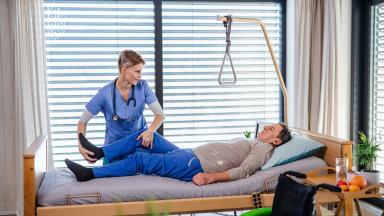
Inpatient Rehabilitation
Should recovery happen on a hospital ward, or at home with visits to a clinic? A ward is the answer when someone needs therapy every day, a nurse at night and a doctor nearby, which is common after a stroke, a hip fracture, heart surgery, a lung flare-up or a long spell in intensive care.
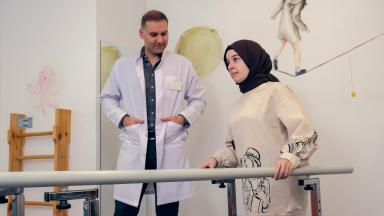
Inpatient Rehabilitation - Acute Rehabilitation Unit
Acute does not mean emergency here. It means the intensive level of rehabilitation, with at least three hours of therapy a day on a hospital ward where a rehabilitation doctor sees you daily, and it suits people in the first months after a stroke, a spinal cord injury, a brain injury or major surgery.