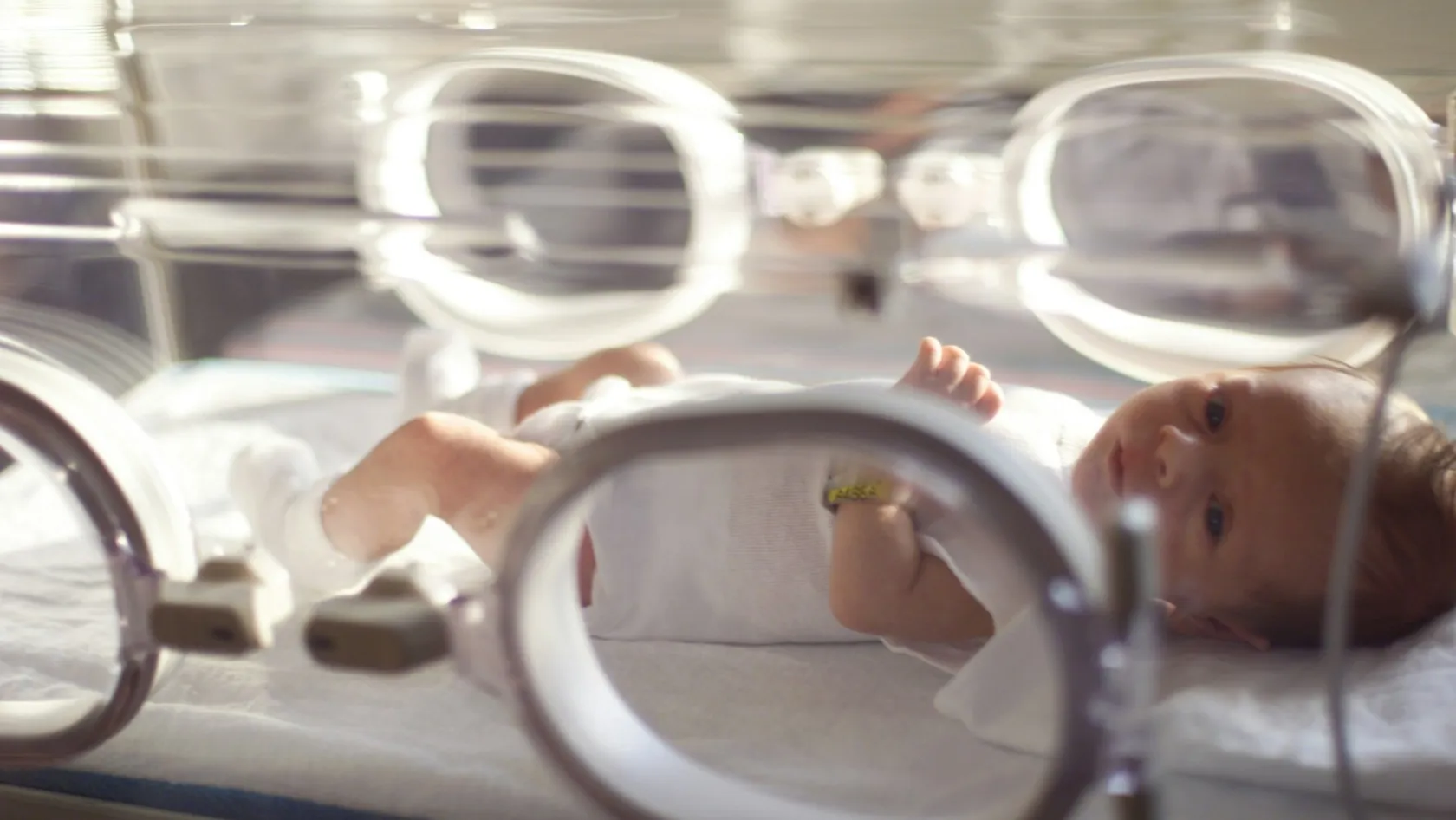
The Neonatal ICU at Biruni Hospital in Istanbul cares for babies born too early, too small or unwell. Among 10,877 babies born at 22 to 28 weeks in a United States registry, 78.3 percent went home, and survival reached 94 percent at 28 weeks. This page covers the first day, survival week by week, breathing support, cooling treatment, skin-to-skin care and going home. Families are supported in seven languages, and a neonatologist reviews reports free of charge.
About This Department
Neonatal intensive care
Of 10,877 babies born between 22 and 28 weeks, 78.3 percent went home. For those born at 28 weeks, survival reached 94 percent.
A neonatal intensive care unit, or NICU, looks after babies in their first weeks of life who were born too early, too small, or unwell. It keeps them warm, helps them breathe and feed, and protects them from infection while their organs finish growing. The figures above come from 19 academic centers in the United States that followed every baby born at 22 to 28 weeks between 2013 and 2018 (Bell and colleagues, JAMA, 2022). Babies born later do better still. This page explains who is admitted to the Neonatal ICU at Biruni Hospital in Istanbul, what the treatments are, what parents can do themselves, and how a family abroad can ask for a review.
78.3
Percent of babies born at 22 to 28 weeks who survived to go home
94.0
Percent survival for babies born at 28 weeks in the same study
40
Percent lower risk of death with skin-to-skin care in low birth weight babies
Free
Review of pregnancy or newborn reports by a neonatologist
A baby who needs the unit is usually brought there within minutes of birth, in a warmed transport incubator, with a parent walking alongside whenever the mother's own condition allows. The team dries and warms the baby, supports breathing at the lightest level that works, places a fine line in the vein of the umbilical cord, and starts sugar and fluid. Blood tests use a few drops. Then the pace slows. Premature babies grow best when they are disturbed least, so lights are dimmed, voices kept low, and care is grouped so the baby can sleep in between.
Both parents meet a doctor on the first day.
Who comes to a NICU
About one baby in ten worldwide is born before 37 weeks. Not all of them need intensive care, and some full-term babies do.
This table scrolls sideways on a narrow screen. Swipe or drag to see every column.
Babies admitted to neonatal intensive care
Group
Born at
What they usually need
Extremely preterm
Before 28 weeks
Breathing support for weeks, feeding by vein and then by tube, an incubator, and a stay that often runs to the original due date
Very preterm
28 to 31 weeks
Help with breathing for days, tube feeds, warmth, and monitoring for pauses in breathing
Moderate and late preterm
32 to 36 weeks
Help with feeding, warmth, jaundice and blood sugar, and sometimes brief oxygen
Term babies who are unwell
37 weeks or later
Treatment for infection, breathing trouble after birth, low oxygen during delivery, seizures, or a condition that needs surgery
Weeks matter more than weight, and each extra week in the womb shortens the stay, which is the reason obstetricians work so hard to delay an early labor by even a few days.
NICU FAQ
How long will my baby stay in the NICU?
The original due date is a fair rough guide for a very early baby, and those born after 34 weeks mostly go home within one to three weeks.
Can I hold my baby in the NICU?
Yes, in nearly every case, and that includes many babies who are still on breathing support, because the nurse lifts the baby and the tubing together and stays close for the whole session.
Can both parents visit at any time?
Parents are welcome for most of the day and night, with hand washing on entry. Other visitors are limited, and anyone with a cold or fever is asked to stay away.
What is the difference between a NICU and a PICU?
Age. A NICU treats newborns, mostly in the first month of life, while a PICU looks after infants, children and teenagers from one month up to the eighteenth birthday.
Will my premature baby develop normally?
Most babies born after 32 weeks do. The earlier the birth, the higher the chance of a delay, and development is judged by corrected age, counted from the due date, for the first two years.
Survival, week by week
Averages from large centers hide wide differences. Your baby's own outlook depends on weight, sex, steroids given before birth, and how the first days go.
Survival to discharge among babies born from 2013 to 2018, Bell and colleagues, JAMA, 2022
Born at
Survived to go home
Note
22 weeks
10.9 percent of all live births, 30.0 percent of those given active treatment
Many hospitals do not offer intensive care this early
23 weeks
55.8 percent of those given active treatment
The outlook changes faster here than at any other point
28 weeks
94.0 percent
Most serious complications become uncommon
22 to 28 weeks together
78.3 percent
Up from 76.0 percent in 2008 to 2012
Progress has been steady and unspectacular. The same research network followed 34,636 babies from 1993 to 2012, and over those twenty years steroid injections for mothers before an early birth rose from 24 percent to 87 percent, breathing tubes placed in the delivery room fell from 80 percent to 65 percent, and late infections in the unit dropped from 37 percent to 27 percent among babies born at 26 weeks (Stoll and colleagues, JAMA, 2015). Survival without a major complication improved by about 2 percent a year for babies born at 25 to 28 weeks. No single invention did that. It came from gentler breathing support, stricter hand hygiene, breast milk and hundreds of small habits repeated at every cot, and a parent choosing a unit is better served by asking about those habits than by counting the machines in the room.
The hurdles of prematurity
Parents of a very early baby hear a list of conditions in the first week, and the names are easier to bear when they are already familiar. Bleeding into the fluid spaces of the brain is looked for with a bedside ultrasound scan in the first days, and the severe form affected 14.3 percent of babies born at 22 to 28 weeks in the American registry. Necrotizing enterocolitis, a dangerous inflammation of the bowel, occurred in 8.9 percent, and breast milk is the best protection known. Late infection struck 19.9 percent, which explains the hand washing that staff ask of every visitor. Severe retinopathy, an overgrowth of blood vessels in the eye, was found in 12.8 percent, so an eye doctor examines every small baby on a schedule and treats early. Chronic lung disease in its severe form followed in 8.0 percent. Nearly all of these figures fall steeply with each extra week of pregnancy.
Most babies meet one or two of these hurdles.
Few meet all of them.
Honesty about the long term belongs here too. Among children born before 27 weeks and examined at age two, 48.7 percent had no or only mild developmental impairment, 29.3 percent had moderate impairment and 21.2 percent severe, and 8.4 percent had moderate to severe cerebral palsy. Follow-up clinics exist to find problems early, when therapy works best.
Two treatments explained
Help with breathing
Lungs are the last organ to mature. Support is stepped up and down daily, and the aim is always the gentlest level that works.
Breathing support, from lightest to heaviest
Treatment
What it is
When it is used
Caffeine
A daily dose by mouth or vein
Stops the pauses in breathing that are common before 34 weeks
Nasal CPAP or high flow
Air and oxygen under light pressure through soft prongs
Keeps small air sacs open while the baby breathes alone
Surfactant
A liquid given once or twice into the windpipe
Replaces the natural coating that premature lungs have not yet made
Ventilator
A machine that breathes through a tube in the windpipe
For the smallest babies and the sickest, for the shortest time possible
Cooling after a difficult birth
A term baby whose brain went short of oxygen during delivery is cooled to 33.5 degrees for 72 hours and then warmed slowly. Treatment has to begin within six hours of birth.
Whole-body cooling in 208 babies, Shankaran and colleagues, New England Journal of Medicine, 2005
Outcome at 18 to 22 months
Cooled
Usual care
Death or moderate to severe disability
44 percent
62 percent
Death
24 percent
37 percent
Cerebral palsy among survivors
19 percent
30 percent
What parents can do
Skin to skin
In 21 trials with 3,042 low birth weight babies, skin-to-skin care cut the risk of death by 40 percent and the risk of hospital infection by 65 percent.
Kangaroo care means holding your baby, dressed only in a diaper, upright against your bare chest under a blanket, for an hour or longer at a time. The figures come from a Cochrane review (Conde-Agudelo and Diaz-Rossello, 2016), and most of the trials took place in countries with few resources, so the effect on survival in a modern unit is smaller. The gains in warmth, weight, breastfeeding and bonding hold everywhere, for fathers as much as for mothers. Even babies on CPAP come out for it.
Your milk
Start expressing within hours of the birth, eight times a day, even if only drops come.
Those first drops are given to the baby on a cotton swab or through the feeding tube. Milk protects the bowel. It lowers infection. A lactation nurse helps with pumping, storage and, later, the move to the breast.
Learn the daily care too. Changing a diaper through incubator doors, taking a temperature and giving a tube feed are all taught to parents, and the parent who has done them for weeks goes home with confidence.
Going home
Discharge has no fixed date. Babies go home when they breathe without pauses, keep warm in an open cot, take all feeds by breast or bottle and gain weight steadily, which for most early babies happens between two and four weeks before the original due date. Before that day comes a hearing test, an eye check where one is due, vaccines by calendar age, a car seat trial for the smallest, and teaching for parents on safe sleep, medicines and infant resuscitation. Carry a written summary. Keep the follow-up dates.
Families from abroad
Moving a sick newborn between countries is difficult and sometimes unsafe, so the better plan, when a pregnancy is known to be high risk, is for the mother to travel before the birth and deliver where the neonatal unit is. The international patients office assigns a coordinator from the first message who stays with the family through discharge and keeps answering the same WhatsApp number once you are back home. Staff in the office speak English, Arabic, French, Russian, Serbian, Romanian and Spanish, and they book interpreters for other languages, because a mother learning to tube feed her baby needs every instruction in words she fully understands. Accommodation near the hospital matters more here than for any other unit, since a stay can last two or three months, and the office arranges it along with airport transfers, daily transport and the invitation letter for a visa. Halal, vegetarian and diabetic meals come from the hospital kitchen. A prayer room is close by. A request for a female physician is passed on and met wherever the rota allows.
Send the pregnancy records and scans, or the newborn's current summary, and a neonatologist reads them free of charge and replies in writing. For the journey home, the neonatologist confirms in writing that the baby is fit to fly, which for a baby born early usually means feeding well, breathing without oxygen and past the original due date.
Cost
Length of stay drives the total, and gestational age drives length of stay. Days on a ventilator, surfactant, surgery, and treatment for infection or eye disease add to it.
Quotes differ. In this market neonatal care is priced per day by level of care, and the mother's delivery appears as its own item. Two questions belong in writing. What does the day rate include. How often will the family receive an updated estimate. Estimates made before anyone has read the reports mean little, and the review that makes a real estimate possible is free.
References
Bell EF, Hintz SR, Hansen NI, et al. Mortality, in-hospital morbidity, care practices, and 2-year outcomes for extremely preterm infants in the US, 2013-2018. JAMA. 2022;327(3):248-263.
Stoll BJ, Hansen NI, Bell EF, et al. Trends in care practices, morbidity, and mortality of extremely preterm neonates, 1993-2012. JAMA. 2015;314(10):1039-1051.
Shankaran S, Laptook AR, Ehrenkranz RA, et al. Whole-body hypothermia for neonates with hypoxic-ischemic encephalopathy. N Engl J Med. 2005;353(15):1574-1584.
Conde-Agudelo A, Diaz-Rossello JL. Kangaroo mother care to reduce morbidity and mortality in low birthweight infants. Cochrane Database Syst Rev. 2016, Issue 8, CD002771.
Editor's note
Written by the Biruni Hospital medical editorial team. Reviewed by Assistant Professor İsmail YILDIZ, Anesthesia and Reanimation.