A multidisciplinary inpatient consultation brings other specialists, nurses, pharmacists and therapists to the bedside during a hospital stay and joins their advice into one plan under the attending physician. This page explains how a consultation is requested and answered, how team meetings work, what research in stroke, hip fracture and heart failure shows, and how Biruni Hospital in Istanbul keeps international patients informed throughout.
About This Department
Multidisciplinary consultation
For every 100 stroke patients looked after by an organized team, two more survive and six more go home to live independently. The drugs are the same. The teamwork differs.
That finding comes from a Cochrane review of 29 randomized trials with 5,902 participants, which compared stroke care delivered by a coordinated multidisciplinary team with care on a general ward (Langhorne and Ramachandra, Cochrane Database of Systematic Reviews, 2020). Similar results exist for hip fracture and for heart failure. Few people are admitted to a hospital with a single problem, and the specialist whose name is on the door cannot be expert in all of them. A multidisciplinary inpatient consultation is the means by which other specialists, nurses, pharmacists and therapists are brought to the bedside during a stay, and by which their advice is joined into one plan. This page explains how that works at Biruni Hospital in Istanbul, who remains in charge, and what patients and families can do to help.
6 in 100
More stroke patients living independently after organized team care
40
Percent lower in-hospital mortality after hip fracture when geriatricians and surgeons share care
25
Percent lower mortality in heart failure with follow-up by a specialized team
Every inpatient has an attending physician, the doctor responsible for the admission. A consultation is a formal request from that doctor to a colleague in another field. Common reasons include these.
A heart, lung or kidney condition that needs assessment before an operation.
Blood sugar, blood pressure or blood thinning that has become hard to control during the illness.
An unexplained fever, or an infection that has not responded to the first antibiotic.
A new finding on a scan.
Confusion, low mood or poor sleep in an older patient.
Pain, nutrition, swallowing, wounds or mobility, where nurses, dietitians and therapists lead.
Patients who receive organized inpatient stroke care are more likely to be alive, independent and living at home one year after the stroke. The benefit held regardless of age, sex, stroke type or severity.
Why the team is the treatment
Stroke units have no secret medicine. Their members meet, share one set of notes, follow agreed routines for swallowing, positioning, fever and early movement, and include the family. Older people with a broken hip tell the same story, since the operation itself takes an hour and the weeks around it, with their risks of confusion, pneumonia, clots, poor nutrition and falls, belong to the physician who specializes in old age.
Across 18 studies with 9,094 patients, care shared between orthopedic surgeons and geriatricians was associated with 40 percent lower mortality in the hospital and 17 percent lower mortality in the long term (Grigoryan and colleagues, J Orthop Trauma, 2014).
How a consultation works
1
A clear question
The attending physician states what is being asked, for example whether the heart is fit for surgery on Thursday, and how urgent the answer is.
2
A visit to the bedside
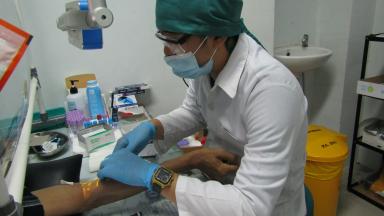
The consultant reads the notes, takes a history, examines the patient and looks at the results personally.
3
A written answer
Findings and specific recommendations go into the record the same day, and for anything urgent the two doctors also speak directly.
The attending physician decides which recommendations to adopt and remains the doctor in charge. Patients should always know that name.
The team meeting
Some decisions need everyone in one room. Cancer treatment is the usual example.
4
The case is presented
Scans go up on the screen, the pathologist describes the tissue, and each specialist comments.
5
One recommendation is recorded
Treatment, alternatives, and who will speak to the patient.
6
The patient decides
The recommendation is brought back to the bedside and explained through an interpreter, and nothing proceeds without consent.
Who does what
Attending physician. Leads the admission, requests consultations, combines the advice and signs the discharge plan.
Consultant specialists. Answer the question asked, follow up while the problem lasts, and sign off in writing.
Ward nurses. See the patient around the clock, carry out the plan, and are the first to notice change.
Clinical pharmacist. Checks doses, interactions and the medicine list at admission and discharge.
Physiotherapist and dietitian. Work on movement, breathing, swallowing and nutrition from the first days.
Coordinator and interpreter. Keep international patients and their families informed in their own language.
Your part
1
Keep one list
Conditions, operations, medicines with doses, and what you cannot take. Hand the same list to every new face.
2
Learn two names
The attending physician and the nurse in charge of the shift.
3
Say what you have been told
When a consultant visits, mention what the previous doctor said. Patients catch contradictions early.
What research shows
Three bodies of evidence stand out, and they share a pattern.
Stroke. Organized team care lowered the odds of death or dependency by about a quarter, without lengthening the stay.
Hip fracture. Shared care between surgeons and geriatricians shortened the stay and lowered mortality.
Heart failure. Follow-up by a specialized multidisciplinary team lowered mortality, heart failure admissions and admissions for any cause.
This table scrolls sideways on a narrow screen. Swipe or drag to see every column.
Relative risk of death 0.75 and of heart failure admission 0.74 with specialized team follow-up
These are conditions in which the patient is frail, the problems are many, and no single specialty holds all the answers. The evidence has limits. Most of the hip fracture studies were observational, their authors called for better trials, and nobody has yet shown which of the three models, a visiting geriatrician, a geriatric ward with visiting surgeons, or fully shared care, works best. The heart failure review found that programs built only on telephone contact did not lower mortality, which suggests that the benefit comes from real shared work and not from the label. In 15 of the 18 heart failure trials that measured cost, the team approach saved money.
When doctors disagree
Specialists sometimes give advice that conflicts. The cardiologist wants the blood thinner continued, and the surgeon wants it stopped. Disagreement of this kind is normal and even healthy, since each is guarding against a different danger, a clot in one case and bleeding in the other, and the patient is safest when both dangers have been spoken aloud.
Somebody has to choose.
The attending physician resolves the conflict, usually by bringing the two colleagues into one conversation, and explains the decision and its reasoning to the patient.
Can I request a consultation myself?
Yes. Tell the attending physician or the nurse which problem concerns you. The doctor will either arrange it or explain why it is not needed now.
Why do so many people ask me the same questions?
Each consultant is trained to take a history personally, and details that matter to a kidney specialist differ from those that matter to a surgeon. Repetition is also a safety check. Your written list shortens it.
Who tells me the overall plan?
The attending physician, on the daily round. If the picture is unclear, say so, and the coordinator will arrange a family meeting with the interpreter.
Will the consultants follow me after discharge?
The discharge summary states which specialists need to see you again and when. For patients going home abroad it is written so that doctors there can continue the plan.
Nights and weekends
Illness keeps no office hours. Consultations requested during the working day are the routine, and hospitals also keep on-call rosters so that urgent questions are answered at night and at weekends, with intensive care and emergency teams in the building around the clock. A sudden change brings the on-call doctor first, the attending physician is informed, and the relevant consultant is called in if the problem demands it. Non-urgent questions raised on a Saturday are often best held for the full team on Monday, when the scans can be reviewed together and the people who know the case are present, and patients are sometimes surprised to learn that waiting a day for the right opinion is safer than acting at once on a partial one. What should never wait is a new symptom. Chest pain, breathlessness, bleeding, sudden weakness, confusion or a fever should be reported to the nurse at once and at any hour, because the team can only respond to what it has been told.
Press the call button. Nobody minds.
Coming from abroad
International patients meet more new faces than most, in a language that may not be their own, and the consultation system depends on information passing accurately. One coordinator from the international patients office stays with you from the first message through discharge. The same WhatsApp number answers once you are back home. The office works in English, Arabic, French, Russian, Serbian, Romanian and Spanish and books interpreters for other languages. Send your reports before you travel. Specialists review them without charge, and the consultations you are likely to need are then planned before admission, which shortens the length of stay and spares you the experience of lying in a bed for two days while a colleague from another department is found. Ward rooms have a companion bed. The office also arranges accommodation near the hospital, airport transfers, daily transport and the invitation letter for a visa. The kitchen prepares halal, vegetarian and diabetic meals, a prayer room is on site, and a request for a female physician is met wherever the rota allows. Chemotherapy and radiotherapy are delivered on the same site, so cancer team meetings include the doctors who would give each treatment.
Before discharge the attending physician confirms that you are fit to fly, and the summary lists every consultant opinion, so that your doctors at home can see who advised what.
Cost
Review of reports before admission costs nothing. Hospitals in this market include the consultations foreseen in the treatment plan in the written estimate and itemize any that become necessary later.
Confirm this for your own plan. The coordinator knows which opinions the estimate already covers, and which would be added only if the doctors find a reason once you are on the ward.
References
Langhorne P, Ramachandra S, Stroke Unit Trialists Collaboration. Organized inpatient (stroke unit) care for stroke, network meta-analysis. Cochrane Database Syst Rev. 2020, Issue 4, CD000197.
Grigoryan KV, Javedan H, Rudolph JL. Orthogeriatric care models and outcomes in hip fracture patients, a systematic review and meta-analysis. J Orthop Trauma. 2014;28(3):e49-e55.
McAlister FA, Stewart S, Ferrua S, McMurray JJ. Multidisciplinary strategies for the management of heart failure patients at high risk for admission, a systematic review of randomized trials. J Am Coll Cardiol. 2004;44(4):810-819.
Editor's note
Written by the Biruni Hospital medical editorial team. Reviewed by Assoc. Prof. Dr. Suna KOÇ, Anesthesia and Reanimation.