
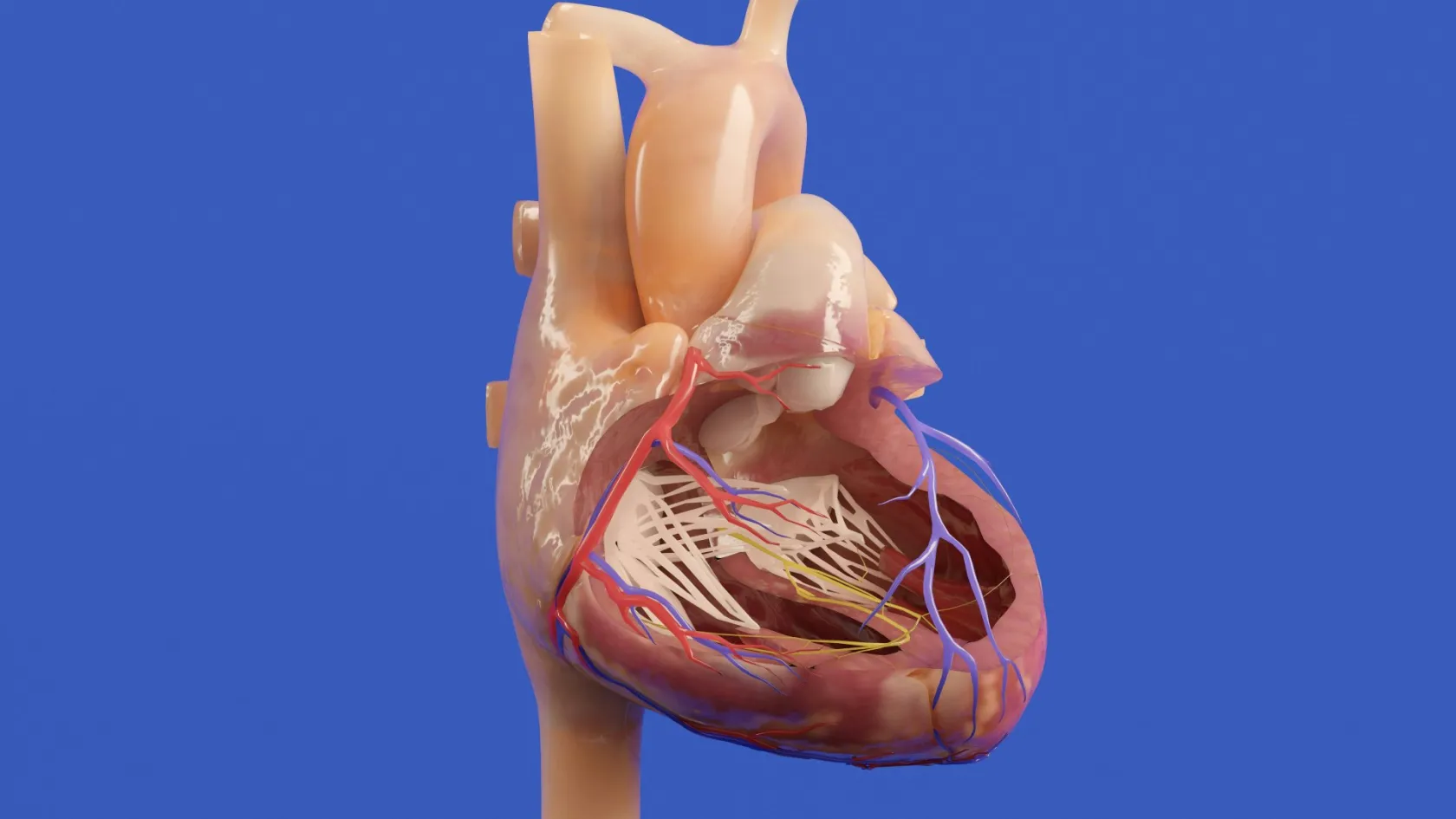
Mitral Valve Replacement
The valve you are given is a choice, and most of it is yours. This page sets the survival data for mechanical and tissue prostheses against the things that override them, from pregnancy plans to whether a blood test every few weeks is realistic where you live.
About This Department
Somebody has probably told you that your mitral valve cannot be saved. That sentence lands hard, and it usually arrives without the two things you need next, which are why the valve is beyond repair and what living with a new one actually involves. Both have straightforward answers, and some 280,000 heart valves are replaced worldwide every year with the mitral among the commonest, which means the decision in front of you is a well-traveled one and narrower than it feels from where you are sitting.
Free consultation
Find out which valve suits you before anybody books a date
Attach the echocardiogram with its moving images, any cardiology or catheter report, a list of what you take each day, and your age and occupation, since those last two decide more than most people expect. A cardiac surgeon reads the file and comes back with which prosthesis fits your life, whether a repair could still be attempted, and what the anticoagulation would mean where you live. That opinion costs nothing and nothing follows from it automatically.
Why a valve gets replaced
Surgeons prefer to keep your own valve wherever they can, and a good unit repairs the great majority of leaking valves it operates on, so replacement is what happens once the tissue itself has gone past rebuilding, which four situations between them account for. Rheumatic disease leads by a distance. It is the biggest cause across the Middle East, the Balkans, Central Asia, North Africa and the Indian subcontinent. Childhood rheumatic fever leaves the leaflets thickened and fused and the cords shortened into stiff cables, and a valve that has lost its pliability cannot be persuaded to close properly no matter what is stitched into it, while heavy calcium in the annulus does something similar from the outside, turning the ring the leaflets hang from into a rigid horseshoe of bone-hard tissue that will not hold a stitch. Endocarditis makes the third. An infection that has eaten through a leaflet or hollowed out an abscess beside the annulus leaves nothing sound to sew to, and here the operation deals first with removing infected material and only then with restoring mechanics.
The fourth situation follows a repair that was attempted and did not hold. Sometimes the surgeon finds this in theater, when the ultrasound probe shows a leak still running after the repair, and the honest response is to take it down and replace the valve in the same anesthetic. Taking it down counts as good judgment, and knowing beforehand that it might happen is part of consenting properly.
Two beliefs get in the way here and both should go.
Replacement is a different operation with a different set of trade-offs, carried out by the same surgeons who do the repairs, and for a valve destroyed by rheumatic fever it is the correct one. And needing a replacement predicts nothing at all for how long you live with it. Cleveland Clinic puts it plainly on its own patient page, that half of the people having this surgery live at least ten more years, with no difference between the two valve types.
Mechanical or tissue
One decision matters more than every other on this page, and unlike most surgical decisions it is substantially yours to make. A mechanical valve is machined from pyrolytic carbon and metal and does not wear out, but it clots if you let it, so it commits you to warfarin every day for the rest of your life. A tissue valve is built from treated animal pericardium or a pig valve, needs blood thinning for only a few months, and degenerates on a clock that runs faster the younger you are.
Below 65 the survival data favor the mechanical valve, consistently. A multicenter study of 1,536 isolated mitral valve replacements matched patients by propensity score and reported ten-year survival of 78.2 percent with a mechanical valve against 69.8 percent with a tissue valve in patients under 65, alongside freedom from a further intervention at ten years of 96.2 percent against 81.3 percent, which is the sort of gap that changes what a surgeon recommends.
In the 65 to 75 group that same study found no survival difference at all, and none in reintervention either.
Younger patients show the pattern most sharply. Among 2,727 patients aged 18 to 50 followed for a median of 12.4 years, propensity-matched survival at fifteen years was 80.8 percent after a mechanical valve and 74.3 percent after a tissue one, with reoperation at 5.7 percent against 19.9 percent. Stroke and major bleeding rates were similar between the groups, which surprises people who assume warfarin buys safety with bleeding.
The pattern holds in rheumatic disease too. A Taiwanese national study of 3,638 patients with rheumatic heart disease undergoing mitral replacement found higher ten-year mortality with tissue valves, 50.6 percent against 45.5 percent, and a fourfold higher rate of repeat valve surgery, with the mechanical advantage persisting until roughly age 65. So the arithmetic points one way and real life sometimes points the other.
A 40-year-old woman who wants children cannot take warfarin through the first trimester without accepting a risk to the fetus, and that alone can decide the question. A man doing heavy manual work with a real chance of a head injury, a patient with a bleeding disorder or previous gastrointestinal bleeding, somebody living where a reliable blood test every few weeks is not realistic, and anybody who knows they will not take a daily tablet consistently all have grounds for choosing tissue at an age the survival curves would not. Every one of those counts as a legitimate reason, and a surgeon who waves them away has stopped treating the person in front of him.
This table scrolls sideways on a narrow screen. Swipe or drag to see every column.
| Question | Mechanical | Tissue |
|---|---|---|
| How long it lasts | Twenty to thirty years, and often longer than the person carrying it. | Ten to twenty years, and at the short end of that in patients under 50. |
| Blood thinning | Warfarin for life, target INR 2.5 to 3.5 in the mitral position, with regular blood tests. | Around three months, then usually nothing beyond what your rhythm requires. |
| Chance of a second operation | Low. Freedom from reintervention reached 96.2 percent at ten years. | Higher, at 81.3 percent in the same comparison, and a catheter valve-in-valve may cover it later. |
| Whom it suits | Under 65, able to attend blood tests, no bleeding disorder, no pregnancy planned. | Over 65, planning pregnancy, bleeding risk, or unable to manage anticoagulation reliably. |
| What you notice | A soft regular click, audible in a quiet room, which most people stop hearing within months. | Nothing. A tissue valve is silent. |
Settle this in the consultation and have it written into the consent form as a plan, with the fallback named. A decision made properly beforehand is a decision. One left to the operating room is a guess somebody else makes for you.
The operation itself
Two to four hours, under general anesthesia, with the heart stopped and a bypass machine breathing and circulating for you. Most replacements go through the breastbone, and selected cases go through a small right-side incision between the ribs or with robotic assistance, chosen by what the valve and the leg vessels allow rather than by preference. The sequence runs as follows.
Anything else planned for the same trip happens on the same bypass run. A tricuspid repair, a maze procedure to treat atrial fibrillation, closure of a hole between the atria or coronary grafting all get done now, since a second bypass run on another day carries far more risk than another thirty minutes today.
Living on warfarin
Nobody chooses a mechanical valve because they want to take warfarin, and the honest picture is that most people manage it without much difficulty once the first two months are behind them. What it asks of you should be spelled out before you commit. This is the part of the operation you live with daily.
Target range for a mechanical valve in the mitral position is an INR of 2.5 to 3.5, higher than the range used for atrial fibrillation, because the mitral position is more prone to clot than the aortic one. Testing starts every few days in hospital and stretches to every four to six weeks once the dose settles, and many patients eventually use a finger-prick meter at home and send the number through to their clinic, which is worth asking about wherever you live.
Nobody gives up green vegetables.
Vitamin K works against warfarin, so the rule is consistency rather than avoidance, and eating roughly the same amount of spinach, broccoli and salad each week keeps the dose stable. A sudden change in either direction is what moves the number.
Alcohol in quantity, a course of antibiotics, many herbal preparations and any new medication can all shift the INR, so tell whoever prescribes for you that you have a mechanical valve, and treat aspirin and anti-inflammatory painkillers with particular care, since those are the common trap and patients buy them across a counter believing them harmless.
Newer direct oral anticoagulants do not work here. They were tested against warfarin in patients with mechanical valves and performed worse, so a mechanical mitral valve means warfarin specifically. Anybody offering you a modern alternative for this indication is mistaken.
Two practical points for a patient traveling home afterwards. The target range, the current dose and the date of the next test belong in your discharge letter in plain terms, addressed to a doctor in your own country. And carry a card stating the valve type, its size and the target INR, because a doctor treating you in an emergency needs that in seconds.
What can go wrong
Almost everyone survives this operation, and the risk climbs with age, with emergency surgery as opposed to a planned date, with a second operation on the same valve and with how weak the heart already is.
What the team watches for, and what gets done about each, follows below.
Who should think hard before agreeing. A very weak ventricle, severe lung disease, advanced kidney failure, active infection elsewhere in the body, and frailty all shift the balance, and in some of those situations a catheter-based option or medical treatment serves better than an operation. Hearing that from a surgeon serves you better than a booking.
Recovery and the flight home
Seven days in hospital, then four to eight weeks to feel yourself again. That second figure catches people out. The chest stops hurting long before the tiredness lifts.
This table scrolls sideways on a narrow screen. Swipe or drag to see every column.
| Stage | What happens | What is expected of you |
|---|---|---|
| Intensive care, one to two days | Breathing tube out within hours. Rhythm, drains and blood pressure watched continuously. Warfarin started if the valve is mechanical. | Deep breathing exercises and sitting up. Say when you are in pain, since chest pain makes people breathe shallowly. |
| Ward, four to five days | Drains and pacing wires removed. INR checked daily and the dose adjusted. Echo before discharge to record how the valve performs. | Walking the corridor several times a day. Learning the wound care and the warfarin rules with your companion present. |
| Hotel, one to two weeks | Wound check, a repeat INR, and a chest film if you are short of breath. Fluid at the base of a lung is drained if it is enough to matter. | Short walks that get longer. No lifting, no driving, and no pushing up out of a chair with your arms. |
| Weeks three to six | Breastbone knitting. Appetite and sleep returning. A dip in mood around week two is common and it passes without treatment. | Desk work is realistic near the end of this window. Driving after six weeks if the breastbone was divided. |
| Months two and three | Energy back. INR testing stretched to every four to six weeks. Follow-up echo at three months. | Cardiac rehabilitation, which measurably improves how far you get back. Physical work from around week ten. |
Flying fixes your return ticket. Two to three weeks after a sternotomy and ten to fourteen days after a small-incision or robotic replacement is the usual clearance, on condition that the wound is dry, the rhythm is steady, the INR is inside its range if you are on warfarin, and any fluid around the lungs has settled. Book a ticket you can change. Take an aisle seat, get up hourly, drink water and wear compression stockings, and carry your anticoagulation card and a copy of the discharge summary in your hand luggage rather than in the hold.
When a tissue valve wears out
Every tissue valve degenerates eventually.
The leaflets stiffen and calcify, or one of them tears, and the valve starts to leak or to narrow again, so breathlessness on exertion returns and the ankles swell, though the yearly echocardiogram normally catches the change well before any of that becomes obvious to you.
A generation ago that meant a second open operation on a chest full of scar tissue, and the risk of it was the strongest argument against choosing tissue in the first place. The argument has weakened considerably. A new valve can now be delivered on a catheter and expanded inside the failing one, a procedure called valve-in-valve, usually reached through a vein in the groin and across the wall between the atria instead of through the chest. Registry data on 1,529 patients who had this done with a balloon-expandable valve reported technical success in 96.8 percent, mortality of 5.4 percent at thirty days and 16.7 percent at one year, and a fall in severe heart failure symptoms from 87.1 percent of patients at baseline to 9.7 percent a year later. Those results came from patients considered high risk for a repeat operation, which is the population the procedure exists for, and the route through the groin did better than the route through the chest wall, at 15.8 percent one-year mortality against 21.7 percent.
Not every failing bioprosthesis suits it. The size of the original valve, the space left in the outflow of the ventricle and the anatomy of the wall between the atria all decide whether a catheter valve can go in safely, and a fit younger patient may still be better served by a straightforward second operation.
What this means for the decision you are making now is simple enough. A tissue valve at 60 no longer necessarily commits you to open surgery at 75. It commits you to a further procedure of some kind, most likely a smaller one, and that belongs in the balance alongside the survival figures rather than instead of them.
Reading a quote
You will not find a price here. Cardiac quotes turn on how long you are expected to spend on intensive care, nobody can estimate that from an email, and a figure produced before a surgeon has read your file therefore describes a patient who is not you and starts every conversation afterwards from the wrong place. What follows tells you how to read the ones you receive.
Ask which prosthesis the figure assumes, because mechanical and tissue valves are not priced alike and a quote that leaves the type open has left the biggest line item open. Find out how many nights of intensive care the figure budgets for. Check whether anything else is being done on the same bypass run. A tricuspid repair, a maze procedure or coronary grafting each lengthen the operation and the stay. Establish whether the work-up sits inside the number, which for a heart operation means a coronary angiogram in most adults past 40, a carotid scan, dental clearance and lung function tests. Settle what happens financially if you go back to theater for bleeding, or if you need a pacemaker before discharge, since both are recognized outcomes and not exotic ones. And find out how the anticoagulation is managed and paid for in the days before you fly, since a patient on warfarin needs testing and dose adjustment right up to the morning of departure and somebody has to be doing it.
Your own history moves the total as much as the operation does. A previous cardiac operation, a weak ventricle, pulmonary hypertension, kidney impairment, diabetes, obesity and chronic lung disease each lengthen the expected stay, and the intensive care unit is where cardiac money goes.
Packages published by Turkish hospitals and medical travel agencies for valve surgery typically include the airport transfer, pre-operative tests, the surgeon, anesthesia and perfusion fees, the theater, the planned intensive care and ward nights, the prosthesis, an interpreter and the follow-up before departure. They typically exclude flights, insurance, unplanned extra intensive care, treatment of a complication and the hotel beyond an agreed number of nights. Compare what you are sent against that list instead of against another hospital's headline.
Send the file and you get a number that describes you.
Planning the trip
Budget three to four weeks in Istanbul. Consultation and any tests that need repeating take the first days, the operation and the ward stay take a week, and the rest is hotel recovery until somebody examines you and clears you to fly.
Bring the echocardiogram loops, and not the report alone. A report says the valve is severely diseased. That much you know. The images show whether a repair could still be attempted and which prosthesis the annulus will accept, and those are the questions that decide your trip. Bring the discs with you as well, since files sometimes fail to transfer cleanly.
One coordinator handles your case from the first message to the day you leave. English, Arabic, French, Russian, Serbian, Romanian and Spanish are covered by the international patients team, and interpreting in other languages is arranged when asked for. Two conversations depend on that more than the rest, the consent discussion where the valve type is settled and the warfarin teaching before discharge, and neither should happen in a language you are guessing at. One companion bed in the room lets one person stay overnight through the ward stay, with the intensive care days following the unit's own visiting rules. Accommodation for the two of you either side of the admission, airport transfers and hospital transport are arranged by the international patients office. Halal, vegetarian and diabetic meals come from the hospital kitchen and a prayer room is on site, and a request for a female physician goes to the department and is met wherever the rota allows, so put that in your first message rather than raising it at the door.
That same office issues an appointment confirmation and an invitation letter naming the hospital and the treating doctor, which is what most consulates want with a medical visa application, and it goes out ten days or so before you travel.
Then comes the part that decides how the next year goes, which is the handover.
You should leave with the operation note naming the prosthesis, its model and its size, the discharge echocardiogram, the anticoagulation plan with its target range and next test date, a card to carry, and a letter addressed to a cardiologist by name where you have one. Your coordinator stays on the same WhatsApp number afterwards. A photograph of a wound, or a question about an INR result, reaches somebody with your file already open. Once you are back home, follow-up means a cardiology review and an echocardiogram at three months and then once a year, done wherever you live and by your own doctor. Report breathlessness that returns, ankles that swell, a fever with no cause, a change in the sound of a mechanical valve, or any bleeding you cannot explain.
Mitral valve replacement FAQ
How long will I be in Turkey for a mitral valve replacement?
Which valve should I choose at 55?
Can I hear a mechanical valve, and will other people hear it?
Can my wife or husband stay with me in the room?
Will I be able to work and exercise normally afterwards?
What do I do about warfarin once I am home?
References
- Rokui S, Gottschalk B, Peng D, Groenewoud R, Ye J. Long-term outcomes of isolated mechanical versus bioprosthetic mitral valve replacement in different age groups of propensity-matched patients. European Journal of Cardio-Thoracic Surgery. 2024;66(1):ezae245.
- Schnittman SR, Itagaki S, Toyoda N, Adams DH, Egorova NN, Chikwe J. Survival and long-term outcomes after mitral valve replacement in patients aged 18 to 50 years. The Journal of Thoracic and Cardiovascular Surgery. 2018;155(1):96-102.
- Chen CY, Chan YH, Wu VCC, Liu KS, Cheng YT, Chu PH, Chen SW. Bioprosthetic versus mechanical mitral valve replacements in patients with rheumatic heart disease. The Journal of Thoracic and Cardiovascular Surgery. 2023;165(3):1050-1060.
- Whisenant B, Kapadia SR, Eleid MF, Kodali SK, McCabe JM, Krishnaswamy A, Morse M, Smalling RW, Reisman M, Mack M, O'Neill WW, Bapat VN, Leon MB, Rihal CS, Makkar RR, Guerrero M. One-year outcomes of mitral valve-in-valve using the SAPIEN 3 transcatheter heart valve. JAMA Cardiology. 2020;5(11):1245-1252.
- Otto CM, Nishimura RA, Bonow RO, Carabello BA, Erwin JP, Gentile F, Jneid H, Krieger EV, Mack M, McLeod C, O'Gara PT, Rigolin VH, Sundt TM, Thompson A, Toly C. 2020 ACC/AHA guideline for the management of patients with valvular heart disease. Journal of the American College of Cardiology. 2021;77(4):e25-e197.
Editor's note
Written by the Biruni Hospital medical editorial team. Reviewed by Op. Dr. Mohammed N.I. SKAIK, Cardiovascular Surgery.
Medically reviewed by
Op. Dr. Mohammed N.I. SKAIK
Cardiovascular Surgery
Related Treatments
View All-
Aortic Aneurysm Repair - Aortic Aneurysm Surgery
Aortic aneurysm repair prevents rupture, which killed 37 percent of patients in emergency surgery against 6 percent in planned repair in a large screening trial. This guide explains when to watch and when to repair, size thresholds for men and women, EVAR against open surgery, long-term trial results, recovery and the stay in Istanbul.
-

Aortic Valve Repair
Being told the aortic valve leaks is usually followed by a conversation about which prosthesis to have. For a large group of patients there is a third answer, which is keeping the valve they were born with, and this page explains who qualifies.
-
Aortic Valve Replacement
The catheter valve wins the first year and the five-year data show the two routes ending up level. This page sets out what that means for a patient of 60 as opposed to a patient of 85, and which prosthesis belongs in each of them.
-
Coronary Angioplasty
In 5,179 patients with stable coronary disease, opening the narrowings did not reduce heart attacks or deaths. In somebody having a heart attack, the same procedure saves lives. Almost every argument about stents comes from confusing those two situations.
-
Endovascular Aneurysm Repair - EVAR
Three randomized trials compared keyhole aneurysm repair with open surgery and disagreed about long-term survival. They agreed on something else, and it is the part that decides how you will spend the next twenty years.