Lu-177 PSMA therapy is a radioligand treatment for advanced prostate cancer that carries lutetium-177 radiation directly to cancer cells carrying PSMA. Given as a drip every six weeks for up to six cycles, it extended survival after hormone therapy and chemotherapy and doubled disease control before chemotherapy. Our nuclear medicine team confirms suitability with a PSMA PET/CT scan, gives each cycle over a short stay and follows you once you are back home.
About This Department
Nuclear Medicine
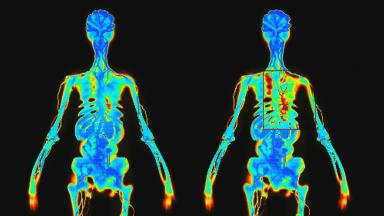
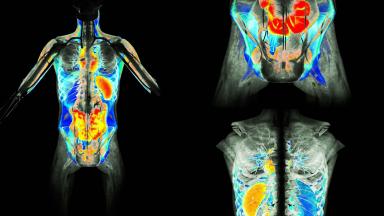
Lu-177 PSMA therapy carries radiation straight to prostate cancer cells wherever they have spread. The same target that lights up on the PSMA scan becomes the treatment.
Lu-177 PSMA therapy, or lutetium PSMA treatment, is a radioligand therapy for advanced prostate cancer in which a molecule that binds to PSMA, a protein found in large amounts on prostate cancer cells, is joined to lutetium-177, a radioactive metal whose short-range beta radiation damages the cancer cells and those next to them. Patients receive it as a drip every six weeks, for up to six cycles. In the VISION trial of 831 men with metastatic castration-resistant prostate cancer that had progressed after hormone therapy and chemotherapy, adding Lu-177 PSMA-617 to standard care extended median survival from 11.3 to 15.3 months (Sartor and colleagues, New England Journal of Medicine, 2021). Doctors now also use it before chemotherapy. A PSMA PET/CT scan first confirms that the cancer carries enough PSMA. This page explains how the treatment works, who qualifies, the trial results, the scans before treatment, a treatment day, radiation safety at home, side effects, monitoring, and how patients from abroad arrange treatment at Biruni Hospital in Istanbul.
15.3
Months median survival with Lu-177 PSMA-617 and standard care in the VISION trial, against 11.3 months
66
Percent of men whose PSA fell by half or more on Lu-177 PSMA, against 37 percent on cabazitaxel chemotherapy
11.6
Months before scans showed progression when given before chemotherapy, against 5.6 months on a switch of hormone tablet
Free
Review of your PSMA scan, PSA history and blood tests by our nuclear medicine team
Radioligand therapy pairs a homing molecule with a radioactive payload. The homing part, called a ligand, attaches to PSMA on prostate cancer cells. The payload, lutetium-177, releases beta particles that travel less than two millimeters in tissue, so the radiation stays close to where the drug collects.
1
How it reaches the cancer
The drip enters the bloodstream and within hours the ligand has bound to PSMA in tumors in bones, lymph nodes and organs. The cells take it inside, and the radiation breaks their DNA over the following days. What does not bind leaves the body through the kidneys.
The parts of the treatment
Part
What it is
Role
PSMA-617 or PSMA I and T
Small molecule ligand
Finds and binds PSMA on cancer cells
Lutetium-177
Radioactive metal
Delivers beta radiation to the cancer
Gamma rays from lutetium-177
Small side emission
Allow imaging after each dose
Doctors call the approach theranostics, because one target serves first to diagnose, with a PSMA PET scan, and then to treat.
Lu-177 PSMA-617, sold as Pluvicto, holds approval in the United States and Europe. Other ligands, such as PSMA I and T, are used in some centers with comparable results.
Who qualifies
The treatment is for men whose prostate cancer has spread and keeps growing despite hormone therapy, called metastatic castration-resistant prostate cancer.
Usual requirements
Requirement
Why
How it is checked
Spread prostate cancer growing on hormone therapy
The approved setting
Rising PSA, new lesions on scans
At least one new hormone tablet already tried
Abiraterone, enzalutamide, apalutamide or darolutamide
Treatment history
PSMA-positive disease on PET
The drug needs the target
PSMA PET/CT
Adequate blood counts and kidney function
Bone marrow and kidneys receive some radiation
Blood tests
Whether chemotherapy has been given decides which trial evidence applies. After chemotherapy, VISION showed longer survival. Before chemotherapy, PSMAfore showed longer control of the cancer, and the US Food and Drug Administration extended approval to this group in 2025.
1
The tumor board decides
Nuclear medicine physicians, oncologists and urologists review each case together, compare radioligand therapy with chemotherapy and other options, and agree the plan with the patient.
When Lu-177 PSMA may not be suitable
Situation
Reason
Alternative
Large tumors without PSMA uptake
Radiation would miss them
Chemotherapy or other treatment
Very low blood counts, extensive marrow disease
Risk of marrow suppression
Treatment adjusted or deferred
Poor kidney function
Drug cleared by kidneys
Individual assessment
Spinal cord compression
Needs local treatment first
Radiotherapy or surgery, then reassessment
Results after chemotherapy
Lutetium-177-PSMA-617 plus standard care significantly prolonged both imaging-based progression-free survival, median 8.7 against 3.4 months, and overall survival, median 15.3 against 11.3 months (Sartor and colleagues, 2021).
Compared with chemotherapy
Lu-PSMA-617 compared with cabazitaxel led to a higher PSA response, 66 against 37 percent, and fewer grade 3 or 4 adverse events, 33 against 53 percent (Hofman and colleagues, Lancet, 2021).
VISION trial, 831 men after hormone therapy and chemotherapy
Measure
Lu-177 PSMA with standard care
Standard care alone
Median survival
15.3 months
11.3 months
Median time before scans showed progression
8.7 months
3.4 months
Serious side effects, grade 3 or higher
52.7 percent
38.0 percent
Quality of life held steady in VISION despite more side effects, since controlling the cancer also eased bone pain and delayed fractures and other skeletal events. TheraP, an Australian trial, compared the treatment directly with cabazitaxel, the chemotherapy usually given next.
TheraP trial, 200 men who would otherwise receive cabazitaxel
Measure
Lu-177 PSMA
Cabazitaxel
PSA fall of half or more
66 percent
37 percent
Serious side effects, grade 3 or 4
33 percent
53 percent
Before chemotherapy
PSMAfore trial, 468 men not yet treated with chemotherapy
Measure
Lu-177 PSMA
Switch to another hormone tablet
Median time before scans showed progression
11.6 months
5.6 months
Serious side effects, grade 3 to 5
36 percent
48 percent
Crossed over to Lu-177 PSMA later
Not applicable
57 percent
1
What this means
For a man whose cancer grows on a first new hormone tablet, switching to a second tablet rarely helps for long. Lu-177 PSMA doubled the time before progression and allows chemotherapy to be kept for later.
For patients with PSMA-positive metastatic castration-resistant prostate cancer being considered for a change of androgen receptor pathway inhibitor, Lu-PSMA-617 may be an effective treatment alternative (Morris and colleagues, Lancet, 2024).
Scans before treatment
1
PSMA PET/CT
A PSMA PET/CT scan within a few weeks before the first cycle confirms that the tumors take up enough tracer. In VISION, tumors had to show more uptake than the liver, with no significant deposit lacking PSMA.
The PET scan doubles as the baseline for judging response. Blood tests for counts, kidney and liver function and PSA are taken the same week, so that every number the team later compares starts from one point.
2
FDG PET/CT in some cases
Some centers add an FDG PET scan, which shows glucose use. A deposit bright on FDG but dark on PSMA would escape the treatment, and finding one changes the plan.
Tests before the first cycle
Test
Purpose
Timing
PSMA PET/CT
Confirms the target, baseline for response
Within weeks before cycle 1
Blood counts, kidney and liver tests
Safety
Days before each cycle
PSA
Baseline and trend
Before each cycle
The treatment cycle
Each cycle is a single infusion. Six weeks later comes the next, up to six cycles in total.
On the day, a cannula is placed and anti-sickness medicine given. The drug runs in over about 30 minutes, followed by fluid to flush the kidneys. Some centers use cold packs on the salivary glands to reduce uptake there, though evidence is limited.
1
Isolation and discharge
Patients stay in a shielded room for several hours, or overnight, depending on national radiation rules, until the dose rate falls below the release limit. A scan the next day or two shows where the drug has gone.
A typical treatment cycle
Time
Step
Note
Day 0
Blood tests, consultation
Confirms safe to proceed
Day 1
Infusion, rest in a shielded room
Several hours to overnight
Day 2
Post-treatment scan, discharge
Written radiation precautions
Weeks 2 to 6
Blood tests every two weeks
Watch blood counts and kidneys
Treatment can be stopped early if the disease clearly progresses or side effects become too much, and paused for a while if the cancer responds very well.
Radiation safety at home
After each dose
1
Simple precautions
For a few days, keep a distance from others, especially children and pregnant women, sleep alone, and use a separate toilet if possible, flushing twice. Your household is safe with these steps.
The radiation from lutetium-177 falls by half every 6.7 days, and most of the dose leaves the body in urine within the first two days.
Drink plenty of water and empty the bladder often for the first days.
Wash hands well after using the toilet.
Carry the treatment card when traveling, since airport detectors may register the radioactivity.
Typical precautions after each cycle
Precaution
Usual duration
Note
Keep distance from children and pregnant women
About one week
Brief contact is fine
Sleep in a separate bed
About three to seven days
Varies by dose and country rules
Avoid sexual contact, use condoms
About one week, condoms for longer
Protects partners
Side effects
Common side effects
Side effect
How often
What helps
Dry mouth
Common, usually mild
Sips of water, sugar-free gum, saliva substitutes
Tiredness
Common in the first weeks
Rest, gentle activity
Nausea
Common on treatment days
Anti-sickness medicine
Low blood counts, especially platelets and anemia
Serious in a minority
Blood tests, transfusion, dose delay
Kidney changes
Uncommon
Hydration and monitoring
1
Dry mouth
The salivary glands take up the drug too. Dry mouth appears after a few cycles in many men, and most find it manageable.
Will I lose my hair or feel as unwell as on chemotherapy?
Hair loss does not occur. Most men tolerate Lu-177 PSMA better than chemotherapy, and in TheraP serious side effects were less frequent than with cabazitaxel. A few days of tiredness and nausea after each cycle are typical.
A temporary flare of bone pain in the first days after a cycle happens in some men and settles with painkillers.
Monitoring response
Response is followed with PSA, blood tests and scans. The post-treatment images taken after each cycle already show whether the drug is reaching the tumors.
1
PSA
PSA is checked before each cycle. A steady fall is encouraging. An early rise does not always mean failure, and decisions rest on PSA, scans and symptoms together.
2
Scans
A PSMA PET/CT or CT and bone scan after two to four cycles and at the end of treatment shows the overall effect.
Realistic expectations
Lu-177 PSMA extends life and eases symptoms. Cure remains rare.
The men who gain most have high, uniform PSMA uptake and few deposits that lack it. For them, PSA can fall to very low levels and stay down for many months, with bone pain easing and energy returning. Others respond for a shorter time. When the cancer grows again, further treatment is still possible, including chemotherapy, other radioligand agents in trials, and in some cases more Lu-177 PSMA after a break. The team sets out what to expect, plainly, before the first cycle.
For patients from abroad
Send your latest PSMA PET/CT, or book one with us, together with PSA history, blood tests and treatment summary. The team confirms suitability before you travel.
One coordinator from the international patients office handles arrangements from the first message through discharge and answers the same WhatsApp number once you are back home. The office works in English, Arabic, French, Russian, Serbian, Romanian and Spanish and books interpreters for other languages, and it arranges the visa invitation letter, airport transfers, daily transport and accommodation near the hospital. Halal, vegetarian and diabetic meals, a prayer room on site, and a female physician on request wherever the rota allows.
1
Length of stay and fitness to fly
Each cycle needs three to five days in Istanbul, covering blood tests, the infusion, the post-treatment scan and discharge. Patients are fit to fly after discharge, carrying the radiation card. Between cycles, blood tests are done at home every two weeks and sent to us.
Six cycles over about seven months means six trips, or a longer stay for patients who prefer to remain in Istanbul.
Traveling home
Keep the card close. Store it with your passport for the first weeks after each cycle, since some airports use radiation detectors at security.
Cost
Treatment is priced per cycle, and most men receive four to six.
What is included
What a quote for Lu-177 PSMA therapy covers
Item
Included
Priced separately
Treatment
The radiopharmaceutical, infusion, shielded room stay
Extra nights for medical reasons
Imaging
Post-treatment scan
PSMA PET/CT before and after treatment
Tests and review
Blood tests on treatment days, nuclear medicine review
Transfusions or management of complications
Compare quotes for the same ligand, dose and number of cycles, and ask whether the PSMA PET/CT and follow-up scans are included.
References
Sartor O, de Bono J, Chi KN, et al. Lutetium-177-PSMA-617 for metastatic castration-resistant prostate cancer. N Engl J Med. 2021;385(12):1091-1103.
Hofman MS, Emmett L, Sandhu S, et al. [177Lu]Lu-PSMA-617 versus cabazitaxel in patients with metastatic castration-resistant prostate cancer (TheraP). A randomised, open-label, phase 2 trial. Lancet. 2021;397(10276):797-804.
Morris MJ, Castellano D, Herrmann K, et al. 177Lu-PSMA-617 versus a change of androgen receptor pathway inhibitor therapy for taxane-naive patients with progressive metastatic castration-resistant prostate cancer (PSMAfore). A phase 3, randomised, controlled trial. Lancet. 2024;404(10459):1227-1239.
Editor's note
Written by the Biruni Hospital medical editorial team. Reviewed by Prof. Dr. Burçak YILMAZ, Nuclear Medicine.