
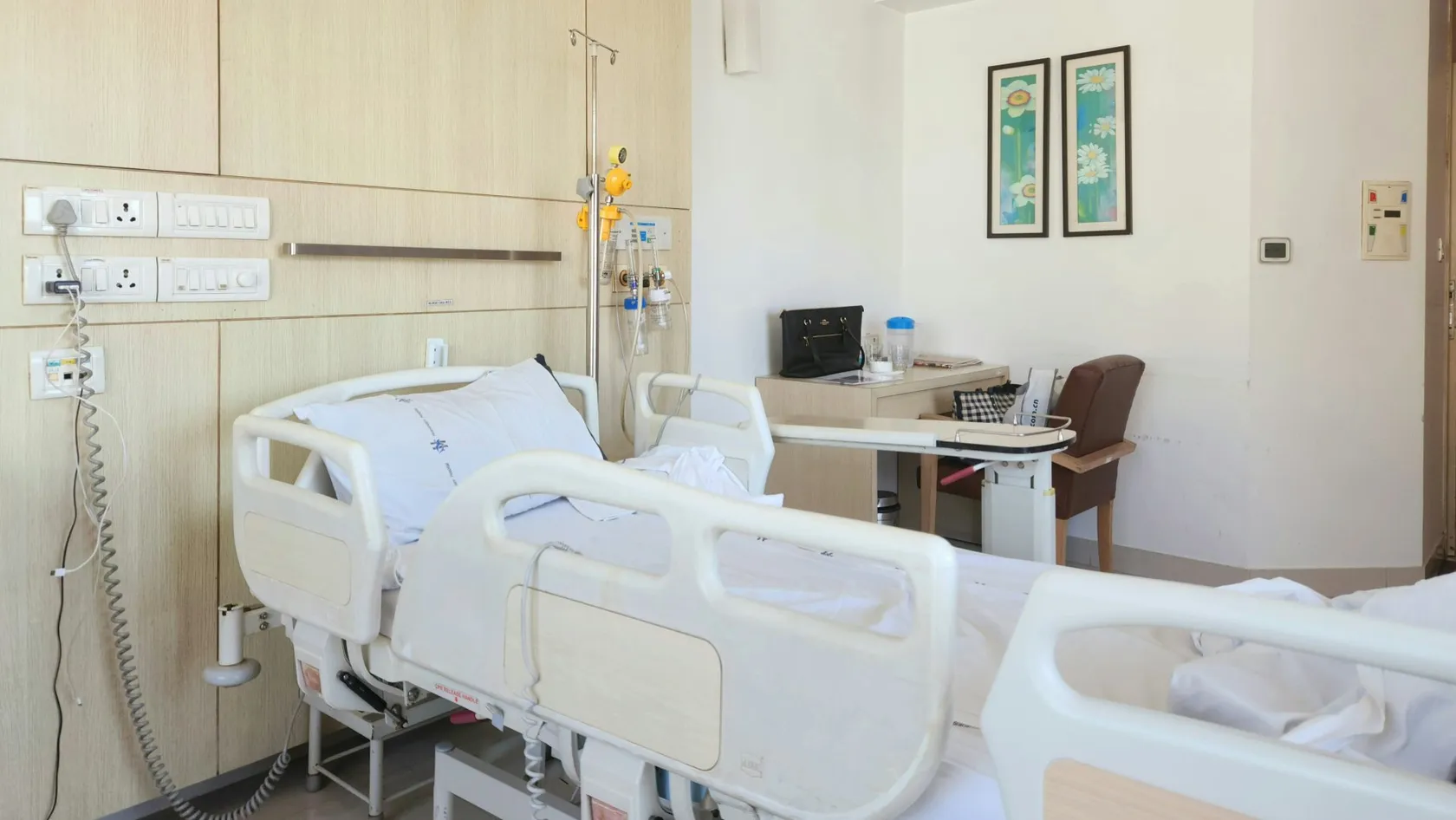
Long-Term Inpatient Care For International Patients
Every admission starts with a number, and long-term inpatient care is what a hospital does once that number turns out to have been wrong. Across 3,235,741 intensive care admissions, 7.6 percent became chronic critical illness. Past a certain point the risks stop coming from the illness and start coming from the days, meaning muscle loss, pressure injuries, lines left in too long, resistant organisms and confusion. This page covers each one, with the visa and the flight home.
About This Department
Most admissions are counted in days. Long-term inpatient care starts where that stops being true.
Across 3,235,741 intensive care admissions in one national study, 7.6 percent became chronic critical illness, meaning at least eight days in the unit alongside prolonged ventilation or a tracheostomy.
The day the plan stops applying
Every admission starts with a number. Five days, ten days, three weeks. Long-term inpatient care describes what a hospital does once that number turns out to have been wrong, and it asks for a different set of skills from the ones everybody prepared for. A national study applied a consensus definition to 3,235,741 intensive care admissions and found that 7.6 percent of them met it, meaning the patient had spent at least eight days in the unit and had also needed prolonged ventilation, a tracheostomy, severe sepsis, multiple trauma or a severe wound. In-hospital mortality across that group ran at 30.9 percent. The population rate came out at 34.4 cases per 100,000 people, projecting to something near 380,000 cases in a single year for one country alone. Those are large numbers for a category most families have never heard named, and the reason they have never heard it named is that almost nobody plans for it, since a long admission is hardly ever the plan. It becomes what the plan turns into, somewhere around the second or third revision of the discharge date.
The word long, and what it stands in for
Eight days marks an administrative threshold inside one study. Other systems draw the line at fourteen days, at twenty one, or at the point where an insurer moves the admission into a different category, and the clinical meaning underneath all of those thresholds stays the same, which is that a patient stopped being someone who could be discharged and nobody can name the day that changes.
And long admissions happen well outside intensive care. A ward bed occupied for eleven weeks is a long admission, whatever the monitor above it says.
Who ends up here, and how they got here
Nobody gets admitted for a long admission. Patients arrive for something else, and the length arrives afterwards, usually attached to a complication that the referral letter never mentioned.
Four routes lead here more than any others. A planned operation that goes well until day three and then does not. An infection that starts in one organ and takes two more with it. A stroke or a head injury where the damage is fixed within hours and the recovery is measured in months. And a transplant or a course of cancer treatment that worked, leaving a patient too weak to go anywhere. The four diagnoses have nothing in common with each other. The situation does, and the situation is that the patient can no longer be discharged while nobody can say when that will change.
When a family notices
The realization hardly ever arrives as an announcement. It arrives as a series of small revisions, each one reasonable on its own, and each one delivered in a corridor by somebody who has four more patients to see before lunch. Another week to get the infection under control. A few more days to see whether the breathing holds up off the machine. A scan on Thursday, and a decision after the scan. Six of those in a row, and a family that packed for ten days has been living in a foreign city for two months with a visa running down and no date to work toward. Ask for the expected length to be restated out loud every week, even when the answer has not moved, because a number somebody said on Monday is easier to plan around than a number nobody has said since admission.
The problems that belong to the days themselves
Here is the part that surprises people. Past a certain point, what decides how a long admission ends is often not the condition that caused it. Bodies that stay still lose muscle. Skin carrying the same pressure at the same three points for the same number of hours breaks down. A feeding tube, a urinary catheter and a central line each carry a small daily risk that reads as trivial on day two and as substantial by day forty, and the bacteria around a bed that has been occupied for six weeks are no longer the bacteria that were there on the first morning. And a mind kept in a room with no daylight, no clock and no familiar voices starts doing things that look like permanent deterioration and turn out, in a good number of cases, to be reversible. None of that appears anywhere on the admission diagnosis. All of it is what the sections below cover, arranged in roughly the order these things become a problem.
Each item on it has a name a family can use.
What lying still takes first
Muscle goes early, and it goes faster than almost anybody expects. A patient who walked into the hospital can be unable to sit unsupported ten days later.
Two features make this worse than it sounds. Speed comes first, since measurable muscle loss starts inside the first week. The second feature sits outside the arms and legs, because the diaphragm is a muscle too, and a diaphragm that has not done its own work for three weeks turns into one of the main reasons a patient cannot leave a ventilator even after the lungs themselves have recovered. Families watch the lung numbers and wait for those to improve. The number that decides the timing is frequently a muscle nobody in the room is measuring.
What helps, and what it cannot undo
Getting a patient upright and moving, early and every day, carries more evidence behind it than anything else in this section, and a long stay unit should be able to say how many minutes of physiotherapy a patient actually received yesterday, which is a different number from how many sessions sit on a plan. The limit worth stating plainly is that physiotherapy shortens the road without removing it, because strength after a long admission comes back over months, and some of it does not come back at all. A service that promises otherwise has stopped describing medicine.
Weekends are the test. A unit running physiotherapy on Saturday and Sunday is telling you something no brochure can.
The injury that happens while nothing is happening
Pressure injuries have a quality that makes them easy to dismiss and hard to forgive, which is that they are caused by time passing rather than by anything going wrong.
One intensive care unit changed its turning interval from every five hours to every three and counted what happened across roughly eleven hundred patients on either side of the change, and pressure injuries fell from 3.5 percent of patients to 2.0 percent, with an adjusted odds ratio of 0.51 and a confidence interval of 0.27 to 0.97. Nothing was purchased. No drug was involved. A ward simply moved people more often, and a third of the injuries stopped happening. That is an unusually clean result in hospital medicine, and it is also the reason the turning schedule is a fair thing for a family to raise by name.
Slide this table sideways on a small screen to reach the second column.
| What causes it | What the ward should be doing |
|---|---|
| Unrelieved pressure at the heels, the sacrum and the back of the head | A turning schedule with a stated interval, written down and carried out overnight and at weekends as well as on a Tuesday morning |
| A mattress that does not redistribute weight | A pressure redistributing surface chosen for the patient, since whatever bed was free on the day of admission was chosen for nobody |
| Moisture from sweat, incontinence or a leaking dressing | Skin checked and dried on every turn, since wet skin breaks down at a fraction of the pressure dry skin tolerates |
| Poor nutrition and low protein | Dietitian involvement that starts in the first week, well before the first wound appears |
| Devices pressing on skin, including tubing, masks and collars | Tubing repositioned on a schedule of its own, because a nasal mask left in one place for days makes its own ulcer |
Asking to see the skin is fair, because a ward confident in its pressure care has no difficulty showing a family the heels and the sacrum, and a ward that hesitates has told you something without meaning to.
Feeding somebody for eight weeks
Nutrition over a long admission is one of the places where intuition gets the answer backwards, and there is a large trial to prove it. Intuition loses.
4,640 critically ill adults were randomly assigned either to start intravenous nutrition within 48 hours when the gut alone was not delivering enough, or to wait until day eight. Waiting won. New infections occurred in 22.8 percent of the late group against 26.2 percent of the early group. The late group had a 9.7 percent relative reduction in the proportion of patients needing more than two days of mechanical ventilation, and they left both the unit and the hospital alive sooner, with a hazard ratio of 1.06 for each. Feeding people more, earlier, through a vein, made them worse. The finding held in a trial large enough that it is difficult to argue with, and it changed practice across Europe.
- Ask whether the feeding is going through the gut or through a vein, since the gut is preferred wherever it works and the reasons for abandoning it should be stated.
- Ask what the daily protein and calorie target is and what proportion of it the patient actually received yesterday, because prescribed and delivered are different numbers and the gap is often large.
- Ask who is weighing the patient, how often, and on what.
- Ask what happens to feeding on the days a patient is fasted for a procedure, because a fortnight of canceled scans can quietly remove several days of nutrition.
Weight during a long admission is a poor guide on its own, since fluid hides muscle loss and a patient can gain three kilograms while losing the strength to lift an arm. Muscle tells you more than weight does, and a dietitian, a physiotherapist and a nurse looking at the same patient in the same week will give you a truer answer than any scale in the building.
Every tube has a clock running on it
On day one a urinary catheter is a convenience. By day thirty it has become a risk that accumulated quietly the whole time.
In a study of catheterized intensive care patients, urinary tract infections linked to the catheter occurred at a rate of 19.02 per 1,000 catheter days, 60 of 204 catheterized patients developed one, and each additional day of catheterization raised the risk, with a hazard ratio of 1.07 per day and a confidence interval of 1.01 to 1.13. A seven percent increase per day compounds in the way that any daily percentage compounds, so the number of days a line stays in has more influence over infection than almost anything else done to it.
All that evidence fits into one question, asked daily rather than weekly. Does this line still need to be there today. A unit that reviews every catheter, every drain and every central line on the morning round, and removes the ones that have outlived their reason, will have fewer infections than a unit that reviews them when something goes wrong. Nobody needs to be persuaded of this in principle. The difficulty lies in doing it on the fortieth consecutive morning, when the line has become part of the furniture.
What a long stay does to the bacteria around a bed
Hospitals contain organisms that have survived antibiotics, and length of stay is the single strongest predictor of meeting them. Time does it.
Two distinctions do a lot of work here, and families are rarely given either of them. Colonization means an organism is living on a patient without causing disease, and it usually requires no treatment at all, while infection means the same organism has caused illness, and it requires treatment with a narrower and less pleasant list of drugs. A patient who is colonized is not sick from it, and they are still placed in a single room with gowns and gloves at the door, which looks alarming and is a precaution for everybody else on the ward. This matters at the point of going home. The hospital that receives them at home will want to know, so ask for the screening results in writing, with the organism named and the dates, and carry them. A receiving hospital told in advance can plan a side room, while a receiving hospital that finds out from its own swab four days later has already had four days of contact with everybody else on the ward.
Confusion, and why nobody should treat it as a side issue
Families are often told that confusion in hospital is normal and temporary. The first half of that is true. The second half deserves more care than it receives. A meta analysis pooling seven high quality studies followed patients who had been delirious in hospital for an average of 22.7 months afterwards, and death was almost twice as likely, with a hazard ratio of 1.95 and a confidence interval of 1.51 to 2.52. Institutionalization was more than twice as likely, occurring in 33.4 percent of those who had been delirious against 10.7 percent of those who had not. Subsequent dementia carried an odds ratio of 12.52. Nothing in that proves the delirium caused the outcomes, since a brain that becomes delirious easily may already have been vulnerable, and the authors said so, while what it does establish is that an episode of confusion in hospital is a marker nobody should file under normal and forget.
Almost everything that reduces it is embarrassingly ordinary. Glasses and hearing aids, which go missing on the first day of an emergency admission and are never asked for again. Daylight, a window, a clock the patient can see, and a difference between day and night. The same faces across shifts, in place of a different agency nurse each time, which costs a rota change and nothing else. Sleep protected from a three in the morning blood test that could have waited until six. A family member who says the date and the place out loud, every visit, without making a ceremony of it, and then the fewest sedative drugs the situation allows, reviewed daily, because sedation that made sense during the first crisis has a way of continuing for weeks after the crisis ended.
When coming off the ventilator takes months
Weaning is the word for the process of handing breathing back to a patient, and in a long admission it stops being an event and becomes a project with setbacks.
A multicenter study followed 1,419 ventilator dependent patients transferred to 23 long-term care hospitals after their intensive care stay. By discharge, 54.1 percent had been weaned successfully, 20.9 percent remained dependent on the machine, and 25.0 percent had died, while among those who did wean the median time it took was 15 days after transfer. Read those three figures together and they describe something a family is rarely told plainly, which is that a majority of patients in this position do come off the ventilator, that it takes a fortnight or more once the process is running properly, and that the outcome is genuinely uncertain in a way nobody can resolve in advance by looking harder at a scan.
- Ask what the weaning plan is in hours, meaning how long the patient breathes without support today and by how much that increases tomorrow.
- Ask what happened on the last attempt and why it stopped, since a failed trial has a reason and the reason directs the next week.
- Ask whether a tracheostomy is being considered, what it would change, and whether it can be reversed later.
- Ask who leads the weaning, because a plan owned by a named team moves faster than a plan owned by whoever is on shift.
On the tracheostomy question, the evidence runs calmer than the conversation around it. A randomized trial of 909 ventilated patients compared a tracheostomy within four days against one after ten days or more, and thirty day mortality came out at 30.8 percent in the early group against 31.5 percent in the late group. Two year mortality was 51.0 percent against 53.7 percent. Neither difference reached significance. Doing it sooner does not save lives, which means the timing can be decided on comfort, on sedation needs and on how the weaning is actually going, rather than treated as a race that somebody is losing.
The right bed, at the right time
Long admissions pass through several kinds of bed, and the commonest failure is staying in one of them after it has stopped being the correct one.
Staying too long in an intensive care bed is not a safe default. It exposes a patient to the organisms, the noise, the sleep disruption and the immobility described earlier in this page, at a point when none of those risks are buying anything, and moving too early carries its own obvious danger. Between the two sits a judgment that should be made out loud, by name, at a stated interval.
Why the move gets delayed
Transfers stall for reasons that are rarely clinical. The receiving unit has no bed. The paperwork needs a signature from somebody on leave. The family has understood intensive care as the safest place in the building and hears a move as a downgrade. The insurer has authorized one level of care and not the next, and every one of those four is solvable, and all four are solved faster when somebody raises them a week ahead of the day the transfer becomes appropriate.
The chair beside the bed
Count the second patient. A companion who intended to stay ten days and has now been in a hospital corridor for nine weeks becomes, at some point, a second patient nobody registered. A study followed 280 caregivers of critically ill patients for a year. At seven days after discharge from intensive care, 67 percent of them had high levels of depressive symptoms. At twelve months, 43 percent still did. Symptoms eased over the year for most, and for 16 percent they did not ease at all, which makes these figures a description of the people doing the visiting, and they sit among the better documented findings in this field. A long admission has two people in it. Hospitals rarely ask the companion anything at all. Putting the question takes a moment, and a person sleeping four hours a night on a fold-out bed in week nine will answer it honestly if somebody with a name and a badge sits down to ask.
This table scrolls sideways on a phone. Drag it across to reach the second column.
| Over ten days | Over ten weeks |
|---|---|
| A bed in the room and somewhere to eat | A room outside the hospital as well as the companion bed, because sleeping on a ward for two months stops being possible |
| A daily update | A weekly meeting with a stated time, in addition to the daily update, where the plan for the next fortnight is set out |
| One relative present | A rota, so that a second family member arrives and the first one goes home for two weeks and comes back |
| Nothing formal | A named contact for the practical layer, meaning visas, accommodation, insurance letters and transport, kept separate from the clinical conversation |
| No particular attention | Someone asking the companion how they are sleeping and eating, since the research says a good share of them are doing neither well |
Send somebody home. A family that rotates its companion is not abandoning anybody, and the alternative is a single exhausted person making decisions in week nine on four hours of broken sleep a night.
Visas, residence and the documents that expire
Paperwork is the section no clinical page covers, and it produces more avoidable distress than anything else in a long admission. A medical visa is issued for a length of time that was estimated before anybody knew how the treatment would go, so when an admission runs past it, the patient is in a hospital bed and cannot attend an office, and the companion is the only person who can act. Start that process in the first week the discharge date moves, because every immigration system in the world treats an application made before expiry differently from one made after it. A hospital letter confirming the admission, the treating doctor, the expected further duration and the clinical reason behind it is the document that most extensions turn on, and any international patients office should be able to produce one within a day or two of being asked. Request that letter in the same conversation where the discharge date first moves, long before the visa runs out.
The same logic covers the rest of the paper. Insurance authorizations expire and get renewed on a schedule nobody mentions until a claim is refused. Accommodation booked for two weeks needs extending at a different rate than a hotel quotes to a tourist, and medication the companion takes themselves runs out in a country where their own prescription means nothing at all. And the documents that will be needed at the end, meaning the discharge summary, the imaging, the culture results and the letter for the airline, take days to assemble and should be requested several days before the discharge date.
Going home, and whether an aircraft is involved
Nobody plans this part. Discharge after a long admission is a journey rather than a door, and for an international patient the last part of it happens at 2,400 meters of cabin altitude in a pressurized tube with no doctor on board by default.
A study of medical emergencies on commercial flights collected 11,920 events. The aircraft was diverted in 7.3 percent of them. Of 10,914 cases with follow up after landing, 25.8 percent of passengers were taken to a hospital by ambulance, 8.6 percent were admitted, and 0.3 percent died. Those figures describe ordinary passengers rather than patients discharged from a long admission, which is the point worth taking from them. A cabin is a place where a medical problem becomes difficult for everybody, and a patient who has spent two months in a hospital bed is not an ordinary passenger.
What fitness to fly actually means
Airlines do not assess patients. They assess paperwork, and they expect a treating doctor to have made the assessment already. A cabin holds a pressure equivalent to standing at around 2,400 meters, so a patient who needs oxygen at sea level will need more of it in the air, and the airline needs to know in advance because oxygen has to be booked and most carriers will not accept a personal cylinder. Recent surgery, a chest drain, a fresh tracheostomy, an unhealed wound, a plaster cast, a recent clot and uncontrolled seizures all have their own rules and their own waiting periods, and anemia below a threshold matters too. So does the ability to sit upright for the length of the flight, which is a real question after eleven weeks in a bed. The practical ladder runs from an ordinary seat, to a seat with oxygen, to a stretcher across several rows, to a medical escort traveling with the patient, to an air ambulance. Each step costs more and each one is arranged through a different process, and the decision between them belongs to the treating team and not to the family or to a travel agent, so start the conversation two weeks before the intended date. A flight home refused at the desk on the morning is a bad way to end a long admission.
What drives the cost of a long admission
No figures appear on this page, because a long admission is priced by what happens in it and nobody can know that in advance. What we can set out is which variables move the total. Eight of them matter.
Slide this table sideways on a small screen to reach the second column.
| Driver | Which way it moves the total |
|---|---|
| Level of care per day | The largest single factor by a wide margin. An intensive care day, a step down day and a ward day are different prices, so the date a patient steps down matters financially as well as clinically |
| Ventilator and tracheostomy | Adds daily cost and usually adds days, since weaning after a long period of support runs in weeks |
| Kidney support | Dialysis or continuous filtration is priced per session or per day and is one of the larger add ons |
| Imaging and laboratory frequency | Daily bloods and repeated scans accumulate quietly. Ask what is being ordered daily out of habit rather than out of a question somebody wants answered |
| Antibiotics for resistant organisms | A narrow spectrum agent for a resistant organism can cost a multiple of the usual first line drug, and the course runs longer |
| Physiotherapy and rehabilitation | Priced per session in most places. This is the line nobody should be cutting, since it shortens the admission that everything else is priced against |
| Companion accommodation and transport | Small per day and large over ten weeks. Ask for it to be quoted by the week |
| Repatriation | A stretcher, a medical escort or an air ambulance each sit in a different order of magnitude, and this belongs in the conversation at the start of the admission |
The question to put to a quotation
Any estimate for a long admission is a projection with assumptions inside it. Ask which assumptions, specifically how many intensive care days it assumes, how many ward days, whether it includes physiotherapy, whether it includes the companion, and what happens to the figure if the stay runs two weeks longer. A hospital that answers those five questions in writing is a hospital that has thought about the answer. One that restates the total is not.
What to ask once the stay stretches
Most of this page turns into a short list of questions, and the questions work better asked weekly than asked once. Nine of them, weekly.
What is the expected further length of stay, said out loud, this week. What is the plan for getting the patient out of bed today and over the weekend. What is the turning schedule, and can we see the skin. How much of yesterday protein target went in. Which lines, drains and catheters are still in, and what is each one still for. Has the patient been screened for resistant organisms, and can we have that result in writing to carry home. What happened on the last weaning attempt and what is different about the next one. When does this patient stop needing this level of bed, and what has to be arranged before that move. And finally, what has to be true before this patient can fly, and how far are we from it.
The meeting worth asking for
Daily updates cover the last twenty four hours and are not designed to answer any of the questions above, so a long admission needs a second conversation, once a week, with a stated time, the treating doctor present, an interpreter present if the family needs one, and somebody taking notes. Thirty minutes in week three saves a fortnight of guessing in week seven. Hospitals hold these meetings when families ask for them, and rarely offer them first. So ask first.
What we arrange
Ten weeks changes the list. For an admission that runs long, the arrangements around the bed stop being conveniences and start being what allows a family to keep going.
One coordinator from the first message through to discharge, with a name and a direct number, so the person who knows the case in week one is the person answering in week nine. Seven languages covered directly by the international patients team, namely English, Arabic, French, Russian, Serbian, Romanian and Spanish, with a professional interpreter arranged for anything else. A companion bed in the room for the whole admission, and accommodation nearby for the rest of the family, extended week by week as the stay extends. Airport transfers and transport between the accommodation and the ward. Halal, vegetarian and diabetic meals from the hospital kitchen, and a prayer room in the building. A request for a female physician put to the department and met wherever the rota allows. An invitation letter naming the hospital and the treating doctor for the visa application, and a further letter confirming the admission and its expected duration when an extension is needed. And once you are home, the same coordinator on the same WhatsApp number.
We review your reports and imaging free of charge, in writing, in a language you read, before anything is booked. Start there.
Questions we are asked, a long-term inpatient care FAQ
How long is long
One large study used eight days in intensive care plus a qualifying condition, and on that definition 7.6 percent of 3,235,741 admissions qualified. Other systems use fourteen days or twenty one. The threshold is administrative. What changes in practice is that the risks start coming from the days and not from the illness.
Will my relative come off the ventilator
A study of 1,419 ventilator dependent patients moved to long-term care hospitals found 54.1 percent weaned by discharge, 20.9 percent still dependent and 25.0 percent died, with a median of 15 days to wean among those who weaned. So the majority do, it takes longer than families expect, and the uncertainty is real, so the question to put is what happened on the last weaning attempt and not what the general figures say.
Should we push for an early tracheostomy
The trial that settled this randomized 909 patients to a tracheostomy within four days or after ten. Thirty day mortality was 30.8 percent against 31.5 percent and two year mortality was 51.0 percent against 53.7 percent, with neither difference significant. Earlier does not mean better for survival. It can still be the right choice for comfort, for reducing sedation and for making weaning easier, and those are the grounds to discuss it on.
Is more feeding better
No, and a trial of 4,640 patients showed the opposite. Starting intravenous nutrition within 48 hours produced more new infections than waiting until day eight, 26.2 percent against 22.8 percent. Nutrition matters enormously over weeks. Aggressive early feeding through a vein is not how to deliver it, and the trial behind that finding is large enough to have changed practice across Europe.
What can a family actually do
More than families assume. Bring the glasses and the hearing aids and keep them at the bedside. Say the date and the place out loud on every visit, without making a performance of it. Ask for the turning schedule, ask to see the heels, and ask each week which lines are still in and why. Push for physiotherapy at weekends. And rotate the companion, because a study of 280 caregivers found 67 percent with high depressive symptoms a week after intensive care discharge and 43 percent still affected a year later. None of that requires medical knowledge, and all of it changes what happens, because the questions a family asks by name are the ones that get answered by name. The single most useful habit is writing the questions down during the week and bringing that list to the ward round, in place of trying to remember them while somebody is already talking.
What does colonization with a resistant organism mean for us
Colonization means the organism is present without causing illness and usually needs no treatment, which is different from infection. It does mean single room precautions, and it does mean the hospital at home needs to know before arrival. A case control study found that a hospital stay longer than 28 days in the preceding year carried an odds ratio of 23.6 for acquiring a carbapenemase producing organism, so a long admission makes this likely enough to plan for, which means asking for the screening results in writing and carrying them with you.
Can a patient fly home after a long admission
Usually yes, with preparation. A cabin is pressurized to the equivalent of around 2,400 meters, so oxygen needs rise and airlines require a treating doctor assessment plus advance notice for oxygen, a stretcher or an escort. Start the assessment two weeks before the intended date.
Can you tell us what this will cost before we come
Not as a single number, and any hospital that offers one for an open ended admission is guessing. What we can do is set out the daily levels of care, say which elements sit inside a quotation and which sit beside it, and state what the figure assumes about the number of intensive care days. Send the reports and the imaging first. The written opinion comes back in a language you read, it costs nothing, and it is the honest starting point for everything else.
References
- Kahn JM, Le T, Angus DC, et al. The epidemiology of chronic critical illness in the United States. Crit Care Med. 2015;43(2):282-287.
- Stevens RD, Dowdy DW, Michaels RK, et al. Neuromuscular dysfunction acquired in critical illness, a systematic review. Intensive Care Med. 2007;33(11):1876-1891.
- Darvall JN, Mesfin L, Gorelik A. Increasing frequency of critically ill patient turns is associated with a reduction in pressure injuries. Crit Care Resusc. 2018;20(3):217-222.
- Casaer MP, Mesotten D, Hermans G, et al. Early versus late parenteral nutrition in critically ill adults. N Engl J Med. 2011;365(6):506-517.
- Temiz E, Piskin N, Aydemir H, et al. Factors associated with catheter-associated urinary tract infections and the effects of other concomitant nosocomial infections in intensive care units. Scand J Infect Dis. 2012;44(5):344-349.
- Cronin KM, Poy Lorenzo YS, Olenski ME, et al. Risk factors for KPC-producing Enterobacteriaceae acquisition and infection in a healthcare setting with possible local transmission, a case-control study. J Hosp Infect. 2017;96(2):111-115.
- Witlox J, Eurelings LSM, de Jonghe JFM, et al. Delirium in elderly patients and the risk of postdischarge mortality, institutionalization, and dementia, a meta-analysis. JAMA. 2010;304(4):443-451.
- Scheinhorn DJ, Hassenpflug MS, Votto JJ, et al. Post-ICU mechanical ventilation at 23 long-term care hospitals, a multicenter outcomes study. Chest. 2007;131(1):85-93.
- Young D, Harrison DA, Cuthbertson BH, et al. Effect of early vs late tracheostomy placement on survival in patients receiving mechanical ventilation, the TracMan randomized trial. JAMA. 2013;309(20):2121-2129.
- Cameron JI, Chu LM, Matté A, et al. One-year outcomes in caregivers of critically ill patients. N Engl J Med. 2016;374(19):1831-1841.
- Peterson DC, Martin-Gill C, Guyette FX, et al. Outcomes of medical emergencies on commercial airline flights. N Engl J Med. 2013;368(22):2075-2083.
Editor's note
Written by the Biruni Hospital medical editorial team. Reviewed by Assistant Professor Pınar ACAR, Anesthesia and Reanimation.
Medically reviewed by

Assistant Professor Pınar ACAR
Anesthesia and Reanimation
Related Treatments
View All
Bone Marrow Transplant Unit (BMT Unit)
Between the mid 1990s and the mid 2000s, death within 200 days of an allogeneic transplant that was not caused by relapse fell by 60 percent, and almost none of that came from a new drug. This page is about the part nobody photographs, meaning the filtered room, the rules that have evidence behind them and the ones that do not, the laboratory chain behind the cells, and what a family can actually do.
Burn ICU (Burn Intensive Care Unit)
Age, burn size and smoke inhalation are the three numbers that set the outlook after a major burn. This page walks through fluids, early surgery and grafting, the long healing phase, and when a burn patient can be flown abroad.

Burn Unit (Burn Center)
Burn care runs on one figure, the percentage of the body surface burned, and a systematic review of 28 studies found that referring hospitals overestimate it in half or more of cases. Fluid volume, the transfer decision and the survival estimate are all calculated from that number, which is why this page starts with how it is measured and who should be measuring it.

Cancer Pain Management Unit
The Cancer Pain Management Unit at Biruni Hospital in Istanbul treats pain caused by cancer and by its treatment. Two in three people with advanced cancer report pain, and reviews show nearly one in three receive medication too weak for it. The unit uses stepwise medicines, radiotherapy for bone pain, nerve blocks and spinal pumps, and plans follow-up for patients who return home abroad. The pain team reviews reports and current medicines free of charge.
Cancer Patient ICU Care
Cancer once counted as a reason not to offer an intensive care bed at all. Pooled data from 7,354 critically ill cancer patients retired that rule, and the argument now is about which patient, for what, and how long full support runs before anybody formally reassesses it.